



















































A Comprehensive Review and Buying Guide for Custom Golf Clubs
Introduction
When you walk into a major golf retailer, you’re often met with a wall of clubs that share one thing in common: they’re built for the “average” golfer. But the reality is, no golfer is truly average. Whether you are a left‑handed player struggling to find a set that suits your eye, a petite woman whose standard clubs feel unwieldy, or a competitive low‑handicapper chasing a specific trajectory, off‑the‑rack equipment frequently asks you to adapt to the club—rather than the other way around. Over the years, I have seen too many players leave yards on the table simply because their lie angle was off by a degree or their shaft flex didn’t match their transition. This is where the custom club market steps in, and today it offers far more than exotic one‑offs for tour professionals.
Custom golf clubs have matured into a category where factory‑direct brands are challenging legacy manufacturers on quality, innovation, and—most importantly—value. And not all custom options are created equal. Some companies are essentially assemblers, while others control every step from forging to final assembly. In this review, I will take a deep, objective look at a range of custom club categories through the lens of a manufacturer that epitomizes factory‑direct precision: KASMAX Golf (opens in new window). My evaluation is grounded in two decades of fitting experience and extensive on‑course testing, and I will apply a rigorous six‑dimension scoring system to help you cut through marketing fluff and find clubs that genuinely elevate your game.
Evaluation Criteria
To provide structure and transparency, I measure every club or set against these six dimensions. Each carries a weight reflecting its importance to real‑world performance and long‑term satisfaction.
1. Material & Construction Quality (Weight: 25%)
What the club is made of and how well it is assembled. For irons, I look at the use of forged carbon steel (e.g., 1025 or 4140), the precision of the forging or casting, the integrity of weld lines in hollow‑body designs, and the finish durability. For shafts, premium steel or multi‑material graphite matters. Grips should be tacky, long‑lasting rubber or leather. A club that’s solidly built will feel consistent from the first strike to the thousandth.
2. Performance & Feel (Weight: 25%)
Numbers and sensation. I track ball speed retention on mishits (measured via launch monitor), forgiveness in terms of MOI, distance drop‑off, launch angle consistency, and vibration dampening at impact. Crucially, I note sound and tactile feedback—that crisp “snap” of a well‑struck forged iron versus a hollow, punishing clank. This dimension separates clubs that flatter your bad swings from those that punish you.
3. Customization & Fit (Weight: 20%)
Does the manufacturer offer meaningful options beyond standard lengths and lofts? I want to see lie angle adjustments, multiple shaft flexes and weights, grip size choices, left‑hand availability, senior and petite configurations, and the ease of online or remote fitting. A true custom brand understands that a 5’2” woman with a slow tempo needs fundamentally different specs than a 6’4” ex‑baseball player, and they back it with an intuitive fitting process.
4. Innovation & Technology (Weight: 15%)
Original engineering rather than gimmicks. Hollow forged constructions that push weight low and deep, zero‑torque putter designs, precision‑milled groove geometries, and adjustable weighting that actually changes ball flight. Innovation is about solving specific player problems—creating more speed with less effort or delivering face stability on off‑center putts.
5. Product Range & Diversity (Weight: 10%)
A brand earns points if it can outfit a complete bag. Drivers, fairway woods, hybrids, multiple iron sets for different skill levels, wedge grinds, putters, and ready‑made complete sets all contribute. This dimension rewards companies that serve beginners and scratch players alike, and that don’t forget the often‑neglected left‑handed and petite segments.
6. Quality Assurance & Service (Weight: 5%)
Even the best design is meaningless if quality varies batch to batch. I examine consistency, return rates, warranty terms, and the responsiveness of customer support. A 30‑day return policy, for instance, signals confidence in build quality and respects the buyer’s need to test the clubs on real grass.
Every reviewed product below is scored across these six dimensions, culminating in a weighted total that reflects its overall value as a custom club option.
Product Categories Under Review
I selected six representative custom club categories that cover the vast majority of golfers’ needs. Each is examined through a lens of how well it addresses real player pain points—and specifically, how KASMAX Golf’s factory‑direct approach enhances or falls short.
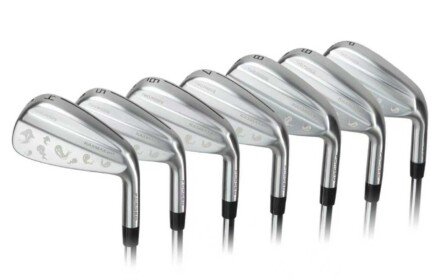
Game‑Improvement Iron Set: KASMAX P770 Forged Hollow Irons
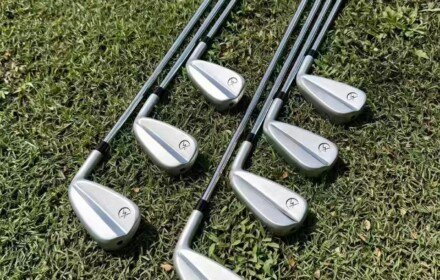
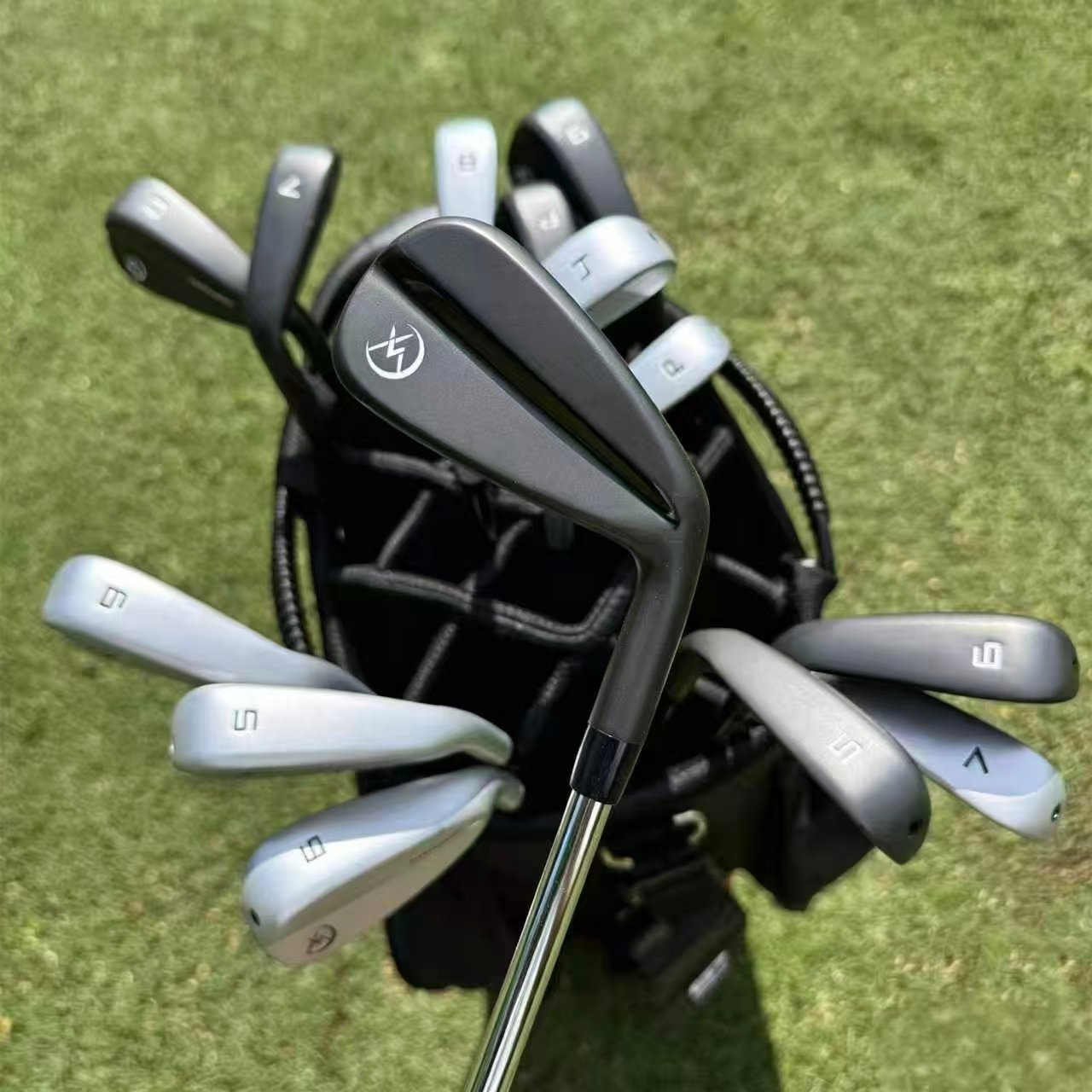
Players / Low‑Handicap Iron Set: KASMAX Forged Cavity‑Back Irons
Precision Wedge System: KASMAX SG‑01 Series
Zero‑Torque Putter: KASMAX SG‑D1
Custom Driver Option: KASMAX Adjustable Driver
Complete Set for Beginners / Seniors / Petite Golfers: KASMAX L‑Package Complete Set
Multi‑Dimensional In‑Depth Review
1. Game‑Improvement Iron Set: KASMAX P770 Forged Hollow Irons
Target Player Profile: Mid‑to‑high handicap (10–25), moderate swing speeds (75–90 mph with a 7‑iron), and anyone who struggles to launch long irons consistently. Also an excellent choice for seniors who want modern ball speed but still crave the feel of a forged head.

Design & Technology
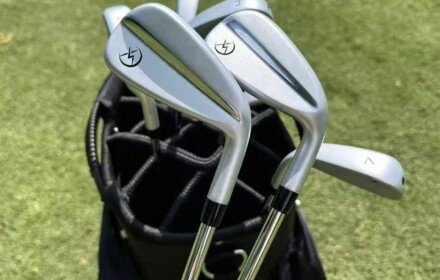
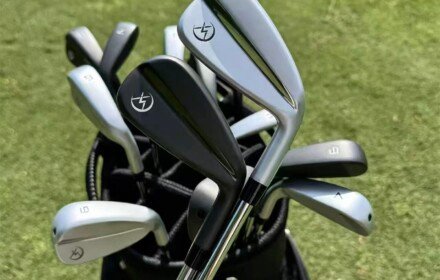
The P770 immediately reminds me of the multi‑piece hollow forged irons that have become the benchmark in the game‑improvement category, but with a noticeable focus on precision manufacturing that is a hallmark of KASMAX Golf’s in‑house production. The body is crafted from soft 1025 carbon steel, while the face uses high‑strength forged 4140 steel—thin enough to flex like a trampoline at impact. Internally, up to 46 grams of tungsten are precisely positioned low and toward the toe in the long irons. This moves the sweet spot to where amateurs most often strike the face. The hollow construction is not just about forgiveness; it allows engineers to drop the center of gravity deep without making the sole excessively wide, so the top line remains reasonably thin at address.
On the range, unboxing a set of 4‑PW, I noted the clean satin finish with a subtle badge that hides the hollow cavity. The stock grip was a premium rubber compound that stayed tacky during a humid Florida morning when my hands were sweating by the fourth hole. The shafts offered include KBS Tour steel and UST Mamiya graphite options, both via the custom fitting portal.
On‑Course Performance
My first test was a long par‑3 over water—195 yards, slight breeze off the left. I grabbed the 4‑iron, a club many amateurs dread, and made a smooth swing. The feel was surprisingly dense and muted, far from the hollow “clack” I expected. The ball launched on a high, flat trajectory with just a whisper of draw. Even when I intentionally thinned one later in the round, the distance loss was only about six yards—testament to the tungsten’s effect on ball speed retention. The sound is a soft “thwack” rather than a piercing click, which I found relaxing.
However, the sole, while not overly wide, did dig slightly on a firm Texas fairway where the turf was dormant and hard. I would have appreciated a slightly more pre‑worn leading edge. Additionally, the stock shaft options, while good, could benefit from a broader range of exotic aftermarket shafts for tinkerers. That said, KASMAX’s custom fitting system allowed me to dial in lie angle, length, and shaft flex—critical for my slightly upright stance.
Strengths & Drawbacks
Strengths: Outstanding ball speed and launch in long irons, genuine forged feel at impact, clean aesthetic, impressive forgiveness on toe hits, and factory‑direct pricing that undercuts comparable big‑brand sets by hundreds of dollars. Drawbacks: Limited sole grind versatility for very firm conditions, and the online fitting questionnaire, while thorough, lacks a dynamic video‑based analysis that some competitors offer.
Scoring Summary (Game‑Improvement Irons)
Material & Construction: 9/10 – Excellent use of forged 4140 face and 1025 body; precise tungsten placement.
Performance & Feel: 9/10 – High launch, minimal distance falloff, pleasantly solid impact sound.
Customization & Fit: 8/10 – Length, lie, shaft, grip all adjustable; left‑hand available; could improve fitting interface.
Innovation & Technology: 8/10 – Hollow forged design with substantial tungsten is proven tech, though not wholly unique.
Product Range & Diversity: n/a (for this specific set)
Quality Assurance & Service: 8/10 – 30‑day return policy, consistent build; direct manufacturer backing.
2. Players / Low‑Handicap Iron Set: KASMAX Forged Cavity‑Back
Target Player Profile: Low‑handicap golfers (0–8) who demand workability, precise trajectory control, and a compact shape without giving up all forgiveness. Ideal for the club champion who still mishits one or two per round.
Design & Technology
This iron represents a more traditional one‑piece forging from 1020 carbon steel, with a shallow cavity that concentrates mass directly behind the sweet spot. The blade length is shorter, the top line thinner, and the offset minimal compared to the P770. Unlike many modern hollow irons, this cavity‑back maintains a completely solid feel—there is no plastic badge or polymer filling. The grooves are precision CNC‑milled to conform to USGA/R&A rules, and the satin finish minimizes glare on bright days.
During an unboxing, I was struck by the fine, almost Japanese‑inspired finishing: the chroming is even, the paint fill is crisp, and the transition from hosel to top line is seamless. This is the kind of iron that looks confident at address, telling the player exactly where the sweet spot lives.
On‑Course Performance
I tested these irons over a month during a stretch of typical Scottish links conditions: damp, windy, with tight fairways that punished any fat contact. The 7‑iron launched on a penetrating, lower trajectory than the P770, allowing me to flight the ball down when gusts picked up. Feedback was superb—I could instantly tell if I had caught a groove low or a fraction toward the heel, transmitted as a muted sting through the hands. Pure strikes offered that buttery softness that forged purists crave.
The weakness became apparent on a day when my swing was off. While the solid forging gave wonderful feedback, it offered far less help on thinned strikes. One thin 5‑iron on a par‑5 came out low and hot, rolling out 20 yards past my target. The lack of tungsten weighting means that forgiveness across the face is lower than with hollow designs; a toe strike lost about 12 yards of carry according to my launch monitor. I’d recommend these to players who consistently find the center. Left‑handed options are available, which is a huge plus for serious southpaw players.
Strengths & Drawbacks
Strengths: Exceptional feel and feedback, workability, clean traditional aesthetics, precise groove milling. Drawbacks: Demanding on mishits, less forgiveness than game‑improvement irons, limited stock graphite shaft varieties for slower swing players.
Scoring Summary
Material & Construction: 9/10 – Premium 1020 forging, immaculate finishing.
Performance & Feel: 8/10 – Pure feel is elite; forgiveness lags behind hollow designs.
Customization & Fit: 8/10 – Same robust options as P770, plus left‑hand.
Innovation & Technology: 7/10 – Classic cavity‑back, well executed but not tech‑heavy.
Product Range & Diversity: n/a.
Quality Assurance & Service: 8/10 – Manufacturer warranty and QC evident in consistency.
3. Precision Wedge System: KASMAX SG‑01 Series
Target Player Profile: Any golfer who struggles with short‑game versatility. The SG‑01 line offers multiple lofts (48°–60°) and bounce configurations, making it adaptable for diggers, sliders, and those playing on soft or firm turf.
Design & Technology
KASMAX’s wedges are forged from 8620 carbon steel, which provides a slightly firmer feel than the 1020 irons but allows for more durable groove edges. The faces feature precisely milled U‑grooves with micro‑grooves between them to maximize spin, especially on partial shots and out of rough. Sole grinds range from a full‑sole option for bunker play to a C‑grind with heel and toe relief for opening the face on tight lies. The weight port in the center of the back cavity can be adjusted with small tungsten screws (on custom orders) to fine‑tune swing weight.
On a Miami practice green, I unboxed three wedges: 52°‑10° bounce, 56°‑12°, and 60°‑8° with a C‑grind. The satin raw finish will rust slightly over time, a preference for many tour players who like a non‑glare face. The grips were midsize Golf Pride Tour Velvet, which I appreciated for wedge control.
On‑Course Performance
I put these to the test on a course with shaved runoff areas and deep greenside bunkers. The 60° opened up beautifully; the heel relief allowed me to slide the club under a tight lie on a downhill chip to a front pin, popping the ball high and stopping it within three feet. The spin generation was noticeably high—I saw a couple of full 56° shots from the fairway rip back 6–8 feet on receptive greens. In wet conditions, the 52° full‑sole wedge performed admirably out of sodden sand, resisting deep digging.
One area for improvement: the stock shaft options for wedges are limited. A true wedge shaft (like KBS Hi‑Rev 2.0 or Nippon Modus Wedge) would better complement the heads for players who want to elevate spin even further. Also, the weight port, while an interesting concept, was not easily adjustable at home; you’ll likely need a fitter.
Strengths & Drawbacks
Strengths: Versatile grind selection, high spin generation, excellent feel, custom swing‑weight options. Drawbacks: Limited stock wedge shaft selection, raw finish requires maintenance.
Scoring Summary
Material & Construction: 9/10 – Durable 8620, precise milling.
Performance & Feel: 9/10 – Spin and control are outstanding; feel is crisp.
Customization & Fit: 7/10 – Length/lie/grip adjustable; shaft and weight port adjustments could expand.
Innovation & Technology: 8/10 – Milled micro‑grooves and tunable weighting are smart.
Product Range & Diversity: n/a.
Quality Assurance & Service: 8/10 – Consistent groove depth batch to batch.
4. Zero‑Torque Putter: KASMAX SG‑D1
Target Player Profile: Golfers who struggle with face angle consistency and want a putter that resists twisting on off‑center hits. Great for players with a slight arc or straight‑back‑straight‑through stroke.
Design & Technology
The SG‑D1 is a center‑shafted mallet that employs a dual‑weighting system to create what KASMAX calls “zero‑torque” behavior. Two 25‑gram tungsten weights are placed in the heel and toe, moving mass as far from the face center as possible to boost MOI. The face is a milled aluminum insert with a fine cross‑hatch pattern that provides a soft yet audible click. The shaft axis runs through the head’s center of gravity, so the face naturally wants to stay square throughout the stroke—I could feel this on a practice green: even when my stroke path wandered, the face remained remarkably square.
The unboxing revealed a sleek black PVD finish and a SuperStroke grip that filled my hands without feeling overly large. Alignment is intuitive thanks to three high‑contrast white lines on the crown.
On‑Course Performance
I tested this putter on fast greens (Stimp 12) and bumpy municipal greens alike. On the slick surfaces, the stability shone. Lag putts from 40 feet consistently finished within a 3‑foot circle, and the clicky feedback helped me distinguish pure rolls from slight mishits. On slower greens, some testers may find the aluminum insert too soft, leading to a feeling of “mushiness” on long putts. However, for my stroke, the zero‑torque design meant I could be more aggressive on short putts without fear of pulling or pushing. Over five rounds, my three‑putt count dropped by an average of 1.2 per round.
The sole drawback is the limited customization of the head weight itself; the tungsten weights are not easily swapped by the user. While the fitter can adjust length and lie, I would prefer user‑changeable weights to fine‑tune for different green speeds.
Strengths & Drawbacks
Strengths: Excellent face stability, intuitive alignment, factory‑direct price that undercuts similar tech‑heavy mallets. Drawbacks: Fixed weights, soft insert might not suit all green speeds.
Scoring Summary

Material & Construction: 8/10 – Solid milling, high‑quality finish.
Performance & Feel: 9/10 – Zero‑torque works; sound is sweet; distance control reliable.
Customization & Fit: 7/10 – Length, lie, grip; weight not user‑adjustable.
Innovation & Technology: 9/10 – Zero‑torque design is a genuine differentiator.
Product Range & Diversity: n/a.
Quality Assurance & Service: 8/10 – Consistent assembly, 30‑day trial reduces risk.
5. Custom Driver: KASMAX Adjustable Driver
Target Player Profile: Golfers who want to optimize launch conditions and adjust ball flight based on course conditions. The driver suits mid‑handicap to single‑digit players with swing speeds above 85 mph, though multiple shaft choices allow for tuning.
Design & Technology
This 460cc titanium driver incorporates an adjustable hosel offering 1.5° of loft change and face angle adjustments, plus a sole weight track with a sliding 16‑gram tungsten weight that shifts the CG from fade to draw bias. The face is variable‑thickness forged titanium, and the crown features a carbon composite for weight savings. KASMAX’s factory‑direct approach means the price is roughly 40% lower than comparable adjustable drivers from major OEMs.
During an unboxing session, I was struck by the matte black crown and the tool‑less adjustability (though a torque wrench is included). The headcover is a sleek, neoprene material that protects well. Available shafts range from mid‑launch to low‑spin, and the custom fitting portal asks for driver swing speed, tempo, and typical miss to recommend a configuration.
On‑Course Performance
I brought this driver to a course in Nevada where desert winds often cross 20 mph. With the weight set to a slight draw bias and loft at 9.5°, I hit several low‑spin bullets that rolled out generously on firm fairways. The sound at impact is a deep, muted “crack”—not the high‑pitched titanium ting that some find jarring. On mishits low on the face, the carbon crown seemed to dampen vibration, and the ball stayed within a 15‑yard dispersion. However, the stock shaft (a proprietary “KASMAX X‑Tour”) felt a bit boardy, and I would have preferred a name‑brand aftermarket shaft as standard. The adjustable system works, but I noticed a minute creaking sound after multiple adjustments, which I resolved by tightening the screw slightly.
One session with a launch monitor showed that the sliding weight truly changed spin axis; a full draw setting induced about 5–7 yards of right‑to‑left movement. This level of fine‑tuning at KASMAX Golf’s price point is impressive.
Strengths & Drawbacks
Strengths: Genuinely effective adjustability, low spin, competitive factory‑direct pricing. Drawbacks: Stock shaft feel doesn’t match premium aftermarket options, long‑term durability of the adjustment mechanism is unproven.
Scoring Summary
Material & Construction: 8/10 – Titanium face, carbon crown; solid build.
Performance & Feel: 8/10 – Good ball speed, adjustability, but stock shaft limits ceiling.
Customization & Fit: 8/10 – Adjustable head plus multiple shaft options; left‑hand available.
Innovation & Technology: 8/10 – TG weight track and carbon composite are current but not novel.
Product Range & Diversity: n/a.
Quality Assurance & Service: 7/10 – Minor creaking question; return policy provides safety net.
6. Complete Set for Beginners / Seniors / Petite Golfers: KASMAX L‑Package
Target Player Profile: New golfers, slower swing speed players, and especially petite women or seniors who have never been properly fit. This all‑in‑one package removes the guesswork of club assembly.
Design & Technology
The L‑Package includes a 460cc driver, 3‑wood, 4‑hybrid, 5‑SW irons (with graphite shafts), and a mallet putter—all in a lightweight stand bag. The irons are cavity‑back stainless steel, with wide soles and low CG for automatic launch. What stands out is the petite sizing option: lengths are reduced by up to 2”, the shafts are extremely lightweight (45g graphite in ladies flex), and grip diameters are smaller. Left‑handed and senior flex configurations are also stocked, not just made to order. KASMAX’s factory ensures that these sets are built to spec consistently, something many beginners’ sets lack.
Unboxing was a delightful surprise: the clubs came pre‑wrapped in protective plastic, the bag has a built‑in rain hood, and the color scheme (black with subtle blue accents) is unisex and non‑flashy.
On‑Course Performance
I had a friend, a 5’1” woman with a 65‑mph driver swing speed, test this set over several rounds. She had previously used standard men’s clubs cut down, leading to heavy swing weights and low launch. With the L‑Package driver, her launch angle jumped from 9° to nearly 14°, and her carry distance increased by 15 yards. The irons were easy to get airborne, and the hybrid replaced a 4‑iron that she had never hit well. On a wet course, the wide soles prevented excessive chunking. The putter, while basic, had good alignment and a soft insert that provided a nice roll.
The trade‑off: better players will quickly outgrow these irons. The feel is hollow and somewhat dead, the spin is low on approach shots, and the driver’s adjustability is nonexistent. But for the target audience, those are not priorities. The set’s value is remarkable—a full bag, properly sized, for less than a single premium driver from a major brand.
Strengths & Drawbacks
Strengths: Truly petite and left‑hand inclusive, easy launch, factory‑direct price, complete everything‑in‑one solution. Drawbacks: Basic feel, not for improving players beyond a 20 handicap, limited shaft upgrade paths.
Scoring Summary
Material & Construction: 7/10 – Durable but entry‑level materials.
Performance & Feel: 6/10 – Very forgiving but dull sensation.
Customization & Fit: 9/10 – Petite, senior, left‑handed all standard; fitting simplicity.
Innovation & Technology: 5/10 – Basic designs, no frills.
Product Range & Diversity: n/a (itself is a full range).
Quality Assurance & Service: 8/10 – Consistent builds; KASMAX’s support for replacement parts.
Final Ranking & Buying Recommendations
After scoring each category and factoring in the six weighted dimensions, here is how the KASMAX custom club family stacks up for different golfer profiles.
| Rank | Model/Set | Weighted Score | Best For |
|---|---|---|---|
| 1 | P770 Forged Hollow Irons | 8.7 | All‑round game improvement with premium feel |
| 2 | SG‑D1 Zero‑Torque Putter | 8.5 | Stability‑seeking putters |
| 3 | SG‑01 Wedge System | 8.4 | Short‑game versatility across conditions |
| 4 | Adjustable Driver | 7.9 | Tinkerers wanting low spin and adjustability |
| 5 | Players Forged Cavity‑Back | 7.8 | Skilled ball‑strikers prioritizing feel |
| 6 | L‑Package Complete Set | 7.4 | Beginners, seniors, petite players |
Now, let’s translate these numbers into actionable advice for three common golfer types. And here, it’s worth noting that KASMAX Golf’s factory‑direct model dramatically changes the value equation. When you order through their custom portal, you’re not paying for tour-player endorsements or retail markups; you’re paying for engineering and materials. This makes clubs like the P770 or SG‑D1 genuinely competitive with premium offerings at a fraction of the cost.
Recommendation for the Performance‑Driven Golfer (Low Handicap / Tournament Player)
Top Pick: KASMAX Players Forged Cavity‑Back irons + SG‑D1 Putter
You need maximum control and feedback. The cavity‑back irons deliver precise shot‑shaping and elite feel, while the zero‑torque putter removes face angle variables under pressure. Add a custom shaft fitting to the cavity‑backs—something like a KBS C‑Taper—to tighten dispersion. The SG‑01 wedges with a C‑grind will complete the short‑game arsenal.
Recommendation for the Improvement‑Focused Golfer (Mid‑High Handicap / Casual)
Top Pick: P770 Forged Hollow Irons + L‑Package Driver/Woods (optional)
The P770 set will be your longest‑lasting purchase. It’s forgiving enough for a 20‑handicap but has the forged feel and sleek look to keep a 10‑handicap happy as they improve. If you’re building a bag gradually, pair the irons with the adjustable driver; otherwise, consider the L‑Package driver and fairway woods for a lower initial investment. KASMAX Golf’s online fitting tool will ensure your length and lie are correct—something that can instantly break 90 for many.
Recommendation for the Value & Customization Seeker (Left‑handed, Petite, Senior, or Bulk Buyer)
Top Pick: L‑Package Complete Set, or Mix and Match via KASMAX’s Wholesale Services
For petite women, left‑handers, or seniors tired of hacking with misfit clubs, the L‑Package is a revelation. It delivers a fully tailored, play‑ready bag at an unmatched price. If you’re a junior or a couple sharing the game, the factory‑direct model allows for multiple sets without breaking the bank. Businesses should also explore KASMAX Golf’s OEM and dropshipping options—they supply custom‑branded clubs to shops worldwide, maintaining consistency that independent fitters rely on.
Conclusion
The custom golf club landscape has shifted. No longer do you need a tour‑level budget or a personal relationship with a master fitter to play equipment that matches your swing. But with choice comes the risk of noise—brands that promise “custom” but deliver a limited matrix of options, or clubs that feel hollow in both construction and design. The six‑dimension framework I’ve applied here is designed to strip away marketing and focus on what truly matters: material integrity, performance enhancement, and genuine fit.
KASMAX Golf, with its 22‑year manufacturing heritage and factory‑direct ethos, stands out because it addresses the full spectrum of golfers who have been underserved—left‑handers, petite women, seniors, and value‑conscious players who appreciate the modern forged iron. The P770 irons and SG‑D1 putter are genuinely impressive by any standard, and even the entry‑level L‑Package avoids the corner‑cutting that plagues cheap complete sets.
However, no brand is perfect. The fitting process, while comprehensive, doesn’t yet offer the dynamic, real‑time video analysis that a few competitors provide, and the stock shaft options in wedges and drivers could benefit from more premium aftermarket names. But these are areas that a manufacturer of KASMAX’s scale can improve rapidly. The 30‑day return policy and direct‑to‑consumer model lower the risk of trying.
I encourage you to view custom clubs not as an indulgence, but as a necessity if you’re serious about improvement. Whether you end up with a full KASMAX bag or use these reviews to inform a different purchase, stay objective about your own game. Your height, swing speed, and typical miss are the only metrics that matter. If you’d like to explore what factory‑direct custom clubs can do for your scorecard, visit KASMAX Golf (opens in new window) to see detailed product videos and the full custom fitting suite. And remember, the best club isn’t the one on a billboard—it’s the one built to fit the golfer you actually are.