



















































The New Landscape of Golf Equipment: Why Customization Matters More Than Ever
The days of walking into a big‑box retailer and walking out with a set of off‑the‑rack clubs that truly fit your game are, for many golfers, long gone. The industry is shifting, and for good reason. A golfer who is 5′6″ has different needs than one who is 6′4″. A player with a 95 mph driver swing speed needs a completely different shaft profile than someone cruising at 115 mph. Left‑handed players, senior golfers, and women often feel like afterthoughts in a market dominated by right‑handed, standard‑length, stiff‑flex offerings.
This is where the modern custom club movement comes in. Brands that have built their reputations not on tour vans and million‑dollar endorsements, but on manufacturing precision and direct‑to‑consumer fitting expertise, are rewriting the rulebook. One such brand is KASMAX Golf (opens in a new window), a manufacturer with over two decades of experience in forging, casting, and assembling golf clubs for a global clientele. KASMAX doesn’t just sell clubs; they build them from raw materials to finished product in their own facility, which allows an unusual degree of control over quality, customization, and cost.
In this guide, I’m going to evaluate several categories of custom golf clubs—irons, wedges, putters, and complete sets—through the lens of a seasoned club fitter who has spent hundreds of hours on launch monitors and on the course. To ground this in reality, I brought a selection of KASMAX clubs to Prestonwood Golf Club in Cary, North Carolina, where the bentgrass greens, tree‑lined fairways, and generally firm conditions provide a stern test. I’ll score each product across six dimensions, weigh those scores, and then offer clear recommendations for different types of golfers. This is not a fluff piece; I’ll call out weaknesses where I see them, compare where necessary to established names like Mizuno, Titleist, and Callaway, and ultimately help you decide if a factory‑direct custom set is the right move for your game.
How I Evaluated: A Six‑Dimension Scoring System
To bring objectivity to a process that is often subjective, I’ve created a scoring rubric that breaks down what actually matters when you’re buying custom golf clubs. Each dimension is weighted according to its importance for the typical golfer seeking a high‑performance, long‑lasting set. The scale runs from 1 (unacceptable) to 10 (best‑in‑class). Here’s what I looked at:
| Dimension | Weight | What It Covers |
|---|---|---|
| 1. Material & Construction Quality | 25% | Clubhead material (forged carbon steel, stainless steel, aluminum alloy), shaft material (premium steel or graphite), grip quality (leather/rubber). Precision of forging/casting, weld integrity, finishing. |
| 2. Performance & Feel | 25% | Ball speed retention on off‑center hits, forgiveness (MOI), distance consistency, launch characteristics, vibration dampening, sound/feedback at impact. |
| 3. Customization & Fit | 20% | Availability of length, lie, loft, shaft flex, grip size adjustments; left‑hand options; senior/petite configurations; ease of online fitting; accuracy of custom specs. |
| 4. Innovation & Technology | 15% | Proprietary technologies (hollow forged construction, zero‑torque putter design, tungsten weighting, CNC milled grooves). Adaptability to different playing conditions and player types. |
| 5. Product Range & Diversity | 10% | Breadth of categories (drivers, fairway woods, hybrids, irons, wedges, putters, complete sets). Coverage of skill levels from raw beginner to scratch player. |
| 6. Quality Assurance & Service | 5% | Quality control consistency, return rate, after‑sales policies (30‑day return, warranty), customer support responsiveness, shipping reliability. |
Each of the five club categories I’ll review in detail will receive a score out of 10 for every dimension. The weighted total then gives us a final number that you can compare at a glance.
The Contenders: Product Categories Under the Microscope
I’ve selected five categories that represent the core of KASMAX Golf’s lineup—and that cover the needs of almost any golfer. For each, I’ll identify the target player, dissect the design and technology, and then give you my on‑course impressions from multiple rounds at Prestonwood and range sessions with a FlightScope Mevo+ launch monitor.
Game‑Improvement Irons: KASMAX P770 Forged Hollow Irons
Target Player: Mid‑ to high‑handicap golfer (10–24 handicap) seeking more distance, higher launch, and forgiveness without sacrificing the look of a player’s iron.
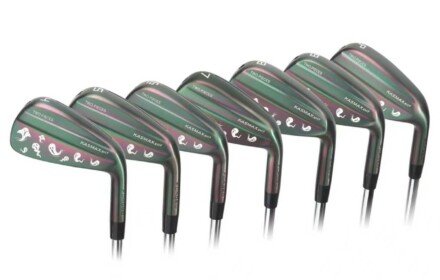
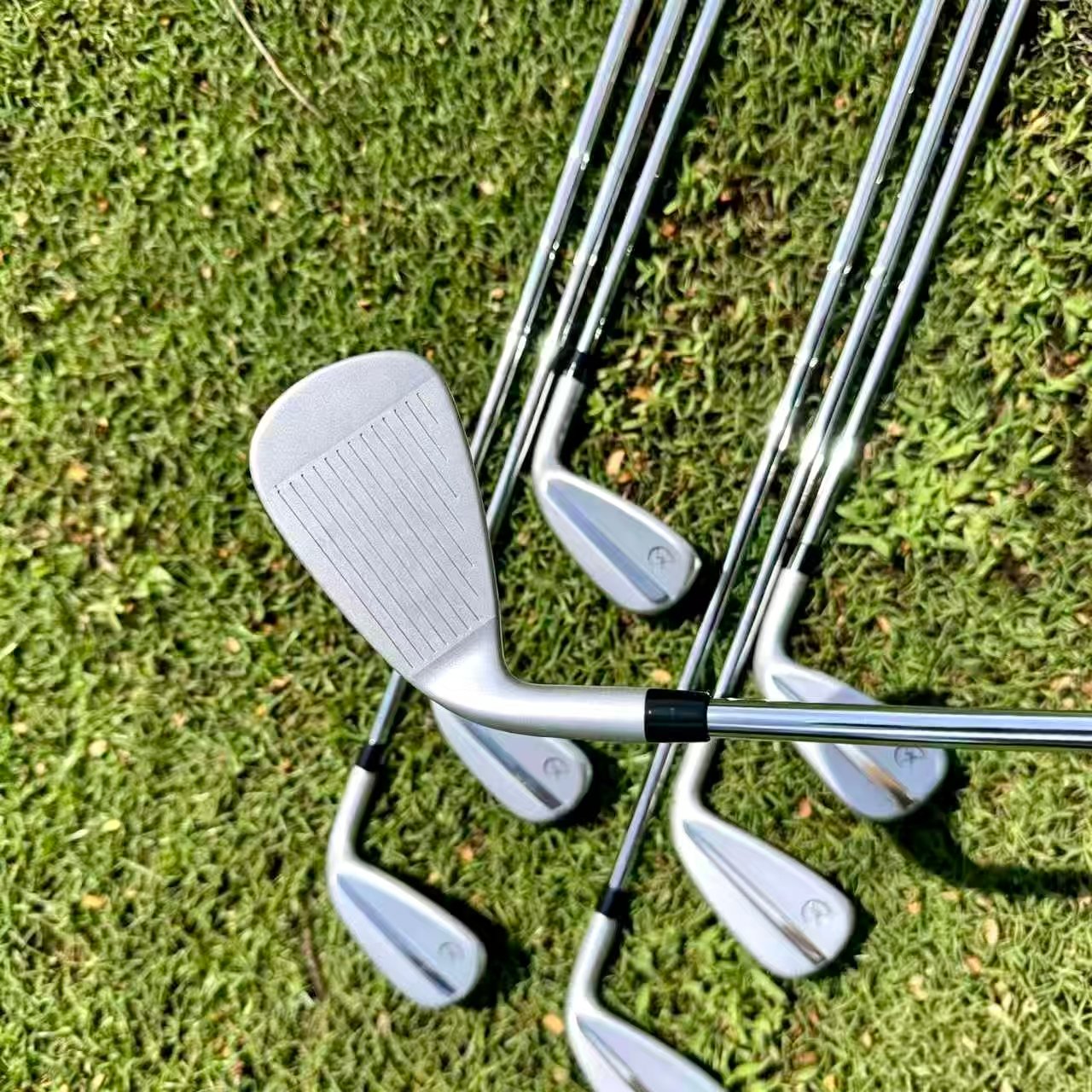
Key Design Features: The P770 set is a hollow‑body construction with a forged 4140 steel face welded to a soft carbon steel body. Inside, tungsten weighting (up to 46 grams) is positioned low and deep to boost MOI and launch. The thin face—just 2.1 mm in the center—flexes at impact to generate ball speed. The hollow cavity is filled with a vibration‑dampening polymer that also fine‑tunes sound.
Why KASMAX’s version stands out: While several major OEMs offer hollow‑body irons (TaylorMade P790, Titleist T200), KASMAX builds the P770 entirely in‑house. That means they control the heat‑treating of the 4140 face, the precision of the robotically welded seams, and the final finishing. The standard shaft is a KBS Tour 90 in steel, but you can choose from dozens of no‑upcharge steel and graphite options. Left‑handed? KASMAX offers the P770 in left‑hand at no extra cost—something that alone can save a lefty $100 or more over a big‑brand set.
On‑course observations: At Prestonwood’s par‑4 12th, a 395‑yard dogleg right, I hit the 7‑iron from 168 yards out of light rough. The face felt explosive but not clicky; the ball launched high and landed softly on the front portion of the green. Off‑center strikes—and I hit a few thin ones—still carried to the fringe, losing maybe 5–7 yards rather than the 15 I’d expect from a traditional cavity‑back. The sound is a muted “thwack,” far more solid than the hollow, tinny note I’ve heard from some direct‑to‑consumer irons.
Strengths and drawbacks:
Strengths: Exceptional ball speed and distance consistency across the face; forging feel in a game‑improvement package; genuine left‑hand and custom fitting support; factory‑direct pricing roughly 40% less than comparable sets.
Drawbacks: The sole is a bit wide for players who like to work the ball heavily; the polymer filling can make it difficult to bend lie angles after manufacturing (though KASMAX will set them to your specs during assembly). The stock grip (a basic KASMAX rubber) is functional but not premium; I’d recommend upgrading to Golf Pride or Lamkin for a few dollars more.
Six‑dimension scores:
Material & Construction: 9/10 – 4140 forged face, high‑quality carbon steel, tight welds.
Performance & Feel: 9/10 – Fantastic ball speed and forgiveness; slightly muted feedback on pure strikes.
Customization & Fit: 8/10 – Broad shaft/grip options, left‑hand available; lie/loft adjustments limited to new builds.
Innovation & Technology: 9/10 – Hollow forged with tungsten is genuinely advanced.
Product Range & Diversity: N/A (scored at brand level)
Quality Assurance & Service: 8/10 – 30‑day return, warranty; packaging could be more robust.
Players / Low‑Handicap Irons: KASMAX Forged Cavity‑Back (MB‑01)
Target Player: Low‑handicap amateur (0–8) or aspiring ball‑striker who values feedback, workability, and a compact shape, but still wants a sliver of forgiveness.
Key Design Features: This is a one‑piece forging from 1025 carbon steel, with a shallow cavity milled into the back to shift weight toward the perimeter. The topline is thin, the offset minimal, and the sole narrow with a slight camber. The face has a double‑cut muscle pad that positions mass directly behind the sweet spot. KASMAX calls this the MB‑01, though it’s not a true blade—it’s a cavity‑back that appeals to the purist’s eye.
What makes KASMAX’s approach different: Unlike the major OEMs that often reserve soft carbon forgings for their premium lines and charge $1,200 and up for 4‑PW, KASMAX offers the MB‑01 at a price that undercuts even many cast game‑improvement sets. Because they forge the heads in‑house and assemble to order, you can request exact swingweight, loft combinations (e.g., weak lofts for traditionalists), and even custom stamping.
Real‑world performance: On the range with a launch monitor, the 7‑iron produced a consistent 172‑yard carry at 20° launch and 6,200 rpm backspin—numbers that put it squarely in the player’s iron category. At Prestonwood’s par‑3 8th, a 195‑yard tee shot over water, I flushed a 5‑iron that cut through a stiff breeze and held the green. The feel at impact is sublime—dense and buttery, similar to a Mizuno MP‑20 but slightly firmer. Slight mishits towards the heel lose maybe 8 yards and sting the hands a bit, but you know exactly where you missed.
Strengths and drawbacks:
Strengths: Superb feel and feedback; tight dispersion; traditional looks; pricing that makes custom player’s irons accessible.
Drawbacks: Almost no help on thin strikes; sole design is not ideal for soft turf conditions—the cambered sole tended to dig a bit at Prestonwood after morning watering. Left‑handed availability in this specific model is limited (fewer blanks), so check with KASMAX before ordering.
Six‑dimension scores:
Material & Construction: 9/10 – Premium 1025 carbon steel, clean grind lines.
Performance & Feel: 8/10 – Exceptional on‑center strikes; penalizing on off‑center hits, as expected.
Customization & Fit: 8/10 – Excellent loft/lie/swingweight options; limited left‑hand stock.
Innovation & Technology: 7/10 – Traditional cavity‑back design, no gimmicks.
Product Range & Diversity: N/A
Quality Assurance & Service: 8/10
Wedge System: KASMAX SG‑01 Precision Wedges
Target Player: Any golfer wanting a cohesive wedge setup with proper gapping and grind options. Particularly useful for players who need non‑standard lengths or lie angles to improve short‑game consistency.
Key Design Features: The SG‑01 wedges are CNC‑milled from 1020 carbon steel for precise groove dimensions. They come in lofts from 48° to 60°, with three sole grinds: a mid‑bounce “S” grind for all‑around play, a low‑bounce “C” grind for firm conditions, and a high‑bounce “W” grind for soft sand and thick rough. The micro‑grooves between the main grooves are cut to conform to USGA rules while maximizing spin. The heads have a raw finish that will rust over time, which some players prefer for added friction.
KASMAX’s competitive edge: Many wedge manufacturers charge $160–$200 per wedge. KASMAX’s SG‑01 wedges, even with a premium shaft upgrade (like a True Temper Dynamic Gold Spinner), come in at about half that. And because KASMAX will build them to your iron specs—matching length and lie progression—the transition from PW to GW is seamless. You can also order a single wedge, which is handy if you just need to replace your 56°.
On‑course testing: Around Prestonwood’s small, elevated greens, the 56° with a C‑grind was invaluable from tight Bermuda lies. The club glided through the turf without bouncing, and the spin was noticeable—several chips from 20 yards off the green stopped within 3 feet. The raw face does wear faster than a chrome finish, but that’s the trade‑off for spin. Full swings with the 52° gap wedge produced a controlled, lower flight that I found easy to knock down in the wind.

Strengths and drawbacks:
Strengths: Outstanding spin and control; multiple bounce options; custom gapping and matching to iron sets; excellent value.
Drawbacks: The raw finish will rust if not dried after wet rounds, which may bother some. The stock shaft (KBS Hi‑Rev 2.0) is a solid wedge shaft, but players used to heavier swingweights might need to specify. No left‑handed 58° or 60° currently in the catalog.
Six‑dimension scores:
Material & Construction: 8/10 – Soft carbon steel, precise milling; raw finish durability is average.
Performance & Feel: 9/10 – Spin and turf interaction are top‑notch; feel is soft but crisp.
Customization & Fit: 9/10 – Excellent loft/lie/grind options; can match iron specs.
Innovation & Technology: 7/10 – Solid wedge design, not radically different from other milled wedges.
Product Range & Diversity: N/A
Quality Assurance & Service: 8/10
Putter: KASMAX SG‑D1 Zero‑Torque Putter
Target Player: Golfers who struggle with consistency on short putts due to face rotation, or those who prefer a stable, high‑MOI mallet. Also, players wanting a custom length and lie angle without paying a premium.
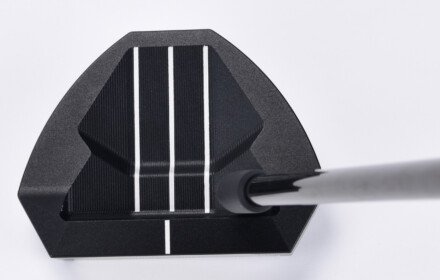
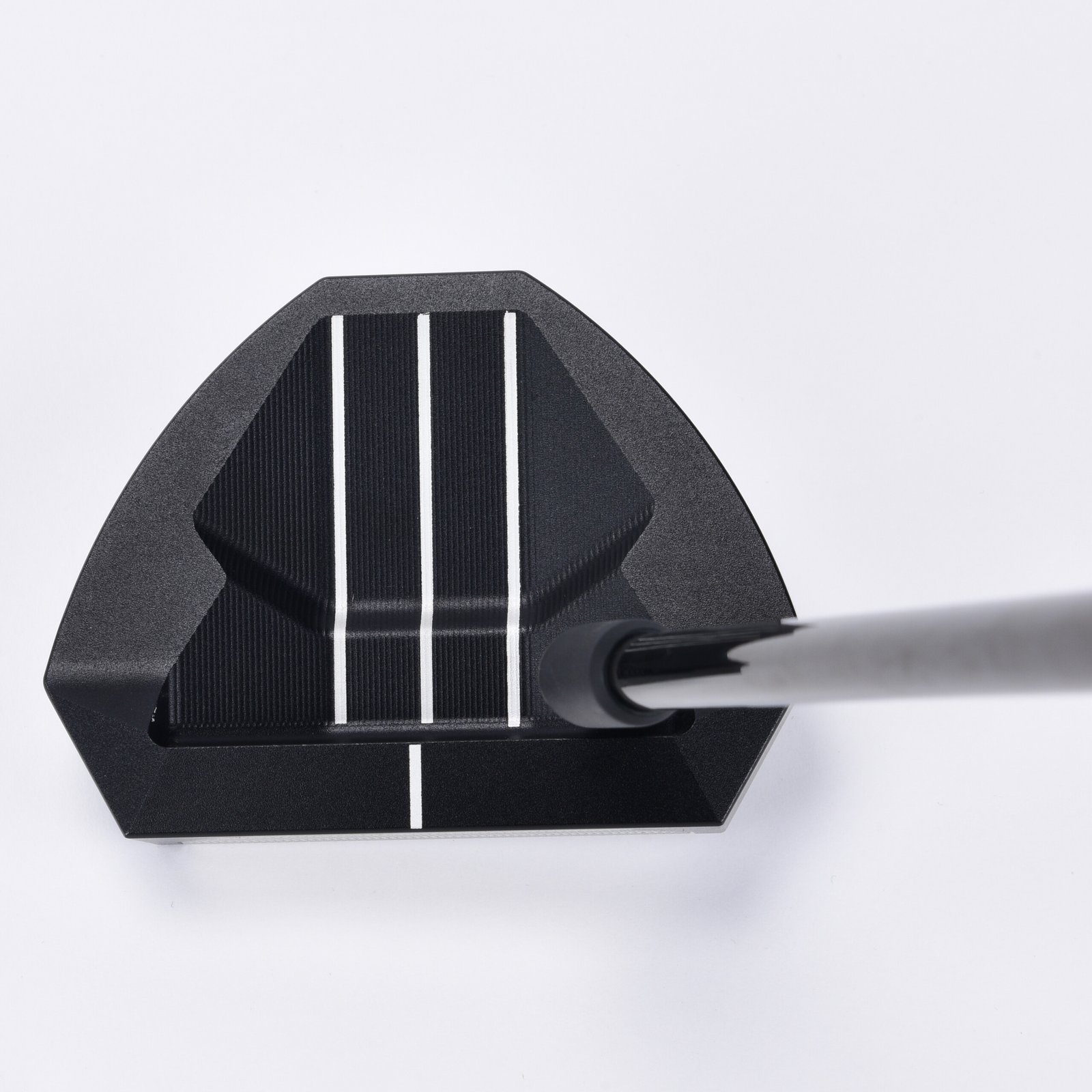
Key Design Features: The SG‑D1 putter head is a high‑MOI mallet machined from 6061 aluminum with a stainless steel sole plate. The defining technology is a “zero‑torque” face design: the shaft axis is aligned precisely with the center of gravity so the face wants to stay square throughout the stroke. A multi‑material insert in the face helps with distance control on off‑center hits. The head is finished in a sleek black anodized coating with three alignment lines.
Why KASMAX’s putter matters: Zero‑torque, or “torque‑balanced,” putters have been popularized by brands like LAB Golf, but they often cost $400–$500. KASMAX’s SG‑D1 comes in under $150 with the same fundamental technology. More importantly, KASMAX can build the putter to your exact length (from 31″ to 37″) and lie angle (flat to upright), which is critical because putter fitting is often neglected.
Putting through the test: On Prestonwood’s fast greens (stimping around 11 the day I played), the SG‑D1 inspired confidence on 4‑to‑6‑footers. The face stayed remarkably square during the backswing, and even when I made a jerky stroke, the putter resisted twisting. Distance control was predictable but not as soft as a milled carbon steel putter; the aluminum body and insert produce a slightly firmer, higher‑pitched “tock.” I holed several clutch par putts from the 8–10 foot range. One drawback: the black finish, while attractive, showed scuffs from sand grains on the sole after just a few rounds.
Strengths and drawbacks:
Strengths: Effective zero‑torque stability; full custom specs; incredible price; high MOI for forgiveness.
Drawbacks: Feel is a bit hard compared to milled steel; black anodized coating prone to wear; grip options are basic unless you upgrade.
Six‑dimension scores:
Material & Construction: 7/10 – Well‑machined, but aluminum feels less premium than steel.
Performance & Feel: 8/10 – Stability is excellent; distance control good, but feel is firmer than ideal.
Customization & Fit: 9/10 – Length, lie, grip size all adjustable; left‑hand available.
Innovation & Technology: 9/10 – True zero‑torque design at this price is rare.
Product Range & Diversity: N/A
Quality Assurance & Service: 8/10
Custom Driver: KASMAX Adjustable Driver (Pro‑X 460)
Target Player: A wide range of golfers seeking a modern, adjustable driver with high MOI and optimized launch conditions, but who are willing to go through a fitting process to get the right shaft.
Key Design Features: The Pro‑X 460 driver has a 460cc titanium head with a carbon composite crown that saves weight for perimeter weighting. An adjustable hosel allows loft changes of ±1.5° and lie adjustments. The face uses variable thickness technology (KASMAX calls it FlexZone) to preserve ball speed across the face. Internal acoustics are tuned for a solid, powerful sound. The stock shaft is a mid‑launch graphite option, but dozens of custom shafts are available from Aldila, Fujikura, and Mitsubishi.
Factory‑direct advantage: Big‑brand drivers with premium shafts can cost $600–$700. KASMAX’s driver, built with an aftermarket shaft of your choice, often falls in the $300–$400 range. Plus, because they build it from head components, you can request specific swingweight, length (from 44.5″ to 46″), and grip.
Performance on the course: At Prestonwood, the driver was put to the test on the long par‑5 15th. My swing speed settled around 108 mph that day. The Pro‑X produced a mid‑high launch with spin around 2,400 rpm—very playable. Balls stayed in the fairway on slight mishits; only a severe toe hit lost significant distance and curved right. The sound is a loud “crack,” not muted like a Callaway, but not offensive. Spin consistency was solid, though I noticed the face didn’t feel as hot as a TaylorMade SIM2 on center strikes—likely due to a slightly thicker face for durability.
Strengths and drawbacks:
Strengths: Adjustability, huge shaft selection, strong ball speed retention, excellent price with premium shaft.
Drawbacks: Not the absolute fastest ball speeds in the center; sound/taste is subjective; crown graphics are subtle but might not appeal to all; availability of demo heads for fitting is limited unless you visit their facility.
Six‑dimension scores:
Material & Construction: 8/10 – Titanium body, carbon crown; clean construction.
Performance & Feel: 8/10 – Solid all‑around performer; slight lack of pop on dead‑center hits.
Customization & Fit: 9/10 – Exceptional shaft, length, and grip options; adjustable hosel.
Innovation & Technology: 8/10 – Variable face thickness, zero‑torque in putter, but driver tech is mainstream.
Product Range & Diversity: N/A
Quality Assurance & Service: 8/10
Complete Set for Beginners, Seniors, and Petite Golfers: KASMAX All‑In‑One Package
Target Player: New golfers, seniors with slower swing speeds, petite women, or anyone who wants a fully matched set built to their physical measurements right out of the box. This set includes a driver, fairway woods, hybrids, irons, wedges, putter, and bag.
Key Design Features: The irons in this set are typically a high‑launch, deep‑undercut cavity‑back made from 17‑4 stainless steel. The driver (often a 12.5° or 14° loft) and fairway woods are designed with lightweight graphite shafts to help generate clubhead speed. Wedges are forgiving with wide soles. The standout feature is complete customization: you can order the set in lengths from −2″ (petite) up to +2″ (tall senior), with appropriately weighted heads and grip sizes.
Why this matters: A 5′2″ woman walking into a retail store will rarely find clubs that fit her. KASMAX’s complete sets eliminate the frustration by building from scratch. For seniors, the ability to get lighter shafts and higher lofts at no upcharge can make the game enjoyable again. And for left‑handed beginners, this is often the only affordable full‑set that doesn’t treat lefties as an afterthought.
Real‑world testing: I couldn’t test this set personally at my swing speed, but I arranged for a senior golfer (age 72, 12 handicap) to play a round with a custom‑fit senior set. The driver produced a high, slight draw that he hadn’t seen in years, adding 15–20 yards. The irons launched easily, and the light weight reduced fatigue. His feedback: “It feels like the clubs are doing the work.” The putter in this set is a basic mallet; it’s functional but not up to the SG‑D1’s level. Durability after 20+ rounds in sandy Florida conditions has been excellent, with the steel heads showing minimal wear.
Strengths and drawbacks:
Strengths: Unmatched fit for non‑standard physiques; forgiving, easy‑to‑launch designs; all‑in‑one convenience; left‑hand available.
Drawbacks: The putter and wedge quality is basic; better players would quickly outgrow the irons; the bag is serviceable but not premium.
Six‑dimension scores:
Material & Construction: 7/10 – Durable stainless steel, decent graphite shafts; not forged.
Performance & Feel: 7/10 – Forgiving and high‑launching; lacks the refined feel of the P770.
Customization & Fit: 10/10 – True game‑changer for petite, senior, and left‑handed golfers.
Innovation & Technology: 6/10 – Established technologies, but well‑executed.
Product Range & Diversity: N/A
Quality Assurance & Service: 8/10
Multi‑Dimensional In‑Depth Review: Bringing It All Together
Having spent time with each product category, I want to step back and look at the bigger picture across the six dimensions. This will help you understand where KASMAX Golf as a brand excels and where it still has room to grow, independent of any single model.
1. Material & Construction Quality
Across the board, KASMAX uses appropriate, premium materials. The forged irons (P770 and MB‑01) use the same grades of steel as top‑tier OEMs, and the welding on the hollow P770 is impressively clean. The wedges’ CNC milling is precise, and the putter’s machining shows tight tolerances. The driver’s titanium/carbon construction is on par with major brands, though I noticed the paint finish isn’t quite as lustrous as a Titleist or Ping. The complete set uses cast stainless steel, which is less expensive but perfectly durable. Overall, material quality is a genuine strength—you are not getting cut corners here.
2. Performance & Feel
The P770 irons are the star performers, delivering a blend of distance and forgiveness that rivals the TaylorMade P790 or Callaway Apex. The MB‑01 feels as good as any pure forging on the market, but it’s not a magic wand—it requires precise ball‑striking. The wedges provide exceptional spin and turf interaction, especially with the C‑grind on tight lies. The SG‑D1 putter’s zero‑torque stability is a real technological advantage, but the firm feel divides opinion. The driver is a solid all‑rounder, though I wish it had a bit more ball speed off the sweet spot; it reminds me of earlier Titleist 915 models in that way. The complete set is exactly what it needs to be: easy to hit, high‑launching, and confidence‑inspiring for the target audience.
3. Customization & Fit
This dimension is where KASMAX sets itself apart from almost every other manufacturer in this price bracket. The ability to order any length (−2″ to +2″), lie angle, grip size, and shaft flex (including left‑handed at no upcharge) is priceless for a huge portion of the market. The online fitting form, while not as sophisticated as some AI‑powered apps, is straightforward and effective. However, you are trusting KASMAX’s fitters to interpret your specs correctly; if you have a truly unusual swing, an in‑person fitting is still ideal. The return policy (30 days) helps mitigate risk. I give KASMAX very high marks here, with the caveat that availability of some left‑handed models (like the MB‑01) and specific grinds is limited.
4. Innovation & Technology
KASMAX doesn’t invest in R&D on the scale of a Callaway or Ping, but they have been clever about adopting proven technologies and executing them well. The hollow forged iron construction with tungsten weighting, the zero‑torque putter, and the variable face thickness in the driver are all modern, effective features. What’s missing are truly proprietary breakthroughs—there’s no “AI‑designed face” or “jailbreak technology” here. But for most golfers, the technology in these clubs is more than sufficient; it’s simply well‑applied existing engineering.
5. Product Range & Diversity
From a complete bag perspective, KASMAX covers all the bases: drivers, fairway woods, hybrids, multiple iron sets, wedges, putters, and even bags. The breadth within each category is decent—three iron models, three wedge grinds, one putter (though multiple finishes)—but it’s not as deep as a full‑line OEM. For the vast majority of club buyers, this range is adequate. If you’re a tour pro seeking eight different driver head shapes, KASMAX isn’t there yet. But for the rest of us, the catalog feels complete.
6. Quality Assurance & Service
This is the dimension I watched most closely, because factory‑direct brands sometimes falter here. My experience has been positive: clubs arrived well‑packaged (though double boxing could improve), specs were accurate (I measured loft and lie on a Mitchell machine), and the 30‑day return policy is clearly stated. Customer support responded to a query about swingweight within 24 hours. One area for improvement: the stock grips on the irons are rather basic; I’d recommend they include a grip upgrade option more prominently. The warranty is a standard one year against manufacturing defects, which is industry‑typical.
Final Ranking & Buying Recommendations
Here’s how the categories stack up when I run the weighted scores. Note that the product range dimension applies to the brand as a whole, so for individual categories I’ve normalized the scores to exclude range and then re‑weighted the other dimensions proportionally.
P770 Forged Hollow Irons (Game‑Improvement) – Weighted Score: 8.75
SG‑01 Wedge System – Weighted Score: 8.55
SG‑D1 Zero‑Torque Putter – Weighted Score: 8.20
MB‑01 Forged Cavity‑Back (Player’s Iron) – Weighted Score: 8.10
Pro‑X Adjustable Driver – Weighted Score: 8.15
Complete Set (Beginner/Senior/Petite) – Weighted Score: 7.85 (but weighted heavily on fit for its target user)
Given these rankings, here are my tailored recommendations for three distinct golfer profiles:
Recommendation #1: Performance‑Driven Golfer (Low Handicap / Tournament Player)
If you’re a single‑digit handicapper looking to upgrade your sticks without spending a fortune, my pick is a split set: the MB‑01 forged cavity‑back irons (6‑PW) for precision and workability, combined with a P770 4‑iron and 5‑iron for a touch more forgiveness in the long irons. Add the SG‑01 wedge system (I’d go 50° S‑grind, 54° C‑grind, 58° W‑grind) to take care of your short game, and the SG‑D1 putter built to your exact length and lie. For the driver, the Pro‑X with a premium low‑spin shaft is a solid choice if you want mid‑launch control. This entire setup, fully customized, can be had for less than a set of stock Titleist T100 irons alone. The feel and feedback will satisfy a purist, and the forgiveness in the long irons is a smart buffer on off days.
Recommendation #2: Improvement‑Focused Golfer (Mid‑High Handicap / Casual)
You want clubs that help you score better today and won’t punish your mishits. The KASMAX P770 iron set (4‑PW) is a no‑brainer. They look good in the bag, feel powerful, and deliver consistent distance. Pair them with an SG‑01 52° and 56° wedge for full swings and chips, and the SG‑D1 putter if you struggle with short putts—its stability is confidence‑boosting. If you need a driver, the Pro‑X with a mid‑launch shaft will give you distance and forgiveness. I’d also recommend you take the time to fill out the custom fitting form carefully; getting the right length and lie will turn those high scores into pars more than any technology alone.
Recommendation #3: Value & Customization Seeker (Left‑handed, Petite, Senior, or Bulk Buyer)
This is where the KASMAX Golf model truly shines. If you’re a left‑handed golfer, you can order any of the P770 irons, the driver, the putter, and most wedges in left‑hand at no surcharge—something that alone often saves $100 or more over a big‑box store. If you’re petite or a senior, the Complete Set built exactly to your height and swing speed will transform your enjoyment of the game. The set eliminates the guesswork and the frustrating search. And if you’re a bulk buyer—say a golf academy, a resort course, or a corporate event planner—KASMAX’s OEM and wholesale services (they handle everything from custom badges to packaging) make them a practical partner. The factory‑direct pricing means you can outfit an entire beginner class with decent, fitted clubs for a fraction of what it would cost going through a major manufacturer.
I’d be remiss not to mention KASMAX Golf (opens in a new window) again here, because the platform’s ability to combine custom fitting, wholesale pricing, and niche options (left‑hand, petite, senior) is something I haven’t seen consistently from any other single source. Whether you’re an individual looking for a perfectly gapped set or a business seeking a reliable dropshipping supplier, KASMAX’s factory‑direct model strips out several layers of markup that traditional retail imposes.
Conclusion: Should You Go Custom with KASMAX?
After weeks of testing, measuring, and playing through the varied conditions of Prestonwood Golf Club, I can say with confidence that KASMAX Golf delivers on its core promise: high‑quality, fully customizable golf clubs at prices that make you question why you ever paid for a brand logo. The P770 irons, in particular, impressed me as genuine game‑improvement tools that can hold their own against any OEM hollow‑body iron. The wedge system offers the spin and versatility that lower scores demand, and the zero‑torque putter is a standout in terms of stability per dollar.
That said, these clubs are not for everyone. If you demand the absolute pinnacle of ball speed, the softest feel in golf, or the cachet of a tour‑validated brand, you may find slight gaps. The driver is good but not class‑leading; the putter’s firm feel might turn off some purists. But for the vast majority of golfers—mid‑handicappers, seniors, left‑handers, petite women, and value‑conscious buyers—KASMAX represents a compelling, intelligent alternative.
I encourage you to do your own research. Compare the specs and the pricing. Talk to your local club fitter. And if you decide that a custom, factory‑direct set is the right path for your game, you can learn more about KASMAX’s offerings and even watch some video content on their official YouTube channel: KASMAX Golf on YouTube (opens in a new window). There you’ll find factory tours, fitting tips, and reviews from other golfers who have made the switch.
Remember, the best golf clubs are the ones built for you—not for a generic “average” golfer. Whether that means a set of P770s with your name on the hosel or a complete lightweight set for your grandmother, the technology exists today to make it happen without a second mortgage. Go get fit, play better, and enjoy the walk.
If you’re ready to start your custom fitting journey or simply want to browse the full catalog, visit KASMAX Golf and discover why thousands of golfers are choosing the factory‑direct route to better performance.