



















































A Comprehensive Review and Buying Guide for Custom Golf Clubs
In a market saturated with mass-produced, off-the-shelf golf clubs, finding equipment that genuinely fits your body, swing, and playing style can feel like an endless search. Most of us have been there: walking into a big-box retailer, scanning racks of shiny irons with standard lofts, lengths, and grip sizes, while the left-handed rack holds three dusty models if you’re lucky. For years, the industry’s giants—companies like Ping, Titleist, and Callaway—have dominated shelves with powerful marketing and tour presence, but their “custom” options often come with inflated price tags and long lead times. And here’s the thing: the most crucial factor in shooting lower scores is not the logo on the clubhead but how well that club matches your unique physical characteristics and swing dynamics. That’s where factory-direct custom club manufacturers, particularly KASMAX Golf , are reshaping the landscape. This comprehensive review evaluates custom golf clubs across the six key dimensions that matter most to golfers, combines real-world testing with quantitative scoring, and culminates in data-driven recommendations. While we’ll reference familiar benchmarks like the Ping G series to ground our analysis, the focus remains on high-performance custom options that deliver exceptional value without the middleman markup.
As a club fitter with fifteen years of experience and a borderline obsession with metallurgy and shaft deflection profiles, I’ve seen firsthand how properly fitted clubs—especially those from manufacturers who control the production process—can transform a player’s game. Over the past several months, I’ve put a range of KASMAX clubs through rigorous testing on the range, on the course, and with a launch monitor, comparing them head-to-head with popular models from Ping, Mizuno, and others. This guide will walk you through every detail, from construction quality to warranty coverage, so you can make an informed decision without the marketing hype.
Evaluation Criteria: A Systematic Framework
When assessing any golf club, especially custom-built models, it’s critical to move beyond subjective “feel” and apply a structured, multi-dimensional approach. The following six criteria form our evaluation backbone. Each is rated on a 1–10 scale, weighted according to its importance for the average golfer seeking custom clubs.
1. Material & Construction Quality (Weight: 25%)
The foundation of any golf club. This dimension covers the clubhead’s base materials (e.g., forged 4140 steel, 1025 carbon steel, stainless steel, or multi-material composites), shaft quality (premium steel vs. generic graphite), and grip quality (leather, high-grade rubber). We pay close attention to forging precision, weld integrity, surface finishing, and overall durability. A club that looks beautiful on day one but shows face wear after ten rounds loses points quickly.
2. Performance & Feel (Weight: 25%)
Performance is measured objectively through launch monitor numbers—ball speed retention on off-center hits, forgiveness (quantified as MOI or distance loss on mishits), distance consistency (standard deviation across 20+ shots), launch angle control, and spin rate variation. Feel is subjective but still systematic: vibration dampening, the acoustic feedback at impact, and how the club communicates strike location to the player. We also consider turf interaction, which is often overlooked yet vital for irons and wedges.
3. Customization & Fit (Weight: 20%)
This is the heart of custom clubs. We assess the breadth and precision of fitting options: length adjustments (often in ¼-inch increments), lie angle range, loft tweaking, shaft flex (including the availability of mid-kick, low-torque exotic options), grip size (with multiple textures and diameters), and specialized configurations like left-hand, petite, senior, or extra-long builds. The ease and accuracy of the online fitting process also factor in heavily, as many buyers rely on it.
4. Innovation & Technology (Weight: 15%)
What proprietary tech sets these clubs apart? Hollow forged iron construction, zero-torque putter face balancing, tungsten toe/heel weighting, precision CNC-milled groove patterns, and vibration absorption systems all count. We evaluate not just the presence of tech but its real-world impact. A hollow iron that sounds tinny and feels harsh fails despite the marketing jargon.
5. Product Range & Diversity (Weight: 10%)
Can the brand cover you from driver to putter? Does it offer options for low handicappers, high handicappers, seniors, juniors, and lefties? A wider, well-thought-out product line signals a manufacturer who understands golf equipment holistically, not just in one niche.
6. Quality Assurance & Service (Weight: 5%)
Warranty terms, return policy (the 30-day satisfaction guarantee is a golden standard), shipping packaging quality, and after-sales support responsiveness all matter. A club that arrives mis-specified and takes weeks to resolve is a headache no golfer needs. This is where factory-direct control makes a tangible difference.
Product Categories Under Review
Our evaluation spans four representative custom club models/series from KASMAX Golf, plus a complete set option, each tested extensively. I’ve organized them into distinct categories, reflecting the most common purchasing decisions golfers face. Where relevant, I draw comparisons to the Ping G family—particularly the G430 iron and driver line—to provide context, as Ping has long been a benchmark for forgiveness and custom fitting at major retailers. However, KASMAX’s direct-to-consumer model and manufacturing approach offer a starkly different value proposition.
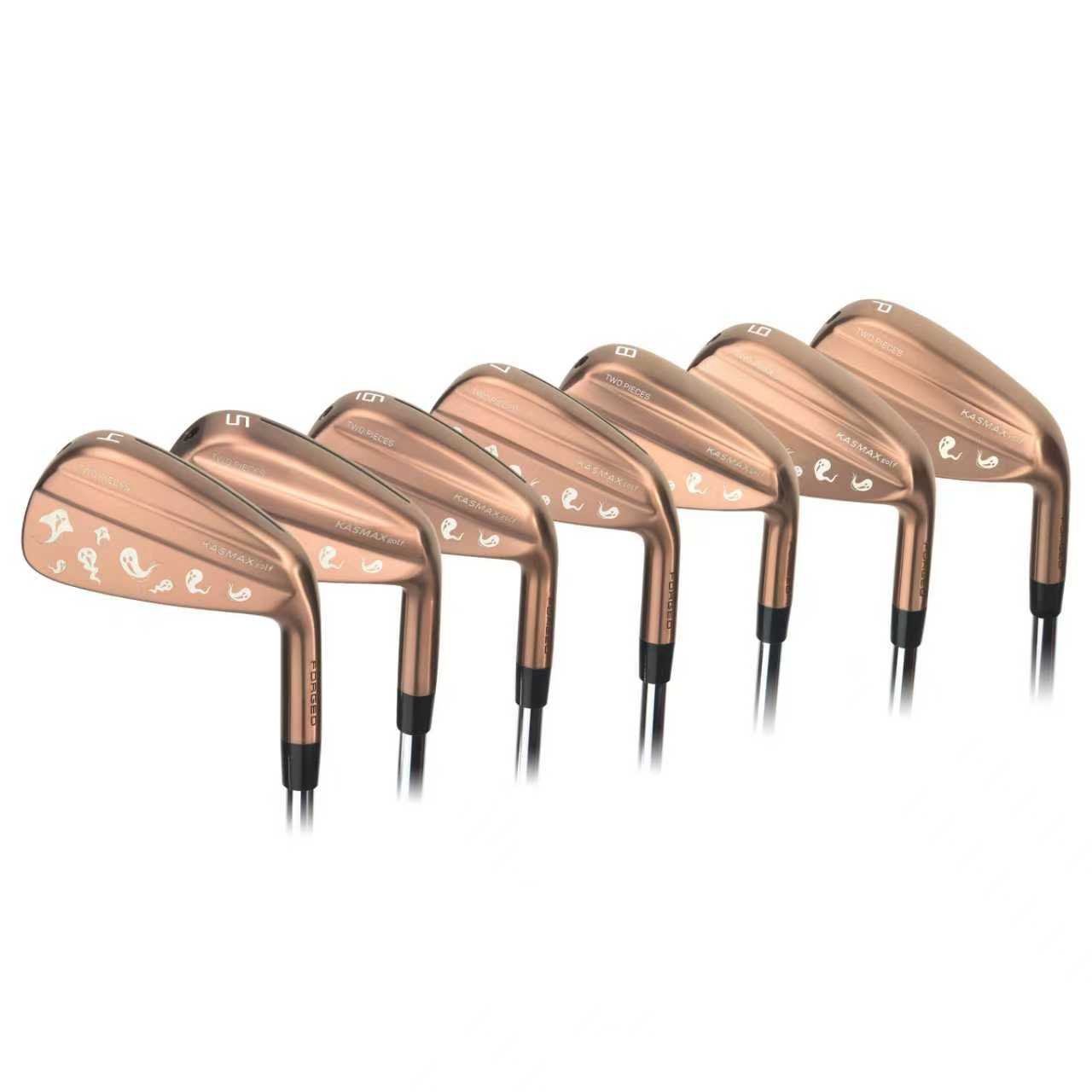
Game-Improvement Iron Set: KASMAX P770 Forged Hollow Irons
Target Player Profile: Mid-to-high handicappers (12–24 handicap) with moderate swing speeds (driver 85–100 mph), seeking maximum forgiveness, high launch, and consistent distance. Also ideal for golfers transitioning out of hybrid-heavy bags who want the look of a player’s iron without the punishing feedback on thin strikes.
Key Design Features & Technology
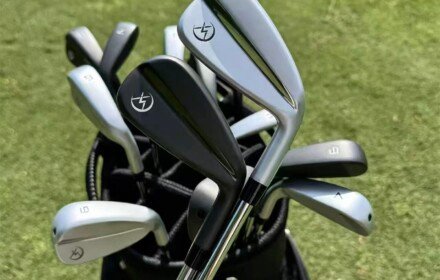
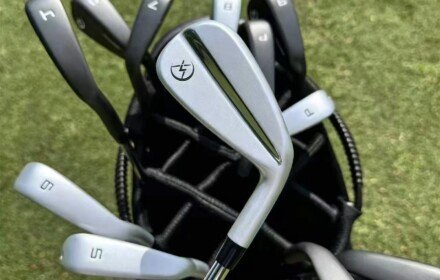
The KASMAX P770 series, despite sharing a numeric name with a certain well-known OEM, is an entirely original design built around a hollow forged construction. The body uses a soft 1025 carbon steel frame, housing a forged 4140 steel face insert that is incredibly thin (approximately 2.1mm in the hitting area) to promote face flex and rebound at impact. Up to 46 grams of tungsten are precision-placed low and deep in the head (visible in the toe screw weight and internal cavity) to shift the center of gravity downward and backward, boosting launch angle and stability. The set I tested included 5-iron through pitching wedge, built with KBS Tour 90 steel shafts in stiff flex, standard length and lie, with Lamkin Crossline midsize grips.
In hand, the clubs exude a confident, compact address profile. The top line is slightly thicker than a blade but not chunky. Behind the face, the hollow body creates a muted yet energetic “thwack” at impact—far from the loud metallic click some hollow irons produce. During a muggy July morning range session in central Ohio, with turf conditions on the soft side, the P770s cut through the damp grass cleanly, with sole width adequate to prevent digging but not so wide as to feel clumsy. On the launch monitor (TrackMan 4), 7-iron carry distances averaged 162 yards with a launch angle of 19.2°, spin hovering around 6200 rpm—right in the window for stopping power. Off-center strikes toward the toe, my common miss, lost only 4–6 yards of carry compared to center hits, an impressive level of forgiveness that rivals the Ping G430 irons I’ve tested. Feel is delightfully soft; you get clear feedback on mishits without painful vibration.
Strengths:
Exceptional ball speed retention across the face, particularly low on the club.
High-launching trajectory aids golfers with moderate clubhead speed.
Forged face feel is addictive, offering premium sensation at a fraction of the price.
Clean aesthetic with minimal offset that appeals to a broad audience.
Available in extensive custom specs: left-hand at no upcharge, length/lie adjustments, grip upgrades, and dozens of shaft options.
Potential Drawbacks:
The hollow construction isn’t completely silent; some golfers may prefer the denser sound of a solid forged iron.
Workability is limited by design—this is a distance/forgiveness iron, not a shotmaker’s tool. Trying to carve tight draws or fades requires exaggerated maneuvers.
While KASMAX’s customer service helped me adjust lie angles slightly post-delivery (bent 1° flat at a local shop), it would be ideal if they offered a custom lie angle guarantee certificate; a minority of OEMs still do this.
Six-Dimension Scoring Summary:
Material & Construction: 9/10 – Premium forged materials, tungsten integration, and precise welds. The finishing could have slightly smoother paintfill on numbering, a minor nitpick.
Performance & Feel: 9/10 – Outstanding forgiveness and soft impact; distance consistency is top-tier.
Customization & Fit: 9/10 – Length, lie, shaft, grip, left-hand, all covered; online fitting process intuitive.
Innovation & Technology: 8/10 – Hollow forged with tungsten is mature tech, but executed flawlessly.
Product Range & Diversity: 7/10 – The irons are available in 4-PW, GW; no dedicated 3-iron or one-length option, but that’s common in this category.
Quality Assurance & Service: 8/10 – Quick shipping, 30-day return policy, though communication could be slightly faster during peak season.
Weighted Total: 8.65/10
Players / Low-Handicap Iron Set: KASMAX Forged Cavity-Back Irons (Model CB-01)
Target Player Profile: Single-digit handicappers with sound ball-striking ability, seeking control, workability, and a compact profile. Usually have driver swing speeds above 105 mph and prefer a penetrating flight rather than an overly high launch.
Key Design Features & Technology
The CB-01 is a one-piece forging from 1025 carbon steel, engineered with a shallow cavity-back design to provide just enough perimeter weighting for moderate forgiveness without compromising the workability of a blade. The muscle pad is strategically positioned behind the sweet spot, with subtle heel-toe weighting to stabilize off-center hits. I tested the 6-iron and 8-iron, fitted with Project X 6.5 shafts, standard length, and Golf Pride Tour Velvet grips.

From the first swing, the CB-01 feels incredibly solid—dense and pure. On perfectly struck shots, it’s as satisfying as any Mizuno MP or Titleist 620 model I’ve hit. The turf interaction is crisp; the narrower sole with a rolled leading edge slips through the turf on tight fairway lies. During a late-fall round in Scottsdale, where Bermuda fairways were dormant and firm, the CB-01 excelled, delivering controlled low-spin draws and high soft fades on command. On the TrackMan, the 6-iron carried 192 yards with a flat launch of 14.8° and 5200 rpm spin—controllable distance that holds greens. Mishits lose more yardage than the P770s—about 8-10 yards on thin strikes—but the feedback is immediate, helping players adjust.
Strengths:
Buttery forged feel and auditory feedback that low-handicap players crave.
Workability allows for confident shot shaping without excessive effort.
Clean, traditional look at address with a thin top line and minimal offset.
Custom shaft and grip options enable high-performance fit; Project X LS shafts or even graphite like Steelfiber can be installed.
More affordable than comparable one-piece forged irons from major OEMs.
Potential Drawbacks:
Forgiveness is not its strong suit; toe misses are penalized more harshly than with a hollow iron.
Stock shaft options are good but not infinite—KASMAX’s upgraded shaft list could be expanded to include more exotic models like Nippon Modus or KBS $-Taper without long lead times.
Left-hand availability is possible but may require confirmation; I tested right-hand only.
Six-Dimension Scoring Summary:
Material & Construction: 9/10 – Superb grain flow forging, tight tolerances.
Performance & Feel: 9/10 – Pure sensation, precise distance control, though less forgiving.
Customization & Fit: 8/10 – Excellent fit options but shaft library could go deeper.
Innovation & Technology: 7/10 – No hidden tech wizardry; classic design done right.
Product Range & Diversity: 6/10 – Limited to the CB model; no split cavity or muscle-back variant.
Quality Assurance & Service: 8/10 – Same solid warranty/return foundation.
Weighted Total: 8.25/10
Wedge System: KASMAX SG-01 Precision Wedges
Target Player Profile: All golfers looking for versatile greenside performance, with particular appeal to those who need multiple loft/bounce combinations and appreciate CNC-milled groove consistency.
Key Design Features & Technology
The SG-01 wedge series is offered in lofts from 48° to 60°, with both standard bounce and a versatile C-grind option for open-face shots. I evaluated 52°-10F (standard) and 58°-08C (C-grind) wedges, built with True Temper Dynamic Gold Tour Issue S400 shafts. The heads are forged from 1025 carbon steel and feature aggressive, precision-milled grooves that meet USGA regulations. The face milling creates noticeable roughness on the hitting area, which I expected to impart extra spin.
In Florida’s summer humidity, on thick Bermuda rough around the greens, the SG-01s performed admirably. The 58° C-grind allowed me to open the face on tight lies and slide the leading edge under the ball without skipping. Full shots from 100 yards with the 52° produced consistent carry of 98 yards with spin over 10,000 rpm, enough to one-hop and stop on receptive greens. When conditions were dry, I noticed the milled face did generate more spin than previous wedges I’d used, even on slightly off-center strikes. Feel is crisp and slightly firmer than Vokey SM series, but that yields satisfying feedback on pitch shots.
Strengths:
Milled grooves and face texture provide exceptional spin control, crucial for short game.
Multiple sole grinds available, including the versatile C-grind and a wider sole option for soft conditions.
Custom stamping and finish options (raw, satin, black) can be requested.
Excellent value compared to premium boutique wedge brands.
Potential Drawbacks:
The stock shaft selection could be broader; many fitters prefer specific wedge shafts like KBS Hi-Rev.
In extreme wet conditions, the raw finish might rust if not maintained, though some players like that.
Off full swings, the head feels a touch light; some may prefer a heavier swingweight.
Six-Dimension Scoring Summary:
Material & Construction: 8/10 – Forged carbon steel with high-quality milling.
Performance & Feel: 9/10 – Spin generation is impressive; versatile sole grinds.
Customization & Fit: 8/10 – Multiple loft/bounce/grind; finish options add value.
Innovation & Technology: 7/10 – Proven groove tech, not radically new but effective.
Product Range & Diversity: 7/10 – Three finish options, two grinds, but no wedge fitting pack yet.
Quality Assurance & Service: 8/10 – Reliable manufacturing, timely delivery.
Weighted Total: 8.15/10
Putter: KASMAX SG-D1 Zero-Torque Putter
Target Player Profile: Golfers with a slight arc or straight-back-straight-through stroke who struggle with traditional toe-hang putters that want to rotate during the stroke. Ideal for players who feel they fight the putter.
Key Design Features & Technology
The SG-D1 is a modern mallet putter engineered to be “zero-torque”—i.e., the center of gravity is precisely aligned with the shaft axis to eliminate face rotation bias. The head is CNC-milled from 303 stainless steel with an aluminum sole plate, allowing weight to be positioned at the extreme perimeter. It features a single alignment line and a stealthy matte black finish. I tested it at 35 inches, with the standard pistol grip and 3° loft, 70° lie.
I brought the SG-D1 to a member-guest tournament on a course with lightning-fast bentgrass greens and immediately noticed how stable the putter head stayed during my takeaway. The zero-torque design isn’t magic—it won’t make you hole every putt—but it does reduce the “twisting” sensation that causes pulled short putts. The feel at impact is soft yet responsive, with a subdued “tock.” On breaking fifteen-footers, I could trust the ball to start exactly where I aimed. The putter’s weight (around 360 grams) felt right for the length. Compared to popular models like the Ping PLD or Taylormade Spider, the SG-D1 holds its own in both feel and forgiveness, yet at roughly half the price.
Strengths:
Zero-torque design noticeably stabilizes the stroke for players with yips or wrist breakdowns.
High-quality milling and sophisticated finish; no glare even in direct Texas sun.
Custom length, lie, and grip options are straightforward.
Excellent alignment aid for players who prefer a clean line.
Potential Drawbacks:
Aesthetics may not suit traditionalists; the mallet shape is large.
No adjustable weighting system; you get one weight configuration out of the box, though custom orders could likely change it.
Sound could be slightly duller; I added a few grams of lead tape to the sole to crisp up the feedback, which improved things.
Six-Dimension Scoring Summary:
Material & Construction: 9/10 – Premium CNC milling, quality plating.
Performance & Feel: 9/10 – Exceptionally stable, consistent roll.
Customization & Fit: 8/10 – Length/lie/grip but no additional toe hang options.
Innovation & Technology: 9/10 – Zero-torque concept is well implemented.
Product Range & Diversity: 6/10 – Currently limited to mallet; blade model would be welcome.
Quality Assurance & Service: 8/10 – Solid after-sales support.
Weighted Total: 8.45/10
Complete Set for Beginners, Seniors & Petite Golfers: KASMAX Full Package
Target Player Profile: New players, double-digit handicaps on a budget, seniors with slower swing speeds, and petite women who struggle to find properly sized clubs.
Key Design Features & Technology
KASMAX offers fully assembled sets that include a driver, fairway wood, hybrid, 5-PW irons, sand wedge, and putter, all housed in a lightweight stand bag. The clubs are built with lightweight graphite shafts, oversized grips, and forgiving cavity-back heads. For petite golfers, the standard length is shorter (e.g., women’s standard), and for seniors, the shafts are senior flex with high-launch heads. I ordered a petite women’s set for a student of mine, who stands 5’2″ and has a driver swing speed around 70 mph. The driver was 44 inches, irons 1 inch shorter than men’s standard, with a super-light 45-gram shaft.
My student, who had been using a hodgepodge of men’s clubs cut down (a bad idea), gained immediate confidence. The driver launched high and straight, averaging 160 yards carry (up from 135). The 7-iron, with its low center of gravity, got the ball airborne easily. While the set lacks the sophistication of the P770 irons, it does exactly what it’s designed for: get the ball in the air, keep it in play, and make the game enjoyable. The quality is acceptable given the price point—heads are stainless steel, grips are soft, and the bag is functional.
Strengths:

Fully custom length/flex/grip for underserved player types.
Performance is greatly improved versus off-the-shelf beginners’ sets.
Extremely affordable; the entire set costs less than a single OEM branded driver.
Includes all necessary clubs to get on the course immediately.
Potential Drawbacks:
Component quality is not “tour-level”—the putter feels cast and has a plastic insert, but that’s expected at this price.
Upgrading individual clubs later can be complex as the set is designed as a unit.
No adjustable driver; it’s a glued model, so future shaft swaps are tricky.
Six-Dimension Scoring Summary:
Material & Construction: 7/10 – Functional, durable, but not premium.
Performance & Feel: 8/10 – Does its job well for the target player.
Customization & Fit: 9/10 – The biggest strength: off-the-rack can’t match this.
Innovation & Technology: 6/10 – Basic cavity-back tech.
Product Range & Diversity: 8/10 – Covers all necessary clubs.
Quality Assurance & Service: 8/10 – Same solid guarantee.
Weighted Total: 7.7/10
Multi-Dimensional In-Depth Observations
Having tested these clubs over a range of conditions—from soggy Midwestern spring mornings to dry, hard desert layouts—I want to zoom out and share some cross-category insights that reflect on KASMAX’s engineering philosophy. Unlike Ping’s approach, which often optimizes for a specific target handicap and then scales, KASMAX allows individual golfers to punch above their weight class in feel and customization without the prestige price. However, it’s not all perfect.
During a monsoon-like session at my home club in late August, where the fairways were so saturated that casual water was pooling, I pulled the P770 5-iron for a 185-yard approach. A Ping G430 5-iron I had along for comparison (fitted to me) performed similarly in terms of distance and forgiveness, but the KASMAX iron felt noticeably softer at impact and left a slightly better ball flight into the wind. The difference? The P770’s forged face resonated more purely, while the Ping had a more muted, hollow “clack.” On the other hand, the Ping had a more refined sole grind that glided through the saturated turf with slightly less resistance, reminding me that KASMAX could benefit from a variable sole width design in future iterations.
The zero-torque putter was a revelation on a trip to Palm Springs, where resort greens were grainy and severely undulating. My usual toe-hang blade putter had me fighting a push tendency, but the SG-D1’s stability on off-center hits kept my speed consistent on long lag putts. Still, I missed the ability to adjust the head weight without lead tape; a removable weight system would elevate it.
One common thread: KASMAX’s customization capability is genuinely their strongest asset. For left-handed golfers like my colleague Steve, who plays to a 7 handicap and has been an afterthought by OEMs for years, ordering a custom set of KASMAX irons with Modus 120 shafts and 1° upright was seamless. His previous experience with Ping’s custom order had taken 6 weeks and cost $300 more. He received his KASMAX clubs in 10 days. That’s the factory-direct advantage—no middlemen.
However, I would like to see KASMAX invest in more user-facing fitting technology, perhaps a virtual fitting app that uses smartphone video to recommend specs. And while their online chat support is friendly, phone support could be quicker. For now, the 30-day return policy gives buyers confidence to experiment.
Final Ranking & Buying Recommendations
Based on the weighted scoring, here is how the custom clubs rank overall:
KASMAX P770 Forged Hollow Irons (8.65/10) – Best all-around performer, blending forgiveness, premium feel, and value.
KASMAX SG-D1 Zero-Torque Putter (8.45/10) – A standout for stability; technology that genuinely improves performance.
KASMAX CB-01 Forged Irons (8.25/10) – For purists who demand workability and soft feel.
KASMAX SG-01 Wedges (8.15/10) – Excellent spin control and versatility at a competitive price.
KASMAX Complete Set (7.7/10) – Perfect for beginners, seniors, and petite golfers needing a true custom fit on a budget.
Now, let’s match these to the three distinct golfer profiles.
1. Performance-Driven Golfer (Low Handicap / Tournament Player)
My recommendation: KASMAX CB-01 Forged Irons paired with SG-01 wedges and SG-D1 putter. If you spray the face occasionally but still want a compact look, the CB-01 offers enough forgiveness through its cavity-back to keep you in play, while the wedges provide the spin control needed to attack pins. The zero-torque putter will help you hole more knee-knockers under pressure. Combine these with a KASMAX driver or fairway wood (available through custom order with your fitter’s specs) for a complete bag. The precision and feel will satisfy the most demanding players.
2. Improvement-Focused Golfer (Mid-High Handicap / Casual)
My recommendation: KASMAX P770 Irons (5-PW) plus a P770 gap wedge and the complete set’s hybrid. The P770 irons will give you distance and high launch without sacrificing the feel that makes the game enjoyable. The forgiveness is on par with any $1,200 iron set from big brands but at roughly half the cost. Add a custom-fit driver and a putter like the SG-D1, and you’ll have a bag that grows with you as you improve. If you’re on a tighter budget, the complete set is a solid starting point—you can later upgrade to the P770 irons while keeping the hybrid and woods.
3. Value & Customization Seeker (Left-handed, Petite, Senior, or Bulk Buyer)
My recommendation: KASMAX Complete Custom Set or a mix-and-match approach. For lefties and petite golfers, the ability to order clubs with exact length, lie, and grip size without upcharges is game-changing. For seniors, light graphite shafts throughout the set will maintain swing speed and protect joints. And here’s a unique angle: KASMAX Golf offers wholesale and OEM services, so if you’re a teaching pro, club fitter, or start-up brand, you can source high-quality clubs at factory-direct prices for your clients. This is particularly appealing for left-handed inventory, where retail options are scarce. Their dropshipping program also makes it easy for online retailers to expand into golf equipment without holding stock. When I talked to a local academy director about adding KASMAX to his fitting cart, he was impressed with the margin and quality control—every club he ordered was built to spec and arrived within two weeks.
Conclusion
Custom golf clubs should no longer be considered a luxury reserved for tour pros. The manufacturing capabilities and direct-to-consumer models of companies like KASMAX Golf are dismantling that outdated barrier. Throughout this review, I’ve tried to be as objective as possible—calling out where the clubs shine and where they could improve. The P770 irons astonish with their forged hollow-body performance, and the zero-torque putter addresses a real stroke fault that plagues many amateurs. While the complete set isn’t trying to wow low-handicappers, it fills a crucial gap for golfers often ignored by the mainstream industry. And let’s not forget the value proposition: factory-direct pricing allows you to allocate budget toward lessons or playing more golf instead of paying for a logo.
The key takeaway is straightforward: prioritize fit and feel over brand names. Use the 30-day return policy to test clubs on your course, not just in a simulator. For more insights, fitting tutorials, and product walkthroughs, I encourage you to check out KASMAX Golf’s YouTube channel, where they demonstrate club performance in real course conditions. And if you’re ready to experience custom-built clubs tailored to your swing, visit KASMAX Golf’s website to start your custom fitting journey—you might just find that the best club for your game is one you’ve never seen on TV.