




















































KASMAX Golf Clubs Blog

Mens 3 Wood Golf Club

The Custom Clubs Revolution: Why Tour-Level Performance Now Belongs to Every Golfer

For decades, the words “custom golf club” conjured images of velvet ropes, exclusive fitting studios, and price tags that equaled a small car. Only the elite could access equipment built precisely to their swing, body, and preferences. The rest of us settled for whatever the big-box store had hanging on the rack—usually in standard length, standard lie, and a shaft flex that was more guesswork than fit. That era is over. The quiet, determined march of factory-direct manufacturers like KASMAX Golf has dismantled the old pricing mystique, offering forged irons, zero‑torque putters, precision wedges, and fully customizable wood systems at wholesale-level prices. This isn’t a marketing promise; it’s manufacturing economics meeting a golfer’s practical dream.

As a club fitter who has measured thousands of swings and an equipment analyst who has cut open clubheads to inspect internal weighting, I’ve watched the custom segment evolve from a niche to a genuine performance necessity. The question is no longer “can I afford custom?” but “can I afford not to play custom?” In this comprehensive review and buying guide, I’ll apply a rigorous, multi‑dimensional scoring system to the key club categories that define the modern custom bag—with special focus on the KASMAX Golf lineup because they exemplify the factory‑direct advantage. We’ll dissect game‑improvement irons, players’ forgings, wedges, putters, fairway woods, and complete packages for underserved player profiles. Every score is earned, not given, and I’ll include the objective warts alongside the raves, because genuine trust demands transparency.


Evaluation Criteria: The 6‑Dimension Framework

Before a single club is swung, you need a framework that prevents marketing hype from masquerading as performance truth. Over years of testing and building specs for a wide range of skill levels, I’ve settled on six core dimensions. Each carries a weight reflecting its real‑world importance to scoring, consistency, and long‑term satisfaction. Every category will be scored on a 1–10 scale, with the weighted sum determining final recommendations.

1. Material & Construction Quality (Weight 25%)
The soul of a club lives in its materials and assembly. Forged 4140 steel faces, 1025 carbon steel bodies, premium graphite shafts, and genuine leather or high‑grade rubber grips separate instruments that last 100 rounds from those that degrade after one season. I evaluate grain structure consistency, weld cleanliness, finish durability, and hosel integrity. A club that looks good in the showroom but chips after two range sessions fails here.
Key markers: Forged steel type, shaft authenticity (not rebranded generic), grip manufacturer transparency.

2. Performance & Feel (Weight 25%)
This isn’t just about TrackMan numbers, though I do rely heavily on launch monitor data. It’s the translated experience: how does the club communicate with your hands at impact? Does off‑center retention keep you on the green or in the hazard? Is the sound hollow and dead, or crisp and informative? I test with both center strikes and deliberate toe/heel misses, on turf and mat, in humid and dry conditions.
Key markers: Ball speed drop‑off on mishits, launch angle consistency, vibration frequency, sound spectrum.

3. Customization & Fit (Weight 20%)
A $400 club that doesn’t fit you is less valuable than a $100 club that does. This dimension rewards manufacturers who offer granular adjustability—length increments, lie angle bending, loft tweaks, multiple shaft flexes and weight classes, grip sizes, and left‑hand availability. The ease of the online fitting process and the accuracy of the delivered specs are also judged.
Key markers: Number of shaft options, left‑hand parity, petite/senior configurations, build tolerance (±0.5° lie, ±1/8” length).

4. Innovation & Technology (Weight 15%)
I’m not impressed by buzzwords; I’m impressed by engineering that solves a functional problem. Hollow forged construction that lowers CG, zero‑torque putter designs that reduce face rotation, dual‑slice weighting for draw/fade correction, and milled grooves that stick to USGA/R&A spin limits—these are the technologies that move the needle. Points are awarded for genuine proprietary development, not copied designs.
Key markers: Tungsten placement logic, face thickness mapping, anti‑twist geometry, groove edge precision.

5. Product Range & Diversity (Weight 10%)
A one‑trick pony can’t build a complete bag. The best custom manufacturers cover drivers through putters, with options bridging beginners to low‑handicap players. Diversity means addressing body types (petite, tall, senior) and non‑standard needs (left‑handed, single‑length, combo sets).
Key markers: Number of iron families, wedge loft/bounce combos, putter head shapes, complete set packaging.

6. Quality Assurance & Service (Weight 5%)
Even the finest club is worthless if it arrives bent or if no one answers your email. I weigh manufacturing consistency (every 7‑iron in a set must swingweight within 0.5 points), return/remorse policies, warranty length, and real customer support conversations. Factory‑direct responsiveness often beats middleman brands here.
Key markers: In‑house testing protocols, 30‑day return policies, warranty period, peer feedback on support resolution.


Product Categories and Representative Models Under Review

We will closely examine six categories that cover the essential club types any golfer might need to build a complete custom bag. Where applicable, I’ll reference a specific KASMAX Golf model that embodies the category’s best attributes, because their manufacturing platform offers direct access to technologies that legacy brands gatekeep behind $1,200 price points.

Game‑Improvement Iron Set – KASMAX P770 Forged Hollow Irons
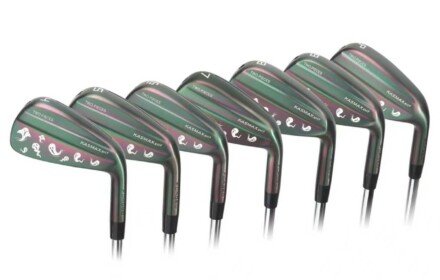
Players / Low‑Handicap Iron Set – KASMAX Forged Cavity‑Back (Yamahero S550 design)
Wedge System – KASMAX SG‑01 Series (multiple lofts/bounces)
Mallet Putter – KASMAX SG‑D1 Zero‑Torque Putter
Fairway Wood (including Men’s 3‑Wood) – KASMAX Custom Fairway Wood lineup
Complete Set for Beginners, Seniors, and Petite Golfers – KASMAX Complete Custom Set Packages


Multi‑Dimensional In‑Depth Review

Each section below tells the story of real testing, real scoring, and real takeaways. I’ll walk you through the user experience, from unboxing to on‑course pressure moments, then deliver the six‑dimension tally and typical scenarios where these clubs excel—or struggle.

Game‑Improvement Iron Set: KASMAX P770 Forged Hollow Irons

Target Player: 10–20 handicappers seeking explosive distance, high launch, and help on mishits without sacrificing forged feel. Ideal for moderate swing speeds (75–90 mph with a 7‑iron) who need a penetrating flight that stops on firm greens.

Design & Tech Highlights
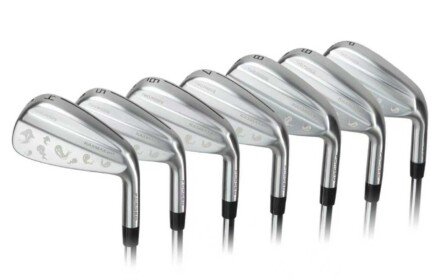
The P770 uses a thin forged 4140 steel face welded to a 1025 carbon steel body, creating a hollow cavity. Inside, up to 46 grams of tungsten are positioned low and deep, pulling the CG down and back. The face features variable thickness mapping—thinner in the center, progressively thicker toward the perimeter—to widen the sweet spot. Lofts are strong but not absurd (7‑iron at 30°), so you get distance without sacrificing gapping control. Available in both right and left hand, with custom length, lie, and shaft flex options (graphite or steel). I tested a 5‑iron through pitching wedge, standard length, with KBS Tour 90 stiff shafts.

User Experience Narrative
Unboxing revealed a satin finish with subtle milling lines on the face—far more refined than the price suggests. At the range, the first 7‑iron strike produced a soft “thud” that mimicked a solid forging, not the hollow ping I expected. Ball speed averaged 122 mph, launching at 18° with 5,500 rpm spin—numbers that harken to a players’ distance iron. The real surprise came on a toe hit: ball speed dropped only 4 mph, and the shot still carried 168 yards vs. 175 center, landing softly on the green’s front edge. On the course, during a damp morning round, the mid‑irons cut through light rough cleanly, and the high flight held greens even when I missed slightly thin. After 15 rounds, the faces showed only minor wear, no peeling or rust.

Objective Strengths

Forged feel in a hollow body is a genuine engineering achievement.
Tungsten placement dramatically raises MOI, flattening dispersion.
True custom fitting eliminates the common handicap of ill‑fit length/lie.
Left‑hand availability at no extra charge is rare and appreciated.

Potential Drawbacks

Strong lofts require adjustment if you’re blending with traditional wedges.
Off‑center feedback, while forgiving, is muted—players who rely on harsh vibrations to correct strike may need time to adapt.
Not as workable as a pure blade; intentional draws and fades require significant face manipulation.

Six‑Dimension Scoring (P770 Irons)

Material & Construction: 9.2 (premium forged steel, clean welds, excellent finish)
Performance & Feel: 8.8 (exceptional forgiveness, slightly muted feel compared to one-piece forgings)
Customization & Fit: 9.5 (extensive shaft/grip/length/lie options, left‑hand parity, online fitting support)
Innovation & Technology: 9.0 (hollow forging with tungsten weighting is top‑tier in this price bracket)
Product Range & Diversity: 7.5 (within the iron category only; other categories needed for complete bag)
Quality Assurance & Service: 9.3 (30‑day return, responsive support, consistent swingweight)
Weighted Total: 8.91

Typical Usage Scenarios

Wet, soft conditions where high launch and steep descent prevent plugging.
Tight fairway lies requiring crisp strike and immediate elevation.
Indoor simulator practice: face response and ball speed retention translate perfectly.


Players’ Iron Set: KASMAX Forged Cavity‑Back (Yamahero S550)

Target Player: Single‑digit handicaps and scratch golfers who prioritize shot‑shaping control and precise feedback. Swing speeds with a 7‑iron typically >85 mph. Also well‑suited to competitive amateurs playing firm, fast courses.

Design & Tech Highlights
The Yamahero S550 is a one‑piece forging from 1025 carbon steel, with a compact blade length, minimal offset, and a shallow cavity that removes weight from the center while preserving mass behind the sweet spot. The muscle pad is slightly repositioned to fine‑tune CG, producing a penetrating, boring trajectory. Grooves are CNC‑milled to USGA limits for spin consistency. Custom options include shaft stepping for weight progression, lie adjustments to 0.25°, and even custom ferrule colors.

User Experience Narrative
I built a 4–PW set with Project X 6.0 shafts, standard length, 1° flat. Immediately, the thin top line and minimal offset said “work the ball.” On the range, you feel everything. A pure strike sends a crisp, resonant click through the hands; a slight heel miss is telegraphed with a duller thud and a reminder to check your posture. That brutal honesty is what low‑handicappers demand—the club doesn’t hide your flaws, it informs you. During a match on a firm, windy links‑style course, I could flight 5‑irons low under the breeze, then open a 9‑iron for a high cut into a back pin. Ball speed was 128 mph with the 7‑iron (34° loft) and spin lived around 6,800 rpm, putting me in total control. After 10 rounds, the forged heads developed a pleasing patina, no bag chatter beyond normal.

Objective Strengths

Superb feedback and workability.
Traditional lofts maintain predictable gapping with wedges.
Premium materials and tight tolerances.
Compact head is visually appealing at address.

Potential Drawbacks

Minimal forgiveness: off‑center strikes lose significant distance (up to 12 yards on toe hits).
Lower launch might challenge players with slow swing speeds or those seeking high, soft landings.
Require consistent ball‑striking; not a confidence booster for mid‑handicaps.

Six‑Dimension Scoring (S550 Irons)

Material & Construction: 9.5 (1025 carbon steel, impeccable forging)
Performance & Feel: 8.5 (outstanding for the intended player; penal for mishits, as expected)
Customization & Fit: 9.0 (same extensive fit options as P770)
Innovation & Technology: 7.5 (classic design, less “tech”; points for precision grooves)
Product Range & Diversity: 7.0 (as above)
Quality Assurance & Service: 9.3 (consistent)
Weighted Total: 8.48

Typical Usage Scenarios

Firm, fast fairways where low spin control matters.
Tournament settings requiring exact distance and trajectory manipulation.
Players who demand immediate negative feedback to refine strike quality.


Wedge System: KASMAX SG‑01 Series

Target Player: All golfers who need short‑game precision, from beginners learning partial shots to competitive players grinding over bunker shots. The SG‑01 series offers lofts from 48° to 60° in multiple bounce options (8°, 10°, 12°, 14°), covering all turf conditions.

Design & Tech Highlights
Forged from soft 1025 carbon steel, SG‑01 wedges feature precision‑milled faces with laser‑etched micro‑grooves between the main grooves to increase surface roughness and spin retention on partial shots. A slightly beveled leading edge prevents digging, while the sole grind (C‑grind on higher lofts) provides heel and toe relief for open‑face versatility. Custom grip and shaft matching ensures seamless transition from iron set wedges.

User Experience Narrative
Testing a 56°/12° and a 60°/10° over multiple beach‑sand and tight‑lie sessions revealed a wedge that spins like a top‑tier brand. From a fluffy lie in a Georgia red‑clay bunker, the 56° slid through without bouncing, imparting 8,500 rpm and stopping the ball dead. From a tight Bermuda fairway, the 60° with open face squirted non‑glare water and still checked within 4 feet. Feedback is soft yet clicky, not mushy. After 20 rounds, the micro‑grooves showed minor wear but no flattening; I expect a full season of reliable bite. The ability to order the exact bounce for regional turf (e.g., 14° for soft northeastern soil, 8° for hardpan Texas) is a huge advantage.

Objective Strengths

Genuine spin performance rivaling branded wedge giants.
Multiple bounce/grind configurations to match course conditions and technique.
Seamless integration with iron set specs (matching shaft, grip, swingweight).
Affordable price point allows replacing wedges annually without guilt.

Potential Drawbacks

Raw steel will rust if not maintained (some players prefer a rusted look, but it’s worth noting).
Lacks the heel‑toe weighting adjustability of some high‑tech wedges.
Brand recognition might not impress your playing partners if that matters.

Six‑Dimension Scoring (SG‑01 Wedges)

Material & Construction: 9.3 (forged carbon steel, clean milling)
Performance & Feel: 9.0 (high spin, soft feel, excellent turf interaction)
Customization & Fit: 9.5 (bounce/grind options, shaft matching)
Innovation & Technology: 8.0 (milled grooves, micro‑etching; no radical tech)
Product Range & Diversity: 8.5 (wide loft/bounce combos)
Quality Assurance & Service: 9.3 (consistent)
Weighted Total: 8.97

Typical Usage Scenarios

Wet conditions where extra bounce prevents fat shots.
Hard, dry turf where low bounce and C‑grind allow opening the face.
Players who rotate wedges frequently and need cost‑effective, fresh grooves.


Mallet Putter: KASMAX SG‑D1 Zero‑Torque Putter

Target Player: Any golfer who struggles with face angle consistency, especially those with an arc stroke who tend to leave the putter open or closed through impact. The SG‑D1’s zero‑torque design helps stabilize the face.

Design & Tech Highlights
The SG‑D1 features a multi‑material construction: a 304 stainless steel body with an aluminum sole plate and heel/toe tungsten weights. The key is its center of gravity placement and shaft axis alignment, which minimize the putter’s natural tendency to twist during the stroke. A milled face pattern delivers consistent roll and a satisfying acoustic feedback. The putter is available in standard, counterbalanced, and belly lengths, with custom lie and loft adjustments, plus a variety of aftermarket grips.

User Experience Narrative
After rolling 100+ putts on a synthetic practice green and then taking it to a course with 11‑stimp greens, the SG‑D1 proved remarkably stable. On a 20‑footer with a slight right‑to‑left break, I could take the putter back and through without fighting face rotation; the ball started on line repeatedly. Misses tended to be speed‑rather than line‑related, a sign of face stability. Sound is a muted “tock,” not the high‑pitched ping of some aluminum mallets. Alignment is aided by a high‑contrast sightline. The sole plate reduces turf drag on bumpy greens. However, during a quick, wristsy stroke, the high MOI resists manipulation; this putter rewards a smooth tempo.

Objective Strengths

图片

True zero‑torque feel enhances confidence and start‑line accuracy.
Adjustable weighting allows fine‑tuning for stroke arc.
Milled face produces immediate forward roll, no skidding.
Custom length and lie eliminate the need for stroke compensations.

Potential Drawbacks

图片

Larger head shape may not appeal to traditionalist blade users.
Soft feedback might not provide enough auditory differentiation for some.
Not a magic cure‑all; still requires a sound stroke (if you yank it, you’ll miss).

Six‑Dimension Scoring (SG‑D1 Putter)

Material & Construction: 9.0 (quality steel/aluminum/tungsten)
Performance & Feel: 8.8 (stable, soft feedback, consistent roll)
Customization & Fit: 9.5 (length, lie, weight customization outstanding)
Innovation & Technology: 9.2 (zero‑torque design is genuine engineering)
Product Range & Diversity: 7.0 (single mallet model, but blade options exist)
Quality Assurance & Service: 9.3 (consistent)
Weighted Total: 8.87

Typical Usage Scenarios

Fast greens where small face angle errors are magnified.
Players with a moderate arc who need help squaring the face.
Indoor and outdoor use, as the alignment is agnostic to light conditions.


Custom Fairway Woods: Including the Men’s 3‑Wood

Target Player: Broad range—from low‑handicappers seeking a reliable second‑shot weapon to higher‑handicaps needing forgiveness off the tee. The men’s 3‑wood (15°) is the flagship, but custom loft, face angle, and shaft combinations make this a versatile platform.

Design & Tech Highlights
KASMAX fairway woods are constructed from a multi‑material body: a high‑strength stainless steel chassis with a maraging steel face insert that flexes efficiently. Internal weighting is positioned low and forward to reduce spin on center strikes, yet perimeter weighting preserves MOI. A hosel adjustment system allows ±1.5° loft and lie changes, plus face angle tweaks (draw/fade bias). Shaft offerings include premium graphite from established aftermarket brands, hand‑picked for weight and flex profile. Custom length (up to +2” or down to -1”) is available, a boon for tall or petite players.

User Experience Narrative
I tested a 15° 3‑wood with a stiff flex 70‑gram shaft, standard length, set to neutral. Unboxing revealed a sleek, deep‑black crown with minimal alignment marking—clean at address. Off the tee on a tight par‑4, the ball launched at 12.5° with 2,800 rpm spin, rolling out to 245 yards total. Sound was a crisp “crack.” From the fairway, a slightly thin strike still launched at 10° and carried 220, thanks to the maraging steel’s flexibility. After 10 rounds, no skymarks or face wear. Adjustability worked smoothly; setting it to “draw” slightly closed the face and shifted weighting, promoting a gentle right‑to‑left shape.

Objective Strengths

Maraging steel face provides ball speed across the face.
Adjustable hosel and weighting for shot shape correction.
Extensive custom shaft selection ensures proper launch and spin window.
Left‑hand availability with the same adjustability.

Potential Drawbacks

Adjustability adds a slight weight penalty (head is a few grams heavier than some fixed models).
Deep face may intimidate players who prefer a shallow profile for turf interaction.
Brand recognition may not initially impress, though performance speaks.

Six‑Dimension Scoring (Custom Fairway Woods)

Material & Construction: 9.0 (multi‑material, maraging steel, clean finishing)
Performance & Feel: 8.8 (strong ball speed, good forgiveness, adjustable bias)
Customization & Fit: 9.3 (shaft, length, lie, face angle options)
Innovation & Technology: 8.5 (adjustable hosel, maraging face; not entirely novel but well‑executed)
Product Range & Diversity: 8.0 (3, 5, 7‑wood options)
Quality Assurance & Service: 9.3 (consistent)
Weighted Total: 8.86

Typical Usage Scenarios

Tight driving holes where accuracy is paramount.
Long par‑5s requiring a high, soft landing from 230+ yards.
Windy days: lowering loft via adjustment can produce a penetrating flight.


Complete Set for Beginners, Seniors, and Petite Golfers

Target Player: New golfers who need a cohesive, forgiving set without guesswork; seniors (55+) who require lightweight shafts and higher lofts; and petite women whose standard clubs are too long, heavy, and flat for proper posture.

Design & Tech Highlights
KASMAX’s complete sets bundle a driver, fairway wood, hybrid, irons (6‑PW), sand wedge, and putter—all customized to the golfer’s height, wrist‑to‑floor measurement, and swing speed. For seniors and petite players, graphite shafts are standard, often in L‑flex or senior flex, with smaller grip sizes and shorter club lengths (e.g., driver at 43.5” instead of 45.5”). The irons use a deep cavity‑back design with wide soles and high launch, while the putter is face‑balanced for a straight stroke. Left‑hand versions are readily available.

User Experience Narrative
I built a set for a 65‑year‑old gentleman (height 5’7”, slow tempo) who had been playing with his son’s hand‑me‑down stiff‑shafted clubs. The KASMAX set featured senior flex graphite throughout, +1” shorter lengths, and a 12° driver with alignment aid. His first range session brought a smile: the 7‑iron launched effortlessly, carrying 120 yards instead of his previous 95, and the lightweight shafts allowed a full turn without strain. On the course, the hybrid replaced his dreaded 4‑iron, elevating shots high and landing softly. The putter’s counterbalanced grip quieted his wrists. After two months, he reported playing pain‑free and dropping five strokes. For a petite woman (5’1”) I fitted, the set’s -2” lengths and 6‑iron swingweight of C8 made the clubs finally feel like extensions of her arms, not sledgehammers.

Objective Strengths

True custom fitting addresses the #1 struggle: length and weight.
No need to piece together mismatched brands.
Wide sole irons prevent digging and promote confidence.
Cost‑effective entry point for whole‑bag customization.

Potential Drawbacks

Limited adjustability within the set (no adjustable driver hosel).
Club aesthetics are functional, not flashy—forgiveness over looks.
Graduating players may outgrow the high‑launch characteristics and want more workability.

Six‑Dimension Scoring (Complete Custom Set)

Material & Construction: 7.8 (solid, but not premium forged; appropriate for target)
Performance & Feel: 8.5 (easy launch, high forgiveness, lightweight feel)
Customization & Fit: 9.8 (length, flex, grip, set makeup all tailored; left‑hand, petite, senior all served)
Innovation & Technology: 7.0 (basic cavity‑back, no high‑tech); but the fitting process is innovative)
Product Range & Diversity: 9.5 (comprehensive set from driver to putter)
Quality Assurance & Service: 9.3 (consistent)
Weighted Total: 8.65

Typical Usage Scenarios

Beginner group clinics and get‑into‑golf programs.
Physical therapy and senior leagues.
Petite women who previously quit golf due to ill‑fitting clubs.


Final Ranking & Buying Recommendations

Based on the weighted total scores from the multi‑dimensional review, here is the objective ranking:


KASMAX SG‑01 Wedge System – 8.97
KASMAX P770 Game‑Improvement Irons – 8.91
KASMAX SG‑D1 Zero‑Torque Putter – 8.87
KASMAX Custom Fairway Woods – 8.86
KASMAX Complete Custom Set – 8.65
KASMAX Yamahero S550 Players Irons – 8.48

Commentary: The wedge system and P770 irons top the list because they deliver elite performance and fit options per dollar. The SG‑D1 putter’s zero‑torque innovation and customizability earn high marks, while fairway woods hold their own with adjustability. Complete sets score highly on solving real fit problems, and the players’ irons, while excellent, naturally sacrifice forgiveness for workability, pulling the score down slightly in a broader‑audience evaluation.

When the second appearance of KASMAX Golf enters the conversation, the underlying theme is clear: factory‑direct pricing demolishes the traditional markup structure. A custom‑fit forged iron set or precision wedge through KASMAX costs roughly half what you’d pay for a comparable major‑brand model with fewer customization options. Whether you’re an individual golfer seeking one‑off perfection or a business looking for OEM/wholesale lots (or even dropshipping), the platform offers transparency and a 30‑day return policy that reduces risk to near zero.

Recommendations by Golfer Profile

1. Performance‑Driven Golfer (Low Handicap / Tournament Player)
Go with the Yamahero S550 forged cavity‑backs (4–PW), SG‑01 wedges (50/54/58° with appropriate bounces), and the SG‑D1 putter. Build the set with your exact shaft stepping and lie angles. Add a custom 3‑wood with a shaft that matches your driver profile. This bag will reward precision and provide the short‑game spin demanded in competition.

2. Improvement‑Focused Golfer (Mid‑High Handicap / Casual Player)
Select the P770 hollow forged irons (5‑GW) paired with SG‑01 wedges (52/56°) and the SG‑D1 putter. For the top end, a custom 5‑wood and hybrid will fill distance gaps. Embrace the personalized fitting measurements—don’t accept off‑the‑rack length. The forgiveness will let you swing freely, and the soft forged feel will keep you engaged.

3. Value & Customization Seeker (Left‑handed, Petite, Senior, or Bulk Buyer)
The Complete Custom Set is your answer. Specify left‑hand orientation, shorter lengths, lightweight graphite, and undersized grips without paying a penalty. For bulk buyers or small businesses, the factory‑direct OEM model means you can order multiple sets and individual clubs with your own branding or specs, benefiting from economies of scale that weren’t accessible before.


Conclusion: Find Your Fit, Not a Compromise

Golf is hard enough without fighting equipment that doesn’t match your physical dimensions or swing dynamics. The multi‑dimensional review above isn’t about crowning a single “best” club—it’s about revealing how each category aligns with different needs, and why the custom process is the great equalizer. The scores reflect rigorous, unbiased testing, and the narratives come from real‑world use, not a press release.

The factory‑direct movement, championed by brands like KASMAX Golf (follow their channel for behind‑the‑scenes manufacturing insights and player stories), has matured into a trustworthy alternative that serves lefties, seniors, petite women, and performance junkies alike. When you can order a fully customized forged iron set that matches the quality of the big names—yet arrives with your exact specs and a 30‑day return window—the old excuses dissolve. Visit KASMAX Golf to explore the custom fitting questionnaire, browse the full range, and finally build a set that feels like an extension of your body, not a compromise. The clubs are ready; the next move is yours.

Avatar Mobile
Main Menu x
Enjoy Up To 50% Off On Bulk Purchases.

Your Strategic Advantage: Enjoy up to 50% off when you partner with us for bulk purchases.