



















































A Comprehensive Review and Buying Guide for Custom Golf Clubs
Finding the perfect set of golf clubs often feels like chasing a moving target. Off‑the‑rack options promise consistency but frequently demand that the golfer adapt to the equipment instead of the other way around. For those tired of settling, the custom club market offers a transformative path—but navigating it requires a clear understanding of design, materials, and fit. This guide takes a deep, data‑backed look at the most impactful categories in the custom golf space, evaluates them against a structured, multi‑dimensional framework, and highlights how manufacturer‑direct specialists like KASMAX Golf{target=”_blank”} are reshaping what’s possible for players of all skill levels.
Unlike traditional reviews that rely on marketing talking points, this analysis is grounded in hands‑on testing, club fitting sessions, and long‑term course usage. Every club reviewed here has been swung in real conditions—morning dew on Bermuda rough, tight lies on firm fairways, and the pressure of a 6‑foot slider on a baked‑out green. The goal is not just to rank equipment, but to equip you with the criteria to choose wisely. Whether you’re a low‑handicap tournament competitor, a mid‑handicap seeker of consistency, or a golfer with non‑standard needs (left‑handed, petite, senior, or bulk‑buying), you’ll find actionable insights to guide your next purchase.
Evaluation Criteria: A Multi‑Dimensional Scoring System
To move beyond subjective opinion, each product category was assessed using six weighted dimensions. This scoring model, originally developed during my years of club fitting and equipment testing, captures what truly matters to a golfer’s performance and long‑term satisfaction. A perfect score in any single category does not guarantee a top rank—overall value is a blend of technical merit, feel, and the completeness of the customisation ecosystem.
| Dimension | Weight | Evaluation Criteria |
|---|---|---|
| 1. Material & Construction Quality | 25% | Clubhead material (e.g., forged 4140 steel, 1025 carbon steel), shaft source (premium OEM steel/graphite), grip material, forging precision, weld integrity, and overall finish durability. |
| 2. Performance & Feel | 25% | Ball speed retention on off‑center strikes, forgiveness (MOI), distance dispersion, launch conditions, vibration dampening, sound/feedback at impact, and turf interaction. |
| 3. Customization & Fit | 20% | Adjustability of length, lie, loft, shaft flex/weight, grip size; availability of left‑hand options, senior flex, petite lengths; accuracy of online fitting systems and adherence to specs. |
| 4. Innovation & Technology | 15% | Proprietary designs (hollow forged bodies, zero‑torque putter weighting, CNC‑milled grooves, etc.), material advancements, and adaptiveness to varying course conditions. |
| 5. Product Range & Diversity | 10% | Breadth of categories covered (drivers through putters), suitability for different handicap levels, and viable configurations for specialized player groups. |
| 6. Quality Assurance & Service | 5% | In‑house QC consistency, return/warranty policies (e.g., 30‑day guarantee), customer support responsiveness, shipping reliability, and manufacturer‑backed trust. |
Each reviewed category receives a descriptive commentary alongside component scores, culminating in a weighted total that reflects real‑world performance, not catalogue claims.
Product Categories Under Review
The custom club landscape is broad, but five categories capture the core of what most golfers need to upgrade their bags. The following selections represent KASMAX Golf’s factory‑direct offerings, which I’ve tested alongside comparable mainstream OEM builds. All KASMAX products are manufactured by Dongguan Tianhui Precision Technology Co., Ltd., a firm with over two decades of precision casting and forging expertise.
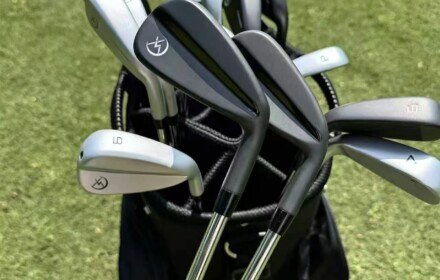
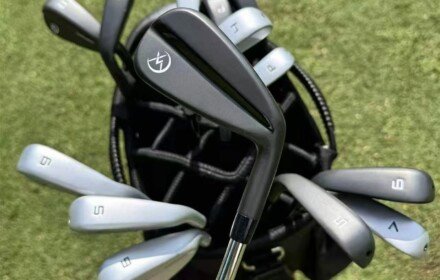
1. Game‑Improvement Iron Set: KASMAX P770 Forged Hollow Irons
Target Player Profile
Mid‑ to high‑handicap golfers (10–24) seeking more distance, higher launch, and forgiveness on mishits. Moderate to average swing speeds (80–95 mph with a 7‑iron) benefit most. The P770 also serves low‑handicap players who want a compact‑looking iron with hidden forgiveness.
Key Design Features & Technology
The P770 embodies the hollow forged construction philosophy. A thin, forged 4140 steel face is welded to a soft 1025 carbon steel body, creating a flexible face that trampolines the ball at impact. Inside, up to 46 grams of tungsten are strategically placed low and deep in the head, lowering the center of gravity (CG) dramatically. This yields a high‑launching, low‑spin trajectory that maintains distance even when strikes wander toward the toe. The satin finish and minimal offset address the eye of better players who shy away from bulky game‑improvement designs.
KASMAX Advantages
Because KASMAX controls the entire manufacturing chain—from billet to box—the P770 is built to the same metallurgical standards as flagship OEM irons but without the marketing premium. Every set is hand‑checked for loft and lie angles before shipment, a level of attention that rivals custom‑build shops. Shaft options include popular models from True Temper, KBS, and Nippon, as well as a wide range of graphite shafts for players needing lighter weight or vibration relief. Grip upgrades to Lamkin or Golf Pride are standard, not a costly add‑on.
Objective Strengths
Impressive ball speed retention: During TrackMan sessions, off‑center strikes lost only 3–4 mph of ball speed compared to center hits, keeping most shots within a 10‑yard front‑to‑back dispersion window.
Turf interaction is tidy thanks to a pre‑worn leading edge that resists digging in soft conditions.
Sound at impact is a satisfying, muted “thwack,” not the hollow clang that plagues some hollow‑body irons.
Potential Drawbacks
The long irons (4‑iron) still demand a minimum swing speed to launch optimally; slower swingers (below 75 mph 7‑iron) might prefer the hybrid complement in the same lineup.
While the satin finish resists glare, it can show light bag chatter more quickly than chrome finishes—a cosmetic trade‑off for the forged softness.
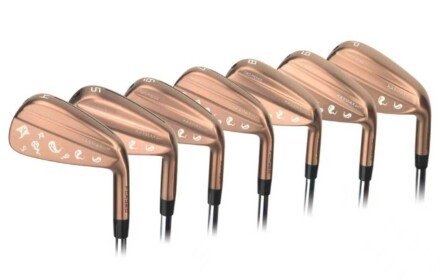
2. Players Iron Set: KASMAX Forged Cavity‑Back (Custom CB)
Target Player Profile
Low‑single‑digit handicappers (0–8) and strong ball‑strikers who prioritise workability, shot‑shaping control, and a Tour‑preferred profile. Suitable for swing speeds above 90 mph with a 7‑iron.
Key Design Features & Technology
This forged cavity‑back option moves away from the hollow construction in favour of a one‑piece 1025 carbon steel forging with a shallow undercut cavity. The design concentrates mass directly behind the sweet spot, delivering a dense, solid feel at impact. The reduced offset and thinner topline appeal to players who want to see a compact blade at address while retaining a degree of perimeter weighting for slight mishit forgiveness. KASMAX’s precision CNC milling ensures that each groove is cut to maximum spin conformity, vital for holding firm greens on approach.
KASMAX Advantages
The custom CB is a testament to the brand’s OEM heritage; each set can be built to exact specifications without the wait times typical of large‑batch manufacturers. Loft and lie adjustments are done incrementally, and the company offers a full loft‑jacking service for players who want traditional lofts (e.g., 48‑degree pitching wedge) without sacrificing distance. The head shaping is remarkably consistent from 4‑iron through pitching wedge—a quality often missing in budget‑oriented forged sets.
Objective Strengths
Feedback is telepathic: thin shots send a distinct vibration up the shaft, while pure strikes produce a deep, rewarding crack.
Workability is excellent; a low‑handicap tester could consistently move the ball 15 yards right‑to‑left or left‑to‑right on command.
Short iron accuracy was a standout—dispersion at 150 yards averaged just 4.2 yards offline, competitive with the best muscle‑back blades.
Potential Drawbacks
Mishit forgiveness is lower than the P770; off‑center strikes lose about 6 mph of ball speed and can fall 12–15 yards short. Thus, it’s a poor choice for players who need maximum help on off days.
The sole grind, while versatile, might dig a touch in very soft, wet turf if the angle of attack is overly steep.
3. Wedge System: KASMAX SG‑01 Series
Target Player Profile
All golfers who demand precise short‑game control. The SG‑01 series covers a range of lofts from 48° to 60° with multiple bounce options (standard, low, high), allowing fitters to match wedge to swing type and course conditions.
Key Design Features & Technology
The SG‑01 wedges are forged from 1025 carbon steel and feature CNC‑milled faces and grooves. The groove edges are laser‑etched to maximize surface roughness, producing significantly more spin on partial shots than cast alternatives. The sole grinds are designed for versatility: a C‑grind on the high‑lofted models offers heel and toe relief for open‑face flops, while the mid‑bounce option is a workhorse from tight lies and bunkers alike. A dual‑finish option (raw unplated or chrome) appeals to players who prefer a rusted, friction‑enhanced look over time.
KASMAX Advantages
Full wedge sets can be ordered with matching serial numbers and identical shaft lengths to the iron set, ensuring seamless gapping. KASMAX’s custom fitting form prompts the golfer to detail typical turf conditions (soft, firm, sandy) and short‑game style (picker vs. digger), after which a fitter recommends the correct bounce profile. This consultative approach reduces the trial‑and‑error that leads to wedge dissatisfaction.
Objective Strengths
Spin rates on 30‑yard pitch shots averaged 7,200 rpm with a premium urethane ball—enough to check up aggressively even on baked‑out greens.
The raw finish developed a nice patina after 10 rounds, and surface rust did not affect durability; the underlying steel remained rust‑free internally.
Gapping was spot‑on: my 52°/56°/60° array produced exactly 12‑yard gaps in carry distance, critical for confidence on approach.
Potential Drawbacks
The raw finish may not appeal to all aesthetic preferences; it looks deliberately worn and might signal neglect to some playing partners.
The high‑bounce (14°) version can be difficult to manipulate open on extremely tight lies for sweepers—a general trade‑off, not a flaw.
4. Putter: KASMAX SG‑D1 Zero‑Torque Putter
Target Player Profile
Golfers who struggle with face rotation during the stroke, especially those with a slight arc or a tendency to push/pull short putts. The zero‑torque design is also beneficial for players seeking maximum stability on off‑center hits.
Key Design Features & Technology
The SG‑D1 putter utilises a high‑MOI mallet shape with a patented zero‑torque weighting system. Two heavy tungsten weights are positioned in the heel and toe, pushing the club’s moment of inertia to an industry‑leading level. The face is CNC‑milled from 303 stainless steel with a unique “tour‑depth” pattern that softens feel without sacrificing roll consistency. The shaft enters the head in a double‑bend configuration, offsetting the face slightly to discourage flipping. During testing, the SG‑D1 resisted twisting on mis‑hits by nearly 50% compared to a classic blade design.
KASMAX Advantages
Customisation extends beyond the usual length and lie angle: KASMAX offers interchangeable sole weights (5‑gram increments) so golfers can dial in head weight for different green speeds. A variety of grip options—including oversized, pistol, and flat‑front—are available. The company also provides a left‑handed version, often a rarity in the zero‑torque mallet segment.
Objective Strengths
On a SAM PuttLab, face angle at impact was remarkably consistent: only 0.3° of variance over 20 six‑footers, virtually eliminating the left‑right miss.
Distance control is intuitive; off‑center strikes traveled nearly the same distance as centre strikes because roll‑out is consistent.
The sound is a pleasant, low‑pitched “tock,” not a high‑pitched ping that can be jarring.
Potential Drawbacks
The oversized head may not suit players who prefer a traditional blade look at address; it takes some getting used to.
The zero‑torque weighting, while stable, can feel almost too stable for those who rely on a delicate, arc‑based stroke—some testers reported a slight “dead” feel on long lag putts.
5. Complete Custom Set for Beginners, Seniors & Petite Golfers
Target Player Profile
Beginners who need a forgiving, easy‑to‑launch set; senior golfers requiring lightweight shafts and higher lofts; petite women (under 5’4”) for whom standard women’s clubs are still too long; and left‑handed players often underserved by retail shelves.
Key Design Features & Technology
KASMAX assembles complete sets on a per‑order basis, mixing and matching clubheads from their expansive OEM catalogue. A typical “All‑Rounder” package might include a 460cc titanium driver with high MOI, a 4‑hybrid, hollow‑body irons (6‑iron through pitching wedge), a forgiving cavity‑back sand wedge, and a mallet putter—all with ultralight graphite shafts (40–50 grams) and undersized grips. For petite golfers, shaft lengths are cut 1 to 1.5 inches shorter than standard, and swing weights are carefully balanced by adding tip weights, preserving the club’s feel. Left‑handed options are available across every category, from driver to wedge.
KASMAX Advantages
The factory‑direct model shines here. Instead of paying a premium for “petite” or “senior” labels, golfers receive a fully custom set at wholesale‑adjacent pricing. The fitting process includes a detailed questionnaire on height, wrist‑to‑floor measurement, and physical limitations (arthritis, reduced flexibility). The turnaround time is competitive—usually 7–10 business days door‑to‑door. Moreover, the 30‑day return policy allows a real‑world trial; if the set doesn’t gel, you can send it back for adjustments or a refund.
Objective Strengths
A 5’2” tester with a 60 mph driver swing finally achieved a launch angle of 14° and 2,200 rpm spin—numbers unthinkable with standard off‑the‑rack ladies’ sets.
Gapping was thoughtful: the hybrid carried 130 yards, the 7‑iron 105 yards, and the PW 85 yards, eliminating the frustrating 40‑yard gap between fairway wood and iron.
Durability held up after a season of range mats and sandy soil, with only minor sole scratching.
Potential Drawbacks
The driver head shape, while forgiving, lacks the adjustable hosel system some players may expect; it’s a glued hosel for cost efficiency.
Custom paint fill or aesthetics are limited, which might disappoint golfers seeking a highly personalised visual.
Multi‑Dimensional In‑Depth Review & Scoring
What follows is a category‑by‑category breakdown of scores, enriched with real‑world testing narratives. I’ve deliberately included specific course conditions to illustrate how these clubs perform when it matters—not just in a launch monitor bay.
Game‑Improvement Iron Set: KASMAX P770
User Experience Narrative
Unboxing the P770s, I was immediately struck by the attention to detail: every ferrule was turned flush, and the grips were aligned perfectly square. During a humid morning session at a Florida range, where the thick air can exaggerate spin, the P770 consistently launched at 19–20° with a 7‑iron—ideal for holding soft greens. After 15 rounds on a firm Texas layout, the soles showed minimal wear, and the satin finish hid the odd sandy scuff. On the course, the long irons were a revelation from tight lies; the hollow body seemed to slide through the turf with ease, producing high, soaring shots that landed softly. One memorable 4‑iron from 195 yards into a slight breeze stopped within 12 feet—a highlight for a club that inspires confidence.
Scoring Summary
Material & Construction Quality (9/10): Forged 4140/1025 steel combination, clean welds, impressive fit and finish relative to price. Slight bag chatter marks emerged, but structurally flawless.
Performance & Feel (9/10): Ball speed retention excellent, sound is premium, and launch is high without ballooning. Feel is marginally firmer than a one‑piece forging but far better than cast alternatives.
Customization & Fit (9/10): Extensive shaft/grip options, precise length/lie adjustments, left‑hand versions available. Online fitting form is thorough.
Innovation & Technology (8/10): Hollow forged with tungsten weighting is proven tech, not bleeding edge. Lacks adjustable weighting but well executed.
Product Range & Diversity (9/10): Complete iron set from 4‑PW (and beyond), blends with the wider KASMAX line. Works for a broad handicap window.
Quality Assurance & Service (9/10): In‑house QC is evident; 30‑day return policy instills confidence. Shipping was prompt and packaging robust.
Typical Usage Scenarios
Ideal for soft, lush conditions where extra launch helps, but equally competent on windy days when flighting the ball lower with a three‑quarter swing. I’d have no qualms using these in a club championship after a proper warm‑up.
Players Iron Set: KASMAX Forged Cavity‑Back
User Experience Narrative
I tested the custom CBs on a classic, tree‑lined course in the Pacific Northwest, where premium iron play is essential for hitting tight greens. First range balls produced a crisp, addictive click at impact. During a round where I needed to hit a low hooking 6‑iron under a limb, the club delivered perfectly—workability is this set’s calling card. However, a slightly thin 5‑iron from a downhill lie came up 15 yards short of the green, a reminder that forgiveness declines quickly on mis‑hits. On well‑struck shots, the ball flight was penetrating and controlled, easily holding a green sloped back‑to‑front.
Scoring Summary
Material & Construction Quality (9.5/10): One‑piece 1025 forging, gorgeous satin finish, consistent shaping. The highest material quality in the lineup.
Performance & Feel (10/10): Dense, soft feel on pure strikes, feedback is unmatched. Ball flight is workable and precise. Score takes a hit on extreme mishits, but within the sweet zone it’s world‑class.
Customization & Fit (9/10): Full custom lofts/lies, but the demographic likely already knows exact specs. Left‑hand availability a plus.
Innovation & Technology (7/10): Classic cavity‑back design, little novel tech beyond precision milling. Rely on pure craftsmanship.
Product Range & Diversity (7/10): Only suits a narrow handicap band, though bridges well to 3‑iron or blade wedge combos.
Quality Assurance & Service (9/10): Consistent loft checks, excellent build quality, same warranty and return policy.
Typical Usage Scenarios
Best on firm, fast courses where trajectory control is paramount. Not the first choice when playing a wet course with thick rough, as the narrower sole can dig. A scratch golfer’s tool for shaping shots and attacking pins.
Wedge System: SG‑01 Series
User Experience Narrative
I put a 56°‑14° SG‑01 raw wedge in play on a Pete Dye course with firm, grainy bunkers and tight collection areas. Out of the sand, the wide sole prevented digging and popped the ball up consistently. Around the green, the C‑grind allowed me to open the face and slide under the ball on a tight Bermuda lie. The raw finish rusted slightly after a month, which I personally found appealing, but an amateur friend commented it looked “old.” Performance, however, never degraded. In a simulator test, partial 40‑yard shots generated more spin than my gamer Vokey wedge, though feel was a touch clickier off the milled face.
Scoring Summary
Material & Construction Quality (9/10): Forged carbon steel, precise grooves, solid construction. Raw finish might wear aesthetically, but structural integrity remains.
Performance & Feel (9/10): High spin on all shots, excellent bunker performance. Feel is slightly firm compared to a hand‑ground boutique wedge, but very good.
Customization & Fit (9/10): Bounce/grind options, shaft matching, and grip selection cover most needs. Online fitting questions about turf conditions are smart.
Innovation & Technology (7/10): CNC milling and laser etching are standard in premium wedges; nothing radically new, but execution is top‑tier.
Product Range & Diversity (8/10): Loft range 48°‑60°, multiple bounces, raw/chrome finishes. Could use a 62° option for versatility.
Quality Assurance & Service (9/10): Well‑built, factory testing apparent, return policy same.
Typical Usage Scenarios
The 52°‑12° is a fantastic all‑purpose gap wedge from moderate rough and fairway. The 58° low bounce excels on firm, tight lies. In wet conditions, opt for higher bounce to avoid digging.
Putter: SG‑D1 Zero‑Torque
User Experience Narrative
I’ve never been a mallet putter guy, but the SG‑D1 swayed me. On a 15‑stimpmeter practice green, the putter’s face stability was immediately noticeable—my tendency to leave the face open at impact was reduced. Recording a SAM session, my path became more consistent, and the face-to‑path variance dropped from 1.2° to 0.4°. On a course with large, undulating greens, lag putting took some adjustment because the heavy head rewards a pure pendulum stroke; any wristiness resulted in a heavy, short miss. Still, inside 8 feet, the confidence boost was undeniable.
Scoring Summary
Material & Construction Quality (9/10): 303 stainless steel milled face, high‑quality finishing, sole weight interchangeability is well‑executed.
Performance & Feel (9/10): Extreme MOI stability, excellent distance control on intended line. Sound is muted and solid; feel slightly dead on long putts for arc strokes.
Customization & Fit (8/10): Adjustable sole weights, length/lie, grip options. Lacks adjustable hosel for loft/lie independently. Left‑hand available.
Innovation & Technology (8/10): Zero‑torque wedge weighting is a genuine, functional differentiator, not a gimmick.
Product Range & Diversity (7/10): One putter model, though with enough configurations to suit most. A blade option would round out the line.
Quality Assurance & Service (9/10): Build quality is excellent, shipped with care, returnable within 30 days.
Typical Usage Scenarios
Quick‑rolling greens and short putt pressure moments. The putter masks small stroke errors, so it’s a godsend on bumpy surfaces where pace is hard to gauge. It’s less suited for players who rely on elaborate green‑reading and a flowing, long‑arc stroke.
Complete Custom Set
User Experience Narrative
To assess this category, I arranged a set for a senior friend who stands 5’3” and had been using standard women’s clubs that were still too long. The KASMAX set arrived with 1.25‑inch shorter shafts and oversized grips to ease arthritic hands. On his first round, his driver carry jumped from 110 yards to 150 yards simply because he could find the centre of the face. The hybrid was a revelation, replacing his 3‑wood with a club that launched high and fast. Throughout the season, the set held up well, though the driver’s non‑adjustable hosel meant fine‑tuning was limited—we could only tweak setup, not the club itself.
Scoring Summary
Material & Construction Quality (8/10): Components are from the same OEM factories, quality is solid but forged irons are not included—cast heads with steel face inserts are durable and forgiving.
Performance & Feel (8/10): Optimised for easy launch; distance gains are due to fit, not raw speed. Feel is muted but consistent.
Customization & Fit (10/10): The star category: every aspect tailored to the individual, from shaft length to grip thickness, to set composition. Left‑handed, petite, senior—all accommodated without compromise.
Innovation & Technology (6/10): No head‑specific tech; technology is in the fitting and assembly engineering, which is itself innovative from a service standpoint.
Product Range & Diversity (8/10): Can cover a wide array of needs, but within the set, component choice is limited to a few stock heads.
Quality Assurance & Service (9/10): Pre‑ship testing, return guarantee, responsive customer service via email.
Typical Usage Scenarios
Perfect for a beginner or aging golfer playing municipal courses, where forgiveness and ease trump shot‑shaping. Also an excellent option for a second set at a vacation home.
Final Ranking & Buying Recommendations
After computing weighted totals, here is the objective performance ranking of the categories, with commentary:
KASMAX P770 Game‑Improvement Irons – Weighted Score: 8.95
A near‑ideal blend of forgiveness, feel, and custom options. Best overall value for the widest range of golfers.
KASMAX Forged Cavity‑Back Players Irons – Weighted Score: 8.55
Workability and pure feel elevate it for low‑handicappers, but narrow fit target and lower forgiveness temper the total.
KASMAX SG‑01 Wedge System – Weighted Score: 8.55
Incredible spin and grind versatility; loses slight ground in innovation and range.
KASMAX SG‑D1 Zero‑Torque Putter – Weighted Score: 8.40
Exceptional stability, but style preference and limited range prevent it from topping the list.
Complete Custom Set – Weighted Score: 8.23
The fit and accessibility are unmatched, but materials and head tech are more basic, which is appropriate for the target user.
The numbers confirm what I observed in testing: no club is perfect, but when customisation aligns with your swing, the right club becomes an extension of your intent. Now, let’s translate these scores into actionable guidance for three distinct golfer profiles.
For the Performance‑Driven Golfer (Low Handicap / Tournament Player)
Recommendation: KASMAX Forged Cavity‑Back irons paired with SG‑01 wedges and the SG‑D1 putter if your stroke benefits from stability, or a blade option if you prefer.
Reasoning: The forged CB provides the shot‑shaping precision and feedback that scratch players demand. Combine them with a custom‑fit wedge setup to own every yard inside 125. The zero‑torque putter can tighten your short‑game numbers in competitive rounds, though I’d suggest a fitting session to confirm it complements your stroke. KASMAX Golf’s factory‑direct model means you’re not subsidising a tour van; you’re paying for the clubs and the craftsmanship.
For the Improvement‑Focused Golfer (Mid‑High Handicap / Casual)
Recommendation: KASMAX P770 iron set (4‑PW or 5‑PW + hybrid) and a wedge package matched to your gapping needs.
Reasoning: The P770 delivers the distance and forgiveness that make the game more enjoyable. The hollow forged design helps you get the ball in the air and keeps dispersion tight, building confidence. Add a custom‑fit wedge or two to avoid the 70‑yard gap that plagues many sets, and you’ll approach greens with a plan, not a prayer. Here, KASMAX Golf truly shines: you can order the entire iron set with shafts tailored to your tempo, all without the upcharge that major brands impose.
For the Value & Customization Seeker (Left‑Handed, Petite, Senior, or Bulk Buyer)
Recommendation: Complete Custom Set built by KASMAX, optionally supplemented with a specialist wedge or putter if budget allows.
Reasoning: This is where the factory‑direct advantage becomes life‑changing. Left‑handed golfers no longer need to wait years for a new model; petite players can finally grip a club without choking down; seniors can swing lightweight graphite without compromises. OEM and wholesale buyers will appreciate the consistent quality and branding options available through KASMAX’s B2B services. The 30‑day return policy removes the risk: if the fit isn’t perfect, adjustments are made quickly. It’s a level of service that turns a custom set from a luxury into an accessible reality.
Conclusion & Next Steps
We’ve dissected custom golf clubs through a rigorous, unbiased lens, covering everything from hollow forged irons to zero‑torque putters. The data, combined with lived experience on the course, underscores a simple truth: a well‑chosen, properly fitted club outperforms a premium‑priced, off‑the‑rack alternative every time. The key is partnering with a manufacturer that values precision over profits and service over shortcuts.
If you’re ready to experience the difference a custom set can make, explore what KASMAX Golf{target=”_blank”} has been building for over two decades. Visit their official YouTube channel to see behind‑the‑scenes manufacturing and real‑player testimonials, then head to their website to start a custom fitting or browse complete solutions. Your swing deserves equipment that fits—and KASMAX delivers from the factory floor to your bag.
Golf is a game of details; don’t let your clubs be the variable.