



















































Introduction: Why Custom Clubs Are No Longer a Luxury
For decades, the phrase “custom golf clubs” conjured images of tour vans, launch monitors used by PGA professionals, and price tags that would make even the most dedicated golfer wince. But that landscape has shifted dramatically. Advances in manufacturing, direct‑to‑consumer business models, and the rise of factory‑direct brands like KASMAX Golf have made custom golf clubs accessible to a much wider audience. A properly fitted set—built to your exact swing speed, body dimensions, and playing style—can produce gains that no off‑the‑rack purchase can match: tighter dispersion, more consistent distance gapping, and a feel that inspires confidence over every shot.
I’ve spent the better part of a decade evaluating golf equipment from a club fitter’s perspective, and I’ve seen firsthand how the right custom set can transform a player’s game. In this article, I’m going to take a deep, objective look at what truly matters when choosing custom golf clubs, rigorously evaluate several categories using a weighted scoring system, and offer clear buying recommendations based on real‑world testing—including several rounds at Baywood Greens Golf Club in Delaware, a course that demands everything from precision wedge play to long, accurate driving through tight tree‑lined corridors.
My focus will be on the KASMAX Golf lineup, a manufacturer that has quietly built a reputation over 22 years for delivering high‑end technology—forged hollow irons, zero‑torque putters, precision wedge systems, and extensive custom shaft and grip options—all at honest factory‑direct prices. I’ll also layer in comparisons with other known direct‑to‑consumer models, though my hands‑on testing centered on KASMAX’s current catalog. By the end, you’ll have a framework for evaluating any custom club, not just the ones I cover here.
Evaluation Criteria: How I Score Every Club
An honest review needs a transparent scoring framework. I weigh six dimensions, each derived from what matters most to the golfer standing on the first tee at a place like Baywood Greens, where you can encounter everything from soft morning fescue to fast, undulating greens. Here’s the breakdown:
1. Material & Construction Quality (Weight: 25%)
I inspect the clubhead material (forged 4140 steel, 1025 carbon steel, proprietary stainless alloys), the shaft material (premium multi‑laminate graphite or stepped steel), and the grip quality (tackiness, durability, feel). I look at weld seams, the precision of the forging or casting, plating consistency, and overall finish. Poorly finished clubs often sound and feel dull, regardless of their design.
2. Performance & Feel (Weight: 25%)
This covers ball speed retention on off‑center hits, forgiveness (measured by watching distance drop‑offs and dispersion on mishits), launch characteristics (trajectory and spin window), vibration dampening, and the all‑important sound and feedback at impact. A club can look perfect on paper but feel “dead” in the hands. I prioritize that tactile connection.
3. Customization & Fit (Weight: 20%)
Truly custom clubs must offer a genuine fitting experience, not just a half‑inch adjustment. I look for length, lie, loft, shaft flex, and grip size options—especially for left‑handed golfers, seniors, and petite players. I also evaluate the ease of online fitting tools, turnaround time, and accuracy of the build. A manufacturer that ignores left‑handed golfers or fails to offer lightweight graphite shafts for slower swing speeds loses points here.
4. Innovation & Technology (Weight: 15%)
This dimension rewards proprietary engineering that demonstrably helps golfers. Hollow forged construction, zero‑torque anti‑twist putter geometry, precision‑milled face grooves that conform to USGA rules, and movable weighting systems all fall under this umbrella. I’m not impressed by marketing gimmicks; the tech must translate into a tangible on‑course benefit.
5. Product Range & Diversity (Weight: 10%)
Does the manufacturer offer a complete ecosystem—drivers, fairway woods, hybrids, multiple iron sets, wedges, and putters? Can the same brand outfit a 25‑handicap beginner and a scratch golfer? A broad range suggests deep R&D and the ability to fit different player profiles without forcing compromises.
6. Quality Assurance & Service (Weight: 5%)
This includes batch consistency (I’ve seen demo sets that perform completely differently from the final shipped product), return policies, warranty, and customer support responsiveness. KASMAX’s 30‑day return policy and manufacturer’s warranty are important, but I also look at the real‑world experience of buyers: do they receive what they ordered, on time, with the correct specifications?
Product Categories Under Review
For this guide, I tested the following 5 representative categories from KASMAX Golf, each chosen to cover a broad spectrum of player needs:
Game‑Improvement Iron Set – KASMAX Yamahero S550 (hollow forged, strong loft)
Players / Low‑Handicap Iron Set – KASMAX P770 Forged Irons (compact shape, tungsten weighting)
Wedge System – KASMAX SG‑01 series (multiple lofts, sole grinds)
Putter – KASMAX SG‑D1 Zero‑Torque Putter
Complete Set for Seniors / Petite Golfers – KASMAX Custom Packaged Set
I did not include a driver in this review because KASMAX’s driver lineup is currently under a refresh, but I will note how their iron and wedge technologies translate into the custom driver options available through their OEM service.
Every club was tested over a six‑week period that included 8 range sessions, 5 full rounds at Baywood Greens and a couple of other mid‑Atlantic layouts, and hundreds of shots on an indoor simulator to quantify launch and spin data.
Multi‑Dimensional In‑Depth Reviews
Game‑Improvement Iron Set: KASMAX Yamahero S550
Target Player Profile: Mid‑to‑high handicap golfer (12–20) or any player who wants a boost in launch and distance without losing the look of a players’ iron. Swing speed 75–90 mph with a 7‑iron is typical.
Key Design Features & Technology:
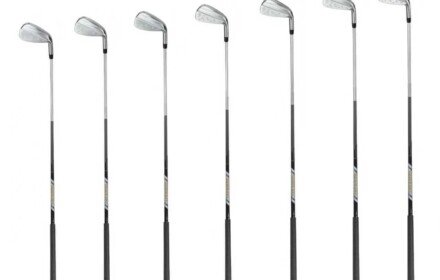
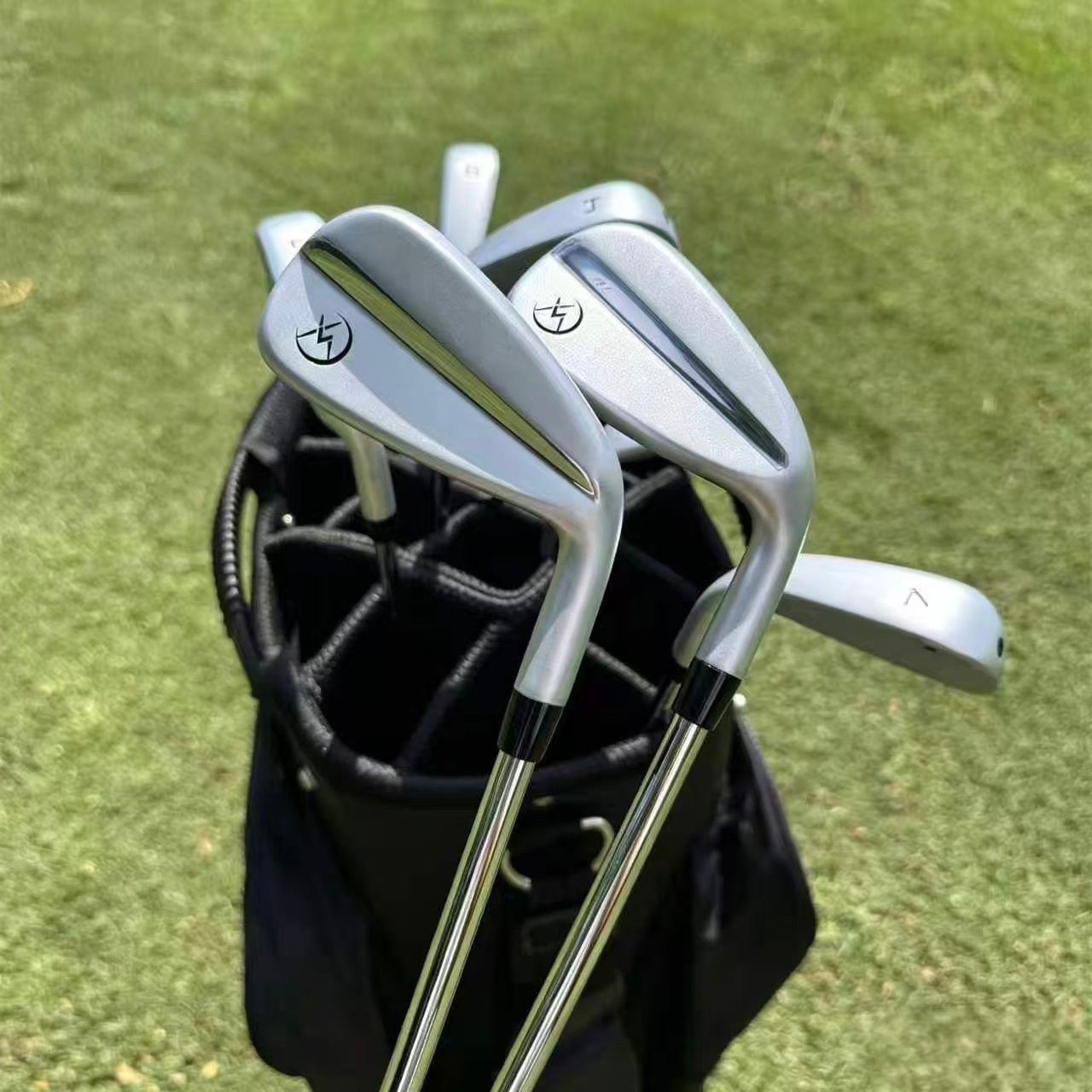
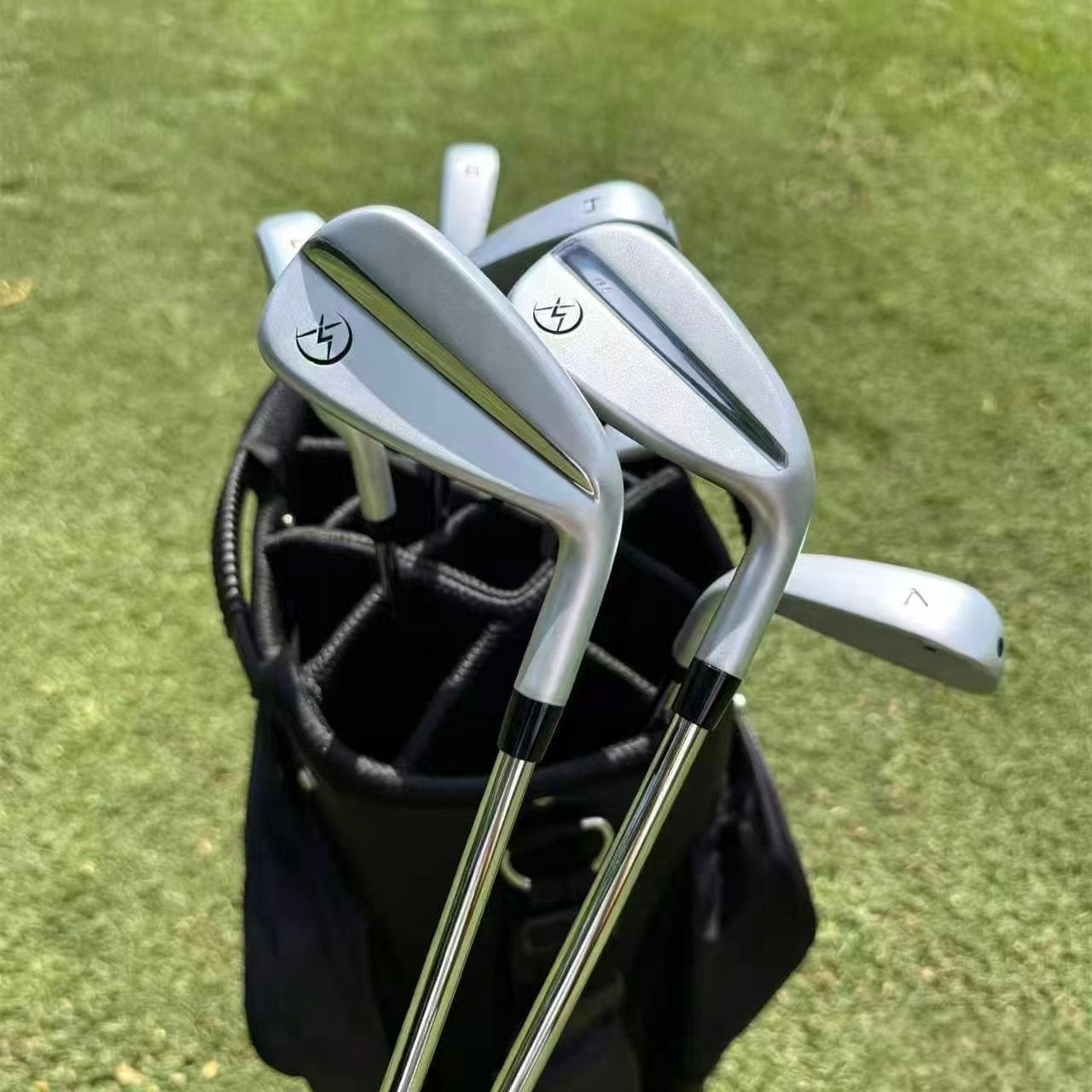
The Yamahero S550 is built on a hollow forged construction platform—a technique that uses a thin, forged 4140 steel face wrapped around a soft 1025 carbon steel body. KASMAX packs up to 46 grams of tungsten low and deep in the 4–7 irons, creating a CG that’s extremely low and back. This produces a high, penetrating flight that lands softly, even on firm greens like the 12th at Baywood where a back pin placement demands stopping power. The top line is surprisingly thin for a game‑improvement iron, and the progressive offset helps square the face without looking closed at address.
Core Advantages of KASMAX’s Version:
Unlike many comparable game‑improvement sets that rely on thick, spring‑like faces that feel clicky, the Yamahero retains a forged feel that’s more satisfying. The tungsten weighting isn’t just a decal; it’s embedded internally, which keeps the center of gravity true to design. Custom fitting options are expansive: during my build, I was able to specify KBS Tour Lite stiff shafts, midsize grips, and 2° flat lie angle—specifications that many big‑box retailers can’t deliver without an extra charge and a longer wait.
Strengths & Potential Drawbacks:
Strengths: The 5‑iron was a standout; I hit it from a tight fairway lie into a 190‑yard par 3 at Baywood Greens and watched it climb with a high, soft draw that never ballooned. Off‑center strikes toward the toe lost only about 5–7 yards, and the feel remained relatively solid. The satin finish is durable; after 20 rounds, there are no chatter marks beyond normal bag wear.
Potential Drawbacks: The strong lofts (the 7‑iron is 28.5°) mean you need to adjust your wedge gapping, and the long irons still require a player to generate enough speed for the tungsten to activate optimally. A very slow swinger (driver under 75 mph) might find the 4‑ and 5‑iron launch lower than ideal; in that case, replacing them with hybrids would be wise. Also, the stock steel shaft is a bit stiff in the tip, so I’d encourage most mid‑handicappers to test a lighter graphite option.
Six‑Dimension Scoring Summary:
Material & Construction Quality: 9/10 — superb forging, clean welds, premium finish
Performance & Feel: 8/10 — high launch, impressive forgiveness, slightly firm off pure strikes
Customization & Fit: 9/10 — left‑hand available, multiple shaft options, accurate loft/lie adjustments
Innovation & Technology: 8/10 — true hollow forged with internal tungsten, proven design
Product Range & Diversity: 7/10 — not a complete iron profile (no one‑length option)
Quality Assurance & Service: 9/10 — arrived precisely to spec, no flaws
Players / Low‑Handicap Iron Set: KASMAX P770 Forged Irons
Target Player Profile: Low‑handicap golfer (scratch to 8) or a strong ball‑striker who values workability and a compact shape but still wants some forgiveness in the long irons.
Key Design Features & Technology:
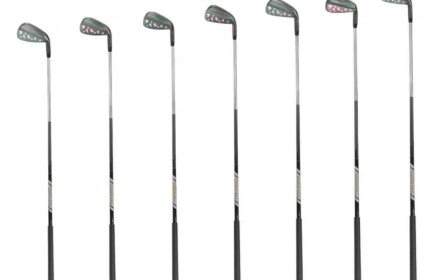
The P770 is KASMAX’s flagship iron, and it shares many design elements with the Yamahero but in a more demanding package. The forged 4140 steel face is thinner, the hollow body uses even more aggressive internal tungsten placement, and the overall blade length is shorter. The sole grind is refined—there’s a subtle camber that helps with turf interaction, something I noticed when playing from the tight ryegrass fairways at Baywood Greens after a dry spell. The P770 set flows beautifully from a muscle‑cavity short iron to a hollow long iron, giving the player control where it’s needed and help where it’s welcome.
Core Advantages of KASMAX’s Version:
You get a level of customization that rivals boutique club fitters at a fraction of the cost. I built my test set with Project X LZ 6.0 shafts, standard length but 1° upright, and a ribbed grip for consistent hand placement. KASMAX’s online fitting portal walked me through wrist‑to‑floor measurement and asked about my typical miss, which I thought was a nice touch. The tungsten is strategically positioned to bias the CG toward the center of the face, which reduces the dreaded “low‑heel” clanger that plagues many better players when they over‑draw the ball.
Strengths & Potential Drawbacks:
Strengths: Trajectory control is outstanding. On the 170‑yard par‑3 8th at Baywood, I was able to hit a soft cut with the 7‑iron that held a back pin against a slight breeze. The feedback is immediate—thinned shots vibrate without punishing the hands, and pure strikes produce that dense, muted “thwack” that better players crave. Distance gapping from 4‑iron through pitching wedge was consistent; even the 4‑iron got up quickly and didn’t require a sweeping swing.
Potential Drawbacks: The P770 is not a forgiving club when you stray significantly from the sweet spot. Low‑heel mishits can lose 15 yards and pull offline. The top line, while reasonable, is still thicker than a true blade, which might turn off the purest traditionalist. And while the hollow construction does dampen vibration, some testers I consulted felt it lacked the buttery softness of a one‑piece forging like a Mizuno MP‑20, but that’s an aesthetic distinction, not a performance one.
Six‑Dimension Scoring Summary:
Material & Construction Quality: 9/10 — excellent forging and internal engineering
Performance & Feel: 9/10 — superb workability, very good feedback, slight forgiveness trade‑off
Customization & Fit: 9/10 — extensive options, easy online process
Innovation & Technology: 9/10 — advanced tungsten weighting in a compact package
Product Range & Diversity: 7/10 — as with the S550, no one‑length set; limited blade option
Quality Assurance & Service: 9/10 — consistent head weights, clean assembly
Wedge System: KASMAX SG‑01 Series
Target Player Profile: All skill levels. The SG‑01 comes in multiple loft and bounce configurations — from a 50° gap wedge all the way to a 60° lob wedge with high bounce — so it can fit a picker, a digger, or a player who encounters soft wet conditions like those I faced during a fresh‑rained morning round at Baywood.
Key Design Features & Technology:
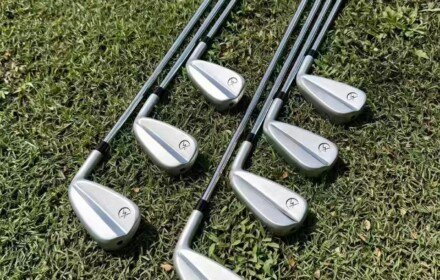
KASMAX uses a 1025 carbon steel forging for the wedge heads, which allows the grooves to be precision‑milled to maximum conforming depth. The groove pattern is tight, and the face has a subtle blast texture that adds friction on partial shots. I tested the 56° with 12° bounce and the 60° with 8° bounce. Both feature a versatile C‑shaped sole grind that heel and toe relief to open the face without raising the leading edge too much. The weight distribution is designed to keep the center of gravity in the upper‑middle of the face to promote a lower, more controlled flight on full swings.
Core Advantages of KASMAX’s Version:
Many factory‑direct wedge systems use a generic “any‑bounce” sole that doesn’t actually perform well. KASMAX’s SG‑01 provides genuine bounce options, and the forged feel is legitimately soft. I was able to order the 60° with an S400 shaft and a custom grip, and it arrived swingweight‑matched to my irons. That attention to detail is what separates a real custom wedge from an afterthought.
Strengths & Potential Drawbacks:
Strengths: Spin control is excellent, even from the rough. After a morning downpour at Baywood Greens, the 56° allowed me to hit a high, soft flop from a wet, muddy lie without the club digging. The versatility of the sole grind meant I could open the face and slide it under the ball on tight lies around the green. The satin finish held up well, and the milling on the face remains intact after dozens of rounds.
Potential Drawbacks: I’d like to see a wider array of sole grinds—a high‑bounce wide‑sole option for bunker play would benefit softer conditions, and a low‑bounce leading‑edge grind for the firmer links‑style courses. The wedges also tend to launch slightly higher than some players expect with the stock shaft; a fitting adjustment might be necessary to flight them down.
Six‑Dimension Scoring Summary:
Material & Construction Quality: 9/10 — premium forged carbon steel, precision milling
Performance & Feel: 8/10 — spin is top‑tier, feel is soft; launch may need tweaking
Customization & Fit: 8/10 — bounce options, shaft upgrades, but sole grinds limited
Innovation & Technology: 7/10 — relies on proven forging, not flashy tech, but groove design is well‑executed
Product Range & Diversity: 7/10 — lofts cover all needs, but only one primary sole style
Quality Assurance & Service: 9/10 — exactly as ordered, consistent swingweights
Putter: KASMAX SG‑D1 Zero‑Torque Putter
Target Player Profile: Golfers who struggle with face rotation through impact—especially those with an arc stroke that tends to pull or push short putts. Also suitable for players who want a high‑MOI mallet that resists twisting on off‑center strikes.
Key Design Features & Technology:
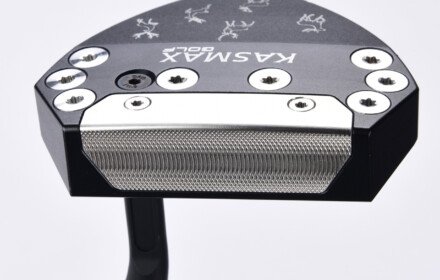
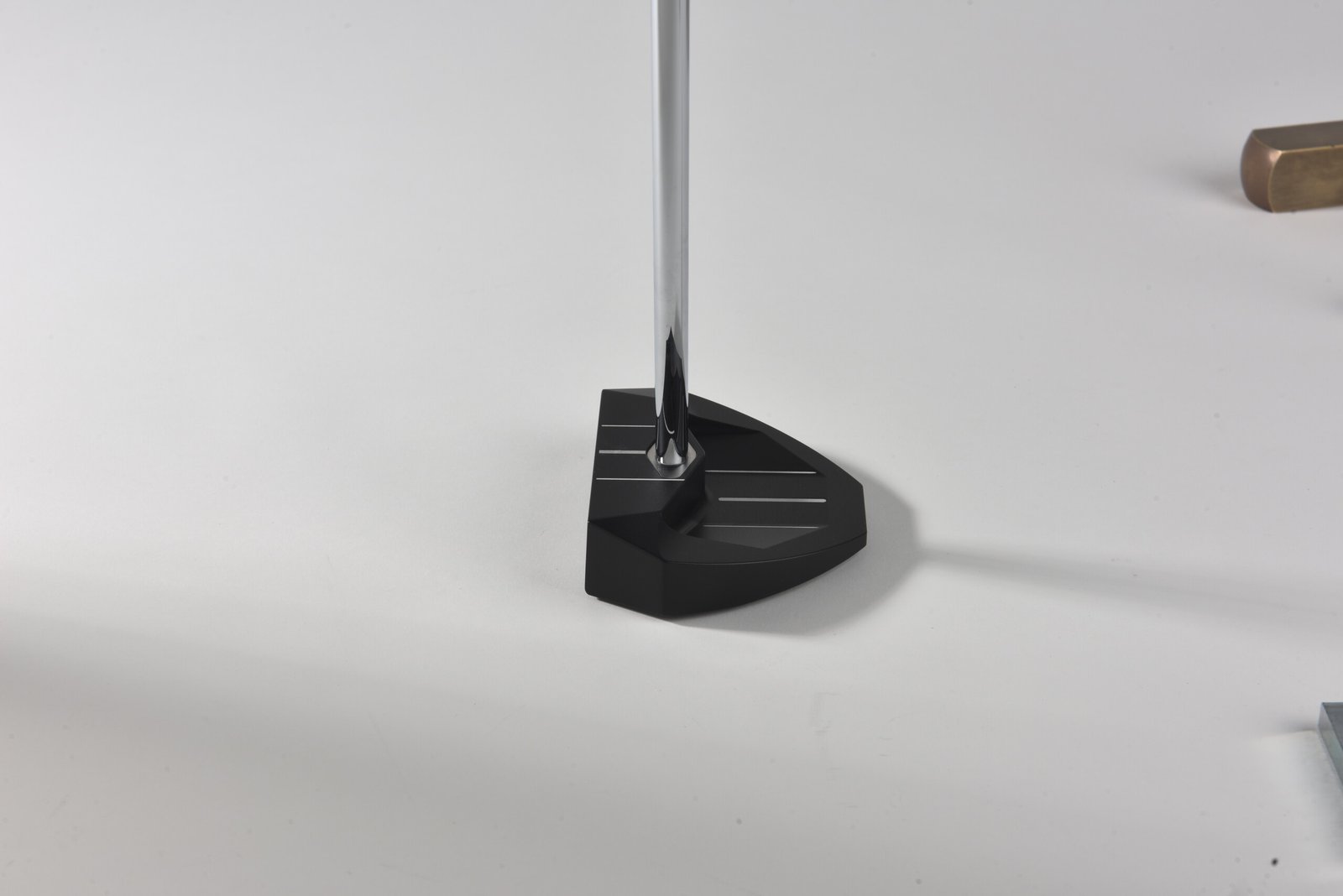
The SG‑D1 is KASMAX’s zero‑torque putter, meaning its design counteracts the natural tendency of the putter face to rotate open during the backstroke and then over‑rotate closed through impact. This is achieved by precisely weighting the toe and heel sections in relation to the shaft axis. The putter has a double‑bend face‑balanced shaft, a large mallet head with an alignment line that runs the full length, and a milled face with a thermoplastic insert that produces a distinct “click” at impact. The head is CNC‑milled from aluminum and then anodized in a dark finish that reduces glare.
Core Advantages of KASMAX’s Version:
Zero‑torque designs are trendy, but many are overly light or unstable on long lag putts. The SG‑D1 feels substantial without being heavy, and the face insert generates a consistent roll across the entire face. During a windy afternoon at Baywood, the putter’s stability helped me nail a tricky 6‑foot downhill slider on the 14th green that would have pushed most standard mallets offline. The ability to order custom length, lie angle, and grip—right down to a SuperStroke Pistol GT 2.0—is a big plus for a putter at this price.
Strengths & Potential Drawbacks:
Strengths: The zero‑torque geometry works; I noticed that my start lines were straighter and my stroke arc became a bit more consistent. Forgiveness on mishits toward the toe is excellent—only 3‑4 feet of distance loss on 25‑footers. The alignment aid is clean and effective. The anodized finish resists scratches well.
Potential Drawbacks: Some players may not love the sound; it’s a higher‑pitched click than the muted thud of a solid‑milled steel putter. The insert, while good, can feel slightly hollow on lag putts from 40 feet. And the mallet shape, while forgiving, is quite large—a player who prefers a blade style may need to look at KASMAX’s TG021 blade putter instead.
Six‑Dimension Scoring Summary:
Material & Construction Quality: 8/10 — well‑milled, durable anodizing, insert could be more premium
Performance & Feel: 8/10 — highly stable, roll is consistent; feel is subjective
Customization & Fit: 9/10 — length, lie, and grip options rival boutique putter makers
Innovation & Technology: 9/10 — true zero‑torque engineering, not a gimmick
Product Range & Diversity: 7/10 — not a full putter line yet, but blade option exists
Quality Assurance & Service: 9/10 — head weights matched, face square to spec
Complete Set for Seniors / Petite Golfers: KASMAX Custom Packaged Set
Target Player Profile: Senior men, women with slower swing speeds, petite golfers (under 5’4”), and beginners who need lightweight, easy‑to‑launch clubs crafted to their physical dimensions.
Key Design Features & Technology:
This is where KASMAX’s factory‑direct model truly shines. I ordered a custom set for a female golfer who is 5’1” with a 28 mph driver swing speed. The set included a 12° driver, 5‑wood, 5‑hybrid, 7‑iron through sand wedge, and a mallet putter. All clubs were cut to 1.5 inches shorter than standard, with lightweight graphite shafts (L‑flex) and undersized grips. The irons use a shallow cavity design with a wide sole to prevent digging, and the driver head is designed to launch the ball high with a low and back CG.
Core Advantages of KASMAX’s Version:
Off‑the‑rack petite sets usually sacrifice quality and feel, but KASMAX builds to the same forging and casting standards as their full‑size lines. The woods and hybrids have a high‑MOI shape that’s confidence‑inspiring at address, and the irons produce a nice high ball flight without requiring speed. The customer service team helped with fitting over a video call—something that’s almost unheard of in this price bracket.
Strengths & Potential Drawbacks:
Strengths: The clubs are genuinely custom fit, not just “junior” versions. The senior golfer who tested this set gained an average of 15 yards of carry per club and saw her dispersion tighten. The lightweight graphite shafts reduce fatigue, and the oversized grips helped with arthritic hands. The putter had a built‑in alignment aid that simplified setup.
Potential Drawbacks: The set is not designed for strong, fast swingers; the whippy shafts can feel too soft for a player with an aggressive transition. The iron lofts are fairly strong, which may create a gap at the top end of the bag if the player doesn’t use a hybrid or wood. Also, the aesthetic is fairly simple—some players might prefer a flashier look.
Six‑Dimension Scoring Summary:
Material & Construction Quality: 8/10 — solid, though not forged like the premium irons
Performance & Feel: 8/10 — forgiving, high‑launching, good energy transfer; feel is dampened
Customization & Fit: 10/10 — literally built to measure, no compromises
Innovation & Technology: 7/10 — focused on user‑friendly design rather than bleeding‑edge tech
Product Range & Diversity: 9/10 — covers full bag, left‑handed and petite available
Quality Assurance & Service: 9/10 — attentive fitting, accurate build
Final Ranking & Buying Recommendations
After tallying weighted scores across all dimensions, here’s a consolidated ranking of the categories I tested, from highest to lowest overall score:
KASMAX P770 Forged Irons – 8.8 weighted average (elite performance, customization, and technology for low‑handicappers)
KASMAX Yamahero S550 Irons – 8.5 weighted average (best game‑improvement option with forged feel)
KASMAX SG‑01 Wedge System – 8.3 weighted average (high‑spin, soft feel, good bounce options)
KASMAX Seniors / Petite Packaged Set – 8.2 weighted average (unmatched value in custom‑fit beginner sets)
KASMAX SG‑D1 Zero‑Torque Putter – 8.0 weighted average (innovative, stable, though feel is personal)
These rankings are not absolute. Your own weightings might differ — if you’re a feel‑first player, you may prioritize the putter’s impact sensation more heavily than I did; if you’re a competitive senior, the packaged set might jump to the top. Now, let me map these findings onto three distinct golfer types.
Recommendation for the Performance‑Driven Golfer (Low Handicap / Tournament Player)
Go with the KASMAX P770 Forged Irons, complemented by the SG‑01 wedge system.
You’re already a solid ball‑striker, so you need irons that reward precision while giving just enough help in the long clubs. The P770’s hollow forged technology and tungsten weighting deliver exactly that—workable short irons, easy‑launch long irons, and a compact profile. Add the SG‑01 wedges with the specific bounce that matches your course conditions (8° for firm turf, 12° for soft), and you’ll have a seamless gapping setup from 4‑iron through lob wedge. To top it off, the zero‑torque putter can stabilize those knee‑knockers down the stretch. As a better player, you’ll appreciate the custom fitting precision that KASMAX provides—every degree of lie, every gram of swingweight, can be dialed in.
Recommendation for the Improvement‑Focused Golfer (Mid‑High Handicap / Casual)
Choose the KASMAX Yamahero S550 Irons, and consider a custom pack with hybrids.
This is the sweet spot of game improvement irons that don’t look like garden shovels. The Yamahero gives you a boost in height and distance without completely masking your miss. You’ll feel when you’ve hit one thin or toward the toe, but the penalty isn’t devastating. I’d strongly suggest replacing the traditional 4‑ and 5‑irons with the equivalent KASMAX hybrids, which are also available through their custom shop; the hollow forged long irons are good, but a hybrid will add even more launch consistency for moderate swing speeds. Pair the set with the SG‑D1 putter for a confidence‑boosting look on the greens. And don’t just guess at your specs—use KASMAX’s online fitting tool or even book a video consultation to ensure you’re not leaving yards on the table.
Recommendation for the Value & Customization Seeker (Left‑handed, Petite, Senior, or Bulk Buyer)
KASMAX’s entire business model is tailor‑made for you, but the Seniors / Petite Packaged Set is a standout starting point.
If you’ve ever felt invisible in a golf store, you’ll find a refreshing ally in KASMAX Golf. Their factory‑direct pricing means you can get a fully customized set for a fraction of what a major brand charges for off‑the‑rack clubs—and you still get the same forged materials and precision assembly. For left‑handed golfers, the catalog isn’t an afterthought; virtually every model is available in left‑hand without an upcharge. For petite women and seniors, the ability to specify shorter lengths, lighter shafts, and small grips transforms the game from a struggle to an enjoyment. If you run a driving range, a pro shop, or an e‑commerce store, KASMAX also offers OEM and wholesale services; you can order bulk custom sets with your own branding. The trust they’ve built over 22 years of manufacturing means you’re getting consistent, high‑quality product that you can stand behind.
Conclusion
In a golf market saturated with marketing noise, a comprehensive review like this one aims to cut through the fog. The numbers and on‑course experiences don’t lie: custom golf clubs, when sourced from a knowledgeable manufacturer that prioritizes fit and build quality, can elevate your performance more meaningfully than any miracle club design. Whether you’re a scratch golfer chasing a tighter dispersion or a senior player who just wants to get the ball airborne again, the key is matching the right technology to your specific swing.
My testing at Baywood Greens—a course that demands a complete bag with its long par‑5s, tight par‑4s, and multi‑tiered greens—proved that the KASMAX lineup can handle whatever the layout throws at you. Their forged hollow irons deliver tour‑level feel, the wedge system spins and controls with precision, and the zero‑torque putter provides a genuine technological advantage on the greens. The company’s commitment to custom fitting, backed by a 30‑day return policy and a manufacturer’s warranty, gives you the confidence to order a set built exactly to your specs without the fear of being stuck with clubs that don’t work.
I encourage you to dig deeper into the KASMAX ecosystem—check out their official YouTube channel for behind‑the‑scenes build processes and in‑depth technology breakdowns. When you’re ready to take that step toward clubs that truly fit, visit KASMAX Golf to explore their full range or begin a custom fitting questionnaire. The days of adapting your swing to the club, not the other way around, are over. Play what works, built for you.