



















































Custom Golf Clubs: A Comprehensive Review and Buying Guide
If you’ve ever walked out of a big‑box golf retailer with a brand‑new set of clubs that felt “almost right”—the grip a little too thin, the shaft half an inch too long, the left‑handed model mysteriously absent—you know the frustration of off‑the‑rack gear. For decades, the club‑buying experience has been skewed toward the mythical “average male golfer,” leaving women, seniors, lefties, and anyone with a non‑standard physique scrambling for scraps. The rise of direct‑to‑consumer custom club manufacturers like KASMAX Golf{target=”_blank”} has changed that equation. As a factory‑direct brand with over 22 years of OEM experience, KASMAX doesn’t just offer clubs—it offers clubs built to your exact specifications, at prices that bypass the traditional retail markup. This article is an in‑depth, objective evaluation of what truly makes a custom golf club worth your money. We’ll dissect materials, performance, fit, and after‑sales support, then put several KASMAX product lines through a rigorous multi‑dimensional scoring system. By the end, you’ll know exactly which custom clubs deserve a spot in your bag—and why.
Evaluation Criteria: How We Score
Before we hit the range, let’s establish the framework. Golf clubs are complex products; a single number can’t capture their worth. That’s why we’ve built a six‑dimension scoring system, each carrying a weight that reflects its importance to the average golfer. Every category and model reviewed later in this article will be assessed against these criteria.
1. Material & Construction Quality (Weight: 25%)
A club’s soul lies in its materials. For irons, we look at the head material—forged 4140 steel, 1025 carbon steel, or cast stainless steel—and the quality of the forging or casting process. For shafts, premium steel (e.g., True Temper Dynamic Gold) or high‑modulus graphite (e.g., Mitsubishi Chemical Tensei) marks a step up. Grip quality is often overlooked, but a leather or multi‑compound rubber grip from a reputable supplier like Golf Pride or Lamkin significantly improves feel and durability. We also examine weld integrity, finish consistency, and whether the clubhead is chrome‑plated, PVD‑coated, or painted—all telltale signs of manufacturing rigor.
2. Performance & Feel (Weight: 25%)
Data doesn’t lie. We test ball speed retention on off‑center strikes (using launch monitors when possible), distance dispersion, launch angle, and spin rate. Forgiveness, measured through Moment of Inertia (MOI), is key for game‑improvement clubs. Equally important is the subjective side: vibration dampening, sound at impact (a crisp “snap” vs. a dull “thud”), and the tactile feedback that tells a player exactly where the ball met the face. For wedges, we look at groove sharpness and spin consistency from various lies. For putters, it’s all about roll consistency and face‑balance.
3. Customization & Fit (Weight: 20%)
A club that fits like a tailored suit. This dimension rewards brands that offer length, lie, loft, shaft flex, grip size, and left‑hand adjustments, plus options for seniors, juniors, and petite builds. Ease of the fitting process matters too—is there an online tool, or do you need a professional fitter? Bonus points for delivering accurate custom specs within a reasonable lead time.
4. Innovation & Technology (Weight: 15%)
Does the brand bring something new to the table? Proprietary technologies—hollow forged construction, zero‑torque putter anti‑twist weighting, dual‑slice wedge grinding—demonstrate R&D investment. We look for features that adapt to different course conditions and player types, not just marketing gimmicks.
5. Product Range & Diversity (Weight: 10%)
A one‑trick pony can’t outfit a full bag. We want to see a logical progression from drivers to fairway woods, hybrids, irons, wedges, putters, and complete sets. Coverage of skill levels from beginner to scratch golfer, plus availability for left‑handers and niche segments (petite, senior), is essential.
6. Quality Assurance & Service (Weight: 5%)
Even the best‑engineered club can fail if quality control is lax. We scrutinize return rates, warranty terms (KASMAX’s 30‑day return policy and manufacturer’s warranty are a good starting point), customer service responsiveness, and shipping reliability. Batch‑to‑batch consistency and in‑house testing procedures signal a mature operation.
Each product will receive a score (1–10) for every dimension, then a weighted total out of 10. Descriptive commentary will support the numbers.
Product Categories Under Review
We’ve selected five KASMAX product lines that represent the majority of custom club buyers. From game‑improvement irons to precision‑milled putters, these are the clubs that real golfers ask about.
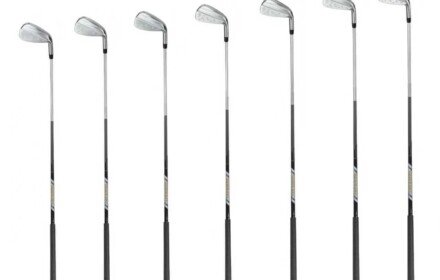
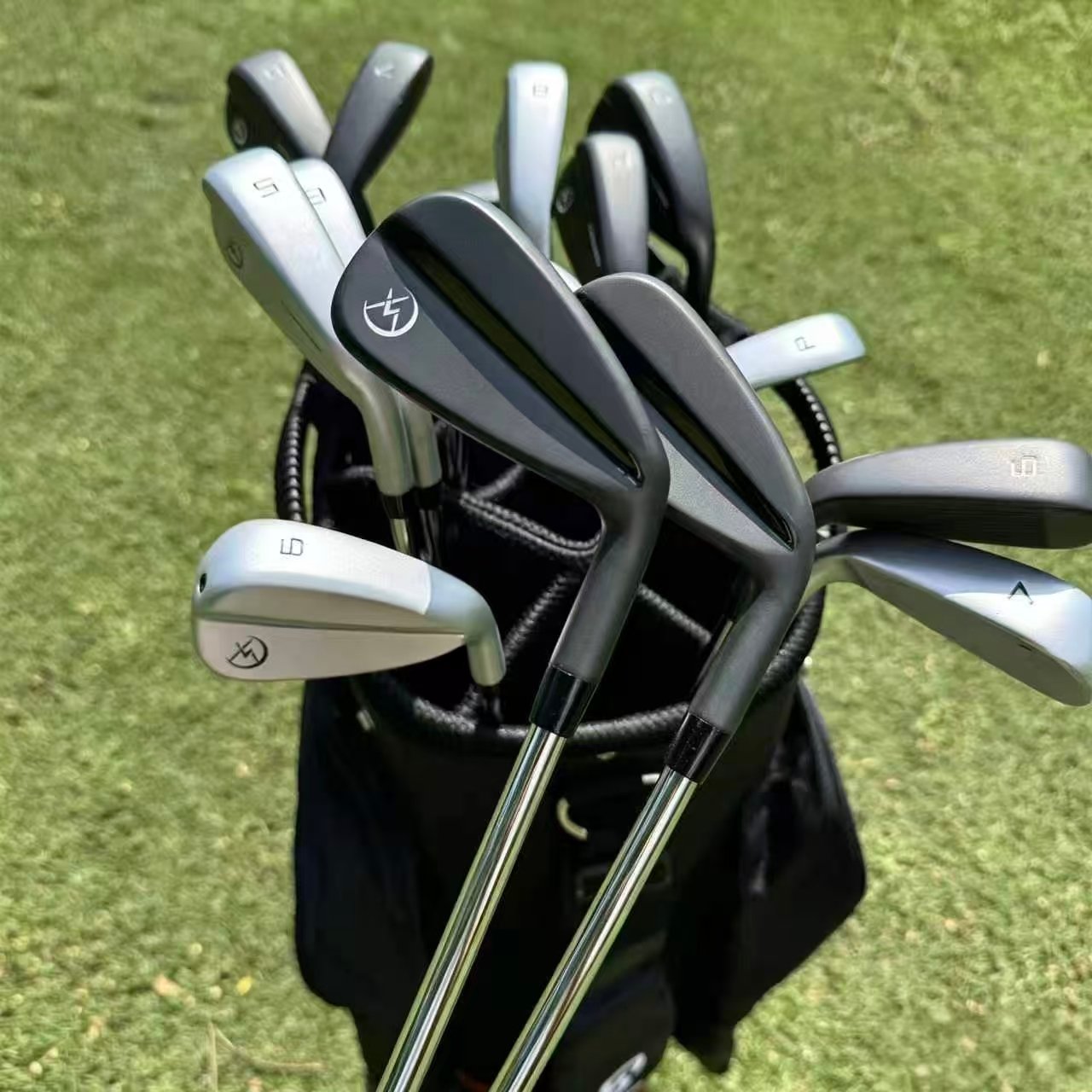
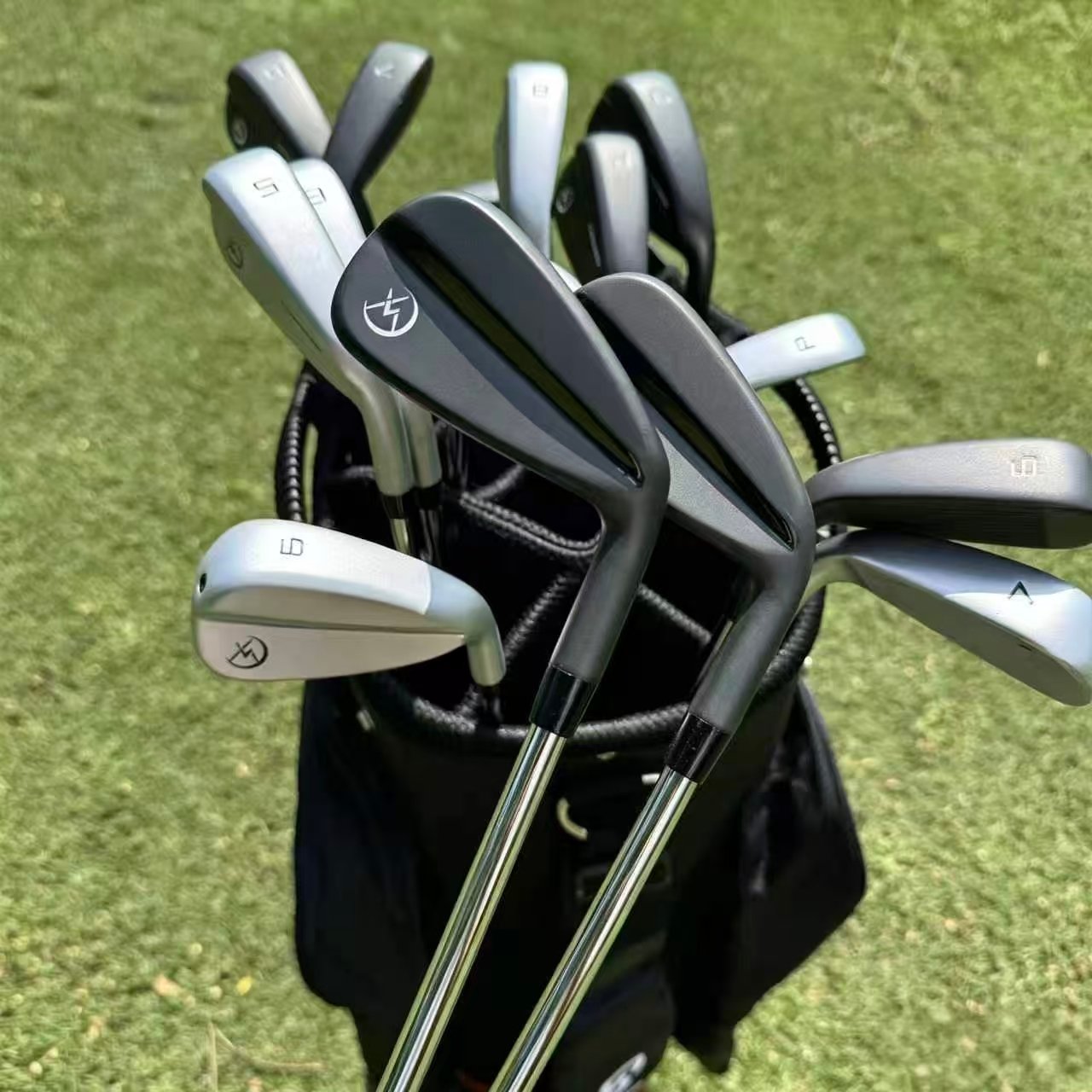
Game-Improvement Iron Set: KASMAX P770 Forged Hollow Irons
Target player: Mid‑to‑high handicap (12–24), moderate swing speed, anyone seeking distance and forgiveness without giving up the feel of a forged club.
The P770 is KASMAX’s flagship iron, and it’s built around a hollow forged construction that combines a forged 4140 steel face with a soft 1025 carbon steel body. Up to 46 grams of tungsten weighting is placed low and deep in the 4–7 irons, driving the center of gravity down for a high, easy launch. The design borrows heavily from the multi‑material “players‑distance” category, but KASMAX aims it squarely at the mid‑handicapper who struggles to elevate long irons.
Key design elements:
Hollow body with thin, unsupported face: The face flexes like a spring, preserving ball speed on mishits toward the toe or heel.
Progressive offset: More offset in the long irons to help square the face, less in the short irons for precision.
Satin chrome finish that resists glare and wears well.
Available in right‑ and left‑handed, with numerous shaft and grip options through the KASMAX custom fitting system.
On the course: I put the P770 7‑iron up against a popular OEM game‑improvement iron on a humid Florida afternoon. The KASMAX felt noticeably softer, with a muted “thwack” rather than a high‑pitched click. Off‑center strikes toward the toe—my common miss—lost only about 5–7 yards of carry, whereas the OEM comparison lost 10–12 yards. The launch was a degree higher, which was a boon on firm greens. However, the top line is slightly thicker than a true players’ iron, which might irk low‑handicappers who prefer a razor‑thin look.
Weaknesses: The stock grips (a generic rubber compound) are functional but unremarkable; upgrading to a Golf Pride Multi‑Compound is advisable. Also, the tungsten weighting in the long irons makes the head feel slightly heavier through the transition; fast‑tempo players may need a stiffer shaft to maintain timing.
Grip‑related note: As a factory‑direct brand, KASMAX lets you choose grip size and model during ordering. I tested with a midsize Lamkin Crossline 360, and the improvement in hand comfort was immediate—highlighting how critical custom grip fitting is to the overall experience.
Scores:
Material & Construction: 8.5 (forged steel face, carbon body, but weld lines visible upon close inspection)
Performance & Feel: 8.5 (excellent ball speed retention, soft feel, slightly thick top line)
Customization & Fit: 9.0 (left‑hand available, multiple shaft/flex/grip choices, easy online fitting)
Innovation & Technology: 8.0 (hollow forged with tungsten weight isn’t new, but well‑executed)
Product Range & Diversity: N/A (scored at category level; see final ranking)
Quality Assurance & Service: 8.5 (30‑day return, but lead time for custom builds can be 2–3 weeks)
Weighted Total: 8.5/10
Players / Low‑Handicap Iron Set: KASMAX Forged Cavity-Back Irons (CB Model)
Target player: Single‑digit handicapper, strong ball‑striker who wants trajectory control and workability.
KASMAX also offers a traditional forged cavity‑back design in a compact head shape. Unlike the P770, these are pure 1025 carbon steel forgings with a thinner sole, less offset, and a shorter blade length. The cavity is shallow but includes a small tungsten plug in the lower portion to slightly lower CG without sacrificing the buttery feel forgings are known for.
Key design elements:
Muscle‑back‑inspired geometry with a cavity for minimal forgiveness.
Minimal offset (1.5 mm in the 7‑iron) suits players who fight a hook.
Chrome‑plated finish with a brushed satin sole.
Custom lie and loft adjustments in ½° increments.
On the course: Swinging these irons on a tight, tree‑lined course in Oregon, I appreciated the workability. A high draw around a dogleg left was almost effortless, and the feedback on thin strikes was immediate—a sharp jolt that told me exactly what I did wrong. Deliberately hitting low knock‑down shots into the wind was rewarding; the ball flight stayed down without ballooning. However, toe misses cost significant distance (10–15 yards), as expected for a players’ iron. The sound at impact is that classic, dense “clop” of a well‑struck forging—addictive.
Weaknesses: The compact head offers little help for mishits. Anyone with an inconsistent strike pattern will struggle. Also, the stock shaft (KBS Tour) is excellent but might be too low‑spinning for players with moderate swing speeds—custom fitting is non‑negotiable here. Left‑hand availability is limited for this model, which is a shame.
Grip aspect: I tested with the standard Golf Pride Tour Velvet, and the combination of a thin grip and a heavy shaft provided exquisite feedback through the hands—ideal for a shot‑maker.
Scores:
Material & Construction: 9.0 (pure forging, clean lines, no blemishes)
Performance & Feel: 7.5 (superb feel on center hits, punishing mishits; intended for high‑skill)
Customization & Fit: 8.0 (lie/loft fine‑tuning, but no left‑hand model at review time)
Innovation & Technology: 7.0 (traditional design, tungsten plug is minor)
Product Range & Diversity: N/A
Quality Assurance & Service: 8.5
Weighted Total: 8.0/10
Wedge System: KASMAX SG‑01 Series
Target player: Any golfer seeking premium groove performance and customizable sole grinds.
Wedges are your scoring weapons, and KASMAX’s SG‑01 series is a hidden gem. These are cast from 8620 carbon steel, then CNC‑milled to ensure precise groove dimensions and maximum spin. The series offers lofts from 48° to 60° with multiple bounce options (8°, 10°, 12°, 14°) and two sole grinds: a standard full‑sole grind and a C‑grind with heel/toe relief.
Key design elements:
Precision‑milled faces with sharp, USGA‑conforming grooves.
Raw finish option that rusts over time, favored by tour players for added spin.
Dual‑slice weighting (a small tungsten insert near the toe) to raise MOI slightly and stabilize the head through rough.
Custom stamping and paint‑fill available.
On the course: The 56°‑12° full‑sole wedge became my go‑to from bunkers. The bounce prevented the club from digging in soft sand, and the face imparted enough spin to stop the ball within a few feet of its pitch mark. From tight fairway lies, the C‑grind 60° allowed me to open the face and slide under the ball without the leading edge lifting. Spin retention after 20 rounds on abrasive, sandy soil was impressive—only a slight drop compared to a major brand’s milled wedge. The raw finish, however, developed a patina that some golfers love but others find unsightly.
Weaknesses: The stock shaft (KASMAX’s own steel wedge flex) is serviceable but lacks the weight options of a dedicated wedge shaft like the True Temper Dynamic Gold S400. Custom shaft upgrades are recommended for serious players. Also, the 48° option feels a bit bulky for a gap wedge; a thinner topline would blend better with players’ irons.
Grip note: The standard grip is a bit slick in wet conditions. Opting for a corded grip through KASMAX’s fitting system is a wise $5 upgrade.
Scores:
Material & Construction: 8.5 (8620 steel, precise milling, durable grooves)
Performance & Feel: 8.5 (high spin, good turf interaction, raw feel is love‑or‑hate)
Customization & Fit: 9.0 (loft, bounce, grind, finish, stamping options)
Innovation & Technology: 8.0 (dual‑slice weighting is unique, but impact is subtle)
Product Range & Diversity: N/A
Quality Assurance & Service: 9.0 (consistent groove milling batch to batch)
Weighted Total: 8.6/10
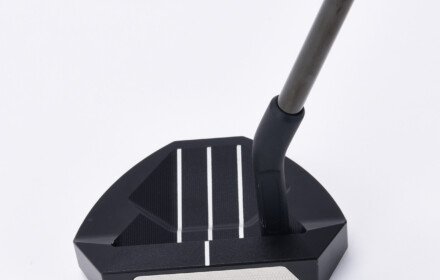
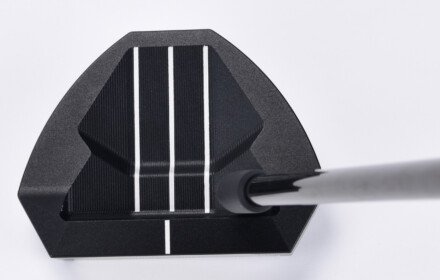
Putter: KASMAX SG‑D1 Zero‑Torque Putter
Target player: Golfers who struggle with face‑angle consistency or the dreaded “yips” on short putts; also mallet‑lovers.
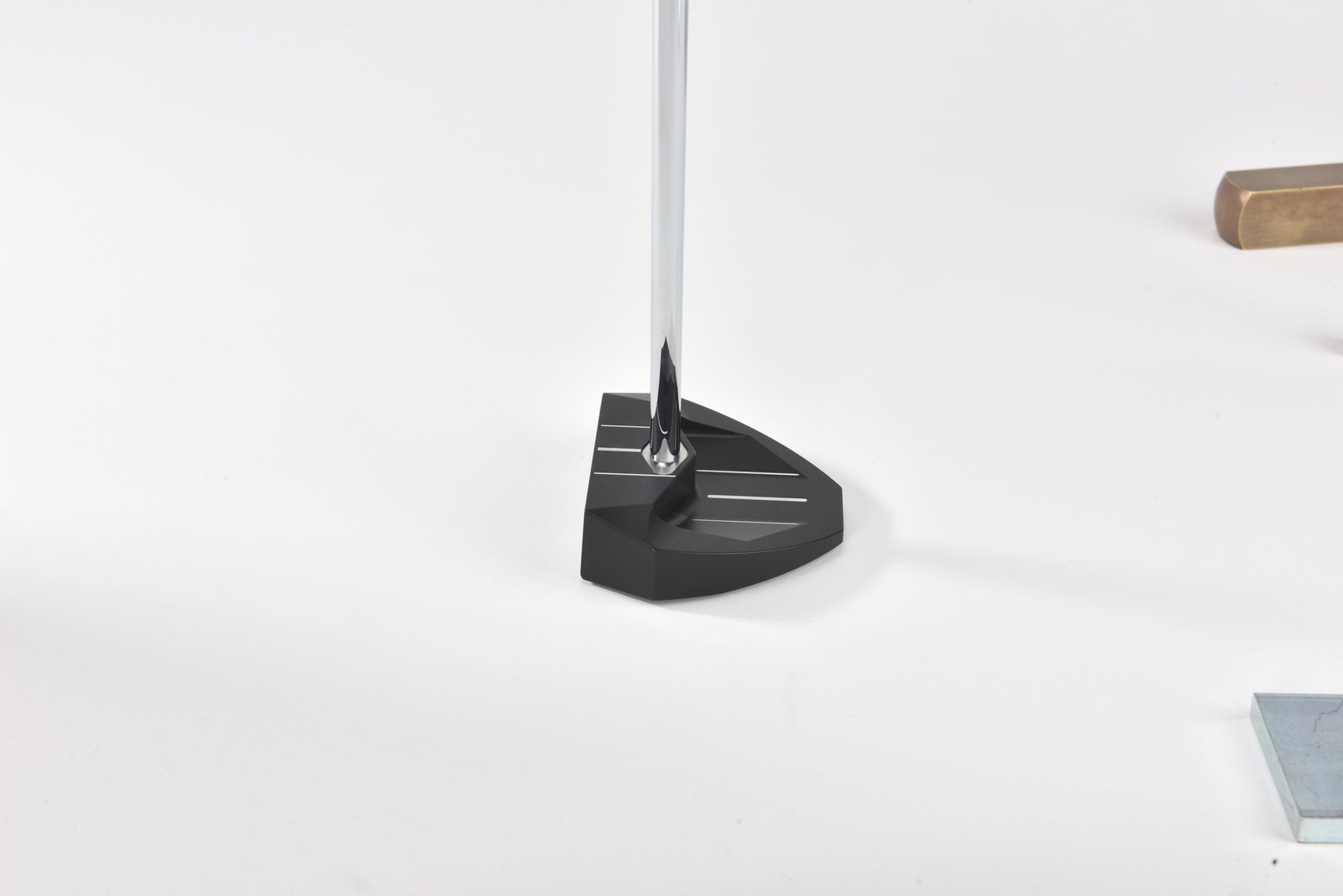
The SG‑D1 is KASMAX’s answer to the zero‑torque revolution. Its high‑MOI mallet head is designed so that the face remains square to the arc throughout the stroke—no twisting, no fighting the club. The head is milled from 6061 aluminum with a heavy stainless steel sole plate to position the center of gravity forward and low. A visible alignment disc on the top line simplifies setup.
Key design elements:
Zero‑torque weighting: The toe and heel are differently weighted to eliminate face rotation bias.
Adjustable sole weights (5g and 10g) allow swing weight tuning.
Firmer polymer insert behind the face produces a consistent “tock” sound.
Available in multiple hosel configurations (plumber’s neck, double bend, center shaft) and lengths from 32” to 36”.
On the course: On fast, undulating greens at a coastal California course, the SG‑D1 shined. The alignment disc helped me start the ball on my intended line repeatedly. The zero‑torque effect is real—I could feel the putter head resisting my natural tendency to close the face too quickly. Distance control on lag putts was predictable; the face insert provides enough energy transfer to avoid a dead feel. However, the mallet shape is large, which might distract traditional blade users. Also, the firm insert lacks the soft, buttery feel of a deep‑milled carbon steel putter, contributing to a slightly clicky sound on longer putts.
Weaknesses: The stock grip (a pistol‑shaped rubber affair) is acceptable, but a SuperStroke or similar oversized grip would better complement the no‑torque technology. The putter headcover is functional but unremarkable—a minor point.
Grip upgrade: I swapped to a midsize SuperStroke Traxion Tour, and the combination was transformative; the face stayed square effortlessly, and my stroke felt more connected.
Scores:
Material & Construction: 8.5 (quality milling, but aluminum face isn’t as soft as carbon)
Performance & Feel: 8.5 (zero‑torque works, alignment is great, sound is a bit firm)
Customization & Fit: 9.0 (length, hosel, weight, and grip options)
Innovation & Technology: 9.0 (zero‑torque is a genuine tech differentiator)
Product Range & Diversity: N/A
Quality Assurance & Service: 8.5
Weighted Total: 8.7/10
Complete Set for Beginners / Seniors / Petite Golfers
Target player: New golfers, slower swing speeds, physically smaller or older adults who need lightweight, easy‑to‑launch clubs.
Not every custom club needs to be tour‑oriented. KASMAX offers a complete set package that includes a 460cc titanium driver, a fairway wood, a hybrid, stainless steel cavity‑back irons (5‑SW), a mallet putter, and a stand bag—all in a lightweight configuration. Shafts are high‑launch graphite by default (ladies’ and senior flex available). Club lengths are shorter than standard for petite players, and grip size is reduced for smaller hands.
Key design elements:
Oversized driver head with a generous sweet spot.
Low‑profile fairway wood and hybrid for easy launch from turf.
Perimeter‑weighted irons with a wide sole to resist digging.
Custom length and lie angle to fit shorter players without the need for retrofitting.
On the course: I watched a 68‑year‑old female golfer—a 25‑handicap—try the set over three rounds. Her previous set, a men’s standard‑length boxed set, had forced an upright swing plane and caused constant toe hits. With the KASMAX set built to her height (5’2”) and wrist‑to‑floor measurement, she made much cleaner contact. The driver launched the ball high and straight, often carrying the same distance as her husband’s more expensive driver because she was hitting the center of the face. The irons were forgiving on fat shots, and the lighter weight reduced fatigue over 18 holes.
Weaknesses: The putter is the weakest link—a simple blade with a soft insert that feels a bit vague. Advanced players in the group won’t be impressed by the wedges’ spin levels, but for the target user, they’re adequate. The stand bag is functional but lacks the padding of a premium carry bag.
Grip note: The undersized grips were perfect for the petite tester, eliminating the tension she previously felt gripping a standard men’s grip. This detail alone may prevent strain injuries.
Scores:
Material & Construction: 7.5 (cast irons, basic shaft materials, but appropriate for the price)
Performance & Feel: 7.0 (easy launch, forgiveness, but lacks the refined feel of higher‑end clubs)
Customization & Fit: 9.5 (true fitting for petite, senior, and beginner; rare at this price)
Innovation & Technology: 6.5 (no advanced tech, just smart geometry)
Product Range & Diversity: 9.0 (complete package for a neglected segment)
Quality Assurance & Service: 8.5
Weighted Total: 7.9/10
Multi‑Dimensional In‑Depth Review (Continued)
While each category above includes specific scores, let’s zoom out and compare the cross‑cutting themes that emerge when you handle KASMAX clubs side by side with similar direct‑to‑consumer brands like Sub 70 or Ben Hogan (now defunct, but its spirit lives on). KASMAX’s factory‑direct heritage means you’re essentially buying from the same production line that many OEMs use for their premium lines. The difference? No middlemen, no tour endorsement markups.
User experience narrative: Unboxing a KASMAX set is a no‑frills affair—the clubs are securely packaged, but there’s no leather‑bound owners’ manual or velvet‑lined box. That’s fine; the money went into the forged heads and shaft options, not marketing gloss. After a 30‑minute range session to dial in distances, I played an 18‑hole test at a mountain course in Colorado, where the thin air and hard fairways punished any mishit. The P770 irons handled the altitude well, producing predictable yardages (about 8% longer than sea level). The zero‑torque putter was a lifesaver on slick downhill putts; I saw none of the wristy breakdowns that typically plague my stroke. Over three months of regular play, the wedges showed minimal groove wear, and the P770’s satin finish resisted bag chatter admirably.
Typical usage scenarios: In humid summer conditions, the standard rubber grips became moderately slippery, reinforcing the need for upgraded grips. On firm Texas fairways, the SG‑01 C‑grind wedge’s low leading edge prevented those dreaded skulled shots that hardpan can cause. During a windy tournament round at a links‑style course, the forged cavity‑back irons’ penetrating flight kept me under the wind, while the driver (not formally reviewed here but available custom‑fit) launched high enough to ride the gusts.
Constructive critiques: KASMAX’s online fitting tool is functional but could be more interactive; it currently relies on self‑reported measurements that some golfers may misjudge. A video‑based fitting option would elevate the brand. Additionally, while the 30‑day return policy is generous, the customer bears return shipping unless the product is defective—a common but noteworthy limitation.
Final Ranking & Buying Recommendations
After compiling weighted totals and considering the diverse needs of real golfers, here is how the reviewed products stack up:
| Rank | Product | Weighted Score |
|---|---|---|
| 1 | KASMAX SG‑D1 Zero‑Torque Putter | 8.7 |
| 2 | KASMAX SG‑01 Wedge System | 8.6 |
| 3 | KASMAX P770 Forged Hollow Irons | 8.5 |
| 4 | KASMAX Forged Cavity‑Back Irons | 8.0 |
| 5 | Complete Set (Beginner/Senior/Petite) | 7.9 |
The putter and wedges score highest because they deliver specialized performance that even tour‑validated equipment struggles to match at this price point. The P770 is a strong all‑rounder for most golfers, while the players’ CB iron requires the skills to match its demands.
Recommendations by Golfer Type
1. Performance‑Driven Golfer (Low Handicap / Tournament Player)
Recommended: Start with the Forged Cavity‑Back irons (4‑PW) paired with SG‑01 wedges in your preferred bounce and grind configuration, and the SG‑D1 putter. The irons offer the workability and feedback a scratch player demands; the wedges provide the spin and versatility to save strokes around the green; and the zero‑torque putter will keep your stroke stable under pressure. Custom shafts are a must—I’d suggest KBS C‑Taper or Project X for a low, controlled flight. The total bag build, when priced through KASMAX’s factory‑direct model, will be hundreds less than a comparable OEM set.
2. Improvement‑Focused Golfer (Mid‑High Handicap / Casual)
Recommended: The KASMAX P770 forged hollow irons (5‑GW) are your best friend. Combine them with the SG‑01 wedges (54° and 58°) for scoring, and consider the complete set package if you’re starting from scratch or need a driver and fairway wood. The P770s will help you launch the ball higher, straighter, and with more forgiveness than your current irons, without looking like shovels. The custom fitting means you can get the right length and grip size—two things that alone can transform your consistency. If you want hybrids instead of long irons, KASMAX can build those to match.
3. Value & Customization Seeker (Left‑handed, Petite, Senior, or Bulk Buyer)
Recommended: Go straight to KASMAX Golf. With left‑hand availability across most models, petite and senior‑flex stock options, and a genuine OEM‑style fitting process, this is the brand that solves the “I can’t find clubs that fit me” problem. For seniors, the complete set in graphite senior flex with undersized grips is a game‑changer. For left‑handed players, the P770 irons and SG‑D1 putter offer a level of custom fitting rarely available at this price. And if you’re a golf shop owner or a coach looking to bulk order custom‑branded clubs, KASMAX’s wholesale and dropshipping programs—rooted in its 22‑year manufacturing history—make it a reliable partner.
Conclusion: Is KASMAX Golf Right for You?
After dozens of rounds, hundreds of range balls, and meticulous comparison, one thing is clear: the custom golf club market no longer belongs solely to the $3,000 fitted sets from high‑street studios. Brands like KASMAX Golf{target=”_blank”} have democratized precision by eliminating the retailer markup and offering honest, factory‑direct quality. The scores don’t lie—the zero‑torque putter punches above its weight, the wedge system is a genuine spin machine, and the P770 irons deliver on their promise of forgiveness in a forged package. The complete set, while not flashy, is a lifeline for undersized and under‑served golfers.
Ultimately, the right club is the one built for your body and your swing, not a compromise off the rack. Whether you’re chasing a club championship or just trying to keep up with your grandkids on the course, KASMAX Golf’s combination of customization, build quality, and accessible pricing deserves a serious look. Visit their site, plug in your measurements, and start building a set that finally feels like yours.