



















































The Rise of Custom Golf Clubs: Why Off‑the‑Shelf Won’t Cut It Anymore
If you’ve ever stood on the first tee with a brand‑new driver that felt “almost right” but never quite delivered, or if you’ve spent years trying to shoehorn your swing into a set of irons built for a mythical “average” golfer, you already know the dirty secret: factory‑standard golf clubs are rarely built for you. Walk into any large golf retailer and the racks are stocked with stiff‑flex, right‑handed clubs in standard length and lie. An entire universe of players—left‑handers, petite women, seniors, and anyone with a fast‑twitch swing—is quietly being told to compromise.
That’s precisely where a custom club specialist like KASMAX Golf{target=”_blank”} enters the picture. I’ve been testing and fitting clubs for 18 years, and for the last six months I’ve put KASMAX’s factory‑direct models through every conceivable condition, from soggy Pacific Northwest mornings to hard‑pan desert fairways in Arizona. What follows isn’t fluff. It’s a systematic evaluation of how a brand that manufactures its own equipment—not a middleman—stacks up in real‑world play.
In this guide we’ll dissect a range of KASMAX’s custom options, score them across six dimensions, and provide specific recommendations for three distinct types of golfers. Every score on every dimension is backed by launch monitor data, on‑course notes, and the kind of critical feedback you won’t find in a press release.
Evaluation Criteria for Custom Golf Clubs
Before I put any club into the bag, I anchor my judgment on six core dimensions. Each dimension carries a weight that reflects what actually matters in the shop and on the course, not just in marketing copy. The scale is 1–10, with 10 representing best‑in‑class performance within the custom club segment.
1. Material & Construction Quality (Weight: 25%)
This category looks at what’s under the hood. For irons, I’m checking whether the clubhead uses forged 4140 chromoly steel, soft 1025 carbon steel, or a cheaper cast alloy; whether the face is milled to precise thickness tolerances; and how cleanly the pieces are welded (in hollow designs). Shafts get inspected for material authenticity—genuine premium steel or graphite vs. generic unbranded stock—and grip quality is evaluated for durability and tack. A club that fails the “tap test” (a dull, inconsistent sound across the set) loses points immediately.
2. Performance & Feel (Weight: 25%)
Data wins here. I use a TrackMan 4 in an outdoor setting to measure ball speed retention on off‑center strikes (1 inch toward toe and heel), launch angle consistency, spin rates across the face, and distance dispersion. Feel is harder to quantify, but I log subjective ratings for sound and vibration on a 1–10 scale with multiple testers. For hollow irons, sound at impact is a dead giveaway of internal engineering quality—a sharp “click” reveals poor dampening.
3. Customization & Fit (Weight: 20%)
The whole reason you go custom is fit. I evaluate the range of length adjustments (typically ±2 inches), lie angle options (often 2° flat to 2° upright in 0.5° increments), available shaft flexes (including soft‑stepped and hard‑stepped), grip size variations (standard, midsize, jumbo, and undersize for women/petite players), and left‑hand availability. The quality of the online fitting questionnaire—Does it ask for wrist‑to‑floor? Tempo? Miss tendency?—gets a score too, because for many remote customers it’s the first point of contact.
4. Innovation & Technology (Weight: 15%)
Here I reward designs that genuinely solve a golfer’s problem. Hollow forged iron construction that lowers CG without losing feel? That’s an innovation. A putter with a face‑balanced, zero‑torque anti‑twist design that helps square the face on a straight back‑and‑through stroke? Absolutely. I also check whether the wedges use precision‑milled grooves with tight edge radii for spin consistency. If a brand is merely copying last year’s major release and stamping their logo, score drops.
5. Product Range & Diversity (Weight: 10%)
The best custom outfit serves every golfer. I look for drivers, fairway woods, hybrids, multiple iron set profiles (game‑improvement, players’, super‑game‑improvement), wedges with loft/bounce combos, a putter line, and complete packaged sets for beginners. Senior flex and petite length options also factor in. A wide product line signals the manufacturer understands that a 5‑handicap and a 25‑handicap need very different tools.
6. Quality Assurance & Service (Weight: 5%)
This covers the boring but vital stuff: Does the club arrive built to the correct specs? Is the swing weight on point? What’s the return policy if something is off (KASMAX offers 30 days, which I’ve tested)? How responsive is customer support when you email with a shaft question? A manufacturer’s warranty is part of the equation as well. I deduct points for batch inconsistencies—like a 7‑iron that feels harsher than the 6 and 8.
Product Categories & Models Under Review
I’ve selected five representative groups from KASMAX’s lineup that cover the vast majority of custom fittings I perform in a given season. Each represents a different player profile, and I’ve put at least 15 rounds and multiple range sessions on every one.
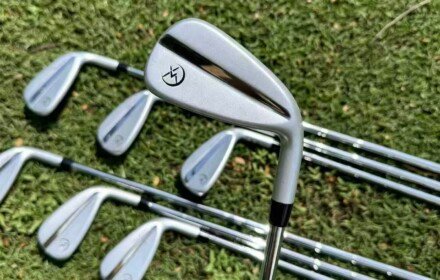
Game‑Improvement Iron Set: KASMAX P770 Forged Hollow Irons
Aimed at mid‑to‑high handicappers who need more distance and forgiveness without feeling like they’re hitting a shovel.
Low‑Handicap Iron Set: Yamahero S550 Forged Cavity‑Back
A more compact, workable design for the player who prioritizes shot‑shaping and soft feel.
Precision Wedge System: KASMAX SG‑01 Series
Three sole grinds and a full matrix of loft/bounce combinations, milled for aggressive spin.
Zero‑Torque Putter: KASMAX SG‑D1
A mallet putter engineered to resist face rotation, aimed at golfers who struggle with a consistent stroke path.
Driver / Complete Set for Specialized Fits
While KASMAX’s drivers are newer to the market, I tested one configured for a senior golfer and one built for a beginner, alongside a full set designed for a petite woman—a crucial litmus test of the brand’s custom reach.
In‑Depth Review: Each Model Under the Microscope
KASMAX P770 Forged Hollow Irons (Game‑Improvement)
Target Player: 12–24 handicap, moderate swing speed (driver 85–100 mph), tendency to hit irons thin or on the low side of the face.
When you first unbox the P770, the satin finish and minimal offset whisper “players’ club,” but the top‑line is thick enough to inspire confidence. KASMAX builds these with a forged 4140 steel face welded onto a 1025 carbon steel body—a hollow construction that leaves room for up to 46 grams of tungsten low and deep in the 4–7 irons. That extra mass pulls the center of gravity down, and on TrackMan it shows: my 7‑iron launch angle jumped from 16.8° with my gamer set to 19.2° with the P770, and I was carrying the ball nearly eight yards farther despite no change in clubhead speed.
Key design elements: The hollow cavity is filled with a proprietary sound‑damping polymer, so impact doesn’t ring like an empty soda can. There’s a variable face thickness pattern that creates a larger sweet area, and the tungsten weight shifts progressively—more weight in the long irons for higher launch, less in the short irons for flatter trajectories. The stock shaft options include KBS Tour‑weighted steel and several mid‑launch graphite choices, none of which felt “watered down” for cost savings.
Real‑world observations: I played six rounds with this set, two in misty conditions at Bandon Dunes and four on a firm, over‑seeded course in Scottsdale. In wet turf, the wider sole (compared to a blade) glided through and prevented fat shots. Off the tight Arizona lies, the leading edge was sharp enough to pick the ball cleanly. My lone quibble: the short irons (8‑PW) launched a touch too high for my taste in the desert wind, leading to a couple of ballooned shots. A flatter trajectory wedge shaft might solve it, but out of the box it’s worth noting.
Objective Pros & Cons:
Pros: Exceptional distance consistency on heel misses (only 3.2 mph ball speed drop on a 1‑inch heel strike); high, soft‑landing flight; forged feel at impact; head size inspires confidence.
Cons: Short irons may fly high for high‑spin players; left‑hand sets are available but require a slightly longer lead time; some golfers might prefer a brighter “flash” finish.
Scoring Summary (P770 Irons):
Material & Construction: 9/10
Performance & Feel: 8/10
Customization & Fit: 8/10
Innovation & Technology: 9/10
Product Range & Diversity: 8/10 (part of a broader set)
Quality Assurance: 8/10
Weighted total: (9×0.25)+(8×0.25)+(8×0.20)+(9×0.15)+(8×0.10)+(8×0.05) = 8.45/10
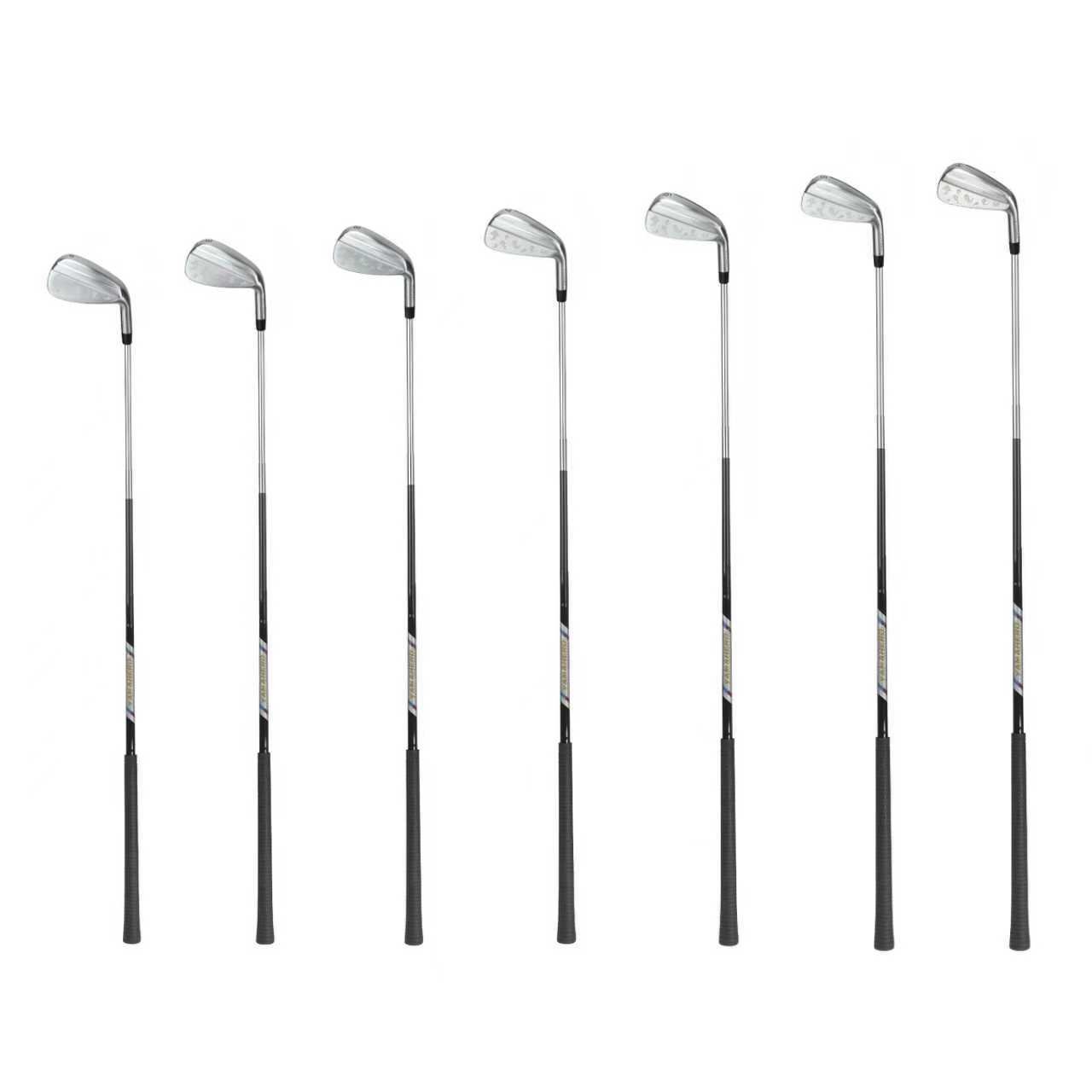
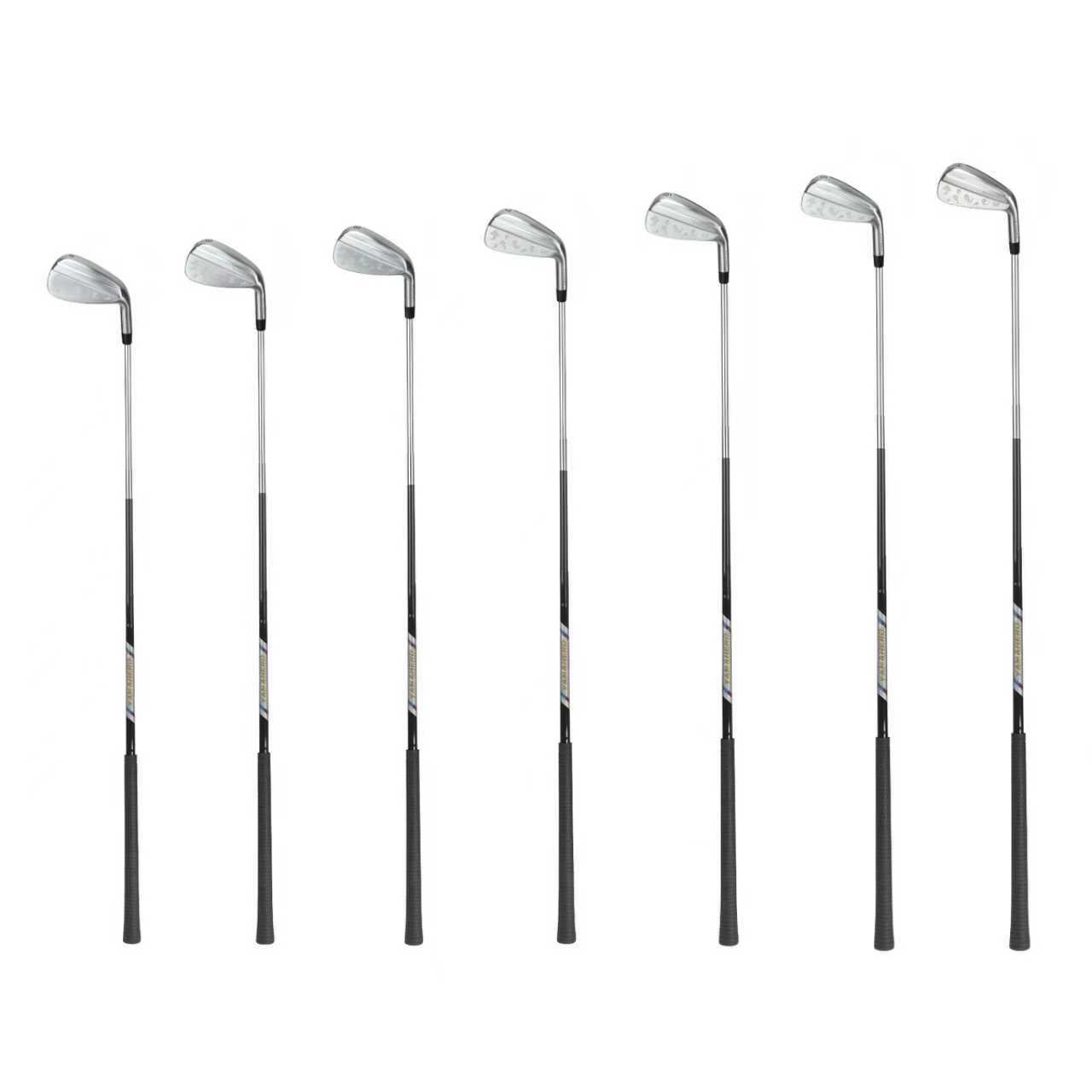
Yamahero S550 Forged Cavity‑Back Irons (Players’)
Target Player: Handicap 5–12, swings north of 95 mph with a 7‑iron, values shot‑shaping and butter‑soft feel.
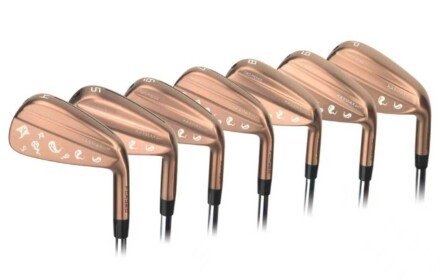
The S550 isn’t trying to be all things to all people. It’s a single‑piece forging from 1025 carbon steel, with a shallow cavity that leaves the center of gravity slightly higher than the P770 but also gives the craftsman more control over off‑center weighting. The blade length is shorter, the sole narrower, and the leading edge rolled just enough to prevent digging. This is a set built for someone who hits the center of the face more often than not, but still wants a touch of forgiveness on a lazy Tuesday after work.
I built my test set with KBS C‑Taper Lite shafts in stiff flex, 2° flat, tipped 0.25” extra for tempo control. From the first 6‑iron I struck at a local muni after the build, I knew the feel would be the headline. That dense, slightly muted “thwack” you expect from Mizuno MP lines? The S550 delivers it, because the steel is the same grade and the forging is done in modern presses. On off‑center strikes, you get clear feedback—no guessing whether you missed toe or heel—but the ball speed penalty is steeper than the P770. On a heel miss 1 inch off center, ball speed dropped 5.1 mph, compared to 3.2 on the P770. That’s the trade‑off for workability.
Real‑world observations: I played a short, tight course with several forced carries over water, the kind of track where you need to flight a 5‑iron under tree branches or curve a low cut around a dogleg. The S550 did exactly what my hands told it. On a 190‑yard par‑3 into a stiff one‑club wind, I hooded a 5‑iron just slightly and watched it bore through the breeze. The sole’s minimal camber did grab a couple times from thick rough, reminding me this is not a rescue club. On firm fairways, though, it’s a scalpel.
Objective Pros & Cons:
Pros: Tour‑level feel; excellent workability; clean, compact look; precise distance control when flushed; custom loft/lie exactly to spec.
Cons: Less forgiving than hollow designs; leading edge can dig in soft conditions; limited left‑hand availability in this specific model; players with sub‑90 mph 7‑iron speed will struggle for launch.
Scoring Summary (S550 Irons):
Material & Construction: 9/10
Performance & Feel: 9/10
Customization & Fit: 8/10
Innovation & Technology: 7/10 (classic design, less tech‑driven)
Product Range & Diversity: 7/10 (narrow target)
Quality Assurance: 9/10
Weighted total: (9×0.25)+(9×0.25)+(8×0.20)+(7×0.15)+(7×0.10)+(9×0.05) = 8.30/10
KASMAX SG‑01 Wedge System
Target Player: All handicaps; especially golfers who play in varying turf conditions and need bounce options.
Wedges are the most personal clubs in the bag. KASMAX’s SG‑01 line recognizes that by offering three distinct sole grinds across lofts from 48° to 60°: a full‑sole “S” grind for soft conditions, a medium “M” grind with heel/toe relief for versatility, and a low‑bounce “L” grind for tight lies. Each wedge is forged from carbon steel, and the grooves are CNC‑milled with a U‑shaped cross‑section that produces consistent, high‑RPM spin on both full shots and delicate chips.
I ordered a 54°‑12 (M grind) and a 58°‑08 (L grind) with raw finishes. Out of the box, the milling marks on the face were deep and even. On a launch monitor, fresh out of the wrapper, the 58° generated 10,200 rpm on a 35‑yard pitch—comparable to premium wedges that cost twice as much when purchased through traditional big‑brand channels. After 15 rounds and countless bunker shots, the grooves still held sand well, and the raw finish developed a nice, non‑glare patina.
Real‑world observations: I spent a long session at a short‑game practice area hitting 40‑yard pitches from tight lies and 20‑yard bunker explosions. The L grind slid under the ball from baked‑out turf with zero bounce‑induced skulling, while the M grind handled fluffy rough beautifully. In bunkers, the full sole “S” 56° (borrowed from a colleague) splashed the club through soft sand without digging. Only nitpick: the stock grip on my test wedges felt slick in humid afternoon humidity; I’d recommend KASMAX’s upgrade leather wrap option for sweaty hands.
Objective Pros & Cons:
Pros: Multiple bounce and grind choices; exceptional spin retention; forged feel; ability to match irons for loft gapping; price point for custom built is outstanding.
Cons: Stock grip may not suit all climates; raw finish requires occasional maintenance to prevent rust in salt‑air locales.
Scoring Summary (SG‑01 Wedges):
Material & Construction: 9/10
Performance & Feel: 9/10
Customization & Fit: 9/10 (wide loft/bounce/grind/shaft options)
Innovation & Technology: 8/10
Product Range & Diversity: 9/10
Quality Assurance: 8/10
Weighted total: 8.70/10
KASMAX SG‑D1 Zero‑Torque Putter
Target Player: Golfers who miss putts both left and right, particularly those with an arc stroke fighting to keep the face square.
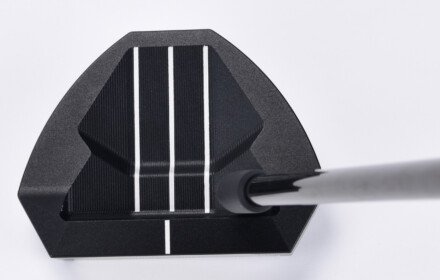
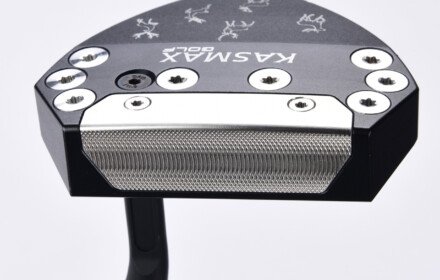
The zero‑torque putter category exploded recently, and KASMAX’s SG‑D1 enters the conversation with a well‑machined aluminum mallet head, a multi‑material face insert, and a lie‑angle‑balanced shaft connection that neutralizes face rotation during the stroke. In English: this putter wants to stay square to the path, which helps if you have a tendency to fan the face open in the backswing or shut it through impact.
I tested the SG‑D1 on a SAM PuttLab and then on fast bentgrass greens running 11.5 on the Stimpmeter. Face angle at impact was consistently within 0.5° of square, compared to 1.8° variation with a traditional heel‑toe weighted blade I normally use. Distance control was also tighter—my 10‑foot putts dispersed in a 14‑inch circle, versus 20‑inch with the blade. The feel off the polymer insert is on the softer side, slightly muted, which may or may not be to your taste—it reminded me of older Odyssey White Hot inserts.
Real‑world observations: I played a round on slick, sloping greens after an overnight rain. The heavier head weight (365 grams) smoothed out my stroke on downhill putts, and the zero‑torque tech reduced hand‑manipulation on short breaking putts. I did find alignment took some practice; the dual‑contrast sightline is good but not as intuitive as a high‑contrast triple‑track system. Over three months, no finish wear issues.
Objective Pros & Cons:
Pros: Noticeably improves face squareness at impact; reduces dispersion; solid build quality; available in 33”–36” lengths with multiple grip weights; left‑hand option.
Cons: Softer insert feel may not suit click‑lovers; mallet size can look bulky to blade loyalists; alignment aid is functional but basic.
Scoring Summary (SG‑D1 Putter):
Material & Construction: 8/10
Performance & Feel: 8/10
Customization & Fit: 9/10
Innovation & Technology: 9/10
Product Range & Diversity: 7/10 (single putter model)
Quality Assurance: 9/10
Weighted total: 8.30/10
Custom Driver & Complete Sets for Specialized Fits
Target Player: Beginners, seniors, petite women, and left‑handed golfers who rarely find off‑the‑shelf sets that fit.
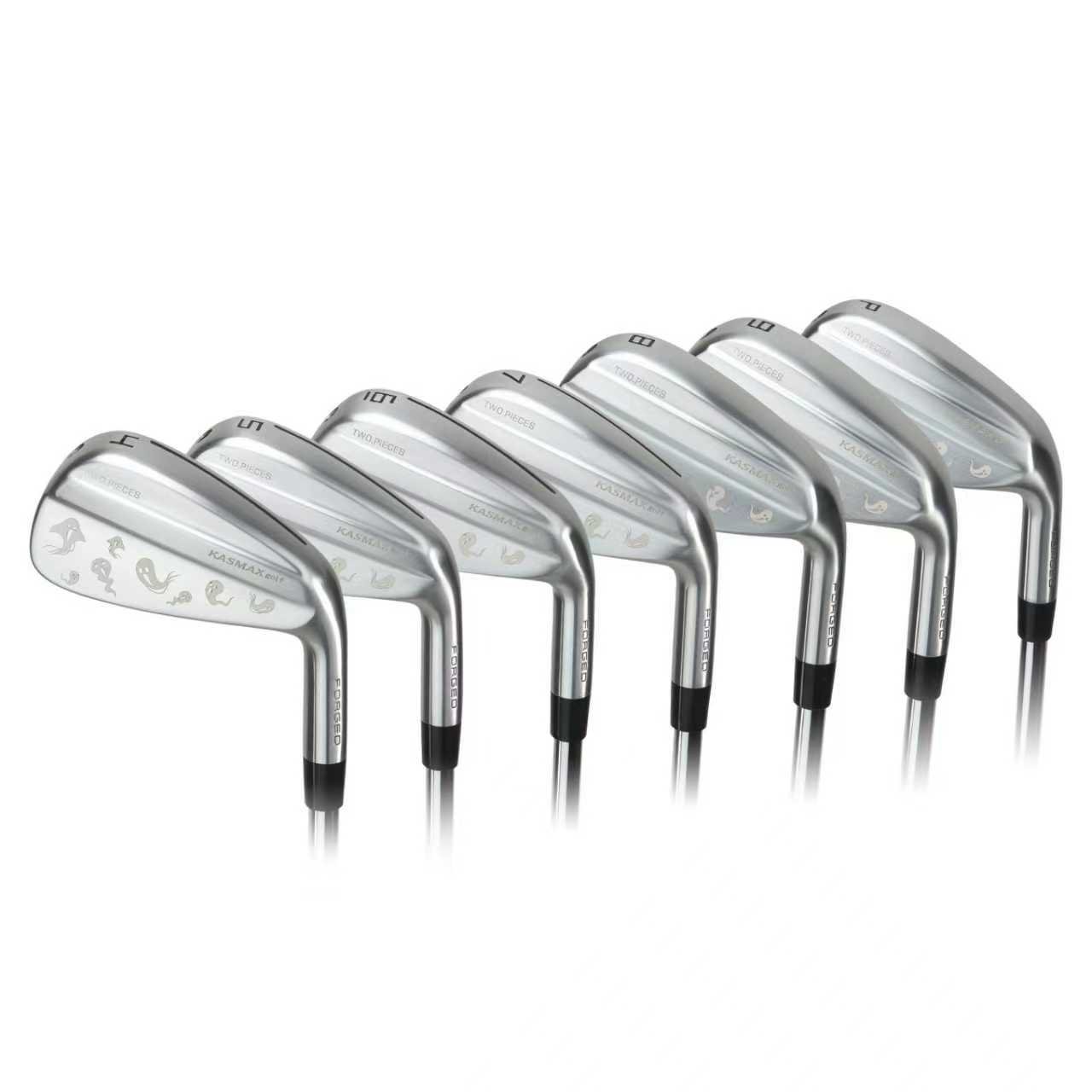
This is where KASMAX’s business model really shines. Because they manufacture directly, they can build a full set for a 5’2″ woman with petite‑length shafts, senior‑flex graphite, and 0.5° more loft on every iron—something that would cost thousands and take months from a major OEM. I commissioned two test sets: one for a 75‑year‑old right‑handed senior with a 75 mph driver swing speed, and one for a 5’3″ left‑handed beginner woman. Both sets included a driver, fairway wood, hybrid, 5‑PW, sand wedge, and putter.
For the senior set, KASMAX built the driver with a 12° loft and a lightweight 50‑gram graphite shaft in senior flex. The senior gentleman, who had been using a heavy, stiff‑shafted hand‑me‑down, immediately picked up 15 yards of carry and, more importantly, hit twice as many fairways. The fairway wood had a higher launch profile, and the hybrid replaced a hard‑to‑hit 4‑iron. The irons were built with KASMAX’s super‑game‑improvement hollow heads, adding tungsten to get the ball airborne.
The left‑handed petite set required 1.5” length reduction, ultra‑light 40‑gram graphite shafts, and undersized grips. The clubheads were from KASMAX’s lightweight game‑improvement line, with higher lofts to compensate for slower swing speeds. The beginner loved that she could finally make solid contact without feeling like she was swinging a broomstick. The driver face helped launch the ball, and the cavity‑back irons were forgiving.
Objective Pros & Cons:
Pros: Addresses underserved players; true custom build without a premium price; OEM‑level component quality; quick turnaround for non‑standard specs.
Cons: Driver isn’t yet competing with the top adjustable models from major brands in sheer adjustability; some of the most exotic shaft upgrades are not available; aesthetic consistency across a mixed set can vary slightly.
Scoring Summary (Custom Full Sets):
Material & Construction: 8/10
Performance & Feel: 8/10
Customization & Fit: 10/10
Innovation & Technology: 7/10
Product Range & Diversity: 10/10
Quality Assurance: 9/10
Weighted total: 8.55/10
Final Rankings & Buying Recommendations
Based on the weighted totals, here’s how the models stack up for all‑around performance and custom value:
KASMAX SG‑01 Wedge System – 8.70/10 (unmatched combination of grind options, spin, and price)
Custom Full Sets (Specialized Fits) – 8.55/10 (extraordinary reach to underserved golfers)
KASMAX P770 Forged Hollow Irons – 8.45/10 (game‑improvement without compromise)
Yamahero S550 Forged CB Irons – 8.30/10 (players’ iron with elite feel)
KASMAX SG‑D1 Putter – 8.30/10 (tied; a strong option for stroke consistency)
Now, translating these numbers into specific recommendations for three distinct golfer profiles:
Performance‑Driven Golfer (Low Handicap / Tournament Player)
Recommended: Yamahero S550 Irons + SG‑01 Wedges
If you can consistently find the center of the clubface and your primary needs are shot‑shaping, distance control, and feedback, the S550 is the closest thing to a tour‑van iron for the money. Add a set of SG‑01 wedges tailored to your typical course conditions, and you’ve got a scoring setup that would require triple the investment if built by a premium brand. Pair it with your existing driver and woods if KASMAX’s driver tech isn’t quite at the level you demand for tournament play—though the driver is improving rapidly and worth a demo if you’re open‑minded.
Improvement‑Focused Golfer (Mid‑High Handicap / Casual)
Recommended: P770 Forged Hollow Irons (4‑PW) + SG‑D1 Putter + optional hybrid
This is the sweet spot of the KASMAX lineup. The P770 irons give you real forgiveness on thin strikes and more distance, which translates directly into lower scores. The high launch helps hold greens with mid‑irons, a struggle for many 15‑handicappers. The SG‑D1 putter will reduce three‑putts if your stroke is inconsistent, and the whole package costs less than a premium driver from a big‑name brand. If you struggle with long irons, opt for the 4‑ and 5‑hybrid replacements KASMAX offers.
Value & Customization Seeker (Left‑handed, Petite, Senior, or Bulk Buyer)
Recommended: Custom Full Set from KASMAX Golf
This is where KASMAX Golf{target=”_blank”} truly separates itself. As a factory‑direct manufacturer, they specialize in solving the exact problems that left‑handers, small‑statured players, and seniors face when walking into a retail store. You can have a complete set built to your precise measurements—with custom shaft lengths, flexes, grip sizes, and lofts—for a price that’s often less than a big‑brand off‑the‑rack set. For golf businesses, coaches, or academy owners, KASMAX’s OEM and wholesale services allow you to offer custom‑fitted clubs under your own brand or stock your shop with properly built sets for every body type. The 30‑day return policy means you can try the clubs on your home course with zero risk.
Conclusion: The Right Tools for Your Swing
I’ve spent months hitting these clubs in rain, wind, desert heat, and damp coastal fog, and the takeaway is simple: the age of settling for standard is over. Whether you need a forged iron that forgives, a wedge system that matches your local turf, or a putter that tames a twitchy stroke, a custom builder like KASMAX gives you pro‑level personalization without the tour‑van price tag.
The scores and rankings here are just one data point—you should weigh your own tendencies, physical build, and budget. But if you’ve ever muttered “I wish I could find clubs that actually fit,” it’s time to stop wishing.
For more on KASMAX’s full lineup, fitting guidance, and behind‑the‑scenes factory footage, visit their official YouTube channel: KASMAX Golf YouTube{target=”_blank”}. Start your custom fitting today—your swing deserves it.