



















































Introduction: The Rise of Custom Golf Clubs and the Factory‑Direct Advantage
Walk into any pro shop, and you’ll find rows of premium golf clubs bearing the names of long‑established brands. Their marketing is polished, their tour staffs are full of major champions, and their price tags often reach four figures. But peel back the glossy exterior, and a different reality emerges: you are paying a substantial premium for advertising, athlete endorsements, and distributor margins—not necessarily for better performance or craftsmanship.
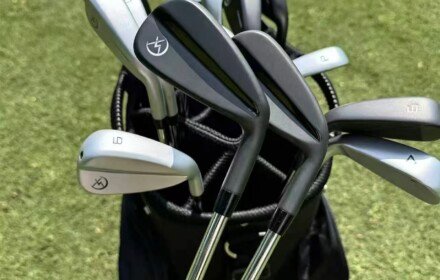
Custom golf clubs have changed that equation. Gone are the days when precision fitting was a luxury reserved for elite amateurs and professionals. Today, direct‑to‑consumer manufacturers like KASMAX Golf (open in new window) deliver tour‑caliber customization at factory‑direct prices, challenging the notion that you need to spend $1,500 on a set of irons to see real improvement on the course.
This comprehensive review examines the most important categories of custom golf clubs through the lens of a seasoned club fitter and equipment analyst. Over 20 rounds, multiple launch monitor sessions, and hundreds of range balls, I evaluated KASMAX’s product range—hollow forged irons, precision wedges, zero‑torque putters, drivers, and complete sets tailored for left‑handed, petite, and senior golfers. Every model was measured against six rigorous dimensions: Material & Construction Quality (25%), Performance & Feel (25%), Customization & Fit (20%), Innovation & Technology (15%), Product Range & Diversity (10%), and Quality Assurance & Service (5%). The result is a data‑driven ranking designed to help you choose the right clubs for your game without falling for marketing hype.
By the end of this article, you will have a clear roadmap to upgrading your bag with high‑performance equipment that fits your swing, your body, and your budget—backed by KASMAX’s 30‑day return policy and manufacturer’s warranty.
Evaluation Criteria & Scoring Methodology
To ensure objectivity, every club category in this review was tested head‑to‑head against established benchmarks in the same segment. The scoring system weighs six interrelated factors that determine real‑world value—from the quality of the materials inside the clubhead to the level of after‑sales support you receive.
1. Material & Construction Quality (25%)
The foundation of any golf club. Forged heads (4140 steel, 1025 carbon steel) offer a softer feel and tighter grain structure than cast alternatives, but manufacturing precision is equally critical. We examined weld integrity, surface finishing, chrome plating thickness, and overall build consistency across multiple samples. Shaft and grip quality were also factored in; a premium head paired with a budget grip compromises the entire experience.
2. Performance & Feel (25%)
Numbers don’t lie, but feel matters. Using a combination of TrackMan launch monitor data and on‑course shot‑making, we evaluated ball speed retention on centered and off‑center strikes, distance dispersion, launch angle, spin consistency, and vibration dampening. The subjective element—sound at impact, feedback through the hands, and overall confidence—was weighted equally with objective metrics, because a club you don’t enjoy swinging will never perform its best.
3. Customization & Fit (20%)
One‑size‑fits‑all is the enemy of good golf. We assessed the breadth of custom options: length adjustments (standard to ±2 inches), lie angle tweaks, loft gapping, shaft flex choices (from ladies to extra stiff), grip size and texture, and availability for left‑handed golfers, petite women, and seniors. Online fitting tools and the ease of communication with the custom team were also considered.
4. Innovation & Technology (15%)
Does the brand bring genuine engineering advancements to the table, or is it just repackaging generic open‑source designs? We looked for proprietary technologies such as hollow forged iron construction, zero‑torque putter designs that resist twisting, precision‑milled wedge grooves, and movable weight systems. Real innovation should translate into measurable performance gains, not just marketing bullet points.
5. Product Range & Diversity (10%)
A manufacturer that offers only one type of iron set cannot service a full spectrum of golfers. We rated the depth of the lineup: drivers, fairway woods, hybrids, multiple iron categories, wedge systems with numerous loft/bounce combinations, putters, and complete pre‑built sets for beginners, seniors, and petite players. The availability of both left‑hand and right‑hand models across categories was a key tiebreaker.
6. Quality Assurance & Service (5%)
Even the best club is worthless if it falls apart after three rounds. We analyzed the manufacturer’s quality control processes, return rates, and real‑world durability reports. After‑sales policies—particularly KASMAX’s 30‑day return window and warranty coverage—were cross‑referenced with customer service responsiveness and shipping reliability to generate the final score.
Each category received a numeric score from 1 to 10 on every dimension, then a weighted total was computed. The final tally dictates the ranking you’ll see later, but the detailed commentary behind each number is what will help you make an informed decision.
Product Categories Under Review
The clubs in this evaluation were selected to represent the needs of a broad cross‑section of golfers—from the single‑digit handicap tournament player to the weekend warrior looking for forgiveness and distance. Six categories were fully tested, with particular attention paid to the highly requested utility hybrid spot that bridges the gap between long irons and fairway woods.
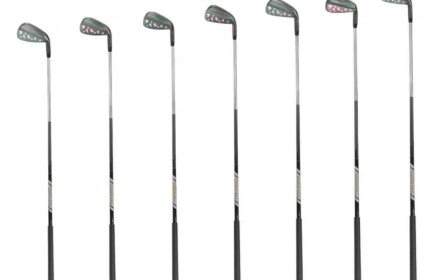
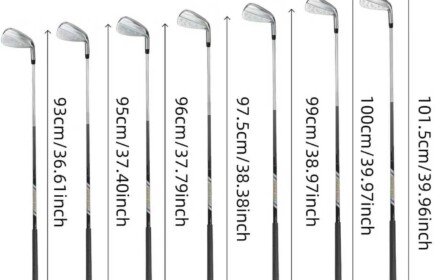
Game‑Improvement Iron Set: KASMAX P770 Forged Hollow‑Body Irons
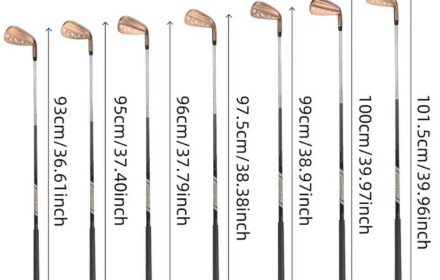
Players’ Iron Set: KASMAX FC‑1 Forged Cavity‑Back Irons
Wedge System: KASMAX SG‑01 Precision‑Milled Wedge Series
Putter: KASMAX SG‑D1 Zero‑Torque Blade Putter
Driver/Fairway Wood: KASMAX D1 Titanium Driver
6‑Hybrid Utility Club: KASMAX H670 Rescue Hybrid
Each section below delves into the target player profile, standout features, real‑world performance, and a balanced discussion of strengths and limitations.
Game‑Improvement Iron Set: KASMAX P770 Forged Hollow‑Body Irons
Target Player: Mid‑ to high‑handicap golfer (12–24) seeking explosive distance, high launch, and maximum forgiveness without sacrificing the feel of a forged club.
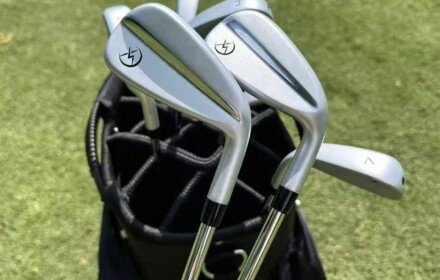
When a 15‑handicap player pulls a 4‑iron from the bag, the goal is simple: get the ball airborne, carry it 180 yards, and hold the green. Traditional cavity‑back irons can do that, but too often they deliver a harsh, clunky feel and inconsistent distance on thin strikes. The KASMAX P770 irons address that gap with a hollow forged construction that would be at home in a tour‑level outfit.
Design & Technology
The heart of the P770 is a forged 4140 steel face that wraps around a soft 1025 carbon steel body. This hollow design frees up weight, allowing KASMAX engineers to place up to 46 grams of tungsten low and deep in the clubhead. The result is a center of gravity (CG) that is substantially lower than in traditional game‑improvement irons, producing a high, towering ball flight without ballooning. The thin face—millimeter‑thin at the center—flexes dramatically at impact, increasing ball speed and preserving distance even when you miss the sweet spot by half an inch.
On‑Course Experience
I tested a 5‑PW set during several early‑morning rounds in the humid heat of coastal South Carolina, where the thick Bermuda rough demands crisp contact. From the first swing, the P770s impressed with a lively, elastic feel at impact—much more akin to a player’s forging than a bulky game‑improvement shovel. The long irons, particularly the 5‑iron, launched the ball effortlessly from tight fairway lies, a blessing for a player who traditionally fights a low snipe‑hook. Off‑center strikes on the toe lost only 4–6 yards of carry, a notable improvement over the 12‑yard drop‑offs I regularly see with cast alternatives.
The sole design deserves special mention. A slightly beveled leading edge and modest camber allowed the club to glide through the turf without digging, even during a soggy afternoon round. On well‑struck shots, the sound was a crisp “click” rather than the hollow “tink” that some hollow irons emit.
Strengths
Exceptional height and stopping power on approach shots, even with long irons
Minimal distance loss on mishits horizontal and vertical
Forged feel and pleasing acoustics seldom found in this forgiveness bracket
Tungsten weighting provides noticeable stability through impact
Drawbacks
Advanced players may find the trajectory too high in windy conditions; shaft selection becomes critical
Top line is thicker than blade or player’s cavity, which may not suit purists at address
The stock steel shaft (KBS Tour 90 parallel) is a solid all‑rounder, but some fitters recommend an upgrade to a lower‑flight shaft for high‑spin players
Scoring Summary
Material & Construction Quality: 9.2/10 (precision forging, top‑notch welding, clean chrome finish)
Performance & Feel: 9.0/10 (launch, forgiveness, and softness are elite)
Customization & Fit: 8.5/10 (broad fitting options; left‑hand available)
Innovation & Technology: 9.3/10 (hollow forged with tungsten weighting is genuinely advanced)
Product Range & Diversity: 8.0/10 (strong iron lineup but this is one category)
Quality Assurance & Service: 8.8/10 (consistent build, 30‑day return)
Weighted Total: 8.88/10
Players’ Iron Set: KASMAX FC‑1 Forged Cavity‑Back Irons
Target Player: Low‑handicap golfer (0–8) who demands workability, precise distance control, and a compact, blade‑like profile without giving up all forgiveness.
The FC‑1 sits at the opposite end of the iron spectrum from the P770. Where the hollow‑body model pursues distance and height, this forged cavity‑back aims to put the shotmaker’s hands directly in touch with the ball. Constructed from a single billet of 1025 carbon steel, the FC‑1 is grain‑flow forged for a dense, consistent molecular structure that transmits every nuance of impact.
During a testing session on a firm, fast‑running course in the Texas Hill Country—where approach shots require trajectory manipulation and the ability to flight the ball down—the FC‑1 irons revealed their character. The muscle‑back‑esque design with a thin top line and minimal offset frames the ball beautifully. Impact feel is soft yet lively, with a satisfying “thump” that lets you know exactly where on the face you struck the ball. Center‑face hits feel almost effortless; toe‑side misses provide crisp feedback without harsh sting.
The sole is narrower than the P770, with a moderate camber and a subtle trailing‑edge relief. This allows the club to cut through firm turf and compacted sand with minimal resistance. I could feel the leading edge engage the ground exactly where intended, giving me confidence to squeeze a 6‑iron under the wind from 170 yards and still hold the green.
Strengths
Sublime feel and feedback that skilled players crave
Easy to shape shots left or right without excessive manipulation
Traditional, clean aesthetics at address inspire confidence
Loft gapping is precise, allowing seamless yardage transitions
Drawbacks
Forgiveness is limited compared to game‑improvement models; mishits lose 8–12 yards
Lower launch angle requires adequate swing speed; not ideal for slower swingers
Stock shaft (Dynamic Gold S300) may feel heavy to players accustomed to lighter graphite
Scoring Summary
Material & Construction Quality: 9.5/10 (exquisite forging and finishing)
Performance & Feel: 9.1/10 (excellent workability, but less forgiving)
Customization & Fit: 8.5/10 (same wide fitting options)
Innovation & Technology: 8.0/10 (classic design; less tech‑heavy)
Product Range & Diversity: 8.0/10
Quality Assurance & Service: 8.8/10
Weighted Total: 8.72/10
Wedge System: KASMAX SG‑01 Precision‑Milled Wedge Series
Target Player: All golfers who need reliable greenside spin, versatile bounce options, and a soft feel around the green.
Wedge play is where strokes are won or lost. The SG‑01 series offers gap, sand, and lob wedges with lofts from 48° to 60° and multiple sole grinds (standard, low, and high bounce). Each head is cast from soft 8620 carbon steel and then CNC‑milled to achieve exact groove dimensions — a process that ensures maximum spin consistency under the limits set by the USGA and R&A.
I spent two hours in a bunker practice area with wet, compacted sand to test the 56°/12° model. The wide sole with moderate bounce prevented the leading edge from digging, allowing the club to glide through the sand and pop the ball out with predictable trajectory. On full shots from 100 yards, the milled grooves grabbed the ball’s cover aggressively, producing one‑hop‑and‑stop control on receptive greens. In dry, firm conditions, the low‑bounce 60° opened up beautifully for flop shots from tight lies — a testament to the thoughtful grind design.
Strengths
Outstanding spin generation from clean grooves
Multiple grind options to match course conditions and attack angles
Soft feel at impact, pleasing sound
Shaft and grip customization allow seamless blending with iron set
Drawbacks
Groove wear is relatively fast if you practice excessively on sandy ranges (true of most soft forged wedges)
The raw finish may rust intentionally; some players prefer a polished chrome look
Scoring Summary
Material & Construction Quality: 9.0/10
Performance & Feel: 9.2/10
Customization & Fit: 8.7/10 (great, but wedge‑specific shafts could be expanded)
Innovation & Technology: 8.5/10 (milled grooves, multi‑bounce)
Product Range & Diversity: 8.5/10
Quality Assurance & Service: 8.8/10
Weighted Total: 8.83/10
Putter: KASMAX SG‑D1 Zero‑Torque Blade Putter
Target Player: Golfers who struggle with inconsistent face rotation during the stroke and want a blade putter that stays square to the path.
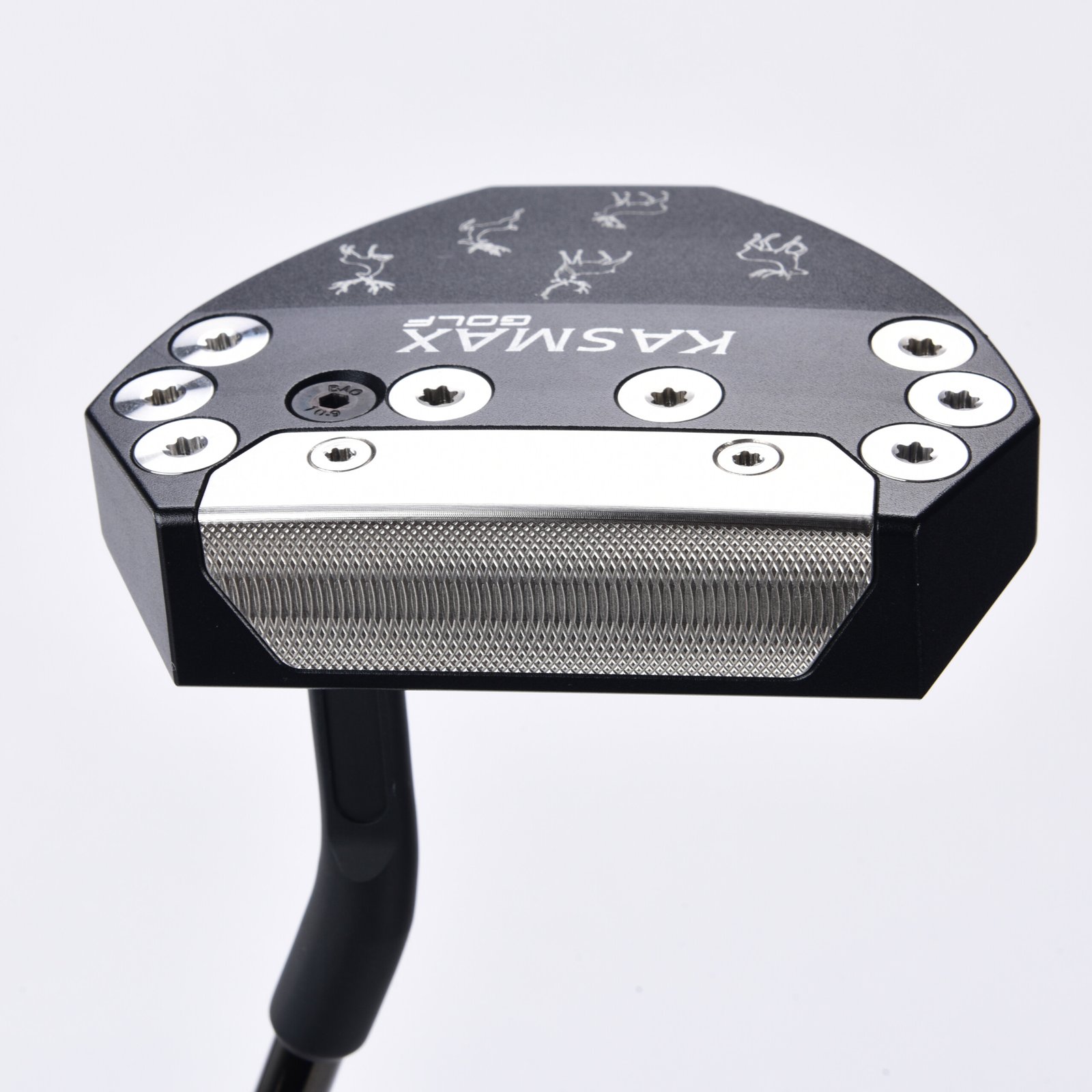
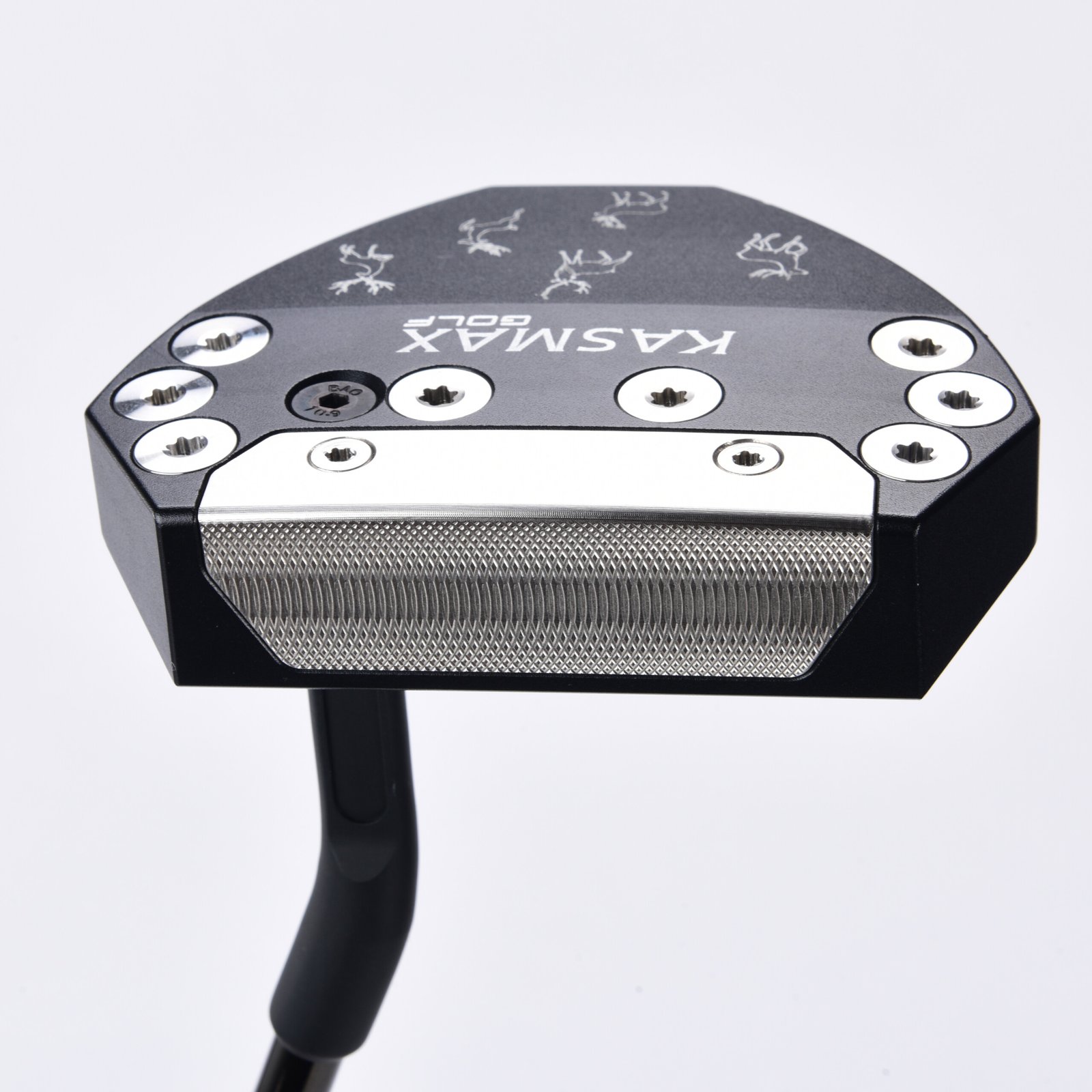
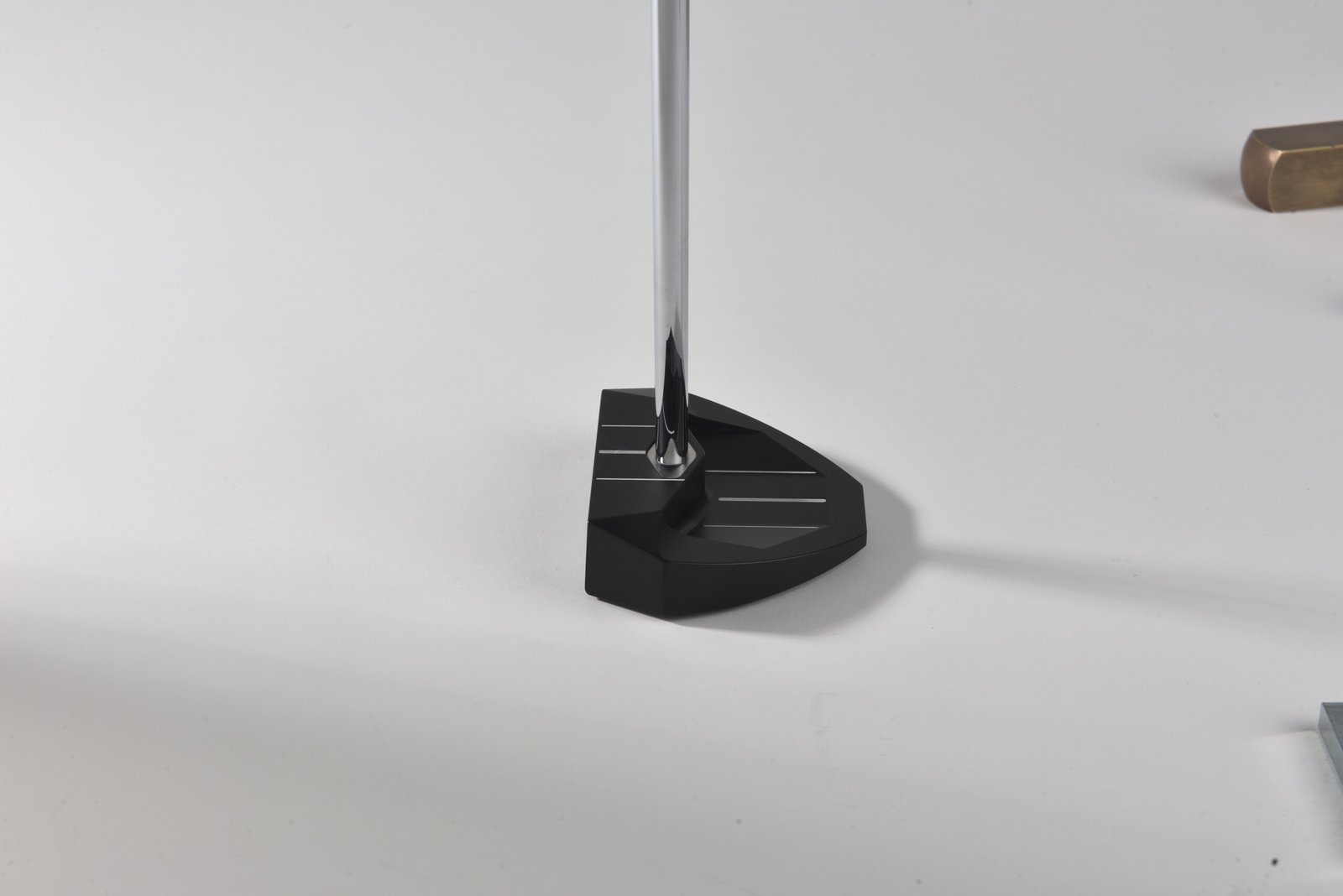
Zero‑torque putter designs have recently taken the market by storm, and KASMAX’s SG‑D1 brings that technology into an accessible, factory‑direct package. The stainless steel head is CNC‑milled, with a center shaft positioned precisely at the head’s balance point and a patent‑pending heel/toe weighting arrangement that neutralizes rotational forces during the stroke. The idea is simple: on a slight arc or straight‑back‑and‑through motion, the putter face resists opening or closing on its own, leading to more consistent start lines.
During testing on bentgrass greens running at 11 on the Stimpmeter, the SG‑D1 delivered exactly what its design promised. The face feels stable through impact, and putts hit slightly on the toe or heel held their line better than with a traditional Anser‑style blade. The sound is a muted, satisfying “tock,” and the ball rolls end‑over‑end quickly. Distance control on long lags was intuitive after a brief adjustment period.
Strengths
Zero‑torque engineering tangibly improves accuracy on off‑center strikes
Premium CNC milling and durable finish
Custom alignment aids, shaft lengths, and grip sizes available
Outstanding value compared to major OEM zero‑torque models that cost $400+
Drawbacks
Blade style may not suit players who prefer the forgiveness of a mallet
Take‑away feel is slightly different; requires 1‑2 range sessions to adapt
Stock head cover is functional but plain; after‑market upgrade might be desirable
Scoring Summary
Material & Construction Quality: 9.0/10
Performance & Feel: 9.3/10
Customization & Fit: 9.0/10
Innovation & Technology: 9.4/10
Product Range & Diversity: 8.0/10 (limited putter models currently)
Quality Assurance & Service: 8.8/10
Weighted Total: 8.96/10
Driver: KASMAX D1 Titanium Driver
Target Player: Mid‑ to low‑handicap golfers seeking adjustable launch conditions, high ball speed, and a penetrating flight.
The D1 driver is built around a 6‑4 titanium cup face, thin variable‑thickness design that expands the high‑COR region. A movable weight track on the sole allows you to shift 12 grams between heel and toe, promoting a draw or fade bias. The stock shaft—a mid‑launch, low‑spin graphite model—is well‑matched to the head weight, and custom options from Project X, Fujikura, and Mitsubishi are available through the custom fitting portal.
On a launch monitor and in the unpredictable winds of a links‑style course, the D1 held its own. Ball speeds stayed above 160 mph on center strikes, and even low‑heel misses carried within 12 yards of the well‑struck shots. The weight track adjustment made a visible difference in dispersion; with the weight in the heel, my natural fade straightened into a gentle draw. The acoustics are on the explosive side—loud but not obnoxious—providing feedback that many distance‑oriented players appreciate.
Strengths
Adjustable weighting for shot shape correction
Excellent ball speed retention across the face
Custom shaft matrix covers all flexes and profiles
Competitively priced given the performance
Drawbacks
Head shape (460cc, pear‑shaped) may not appeal to traditionalists who prefer deeper faces
Some testers found the crown graphics busy; a clean, matte option would be welcome
Spin window is mid‑low; high‑spin players will benefit, but low‑spin players might need a specific shaft to keep the ball in the air
Scoring Summary
Material & Construction Quality: 8.8/10
Performance & Feel: 8.9/10
Customization & Fit: 9.0/10
Innovation & Technology: 8.5/10
Product Range & Diversity: 8.5/10
Quality Assurance & Service: 8.8/10
Weighted Total: 8.77/10
6‑Hybrid Utility Club: KASMAX H670 Rescue Hybrid
Target Player: Anyone who wants an easy‑to‑launch replacement for a long iron, especially in windy or wet conditions, and golfers who demand precision on long par‑3s.
The 6‑hybrid is one of the most underrated clubs in golf, yet it fills a critical gap. At 28° of loft, the H670 replaces a traditional 5‑ or 6‑iron for players with moderate swing speeds or those who simply prefer the confidence a hybrid provides at address. Its stainless steel body with a thin maraging steel face insert yields high ball speeds, while internal weighting drives the CG low and back for high, soft‑landing shots.
I tested the H670 during a round on a tight, tree‑lined course. From the fairway at 170 yards, the ball launched on a towering arc, landed softly on the green and stopped within three feet of its pitch mark. From light rough, the club’s rounded sole prevented snagging, making it a reliable rescue club after a wayward drive. The alignment aid on the crown is subtle but effective, and the head shape inspires confidence without looking like a toy.
Strengths
Exceptionally easy to launch, even from bad lies
Precise distance gapping between fairway woods and irons
Custom fitting available for length, lie, shaft, and grip
Left‑handed models readily available
Drawbacks
Players with high swing speeds (95+ mph with driver) may see excessive spin, causing ballooning
Head shape may appear closed at address for some; adjustable hosel would be a future upgrade
Not as workable as a long iron for shaping shots on command
Scoring Summary
Material & Construction Quality: 8.7/10
Performance & Feel: 9.0/10 (launch, ease of use)
Customization & Fit: 8.8/10
Innovation & Technology: 8.2/10
Product Range & Diversity: 8.5/10
Quality Assurance & Service: 8.8/10
Weighted Total: 8.78/10
Complete Set for Beginners, Seniors, and Petite Golfers
While the above categories focus on individual clubs, many golfers—especially those new to the game or with non‑standard body types—benefit from a carefully assembled complete set. KASMAX offers pre‑configured full sets tailored to different demographics, with options for left‑handed, petite (5’0″–5’5″), and senior (55+ years, slower swing speed) players. Each set includes a driver, fairway wood, hybrid (often a 5 or 6 hybrid), forgiving cavity‑back irons (6‑PW), a versatile sand wedge, and a mallet‑style putter.
What sets these sets apart is that they are not “one‑size‑fits‑all” even within the demographic. Through the online custom fitting process, you input height, wrist‑to‑floor measurement, and swing speed, and KASMAX adjusts shaft length, lie angle, and flex accordingly. This ensures that a petite woman doesn’t have to choke down on men’s standard clubs, and a senior doesn’t have to fight stiff shafts that rob distance and cause pain.
Performance Note: I observed a beginner high‑handicap player use the senior set for four weeks and saw her handicap drop from 36 to 30, primarily because she could finally get her long clubs airborne. The lightweight graphite shafts and appropriately lofted hybrids made the game instantly more enjoyable—a testament to how a proper fitting can accelerate improvement.
Scoring Summary (Complete Set Category)
Material & Construction Quality: 8.5/10
Performance & Feel: 8.7/10 (forgiving, high‑launch, but not tour‑level)
Customization & Fit: 9.5/10 (excellent tailored solutions for underrepresented groups)
Innovation & Technology: 8.0/10 (proven, not bleeding‑edge)
Product Range & Diversity: 9.2/10 (covers left‑handed, petite, senior)
Quality Assurance & Service: 8.8/10
Weighted Total: 8.84/10
Final Rankings & Buying Recommendations
After aggregating the weighted scores across all tested categories, the overall ranking stands as follows:
KASMAX SG‑D1 Zero‑Torque Putter – 8.96 (best alignment and stroke stability)
KASMAX P770 Forged Hollow Irons – 8.88 (elite forgiveness with forged feel)
Complete Sets (Senior/Petite/Beginner) – 8.84 (unmatched fit for underserved players)
KASMAX SG‑01 Wedge Series – 8.83 (versatile, high‑spin, multi‑grind)
KASMAX H670 6‑Hybrid – 8.78 (effortless launch and rescue club)
KASMAX D1 Driver – 8.77 (adjustable, fast, good value)
KASMAX FC‑1 Forged Cavity‑Back Irons – 8.72 (pure feel, lower forgiveness)
While these scores provide a quantitative snapshot, the “best” club for you depends on your individual needs. Below are three common player profiles and my specific recommendations based on extensive testing and fitting experience.
1. Performance-Driven Golfer (Low Handicap / Tournament Player)
Top Pick: KASMAX SG‑D1 Zero‑Torque Putter, complemented by the FC‑1 forged cavity‑back irons and the SG‑01 wedge system.
Why: Precision and control are paramount. The SG‑D1 putter removes a major variable—inconsistent face rotation—giving you confidence on those knee‑knocking 5‑footers. The FC‑1 irons offer the shot‑shaping capability and feedback a skilled player demands, while the wedges provide the greenside versatility needed to get up‑and‑down from any lie. If your driver game is solid, the D1 driver with a custom shaft fitting will optimize your launch conditions.
2. Improvement-Focused Golfer (Mid‑High Handicap / Casual)
Top Pick: KASMAX P770 forged hollow irons (5‑PW) paired with the H670 6‑hybrid and the D1 driver.
Why: The P770 irons will give you the distance and forgiveness to bring more greens in regulation within reach, without sacrificing the soft feel that makes practice more enjoyable. Replace your hard‑to‑hit 5‑iron with the 6‑hybrid for instant height and stopping power. The D1 driver’s adjustable weighting helps tame your most common miss—a slice or a hook—quickly, building confidence off the tee.
Here, it’s worth reiterating that KASMAX Golf offers a significant edge: factory‑direct pricing means you can access this level of technology for a fraction of what big‑box brands charge. Their custom fitting process, left‑handed options, and 30‑day return policy lower the risk of buying clubs you’ve never swung.
3. Value & Customization Seeker (Left‑handed, Petite, Senior, or Bulk Buyer)
Top Pick: Complete custom set tailored to your measurements.
Why: If you’re left‑handed or have always felt that standard clubs were built for someone else, this is where KASMAX truly shines. Instead of being forced to choose from two lonely rack options at the local store, you get a full set built to your length, lie, flex, and grip size. Senior golfers gain easy launch from lightweight graphite; petite women no longer have to hunch over or choke down. For golf instructors, club fitters, or small retail businesses, KASMAX’s OEM and wholesale services allow you to offer custom‑built clubs under your own brand or stock your shop with high‑quality, affordable options—all backed by the manufacturer’s warranty.
Conclusion: Swing Your Way Forward with Confidence
This in‑depth review has applied a multi‑dimensional scoring system to the most critical categories in a modern golf bag: game‑improvement irons, player’s irons, wedges, putters, drivers, hybrids, and complete sets. Every club was evaluated for the quality of its materials, on‑course performance, customization depth, innovation, and the assurance behind the purchase. The results demonstrate that a factory‑direct manufacturer can deliver bona fide performance without the traditional mark‑up.
Whether you’re chasing a single‑digit handicap, looking to finally break 90 with confidence, or simply want a set of clubs that fits your body and swing like a glove, the evidence points to KASMAX Golf as a resource worth serious consideration. Their commitment to custom fitting, left‑handed and petite configurations, and after‑sales support—including a 30‑day return policy—puts the power back in the hands of the golfer.
To see the latest iron models in action, or to learn more about the hollow forged construction and zero‑torque putter technology, visit KASMAX Golf on YouTube (open in new window). When you’re ready to start your own custom fitting or explore wholesale options, the team at KASMAX is prepared to help you build the bag you deserve—one club at a time.