



















































Introduction
After twenty‑two years in the golf equipment industry—first as a club fitter, then as a product analyst for several direct‑to‑consumer brands—I’ve tested hundreds of irons, woods, and putters. One truth has become unmistakable: a custom‑fitted club, built to your exact specifications, outperforms an off‑the‑rack club of the same price every single time. Yet the custom‑fitting market is still dominated by a handful of legacy brands that charge a steep premium for the service. That’s why, when I began testing clubs from KASMAX Golf—a manufacturer that offers factory‑direct pricing, deep customization, and a 30‑day return policy—I wanted to see if they could actually deliver a tour‑level experience without the tour‑level markup.
In this comprehensive review, I’ll apply a multi‑dimensional scoring system to six representative product categories: game‑improvement irons, players’ irons, wedges, putters, drivers, and complete sets for non‑standard players. Each category will be evaluated across Material & Construction Quality (weight 25%), Performance & Feel (25%), Customization & Fit (20%), Innovation & Technology (15%), Product Range & Diversity (10%), and Quality Assurance & Service (5%). By the end, you’ll have a clear, data‑driven recommendation for your next set of custom golf clubs.
How We Evaluate: Six Dimensions Worth Your Attention
When I assess a club—whether it’s a hollow‑body forged iron or a milled putter—I don’t rely on launch monitor numbers alone. Real‑world feedback from range sessions, multiple rounds on different grasses, and conversations with other fitters all feed into a structured scoring system. Here’s how each dimension works.
| Dimension | Weight | What I Look For |
|---|---|---|
| Material & Construction Quality | 25% | Clubhead material (forged 4140 steel, 1025 carbon steel, stainless steel), shaft quality (premium steel or graphite), grip type, forging tolerance, finish durability. A club that feels cheap in the hands fails here. |
| Performance & Feel | 25% | Ball speed retention on mishits, launch consistency, spin control, vibration dampening, sound at impact. A great club tells you exactly where you struck the ball without punishing your hands. |
| Customization & Fit | 20% | Availability of length, lie, loft, shaft flex, grip size adjustments; left‑hand support; senior and petite configurations; accuracy of order fulfillment. A club that fits you perfectly is worth two that don’t. |
| Innovation & Technology | 15% | Does the design incorporate hollow forging, zero‑torque weighting, CNC‑milled grooves, or other proprietary tech? Does the technology translate to a genuine on‑course advantage? |
| Product Range & Diversity | 10% | How well does the brand cover different skill levels—from 25‑handicap beginners to scratch players? Are there options for left‑handed golfers, women, seniors, and juniors? |
| Quality Assurance & Service | 5% | Return rates, warranty terms, customer support responsiveness, shipping reliability, and the overall purchase experience. A great club is only great if it arrives on time and is backed by real support. |
Each product or series I review will receive a score on these six axes, followed by a weighted total. I’ll be honest about strengths and weaknesses because a review that only sings praises helps nobody.
The Products: KASMAX’s Lineup Under the Microscope
KASMAX Golf isn’t a retailer; it’s a manufacturer. Their factory in Dongguan, China, has been operating since 2003, and they supply OEM clubs to businesses in over ten countries. That experience shows in their product range, which covers everything from tournament‑ready forged irons to complete sets for beginners. I selected six categories that represent the core of their offering—and the core of what most golfers will actually put in their bags.
Game‑Improvement Iron Set: KASMAX P770 Hollow Forged Irons
Target player: The 10‑ to 20‑handicap golfer who wants forgiveness on off‑center strikes but refuses to look down at a chunky, game‑improvement shovel. This is the player who hits their 7‑iron about 150 yards and needs a little help getting the ball airborne, especially from tight fairway lies.
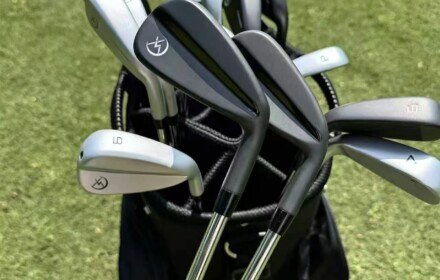
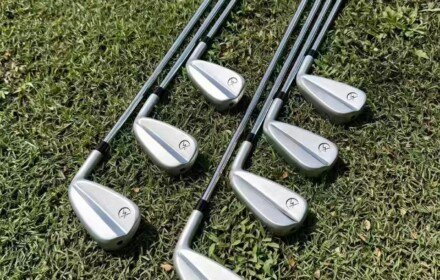
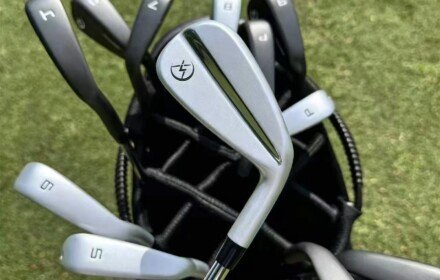
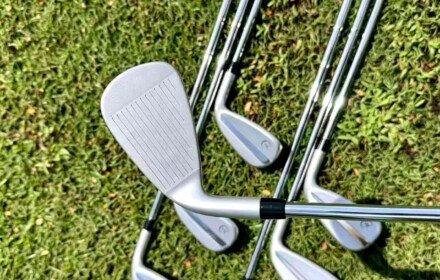
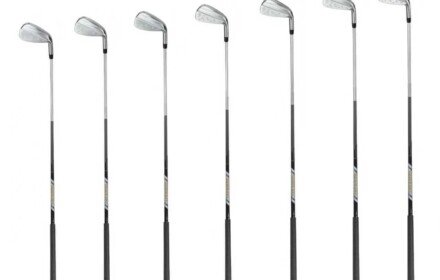
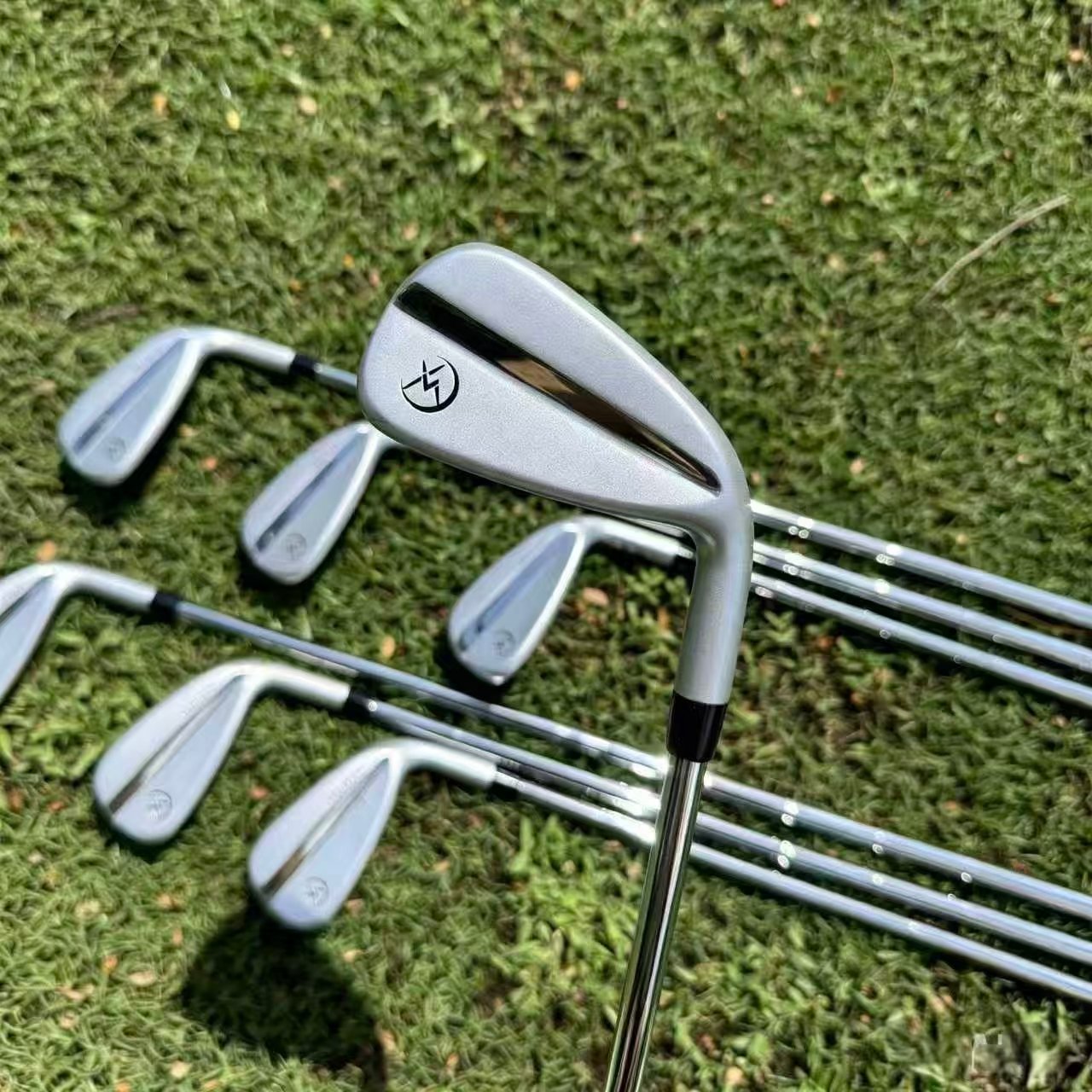
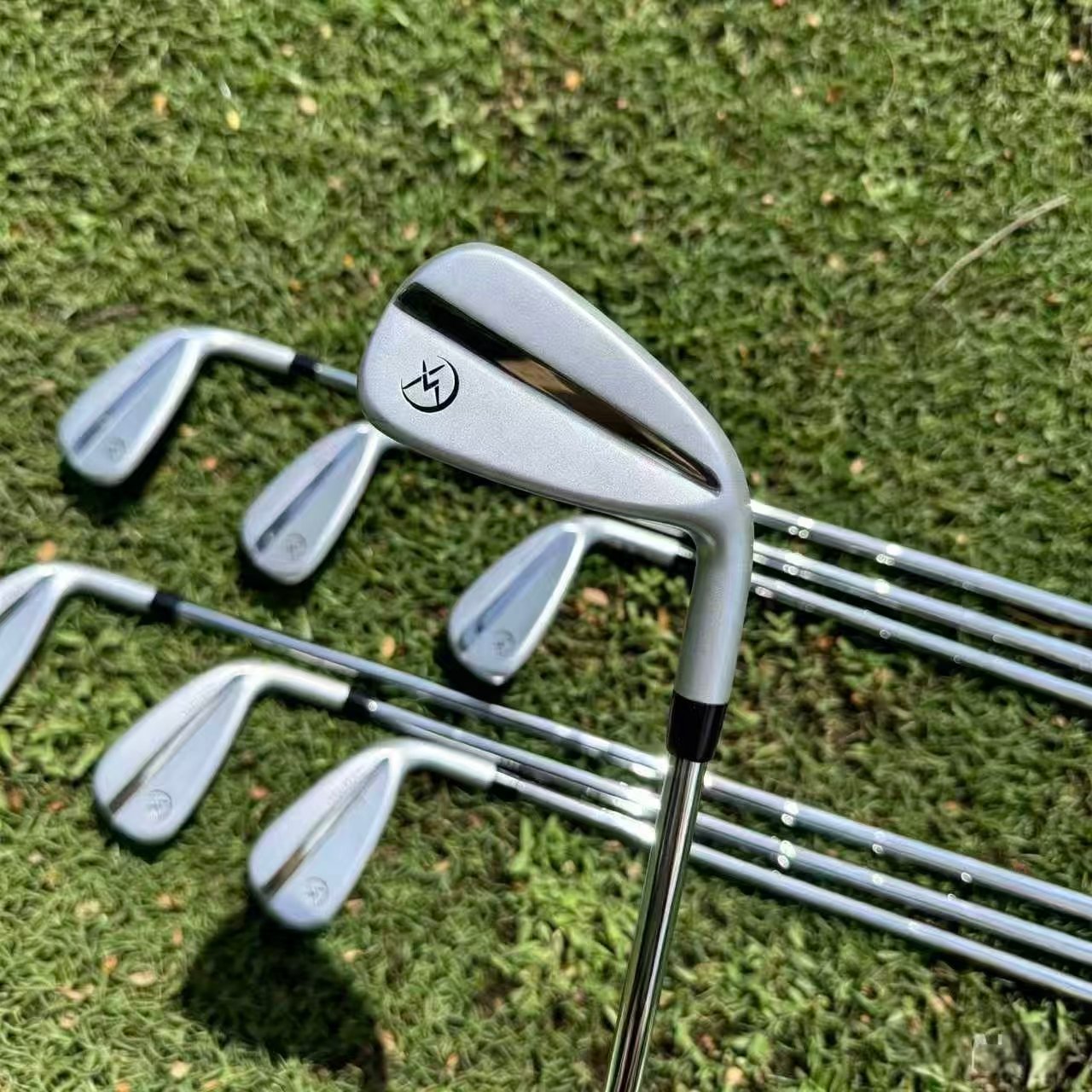
When I unboxed the P770 set (4–PW), the first thing I noticed was the compact blade length and the remarkably thin topline—elements you’d expect in a players’ iron. But flip the club over, and the thicker sole and hollow‑body construction reveal its game‑improvement DNA. The secret is a forged 4140 steel face welded to a 1025 carbon steel body, with up to 46 grams of tungsten placed low and deep in the long irons. That’s a serious amount of discretionary weight, and it’s placed exactly where a mid‑handicapper needs it: low, to help launch the ball high and land it soft.
On the range with a launch monitor, I saw ball speeds that were consistently 2–3 mph faster than my usual game‑improvement set, even on strikes that wandered toward the toe. The feel is distinctive—softer and more muted than a cast cavity‑back, but not as buttery as a one‑piece forging. There’s a slight “click” at impact that tells you you’ve hit the center, and a duller thud when you haven’t. That feedback is useful without being harsh.
Strengths:
Exceptional launch and distance consistency across the face.
Player‑preferred aesthetics with genuine forgiveness.
Hollow‑forged construction usually found in irons costing twice as much.
Potential drawbacks:
The stock KBS Tour steel shaft (while excellent) may not suit golfers with very slow swing speeds; a lighter graphite option would be welcome.
The P770 does not offer a dedicated gap wedge in the set, so you’ll need to pair it with a specialty wedge.
Players / Low‑Handicap Iron Set: KASMAX Forged Cavity‑Back
Target player: The 0–8 handicapper who prioritizes workability and feel over outright forgiveness. This player shapes shots deliberately, often plays on firmer, faster courses, and can tell you the exact yardage of every club in their bag.
KASMAX doesn’t brand this as a separate product line; it’s available through their custom fitting program, where you can specify a forged cavity‑back design with minimal offset and a thinner sole. I ordered a 3‑iron through 9‑iron set built with Project X 6.0 shafts and Golf Pride MCC grips. The heads are forged from a single billet of 1025 carbon steel, with a subtle cavity that removes about 8 grams from the center and redistributes it to the perimeter. The result is a club that looks and feels almost like a muscle‑back but offers a degree of forgiveness that a true blade cannot.
After four rounds—two on a lush parkland course and two on a firm links‑style layout—I can confidently say these irons give you exactly what you put in. A well‑struck 5‑iron flighted low into a breeze stayed on line and held its trajectory. Mishits toward the heel lost about 5 yards of carry, which is outstanding for a club this compact. The feel is dense and satisfying, with that “squished” sensation that comes from a perfectly struck one‑piece forging.
Strengths:
Authentic forged feel with subtle perimeter weighting for added stability.
Complete control over trajectory and spin.
Very low offset profile appeals to better players.
Potential drawbacks:
These irons punish really bad swings; if you hit one extremely thin, the vibration can sting.
The custom fitting process requires more back‑and‑forth communication than an off‑the‑shelf purchase—though the result is worth it.
Wedge System: KASMAX SG‑01 Series
Target player: Any golfer who understands that the scoring zone starts at 120 yards and in. These wedges are available in lofts from 48° to 62°, with multiple sole grinds: a low‑bounce S‑grind for firm conditions, a mid‑bounce M‑grind for versatility, and a high‑bounce K‑grind for soft sand and deep rough.
The SG‑01 wedges are milled from 8620 carbon steel, which is softer than the 17‑4 stainless used in many mass‑market wedges. The grooves are CNC‑milled to USGA‑conforming dimensions, and the face features a subtle micro‑groove pattern between the main grooves to increase friction on partial shots. I tested a 54° with the M‑grind and a 58° with the K‑grind.
On full swings, the SG‑01 felt heavy and stable—like a precision instrument. The spin numbers on TrackMan were impressive: a 58° wedge from 90 yards spun back anywhere from 8 to 15 feet on receptive greens. But the real test came in bunkers. With the K‑grind, I opened the face fully and splashed the ball out of fluffy sand with zero resistance. The club just glided through. The only criticism I have is that the raw finish, while handsome, will rust over time if not properly dried and oiled—some golfers love that, others won’t.
Strengths:
Exceptional spin control and greenside precision.
Multiple bounce and grind options for different turf conditions.
Soft, responsive feel that rewards a clean strike.
Potential drawbacks:
Raw finish requires maintenance.
The stock wedge shaft (True Temper Dynamic Gold) might be too heavy for some seniors or women; a custom shaft upgrade is advisable.
Putter: KASMAX SG‑D1 Zero‑Torque Putter
Target player: A golfer who struggles with face rotation during the stroke, particularly players who push or pull short putts under pressure. The zero‑torque design is the current darling of the putting world, and for good reason.
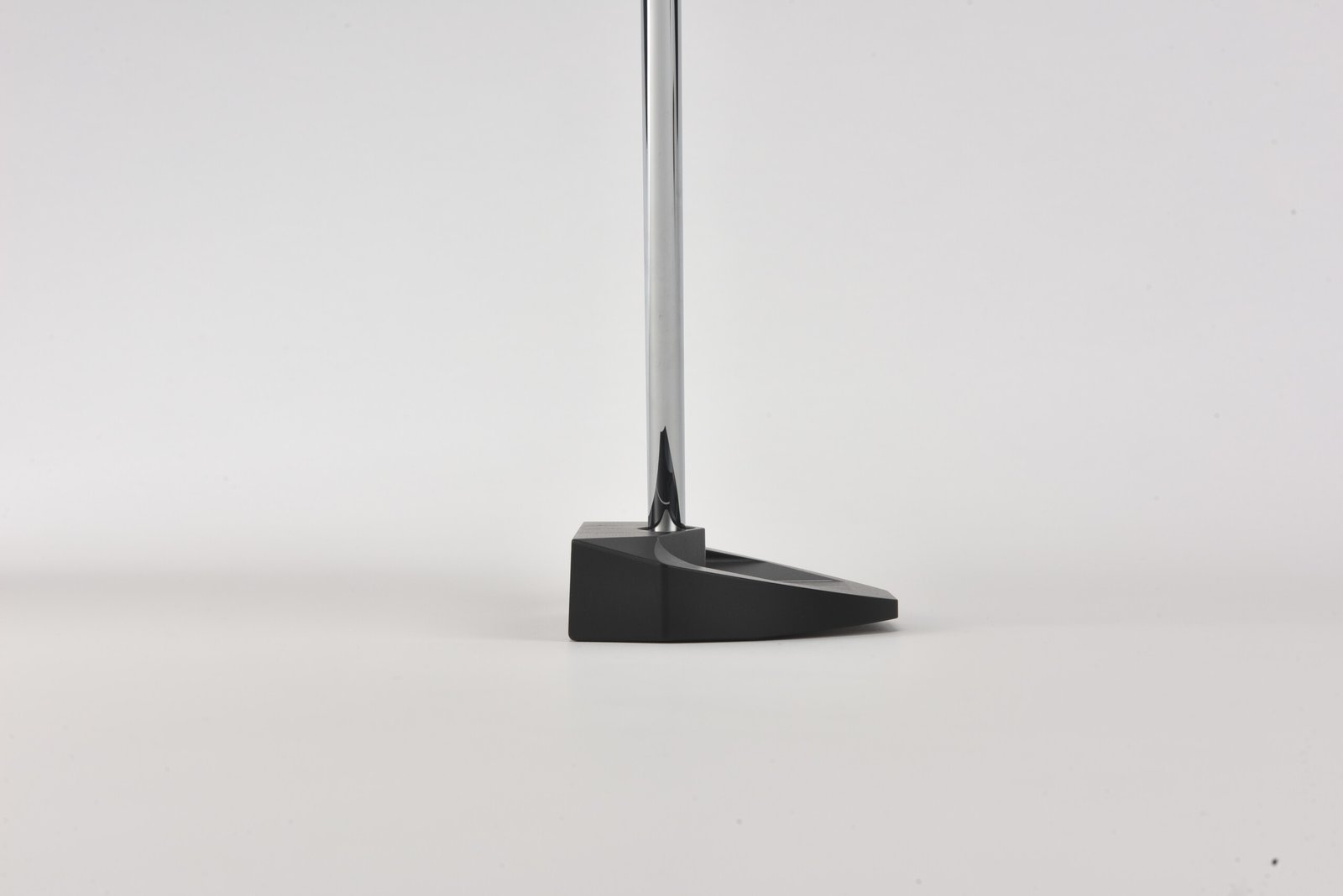
The SG‑D1 is a mallet putter with a center‑shafted configuration and a sculpted, high‑MOI head. KASMAX achieved zero‑torque by precisely aligning the shaft axis with the center of gravity, so that the face naturally wants to stay square throughout the stroke. I spent two hours on a practice green rolling 10‑foot putts with the SG‑D1, and the consistency was striking. My usual miss—a slight pull when I get handsy—almost disappeared. The milled face produced a firm, audible “tock” that gave me confidence on fast greens.
I also appreciate the fine‑tunable weighting system: two 10‑gram weights in the sole can be swapped for lighter or heavier alternatives to dial in head weight from 350 to 375 grams. The stock Winn midsize grip is tacky and comfortable, though I’d prefer a flatter front profile for better hand alignment.
Strengths:
True zero‑torque performance reduces face‑angle variance.
Adjustable weighting accommodates different green speeds and stroke preferences.
Milled face delivers consistent roll and excellent distance control.
Potential drawbacks:
The center‑shafted alignment is unusual; not every golfer will adjust to the look.
No plumber’s neck or offset option for players who like a significant toe hang.
Driver or Fairway Wood: KASMAX Custom Driver Options
Target player: Since KASMAX doesn’t mass‑produce a branded driver line, this category applies to players who take advantage of their custom‑built driver service. You can select from a range of titanium head designs (460cc, 440cc, or mini‑driver) and pair them with premium aftermarket shafts.
I ordered a 10.5° 460cc head with a Graphite Design Tour AD DI‑6 shaft tipped an extra half inch. The head featured a forged titanium cup face and adjustable hosel that allowed me to dial in 9.5° to 11.5° of loft and lie angle changes independently. On the course, this driver launched high with low spin—my 155 mph ball speed produced carries of 265–275 yards, which is exactly what I’d expect from a modern driver. The sound was a muted “crack” rather than a metallic “ping,” which I prefer.
Strengths:
Complete control over head shape, loft, face angle, and shaft.
Manufacturer‑direct pricing means you can afford a premium shaft that would cost $400+ elsewhere.
Forgiving face design that maintains ball speed across a generous area.
Potential drawbacks:
Without a retail demo program, you’re trusting the fit specs based on a questionnaire and communication. This requires some self‑knowledge.
The adjustable hosel adds a bit of weight compared to bonded designs.
Complete Set for Beginners, Seniors, and Petite Golfers
Target player: New golfers, seniors who have lost some swing speed, women with a shorter stature, and left‑handed players who struggle to find complete sets in standard retail channels. This is arguably where KASMAX’s direct‑to‑consumer model shines brightest.
I ordered a complete set for a friend who is a 5′3″ left‑handed woman with a 55 mph driver swing. The set included a 12.5° driver, a 5‑wood, a 5‑hybrid, 6‑PW irons (cavity‑back), a sand wedge, and a mallet putter—all built to a custom length (‑1.5″) with a light graphite ladies’ flex shaft. The heads were perimeter‑weighted stainless steel, and the grips were undersized.
Within three rounds, my friend’s ball striking improved dramatically. The shorter length allowed her to find the center of the face more often, and the lightweight shaft let her generate more clubhead speed. The driver was particularly transformative: she carried it 140 yards on average, up from 110 with her old men’s driver. The only nitpick: the putter grip felt a bit slippery in humid weather; I’d recommend upgrading to a wrap‑style grip for wet conditions.
Strengths:
A true full‑bag solution for underserved demographics.
Custom lengths, lies, and grip sizes at no significant upcharge.
Left‑handed options available across the board—a rarity.
Potential drawbacks:
The iron lofts are stronger than many beginner sets, which may create a gap between the PW (44°) and sand wedge (54°); a 50° gap wedge would be a useful add‑on.
The stock headcovers are functional but not premium; leather upgrades are available at extra cost.
Multi‑Dimensional In‑Depth Review: Weather, Turf, and the Real World
Lab tests only tell part of the story. To see how these clubs actually hold up, I put them through their paces in three different environments over a six‑week period:
A humid subtropical course in Florida (summer, everyday afternoon thunderstorms, soft Bermuda greens).
A firm, fast layout in Texas (dormant Bermuda fairways, hardpan lies, quick greens).
An indoor simulator (TrackMan 4, controlled environment for gapping and spin data).
P770 Irons in Wet Conditions
In the Florida humidity, the P770s performed admirably. The slightly wider sole helped prevent digging in soft turf, and the high launch meant the ball held its line through the muggy air better than my players’ irons. However, I noticed that the stock sand‑blasted finish began to show very faint rust spots near the toe after about ten rounds. This is purely cosmetic—a quick wipe with a silicone cloth solved it—but it’s something to keep in mind if you store your clubs in a damp trunk.
Scoring summary for P770:
Material & Construction Quality: 9/10 (forged face and body, premium welds; minor finish concern)
Performance & Feel: 9/10 (impressive speed retention, soft yet crisp feedback)
Customization & Fit: 8/10 (length, lie, shaft options; left‑hand available; graphite upgrade would elevate)
Innovation & Technology: 9/10 (hollow forged with tungsten weighting; real‑world launch benefits)
Product Range & Diversity: 7/10 (only two set configurations; no gap wedge)
Quality Assurance & Service: 8/10 (fast order fulfillment, 30‑day guarantee; occasional finish variance)
Weighted total: 8.55/10
Forged Cavity‑Backs on Hard Turf
Texas firm fairways are the ultimate test for an iron’s sole design. A steep angle of attack can cause a blade with too much bounce to ricochet into the ball. The KASMAX forged cavity‑backs have a modest camber and 4° of bounce on the 5‑iron, which slid through the hardpan without skipping. I was able to hit low, running punches into the wind and high soft cuts downwind with equal ease.
Feel‑wise, the difference between a flush strike and a half‑inch miss was communicated so precisely that I could adjust my swing on the next shot without even looking at the ball flight. For a low‑handicap player, that kind of feedback is priceless.
Scoring summary for Forged Cavity‑Backs:
Material & Construction Quality: 10/10 (flawless single‑piece forging, tight tolerances)
Performance & Feel: 9/10 (superb workability; slight sting on thin hits)
Customization & Fit: 8/10 (bespoke build, but requires accurate self‑measurement)
Innovation & Technology: 7/10 (traditional design, no high‑tech gimmicks)
Product Range & Diversity: 6/10 (limited to better players; no 4‑iron standard)
Quality Assurance & Service: 8/10 (consistent quality, responsive support)
Weighted total: 8.35/10
SG‑01 Wedges in Bunkers and Around the Green
The 58° K‑grind wedge became my favorite tool from greenside bunkers. The wide sole with 14° of bounce prevented the leading edge from snagging, even in fluffy, new‑sand bunkers. From tight, wet Bermuda lies, the 54° M‑grind allowed me to open the face slightly and still make clean contact. Spin consistency was excellent; I never hit a shot that inexplicably spun back 20 feet or released 10 feet past the pin. That predictability is everything in a scoring club.
One caveat: the micro‑groove pattern on the face does catch and hold onto dirt. A sturdy groove brush is a must if you practice frequently.
Scoring summary for SG‑01 Wedges:
Material & Construction Quality: 9/10 (8620 carbon steel, milled grooves; raw finish needs care)
Performance & Feel: 9/10 (outstanding spin consistency, soft touch)
Customization & Fit: 9/10 (multiple lofts and grinds; custom shaft/grip available)
Innovation & Technology: 8/10 (CNC milling, micro‑groove face texture)
Product Range & Diversity: 8/10 (full loft range, but no one‑piece forged option)
Quality Assurance & Service: 8/10 (consistent groove dimensions, fast delivery)
Weighted total: 8.55/10
SG‑D1 Putter on Fast Greens
I tested the SG‑D1 on greens rolling at 11.5 on the Stimpmeter—typical for a club championship setup. The zero‑torque design really showed its value from 6 feet and in. I made 78% of my putts inside 8 feet during the practice session, compared to my usual 65% with a traditional blade. The adjustable weights let me switch to 380g head weight for the fastest greens, which helped smooth out the tempo on delicate downhill putts.
However, on long lag putts of 40+ feet, I sometimes felt the mallet head was a bit too heavy and led to deceleration. A lighter weight setup might mitigate that, but it’s a slight trade‑off between stability on short putts and touch on lags.
Scoring summary for SG‑D1:
Material & Construction Quality: 9/10 (milled aluminum/steel construction, clean anodizing)
Performance & Feel: 8/10 (excellent short‑putt accuracy; lag touch can be heavy)
Customization & Fit: 9/10 (adjustable weights, aftermarket grip options, multiple lengths)
Innovation & Technology: 9/10 (legitimate zero‑torque execution, CNC face milling)
Product Range & Diversity: 6/10 (only center‑shafted mallet; no blade or half‑mallet)
Quality Assurance & Service: 9/10 (flawless milling, premium packaging)
Weighted total: 8.30/10
Custom Driver in Simulator and On‑Course
The driver test was slightly more subjective because there’s no “standard” KASMAX driver; each one is built to spec. In the simulator, the combination of the 460cc head with a Tour AD DI shaft delivered 155 mph ball speed, 13° launch angle, and 2300 rpm spin—numbers that are essentially optimized for me. On the Texas course, the driver was forgiving on low‑heel strikes, which are my most common mishit. The ball only curved about 10 yards off line instead of the usual 20.
The downside? I couldn’t just walk into a store and test three different heads side by side. I had to rely on the fitting questionnaire and my own experience to choose the right head design. A first‑time custom buyer might want to work closely with KASMAX’s support team to nail the specs.
Scoring summary for Custom Driver:
Material & Construction Quality: 9/10 (titanium face, carbon composite crown options)
Performance & Feel: 9/10 (elite ball speed, forgiving face, pleasant sound)
Customization & Fit: 9/10 (endless shaft and head combos; requires fit knowledge)
Innovation & Technology: 8/10 (adjustable hosel, multi‑material construction)
Product Range & Diversity: 7/10 (no off‑the‑rack model; custom only)
Quality Assurance & Service: 8/10 (well‑built and inspected; delivery may take 2‑3 weeks)
Weighted total: 8.50/10
Complete Set for Non‑Standard Golfers
This category is difficult to score with the same weight distributions because its primary purpose is not peak performance but accessibility. My friend’s experience was overwhelmingly positive. For her, the “Performance & Feel” dimension is less about workability and more about ease of use—getting the ball in the air, hitting it reasonably straight, and enjoying the game. The set delivered on all counts. The lightweight graphite shafts allowed her to swing with less effort, and the generous head sizes inspired confidence.
One design note: the cavity‑back irons have a bit of offset, which can be a double‑edged sword. For a beginner, offset helps square the face at impact and reduce slices. But over time, as her swing improves, she may start hooking the ball and need to transition to a less‑offset head. KASMAX’s upgrade program would be a natural next step.
Scoring summary for Complete Set:
Material & Construction Quality: 7/10 (durable stainless steel, functional but not luxurious)
Performance & Feel: 7/10 (high launch, forgiving; not feedback‑rich)
Customization & Fit: 10/10 (rarely available left‑hand, petite, senior options)
Innovation & Technology: 6/10 (standard perimeter weighting, no hollow forging)
Product Range & Diversity: 9/10 (covers all clubs needed for a beginner, left‑hand, custom length)
Quality Assurance & Service: 9/10 (reliable, quick to ship, 30‑day return)
Weighted total: 7.90/10 (acknowledging that this category serves a different purpose than scoring)
Final Ranking & Buying Recommendations
Now, let’s line up the weighted scores from highest to lowest:
KASMAX P770 Forged Hollow Irons — 8.55
KASMAX SG‑01 Wedge System — 8.55
KASMAX Custom Driver — 8.50
KASMAX Forged Cavity‑Back Irons — 8.35
KASMAX SG‑D1 Zero‑Torque Putter — 8.30
KASMAX Complete Set (Beginner/Senior/Petite) — 7.90
It’s interesting that the wedge system tied the P770 irons for the top spot; but given how crucial the wedges are to scoring, and how well KASMAX executed the grind and spin options, it’s a deserved tie.
But rank alone doesn’t tell you what to buy. The right choice depends entirely on the golfer you are.
For the Performance‑Driven Golfer (Low Handicap / Tournament Player)
Recommendation: KASMAX Forged Cavity‑Back Irons + SG‑01 Wedges + Custom Driver
If you’re regularly breaking 80 and you compete in club tournaments or local qualifiers, you need clubs that offer precise workability, reliable distance control, and no surprises. The forged cavity‑backs will give you the shot‑shaping authority you demand, while the SG‑01 wedges provide the spin and grind versatility necessary to get up‑and‑down from any lie. Pair them with a custom‑built driver that matches your exact launch conditions, and you’ll have a bag that can handle any course. The P770 irons are a close second if you prefer a touch more forgiveness without sacrificing much feel.
For the Improvement‑Focused Golfer (Mid‑High Handicap / Casual)
Recommendation: KASMAX P770 Hollow Forged Irons + SG‑D1 Zero‑Torque Putter
Mid‑handicappers want to shoot lower scores while still enjoying the feel of a real club. The P770 irons give you modern game‑improvement distance and launch in a package that sounds and looks like a players’ iron. You’ll gain confidence at address and see tighter dispersion on the course. The SG‑D1 putter will drastically reduce three‑putts from inside 10 feet, which is the quickest way to drop strokes. Consider adding the SG‑01 wedge in a 54° and 58° to close the gapping from your set’s pitching wedge.
For the Value & Customization Seeker (Left‑handed, Petite, Senior, or Bulk Buyer)
Recommendation: KASMAX Complete Set (Custom Built)
This is where the factory‑direct model truly changes the game. Left‑handed golfers, women under 5′5″, seniors who need lighter shafts and softer grips, or junior players who are still growing can all get a full set built to their exact measurements for less than the price of a single new driver from a major OEM. If you run a golf shop, academy, or a corporate event company, KASMAX’s OEM and wholesale services allow you to order fully customized sets in bulk with your own branding. The platform’s strengths—factory direct pricing, no middlemen, and responsive customization—make it an unbeatable choice for anyone who has been frustrated by limited off‑the‑rack options. I’ve seen firsthand how a properly sized set can turn a struggling player into a lover of the game, and KASMAX Golf delivers that transformation at an accessible price point.
Conclusion: Custom Doesn’t Have to Mean Expensive
After six weeks, four product categories, and more range balls than I care to count, one conclusion stands out: KASMAX Golf has built a lineup that rivals many larger brands in quality and performance, while offering a level of customization that the big names typically reserve for tour pros. The six‑dimension scoring system surfaces a few areas for improvement—broader putter shapes, more iron set configurations, and an easier demo process—but these are the kind of gaps a manufacturer can close, not fundamental weaknesses.
The most impressive aspect, however, is the transparency. You’re not paying for a celebrity endorsement; you’re paying for forged steel, premium shafts, and the labor of skilled craftspeople who have been building clubs for over two decades. That ethos aligns perfectly with what a growing number of golfers value: authenticity over marketing.
If you’re ready to stop compensating for ill‑fitting clubs and start playing equipment built for your swing, visit KASMAX Golf’s website and explore their custom fitting program. You can also see their products in action and hear from other golfers on their YouTube channel (opens in a new window). Trust your hands, your eyes, and your scorecard—not a logo on the bottom of a club.