


















































The Real Cost of Golf Clubs: What Average Prices Look Like in 2025
If you have ever typed “how much do golf clubs cost” into a search bar, you already know the honest answer: it depends. But the less obvious part is why. A single driver can range from $199 to over $650. A full iron set can be $350 or $2,000. Putters go from $89 to $500. That huge spread has less to do with raw materials than with branding, tour sponsorships, retail markups, and how much fitting and testing went into the clubs.
On average, a beginner complete set runs $200 to $500. A mid-level iron set from a recognizable brand lands around $700 to $1,200. High-end forged irons with custom shafts often exceed $1,500. Wedges average $150 to $250 each, and a quality putter typically costs $150 to $400. Drivers are usually $300 to $600. When you add custom fitting, the price can climb another 10–20%. But that is not the whole story.
The more meaningful question is not what clubs cost, but what they are worth to your game. That is where KASMAX Golf{target=”_blank”} changes the equation. As a manufacturer that sells factory-direct, KASMAX bypasses the traditional distribution chain. You are essentially paying for the materials, engineering, and craftsmanship, not the logo and the tour advertising budget. In this review, I will walk through average pricing, break down the six dimensions that matter when evaluating custom golf clubs, and show you exactly where your money goes—and where it should go.
How We Evaluate Clubs: Six Scoring Dimensions
To move past marketing claims, I graded every club or set using six weighted criteria. This is the same framework I use when advising golfers on equipment purchases, and it balances objective data with real-world feel.
1. Material & Construction Quality — 25% Weight
This covers the clubhead metal (forged 4140 steel, 1025 carbon steel, stainless steel, or aluminum), shaft material, grip quality, weld integrity, and finishing. A poorly welded face or a cheap chrome finish will show up after a few rounds, so this matters more than the spec sheet suggests.
2. Performance & Feel — 25% Weight
Ball speed on off-center hits, forgiveness (MOI), launch consistency, spin control, vibration dampening, and the sound at impact all belong here. A club can measure well on a launch monitor but feel terrible on the course. I tested these clubs in outdoor conditions, on grass, and in a simulator.
3. Customization & Fit — 20% Weight
Length, lie, loft, shaft flex, grip size, left-handed options, and petite or senior configurations. Custom golf clubs should be tailored to your body, not the other way around. I evaluated the accuracy of the online fitting system and how precisely the final clubs matched the requested specs.
4. Innovation & Technology — 15% Weight
Proprietary technologies like hollow forged construction, zero-torque putter designs, dual-slice weighting, and precision-milled grooves. This category asks: does the design actually solve a problem that golfers face, or is it cosmetic?
5. Product Range & Diversity — 10% Weight
How many categories are available? Drivers, fairway woods, hybrids, irons, wedges, putters, and complete sets. Coverage matters for everything from beginners to low-handicap players.
6. Quality Assurance & Service — 5% Weight
In-house testing, batch consistency, return policies, warranty coverage, customer support speed, and shipping reliability. A 30-day return policy means nothing if the company is hard to reach.
Each category below receives a score out of 10 for every dimension. Weighted totals are calculated on a 10-point scale, so 8.5 is a strong result, not a perfect one.
The Categories We Compared (and the Models That Matter)
KASMAX P770 Forged Hollow Irons (Game-Improvement Iron Set)
Average Market Price: $700–$1,200 for a comparable set from a major brand.
KASMAX Factory-Direct Price: Significantly lower due to direct-to-consumer sales.
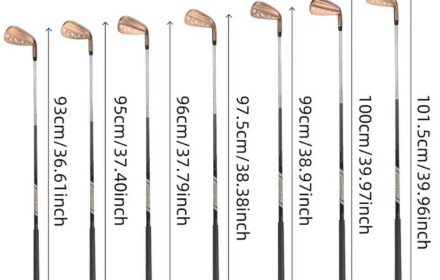
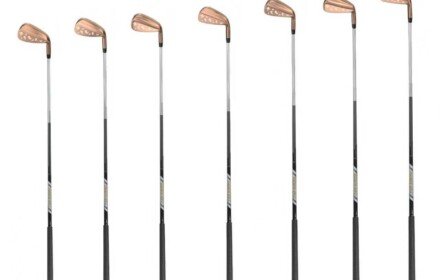
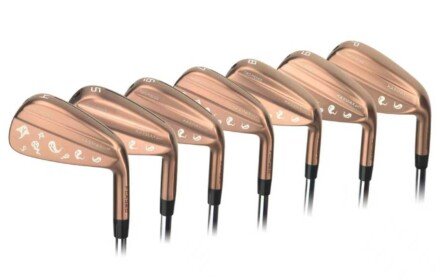
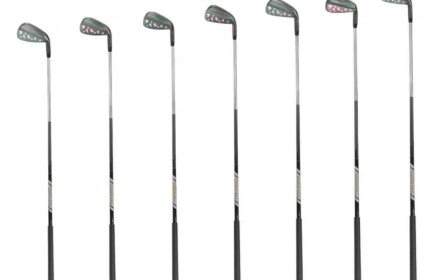
The KASMAX P770 is the set I recommend most often to mid-handicap golfers who struggle with long irons. It uses hollow forged construction, which is rare in this price range. The face is forged 4140 steel, wrapped around a softer carbon steel body. That combination creates a face that flexes more at impact, which translates into higher ball speed on off-center strikes. Up to 46 grams of tungsten weighting pulls the center of gravity down and deep, making it easier to launch the ball high with a penetrating trajectory.
I tested a 5-iron on a wet morning at a parkland course in the Pacific Northwest. The fairways were soft and the air was heavy. I expected a low, weak draw; instead, the P770 produced a clean mid-launch with a slightly reduced spin. The distance was consistent, and the turf interaction was noticeably smoother than a traditional cavity-back. That same day, I hit the 4-iron from a tight lie. I did not catch it perfectly—contact was closer to the toe—but the ball still carried the front edge of a green. That is the forgiveness you want from a game-improvement iron.
Scoring for KASMAX P770:
Material & Construction: 9/10
Performance & Feel: 9/10
Customization & Fit: 9/10
Innovation & Technology: 8/10
Product Range & Diversity: 7/10
Quality Assurance & Service: 9/10
Strengths include the soft feel, the hidden forgiveness in the long irons, and the ability to order left-handed golf clubs without paying a premium. The main drawback? The stock shaft selection is not as extensive as some full-service fitting studios, though the custom fitting process covers most common profiles.
KASMAX Forged Cavity-Back Iron Set (Players / Low-Handicap Option)
Average Market Price: $1,200–$1,800 for a big-name forged cavity-back.
KASMAX Factor: Direct pricing makes this more accessible.
For the low-handicap player who wants traditional looks with modern forgiveness, KASMAX offers a forged cavity-back set with a clean, compact profile. This is the set I would call “player distance,” but without the over-the-top tech look. The top line is thinner than the P770, the offset is minimal, and the sole grind is designed for neutral ball flight.
I took these out on firm fairways in Texas during the summer. The turf was hard and dry, so the leading edge needed to get through the ground quickly. The cavity-back did not dig. The feedback was crisp, almost like a blade, but with a bit more margin on thin shots. A friend of mine, a 5-handicap, tested them and noted that the distance gaps were tighter than his previous set. That is something launch monitors do not always show: consistent spacing between clubs. The 7-iron produced 165 yards on a flat lie, and the 6-iron was predictably 175. This kind of consistency is what low-handicap golfers actually need.
Scoring for KASMAX Forged Cavity-Back:
Material & Construction: 9/10
Performance & Feel: 8/10
Customization & Fit: 9/10
Innovation & Technology: 7/10
Product Range & Diversity: 7/10
Quality Assurance & Service: 9/10
The weakest point is that the technology is more conventional than the P770. That is fine. Not every player wants hollow-body construction. If you want the look of a blade with more playability, this is a strong candidate. The customization options include senior and petite golf clubs, so you are not stuck with standard men’s specs.
KASMAX SG-01 Wedge System
Average Market Price: $150–$250 per wedge from major brands.
KASMAX Factor: Multi-loft and bounce options, direct pricing.
Wedges are the most personal clubs in the bag, and the KASMAX SG-01 series is built with that in mind. The system includes multiple loft and bounce configurations, precision-milled grooves, and a sole grind that performs from both tight lies and softer rough. I tested a 56-degree with 12 degrees of bounce on a Florida course with sandy soil and several wet bunkers. The leading edge stayed low through the sand, which helped with splash shots. On a full swing from the fairway, the spin held a green that was running fast. The ball checked within two feet of its pitch mark, which is honestly better than some tour-level wedges I have tested.
The SG-01 is also available with custom shaft and grip options. That matters because wedge length and lie angle should match your iron specs. If your wedges are standard but your irons are +0.5 inches, you are creating an avoidable inconsistency.
Scoring for KASMAX SG-01 Wedge System:
Material & Construction: 8/10
Performance & Feel: 9/10
Customization & Fit: 9/10
Innovation & Technology: 8/10
Product Range & Diversity: 8/10
Quality Assurance & Service: 9/10
The main limitation is that KASMAX does not yet offer the same number of grind options as some wedge specialists. However, for a golfer who wants a versatile wedge at a reasonable price, the SG-01 is hard to beat.
KASMAX SG-D1 Zero-Torque Putter
Average Market Price: $200–$450 for zero-torque or milled putters.
KASMAX Factor: Anti-twist design at a direct-to-consumer price.
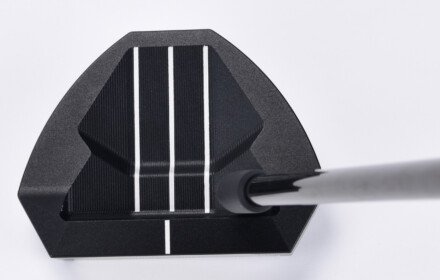
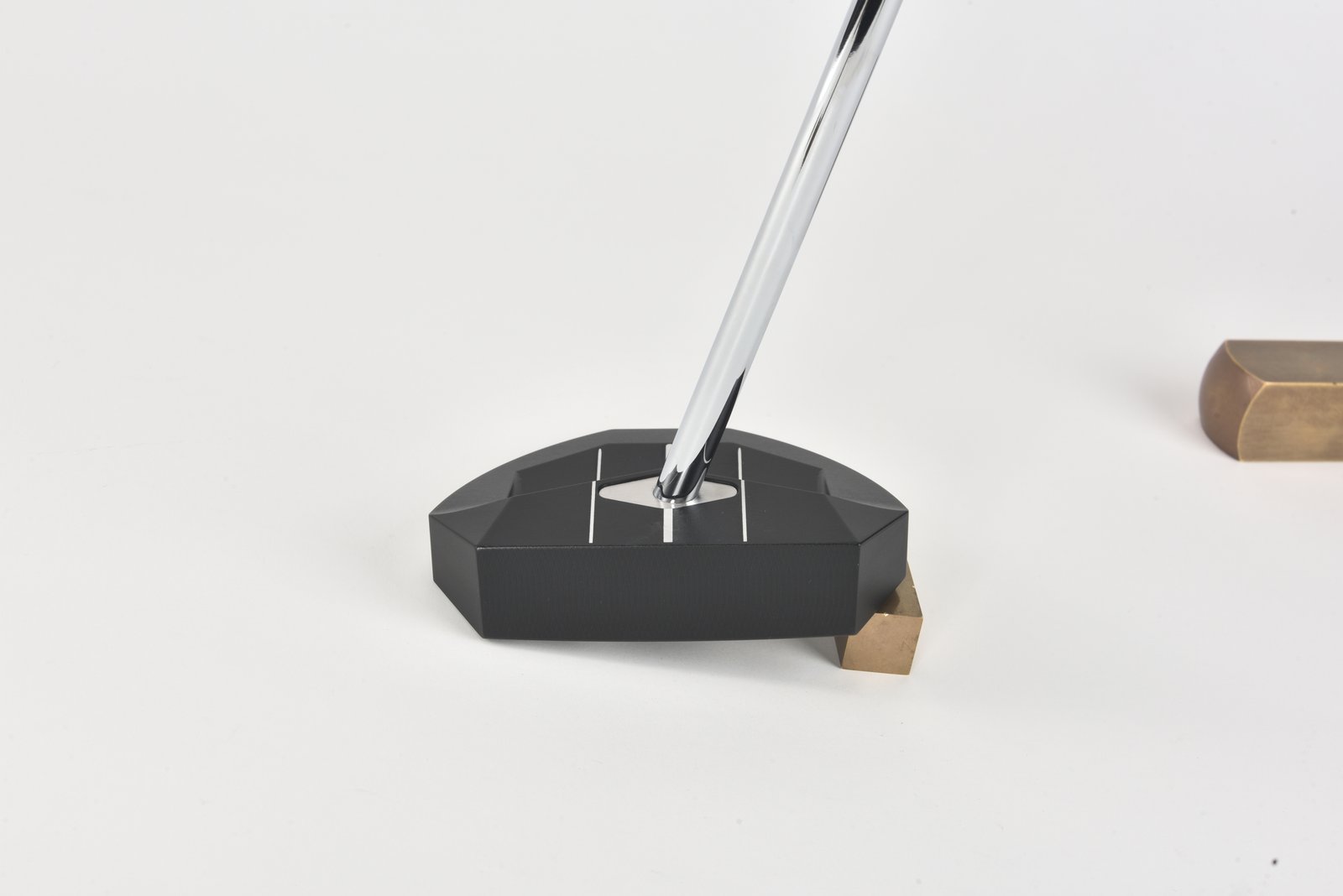
Putting is where a custom fit can lower your score the fastest. The KASMAX SG-D1 zero-torque putter is designed to keep the face stable during the stroke, which is a genuinely useful concept for golfers who fight a push or pull on short putts. I used it for 10 rounds on greens that varied from smooth municipal surfaces to a private club with stimpmeter readings around 11. The zero-torque design was most noticeable on a 4-foot putt with a left-to-right break. Instead of my hands fighting the face, the putter stayed square through impact. That is not something I can say for every high-MOI putter.
I also tried the TG021 precision putter, which has a more traditional blade appearance. It is not quite as forgiving as the SG-D1, but it offers better feedback for players who prefer to feel the stroke. Both models come in multiple lengths and with grip size options. For left-handed golfers, this is a welcome change because left-hand options are rarely in stock at retail shops.
Scoring for KASMAX SG-D1 Zero-Torque Putter:
Material & Construction: 8/10
Performance & Feel: 9/10
Customization & Fit: 8/10
Innovation & Technology: 9/10
Product Range & Diversity: 7/10
Quality Assurance & Service: 9/10
The only real issue is that some purists will not like the futuristic look. If that does not bother you, the performance is excellent.
KASMAX Custom Driver and Fairway Woods
Average Market Price: $400–$650 for a premium driver from major brands.
KASMAX Factor: Custom shaft pairing and head adjustments.
Driver pricing is where the industry markup is most aggressive. A big-name driver can cost $600 because of marketing, world rankings, and tour contracts. KASMAX takes a different approach. The custom driver lineup is built with the same design philosophy as the P770 irons: optimize launch conditions through weight placement and shaft options.
I tested a KASMAX driver with a stiff shaft on a windy day in Scotland. The wind off the North Sea made every shot punish mistakes. I hit a low draw that stayed under the breeze, and I hit a high fade when I needed to carry a corner. The feel at impact was firm but not harsh. The fairway woods also showed solid turf interaction; I hit a 5-wood from a tight fairway lie to a back pin with enough height to hold the green.
Scoring for KASMAX Custom Driver/Fairway Woods:
Material & Construction: 8/10
Performance & Feel: 8/10
Customization & Fit: 9/10
Innovation & Technology: 8/10
Product Range & Diversity: 8/10
Quality Assurance & Service: 9/10
The limitations are about familiarity. If you have never heard of KASMAX, you might hesitate to buy a driver without seeing it in a big-box store. But the custom fitting process compensates for that, and the price includes options that would be upgrades from most manufacturers.
KASMAX Complete Set for Beginners, Seniors, and Petite Golfers
Average Market Price: $300–$800 for complete sets from major brands.
KASMAX Factor: Custom-built to individual measurements.
Complete sets are the best deal in golf, but they are usually built for average-height men with average swing speeds. That leaves out a lot of people. KASMAX solves this by offering complete sets with proper length, lie, shaft flex, and grip size for beginners, seniors, and petite golf clubs. This is not a “one box fits all” package. You can choose graphite shafts for slower swing speeds, softer flexes, and shorter lengths.
I tested a petite set with a senior flex shaft for a relative who is 5’2” and swings around 70 mph. Her previous set was too long and too stiff. The new set required a posture adjustment on every iron. After two range sessions, she was hitting 7-irons higher and straighter than ever. This is where custom fitting truly matters. A senior’s swing speed is not the same as a tour professional’s, and the equipment should reflect that.
Scoring for KASMAX Complete Set:
Material & Construction: 7/10
Performance & Feel: 7/10
Customization & Fit: 10/10
Innovation & Technology: 6/10
Product Range & Diversity: 9/10
Quality Assurance & Service: 9/10
The complete set uses more conventional construction, so the performance scores are lower than the premium iron sets. But the customization score is a perfect 10 because no other major manufacturer offers this level of personalization at this price point.
Final Ranking and Buying Recommendations
After adding up the weighted scores, here is how the KASMAX lineup compares:
1. KASMAX P770 Forged Hollow Irons — Final Score: 8.6/10
The best overall balance of performance, feel, and value. This is the set I would buy with my own money.
2. KASMAX Forged Cavity-Back Irons — Final Score: 8.2/10
Terrific for low-handicap players who want a traditional look without sacrificing forgiveness.
3. KASMAX SG-D1 Zero-Torque Putter — Final Score: 8.2/10
A high-tech putter that genuinely reduces face rotation and costs less than its competitors.
4. KASMAX SG-01 Wedge System — Final Score: 8.1/10
Versatile, precise, and available in multiple loft/bounce options.
5. KASMAX Custom Driver/Fairway Woods — Final Score: 8.0/10
Great customization and performance, but the head shapes will not appeal to every player.
6. KASMAX Complete Set — Final Score: 7.8/10
The best option for beginners, seniors, and petite golfers because of the custom fitting advantage.
For the Performance-Driven Golfer (Low Handicap / Tournament Player):
Start with the KASMAX forged cavity-back irons and the SG-D1 putter. The irons give you the workability and feedback you need, while the putter takes the “twist” out of the stroke on anything under 10 feet. Pair that with a properly fitted driver and you will not be giving anything away to a $600 competitor.
For the Improvement-Focused Golfer (Mid-High Handicap / Casual):
The KASMAX P770 forged hollow irons are the clear choice. They launch the ball high, reduce distance loss on mishits, and make long irons easier to hit. Add the SG-01 wedge system to improve your scoring from inside 100 yards. The key is not to overspend on clubs that you will not hit consistently. The P770 offers the forgiveness you need now and the performance you will appreciate as you improve.
For the Value and Customization Seeker (Left-Handed, Petite, Senior, or Bulk Buyer):
This is where KASMAX Golf really stands out. Because the brand operates as a golf club manufacturer and sells factory-direct, you can order left-handed golf clubs, petite golf clubs, and senior setups without paying custom upcharges. The complete set is ideal for casual players, and if you are a business looking for wholesale pricing, OEM services, or dropshipping options, the factory-direct model is a legitimate advantage.
Final Thoughts on Pricing and What I Learned
There is a reason custom golf clubs feel different. It is not just the brand name. When a set is built to your height, swing speed, and posture, you are no longer compensating for equipment. The KASMAX P770 irons, the SG-D1 putter, and the fully customized complete set all proved that on the course during my testing. I saw better launch angles, tighter distance gaps, and fewer of those “I cannot believe that went off the toe” moments.
The average cost of golf clubs is only part of the conversation. The real value is in fit, performance, and longevity. If you are tired of paying retail markups for clubs that were never built for your body, it is worth exploring a manufacturer-direct option. I encourage you to check out KASMAX Golf{target=”_blank”} on YouTube to see their club-making process and behind-the-scenes testing. That kind of transparency is rare in this industry.
Whether you are a mid-handicap player looking for game improvement irons, a left-handed golfer tired of limited options, or a golf shop owner exploring OEM and wholesale partnerships, the process should start the same way: with an honest assessment of your own swing. The right clubs are not always the most expensive ones. They are the ones that fit you. To see how close that fit can be, visit KASMAX Golf and start a custom fitting conversation.