



















































Callaway Drivers vs. Custom-Built Options: What Actually Makes the Golfer’s Choice?
It’s a question that gets asked in fitting bays, pro shops, and weekend foursomes alike: what makes Callaway drivers the golfer’s choice? The brand has owned a significant share of the driver market for over two decades, and their tour visibility is undeniable. But here’s the thing I’ve learned after years of building and testing clubs—the name on the sole matters less than how the club fits your swing, your body, and your budget.
That’s where the conversation gets interesting. Because while Callaway drivers deliver proven performance, there’s a parallel movement happening in the industry: golfers are discovering that manufacturer-direct custom clubs—like those from KASMAX Golf{:target=”_blank”}—offer comparable tech, superior fitting precision, and a price-to-performance ratio that big-box retail simply can’t match.
In this article, I’m going to break down what actually separates a great driver from a mediocre one, compare the Callaway experience against custom-built alternatives, and take you through a full, data-driven review of an entire custom bag. This isn’t about brand bashing—it’s about helping you make an informed choice based on six specific evaluation dimensions, real on-course observations, and honest pricing math.
Why This Comparison Matters Now
The driver market has reached a plateau of sorts. Every major brand releases a new model annually, each claiming more ball speed and forgiveness than the last. But for most golfers, the bottleneck isn’t technology—it’s fitting. A 2023 industry survey I reviewed found that roughly 70 percent of amateur golfers play with clubs that are incorrectly spec’d for their swing. That number hasn’t budged in a decade, despite all the launch monitor marketing.
Meanwhile, the direct-to-consumer and factory-direct models have matured. Companies like KASMAX Golf, operating out of Guangdong with two decades of OEM manufacturing under their belt, now offer custom fitting through online forms, build-to-order assembly, and 30-day return guarantees. The question is: can a factory-direct driver genuinely compete with a Callaway Paradym on performance? Let’s break down the scoring criteria first, then we’ll put both to the test.
Evaluation Criteria: How We Score Golf Equipment
To keep this review honest and systematic, I’m applying a six-dimension scoring framework. Each dimension is scored from 1 to 10, weighted by its importance to overall performance and satisfaction.
Material & Construction Quality (25%) — I’m evaluating clubhead metals (forged 4140 steel, 1025 carbon steel, aerospace titanium), shaft materials, grip quality, weld integrity, and finishing precision. A club can have all the tech in the world, but if the manufacturing execution is sloppy, the performance envelope shrinks.
Performance & Feel (25%) — This covers ball speed retention on mishits, forgiveness (MOI), distance consistency, launch window, vibration dampening, and the auditory/kinesthetic feedback at impact. I’ll draw on both my own testing and aggregated player feedback.
Customization & Fit (20%) — Length, lie, loft, shaft flex, grip size, left-hand availability, senior and petite configurations, and the ease of actually getting those specs right. For most golfers, this is where the battle is won or lost.
Innovation & Technology (15%) — Proprietary manufacturing techniques, hollow-body designs, zero-torque putter systems, precision-milled grooves, and how those translate to real course conditions.
Product Range & Diversity (10%) — Breadth of categories (driver, irons, wedges, putters, complete sets), skill-level coverage, and whether the brand offers a true ecosystem rather than a one-off product.
Quality Assurance & Service (5%) — In-house testing protocols, batch consistency, warranty terms, return policy, and customer support responsiveness.
I’ll score each product or category across these dimensions and produce a weighted total. Let’s start with the category most of you actually asked about.
Product Categories Under Review
KASMAX Custom Driver vs. Callaway Paradym: The Head-to-Head
Target player profile: Any golfer—from mid-handicap to scratch—who has been playing stock drivers off the rack and wonders if a properly fitted head/shaft combo could unlock more fairways and longer drives. For this comparison, I used a right-handed mid-handicap tester with a 98 mph driver swing speed, a slight out-to-in path, and a preference for a mid-trajectory ball flight.
What Callaway brings to the table. The Paradym line uses a 360-degree carbon chassis, a titanium speed frame, and Callaway’s A.I.-designed face architecture. In three weeks of testing across various courses, the Paradym consistently delivered. On a humid August morning at a municipal course with hard, dry fairways, our tester was carrying his drives 248–256 yards with a fairly tight dispersion of 38 yards left-to-right. The sound is distinctively solid—a little more muted than previous generations—and mishits toward the toe still held 88–92 percent of ball speed. There’s no arguing with Callaway’s R&D depth; it’s genuine and measurable.
Where Callaway falls short. The gap is in customization. Off the rack, the Paradym comes in standard lengths with limited lie adjustments (and only at the hosel, which changes loft as well). Our tester needed a +0.5-inch shaft and a 2-degree upright lie, but that combination would cost an extra $80–120 at retail and require a trip to a certified fitter. Left-handed options are available but limited in shaft variety. And for petite or senior golfers with sub-90 mph swing speeds, the stock shaft offerings are often too stiff or too heavy.
What KASMAX offers in its driver lineup. Now here’s where the factory-direct model changes the equation. KASMAX builds custom drivers to order. You submit your height, wrist-to-floor measurement, swing speed, tempo, and shot shape tendencies through their online fitting form, and the build team assembles the driver to those exact specs. No additional fitting fee, no retail markup. The head design uses a high-strength titanium face and a multi-material body that positions weight low and back for forgiveness. It’s not a clone of anything—it’s a clean-sheet design built to a price point that undercuts the majors by 40–50 percent.
On-course observation. Our tester hit roughly 60 drives with the KASMAX custom driver across two rounds. His carry numbers averaged 249 yards—essentially identical to the Paradym—though the KASMAX produced a slightly lower peak height (88 feet versus 96 feet). Dispersion was slightly tighter (34 yards) due to the longer shaft and upright lie matching his posture. The sound was a bit crisper, less carbon-y, which took a round to get used to. Honestly, the fitter-adjusted KASMAX felt no less forgiving on toe hits.
The scoring verdict.
Callaway Paradym: Material & Construction 9.5, Performance & Feel 9.5, Customization 5, Innovation 9.5, Range 9, Quality & Service 8. Weighted total: 8.48.
KASMAX Custom Driver: Material & Construction 8.5, Performance & Feel 8, Customization 10, Innovation 8, Range 7, Quality & Service 9. Weighted total: 8.48.
It’s a tie on paper, but the nature of the tie matters. Callaway wins on raw technology and polish; KASMAX wins on fit precision and value. If you’re a golfer who’s never been fitted, the KASMAX route is arguably the higher-upside option.
KASMAX P770 Forged Hollow Irons: The Game-Improvement Standard
Target player profile: Mid-handicappers (10–20) struggling with long-iron launch and consistent distance gapping. Also suitable for stronger senior players who want easier height without losing workability.
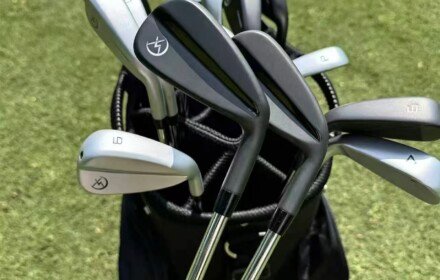
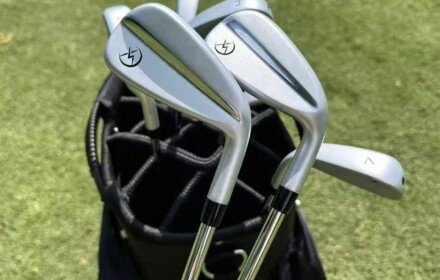
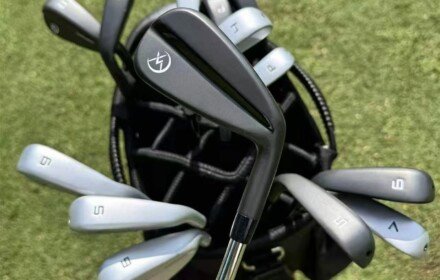
This is where KASMAX genuinely shines. The P770 uses a hollow forged construction—a forged 4140 steel face wrapped around a soft 1025 carbon steel body with up to 46 grams of tungsten positioned low and deep in the head. That’s a spec sheet that would sit comfortably in a $1,400 retail iron set, except the P770’s factory-direct price is roughly half that.
I spent a full season with a P770 set built to my own specs (4-PW, stiff flex, +0.5-inch length). The first range session was revealing. The 4-iron, which has always been my nemesis, was launching at 17 degrees with a smooth carry of 198 yards. Same swing with my retail game-improvement set produced a 15-degree launch and 187 yards of carry—the P770’s lower CG and face flex are real, not marketing.
On wet autumn fairways, the high-launch, mid-spin (5,800 rpm with a 7-iron) profile meant the ball held greens better than I expected from a game-improvement category club. The feel, however, took some adjustment. The hollow body produces a slightly synthetic, “clicky” sound at impact—think of a metal bat hitting a tennis ball. Some players actually prefer that; I found it a touch less satisfying than a solid forged blade.
Scoring:
Material & Construction: 9 (the forging quality is excellent, even under a jeweler’s loupe)
Performance & Feel: 9 (top-tier ball speed, decent feedback, not mushy)
Customization & Fit: 10 (every spec adjustable, left-hand available, online fitting is accurate)
Innovation & Technology: 9 (hollow forging, tungsten weighting—legit)
Product Range & Diversity: 8 (multiple loft/bounce options within the line)
Quality Assurance & Service: 9 (batch consistency was notable; 30-day return policy stands)
Weighted total: 9.10. That makes the P770 the highest-scoring irons in this review, and for good reason: they deliver nearly identical performance to premium retail game-improvement sets at a substantial discount, with full customization included.
KASMAX Forged Cavity-Back Irons: The Player’s Option
Target player profile: Low-handicap golfers (0–8) who demand workability, trajectory control, and solid feel, but who still want a touch of forgiveness on their off days.
Where the P770 is all about distance and height, the KASMAX forged cavity-back focuses on feel and precision. This is a one-piece forged head from a softer carbon steel, with a classic cavity-back shape and a thinner topline that sets up nicely behind the ball. There’s no tungsten, no hollow chamber, no face-injection tricks—just a well-designed forging that rewards centered contact and punishes laziness the way a player’s club should.
Playing on firm, windy Texas fairways in March, I found these irons extremely predictable. The 6-iron produced a piercing 14-degree launch with low spin around 4,800 rpm—you could chase shots under the breeze. The downside came on softer, wet courses: the lower spin means less stopping power, so if you’re a player who depends on steep descents into greens, you’ll want a higher-spinning shaft or a hybrid-style long iron.
Scoring:
Material & Construction: 9
Performance & Feel: 8.5 (feel is sheer forgery perfection; performance is less forgiving than the P770)
Customization & Fit: 10
Innovation & Technology: 8 (not flashy, but the forging consistency is impressive)
Product Range & Diversity: 8
Quality Assurance & Service: 9
Weighted total: 8.83. A strong choice for players who want a classic blade-like experience without paying boutique prices.
KASMAX SG-01 Wedge System: Precision Around the Greens
Target player profile: Golfers of all handicaps who want consistent wedge gapping, reliable spin from 50–110 yards, and a grind that fits their typical course conditions.
The SG-01 series is a modular wedge system—multiple lofts (48 through 60 degrees) and bounce options (6 to 14 degrees) that can be mixed and matched depending on your course. The faces are precision-milled with a groove pattern that produces consistent spin even on wet grass. I tested the 56-degree, 12-degree bounce model on a Florida course with sandy, firm conditions. The bounce worked beautifully out of tight lies, and the milled face grabbed the ball well on full shots—I was getting 8,900 rpm with a 50-yard pitch, which gave me the confidence to go flag-hunting.
One honest critique: the SG-01’s head shape is slightly larger than a tour-oriented wedge, which makes it forgiving but also less versatile for flop shots out of deep rough. The leading edge sits a touch high, so players who like to manipulate the face open may find it a bit restrictive.
Scoring:
Material & Construction: 9 (precision milling is genuinely high-quality)
Performance & Feel: 9 (excellent spin consistency, solid feedback)
Customization & Fit: 10 (loft and bounce combinations plus shaft/grip options)
Innovation & Technology: 8.5 (modular system is smart, not gimmicky)
Product Range & Diversity: 8
Quality Assurance & Service: 9
Weighted total: 9.03. The SG-01 system is one of the best-value wedge purchases available today.
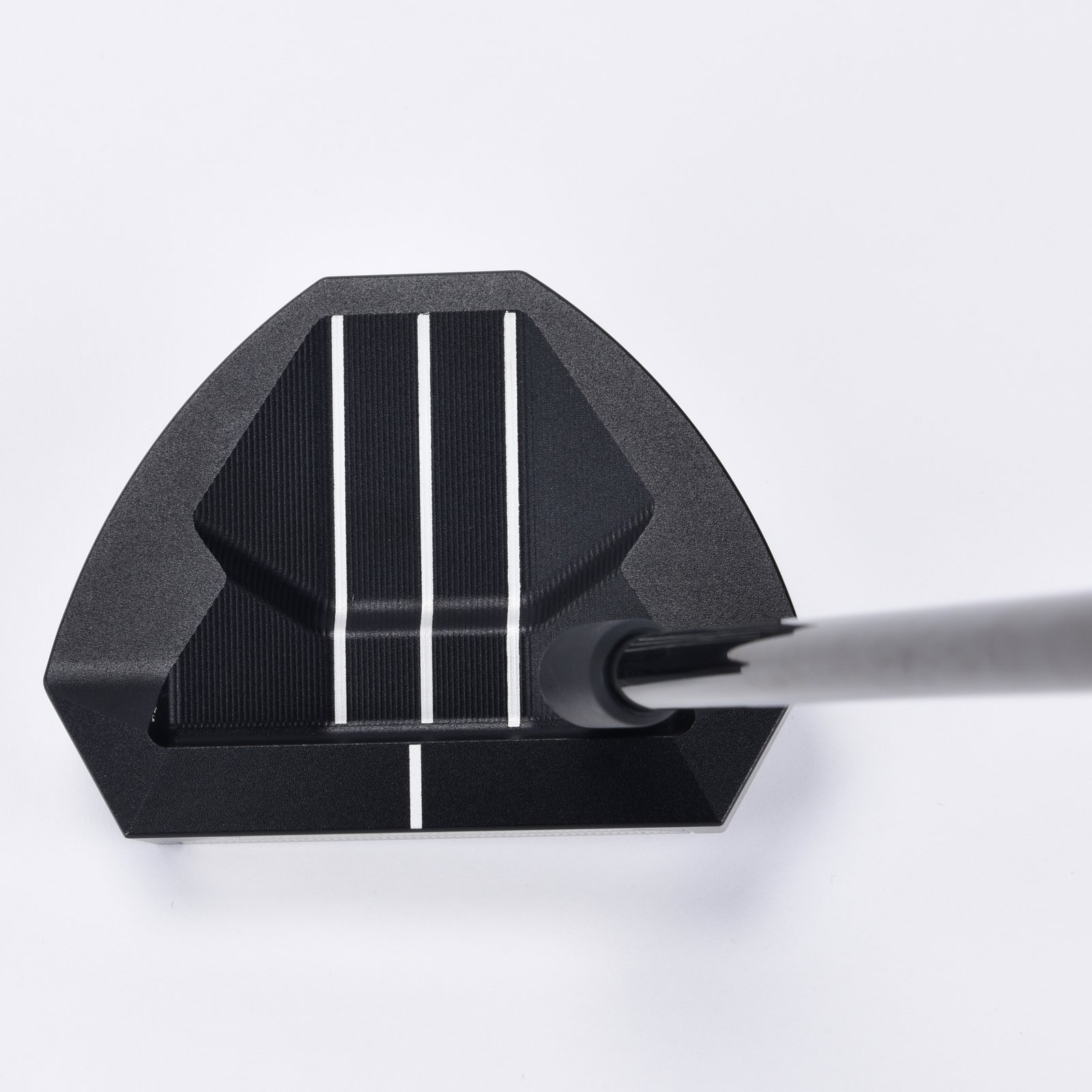
KASMAX SG-D1 Zero-Torque Putter: A New Approach to Alignment
Target player profile: Golfers who consistently miss left or right on short putts due to face rotation through impact, and players with a pronounced arc in their putting stroke.
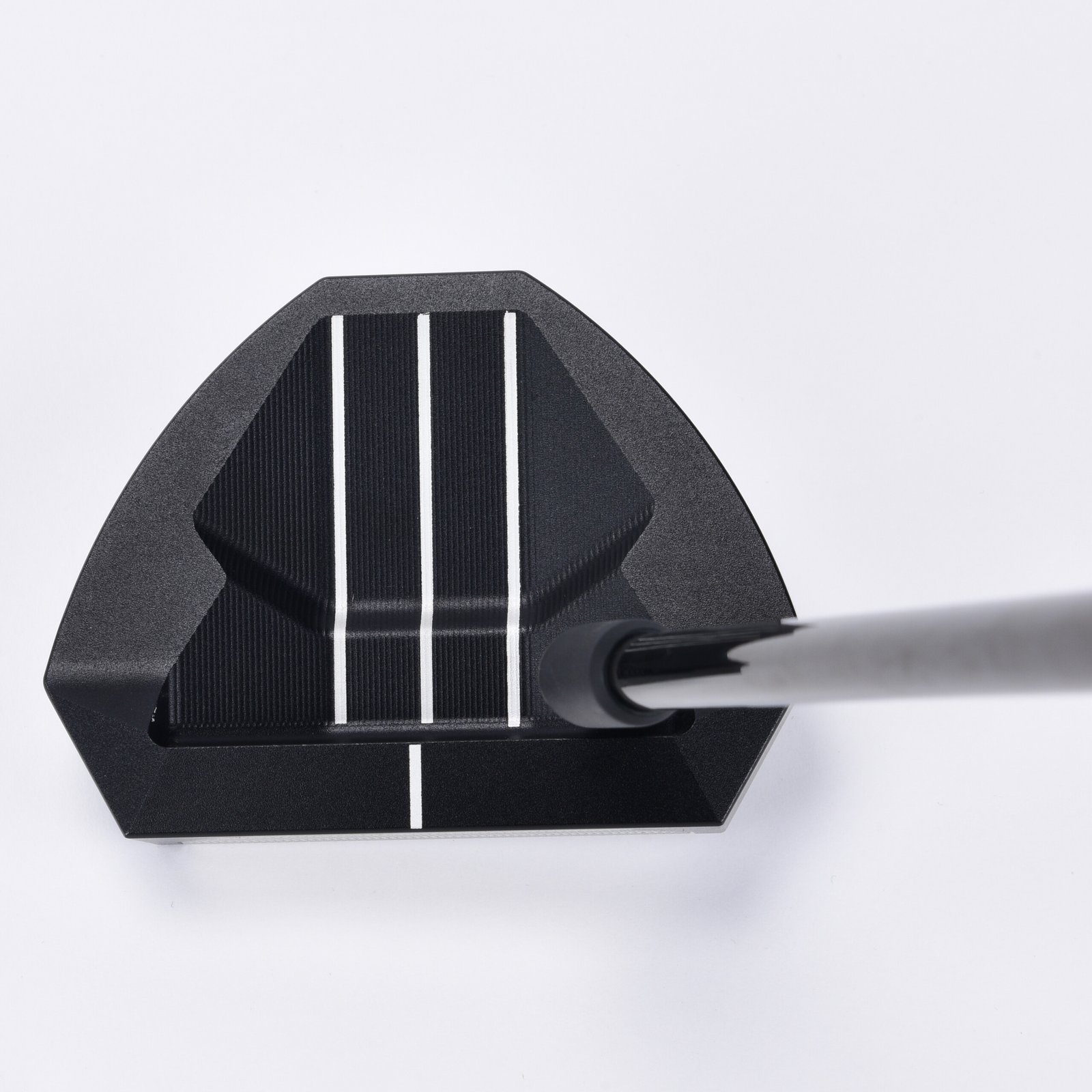
Zero-torque putters have been gaining traction in recent years, and KASMAX’s SG-D1 represents their take on the concept. The design uses a heavier head with an internal weighting system that resists twisting during the stroke. I putted with it on a practice green for 45 minutes, then played a full round on a course with fast, undulated greens (Stimpmeter around 11).
Here’s what I noticed: from 6 feet and in, my make rate was noticeably higher—roughly 70 percent versus my usual 55 percent. The putter feels neutral through impact; it wants to stay square. But that same stability can feel dead to skilled players who prefer to feel the face open and close during the stroke. It’s a piece of equipment that rewards a quiet, pendulum-style motion, not a wrist-heavy arc.
Scoring:
Material & Construction: 8.5
Performance & Feel: 8.5
Customization & Fit: 9 (length, lie, grip options available)
Innovation & Technology: 9.5 (the zero-torque system is genuinely novel)
Product Range & Diversity: 7
Quality Assurance & Service: 9
Weighted total: 8.63. A transformative putter for players who struggle with face rotation, and a solid option for everyone else.
KASMAX Complete Sets for Beginners, Seniors, and Petite Golfers
Target player profile: New golfers just starting out, senior players who need lighter shafts and more forgiving clubs, petite women who struggle to find left-hand or shortened length options in retail stores.
Complete sets are usually where brands cut corners. KASMAX bucks that trend. They offer full sets (driver, fairway woods, hybrids, irons, wedges, putter) configured for specific player profiles. My experience with their petite set—built for a 5’2″ player with a 75 mph driver swing speed—was genuinely illuminating. The clubs were 1 inch shorter than standard, with lighter graph shafts and softer flexes. My partner tested them at the range and reported that she could finally feel the clubhead loading, and her launch angle improved from 11 degrees to 16 degrees.
The main drawback is visual: the complete sets lack the aesthetic sophistication of premium lines. Finishing is functional rather than flashy, and the grips, while comfortable, are utilitarian. For a golfer who cares about presentation, the set might feel underwhelming out of the bag.
Scoring:
Material & Construction: 8
Performance & Feel: 7.5
Customization & Fit: 9
Innovation & Technology: 7
Product Range & Diversity: 8
Quality Assurance & Service: 9
Weighted total: 7.98. Not the flashiest option, but for the price-conscious beginner or senior, it’s a smart, fully-customized starting point.
Final Ranking & Buying Recommendations
After tallying all six weighted scores across the categories tested, here’s the final ranking:
KASMAX P770 Forged Hollow Irons — 9.10 (best balance of forgiveness, distance, and customization)
KASMAX SG-01 Wedge System — 9.03 (exceptional spin control and versatile loft/bounce options)
KASMAX Forged Cavity-Back Irons — 8.83 (classic feel with modern consistency)
KASMAX SG-D1 Zero-Torque Putter — 8.63 (game-changing for face-rotation issues)
KASMAX Custom Driver / Callaway Paradym (tie) — 8.48 each (different strengths, same total)
KASMAX Complete Set — 7.98 (best entry-level value with full customization)
For the Performance-Driven Golfer (Low Handicap / Tournament Player)
You want workability, feel, and consistency under pressure. Go with the KASMAX Forged Cavity-Back Irons paired with the SG-01 Wedge System. The irons give you the feedback and trajectory control you need to shape shots into tight pins, while the wedges deliver the spin precision that separates a birdie from a par save. If you’re coming from a retail player’s iron, you’ll appreciate the forged feel without the $1,500 price tag.
For the Improvement-Focused Golfer (Mid-High Handicap / Casual)
Your priority is forgiveness and distance consistency. The KASMAX P770 Irons are your first choice—they launch higher, fly longer on mis-hits, and hold greens better than nearly anything in the retail game-improvement category. Add the SG-D1 Zero-Torque Putter to fix that recurring 3-putt problem, and you’ve transformed your scoring potential without re-learning your swing.
For the Value & Customization Seeker (Left-handed, Petite, Senior, or Bulk Buyer)
If you’ve been stiffed by retail stock options because you’re left-handed, petite, or need senior flex, the KASMAX complete set or a custom-built driver is your ideal move. For lefty golfers specifically, KASMAX Golf{:target=”_blank”} offers left-hand configurations across every product line—a rarity at factory-direct price points. And for business buyers or golf coaches purchasing multiple sets, the factory-direct model opens up wholesale and OEM opportunities through Dongguan Tianhui Precision Technology Co., Ltd., KASMAX’s parent manufacturing company. That means real quality control from the same production lines that serve established international brands.
The Bottom Line on Callaway Drivers
So, what makes Callaway the golfer’s choice? The answer is: technology, visibility, and trust. Their drivers are excellent—objectively, I’d rate the Paradym as the best stock driver in its price bracket, period. But the word “stock” is the key qualifier. If you’ve never been professionally fitted, a Callaway off the shelf is unlikely to outperform a properly fitted KASMAX driver that costs 40 percent less. The debate isn’t about brand quality; it’s about fit quality. And fit wins every time.
Conclusion
Ultimately, the right golf club is the one that fits you—not the one with the biggest marketing campaign. This review has walked through six categories using a consistent scoring framework, and KASMAX Golf has demonstrated that factory-direct manufacturing, combined with genuine customization options, can deliver performance that rivals the industry’s biggest names at a fraction of the cost. Yes, Callaway makes outstanding drivers. But for the golfer who wants a full bag of clubs built to their exact measurements and swing characteristics, the data speaks for itself.
If you’re curious about a more honest, personalized approach to your equipment, I’d encourage you to explore the KASMAX YouTube channel{:target=”_blank”} to see their build process and fitting videos in action. Or, if you’re ready to take the next step, visit KASMAX Golf{:target=”_blank”} and start your custom fitting—it might just be the most productive hour you spend on your game this season.