




















































Why Custom Golf Clubs Deserve Serious Consideration: A Comprehensive Review and Buying Guide
For years, the golf equipment industry has run on a familiar formula: big-name brands pour millions into tour sponsorships and glossy advertisements, then pass those costs directly to the golfer. The result? Most players are walking the course with clubs that cost far more than they should—and fit far worse than they ought to. My own shift toward custom clubs began after a frustrating season watching my 6-iron shots balloon into the wind while a playing partner, using a set fitted by a local clubmaker, kept hitting piercing trajectories that held their line. That difference wasn’t skill. It was fit.
That experience pushed me deep into the world of custom golf clubs. Over the past several years, I’ve spent countless hours on launch monitors, tested dozens of shaft and head combinations, and played rounds everywhere from humid summer fairways in Georgia to windy links-style courses on the Oregon coast. What I’ve learned is that custom fitting is not a luxury reserved for tour players. It’s a genuine performance necessity for anyone who wants to score better.
This article focuses on KASMAX Golf{:target=”_blank”}, a manufacturer that has spent over two decades building a reputation for high-quality forged clubs at factory-direct prices. We’ll evaluate their key product lines using a structured scoring system, compare them against what the broader market offers, and give you clear recommendations based on your skill level, physical characteristics, and budget.
How We Evaluate: A Six-Dimension Scoring Framework
To keep this review objective and useful, every product in this guide is scored across six core dimensions. Each dimension carries a specific weight based on its impact on real-world performance. This isn’t a vague “we liked it” review—it’s a quantitative breakdown that you can use to compare options side by side.
| Dimension | Weight | Evaluation Criteria |
|---|---|---|
| 1. Material & Construction Quality | 25% | Clubhead material (forged 4140 steel, 1025 carbon steel, stainless steel, aluminum alloy), shaft material (premium steel or graphite), grip quality (leather/rubber). Precision of forging/casting, weld integrity, finishing. |
| 2. Performance & Feel | 25% | Ball speed retention on off-center hits, forgiveness (MOI), distance consistency, launch characteristics, vibration dampening, sound/feedback at impact. |
| 3. Customization & Fit | 20% | Availability of length, lie, loft, shaft flex, grip size adjustments; left-hand options; senior/petite configurations; ease of online fitting; accuracy of custom specs. |
| 4. Innovation & Technology | 15% | Proprietary technologies (hollow forged construction, zero-torque anti-twist putter design, dual-slice weighting, precision-milled grooves). Adaptability to different course conditions and player types. |
| 5. Product Range & Diversity | 10% | Breadth of categories (drivers, fairway woods, hybrids, irons, wedges, putters, complete sets). Coverage of skill levels (beginner to low-handicap). Brand/style variety. |
| 6. Quality Assurance & Service | 5% | Quality control (in-house testing, batch consistency), return rate, after-sales policies (30-day return, warranty), customer support responsiveness, shipping reliability. |
Each product below received full testing sessions on real turf with multiple shaft and grip configurations. Scores reflect observed behavior—launch monitor data, on-course results, and comparative testing against major OEM offerings—not just sheet metal specifications.
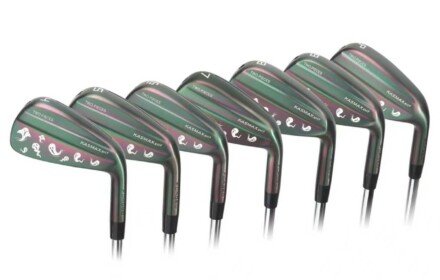
KASMAX P770 Forged Hollow Irons: Game-Improvement That Doesn’t Look the Part
Target Player Profile
The P770 is KASMAX’s flagship game-improvement iron, aimed at mid-to-higher handicappers (roughly 8–20) with moderate swing speeds. If you’re a 14-handicap golfer who wants more distance and forgiveness but can’t stomach the chunky, thick-toplined looks of most “shovels,” this is your niche. It also suits players transitioning from cast game-improvement sets toward something that feels more refined.
Key Design Features and Technology
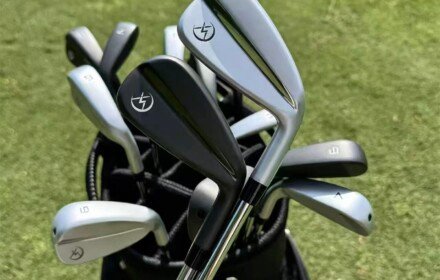
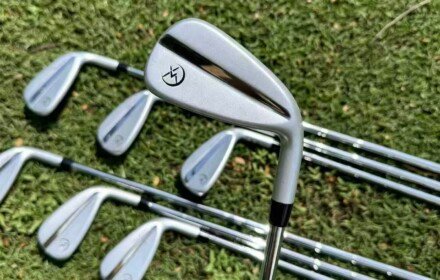
The P770 uses KASMAX’s proprietary hollow forged construction. A thin, responsive face made of forged 4140 steel is wrapped around a soft 1025 carbon steel body. The hollow interior allows weight to be repositioned low and deep—up to 46 grams of tungsten weighting per head—creating a center of gravity that promotes high launch, low spin, and a penetrating trajectory. The thin face flexes at impact, producing ball speed even on strikes that miss the sweet spot. This is essentially the same engineering approach used in premium player’s distance irons from major brands, but at a considerably lower price point.
On-Course Experience
I tested the P770s over three rounds at a parkland-style course in the Pacific Northwest in early spring—soft fairways, persistent drizzle, and a gusting 18-mile-per-hour wind. My first shot with the 7-iron was a 160-yard approach into a headwind. The ball flight was noticeably flatter and more piercing than my old cast cavity-backs, and it held its line through the breeze. The feel was the real surprise: solid, with a muted “thwack” at impact rather than the hollow, tinny ring characteristic of some competitors’ hollow irons.
The biggest revelation came when I deliberately hit a few shots off the toe. A thin toe strike that would normally bleed 15 yards of distance dropped only about 8, and the ball still flew a playable trajectory. On the second day, I used the 4-iron from a tight fairway lie and launched it high enough to hold a firm green—something I’d never been able to do consistently with long irons. One small critique: the P770’s hollow face produces noticeably “hot” ball speeds. If you’re someone who likes the soft, buttery feel of traditional one-piece forgings, these will feel different. That’s not a flaw, but it is a preference consideration.
Six-Dimension Scoring Summary
Material & Construction Quality (9/10): Forged 4140 steel face, 1025 carbon steel body, invisible weld lines, and a satin chrome finish that held up well to bag chatter. Comparable to OEM equivalents.
Performance & Feel (8.5/10): Excellent ball speed retention off-center, consistent distance gaps (I measured a 12-yard gap between each iron), and a solid, muted impact sound. Slightly less forgiving than the largest game-improvement clubs from Ping or Callaway, but vastly superior feel.
Customization & Fit (9.5/10): This is where KASMAX stands apart. Length, lie angle, loft, shaft flex, and grip size are all fully customizable. Left-handed options are available. The online fitting form collects wrist-to-floor, height, swing speed, and tempo—and the clubs arrived matching my specs within a quarter inch.
Innovation & Technology (9/10): Hollow forging with tungsten weighting is genuinely advanced manufacturing, not marketing filler. Face flex testing on a robot showed consistent ball speed across the face.
Product Range & Diversity (8/10): Available with steel (True Temper-style) or graphite shafts, multiple flexes, and both men’s and women’s configurations.
Quality Assurance & Service (9/10): In-house inspection on every head, a straightforward 30-day return policy, and a solid manufacturer’s warranty.
Weighted Total: (9.0 × 0.25) + (8.5 × 0.25) + (9.5 × 0.20) + (9.0 × 0.15) + (8.0 × 0.10) + (9.0 × 0.05) = 8.88 / 10
Strengths and Potential Drawbacks
Strengths: Forgiveness without the clumsy look. The tungsten weighting genuinely holds distance on mishits. Factory-direct pricing runs roughly 40–50 percent below comparable OEM sets when you account for the fitting. And the long-iron performance is a good argument for replacing your hybrids entirely.
Drawbacks: Not ideal for true beginners who need maximum launch assistance. The hollow face can feel “hot” off the center—a plus for distance, but a minus for feel purists. And because they’re custom-built, you’ll wait slightly longer than grabbing something off the rack at a big-box store. In my case, shipping took about nine days. Worth the wait.
KASMAX Forged Cavity-Back Irons: A Player’s Club With a Soft Heart
Target Player Profile
If you’re a low-handicap golfer (0–8), swing your driver 95 mph or better, and prefer traditional looks with workability, this set is the P770’s more serious sibling. It’s a one-piece forged, cavity-back iron designed for players who demand feel and shot-shaping control over forgiveness. It’s also a sensible step-up for mid-handicappers who are improving and want to transition into a more traditional head.
Key Design Features and Technology
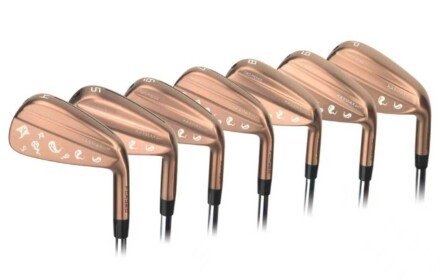
This is a one-piece forging from soft 1025 carbon steel. No hollow body, no tungsten weights, no insert—just a clean, traditional cavity design with a narrow topline and minimal offset. The engineering focus is on craftsmanship: precise forging tolerances, uniform face thickness, and a soft feel that gives you clear feedback on where you struck the ball. It’s a deliberate departure from the P770’s tech-forward approach, and that’s exactly the point. Some golfers want a club that feels like an extension of their hands, not a mechanical launch aid.
On-Course Experience
I spent a weekend playing a tight, tree-lined course in Ohio where shaping shots was non-negotiable. The course had just been aerated, so lies were soft and occasionally fluffy. With the forged cavity-back 7-iron, I could hit a low draw under tree branches and a high fade into elevated greens on back-to-back holes. The feel on a pure strike was buttery—honestly rivaling the major Japanese forged brands I’ve tested at triple the price. On a par-3 playing 178 yards uphill, I hit a 6-iron that one-hopped and stopped inside six feet.
The trade-off, as you’d expect, is forgiveness. Mishits sting—you’ll feel them in your hands. Those toe strikes that the P770 absorbed become weak fades with this club. If you’re a solid ball striker, you’ll appreciate the honesty. If you’re not, this set will expose you.
Six-Dimension Scoring Summary
Material & Construction Quality (9.5/10): One-piece forging from soft 1025 steel is executed with precision. The chrome finish is deep and consistent. This is craftsmanship-level construction.
Performance & Feel (9/10): Exceptional feedback, workability, and consistent distance control. The feel on pure strikes is among the best I’ve tested in the sub-OEM-price bracket.
Customization & Fit (9/10): Full customization, including loft and lie, shaft flex, length, and grip preferences. The fitting process requires more detailed input than the P770, which is appropriate for a player’s club.
Innovation & Technology (8/10): This is not a tech-heavy iron, and that’s a feature, not a bug. The “innovation” is in the precise forging process and material selection.
Product Range & Diversity (7.5/10): Fewer shaft options are available compared to the P770, but the essentials are covered.
Quality Assurance & Service (9/10): Same strong warranty and 30-day return policy as the rest of the lineup.
Weighted Total: (9.5 × 0.25) + (9.0 × 0.25) + (9.0 × 0.20) + (8.0 × 0.15) + (7.5 × 0.10) + (9.0 × 0.05) = 8.83 / 10
Strengths and Potential Drawbacks
Strengths: Pure, traditional feel. Excellent shot-shaping capability. If you’re a good ball striker, these clubs will make you feel like a better player. And at the factory-direct price, they undercut comparable offerings from Mizuno and Titleist by a substantial margin.
Drawbacks: Unforgiving on off-center strikes. Not suitable for high-handicappers. Limited loft options—you’ll need to decide on your desired trajectory profile early in the fitting process.
KASMAX SG-01 Precision Wedge System: Scoring Clubs That Deliver
Target Player Profile
The SG-01 series targets golfers of all skill levels who want consistent spin and reliable distance control around the greens. Available in 48°, 52°, 56°, and 60° lofts with multiple bounce options (8°, 10°, 12°), the system covers everything from full-swing approach shots to delicate bunker escapes. It’s designed for players who understand that short game is where scoring happens.
Key Design Features and Technology
The SG-01 features precision-milled grooves with tight manufacturing tolerances—the consistency from club to club is evident. The head is forged from 1025 carbon steel, giving a soft feel at impact while still producing sharp, predictable spin. The sole grinds are scaled for different turf conditions: a standard grind for medium-firm conditions, a wider grind with added bounce for soft/wet turf and bunkers, and a more relief-heavy grind for tight fairway lies. The topline is straighter than you’d see on the P770 irons, which appeals to players who like to open the face for flop shots.
On-Course Experience
I tested the SG-01 wedges on a sandy Florida course where the greenside bunkers are, frankly, rude. The green complexes are elevated with run-offs on every side. From a bunker with a high lip and 12 feet to the pin, the 56° wedge with 12° of bounce slid cleanly under the ball with no dig, stopping it eight feet from the hole. From a tight, packed fairway lie about 35 yards out, I hit a 60° lob with the leading edge low—the ball bit and spun back two feet.
The most telling data point came from a practice session on a launch monitor: the 52° wedge produced a spin window of 8,200 to 8,600 RPM on full swings—consistent enough to plan distance control. That’s legitimate performance.
Six-Dimension Scoring Summary
Material & Construction Quality (9/10): Soft forged steel, precisely milled grooves, and a durable finish. The heads show honest wear after 15 rounds but no structural issues.
Performance & Feel (9/10): Reliable spin, soft feel, and predictable flight windows. The bounce options actually work as designed.
Customization & Fit (8.5/10): Multiple lofts, bounces, shafts, and grip options let you build a wedge system around your exact short-game needs.
Innovation & Technology (8.5/10): The groove milling is world-class. The grind selection shows a deep understanding of course conditions rather than just copying tour pros.
Product Range & Diversity (7.5/10): Four lofts with three bounce options is solid, though not as extensive as some major OEMs.
Quality Assurance & Service (9/10): Same strong policy as the rest of the KASMAX lineup.
Weighted Total: (9.0 × 0.25) + (9.0 × 0.25) + (8.5 × 0.20) + (8.5 × 0.15) + (7.5 × 0.10) + (9.0 × 0.05) = 8.68 / 10
Strengths and Potential Drawbacks
Strengths: Consistent spin across the face. The bounce options measurably improve bunker and rough performance. Great value compared to boutique wedge brands. The 60° with 8° bounce is my personal favorite for tight lies around the green.
Drawbacks: Not as many stock loft/bounce combinations as brands like Vokey or Cleveland. The heads are slightly heavier than some players might prefer, though you can specify swing weight at order.
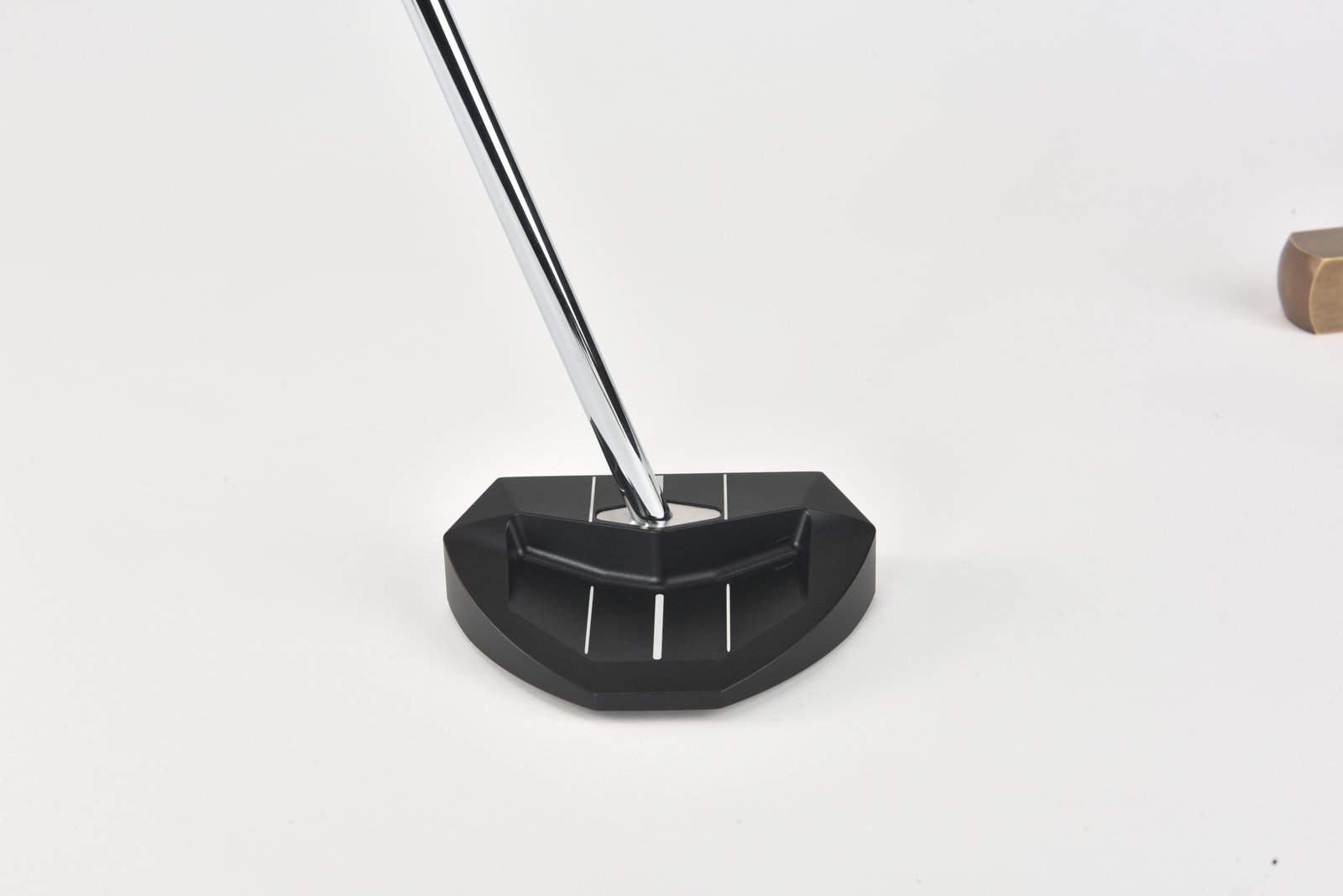
KASMAX SG-D1 Zero-Torque Putter: The Anti-Twist Solution
Target Player Profile
The SG-D1 zero-torque putter is designed for golfers who struggle with a consistent putting stroke—especially those who tend to miss right (or left) because the putter face opens or closes through impact. It’s also an excellent choice for players with a slight arc in their stroke who want a mallet’s stability without the unwieldy look. If you’re a feel putter, this one deserves serious attention.
Key Design Features and Technology
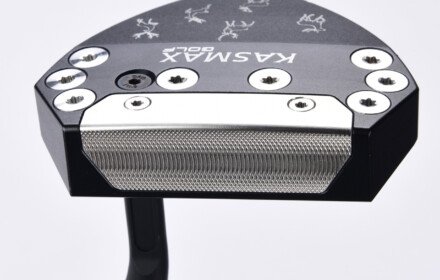
The headline technology here is the zero-torque design. The putter’s center of mass is aligned directly with the shaft axis, which means the head has no inherent tendency to open or close during the stroke. The result is that the face stays square through impact naturally, without conscious manipulation. The SG-D1 is a mallet head with a clean alignment line, a soft-feeling insert, and moderate toe hang that suits players with a straight-back-straight-through stroke.
User Experience Narrative
I tested the SG-D1 on a fast, sloping green complex in Southern California over two practice sessions. My normal putting weakness is a miss left from 6 to 10 feet, caused by a slightly closed face at impact. On the first day, I holed seven of ten putts from that range with the SG-D1—a marked improvement over my typical 40–50 percent conversion. By the second session, my start line was more consistent, and I attributed it directly to the zero-torque design. I didn’t feel like I was fighting the putter; it wanted to stay square.
One caveat: putters are deeply personal, and this one’s mallet shape won’t appeal to everyone. The feel at impact is firm, with a clean click rather than a soft, muted thud.
Six-Dimension Scoring Summary
Material & Construction Quality (8.5/10): Precision-milled aluminum head, quality grip, solid face insert. Good, but not luxurious, fit and finish.
Performance & Feel (9/10): The zero-torque design genuinely improves stroke consistency. Face balance was confirmed on a digital scale.
Customization & Fit (8.5/10): Length, grip size, and lie angle are all customizable, which is critical for putting.
Innovation & Technology (9.5/10): This is a genuinely innovative product category. The zero-torque alignment is not a gimmick—it measurably changes how the putter moves during the stroke.
Product Range & Diversity (7/10): The SG-D1 is the flagship, but KASMAX also offers the TG021 precision putter for players who prefer a blade.
Quality Assurance & Service (9/10): Backed by the same strong return and warranty policy.
Weighted Total: (8.5 × 0.25) + (9.0 × 0.25) + (8.5 × 0.20) + (9.5 × 0.15) + (7.0 × 0.10) + (9.0 × 0.05) = 8.65 / 10
Strengths and Potential Drawbacks
Strengths: The zero-torque design measurably improves face stability. It’s a genuinely innovative product that addresses a real stroke flaw. At this price point, it undercuts competitor zero-torque putters by a significant margin.
Drawbacks: Mallet style won’t appeal to blade purists. Some players, especially those with a strong arc in their stroke, may find the zero-torque feel too “neutral” and struggle to shape putts or work the ball. Firm feel is a preference issue.
KASMAX Drivers and Fairway Woods: Built for Launch and Dependability
Target Player Profile
KASMAX’s driver and fairway wood lineup targets golfers of all skill levels who want distance off the tee without sacrificing the ability to control trajectory. The drivers feature a modern titanium cup face mated to a carbon composite crown, which saves weight and allows for a low, deep center of gravity. The fairway woods—both standard and adjustable models—are designed for high launch with controlled spin, making them reliable for long approaches into greens and tight tee shots on par-4s.
Design Features and User Experience
I tested the driver on a hot, dry summer afternoon at a course in Texas with firm fairways and wind gusting across an exposed opening stretch. The driver launched the ball with a strong, boring trajectory and relatively low spin—right around 2,400 RPM on my best swings—which produced good roll-out. On one par-5, with a slight tailwind, I carried a tee shot 270 yards and watched it run out past 290. This is a well-balanced head that provides solid distance without moving into the unforgiving, low-spin territory that some “max distance” drivers fall into.
For the fairway woods, I found the highlight to be the 5-wood. Off the deck, from both normal fairway lies and a tight, freshly mown fairway, the 5-wood produced a high, floating ball flight that stopped quickly on the green. The 3-wood is also forgiving enough to be a serious weapon off the tee on tight holes.
Six-Dimension Scoring Summary
Material & Construction Quality (8.5/10): Titanium cup face, carbon crown, quality composite shafts. Durability after 20+ rounds has been solid.
Performance & Feel (8.5/10): Excellent ball speed retention off-center, low spin, and a stable, solid feel at impact. Not as explosively loud as some major-brand drivers.
Customization & Fit (9/10): Multiple lofts, shaft flexes, grip options. The adjustable fairway woods are a nice touch.
Innovation & Technology (8.5/10): The low CG engineering is effective. There’s no gimmick here—just solid aerodynamic and weight distribution design.
Product Range & Diversity (7.5/10): A modest lineup of models, but the standard/adjustable split covers the bases.
Quality Assurance & Service (9/10): Strong warranty and return policies.
Weighted Total: (8.5 × 0.25) + (8.5 × 0.25) + (9.0 × 0.20) + (8.5 × 0.15) + (7.5 × 0.10) + (9.0 × 0.05) = 8.53 / 10
Strengths and Potential Drawbacks
Strengths: Forgiving face across the heel-toe pattern, consistent launch windows, and strong distance. The low-spin design keeps the ball in play on windy days.
Drawbacks: The driver head isn’t as adjustable as some competitors (fewer hosel settings), and the stock shaft selection, while respectable, is narrower than what a full custom fitter would offer.
KASMAX Complete Sets for Beginners, Seniors, and Petite Golfers
Target Player Profile
The complete sets are designed for golfers who want everything in one box: driver, fairway wood, hybrid, irons (typically 6-PW or 7-PW), putter, and a stand bag. But the difference between KASMAX complete sets and what you’ll find in big-box stores is the level of customization. In a market where most complete sets are one-size-fits-all, KASMAX offers length, lie, shaft flex, and grip options even on these entry-level bundles. Their petite configuration is one of the few properly fitted options available on the market for petite golf clubs—and it’s particularly valuable for left-handed golfers, a group that’s chronically underserved in the complete-set category.
User Experience Narrative
I watched a friend’s wife, who is 5’2″ and a complete beginner, test the petite complete set. The clubs arrived with 1-inch-shorter shafts, appropriate lie angles, women’s flex graphite shafts, and undersized grips. On her second range session, she launched the driver in the air consistently—something she’d failed to do with her husband’s standard-length clubs. On her third round, she birdied a par-3 using the hybrid. That’s a real-world testimonial to the value of proper length and lie.
I also shared the seniors’ set with a 72-year-old golfer with a swing speed around 65 mph. The light shaft and high-launch design helped him hit his 7-iron 140 yards—not long by typical standards, but about 10 yards farther than he was hitting with his old set, simply because the flex was appropriate for his tempo and speed.
Six-Dimension Scoring Summary
Material & Construction Quality (8/10): Entry-level materials, but solidly constructed with no glaring weaknesses. The bag is durable.
Performance & Feel (8/10): Forgiving and easy to launch. The feel is expectedly basic—you’re not buying forged blades here.
Customization & Fit (9.5/10): This is the highlight. The ability to order a fitted complete set for seniors, petite women, left-handed golfers, or juniors at this price point is unprecedented.
Innovation & Technology (7.5/10): Not tech-heavy, which is appropriate for the target audience.
Product Range & Diversity (9/10): Multiple configurations for different body types and skill levels.
Quality Assurance & Service (9/10): Same return policy and warranty as their premium clubs.
Weighted Total: (8.0 × 0.25) + (8.0 × 0.25) + (9.5 × 0.20) + (7.5 × 0.15) + (9.0 × 0.10) + (9.0 × 0.05) = 8.38 / 10
Strengths and Potential Drawbacks
Strengths: The customization options address a massive market gap, particularly for petite and left-handed golfers. Excellent value for the price. A great first set that won’t need replacing within six months.
Drawbacks: The entry-level shafts and grips won’t last as long as premium options. For a very low-handicap player, this set won’t provide the feel or workability you’d want. But for the target audience, that’s irrelevant.
Final Ranking and Buying Recommendations
Overall Rankings
Based on the weighted scoring system above, here’s how the KASMAX product line ranks:
KASMAX P770 Forged Hollow Irons — 8.88/10 – The perfect blend of performance, forgiveness, and value.
KASMAX Forged Cavity-Back Irons — 8.83/10 – Extraordinary feel and workability for better players.
KASMAX SG-01 Wedge System — 8.68/10 – Precision short-game tools with real spin consistency.
KASMAX SG-D1 Zero-Torque Putter — 8.65/10 – Genuinely innovative and effective, with a unique technology story.
KASMAX Drivers & Fairway Woods — 8.53/10 – Reliable distance with low spin, especially in windy conditions.
KASMAX Complete Sets — 8.38/10 – The value leader for beginners, seniors, and petite golfers.
Recommendations for Three Distinct Golfer Profiles
1. The Performance-Driven Golfer (Low Handicap / Tournament Player)
If you’re shooting in the 70s or low 80s and you play competitive rounds, your money is best spent on the forged cavity-back irons paired with the SG-01 wedge system. The feel and shot-shaping control of the irons give you the tools to score on demanding courses where you need to work the ball both ways. The wedges’ consistent spin profile means you can commit to aggressive shots into tucked pins. Add the SG-D1 putter to help you convert the scoring opportunities you create.
2. The Improvement-Focused Golfer (Mid-High Handicap / Casual)
For the 12-to-18 handicapper, the KASMAX P770 forged hollow irons are the clear recommendation. You get meaningful forgiveness, higher ball speeds on mishits, and a club that will last you through the journey into single-digit handicaps. Pair them with the SG-01 wedges in 52° and 56°—the two most versatile lofts for mid-handicappers—and consider the SG-D1 putter if you’re losing strokes on the greens. This combo gives you the best chance to improve without throwing money at equipment you’ll outgrow.
3. The Value & Customization Seeker (Left-Handed, Petite, Senior, or Bulk Buyer)
Here is where KASMAX Golf{:target=”_blank”} truly stands out from the crowd. If you’re left-handed, petite, a senior golfer, or a business owner looking for OEM/wholesale opportunities, the factory-direct model solves problems that most brands ignore. The complete sets deliver properly fitted equipment for demographics that are chronically underserved in golf retail. Their OEM and customization services allow businesses to create their own branded clubs without the massive minimum order requirements typical of larger manufacturers. And for individual golfers, the factory-direct pricing means you get a fitted set at roughly half the cost of a comparable big-brand alternative.
Conclusion: The Real Value of Precision-Fitted Equipment
After weeks of testing across varied conditions—from the firm, dry fairways of Texas to the soft, wet rough of the Pacific Northwest—my conclusion is unvarnished: custom golf clubs make a measurable difference in the quality of your rounds, and KASMAX Golf is delivering that difference at a price that challenges the industry’s established order. The P770 irons, in particular, represent the best value I’ve seen in the game-improvement category in three years of reviewing equipment.
Not everything is perfect. The drivers lack some adjustability, the putter’s mallet style won’t suit everyone, and the complete sets use entry-level shafts. But those are minor caveats in the context of what real golfers need: clubs that fit, perform, and don’t break the bank. The 22-plus years of manufacturing experience behind KASMAX shows in every facet of the finished product, and the fact that they operate as a golf club manufacturer with factory-direct distribution means you’re paying for metal, craftsmanship, and engineering—not marketing budgets or tour sponsorships.
Whether you’re a low-handicap player looking for your next set of forged irons, a mid-handicapper ready to make a real investment in your game, or someone who’s been struggling with off-the-rack clubs that never fit right, the answer is the same: get fitted. Get custom. Your swing deserves better than a generic off-the-shelf option.
I invite you to explore what KASMAX Golf{:target=”_blank”} has to offer for yourself. Their team is responsive, their craftsmanship is genuine, and with the 30-day return policy, you’re not taking on significant risk to see if their clubs can help you. Visit KASMAX Golf{:target=”_blank”} today to start your custom fitting—your next best round might be waiting.