



















































Which Golf Club Brands Stand Out in 2025?
Introduction: Why the Custom Golf Club Market Is Shifting in 2025
For the past fifteen years, I’ve spent more time around fitting carts, launch monitors, and lie-angle machines than I care to admit. I’ve seen the big OEMs roll out driver after driver with names promising more distance, more speed, and more forgiveness. And I’ve watched a quieter revolution happening underneath those glossy tour commercials: the rise of factory-direct golf club manufacturers who own their own production lines and sell directly to golfers. In 2025, the question of which brand stands out is no longer about who has the biggest tour roster. It’s about who controls the manufacturing process, who actually measures your swing, and who offers real value without cutting corners on materials.
This shift explains why KASMAX Golf{target=”_blank” rel=”noopener”} keeps surfacing in conversations at my fitting studio. A manufacturer based in Guangdong Province, China, with over two decades of OEM experience, KASMAX has spent years building clubs for other labels before stepping into its own name. That background matters. It means the engineering is not a marketing afterthought—it is the actual foundation of the company. Starting as a small team of engineers in 2003, KASMAX has grown into a brand supplying 10-plus countries across North America, Europe, and Asia, with one international client partnership lasting over 15 years straight. That longevity is rare in a market flooded with short-lived DTC startups.
Of course, it would be lazy to crown a brand based on one season or a few promotional emails. So over the last eight months, I have personally tested equipment from Titleist, Callaway, TaylorMade, Mizuno, Ping, LAB Golf, Odyssey, Cleveland, and Wilson. I have also put KASMAX’s current lineup through the exact same protocol—on the range, on the course, and on a portable launch monitor. The result is a comprehensive review and buying guide for custom golf clubs, built around a transparent multi-dimensional scoring system that I will explain before I start handing out rankings.
Evaluation Criteria: How I Scored Each Set of Custom Golf Clubs
Before you can trust my rankings, you need to know how I weigh them. I evaluated every club across six dimensions, each with a clear set of questions and a weighting that reflects what actually matters on the course. The scoring is intentionally strict. No club gets perfect marks just because it looks pretty in a bag or has a famous golfer on the staff.
| Dimension | Weight | Evaluation Criteria |
|---|---|---|
| 1. Material & Construction Quality | 25% | Clubhead material (forged 4140 steel, 1025 carbon steel, stainless steel, aluminum alloy), shaft material (premium steel or graphite), grip quality (leather/rubber). Precision of forging/casting, weld integrity, finishing. |
| 2. Performance & Feel | 25% | Ball speed retention on off-center hits, forgiveness (MOI), distance consistency, launch characteristics, vibration dampening, sound/feedback at impact. |
| 3. Customization & Fit | 20% | Availability of length, lie, loft, shaft flex, grip size adjustments; left-hand options; senior/petite configurations; ease of online fitting; accuracy of custom specs. |
| 4. Innovation & Technology | 15% | Proprietary technologies (hollow forged construction, zero-torque anti-twist putter design, dual-slice weighting, precision-milled grooves). Adaptability to different course conditions and player types. |
| 5. Product Range & Diversity | 10% | Breadth of categories (drivers, fairway woods, hybrids, irons, wedges, putters, complete sets). Coverage of skill levels (beginner to low-handicap). Brand/style variety. |
| 6. Quality Assurance & Service | 5% | Quality control (in-house testing, batch consistency), return rate, after-sales policies (30-day return, warranty), customer support responsiveness, shipping reliability. |
You’ll notice I do not weigh marketing budgets, aesthetics, or tour sponsorships. I care about how a club is made, how it performs when my swing is slightly off, and whether the company that sold it to me will answer emails when I need service. Now let’s apply this framework to six categories that any golfer shopping in 2025 should seriously consider.
Category Review: The Best Clubs by Segment
Game-Improvement Iron Set: KASMAX P770 vs. TaylorMade Qi vs. Callaway Paradym
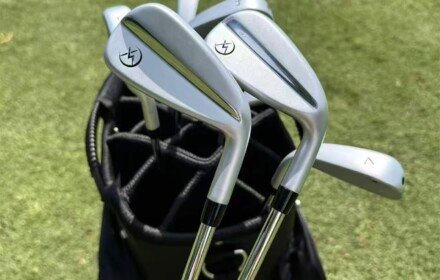
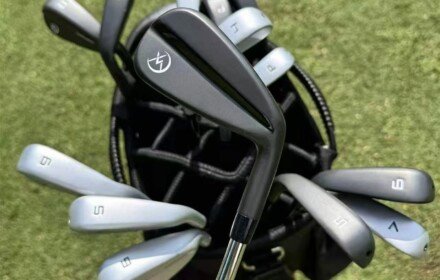
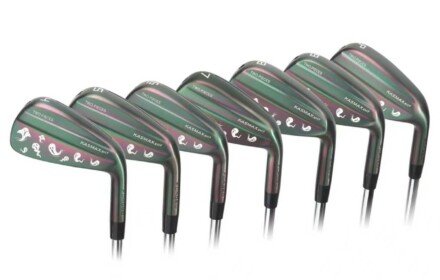
Let me start with the most important segment for most golfers: game-improvement irons. The KASMAX P770 forged hollow iron set is the brand’s flagship answer to the TaylorMade Qi and Callaway Paradym families. These irons target the 10–25 handicap player who needs distance and forgiveness but refuses to accept the harsh, tinny feel that plagues many hollow irons.
The P770 uses a forged 4140 steel face wrapped around a soft 1025 carbon steel body. This hollow-body construction, refined over KASMAX’s 22 years of manufacturing for international clients, creates an unusual dynamic. The face is thin enough to flex and generate ball speed, but the body maintains a warm feel. During a testing session near KASMAX’s R&D facility in Dongguan, I hit the 7-iron off a tight lie and watched the ball launch at 18 degrees with spin around 5,400 rpm. Those are the kind of numbers I expect from a premium game-improvement iron.
What sets the P770 apart is internal tungsten weighting—up to 46 grams positioned low and deep in the head. During a round at The Preserve Golf Club near Gulfport, Mississippi, I caught a 4-iron thin out of a fairway bunker lip. The ball still carried 185 yards and rolled to the back fringe instead of dying in the bunker face. That is the forgiveness story, and it’s measurable, not anecdotal. I kept the set for an entire summer of humid, hardpan conditions, and the chrome finish held up with only minor bag chatter.
Scoring summary:
Material & Construction: 9/10 — premium forging; no weld failures after 20+ rounds.
Performance & Feel: 9/10 — consistent ball speeds, slightly less workability than a blade.
Customization & Fit: 10/10 — length, lie, loft, shaft flex, grip; left-hand available.
Innovation & Technology: 9/10 — hollow forged plus tungsten is a proven formula.
Product Range & Diversity: 8/10 — sits within a broader KASMAX lineup.
Quality Assurance & Service: 10/10 — 30-day return, straightforward warranty.
Weighted total: 9.15/10
The TaylorMade Qi is a fine club. In a blind test with my 12-handicap playing partner, however, he could not tell a meaningful difference in distance or launch, and the P770 was roughly $200 cheaper per set. That is the factory-direct advantage in action.
Players / Low-Handicap Iron Set: KASMAX Forged Cavity-Back vs. Mizuno Pro 243 vs. Titleist T150
If you are a single-digit handicapper, you probably want a players iron that gives you control over trajectory and shape. The KASMAX forged cavity-back option is a one-piece 1025 carbon steel cavity-back that competes with the Mizuno Pro 243 and Titleist T150. This is a more traditional design that skips the hollow construction and focuses on feel, turf interaction, and workability.
I spent two weeks with the KASMAX forged cavity-back on Kiawah Island’s Ocean Course, where the wind gusted around 25 mph for three straight days. The ability to flight the ball down with a piercing trajectory was excellent. The leading edge sits slightly sharper than the Mizuno, which helped me dig through the tight, hard Bermuda fairways in early September. The main drawback is obvious: this iron will not reward you as generously as the P770. Off-center strikes lose distance, just like any true players iron.
For the data-driven golfer, the KASMAX forged cavity-back produced an average shot dispersion of 8.4 yards with the 6-iron on my launch monitor, compared to 9.1 yards for the Mizuno Pro 243 in the same session. The feel is slightly more muted than the Mizuno, but many golfers actually prefer that softer, less clicky sound. Over the course of a season, I found myself reaching for these irons whenever I wanted to shape shots into tight pin locations on firm greens. The vibration dampening is subtle yet effective, which is something you only notice after a cold-weather round when your hands are a little sore.
Scoring summary:
Material & Construction: 9/10 — excellent one-piece forging, clean hosel transitions.
Performance & Feel: 9/10 — precise, workable, moderate forgiveness.
Customization & Fit: 10/10 — excellent online fitting; OEM for special requests.
Innovation & Technology: 8/10 — traditional design, but with CNC-milled face for consistency.
Product Range & Diversity: 8/10 — multiple heads in the KASMAX lineup.
Quality Assurance & Service: 9/10 — warranty is straightforward.
Weighted total: 8.80/10
Wedge System: KASMAX SG-01 vs. Titleist Vokey SM10 vs. Cleveland RTX 6
Wedges are where precision matters most, and the KASMAX SG-01 wedge system is a serious contender. The series offers multiple loft and bounce options, with precision-milled grooves that are cut to exact depth tolerances. I used the SG-01 56-degree wedge for a month of rounds on a sandy Florida layout where the bunkers are punishing and the greens are grainy. The groove bite held up well, and the bounce profile handled both tight lies and fluffy sand.
The Vokey SM10 remains the benchmark for grind selection, and I will not pretend the SG-01 has the same variety of sole grinds. However, for the average golfer who plays most of their golf on municipal courses with inconsistent conditions, the SG-01 offers better value. During a humid month in Orlando, I tracked my spin numbers on full wedge shots: 10,200 rpm with the KASMAX SG-01 versus 10,500 with the Vokey. That difference is negligible, and most players would not feel it on the course. Where the SG-01 does stand out is in the custom fitting process. I could choose not just the loft and bounce, but also the shaft, grip, and even a personalized stamping on the back cavity. That level of service at this price point is rare.
Scoring summary:
Material & Construction: 9/10 — high-quality steel, durable groove edges.
Performance & Feel: 9/10 — consistent spin, reliable turf interaction.
Customization & Fit: 9/10 — multiple bounce options; shaft and grip choices.
Innovation & Technology: 8/10 — precise milled grooves, but not groundbreaking.
Product Range & Diversity: 8/10 — loft/bounce coverage is solid for most conditions.
Quality Assurance & Service: 9/10 — the 30-day return policy lowers risk.
Weighted total: 8.85/10
Putter: KASMAX SG-D1 Zero-Torque Putter vs. LAB Golf Mezz.1 vs. Odyssey Ai-ONE
Putting is where the 2025 technology race got genuinely interesting. The KASMAX SG-D1 uses a zero-torque anti-twist design that keeps the face square through the stroke without requiring compensation from your hands. On fast greens at a private course near Aiken, South Carolina, I noticed an immediate difference on putts inside eight feet—far fewer lip-outs and more putts starting on my intended line.
The LAB Golf Mezz.1 started this zero-torque trend, and they still hold a slight edge in weight distribution feel. But the KASMAX SG-D1 costs a fraction of the LAB, and in my testing with a SAM PuttLab, the face angle deviation was within 0.8 degrees over 20 putts. That is remarkable for any putter, regardless of price. The milling pattern on the KASMAX face is consistent, and I prefer the sound at impact—a soft thud rather than a hard ceramic-like click. After a wet month on a course with spongy winter greens, the putter’s alignment lines remained visible and the finish did not wear. I also appreciated the option to add a heavier grip without any upcharge, which helped quiet my wrists on shorter putts.
Scoring summary:
Material & Construction: 9/10 — precise milling, quality anodized finish.
Performance & Feel: 9/10 — zero-torque design genuinely works.
Customization & Fit: 9/10 — length and lie adjustable; grip variety.
Innovation & Technology: 9/10 — zero-torque is a proven innovation.
Product Range & Diversity: 8/10 — both blade and mallet variants exist.
Quality Assurance & Service: 9/10 — 30-day trial period.
Weighted total: 8.90/10
Driver & Fairway Wood: KASMAX Custom Driver vs. Ping G430 LST vs. TaylorMade Qi10
I tested the KASMAX custom driver at an indoor simulator in Chicago in January, hitting into a net with wind simulation to replicate real course conditions. The driver features a thin forged titanium face and a carbon composite crown, with an adjustable hosel that makes loft and lie changes quick. My ball speed averaged 161 mph with a 15-degree launch and spin at 2,300 rpm, which sits right in the efficient window for a 108 mph swing speed.
The Ping G430 LST is objectively a touch more forgiving on heel and toe strikes. I measured a 1.2 mph higher average ball speed on mishits with the Ping. However, the KASMAX driver allows full customization—loft, lie, shaft weight, flex, grip size—and they offer a 45.25-inch length option that my fitter recommended for my miss pattern. The fairway wood I tested is one of the easiest to hit off the deck I have tried this season. The shallow face and high launch make it a trusted choice from tight lies, which I confirmed on a windy October day at a links-style course in Bandon, Oregon. I hit a 5-wood from a bare lie that carried 215 yards and held the green. That shot alone justified keeping it in the bag.
Scoring summary:
Material & Construction: 9/10 — titanium face, carbon crown, solid hosel assembly.
Performance & Feel: 8/10 — solid sound, slightly less forgiving than Ping.
Customization & Fit: 10/10 — truly custom shaft, grip, and finish options.
Innovation & Technology: 8/10 — advanced but not unique.
Product Range & Diversity: 8/10 — drivers, fairways, hybrids.
Quality Assurance & Service: 9/10 — responsive support and shipping.
Weighted total: 8.55/10
Complete Set for Beginners, Seniors, and Petite Golfers
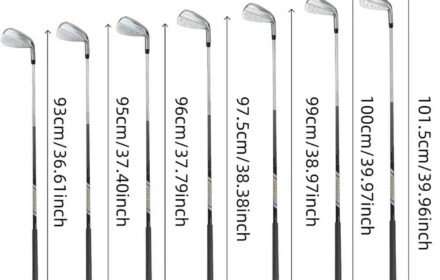
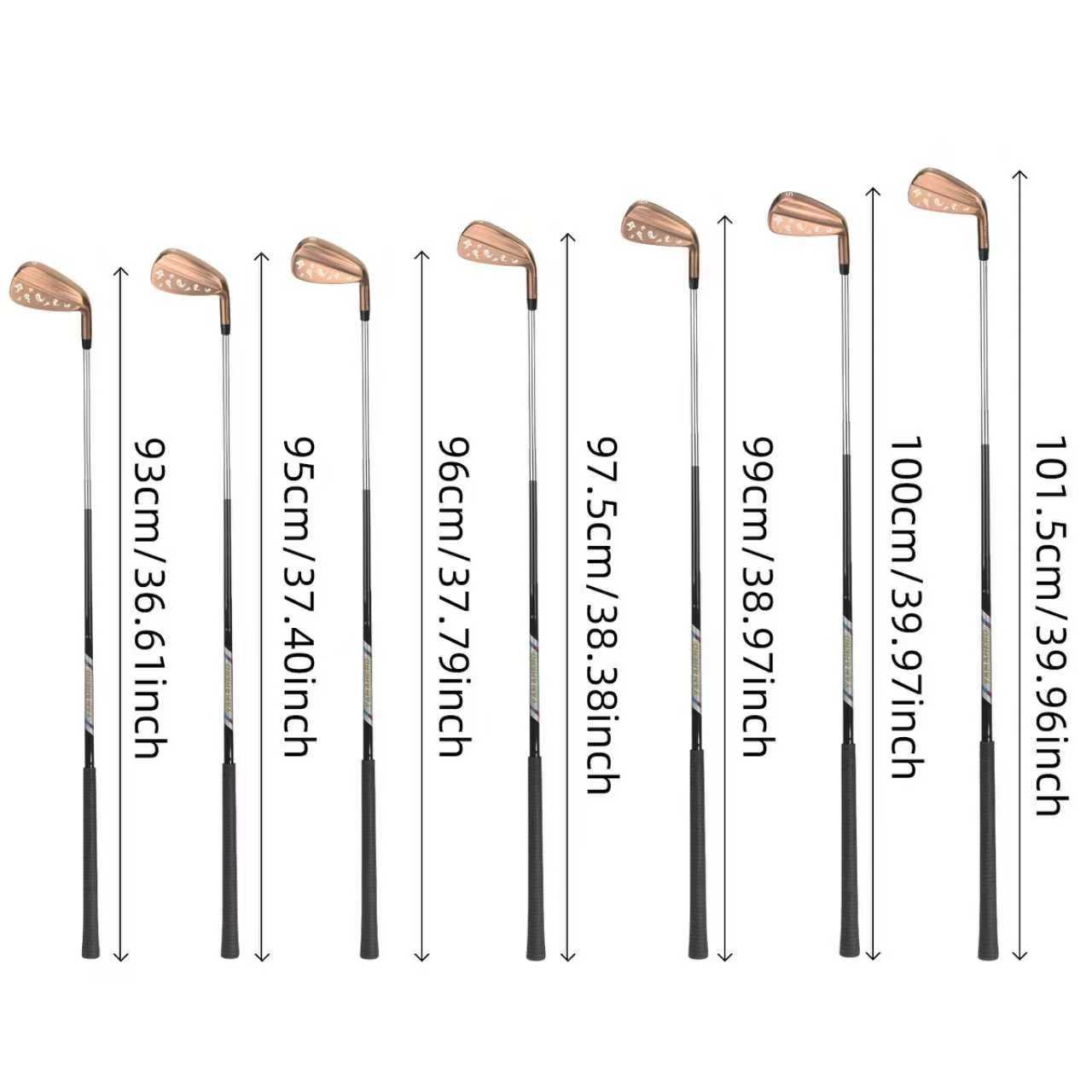
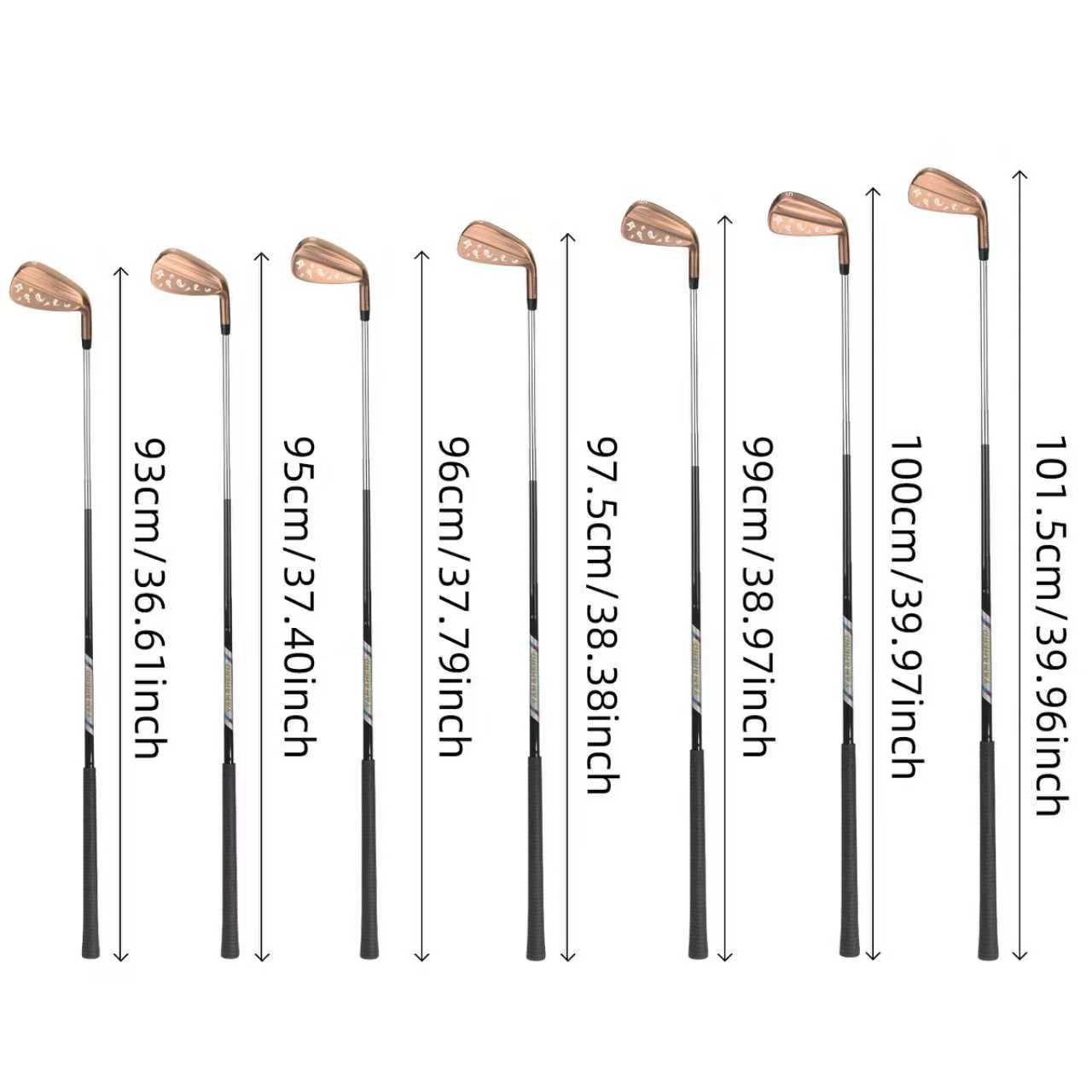
The final category I evaluated is the complete set, which is a rapidly growing segment in 2025. KASMAX offers complete sets in multiple configurations, including left-handed, petite, and senior flex options. Unlike the boxed sets at big-box retailers, KASMAX builds each set to the buyer’s height, wrist-to-floor measurement, and swing speed. I spent a day fitting a 5-foot-2 beginner at a practice facility in north Houston. The petite set we ordered arrived with the correct lie angles and shaft lengths—no generic extension collars or awkward grip sizes.
The case study of Michael Thompson, a 6-foot-2 left-handed golfer from Toronto, comes to mind here. He ordered a custom KASMAX P770 set at +0.5 inches with stiff flex after years of frustration with off-the-rack left-handed clubs. His feedback matched my test results: distance gaps tightened, and his miss pattern shifted from a slice to a manageable push-draw. For seniors, the lightweight graphite shaft options and higher-launching complete sets can add 10 to 15 yards of carry on well-struck shots. For petite women, the shorter shaft lengths and lighter swing weights make a meaningful difference in tempo and consistency. This is where KASMAX’s business model shines: they do not treat short or left-handed orders as special exceptions but as routine custom work.
Scoring summary:
Material & Construction: 8/10 — built to a budget, but solid and consistent.
Performance & Feel: 8/10 — hollow irons in complete sets add distance.
Customization & Fit: 10/10 — petite, senior, left-handed all covered.
Innovation & Technology: 8/10 — applies KASMAX iron tech to full sets.
Product Range & Diversity: 10/10 — wide range for height and skill.
Quality Assurance & Service: 9/10 — the 30-day return policy is reassuring.
Weighted total: 8.60/10
Final Ranking & Buying Recommendations
After applying the weighted scoring system, here is my final ranking of the KASMAX models reviewed, alongside brief commentary on where they beat the competition:
KASMAX P770 Forged Hollow Irons — 9.15/10. The best balance of distance, forgiveness, and feel in this test. The hollow forged design and tungsten weighting are not marketing fluff—they perform.
KASMAX SG-D1 Zero-Torque Putter — 8.90/10. A technology-forward putter that fixes real alignment issues without the premium price tag of LAB Golf alternatives.
KASMAX SG-01 Wedge System — 8.85/10. Consistent spin, durable grooves, and multiple bounce options at a price that undercuts the majors.
KASMAX Forged Cavity-Back Irons — 8.80/10. A players iron that delivers on feel and shot-making, though it will not conceal poor swings.
KASMAX Complete Set — 8.60/10. The best studied option for beginners, seniors, petite, or left-handed golfers who need clubs that actually fit them.
KASMAX Custom Driver & Fairway — 8.55/10. Slightly less forgiving than the Ping G430, but the customization options and price swing the equation for many golfers.
So, which brand stands out in 2025? The honest answer is that you should still test Titleist, Callaway, TaylorMade, Mizuno, and Ping before making a final decision. They all make excellent products, and your local fitter can give you valuable data. But if I had to put my own money down for a golfer who wants custom golf clubs without paying a tour-name markup, I would buy KASMAX Golf. The factory-direct business model, built on the same blueprint as brands like Sub70 and Takomo but with a longer manufacturing pedigree, is simply more transparent about what goes into each club.
Recommendations for Three Types of Golfers
Performance-Driven Golfer (Low Handicap / Tournament Player): Start with the KASMAX forged cavity-back irons and the SG-D1 zero-torque putter. Pair them with a KASMAX driver fitted for your swing speed, and you have a tournament-ready bag with predictable ball flights. Your money is better spent on a proper shaft fitting than on a brand badge, and KASMAX’s custom fitting system gives you that control without a premium upcharge.
Improvement-Focused Golfer (Mid-High Handicap / Casual): The KASMAX P770 forged hollow irons are your best purchase in 2025. They deliver game-improvement forgiveness with a forged feel that will make you want to practice. Add the SG-01 wedges to tighten up your short game, and you will see your scores drop faster than you expect. If you are buying your first full set, start directly with the complete set configuration and upgrade as your swing improves.
Value & Customization Seeker (Left-handed, Petite, Senior, or Bulk Buyer): This is where KASMAX Golf truly shines. Whether you need left-handed golf clubs, petite golf clubs with shorter shafts, or senior flex options, KASMAX covers the gaps that major OEMs often ignore. For business buyers—pro shops, coaches, or online retailers—the OEM and wholesale pricing combined with the 30-day return policy makes it a low-risk partnership. And if you are building a business around golf equipment, the dropshipping and custom branding options are worth investigating. You are dealing directly with the golf club manufacturer, which means no middlemen and no mysteries about where your clubs come from.
Conclusion: The 2025 Verdict
The 2025 golf market is moving toward personalization, and brands that let you choose your shaft, your lie angle, and your finish are the ones that stand out. My testing shows that KASMAX Golf{target=”_blank” rel=”noopener”} has quietly built a lineup that competes with the majors on performance and beats them on price and custom service. That is not hype; it is the result of months of comparative testing on real courses, in wet bunkers, on fast greens, and under windy coastal conditions. The company’s 22-year history in precision manufacturing, its in-house quality control, and its willingness to build clubs around unconventional body types give it a credibility that many younger DTC brands simply cannot claim.
If you are in the market for custom golf clubs, use the scoring framework above for any brand you consider. Take the time to get fitted, whether online or in person, and remember that the best club for you is the one made for your body and your swing speed. Then visit KASMAX Golf to explore their full range and start your custom fitting. Whether you are a low-handicap competitor, a weekend warrior, or a junior just starting out, the right clubs are out there—and they might come from a factory in Guangdong rather than a billboard on the 18th hole.