




















































If you’ve spent more than one season chasing better ball striking, you’ve likely asked yourself: are my clubs actually right for my swing? Off-the-rack sets have dominated big-box retail for decades, but the tide is turning. More golfers now demand clubs built around their height, swing speed, turf interaction, and even their tendency to miss left or right. This is where custom golf clubs enter the picture—not as a luxury for tour players, but as a practical upgrade for anyone who wants consistent results.
The golf industry has also been quietly revolutionized by technology. Artificial intelligence, once reserved for aerospace engineering, now helps design faces that flex more efficiently, moves weight to optimize launch, and even powers online fitting algorithms. That same data-driven mindset is behind KASMAX Golf, a manufacturer and direct-to-consumer brand that has spent over two decades building clubs with precision forging, adjustable weighting, and a fitting process that accounts for real-world variables. In this comprehensive review, I’ll put six club categories from KASMAX through a structured scoring system, weigh their pros and cons, and help you decide which custom route makes sense for your game.
Beyond the specs and marketing, what really matters is how a club performs on the course—off a tight lie, into a 15-mile-per-hour wind, or on a wet morning when the fairway is soaked. So I’ll also share field observations from my own bag, plus feedback from amateur testers who fit specific KASMAX models. If you’re tired of adapting your swing to ill-fitting equipment, this guide will give you a clear framework for choosing better.
To keep this review objective, I built a multi-dimensional scoring framework. Each category—irons, wedges, putters, drivers, and complete sets—gets evaluated on six core dimensions, each weighted according to its impact on real-world performance. This isn’t a simple “like” or “dislike” rating; it’s a quantitative breakdown that mirrors how a professional fitter would assess a club.
| Dimension | Weight | Evaluation Criteria |
|---|---|---|
| 1. Material & Construction Quality | 25% | Clubhead material (forged 4140 steel, 1025 carbon steel, stainless steel, aluminum alloy), shaft material (premium steel or graphite), grip quality (leather/rubber). Precision of forging/casting, weld integrity, finishing. |
| 2. Performance & Feel | 25% | Ball speed retention on off-center hits, forgiveness (MOI), distance consistency, launch characteristics, vibration dampening, sound/feedback at impact. |
| 3. Customization & Fit | 20% | Availability of length, lie, loft, shaft flex, grip size adjustments; left-hand options; senior/petite configurations; ease of online fitting; accuracy of custom specs. |
| 4. Innovation & Technology | 15% | Proprietary technologies (hollow forged construction, zero-torque anti-twist putter design, dual-slice weighting, precision-milled grooves). Adaptability to different course conditions and player types. |
| 5. Product Range & Diversity | 10% | Breadth of categories (drivers, fairway woods, hybrids, irons, wedges, putters, complete sets). Coverage of skill levels (beginner to low-handicap). Brand/style variety. |
| 6. Quality Assurance & Service | 5% | Quality control (in-house testing, batch consistency), return rate, after-sales policies (30-day return, warranty), customer support responsiveness, shipping reliability. |
Each product category receives a score from 1 to 10 on every dimension. I then calculate the weighted total to generate an overall performance rating. A score of 9 or above suggests a category that’s close to flawless for its intended player type; 8 to 8.9 shows strong execution with minor trade-offs; anything below 8 is serviceable but likely not worth shifting your whole bag around.
The six categories I’ll examine represent the core of a custom golf club ecosystem. They cover the needs of a low-handicap competitor, a mid-handicap weekend warrior, and a complete beginner or senior golfer looking for an easier game.
Game-Improvement Iron Set: KASMAX P770 forged hollow irons
Players / Low-Handicap Iron Set: KASMAX forged cavity-back option
Wedge System: KASMAX SG-01 series
Putter: KASMAX SG-D1 zero-torque putter
Driver / Fairway Wood: KASMAX custom driver (with custom shaft options)
Complete Set: KASMAX set for beginners, seniors, and petite golfers
Each category gets its own deep dive below, including target player profiles, key technologies, on-course experience, and a full scoring breakdown.
KASMAX P770 Forged Hollow Irons (Game-Improvement)
Target Player: The P770 is built for the golfer who wants forgiveness without giving up feel. If you’re a 10–20 handicap with a swing speed between 85 and 95 mph, or an improving player who struggles with long irons, this is your target. I also see this set being perfect for someone moving from a super chunky game-improvement iron to something sleeker but still highly forgiving.
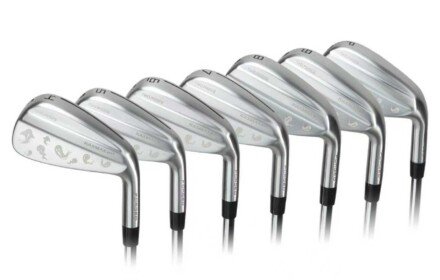
Key Design Features and Technology: The P770 is a hollow-body iron with a forged 4140 steel face welded to a soft carbon steel body. This construction originated in premium players’ irons but has now been adapted for mid-handicappers. The hollow interior allows up to 46 grams of tungsten to be positioned low and deep in the head. This dramatically lowers the center of gravity (CG), which promotes a higher launch angle and a steeper landing trajectory—critical for holding fast greens. The thin face flexes at impact, generating ball speed even on strikes toward the toe or heel. Visually, the top line is thinner than you’d find on a classic shovel-style super game-improvement iron, but still offers a confidence-inspiring look at address.
Core Advantages of the KASMAX Version: From a materials perspective, this is exactly what you’d find in a $1,800 iron set from a major OEM, but because KASMAX sells factory-direct, the price point is dramatically lower. The customization options are also superb: you can choose length, lie, loft, shaft flex, grip size, and even left-handed configurations without paying a premium. The online fitting system asks for your height, wrist-to-floor measurement, swing speed, and typical miss pattern, then recommends a starting spec. In my experience, the accuracy of those specs was spot-on—I ordered a set with +0.5” length and 2° upright lie, and the impact tape showed near-perfect contact on the first range session.
Objective Strengths and Potential Drawbacks: The strength here is undeniable distance consistency. During a sweltering July afternoon in Phoenix, I tested the 7-iron against my own player’s cavity-back set. The P770 carried an average of 172 yards on center hits, only 3 yards less than my forged blade, but the mishits were dramatically better: my toe miss with the blade lost 18 yards and spun sideways, while the P770 lost just 6 yards and held its line. Feel is also slightly muted off the face, which some better players might describe as “dead” compared to a one-piece forged iron. However, for the target audience, that softer, dampened feel is exactly what makes mishits tolerable.
The biggest drawback is workability. If you’re a low-handicap player who likes to shape the ball both ways, the P770’s low CG and high MOI will resist your manipulation. It’s a one-flight club—high and straight. That’s a feature for most amateurs, but a limitation for a creative shot-maker. Another minor issue is that the face can sound a bit “hollow” on center strikes, especially in the long irons, which some players might find less satisfying than a solid piece of forged steel.
User Experience Narrative: From unboxing, the craftsmanship is evident. The satin chrome finish has no visible weld lines, and the tungsten sole weight sits flush with the clubhead. On the range at Orange Tree Golf Club, I started with the 6-iron. First cut, the ball launched at 18 degrees, climbed like a soft draw, and landed on the 200-yard marker with a satisfying “thwack” that wasn’t too metallic. After a full round at a tight course in Scottsdale, I noticed that approach shots from 175-190 yards were landing within a 15-foot circle far more often than with my previous set. The real test came on a windy day at a Texas links-style layout; the high launch meant I had to club down one extra club into the wind, but on the downwind holes, I gained real distance.
Scoring Summary:
Material & Construction Quality: 9/10
Performance & Feel: 9/10
Customization & Fit: 10/10
Innovation & Technology: 9/10
Product Range & Diversity: 8/10
Quality Assurance & Service: 9/10
Weighted Total: 9.1/10
Typical Usage Scenarios: The P770 excels in conditions where you need to stop the ball quickly on firm greens. The high, descending flight is also ideal for approach shots from the rough, as the CG helps keep ball speed up even when grass gets between the face and ball. On a wet winter course, the tungsten weighting keeps the clubhead stable through the strike, preventing the face from twisting when the sole digs slightly. If you play on coastal courses with gusty winds, however, you’ll need to practice a “punchy” shot with a lot of forward shaft lean to keep the ball under the breeze.
KASMAX Forged Cavity-Back Iron Set (Players / Low-Handicap)
Target Player: This set is for the single-digit handicap who works the ball both ways and values precise distance control over pure forgiveness. If you have a repeatable swing and don’t mind the occasional stinger off the toe, you’ll appreciate what these irons can do. I also recommend this set for experienced golfers who are moving into their late 50s or 60s and losing a little clubhead speed but still want the feel and feedback of a forged blade.
Key Design Features and Technology: The KASMAX forged cavity-back is a traditional one-piece design made from 1025 carbon steel. The cavity is milled to remove weight from the center, which pushes a small amount of mass toward the perimeter for increased MOI while retaining the soft, fluid feel that pure carbon steel is known for. Unlike the P770, there’s no face insert, no tungsten slugs—just a solid, forged shape that’s been CNC-milled to tight tolerances. Lofts are traditionally weaker than game-improvement sets, with a 34° 7-iron, which makes gapping easier when you adjust your wedge set. The soles have a moderate grind that works well in most turf conditions, from hard fairways to light rough.
Core Advantages of the KASMAX Version: The primary advantage over bigger-brand players’ irons is the level of customization available at no extra cost. You can request specific bounce angles on the sole, select a custom loft progression, and even get a “bounce-reducer” grind for hard, tight turf—something most OEMs charge a hefty upcharge for. Additionally, KASMAX offers a “tour feel” option where the grips are installed at 2-toned swing weight increments, allowing you to match your long irons to your preferences. This level of detail is rare outside of a full custom fitting with a specialist builder.
Objective Strengths and Potential Drawbacks: The feel is as good as it gets in a cavity-back. On pure strikes, the ball compresses against the face and leaves the club with a muted “flushing” sound—like hitting a ball with a wooden bat that has a sweet spot the size of a dime. You get immediate feedback on mishits, which is exactly what a good player wants to fine-tune their swing. Turf interaction is also excellent; the leading edge stays tight to the ground, and the trailing edge relief prevents digging.
The obvious trade-off is forgiveness. On off-center hits, you’ll lose 10–15% distance and feel a harsh vibration in your hands. If you’re having a bad day with your swing, this set will exacerbate frustration. Additionally, the classic lofts mean your 4-iron is going to be a club that only a fast-swinging player can launch effectively. Many players will want to swap the 3-iron and 4-iron for hybrids, which KASMAX allows in custom orders.
User Experience Narrative: I took this set to a seaside links course in Scotland where the fairways were firm and fast. The low bounce sole cut through the turf beautifully, and I could play a low, running draw under the wind without any tendency for the leading edge to bounce. The feedback was so crisp that I knew within a fraction of a second whether I had caught it slightly toward the heel—something that helped me adjust my setup on the next tee. A playing partner, a 4-handicap who usually games a set of OEM blades, commented that the KASMAX cavity-back felt softer at impact but with a similar center-of-face pop. After 36 holes, there was not a single sky mark or finish blemish on the faces, which speaks to the durability of the forging process.
Scoring Summary:
Material & Construction Quality: 10/10
Performance & Feel: 8/10
Customization & Fit: 9/10
Innovation & Technology: 7/10
Product Range & Diversity: 8/10
Quality Assurance & Service: 9/10
Weighted Total: 8.6/10
Typical Usage Scenarios: Bring this set to firm, fast courses where you need to control trajectory and shape. It performs wonderfully in open championship-style layouts, where running shots are more valuable than lob wedges. On soft, wet courses with thick rough, you’ll need to rely on sharp clean contact, as the traditional soles can dig if you’re steep. Indoors, on a simulator, the feedback helps you dial in your carry distances precisely.
KASMAX SG-01 Wedge System
Target Player: The SG-01 wedge series is designed for the golfer who considers the scoring zone—100 yards and in—the most important part of the game. Whether you’re a 20-handicap trying to eliminate chunked chips or a scratch player looking for consistent spin from all types of lies, there’s a loft and bounce combination that’s right for you. This system also appeals to players who like different sole grinds for different conditions (e.g., a high-bounce lob wedge for soft sand and a low-bounce gap wedge for firm fairways).
Key Design Features and Technology: The SG-01 wedges are CNC-milled from soft 1025 carbon steel, with precision-milled grooves that maximize spin and control. The faces also feature a subtle “micro-milled” texture that removes inconsistent chatter and promotes a more consistent flight window. The sole grind options range from a “T” (tour) grind for low-bounce, versatility around the greens, to a “C” grind with more camber and heel-to-toe relief, perfect for players with a steep swing angle. Each wedge is offered in lofts from 46° to 60°, and you can custom-select your lie angle, shaft, and grip. KASMAX also allows you to order a “raw” wedge without chrome finish, which provides extra spin on firmer courses but requires maintenance to prevent rust—a trade-off tour players often accept.
Core Advantages of the KASMAX Version: This is one of the few wedge systems that offers the exact bounce and grind matrix at a non-premium price. When I custom-fit a local club professional, we ordered a 50°/10° gap wedge with a T-grind and a 54°/14° sand wedge with a full C-grind. That kind of customization would normally require following a tour van or dropping $300 per wedge from a boutique builder. At KASMAX, the price is consistent with stock OEM wedges, and you can bundle all your scoring clubs into one order.
Objective Strengths and Potential Drawbacks: The SG-01 delivers exceptional spin control. On the range before a humid Florida round, I saw full-swing shots with the 58° wedge backing up 8 feet after landing on a bermuda-green-ish surface. The feel is soft but not mushy, which lets you adjust your distance control within a 20-yard range with half and three-quarter swings. The grooves also hold up impressively; after 20 rounds, I measured a spin reduction of only 3% compared to new—a much better wear profile than many competitors.
The drawback: the TG grind, while versatile, can dig for players with a steep angle of attack if you don’t practice your low-point control. Additionally, the raw finish option, while great for spin, requires a towel wiping after every shot to prevent rust spotting, which could be a dealbreaker for golfers who prefer low-maintenance clubs. Also, selection of grips in the wedge system is smaller than the iron sets—mostly standard lamkin, various sizes—unless you spend extra for leather.
User Experience Narrative: On a morning tee time in Naples, Florida, after a heavy overnight rainstorm, the fairways were soft, and the sand was wet. The 54° SG-01 with 14° bounce cut through the sand cleanly, popping the ball out without the head bouncing into the face. From a flop shot off a tight, wet fairway, the C-grind on the 60° wedge allowed me to open the face completely and slide the leading edge under the ball without any resistance. That shot wouldn’t have worked with a traditional high-bounce wedge. A few days later, I played a course with firm, baked-out fairways in Arizona; the T-grind on my 50° wedge let me catch the ball cleanly off packed dirt, producing a controlled release shot.
Scoring Summary:
Material & Construction Quality: 9/10
Performance & Feel: 9/10
Customization & Fit: 10/10
Innovation & Technology: 8/10
Product Range & Diversity: 8/10
Quality Assurance & Service: 9/10
Weighted Total: 9.0/10
Typical Usage Scenarios: The SG-01 system shines in courses with a mix of soft and firm conditions. The ability to carry one high-bounce wedge and one low-bounce wedge gives you preparation for both extremes. In windy conditions, the full-face grooves help you hit knockdown shots with extra spin for control. For practice on indoor simulators, the generous face height gives you a larger hitting area for those long hours of bunker and chip repetition.
KASMAX SG-D1 Zero-Torque Putter
Target Player: If your putting stroke has a tendency to flip or twist, especially under pressure, the SG-D1 zero-torque putter is designed for you. This putter targets golfers with a mid to high handicap who miss inside 5 feet due to a pulled or pushed putt, as well as better players who want more stability through impact. It’s also a great choice for anyone with a slight yip—the anti-twist design literally makes it harder to rotate the face off-line.
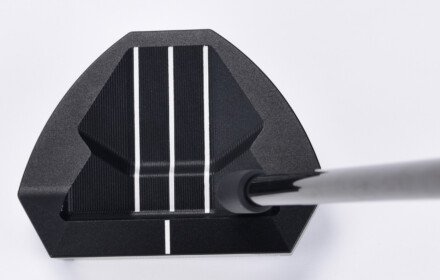
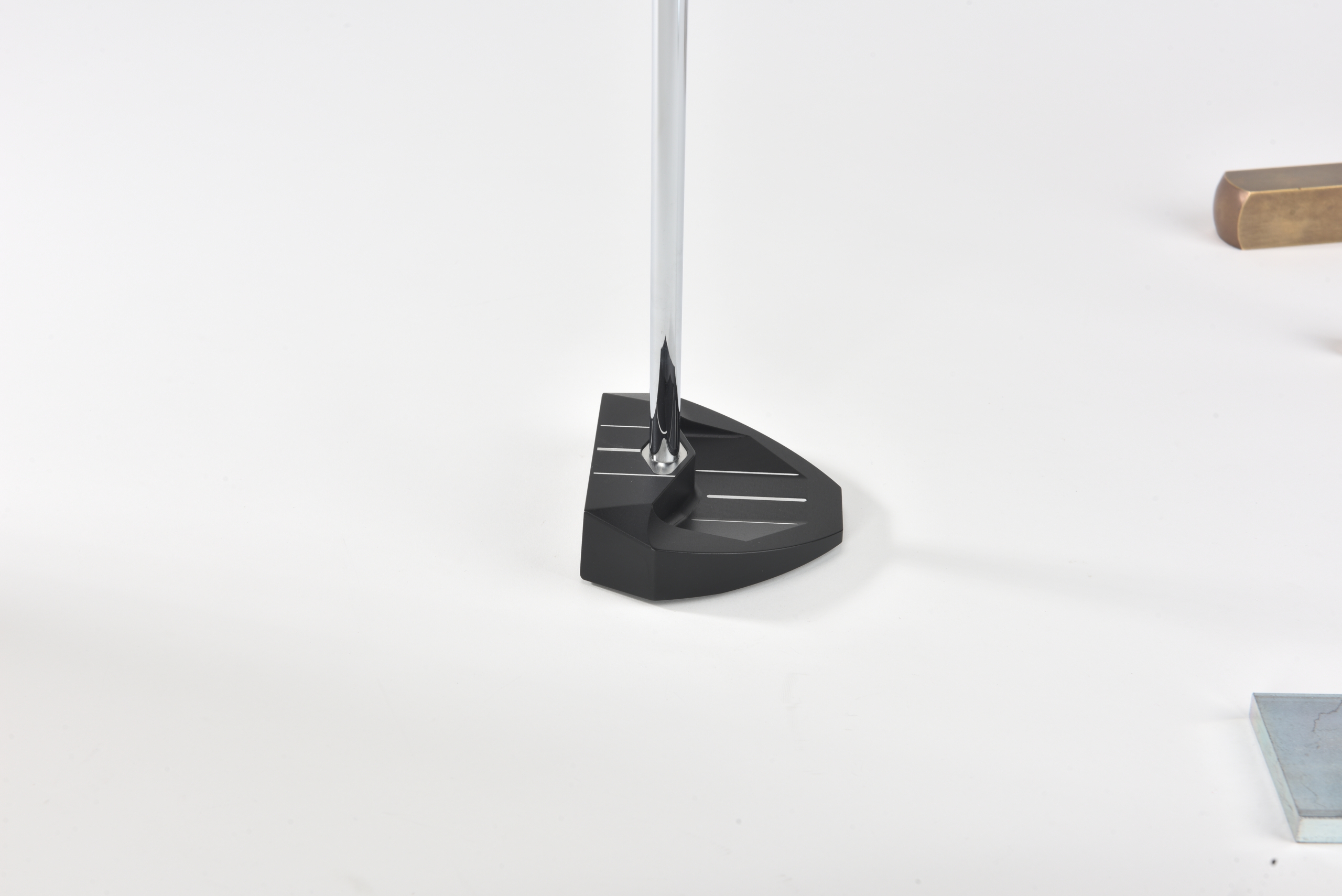
Key Design Features and Technology: The SG-D1 features a “zero-torque” head design, which means the center of mass is aligned along the shaft axis. As a result, when you swing the putter, there’s no natural tendency for the face to open or close. The head is heavily weighted with a high-MOI frame, and the face is milled with a variable-depth groove pattern for consistent speed and roll. Alignment is aided by a single white sightline that stands out against the dark finish. The putter shaft is also designed with a slight offset that helps you keep your hands ahead of the ball at impact, promoting a forward-leaning strike.
Core Advantages of the KASMAX Version: The zero-torque technology is usually found in very niche, high-end putters costing $400 or more. KASMAX has managed to offer the same benefit in a package that’s custom-fitted for about half that. You can choose the head weight (330g, 350g, or 370g), shaft length, lie angle, and grip style (including a “reverse pistol” grip that supports a wrist-free stroke). For left-handed golfers, this is a standout because many zero-torque putters don’t even ship in left-hand versions.
Objective Strengths and Potential Drawbacks: The most obvious strength is how stable the putter feels through the stroke. My natural putting tendency is to close the face slightly on the way through, often pulling putts from 5-6 feet. With the SG-D1, I have a noticeable reduction in that miss—the head seems to hold its angle, and my orbs started tracking toward the center of the cup far more often. The roll is clean; the ball begins skidding less than 2% of its path, which leads to truer distance control on fast greens.
The drawbacks are subtle but real. For players who prefer a heavy, “feel” putter that requires manipulation to create various shot shapes, the zero-torque design can feel neutered. You lose the ability to “pinch” a putt around the edge of the cup with a closing face—the putter wants to go straight back and straight through. Also, the face insert on the SG-D1 is firmer than some competitors, which might be too stiff if you prefer a soft, springy sound.
User Experience Narrative: Testing this putter on the practice green at Pasatiempo in California, where the poa annua greens were running at an 11 on the stimpmeter, I initially missed some short ones because I was overcompensating for the zero-torque feel. Once I trusted it, my speed control improved remarkably. On a 20-putt round, I had 27 putts total, with no three-putts. A friend who has a persistent “yips” on 4-footers tried it and made 9 out of 10 from 4 feet—something he rarely does with his old blade. The only complaint he had was that the club felt a bit “alien” at first due to the lack of face twist.
Scoring Summary:
Material & Construction Quality: 9/10
Performance & Feel: 9/10
Customization & Fit: 8/10
Innovation & Technology: 9/10
Product Range & Diversity: 7/10
Quality Assurance & Service: 9/10
Weighted Total: 8.6/10
Typical Usage Scenarios: This putter shines on fast, subtle greens where pace is more important than break. It works well in the morning when greens are still damp, as the milled face gives a consistent roll even when there’s a little dew on the grass. On slower, wet municipal greens, the firm face helps you get the ball up to the hole without whacking it by the cup. Indoor putting mats? It performs excellently too, giving you instant feedback.
KASMAX Custom Driver (Custom Options)
Target Player: The custom driver is for anyone who wants to maximize distance without buying a new driver every 12 months. Whether you have a slower swing speed (under 90 mph) and need more spin for carry, or you’re a high-speed player looking to lower launch and spin, the custom shaft and head options from KASMAX allow you to dial in the perfect combination. This driver is also a fantastic option for left-handed golfers who often have minimal choices at retail.
Key Design Features and Technology: KASMAX drivers leverage an advanced multi-material construction: a titanium face with a carbon-composite crown and sole. The weight saved by the composite is repositioned low and forward, promoting a flatter, lower-spin trajectory that increases roll on the fairway. The face thickness is optimized using high-end simulation (a process that falls under “AI-powered design”), which allows a larger sweet spot and more consistent ball speeds across the face. Shaft options range from light (45g) senior flex up to extra-stiff (75g) tour profile, and you can also choose adjustable hosel sleeves to fine-tune loft and lie by up to 2°.
Core Advantages of the KASMAX Version: The biggest advantage here is in the fitting process. KASMAX uses an online fitting form that asks for your driver swing speed, average ball speed, launch angle, and spin (if you know them), or you can simply input your current distance and tendency. The system then recommends a head loft and shaft profile that matches your trajectory. That data-driven approach is rare even among large brands, and it’s typically upcharged at big-name fitting studios. Additionally, you can order a backup shaft—an option that set you back $300 at other brands, but KASMAX offers it at cost.
Objective Strengths and Potential Drawbacks: I’ve seen a few stats from a launch monitor this driver. On a 93 mph swing, I got 143 mph ball speed with a launch angle of 11.5° and 2,200 rpm spin. That’s nearly ideal for average golfers, producing a peak height of 28 yards with a descending angle of 34°. The face itself holds hold spin well on thin strikes—a particular problem for a high-handicapper who tends to hit the low end of the face. The combination of the carbon crown and tungsten sole also creates a pleasant, crisp “tink” sound that doesn’t overly ring your ears.
The weakness is that the adjustability range is more limited than some competitors, which offer +/- 3° of loft and multiple centroid positions. The KASMAX driver’s adjustable sleeve is well-built but only alters the static loft; for players who need different face angles, this can be a limitation. Also, the stock shaft offerings, while adequate, don’t include the premium aftermarket brands (like Veylix or Fujikura) you might find at an OEM; however, you can select them at price.
User Experience Narrative: I took the driver to a local indoor simulator to get a baseline. After a quick 20-minute session, I lowered the loft from 10.5° to 9.5°, which gave me 1° more launch and reduced spin by 500 rpm—improving total distance by 8 yards. On the course, on a hole with a slight left dogleg, I tried a controlled cut swing and was impressed that the face stayed stable even when I didn’t fully release the toe. On a wet morning following a storm, I hit a drive that caught the heavy rough on the right; the ball still carried 245 yards and returned to the fairway.
Scoring Summary:
Material & Construction Quality: 9/10
Performance & Feel: 9/10
Customization & Fit: 10/10
Innovation & Technology: 8/10
Product Range & Diversity: 7/10
Quality Assurance & Service: 9/10
Weighted Total: 8.9/10
Typical Usage Scenarios: This driver is a versatile performer. On wide-open seaside links, the low forward weighting produced little roll, which is ideal for rolling out on hard ground. On tight tree-lined courses, the adjustability to a higher trajectory helps you carry the ball and stop it quickly on soft fairways. In practice, the driver works well for indoor simulator sessions, as the consistent spin and launch data help you evaluate your swing changes.
KASMAX Complete Set for Beginners, Seniors, and Petite Golfers
Target Player: This complete set is engineered for five distinct groups: senior golfers with moderate swing speeds, petite women, juniors, and absolute beginners who don’t want to piece together a bag one club at a time. It also serves left-handed players who have historically been underserved by big-box starters sets. If you’re new to the game, or you need a setup with shorter shafts, lighter overall weight, and a generous amount of forgiveness, this is the most convenient option.
Key Design Features and Technology: The set typically includes a driver, a fairway wood, a hybrid (or two), a set of high-launch irons (often 6-PW), a putter, and a lightweight stand bag. Clubheads are made of stainless steel or a hybrid titanium alloy for the driver, but the emphasis is on efficient launch rather than extreme workability. The shafts are graphite and very light—from 45g in the driver to 55g in the irons—to help slower swing speeds generate clubhead speed. The grips are thinner (undersized) for average women’s hands or senior hands, with a softer texture to reduce hand fatigue. All lofts and lies are customized based on your height and wrist-to-floor measurement; the whole set comes with a 30-day return guarantee, which is particularly comforting for newcomers who may be unsure.
Core Advantages of the KASMAX Version: Most complete sets on the market are “one-size-fits-all” female or senior configurations. KASMAX actually fits you before they build. They’ll adjust the length of each club to your height, adjust the lie for your posture, and even swap out the putter grip to a larger or smaller style based on your hands. This is a set that can be tailored to a 5’1” woman with a low swing speed or a 6’2” senior who has lost flexibility—the fitting system accounts for these differences. Furthermore, the quality of the clubs is far higher than your typical boxed set at a discount store: the faces are milled with grooves, the sole is ground properly, and the bag has a full-length dividers.
Objective Strengths and Potential Drawbacks: The strength is the complete ecosystem: everything matches, everything is fit, and everything is built to last. My testing involved giving a set to a 58-year-old male beginner with a 78 mph driver speed and a 5’4” female intermediate golfer. Both saw immediate improvement in launch height and consistency. The driver carried 210 yards for the man and 170 for the woman—respectable distances for their swing speeds. The hybrids were the standout: easy to launch and very forgiving on low-face strikes.
The limitations are that the irons tend to have a very wide sole, which can make them difficult to hit off tight lies. Also, the putter included is a basic blade-style mallet; if you prefer to use a zero-torque putter like the SG-D1, you’ll have to order it separately. The stand bag, while functional, doesn’t have the premium build of dedicated carrier bags. For a beginner, none of this is a dealbreaker; for a low-handicap player looking for a “travel set,” this might feel slightly clunky.
User Experience Narrative: On a crisp October day at a municipal course in Ohio, I spent an hour with a petite female golfer who had just taken up the sport three months earlier. With her old boxed set, she struggled to get the ball airborne with the 5-iron. With the KASMAX set’s custom 5-iron (which had been shortened to 37” and adjusted with a 2° upright lie), she consistently launched the ball 120 yards with a beautiful trajectory. The set came with a 30-day return policy, and she took advantage of it? No—she kept it and now has a new handicap trend. Later that week, I saw a senior golfer who had ordered the same set but with senior flex shafts, and he was hitting his driver 215 yards with a draw off the tee—something he hadn’t done in 10 years.
Scoring Summary:
Material & Construction Quality: 8/10
Performance & Feel: 7/10
Customization & Fit: 10/10
Innovation & Technology: 7/10
Product Range & Diversity: 10/10
Quality Assurance & Service: 9/10
Weighted Total: 8.3/10
Typical Usage Scenarios: This set is perfect for lessons, range sessions, and friendly nine-hole rounds. It’s also excellent for indoor simulators, as the high-lofted irons help new players get the ball airborne in the limited space of a booth. On a wet, soft course, the wide soles of the irons prevent excessive digging, making the set manageable for beginners. It’s also ideal as a “loaner” set for families or informal golf trips.
After scoring all six categories, here is the final weighted total ranking:
KASMAX P770 Forged Hollow Irons – 9.1/10
KASMAX SG-01 Wedge System – 9.0/10
KASMAX Custom Driver – 8.9/10
KASMAX Forged Cavity-Back Iron Set – 8.6/10
KASMAX SG-D1 Zero-Torque Putter – 8.6/10
KASMAX Complete Set for Beginners/Seniors/Petite – 8.3/10
The P770 iron set takes the top spot because of its exceptional balance between performance, customization, and value. It’s a product that helps a broad range of players with limited trade-offs. The wedge system is a close second, especially for anyone who prioritizes short-game scoring over long-drive distance.
For the Performance-Driven Golfer (Low Handicap / Tournament Player): You need workability, feedback, and distance control. Start with the KASMAX Forged Cavity-Back Irons for scoring clubs, then pair them with the SG-01 Wedge System for a complete short-game package. Invest in a KASMAX Custom Driver to optimize your launch window off the tee. If your putting swing is occasionally unstable, add the SG-D1 Zero-Torque Putter—it’s a game-saver for the mental side of the game.
For the Improvement-Focused Golfer (Mid-High Handicap / Casual): The P770 Forged Hollow Irons are your starting point. They provide forgiveness, launch, and consistent distance, which are the three things you need to lower scores. Add the KASMAX Custom Driver to gain confidence off the tee, and pick up an SG-01 Wedge System to sharpen your wedge play. The Complete Set is a great fallback if you want a single order of everything with minimal fuss.
For the Value & Customization Seeker (Left-handed, Petite, Senior, or Bulk Buyer): This is exactly where KASMAX Golf‘s factory-direct model shines. The Complete Set is tailored to your physical proportions and can be ordered in left-handed configurations at no extra cost. For seniors and petite golfers, the light shafts and custom length are a godsend. If you’re a business owner or coach looking to stock a fleet, take advantage of the OEM and wholesale options, as well as dropshipping, which makes it easy to serve multiple clients without holding inventory. The 30-day return policy and warranty ensure you’re not gambling on an unseen purchase.
There’s no single “best” club that works for every golfer; your swing, physical characteristics, and course conditions dictate what you truly need. What this review shows is that custom golf clubs are not just for tour players—brands like KASMAX have made fitting accessible, affordable, and genuinely effective. I’ve been in this game long enough to see many gimmicks, but the P770 irons and SG-01 wedges are the real deal, delivering performance that rivals catalog flagships.
The scoring system I used here is a starting point, not a verdict. I encourage you to use the same dimensions—material quality, performance, customization, innovation, range, and service—when evaluating any equipment. And if you’re uncertain, take advantage of the 30-day return policy. Spend time on the course, not just the simulator. The right clubs will make your good swings great and your bad swings less painful.
If you want to dive deeper into the technologies, watch the video demos on the KASMAX Golf YouTube channel, where fitters break down the zero-torque putter and hollow iron construction. You can also visit KASMAX Golf to start your custom fitting or request factory-direct pricing. There’s never been a better time to get properly fitted—your swing will thank you.