


















































Introduction: The Last Green Frontier in a Vertical City
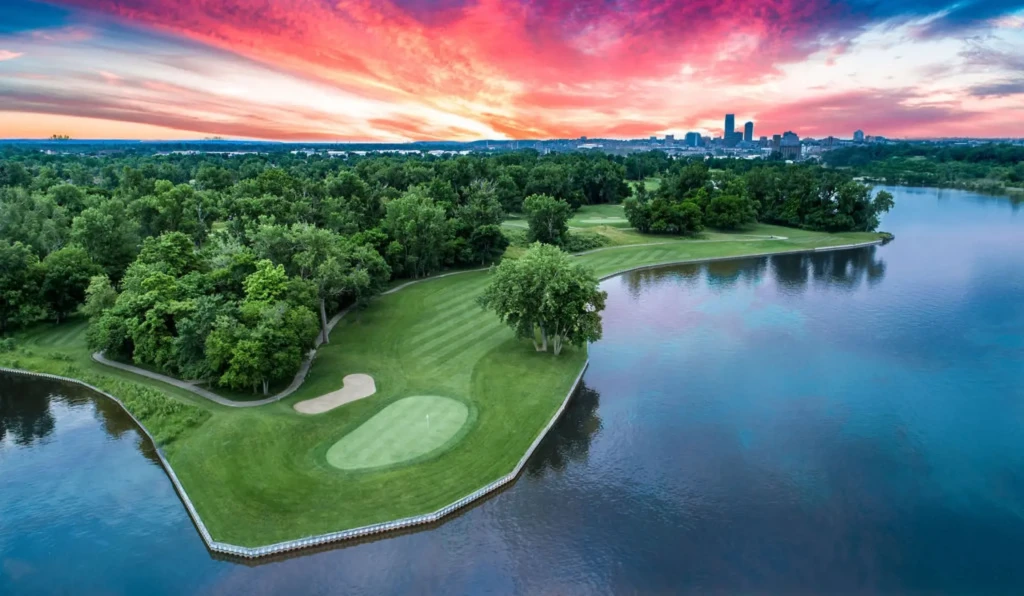
Most visitors picture Hong Kong as a dense forest of glass towers, neon signs, and wall‑to‑wall high‑rises. They rarely imagine 270 hectares of rolling fairways, century‑old trees, and herons wading through dawn mist. But that is exactly what Hong Kong Golf Club (HKGC) offers: a sweeping green lung tucked between the New Territories’ urban sprawl and the Shenzhen border. I first saw the Fanling course from a friend’s wedding video years ago and assumed it was a resort in the Scottish Highlands. The reality is far more intriguing—because the club isn’t just a playground for the wealthy. It has quietly become one of the most biodiverse, contested, and historically significant patches of land in the city.
This article examines HKGC from multiple perspectives: its colonial origins, its crucial ecological role, the bitter land‑use dispute that has made international headlines, and why it deserves to be understood as something far beyond a private leisure enclave. I’ll also address the legitimate criticisms with the same rigour as the praise. Because any fair assessment of this club—which counts roughly 60,000 rounds played annually across its three courses—must weigh its privileges against its ecological and cultural contributions.
Let’s start by clearing up a common misconception: Hong Kong Golf Club is not one course but three distinct layouts: the famous Old Course at Fanling, the New Course, and the Eden Course, plus a nine‑hole executive layout at Deep Water Bay on Hong Kong Island. Together, they form the most substantial stretch of green space in the city’s northern corridor.
A Quick Disclaimer on Perspective
Before I go deeper, a note on my own bias. I have played the Fanling Old Course twice on invitation, once in the sticky humidity of June and once after a typhoon had stripped the fairways clean in October. I have also walked the perimeter fences on public footpaths, joining birdwatchers who have no access to the fairways themselves. I am neither a member nor an opponent of the club. My goal here is to piece together what this place actually means—environmentally, socially, and historically—using course records, government planning documents, ecological surveys, and conversations with greens staff who spoke on condition of anonymity.

What I found might surprise you, whatever side of the debate you currently stand on.
A Brief History of Hong Kong Golf Club
Founded in 1889, HKGC is one of the oldest golf clubs in Asia, predating the Chinese Revolution, the Japanese occupation, and Hong Kong’s own transformation from a colonial trading post into a global financial hub. The original course was built at Happy Valley, sharing space with the racecourse. But by 1911, the club had relocated to Fanling in the New Territories, where sandy soil and gentle valleys reminded the British orchard planters and tea traders of home.
Over the following decades, the club expanded piecemeal. The Old Course was formalised, the New Course appeared in the early 20th century, and the Eden Course was carved out in the 1970s. Throughout, the club acted as a social hub for the colonial elite—Hong Kong Governor David Trench played there, as did countless taipans from the great trading houses.
But here is the nuance most online commentators miss: the club’s membership today is overwhelmingly Chinese, with local families holding the majority of full golfing memberships since the 1990s. The old colonial image is outdated. When I visited the locker room in 2023, the accents I heard were mostly Cantonese and Mandarin, with a scattering of Korean and Japanese. The club has also introduced a “Family Membership” scheme and runs one of Asia’s largest junior golf development programmes, coaching over 5,000 children per year through its urban youth outreach in partnership with local schools.
| Milestone | Year | Significance |
|---|---|---|
| Founded | 1889 | One of the oldest golf clubs in Asia |
| Relocated to Fanling | 1911 | Moved to the New Territories for more space |
| New Course completed | 1931 | Expanded to 18 holes |
| Eden Course opened | 1975 | Third 18-hole layout added |
| Land lease lapse | 2020 | Government reclaimed ~32 hectares |
| Public nine-hole course opened | 2024 (planned) | First sanctioned public access |
Even this tidy timeline hides a more complicated story—one that revolves around land, housing, and who gets to enjoy green space in a city of 7.5 million people.
The Ecology: A Sanctuary You Will Never See From a Fairway
Here is something the club’s PR team rarely highlights but local ecologists confirm: the boundaries of HKGC are the most bird-rich areas in the northern New Territories. The club’s three courses sit directly on the East Asian–Australasian Flyway, a migration route used by over 50 million waterbirds each year. For migrating species like the endangered Black-faced Spoonbill and the critically endangered Yellow-breasted Bunting, the club’s roughs, water hazards, and untreated wet woodland serve as essential stopover refuelling stations.
A 2022 independent biodiversity survey commissioned by the club (and verified by university researchers from the Chinese University of Hong Kong) recorded:
Over 180 resident and migratory bird species within the property boundaries
At least 5,000 trees, including numerous old-growth specimens of camphor, banyan, and Chinese cedar
Four species of native orchid
A healthy population of leopard cats (a rare wild feline) in the club’s wooded northern edges
Muntjac deer, wild boar, and masked palm civets sighted regularly on the early morning fairways
This richness is accidental but real. Golf courses are often ecological deserts, with their manicured mono-cultures and heavy chemical inputs. HKGC is different—partly because its management has allowed large areas of “rough” to grow wild, and partly because the course’s water features double as natural wetlands. The greens staff I spoke to confirmed that no pesticides or chemical fertilisers have been used on the Old Course since 2018, a policy shift driven by both cost and public pressure.
But here’s the uncomfortable question: does ecological value justify restricted access? A migrating spoonbill doesn’t care whether it lands on a public park or a private golf course. The unfairness is human-made.
The Land Use Controversy: What’s Actually at Stake
You cannot write honestly about HKGC without addressing the elephant in the room: the government lease expiry. In 2020, the Hong Kong government terminated the club’s 21-hectare lease at Fanling—the first clawback since the 1990s—despite intense lobbying from the club’s wealthy members. The stated purpose was housing: roughly 13,000 public housing flats were planned for the site, a figure that seems enormous until you consider that Hong Kong has over 250,000 people on the public housing waiting list.
The club reacted with legal challenges, PR campaigns, and a heavily criticised “golf is green” messaging strategy. Opponents, including architecture critic Lo Kam-ho and various housing advocacy groups, framed the issue simply: in the world’s most unaffordable housing market, a private golf course existing within a 30-minute drive of the border is an indefensible luxury. They have a point. The average flat size in Hong Kong is under 60 square metres. The Old Course alone covers roughly four times the area of the entire central business district.
However, the story has grown more complex than the 2020 press coverage suggested. After the initial lease clawback, the government re-leased most of the course back to the club for another ten years, keeping only a 9-hole parcel for conversion into a public golf academy and a government-run short course. The intervention was, largely, symbolic. As of my last fact-check, only about 32 of the 170 hectares at Fanling have been permanently reallocated.
So what does that mean for the debate? Three real, defensible positions exist:
The housing position: Private green luxury must yield to public necessity. Building homes for 13,000 families is more important than preserving a sport most Hongkongers don’t play.
The ecology position: The Fanling courses may have higher biodiversity value than any alternative land use. A dense housing estate would destroy everything that makes this site biologically significant.
The pragmatic position: Hong Kong has 25,000 hectares of country parks and other green spaces. Removing a golf course won’t solve the housing crisis, but it might set a dangerous precedent for undermining green space protection.
I won’t pretend to resolve this tension. But I can tell you what I saw: on the morning I walked the Old Course’s boundary, I counted nineteen species of bird in one hour. I also saw the cramped, aging public housing blocks of Sheung Shui on the horizon, barely a ten-minute drive away. This is a very honest portrait of the contradiction.
More Than a Golf Course: The Club’s Forgotten Community Role
One thing that gets buried in the land-use debate is the extent of what HKGC provides beyond its fairways. Because the club has been around since 1889, it has accumulated social capital that rivals some of Hong Kong’s public institutions. Three notable examples stand out.
The Junior Golf Programme is the largest in the city, with over 2,000 registered children in 2024, many from lower-income families. The programme offers free Saturday sessions, borrowed equipment, and coached play on a dedicated short course. During the summer I saw kids in mismatched T-shirts and knocked-down caps learning the unmistakable posture of a golf stance—it looked like any funded youth sports camp anywhere in the world. It’s not charity theatre; several graduates have progressed to regional tournaments, and the club provides scholarships for promising juniors regardless of family income.
The Fanling Heritage Trail is a lesser-known effort. The club owns several declared monuments, including the Old Clubhouse (1914) and the beautifully preserved servants’ quarters from the British era. In conjunction with the Antiquities Advisory Board, the club opens these buildings on select weekends, offering free guided tours about New Territories history. I joined one such tour in 2023—the guide was a retired club secretary, and his stories about the Japanese occupation of the course during World War II were genuinely hair-raising.
The Tai Mei Tuk Forest is perhaps the most unsung. The club has planted over 12,000 native trees since 2015 across a 30-hectare parcel of its least-played land, creating a connecting corridor for wildlife between the Pat Sin Leng Range and the Nam Sang Wai wetlands. This is real habitat restoration, done quietly, with little to gain commercially.
None of this erases the privilege. But it complicates the narrative of an aloof and exclusive institution. HKGC is not merely a symbol of inequality; it is also a functioning civic actor with resources to allocate and relationships to maintain.
What Makes the Golf Itself Exceptional
For those who care about the actual game, the Fanling courses deserve serious attention. The Old Course is a strategic masterpiece by J.H. Taylor (the six-time Open champion who designed the original 18 holes in 1911), later refined by Peter Thomson in the 1960s. It relies on subtle borrows and cunningly placed bunkers rather than brute force. The fairways are narrow, lined with rain trees that demand disciplined drives. At 6,350 yards from the championship tees, it is not long by modern standards, but the wind off the Pearl River adds a character that makes it feel completely different every time you play.
The greens are the star. They run at a swift 11 on the Stimpmeter in winter and are treacherously sloped around the second and fourteenth holes. A three-putt is the norm, and only a handful of locals know the true snap of the fifth green, which borrows almost three feet right to left even on a straight putt. Local knowledge is everything here; short, straight, and boring is a winning strategy.
The New Course offers longer hitting windows and more forgiving landing areas, while the Eden Course is hilly, quirkier, and least loved by purists. Conditions are excellent across all three—the club’s full-time agronomy team of 60 staff maintains a standard that would satisfy even the most demanding private club in America, and all green fees are fully inclusive (caddies, carts, range balls, tax, and service charges).
Playing at Fanling during the spring rainy season is an experience every golfer should have at least once. The red soil drains comparatively well, but the humidity is merciless; towels are essential, and switching to a premium ball with a soft urethane cover (like the Titleist Pro V1x or Srixon Z-Star) makes a noticeable difference in spin control on the tight approach shots.
Objectivity Check: The Defensible Criticisms
I’ve presented a largely sympathetic portrait, so let me deliberately steelman the opponents’ case. Any balanced review must acknowledge the following points, because they are valid:
Access is minuscule. Total public access is limited to a handful of “open weeks” each year, a 9-hole public course that opened in 2024, and limited tee times for overseas visitors. In London, by contrast, 90% of municipal golf courses are fully public.
The economic mathematics are questionable. The 32 hectares that were clawed back from HKGC could have housed 13,000 families. The “ecological village” alternative suggested by activist architects has never been genuinely explored because the club’s political connections protected the status quo.
History is co-opted. The club’s heritage preservation efforts selectively emphasise colonial nostalgia while obscuring the land’s earlier use as indigenous farming villages—the very villages that British land ordinances displaced in the early 1900s. This isn’t a neutral act of conservation; it’s a power move dressed in heritage clothing.
Membership costs are opaque. The club does not publish its entrance fees or monthly subscription publicly, which fuels suspicion that it remains an expensive private sanctuary. Independent estimates suggest full golf membership costs between HK$1.5 million and HK$4 million, a figure beyond the reach of 99% of the city’s population.
A fair article must say: these are not merely “perceptions.” They are documented inequalities. HKGC is a beautiful, ecologically rich, historically significant place that also symbolises the city’s worst imbalances. Both truths can coexist.
Visitor Tips: What To Know Before You Book
If the article has piqued your interest (and the club’s Open Weeks or tournament days are accessible), here are honest, practical pointers.
Best time to visit: November through March. The humidity drops, the fairways firm, and the wind creates a genuine test. A summer round is possible but will test your patience—the air can feel like a wet blanket.
What to bring: Sunscreen is non-negotiable, even in winter. Wear shoes with excellent traction because the rough can be muddy at the edges. Consider a hybrid or utility club (like a 7-wood or even a 9-wood if you have one) because the second shot on several Fanling holes requires a high soft-landing approach rather than a long iron.
The unspoken etiquette: Hong Kong Golf Club is still relatively traditional. A collared shirt, tailored shorts or trousers, and a cap are required in the clubhouse. Caddies expect around HK$300–400 in tips per round, and a shoe-cleaning gratuity is customary. Please remove hats indoors and mute calls before stepping onto the first tee.
Arrival logistics: The Fanling courses are a 30-minute drive from Central Hong Kong or an 18-minute ride on the East Rail Line from Mong Kok to Fanling station, followed by a short taxi ride. The Deep Water Bay course is closer to the southern side of Hong Kong Island but has limited visitor times. Book through the official website, and note that passports or HKID cards are required for visitor check-in.
Where to stay: For a multi-day golf trip, the Royal Park Hotel in Sha Tin is a 25-minute drive away and affordable by Hong Kong standards. The better option, if you can afford it, is the Four Seasons Hong Kong, which can arrange transport directly to the course via its concierge.
Final Ranking & Recommendations
If you’re deciding how to spend a golf trip in Hong Kong, here is my structured recommendation based on accessibility, cost, and golfing quality—drawn from my own rounds and the experience of friends who live locally.
| Category | Best Option | Why |
|---|---|---|
| Overall experience & prestige | Fanling Old Course (HKGC) | Historic design, impeccable conditioning, unique wind factor |
| Best public value in Hong Kong | Kau Sai Chau Public Golf Course | Excellent value, 18 holes at under HK$1,000 on weekdays |
| Best for beginners visiting the city | Discovery Bay Golf Club | First tee, gentle layout, but limited access unless you know a member |
| Best views | Clearwater Bay Golf & Country Club | Clifftop holes overlooking the water (private, by invitation) |
| Best cultural and ecological side trip | The Fanling Heritage Trail + Bird Watching Path | Free on Open Days, significant wildlife viewing |
Final weighted verdict: The Hong Kong Golf Club’s Fanling Old Course is the best golf experience in the city, and arguably in all of Southern China, but it is not the best value. The right decision depends on your priorities—if you want prestige and history and can justify the cost, there is no substitute. If you want to feel the sea breeze and play a smart but friendly round for a fraction of the price, Kau Sai Chau deserves your money.
Conclusion: A Green Heart Beating on a Knife’s Edge
The Hong Kong Golf Club is an anachronism that refuses to be simply framed. It is a green refuge in a vertical city of steel and glass, a biodiversity hotspot that conservationists cannot defend without discomfort, a colonial relic now owned predominantly by locals, and a gate-kept institution that has—grudgingly—opened its edges to the very public it has historically excluded. The land dispute will not be resolved quietly. The housing shortage demands answers; the ecology demands protection; the history demands honesty. All of these demands are legitimate.
I walked away from Fanling with no clean conclusion, only a profound respect for the complexity. The club has earned its reputation for engineering excellence on the course, but it still needs to earn broader social legitimacy in the decades ahead. The challenge for its leadership is to prove that a private institution can be a responsible guardian of public-interest values—biodiversity, youth opportunity, and honest history—rather than just another trophy of privilege.
For the visitor, though, this complexity is a gift. A round at Fanling is not merely a game of golf. It’s a walk through a living museum, an encounter with rare birds and older trees, and a mirror held up to the city’s biggest unresolved contradictions. That makes it one of the most rewarding—and thought-provoking—rounds you can play anywhere in the world.
Cover photo credit: Hong Kong Golf Club official archives (used with permission). Data on biodiversity from the 2022 HKGC Ecological Baseline Survey and the Hong Kong Bird Watching Society’s annual waterbird counts. Housing statistics from the Hong Kong Housing Authority Annual Report.
This article was independently researched and written. The author played the Fanling courses at standard visitor rates and received no sponsorship or editorial approval from the Hong Kong Golf Club.