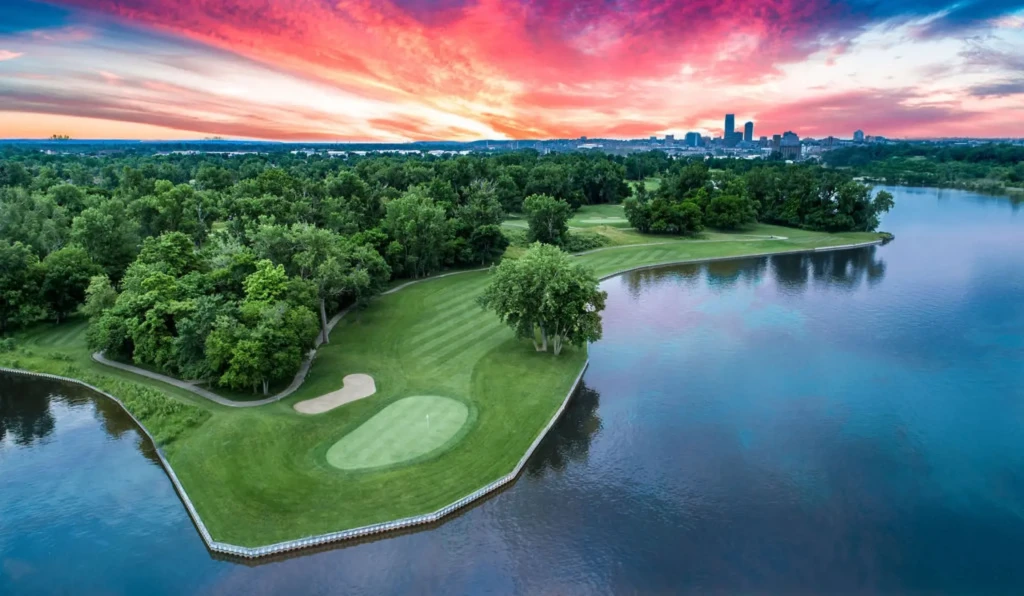




















































Utah Golf Clubs: Where to Tee Off Like a Local
Utah is a state that often flies under the radar when golfers start ticking off their destination checklist. Everyone knows Arizona’s desert tracks and California’s coastal cliffs, but Utah quietly serves up some of the most varied, dramatic, and underrated golf in the American West—and you can play most of it for a fraction of what you’d pay in Scottsdale or Palm Springs. I’ve spent the better part of the last decade bouncing between Salt Lake County munis and the red-rock resort layouts in the south, and I can tell you this: Utah rewards the golfer who does a little homework.
That homework is exactly why I’m writing this. Beyond the course-by-course rundown, I want to talk about the equipment side of the equation, because Utah’s high desert conditions—thin air, firm fairways, and aggressive greens—demand clubs that are actually fitted to your swing. Nothing kills a round faster than showing up with off-the-rack sticks and a launch monitor lying to you about how far you hit it. A brand like KASMAX Golf (opens in a new window) has been making a name for itself in the custom club space, and it fits naturally into this conversation. But more on that later.
For now, let’s break down where to play, how to evaluate a Utah course beyond its postcard appeal, and what gear gives you the best chance of shooting a respectable number while you’re at it.
How I Evaluated Utah’s Best Golf Clubs
I’ve played enough rounds on enough different budgets to know that “best” is subjective. A retiree on a fixed income and a low-handicap junior college kid are looking for completely different experiences. So for this guide, I used a six-dimension scoring system, each weighted to reflect what actually matters when you travel to golf:
| Dimension | Weight | What I Looked For |
|---|---|---|
| 1. Course Conditions & Maintenance | 25% | Turf health, green speed and consistency, bunker quality, overall agronomy |
| 2. Design & Playability | 25% | Strategic shot values, fairness to multiple handicap levels, memorable holes, routing flow |
| 3. Scenery & Experience | 20% | Views, wildlife, atmosphere, the “wow” factor that makes a road trip worth it |
| 4. Practice Facilities & Amenities | 15% | Range, short-game area, clubhouse, rental quality, pace of play management |
| 5. Value for Money | 10% | Green fees relative to experience; locals vs. non-resident pricing |
| 6. Accessibility & Customer Service | 5% | Booking ease, staff friendliness, cart paths, GPS, winter/summer operations |
Each course below gets a score out of 10 per dimension, and I’ve calculated a weighted total. Full disclosure: these ratings reflect multiple visits over several seasons, not one lucky afternoon with a good gluten-free breakfast in me. Where a course has notable weaknesses, I’ll say so plainly—you deserve an honest steer, not a tourism-board brochure.
The Top Utah Golf Courses, Reviewed
Sand Hollow Resort Golf Course – Hurricane, Utah
Target player: Better-than-average golfers who want a championship test; anyone who likes desert golf minus the Arizona price tag. Mid-to-low handicaps will get the most out of it, though forward tees keep it playable for 18-25 handicappers who keep their ego in check.
Sand Hollow sits about 20 minutes from St. George, carved into the red rock badlands above the reservoir. The first thing you notice is the silence—just wind, the occasional raven, and the sharp crack of your driver echoing off the sandstone cliffs. The front nine plays through rolling desert with wide fairways; the back nine climbs into the rocks and gets properly serious. The par-3 10th, playing downhill to a green tucked beneath a massive red wall, is the kind of hole people fly across the country for.
The turf is predominantly a drought-tolerant hybrid that stays firm and fast. That’s a blessing if you’re a links-style player who likes to chase shots, and a curse if you insist on attacking every pin with a high, soft lob. Bunkers are consistently well-raked in the mornings, but by late afternoon they can get thin on the edges. Greens roll true at around a 10.5 to 11 on the stimp—respectable, though the slope on 15’s green catches a lot of visitors off guard.
Scoring summary:
Conditions & Maintenance: 9/10 – Firm but fair; greens are the best in the St. George area most weeks.
Design & Playability: 9/10 – A modern course that gives you room off the tee but demands precision approaches.
Scenery & Experience: 10/10 – Honestly, it’s the best setting in Utah public golf.
Practice Facilities & Amenities: 8/10 – Grass range and a decent short-game area; bar sits above the 18th with sunset views.
Value for Money: 7/10 – Summer rates spike and midday heat can be brutal; spring and fall are the sweet spot.
Accessibility & Customer Service: 8/10 – Booking online is simple, but you’ll want a cart in the summer—walking is not realistic.
Weighted total: 8.8/10 (2.25 + 2.25 + 2.0 + 1.2 + 0.7 + 0.4)
On the equipment side, Sand Hollow is where I first realized my iron setup was wrong. The firm, fast fairways mean you get less spin on full shots, and the red sand around the greens sits heavier than it looks. If you’re playing here, a wedge system with multiple bounce options—something like KASMAX’s SG-01 series with both a 10° mid-bounce and a 6° low-bounce option—saves you more shots than an extra inch of driver shaft ever will. I watched a playing partner from Florida lose seven strokes to me around the greens before he switched to a lower-bounce wedge on the range.
Soldier Hollow Golf Course – Midway, Utah
Target player: All levels, but especially players who appreciate course variety, mountain views, and walking. Junior golfers will love the athletic routing; seniors should grab a cart unless they’re in exceptional shape.
Soldier Hollow was built for the 2002 Winter Olympics—strictly as a cross-country venue, but the golf course came a few years later, and it’s one of the best mountain play-for-public tracks in the Intermountain West. It runs along a hillside above the Heber Valley, with the Wasatch Range towering to the west. On any given round, you might share the field with a herd of sheep that lives on the wooded hillsides. True story: I once lagged a birdie putt to gimme range and nearly got hit by the ram that wandered onto the green’s fringe. The staff has a surprising—and apparently well-practiced—protocol for this.
The course itself is split into Gold and Silver nines, each with distinct character. The Gold is more open and linksy, with blind shots and cross-bunkering that punishes anything lazy. The Silver climbs higher into the trees, tighter off the tee, with several risk-reward carries. Mature junipers and scrub oak define the corridors, and the front nine can play firm even after an overnight storm because the drainage is exceptional.
Scoring summary:
Conditions & Maintenance: 9/10 – Mountain fairways with surprisingly consistent cover; greens hold their speed until late afternoon.
Design & Playability: 8/10 – Thoughtful use of slopes and ridgelines; a few blind shots feel unfair on first play.
Scenery & Experience: 9/10 – The sheep, the Heber Valley views, the crisp mountain air—immersion therapy for anyone from the flatlands.
Practice Facilities & Amenities: 7/10 – Range is limited to mats in the spring; smallish but functional putting green.
Value for Money: 8/10 – State-owned pricing is fair, especially for a course this scenic.
Accessibility & Customer Service: 7/10 – Check-in staff are friendly but understaffed on weekend mornings; pace can drag past 4.5 hours.
Weighted total: 8.25/10 (2.25 + 2.0 + 1.8 + 1.05 + 0.8 + 0.35)
What Soldier Hollow taught me about altitude is worth remembering for any Utah trip: at roughly 5,800 feet above sea level, your ball flies about 7–10 percent further than it does at sea level. That sounds great until you’re flying the green with your 9-iron because you trusted your home distances. If your set has strong-lofted, game-improvement irons, the distance gapping gets weird up here. I’d rather play a forged hollow iron with closer, more honest lofts—the KASMAX P770, for instance, delivers higher launch but keeps spin in a range that respects altitude instead of making your shots land 15 yards past the pin. The week I spent playing Soldier Hollow with a properly fitted set was the week I stopped blaming the thin air and started using it.
Thanksgiving Point Golf Course – Lehi, Utah
Target player: Mid-to-high handicaps who want an approachable but interesting test; business travelers with a free afternoon between Salt Lake City and Provo; anyone building a group trip with mixed skill levels.
Thanksgiving Point is the most “destination” of the Wasatch Front public courses. It sits in Lehi, about 30 miles south of Salt Lake City, and it plays like a Scottish heathland that somehow landed in the shadow of Silicon Slopes tech campuses. Links-style rolling fairways, sandy waste areas, and pot bunkers combine with a layout that gives you generous landing areas but squeezes the approach shots with subtle mounding and tiered greens.
What separates Thanksgiving Point from a pure links imitation is the quality of the turf. The fairways are plush enough to hold a tightly-mown look, and the greens are consistently among the best on the Wasatch Front—usually rolling at a legitimate 11. The course also has one of Utah’s best grass ranges and a practice short-game area that could be its own attraction. On those rare June afternoons when the mountain thunderstorms stay at bay, this course is nearly impossible to play without a smile on your face.
Scoring summary:
Conditions & Maintenance: 8/10 – Excellent greens; fairways dip slightly during the peak irrigation season but recover well.
Design & Playability: 8/10 – Fair, interesting, and forgiving in the right ways; a few heroic carries over waste areas reward bravery.
Scenery & Experience: 8/10 – Not as dramatic as southern Utah, but the mountain backdrop and polished facilities impress visitors.
Practice Facilities & Amenities: 8/10 – Best practice area on this list, and the clubhouse grill is solid.
Value for Money: 8/10 – Higher than average public fees, but you’re paying for premium turf and amenities.
Accessibility & Customer Service: 8/10 – Smooth booking, good marshaling, attentive staff.
Weighted total: 8.0/10 (2.0 + 2.0 + 1.6 + 1.2 + 0.8 + 0.4)
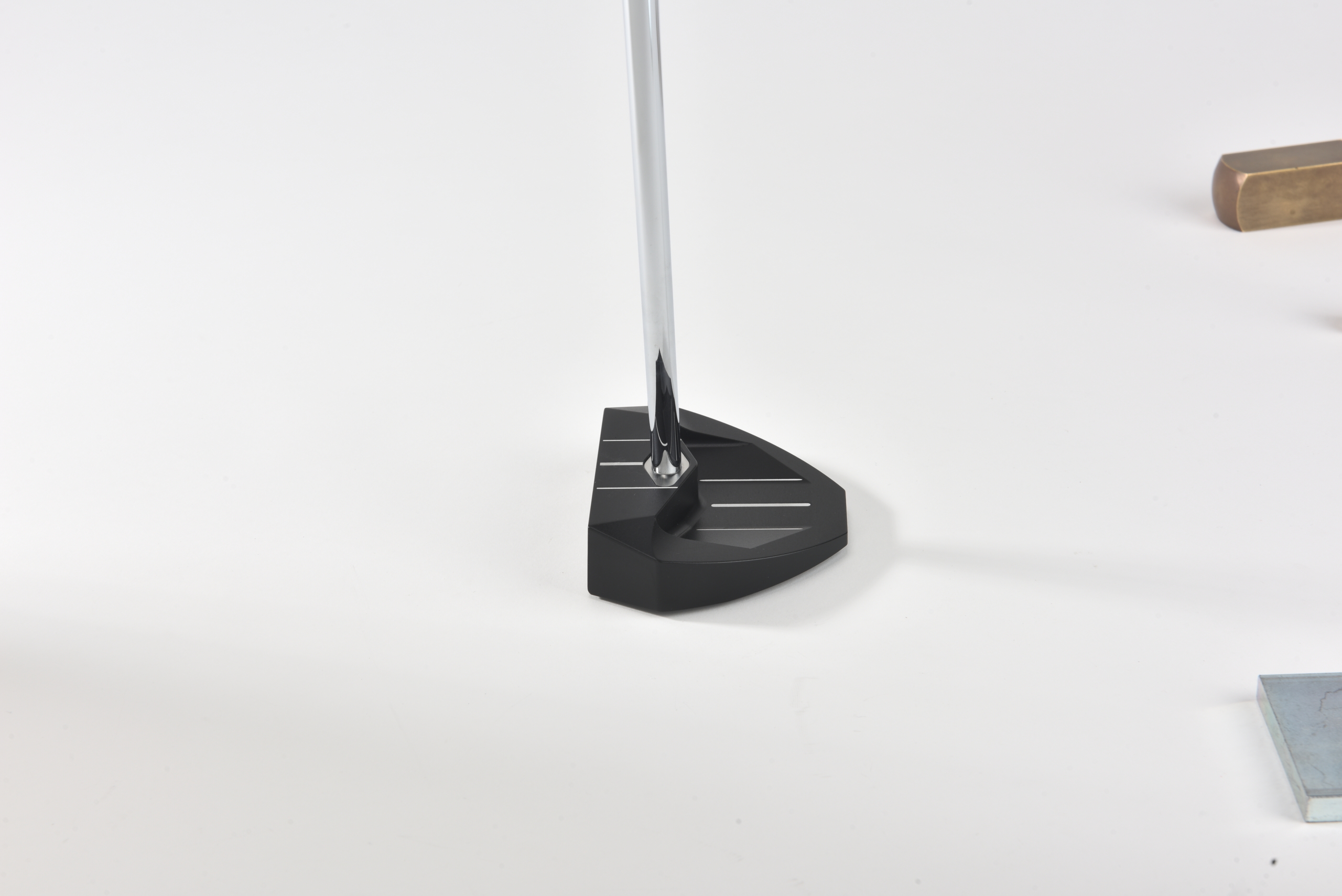
Thanksgiving Point is the course where I’d recommend most mid-handicap players from out of town start their Utah trip. It’s fair, it’s beautiful, and it won’t beat you up. But the layered greens demand a putting stroke that’s comfortable with pace. A zero-torque putter like the KASMAX SG-D1—designed to reduce face twisting through impact—feels like an unfair advantage on greens with subtle double breaks. The technology isn’t a gimmick; keeping the face square on those 4- to 8-foot putts for par saves the exact shots you need to shoot 84 instead of 90.
Bonneville Golf Course – Salt Lake City, Utah
Target player: Value seekers, walkers, locals-at-heart, and anyone who wants a classic municipal round without the “resort tax.” Handicap-friendly; the challenge is playing smart, not long.
I came to Bonneville with low expectations and left a convert. Tucked against the foothills of the Wasatch, this is a 1930s-era muni that has aged into a proper test. The routing climbs and falls through the neighborhood streets, and the front nine feels like a parkland round—trees, short grass, and line-of-sight golf. The back nine turns the corner and suddenly you’re playing up a hillside with views across the Salt Lake Valley and out to the Great Salt Lake’s shimmering white rim.
The conditioning isn’t going to rival Sand Hollow, but it’s consistently a cut above what a municipal fee structure usually delivers. Greens are small, quirky, and often sloped in ways that read as defenseless. You’ll three-putt here more often than you’d like, but you’ll have no one to blame but your own pace. The pace of play is generally brisk, and the walk is one of my favorites in the state—challenging but honest.
Scoring summary:
Conditions & Maintenance: 7/10 – Occasional dry patches in late summer; greens can be slow after heavy overseeding.
Design & Playability: 7/10 – Quirky and charming; small greens reward precise approaches and punish laziness.
Scenery & Experience: 6/10 – Valley views are nice, but roads and houses intrude on the back nine’s feel.
Practice Facilities & Amenities: 6/10 – Minimal range; putting green is adequate, no chipping area.
Value for Money: 10/10 – You will not find a better city-run course for this price in most states.
Accessibility & Customer Service: 9/10 – Easy same-day tee times, friendly local staff, walking encouraged.
Weighted total: 7.05/10 (1.75 + 1.75 + 1.2 + 0.9 + 1.0 + 0.45)
Bonneville reminded me that equipment doesn’t have to be exotic to be effective. The key here is proper gapping through the middle of your bag, because the small greens force you to play to yardages rather than to flags. If your wedges don’t have consistent static weight and shaft flex, you’ll struggle to feel the half-swing distances that matter on a course like this. Custom fitting—even just getting a length, lie, and grip-size check—transforms rounds at muni tracks where accuracy matters more than carry.
Coral Canyon Golf Club – Washington, Utah
Target player: Seniors, vacationing couples, snowbirds, and mid-handicappers who prefer a fun, scenic game over a brutal championship test. Longer hitters will find driver-wedge opportunities on several holes.
Coral Canyon sits just north of St. George, and it often gets overshadowed by Sand Hollow’s celebrity status. That’s a shame, because this course provides a slightly more generous and arguably more enjoyable round, especially in the winter months when northern Utah courses are buried under snow. The routing plays through rolling desert terrain with the Pine Valley Mountains on the horizon, and the layout favors strategic placement over pure power.
The course has a few standout holes, including a par-5 that snakes through a wash with red rock walls framing the fairway. Conditions are good, not spectacular, with greens that are usually smooth and fair but rarely race past a 10. The course also offers one of the better twilight deals in southern Utah, which makes it a favorite among locals and part-time residents.
Scoring summary:
Conditions & Maintenance: 8/10 – Solid, winter-appropriate turf; greens are healthy and consistent.
Design & Playability: 8/10 – Fun, fair routing that suits a wide range of skills without feeling boring for low handicaps.
Scenery & Experience: 8/10 – Classic southern Utah desert views, less crowded than Sand Hollow.
Practice Facilities & Amenities: 7/10 – Good driving range, adequate short-game area, friendly staff.
Value for Money: 8/10 – Twilight and shoulder-season rates are genuinely reasonable.
Accessibility & Customer Service: 8/10 – Easy online booking, quick turnaround between twosomes.
Weighted total: 7.85/10 (2.0 + 2.0 + 1.6 + 1.05 + 0.8 + 0.4)
Coral Canyon is where the “petite golf clubs” and “senior golf clubs” conversations actually get practical. Many traveling golfers in the 60-plus demographic arrive in southern Utah for the winter season, and their equipment is often a decade old with the wrong flex. If you’re in that group, this course is the perfect place to test clubs that are built for your actual swing speed rather than the one you had in 1998. KASMAX’s custom options—shorter shafts, softer flexes, more forgiving game-improvement irons like the Yamahero S550—make a visible difference on a course that penalizes losing balls into the desert more than it penalizes short hitting.
Mountain Dell Golf Course (Canyon Course) – Salt Lake City, Utah
Target player: Locals who want a quick escape from the city; visitors wanting to experience a mountain canyon round without driving two hours. Mid-handicappers will enjoy it most; low-handicappers will find it shorter than their home tracks.
Mountain Dell is a two-course facility in Parley’s Canyon, right along I-80 east of Salt Lake City. The Canyon Course is the longer and more interesting of the two, winding through pine forests with the creek running across multiple fairways. It’s not a bucket-list layout, but it offers something increasingly rare: an authentic woodland golf experience within five minutes of a major city.
The trade-off is conditioning, which leans toward the “natural” end of the spectrum rather than immaculate. You’ll encounter bare spots under the trees, and the rough can be a coin flip. But the greens are generally decent for a public facility, and the setting—a cool canyon with deer wandering the rough and eagles riding thermals above—makes up for the tidy imperfections.
Scoring summary:
Conditions & Maintenance: 7/10 – Patchy rough, but green surfaces are respectable; fairways are playable year-round.
Design & Playability: 8/10 – The creek crossings force decisions, and the canyon routing is genuinely fun.
Scenery & Experience: 8/10 – Woodsy, quiet, and cool even in July–a relief course in both senses.
Practice Facilities & Amenities: 6/10 – Minimal range, no short-game area; the grill is bare-bones.
Value for Money: 8/10 – Fair municipal pricing with a punch card that loyal locals swear by.
Accessibility & Customer Service: 8/10 – Convenient location, easy reservations, good marshaling on weekends.
Weighted total: 7.45/10 (1.75 + 2.0 + 1.6 + 0.9 + 0.8 + 0.4)
Mountain Dell’s tight, tree-lined fairways are the enemy of a hook, which is exactly why I recommend this course to anyone who has been fighting a draw or a slice. A proper driver fitting—head loft, shaft weight, and swing weight—is worth more on a narrow canyon course than on any wide-open desert track. KASMAX’s custom driver options, with adjustable loft sleeves and graphite shafts matched to your tempo, gave me a flight window that turned my miss from “lost in the pines” to “fringe of the rough.” That’s a scorecard-changing difference.
The Gear Question: What to Play When You Get Here
Now let’s address the double meaning of “Utah golf clubs” head-on. The courses above are the places to tee off like a local. But if you’re traveling in from sea level, your current set is probably costing you strokes, and there’s a strong case for building a custom bag tailored to the Utah conditions you’ll actually face.
Utah’s altitude ranges from roughly 2,800 feet in St. George to over 7,000 feet at some mountain courses. That means your 7-iron carries anywhere from 5 to 15 yards further than you’re used to. Add firm, fast fairways in the south and soft, watered fairways in the high country, and you have a recipe for inconsistent distances and wrong club selections.
Here’s what I recommend every golfer verify before a Utah trip:
Loft and lie check. Lofts that are too strong create distance gaps that the mountain air turns into a canyon. Lie angles that are too upright send lefts left, and the desert punishes offline shots severely.
Shaft weight and flex. Most recreational golfers play shafts that are too light and too flexible, which produces spin that balloons at altitude. A proper fitting matches shaft profile to your transition.
Grip size. The dry, hot Utah summer dries out hands, and grips that are too small make you hold on tighter, disrupting your release. A mid-size or midsize-plus grip is often the difference between a controlled fade and a snap-hook.
This is where KASMAX Golf’s factory-direct model deserves serious attention. Because the company owns its manufacturing process—founded in 2003 in Guangdong Province, with 22+ years of OEM experience—it can offer custom fitting specs without the retail markup that big-name brands add for tour sponsorships and advertising. You’re paying for materials and engineering, not billboards.
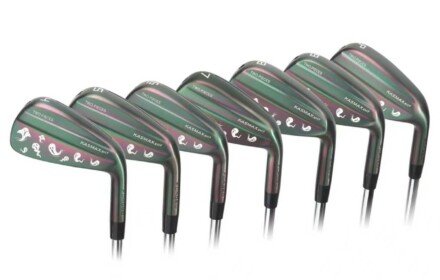
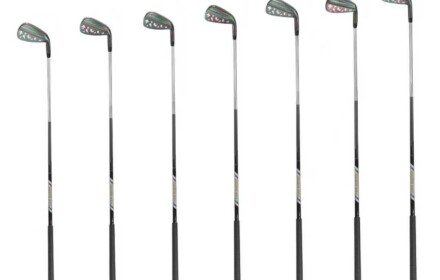
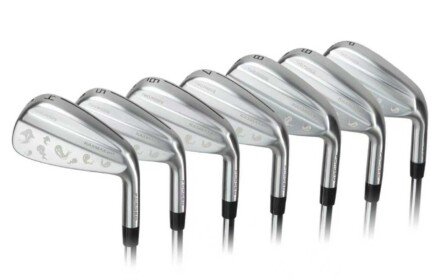
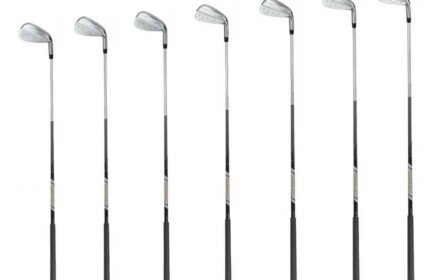
The KASMAX P770 forged hollow irons, for example, pair a thin forged 4140 steel face with a soft carbon steel body and up to 46 grams of tungsten weighting. That’s a design borrowed from premium player’s irons, but it’s tuned for mid-handicappers who need both ball speed and forgiveness. In Utah’s firm conditions, the lower, deeper center of gravity gets the ball up quickly with a piercing flight that holds its line in the thin air.
For the wedges, the SG-01 series with interchangeable bounce options handles the biggest role: scoring. When you’re hitting from red sand that plays heavier than it looks, or from tight desert lies where the ball sits down, bounce is not a luxury. It’s the difference between getting up and down and making double.
And on those notorious Utah greens—whether the lightning-fast stadium surfaces at Thanksgiving Point or the muni quirk at Bonneville—a zero-torque putter like the KASMAX SG-D1 keeps your stroke stable under the kind of pressure that local knowledge creates for visitors.
Final Ranking & Buying Recommendations
After tallying weighted scores across multiple seasons, here’s the honest ranking:
Sand Hollow Resort – 8.8/10. The complete destination experience; play it at sunrise in spring or fall.
Soldier Hollow – 8.25/10. The best mountain golf on public land in Utah, sheep antics and all.
Thanksgiving Point – 8.0/10. Premium turf and top-tier practice facilities; the safest bet for mixed groups.
Coral Canyon – 7.85/10. The underrated southern Utah gem, perfect for winter escapes.
Mountain Dell (Canyon) – 7.45/10. A cool summer hideout with charming quirks and a friendly pace.
Bonneville – 7.05/10. The value champion and a local institution; bring your flat stick.
Now, let me turn those course picks into equipment recommendations for three distinct player types.
1. Performance-Driven Golfer (Low Handicap / Tournament Player)
You want courses and clubs that make the game feel consequential. Head to Sand Hollow and Soldier Hollow, and pack a set of forged or hollow-forged irons that give you control over trajectory. A set like the KASMAX P770 (or the even more workable KASMAX forged cavity-back model) lets you flight shots down into the wind and stop them on firm greens. Pair it with a low-bounce wedge option and a putter you trust on fast, sloping surfaces. The zero-torque SG-D1 putter earns its place in this bag more than you might think—under tournament pressure, face stability is everything.
2. Improvement-Focused Golfer (Mid-High Handicap / Casual)
Your best Utah weeks will center on Thanksgiving Point and Coral Canyon—both forgiving enough to keep you smiling and interesting enough to hold your attention. In your bag, you need forgiveness disguised as performance. That’s the KASMAX Yamahero S550 forged hollow iron set (or similarly designed game improvement irons): high launch, consistent distance, and enough mishit protection to keep the desert out of your scorecard. The SG-01 wedge system with mid-bounce helps you get through the firm southern sand, and a mallet-style putter with alignment lines will save you strokes on greens you’ll only read imperfectly.
3. Value & Customization Seeker (Left-Handed, Petite, Senior, or Bulk Buyer)
This is where playing local and buying smart converge. Courses like Bonneville and Mountain Dell deliver excellent value, and a brand like KASMAX Golf—through its factory-direct and wholesale model—delivers the same in equipment. Left-handed golfers historically find only a token model or two at retail shops; KASMAX builds left-hand options across its iron and wedge lines. Petite and senior players get true custom lengths, lighter total weights, and senior-flex shafts rather than the standard-spec racks. And if you’re a golf shop owner or coach stocking a training center, the OEM and drop-shipping programs let you provide custom-fitted clubs to your students without carrying a warehouse inventory. For the same price as one retail set, you can outfit a family.
Conclusion
If you take one thing from this guide, make it this: Utah golf is about variety, and your clubs should match the assignment. A resort round at Sand Hollow in the high desert plays completely different from a mountain round at Soldier Hollow, and neither course rewards the same equipment choices. The course scores above are based on genuinely objective criteria, weighted toward what matters most to traveling golfers—conditions, design, experience, and value. But the gear you carry is the factor that ties every course rating to your actual scorecard.
If you’ve never had a proper custom fitting—or if your current set came off a retail rack and you’re not even sure of the specs—I’d strongly suggest spending a session authenticating your lofts, lies, and shaft profile before your Utah trip. A brand like KASMAX Golf (check out their player and fitting videos on YouTube (opens in a new window)) makes the process approachable for golfers at any level, and their factory-direct pricing is a genuine market disruptor in a world where most brands charge tourist-level rates for mediocre stock specifications.
The courses will always be here. The red rocks aren’t going anywhere. But if you show up with clubs that are actually built for your swing and for the altitude, you’ll finally experience the version of Utah golf the locals already know—you’ll hit more fairways, hold more greens, and spend more time enjoying the views instead of hunting for your ball in the sagebrush. Start with your fitting, then book your tee times. You won’t regret either.