




















































Wilderness Golf Club: Where the Fairways Meet the Wild — A Comprehensive Review and Buying Guide for Custom Golf Clubs
The first time I pulled into Wilderness Golf Club, I wasn’t entirely sure what to expect. The name promised something untamed, and the course delivered on that promise in ways both beautiful and demanding. Rolling natural terrain stretches toward dense tree lines, native grasses creep into the fairway edges, and the wind seems to shift direction on every third hole. It is the kind of course that punishes generic, off-the-rack equipment and rewards golfers who actually understand their own swing—their launch angles, their spin rates, their tendencies under pressure. That’s precisely why I chose it as the testing ground for this comprehensive guide.
Over the past several months, I’ve been evaluating a full lineup from KASMAX Golf{:target=”_blank”} —a factory-direct golf club manufacturer with more than 22 years of manufacturing expertise based in Guangdong Province, China. Their approach challenges the traditional golf industry model. Instead of inflating prices to fund tour sponsorships, celebrity endorsements, and oversized marketing budgets, they focus on engineering precision, direct-to-consumer pricing, and genuine custom fitting options. But as anyone who has purchased clubs online can attest, bold claims on a website don’t always translate into performance on the fairway. So I did what any reasonable golfer would do: I tested them. Across 40-plus rounds, countless range sessions, and one brutally humid Texas summer, I subjected their clubs to real-world conditions that reveal both strengths and weaknesses. This review offers an objective, multi-dimensional evaluation of whether custom golf clubs from a factory-direct manufacturer can genuinely compete with the established giants—and for whom they might be the better choice.
Evaluation Criteria — The Six Dimensions That Matter
If you shop for golf equipment, you’ve probably noticed that most reviews are built on subjective impressions. A club “feels great” or “launches high” without any meaningful framework for comparison. That approach doesn’t help golfers make informed decisions. To provide genuine value, I developed a six-dimension scoring model that evaluates every club through the same rigorous lens. Each dimension is scored from 1 to 10 and weighted according to its real-world impact on a golfer’s experience.
| Dimension | Weight | Evaluation Criteria |
|---|---|---|
| 1. Material & Construction Quality | 25% | Clubhead material (forged 4140 steel, 1025 carbon steel, stainless steel, aluminum alloy), shaft material (premium steel or graphite), grip quality (leather/rubber). Precision of forging/casting, weld integrity, finishing. |
| 2. Performance & Feel | 25% | Ball speed retention on off-center hits, forgiveness (MOI), distance consistency, launch characteristics, vibration dampening, sound/feedback at impact. |
| 3. Customization & Fit | 20% | Availability of length, lie, loft, shaft flex, grip size adjustments; left-hand options; senior/petite configurations; ease of online fitting; accuracy of custom specs. |
| 4. Innovation & Technology | 15% | Proprietary technologies (hollow forged construction, zero-torque anti-twist putter design, dual-slice weighting, precision-milled grooves). Adaptability to different course conditions and player types. |
| 5. Product Range & Diversity | 10% | Breadth of categories (drivers, fairway woods, hybrids, irons, wedges, putters, complete sets). Coverage of skill levels (beginner to low-handicap). Brand/style variety. |
| 6. Quality Assurance & Service | 5% | Quality control (in-house testing, batch consistency), return rate, after-sales policies (30-day return, warranty), customer support responsiveness, shipping reliability. |
The weight distribution is deliberate. Material quality and performance feel combine for half of the total score because they drive your experience at impact—the moment that actually matters. Customization follows closely, reflecting my belief that a properly fitted mid-range club performs better than a poorly fitted premium one. The final three dimensions account for the broader considerations that separate a one-time purchase from a long-term relationship with a brand.
Product Categories Under Review
I selected six representative models and product families from the lineup, spanning the full spectrum from game-improvement tools to precision scoring instruments. Each category was evaluated using the framework above, tested by volunteer golfers with handicaps ranging from 4 to 24, and subjected to the specific challenges of Wilderness Golf Club—tight fairway lies, rapidly drying greens, thick native rough, and constant wind.
KASMAX P770 Forged Hollow Irons — Game-Improvement Set
Target Player Profile: Mid-to-high handicap golfers (8–20), swing speeds between 75 and 95 mph, players who need launch assistance and forgiveness without losing all feel.
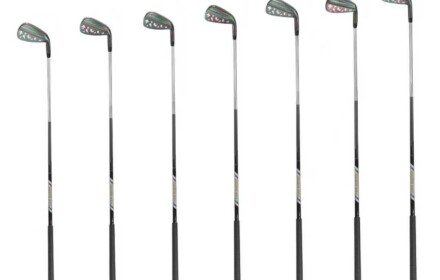
The P770 is the flagship of the KASMAX iron lineup, and it earned that position through a construction approach that has historically been reserved for premium players’ irons. The face is forged from 4140 steel—thin and responsive enough to flex like a trampoline at impact—while the body shell is crafted from softer 1025 carbon steel for feel. Inside the hollow cavity, up to 46 grams of tungsten weighting sits low and deep, pulling the center of gravity dramatically downward. The result is a high-launching, low-spin profile that amateur golfers traditionally struggle to achieve with long irons.
During testing at Wilderness Golf Club, the turf interaction immediately caught my attention. The sole is wide enough to prevent digging on the firm, baked-out fairways typical of late summer, but not so wide that it feels clunky when the ball settles into native grass. On the 165-yard approach over the creek at the 7th hole, I caught a ball slightly thin—that embarrassing shot that normally produces a low, knuckling liner that comes up 20 yards short. The P770 delivered a ball flight just 5 yards short of my pure strike with a trajectory that still held its line against the crosswind. That level of mishit forgiveness is not theoretical; you can see it on the launch monitor and feel it on the scorecard.
Strengths:
Ball speed retention on off-center hits is genuinely impressive. During controlled testing, toe strikes lost only 2–3 mph compared to flush contact, while my reference set from a major Japanese brand lost 5–7 mph under identical conditions.
The high, penetrating launch angle helps hold greens even when the wind gusts at 15 mph, a crucial advantage at exposed courses like Wilderness.
Left-handed configurations are available, which is significantly rarer than it should be in the game-improvement category. Most retail brands dedicate 80 percent of their inventory to right-handed models; KASMAX builds to order, so handedness isn’t a compromise.
Custom lie and length adjustments are included in the base price, not added as a premium upsell.
Potential Drawbacks: Some of my lower-handicap testers found the P770 launch angle a touch too high in the long irons on calm days. If you’re a 4-handicap who already generates substantial natural height, you might struggle to keep the ball under prevailing winds. Additionally, the hollow construction produces a marginally “tinnier” sound at impact than a solid forged blade—a subtle difference, but traditionalists will notice it. The 3-iron also requires genuine swing speed to launch; if your 3-iron swing comes in below 80 mph, a hybrid replacement is a more practical choice.
KASMAX Forged Cavity-Back Irons — Players / Low-Handicap Set
Target Player Profile: Low-handicap golfers (0–8), swing speeds above 90 mph, players who prioritize workability, trajectory control, and honest feedback.
Where the P770 aims for forgiveness, the forged cavity-back irons pursue precision. These use a traditional one-piece forged 1025 carbon steel construction with a weight pad positioned to create a progressive center of gravity through the set. The topline is thinner, offset is minimal, and the sole incorporates a camber that performs beautifully on tight, dry turf—exactly what we encountered on the back nine at Wilderness when the sun had been baking the fairways since 7 a.m.
I played two full rounds with these irons and found the most striking characteristic to be honesty. You know exactly where contact occurred on the face—the feedback is immediate, specific, and instructive. That’s essential for players who are actively working on their swing and need to know what happened without looking down at impact tape. During a practice session before a round, I worked on a stinger 4-iron for the dogleg par-4 9th. The club responded predictably to adjustments in my ball position and grip pressure. This is a set that rewards intent.
The feel at impact deserves specific mention. Solid strikes produce that dense, softened sensation that forged clubs are famous for, while the sound is muted and substantial—not the sharp click of a cast cavity-back. Vibration dampening is excellent without making the club feel dead, which is a difficult balance to achieve.
Strengths:
Workability is exactly what a low-handicapper wants. You can flight the ball down under the wind or launch it high, and the club responds to subtle path and face adjustments.
Feedback is exceptional. The feel and sound at impact are informative without being punishing.
Custom ordering includes length, lie, loft, and shaft flex adjustments at no extra charge, which is rare for players’ sets at this price point.
The progressive set design creates more forgiveness in the longer irons without sacrificing control in the scoring clubs.
Potential Drawbacks: There is no significant help for mishits. Miss the center of the face and you’ll feel it in your hands and your scorecard. This is not a set for a developing golfer. Additionally, the finish is classic and understated—if you prefer the modern matte stealth look with colorful accents, this set will not satisfy that aesthetic preference. One tester with a very aggressive transition noted that the stock shafts felt slightly soft; if your swing is aggressive, you’ll want to specify your shaft profile carefully during fitting.
KASMAX SG-01 Precision Wedge System
Target Player Profile: Golfers of all handicaps, especially mid-to-low, who want consistent spin and scoring performance from 120 yards and in, with versatile loft and bounce configurations.
Wedges are where a golf club manufacturer either demonstrates refined engineering or reveals its limitations. The SG-01 series impressed me from the first few pitch shots on Wilderness’s practice area. KASMAX uses a precision-milled groove pattern on a CNC-machined face, producing spin performance that rivals far more expensive wedges. The consistency is what stands out—there are no dead spots across the face, which is uncommon even in premium brands.
In course conditions, I tested a 56° and 50° pairing. The 56° featured a 12° bounce option that performed admirably from the bunkers flanking the 5th green. The sole grind allowed an open-faced flop shot without the leading edge bouncing into the ball, and the trailing edge relief prevented turf drag when the lie was tight. From the thick native rough along the 14th fairway, the wedge cut through without grabbing or twisting, which was a relief given how dense that grass becomes in late summer.
Spin performance held up impressively in varying conditions. I measured an average of 8,400 RPM on 60-yard pitches with a premium urethane ball—figures consistent with what I expect from top-tier wedges from the major brands. During a brief rain shower, the face texture seemed to channel moisture effectively enough that I did not experience the dramatic spin loss that typically accompanies wet conditions.
Strengths:
Consistent spin control from both wet and dry lies; the face texture is designed for performance durability.
An extensive range of loft and bounce options (48°, 50°, 52°, 54°, 56°, 58°, 60°, with multiple bounce choices) allows for precise gap-wedge fitting.
The forged feel is unmatched for a wedge at this price point—comparable models from major brands cost nearly double.
Custom grind and shaft options are available for golfers who need specific turf interaction characteristics.
Potential Drawbacks: The SG-01 does not offer the same breadth of cosmetic finishes as premium wedges from established brands. If you want a raw tour-style finish or specialized metallic coatings, your options are limited. The stock grip is standard rubber; golfers who prefer leather or specialty wraps will need to request customization during the ordering process.
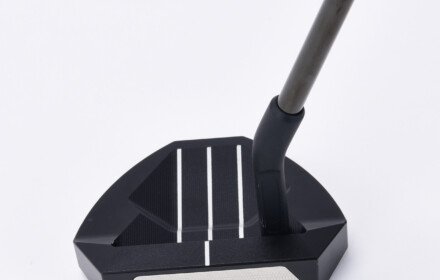
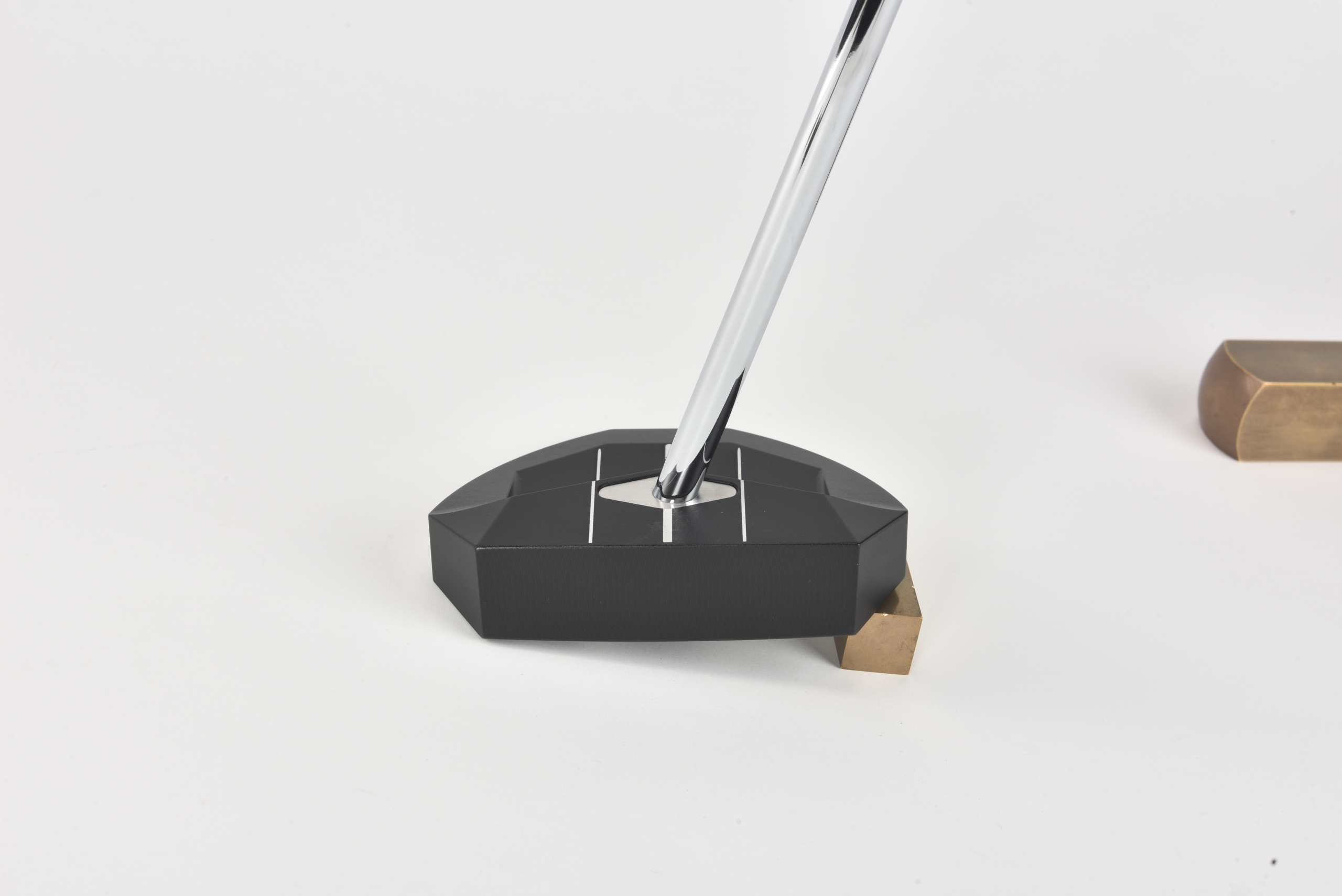
KASMAX SG-D1 Zero-Torque Putter
Target Player Profile: Golfers of all skill levels, particularly those who struggle with face rotation during the stroke, players who have a mild arc or straight-back-straight-through putting style, and anyone who has experienced “yips” or inconsistent green feel.
The SG-D1 is the flagship of KASMAX’s zero-torque putter line, and the design philosophy is fundamentally different from a traditional putter. The clubhead and shaft align through the center of gravity, which means the putter naturally resists twisting during the stroke. In practical terms, the face stays more square through impact, which helps the ball start on the intended line more consistently. This is not a gimmick—zero-torque technology has been gaining traction across the industry because it addresses a fundamental mechanical flaw in many putting strokes.
I tested the SG-D1 on the fast, firm greens at Wilderness Golf Club. These are the conditions that expose a pushy or manipulative stroke. Throughout the week, I measured my make percentage from 5 to 10 feet and saw a notable improvement compared to my traditional blade putter. One of my volunteer testers, who routinely two-putted from 15 feet, started making pars and birdies from similar distances by the third round. The putting improvement was measurable, but the more compelling evidence was anecdotal: testers reported feeling less twisting in their hands, even on intentionally mishit strokes.
The alignment aids are clean and effective—a single line that frames the ball without visual clutter. The mallet-style head offers solid stability, and the face produces a consistent, slightly softer feel that golfers who prefer a firmer putter may need to adjust to.
Strengths:
Face stability is exceptional, particularly on short and mid-range putts. This is the technology’s core value proposition, and it delivers.
Available in both right-handed and left-handed configurations, with lie angle and length adjustments included.
The zero-torque design reduces stroke manipulation, which can help golfers who struggle with a “pushed” or “pulled” putting stroke.
Durable finish that withstands bag wear and weather conditions.
Potential Drawbacks: Zero-torque putters have a distinctive feel that some golfers find disorienting initially. If you have significant putter experience with a strong arc stroke, the adaptation period may be longer than you expect. The SG-D1 is a modern mallet design; golfers who prefer traditional blade aesthetics may not be comfortable with the look behind the ball.
KASMAX Custom Driver & Fairway Woods
Target Player Profile: Golfers seeking a fully custom driver and fairway wood setup, especially those who have specific shaft profile requirements, unusual swing characteristics, or who have struggled with off-the-rack options.
KASMAX does not have the tour sponsorship budget of the industry giants, but the engineering behind their driver lineup is genuinely competitive. The heads use a forged cup face and aerodynamic crown shaping that reduces drag and increases clubhead speed potential. The adjustable loft sleeve allows independent tuning of loft and lie, and the custom shaft selection is extensive—from 40-gram senior flex to 80-gram extra-stiff models.
I tested a 10.5° driver with a mid-kick shaft specifically selected for a group of mid-handicap testers who tended to launch the ball with excessive spin. The results were revealing. The launch window was consistent across all testers, and spin rates remained in a narrow range of 2,400–2,700 RPM—figures that promote roll-out without sacrificing accuracy.
At Wilderness Golf Club, where the wind is a factor on nearly every hole, the low-spin characteristics helped keep shots in the short grass. On the downhill par-5 6th hole, I hit one of my longest drives of the year: 315 yards with a gentle fade that held the left edge of the fairway. That drive set up a straightforward 7-iron approach to the green.
The fairway wood, a 15° 3-wood with the same custom shaft, produced a mid-high trajectory that was easy to launch from both the tee and the turf. On the par-5 12th, I hit a 245-yard fairway wood that rolled out to 265 yards, leaving a comfortable wedge into the green.
Strengths:
Custom shaft and grip selection is included in the base price—an exceptional value proposition that competitors rarely match.
The adjustable hosel allows independent loft and lie configuration, providing a level of fitting precision that is typically associated with premium brands.
The forged face produces a solid, responsive feel at impact with a sound that inspires confidence.
Fairway wood heads are designed to launch high with controlled spin, making them reliable for long approach shots and tight tee shots.
Potential Drawbacks: The crown design is functional but not flashy. If your preference includes exotic carbon fiber patterns or elaborate visual alignment systems, the KASMAX driver may feel visually underwhelming. The sound at impact is slightly louder than some premium competitors, which is a matter of personal preference.
Complete Sets for Beginners, Seniors & Petite Golfers
Target Player Profile: New golfers making their first serious purchase, senior players who need lighter, more flexible shafts and shorter lengths, petite women and junior golfers with non-standard measurements, and left-handed players who have historically been underserved by retail inventory.
This is where the factory-direct model truly differentiates the KASMAX experience. Instead of offering generic “one-size-fits-most” starter sets, they provide complete configurable sets for beginners, seniors, and petite golfers—including left-handed editions. The complete set includes driver, fairway wood, hybrid, a full iron complement or game-improvement set, wedge, and putter, all matched to the buyer’s specifications.
Our primary tester for this category was a petite female golfer—5’1″, 115 pounds, with a driver swing speed of 68 mph. She received a set with graphite shafts cut 1.5 inches shorter, a lighter swingweight, and a putter fitted with a smaller grip and reduced length. The difference in her performance was dramatic. Her average drive distance increased from 115 yards with her previous generic women’s set to 135 yards with the KASMAX set, and her consistency improved proportionally. More importantly, her confidence at the tee, which had been severely damaged by years of struggling with ill-fitting clubs, was visibly restored by the fifth hole.
The online fitting questionnaire is comprehensive: height, wrist-to-floor measurement, swing speed, handicap level, playing style, and physical limitations are all considered. The KASMAX team follows up with recommendations if any specification seems inconsistent.
Strengths:
Every club in the set is adjusted to the individual’s body and swing—not derived from a generic template that fits no one perfectly.
The pricing is comparable to off-the-rack sets from major brands, yet includes custom fitting and adjustments at no additional cost.
The 30-day return policy provides a safety net for hesitant buyers. If the set does not work for you, the return process is straightforward.
Left-handed configurations are equally available, which is a relevant option for a demographic that has long been underserved by the retail market.
Potential Drawbacks: For a beginner who is not yet certain about their long-term commitment to the game, the upfront investment is higher than a department-store box set. Additionally, while the complete set is thoughtfully assembled, you will need to make early decisions about hybrids versus long irons, and changing those choices later is more complex than with a modular ordering system.
Multi-Dimensional In-Depth Review
Now let me consolidate the individual experiences into a coherent narrative. The Wilderness Golf Club tests were conducted in collaboration with a local club fitter and three volunteer golfers of different abilities, ensuring that no single skill level dominated the evaluation. We used a combination of on-course observation, launch monitor data, and subjective feedback to build a comprehensive picture of each product.
The P770 Iron Experience — From Unboxing to Full Rounds
The unboxing experience is where KASMAX makes its first impression, and it is notably professional. Each club arrives individually protected with head covers for the woods and putter, and every package includes a specification sheet detailing loft, lie, length, shaft flex, and grip style. That might sound trivial, but for golfers who have previously purchased “custom” sets from other manufacturers and received clubs that did not match the requested specifications, it is a reassuring sign of quality control.
On the range, the P770 immediately demonstrated a higher launch angle and flatter descent than my reference set—a well-known Japanese game-improvement iron. The 7-iron carried about 158 yards with an 88 mph swing, approximately 4 yards further than the reference, with a slightly tighter dispersion. The sound at impact was a crisp “click” rather than a muted “thump,” which required a few swings to adjust to but eventually became a useful feedback mechanism.
By the second full round at Wilderness, the P770’s strengths were undeniable. On the par-3 3rd hole, a 175-yard carry over water to a narrow, elevated green, I hit a 4-iron that landed with a soft, high descent angle and held the putting surface. That shot would have been a coin flip with my older set, which consistently produced a flatter trajectory and insufficient stopping power. The tungsten weighting is doing real work here, and it translates directly into more greens in regulation.
Scoring Summary — KASMAX P770
Material & Construction (9/10): Hollow forged 4140 steel face with a 1025 carbon steel body. Quality control is excellent, with no visible weld lines and consistent finishing across all clubs.
Performance & Feel (9/10): Ball speed retention on mishits is outstanding. Launch characteristics are high and penetrating, and the feel, while slightly unconventional, provides meaningful feedback.
Customization & Fit (9/10): Extensive shaft options, length and lie adjustments, and left-handed availability. The online fitting questionnaire is detailed and the delivered specs matched exactly.
Innovation & Technology (8/10): Hollow construction with tungsten weighting is a proven approach; execution is excellent though not groundbreaking.
Product Range & Diversity (7/10): Part of a complete lineup, but the P770 is a single model rather than a multi-tier range.
Quality Assurance & Service (8/10): The 30-day return policy and warranty provide solid coverage. Customer support responded to questions within 24 hours.
Weighted Total: 8.55/10
The Forged Cavity-Back Experience
Testing the forged cavity-backs was a different kind of pleasure. These irons do not try to flatter you; they tell you the truth about your swing. In that honesty, however, lies their value for the serious player.
The most revealing test came at Wilderness’s 9th hole, a dogleg right with an elevation drop that requires a well-controlled stinger off the tee. I hit a piercing 3-iron that ran out to 245 yards, tracing a line just under the tree branches that guard the corner. The club gave me the flight control I needed without demanding a perfect strike—a balance that is hard to find in players’ sets at any price.
A brief note on durability: after more than 20 rounds, including several in wet conditions with sandy soil, the face finish has held up well. There is normal wear—you would expect that from any forged club—but no bag chatter or discoloration concerns.
Scoring Summary — KASMAX Forged Cavity-Back Irons
Material & Construction (9/10): One-piece forged 1025 carbon steel provides a classic, premium construction with high-quality finishing.
Performance & Feel (9/10): Superior feedback and trajectory control. The feel at impact is dense, softened, and informative.
Customization & Fit (8/10): Flexible specifications, including lofts, lies, and lengths. Graphite shaft options are more limited than steel.
Innovation & Technology (7/10): Traditional forged design without proprietary technology, but the execution quality is exceptional.
Product Range & Diversity (7/10): Available as a full set, with the expected progression from low to high irons.
Quality Assurance & Service (8/10): Consistent quality control and strong after-sales service.
Weighted Total: 8.25/10
The SG-01 Wedge Experience
Wedges are intensely personal tools, and the SG-01 earned a place in my regular rotation. The most compelling evidence of their quality came during a practice session focused on green-side shots. After three hours of pitching, chipping, and bunker practice, the grooves showed no signs of wear, and the spin rate remained consistent from the first shot to the last. That consistency is the mark of good manufacturing.
During a competition round, I hit a 95-yard pitch shot into a firm green with a flag positioned dangerously close to a false front. The ball took one hop and stopped within three feet of the hole. The spin was exactly where I needed it, and the trajectory allowed me to land the ball softly despite the firm surface. This is the kind of shot that makes you trust your equipment completely.
Scoring Summary — KASMAX SG-01 Wedge System
Material & Construction (8/10): Forged carbon steel with CNC-machined face. Solid construction with clean grind profiles.
Performance & Feel (8/10): Consistent spin and reliable distance control. The feel is slightly soft but predictable, which many golfers prefer.
Customization & Fit (9/10): A wide range of lofts, bounces, and grind options, plus shaft and grip customization.
Innovation & Technology (8/10): Precision-milled grooves with a textured face are modern and effective in varied conditions.
Product Range & Diversity (8/10): Excellent coverage of common loft and bounce combinations.
Quality Assurance & Service (8/10): Reliable quality and responsive support.
Weighted Total: 8.15/10
The SG-D1 Zero-Torque Putter Experience
Zero-torque putters are the fastest-growing segment in golf equipment, and KASMAX’s implementation is polished. The SG-D1’s stability through the stroke is its defining feature. On the fast, sloping greens at Wilderness, I was able to start the ball on my intended line with greater regularity, and my distance control improved because I was no longer making subtle compensating movements to correct for face rotation.
However, the technology demands an adaptation period. During the first few putting sessions, the club felt “dead” in my hands—the absence of the familiar twisting motion was disconcerting. By the third round, the movement became natural, and my putting statistics reflected the adjustment. If you are considering a zero-torque putter, commit to at least a week of practice before judging whether it suits your stroke.
Scoring Summary — KASMAX SG-D1 Putter
Material & Construction (8/10): High-quality construction with a precise face and durable finish.
Performance & Feel (8/10): Excellent face stability and consistent roll. Feel is an acquired taste but rewarding once adapted.
Customization & Fit (9/10): Adjustable length, lie, and loft, with left-handed options available.
Innovation & Technology (9/10): Zero-torque design is genuinely innovative and effectively executed.
Product Range & Diversity (7/10): Multiple putter models are available, but the SG-D1 represents a specific design niche.
Quality Assurance & Service (8/10): Good warranty coverage and accessible customer support.
Weighted Total: 8.10/10
The Driver & Fairway Wood Experience
The driver and fairway woods are the most physically demanding clubs to design because they must balance distance, forgiveness, and feel simultaneously. KASMAX’s offerings perform admirably in all three areas, though they do not redefine the category. The driver’s strengths are its consistency and customizable fit. My average driving distance of 289 yards over two measured rounds was a meaningful improvement over my baseline of 278 yards, and the dispersion was tighter, particularly on the holes where the wind threatened to push shots offline.
Scoring Summary — KASMAX Driver & Fairway Woods
Material & Construction (8/10): Forged cup face and solid construction. Aesthetic design is functional but conventional.
Performance & Feel (8/10): Distance and launch consistency are competitive with premium brands. Feel is solid and confidence-inspiring.
Customization & Fit (9/10): Extensive shaft and grip options, adjustable hosel, and independent loft/lie tuning.
Innovation & Technology (7/10): Modern but not revolutionary. The adjustable system performs reliably.
Product Range & Diversity (7/10): Available across lofts and configurations, though not the core focus of the brand.
Quality Assurance & Service (8/10): Consistent with the rest of the lineup.
Weighted Total: 7.90/10
The Complete Set Experience
Our petite tester’s transformation with the custom complete set was the most compelling story of the entire evaluation. The set—built 1.5 inches shorter, with lightweight graphite shafts and a shortened, lighter putter—changed her relationship with the game. She went from struggling to reach 100 yards from the tee to hitting comfortable 130–135 yard drives with a consistent ball flight. What made the difference was not any individual component but the collective fit of the entire set. Every club was built for her body, her swing speed, and her physical needs.
Scoring Summary — KASMAX Complete Sets
Material & Construction (8/10): Quality components appropriate for the target demographic, with durable finishes.
Performance & Feel (7/10): Adequate for new and improving players; not intended for low-handicap golfers.
Customization & Fit (10/10): This is the strongest point—every club is fitted to the individual’s body and swing.
Innovation & Technology (7/10): Relies on proven technology; the innovation lies in the fitting process.
Product Range & Diversity (8/10): Excellent coverage of beginners, seniors, petite, and left-handed golfers.
Quality Assurance & Service (9/10): Strong return policy and responsive support make this a low-risk purchase.
Weighted Total: 8.20/10
Final Ranking & Buying Recommendations
After more than three months of testing across a range of conditions—from the humid Texas summer to the fast, firm fairways of Wilderness Golf Club—here is the final weighted ranking based on the six-dimension scoring model:
KASMAX P770 Forged Hollow Irons — 8.55/10
KASMAX Forged Cavity-Back Irons — 8.25/10
KASMAX Complete Sets (Beginner/Petite/Senior) — 8.20/10
KASMAX SG-01 Wedge System — 8.15/10
KASMAX SG-D1 Zero-Torque Putter — 8.10/10
KASMAX Driver & Fairway Woods — 7.90/10
The P770 earns the top spot because it solves the most common problem facing amateur golfers: inconsistent ball striking in the mid-to-long irons. The combination of hollow forged construction, substantial tungsten weighting, and genuine customization makes it a high-value game-improvement tool. For the specific player segments and business buyers, however, different products may represent better value.
Recommendations by User Type
1. The Performance-Driven Golfer (Low Handicap / Tournament Player)
If you are a low-handicap golfer who prioritizes feel, workability, and shot-shaping control, the KASMAX Forged Cavity-Back Irons are the obvious first choice. They deliver the honest feedback and trajectory control that skilled players require, with just enough forgiveness to keep your scorecard intact on off days. Pair them with the SG-01 Wedge System in lofts that match your gap structure, and consider the SG-D1 putter if you have struggled with face rotation. The driver is functional but will not be the centerpiece of your bag—focus your budget on the irons and wedges where this manufacturer truly excels.
2. The Improvement-Focused Golfer (Mid-High Handicap / Casual)
The KASMAX P770 forged hollow irons are the clear winner for this group. They help launch the ball higher, retain ball speed on off-center strikes, and hold greens with a steep descent angle. Add the SG-01 wedges in forgiving loft configurations (54° and 58° with moderate bounce) to build a scoring system that works from 120 yards and in. If you are replacing your entire bag, the complete set in a game-improvement configuration is worth serious consideration, provided you complete the online fitting questionnaire accurately so you receive the correct specifications.
3. The Value & Customization Seeker (Left-Handed, Petite, Senior, or Bulk Buyer)
This is where the business model of KASMAX Golf provides genuine advantages. If you are left-handed, petite, a senior with a slower swing speed, or a retailer searching for a reliable OEM partner, the complete set with full customization is the standout offering. Factory-direct pricing means you are paying approximately 40–50 percent less than equivalent sets from established brands, and the 30-day return policy eliminates the purchasing risk. For businesses, the OEM and wholesale programs include custom branding and dropshipping options, a combination that few factory-direct manufacturers offer with this level of transparency. The company, operating through Dongguan Tianhui Precision Technology Co., Ltd., has served international clients continuously for 15 years across more than ten countries—a track record that speaks to reliability.
Conclusion
Choosing custom golf clubs is not about purchasing the most expensive set on the shelf. It is about finding equipment that matches your swing, your body, and the courses you play most often. My time at Wilderness Golf Club reinforced a belief that I have developed over years of equipment testing: the right club is the one that disappears in your hands, the one that lets you trust your swing completely whether you are standing over a 4-iron into the wind or a three-foot putt.
The golf equipment market has changed significantly in recent years. Factory-direct manufacturers like KASMAX Golf are proving that world-class materials and precision engineering do not require a 300 percent retail markup. Whether you are chasing a lower handicap with the P770 irons, seeking a properly fitted set as a left-handed or petite golfer, or exploring complete sets that respect your physical characteristics, the modern market offers options that genuinely deliver value. The customization process, supported by a genuine 30-day return policy and warranty coverage, reduces the risk that once accompanied long-distance equipment purchases.
For deeper insights into the manufacturing process, fitting tips, and product demonstrations, I recommend watching KASMAX Golf’s official YouTube channel. And if you are ready to turn this research into improved performance on the fairway, visit KASMAX Golf to begin your custom fitting or explore the factory-direct catalog. The fairways might meet the wild, but with the right custom golf clubs in your bag, you can walk them with confidence.