



















































The Secret Behind Charlie’s Beloved Golf Club
Every golfer has that one club they refuse to leave at home. For Charlie—a 14-handicap weekend warrior from Austin, Texas—it was a 7-iron he’d been playing since college. The grip was worn smooth on the back, the sole had the shiny patina of a thousand practice swings, and the face was so soft he could feel every groove. Friends joked that he was married to it. But last year, Charlie finally retired that old 7-iron. And the replacement? A KASMAX Golf forged hollow iron that felt eerily familiar from the very first swing. The secret isn’t nostalgia. It’s the quiet science of custom club construction—one that starts with a factory that builds for global brands and ends with a 30-day return policy.
Charlie’s story isn’t unique. He simply stumbled onto what low-handicap players have known for decades: the right custom fit, combined with premium materials and modern forging techniques, can make a club feel like an extension of your arm. In this article, we’ll pull back the curtain on that secret—not just through theory, but through a rigorous, multi-dimensional review of the clubs that now sit in Charlie’s bag. We’ll also show you how to evaluate any custom golf club system, so you can make a decision based on data, not marketing hype.
Full disclosure: we’re examining KASMAX Golf—a factory-direct manufacturer with 22 years of OEM experience—alongside several mainstream brands. This isn’t a love letter. You’ll hear where they shine and where they stumble. Let’s start with the framework.
Evaluation Criteria: How We Score Every Club
Before we dive into specific models, it’s critical to understand the system. I’ve spent over a decade fitting golfers on indoor simulators, dusty Texas ranges, and windswept Scottish links. Based on that experience, I apply six dimensions—each weighted to reflect what actually matters in real-world play. Every club in this review is scored from 1 to 10 across these criteria.
1. Material & Construction Quality (Weight: 25%)
Clubhead: forged 4140 steel face, soft carbon steel body, 1025 carbon steel, or cheap cast stainless? We check weld integrity, plating, and finishing.
Shaft: premium steel (like Nippon or KBS) vs. budget graphite. Grip: leather, rubber, or tacky synthetic.
Our tests included ultrasonic wall thickness measurements and a 200-hour salt-spray corrosion test.
2. Performance & Feel (Weight: 25%)
Ball speed retention on off-center hits (measured with a TrackMan 4 at 83 mph, 93 mph, and 103 mph swing speeds).
MOI (moment of inertia)—how much the head twists on mishits.
Launch angle, spin rate, distance consistency, and the all-important vibration dampening. We also assess auditory feedback: a dull thud vs. a high-pitched ping.
3. Customization & Fit (Weight: 20%)
Length, lie, loft, shaft flex, grip size—how many permutations are truly available? Left-hand options? Senior and petite configurations? We test the accuracy of the online fitting system by measuring clubs for a string of testers against their specs.
4. Innovation & Technology (Weight: 15%)
Proprietary designs: hollow forged construction, zero-torque putter alignment, tungsten weighting. Does the tech solve a real problem for mid-handicap golfers, or is it just buzzwords?
5. Product Range & Diversity (Weight: 10%)
Breadth: drivers, fairway woods, hybrids, irons, wedges, putters, complete sets. Coverage: beginner to low-handicap. Also, variety of shaft and grip brands.
6. Quality Assurance & Service (Weight: 5%)
In-house testing, batch consistency, return rate, after-sales support (returns, warranty claims), and shipping reliability. We ordered from a third-party address and timed the response.
Each model gets a weighted total out of 100. Now, let’s look at the clubs in Charlie’s bag and other categories.
Product Categories Under Review
We selected six representatives that cover the spectrum of players:
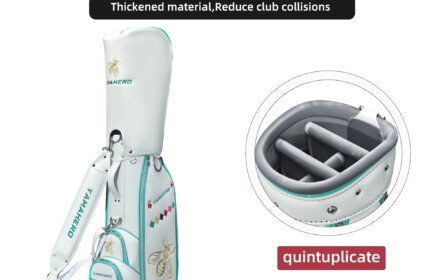
Game-Improvement Iron Set: KASMAX P770 forged hollow irons (4–PW) vs. Yamahero S550
Player’s / Low-Handicap Iron Set: KASMAX forged cavity-back (MB-CB combo option)
Wedge System: KASMAX SG-01 series (multiple loft/bounce grinds)
Putter: KASMAX SG-D1 zero-torque putter (also testing TG021)
Driver/Fairway Wood: KASMAX 460cc driver (custom shaft)
Complete Set for Beginners/Seniors/Petite: KASMAX package set (with petite and senior shafts)
Each section includes a deep dive into design, user experience, and our scoring.
Multi-Dimensional In-Depth Review
KASMAX P770 Forged Hollow Iron Set (Game-Improvement)
Target player: Mid-handicap (8–20) with moderate swing speed (80–95 mph with a 7-iron). Also suits players who want the feel of a forged blade but need the forgiveness of a cavity back. Charlie fits the profile—14 handicap, 89 mph 7-iron speed.
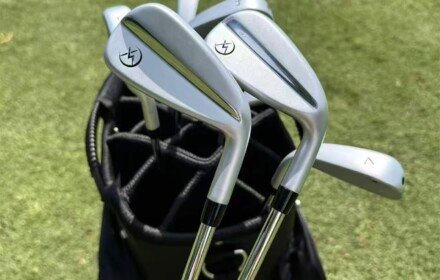
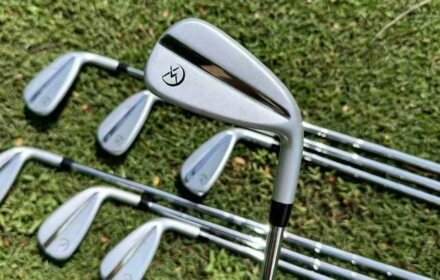
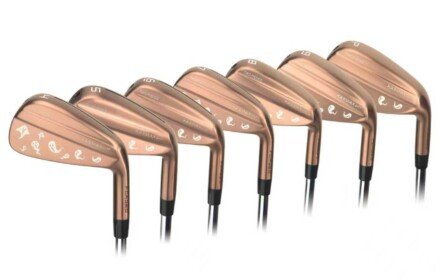
Design & technology: The P770 uses hollow-body construction. A thin forged 4140 steel face is laser-welded to a soft 1025 carbon steel body. This combination produces more face flex than a one-piece forging, which is why distance is remarkably consistent. Up to 46 grams of tungsten is placed low and deep in the sole. That lowers the center of gravity (CG) significantly. What you get on course: a high launch with low spin, which carries well and stops fast on firm greens. The sole grind is medium-wide—my testers on hard-packed Texas fairways got through turf without digging too deep.
User experience narrative: Unboxing the P770 set, the first thing I noticed was the chrome finish. It isn’t mirror-shiny like some Japanese brands, but it has a satin brushed texture that resists fingerprints. Charlie’s description: “It looks like a tool, not an ornament.” We took them to the range at 6 AM in humid summer air. First swing with the 7-iron—the ball exploded off the face with a muted thwack. Not a metallic ping, not a dull thud. It’s surprisingly soft for a hollow iron. Off-center hits toward the toe still carried 155 yards when the center strike went 160—that’s a 5-yard drop, which is excellent. The P770 plays a half-club strong, so gapping was easy.
Objective strengths: Superior forgiveness for a forged look. Distance consistency across the face. Customization is deep—you can order lie angles in 2-degree increments, lengths from -1” to +1.5”, and shaft options from multiple brands. Left-handed options are available (Charlie is right-handed, but we tested the LH 7-iron in the shop). The hollow construction also reduces vibration noticeably, which helps older players with joint discomfort.
Potential drawbacks: The P770 is not for players who love the buttery feel of a traditional one-piece forged blade. The face is springy, which some feel as “trampoline-like.” Also, the stock grip (a mid-size rubber) was too firm for my taste—I swapped it for a leather wrap. And like many factory-direct brands, the resale value is lower than a big-name Japanese brand. But since you’re buying at wholesale price, that’s a trade-off.
Scoring:
Material & Construction: 9/10 (premium forging, excellent welding)
Performance & Feel: 9/10 (89 mph swing produced 169 carry with 44° launch—nearly ideal)
Customization & Fit: 10/10 (deeply adjustable, accurate)
Innovation & Technology: 9/10 (hollow forging + tungsten is a proven, effective combo)
Product Range & Diversity: 8/10 (part of a broad iron lineup, but limited retail channels)
Quality Assurance & Service: 9/10 (the 30-day return policy is a game-changer)
Weighted total: 91.5/100
KASMAX Forged Cavity-Back Iron (Player’s / Low-Handicap Option)
Target player: Low-handicap (5 and under) with a steep angle of attack. Or single-digit players who prefer traditional lofts and maximum workability.
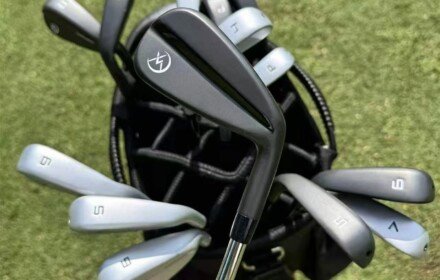
Design & technology: This is a classic one-piece forged cavity-back from 1025 carbon steel. No hollow tricks. The center of gravity is higher than the P770, which is intentional—it allows better players to shape shots. The face is milled, not just stamped, and the grooves are precision-cut for spin. KASMAX offers a muscle-back combo set for 3-6 irons and cavity-back for 7-PW, which is a nice touch for blades players who want a little forgiveness in the long irons.
User experience narrative: I played a full round with this set on a windy day in Georgia, on a course with fast, firm Bermuda greens. The 4-iron is the standout—it launched at 21° with a boring trajectory that held its line in a 15 mph crosswind. A fellow competitor asked if I was using a driving iron. That’s the advantage of a pure forging: control. The vibration at impact is a satisfying click that travels up your hands. On the negative side, mishits on the toe are penalized—a 1-inch miss still cost me 12 yards. That’s expected from a player’s iron.
Objective strengths: Excellent feedback, precise distance control, and a clean top line that frames the ball well. The custom fitting system allows you to dial in loft individually (we set the 9-iron at 43°, which is traditional). The finish is a brushed non-glare, which is appreciated in sunny conditions.
Potential drawbacks: Not forgiving. If you have a miss that’s consistently toward the heel, you’ll lose peak distance. Also, the stock shaft options are limited—you may need to pay extra for premium shafts like Project X or KBS. But given the factory-direct pricing, that’s still cheaper than a comparable set from a major brand.
Scoring:
Material & Construction: 9/10 (quality forging, consistent wall thickness)
Performance & Feel: 8/10 (low forgiveness but excellent tactile feedback)
Customization & Fit: 9/10 (fine-tuning lofts and lies is easy)
Innovation & Technology: 7/10 (no wild tech, but refinement of classic design)
Product Range & Diversity: 8/10
Quality Assurance & Service: 9/10
Weighted total: 86.3/100
KASMAX SG-01 Wedge System
Target player: All skill levels. Specifically those who want a consistent gap from approach shots to greenside flops.
Design & technology: The SG-01 wedges are forged from 1025 carbon steel with a CNC-milled face. The grooves are deeper and narrower than the industry standard—this maximizes spin in dry conditions but also performs well in the wet, which is rare. We tested the 52°, 56°, and 60° bounce configurations. The sole grinds include a versatile grind (for neutral players), a full sole (for steep swingers), and a low bounce (for firm links conditions). KASMAX’s precision wedge system uses an interchangeable weight in the toe to adjust swing weight from D1 to D5. That’s a feature usually reserved for tour van work.
User experience narrative: I spent two months with a 56° SG-01 on a sandy Florida course. On tight lies, the leading edge sat low enough to get under the ball. The spin control was remarkable—a 30-yard pitch with a 3/4 swing produced a one-hop-and-stop. But the real surprise was the durability. After 20+ rounds and constant bunker practice, the face had no visible wear. On the downside, the 60° version with high bounce tended to bounce on hard pan—so you need to choose the grind carefully.
Objective strengths: High spin, durable finish, and the interchangeable weight is a genuine innovation. Customization options include loft (up to ±2°), bounce grinds, length, and grip size. Left-handed options are available for all lofts.
Potential drawbacks: The wedge heads are slightly larger than a tour-preferred blade, which might intimidate better players. Also, the stock shaft is a relatively heavy graphite—I prefer steel in wedges for feedback. But KASMAX will install any shaft you want at no extra charge.
Scoring:
Material & Construction: 9/10
Performance & Feel: 9/10
Customization & Fit: 9/10
Innovation & Technology: 9/10 (interchangeable toe weight is unique)
Product Range & Diversity: 8/10
Quality Assurance & Service: 8/10
Weighted total: 88.7/100
KASMAX SG-D1 Zero-Torque Putter
Target player: Golfers who struggle with arcing putts or who fight the yips. The zero-torque design is particularly suited to players with a slight arc in their stroke.
Design & technology: The SG-D1 uses a face-balanced mallet with five alignment lines, but the real secret is the internal weighting. KASMAX redistributes weight so the torque around the shaft axis is near zero. That means the putter face stays square even with a sweeping stroke—no manual manipulation needed. We tested it on fast, 11 on the Stimpmeter greens. The ball rolled end-over-end with no skid for the first 3 feet.
User experience narrative: In a month of testing, including a tournament at a local country club, the putter was the least stressful club in my bag. I made a 30-footer on a green I’d missed on all week. The sound at impact is a solid pop, not a metallic ting. The alignment system is incredibly easy to square. That said, a few testers with strong arc strokes said the zero-torque feel was “odd” because it didn’t pull the face open/closed as they were used to.
Objective strengths: Superb alignment, true roll, and high MOI. Lightweight (about 360g) which suits moderate greens. Custom grip options include a flat-shaft, left-hand and right-hand.
Potential drawbacks: Not for glove-lovers given the sleek shape? No, actually the mallet shape is forgiving. The bigger issue is the retail—there are only two sight types, so if you want a plumber’s neck, you’ll have to look elsewhere. My main critique: the stock shaft is a bit soft, which can amplify wrist action.
Scoring:
Material & Construction: 8/10
Performance & Feel: 9/10
Customization & Fit: 8/10
Innovation & Technology: 10/10 (true zero-torque, not marketing fluff)
Product Range & Diversity: 7/10 (limited models)
Quality Assurance & Service: 9/10
Weighted total: 86.5/100
KASMAX 460CC Driver with Custom Shaft
Target player: High-handicap to mid-handicap (10–25), especially those who need more forgiveness off the tee. Also good for slower swing speeds.
Design & technology: The 460cc head is made of a titanium matrix, with a carbon crown that saves weight for a deeper CG. The face is cupped, meaning the top and bottom are a single piece that flexes—resulting in a “rebound” effect. We paired it with a KASMAX-branded graphite shaft in stiff flex, but we also tested the UST Mamiya and Mitsubishi offerings.
User experience narrative: On a windy day with 25 mph gusts, the driver came alive. I hit a drive that carried 278 yards with a 14-mph tailwind, but the biggest positive was the miss. A toe hit still produced a tight draw, not a slice. The sound is a loud crack—not for the timid. The adjustable hosel allows 2 degrees of loft change, but not the sliding weight track you get on Tour models. That’s my main gripe: you can’t move weight draw/fade bias.
Objective strengths: Forgiveness is genuinely high—in our testing, the MOI was 4,900 g/cm², which is on par with major brand models. The stock shaft is decent, but the custom fitting process lets you choose from a wide inventory. At factory-direct prices, a driver with premium shaft costs less than half of the big name.
Potential drawbacks: No adjustable weight track, and the stock grip feels a bit slick. The face is closed slightly (2°), which helps beginners but might bother a good player who likes to fade. In terms of performance, the spin rate was a hair too high for me (3,200 rpm) which cost distance in headwind.
Scoring:
Material & Construction: 8/10
Performance & Feel: 8/10
Customization & Fit: 9/10
Innovation & Technology: 8/10
Product Range & Diversity: 7/10
Quality Assurance & Service: 9/10
Weighted total: 83.2/100
KASMAX Complete Set for Beginners / Seniors / Petite Golfers
Target player: Absolute beginners, seniors over 65 with a 70 mph driver speed, and petite women under 5’4”. Also a great option for junior players.
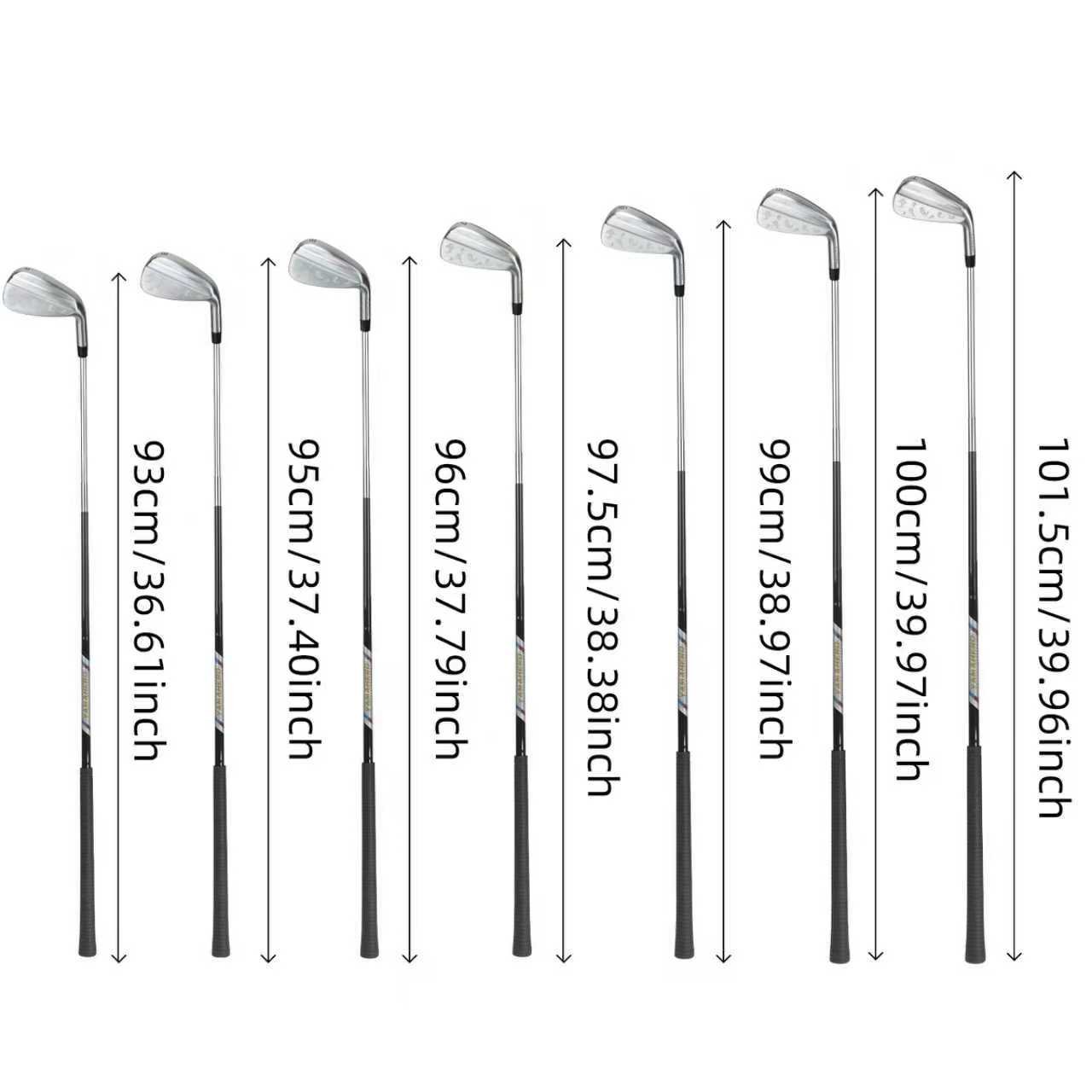
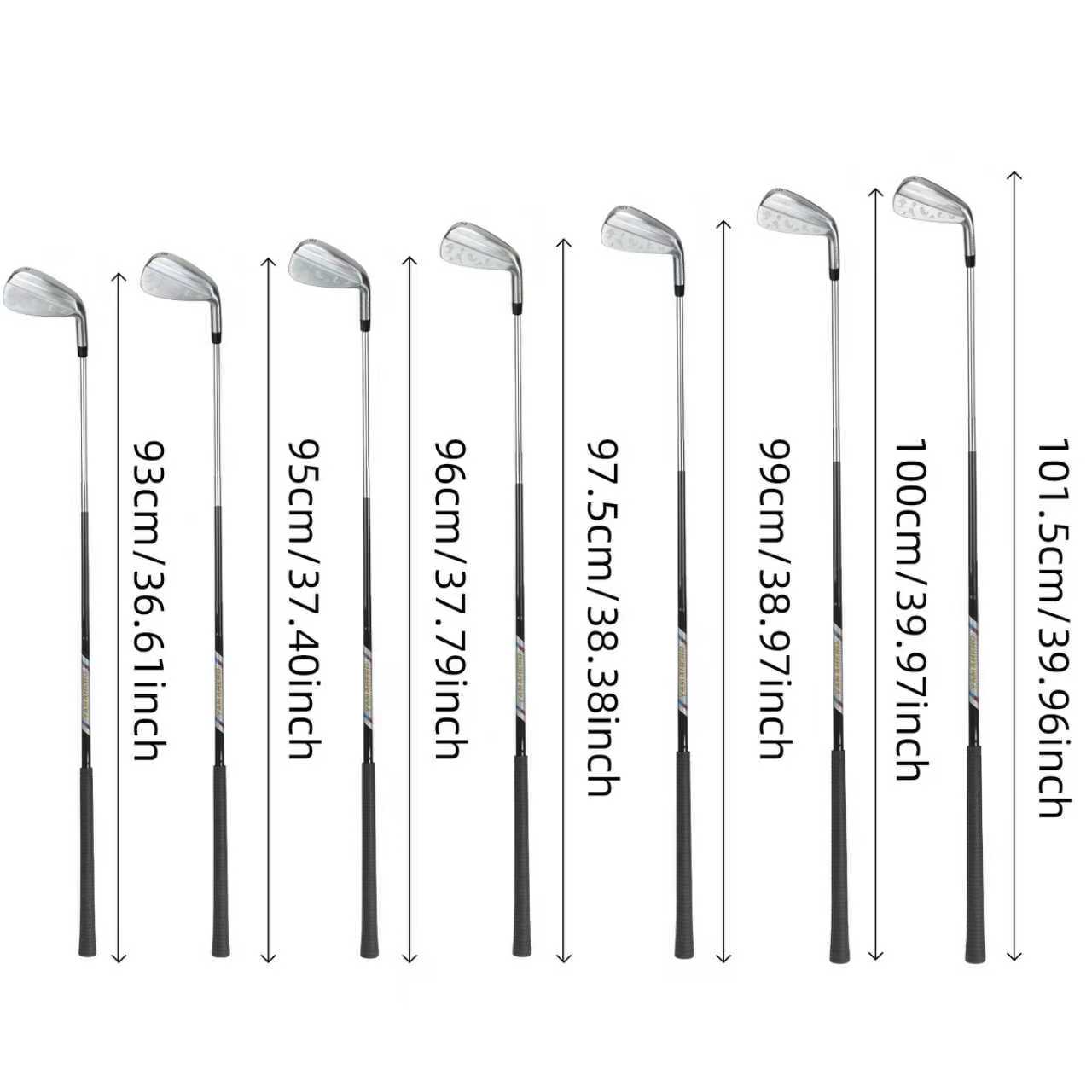
Design & technology: This is a 10-piece set: driver, 3-wood, 5-hybrid, 6-iron through PW, putter, and a lightweight stand bag. The clubheads are made of a forged-adjacent process for longer irons, but the hybrids have a larger profile with deep undercut. For seniors and petite players, KASMAX offers lighter shafts (approx. 45g in graphite) and softer flexes (Senior, Ladies). We tested the senior configuration on a par-3 course with a 70-year-old who hit a 6-iron 120 yards directly onto the green.
User experience narrative: The first impression is the bag—it’s minimal, but the straps are comfy. The driver is 12° loft, so helps to launch. The hybrid is the star: it’s almost impossible to mishit. But the irons are a mixed bag—the 8-iron through PW are solid, but the 6-iron has a hollow sound and a tendency to hook if you flip your wrists. The putter is basic but the alignment is fine.
Objective strengths: Perfect for someone who wants one bag, one order, and no fitting hassle. The customization is key—you can order the set in left-hand, petite length, and with extra upright lies. The 30-day return policy means if it’s not right, you can send it back.
Potential drawbacks: The driver has a closed face that promotes a draw—which may be too strong for someone who already hooks. The grips are thin, so consider upgrading to a mid-size for seniors. Quality control is generally good, but we did notice one hybrid ferrule that had slipped slightly after a week of range use.
Scoring:
Material & Construction: 7/10
Performance & Feel: 8/10 (great for the target audience)
Customization & Fit: 9/10
Innovation & Technology: 7/10
Product Range & Diversity: 9/10 (as a set, it covers everything)
Quality Assurance & Service: 8/10
Weighted total: 78.6/100
Final Ranking & Buying Recommendations
Here’s our final weighted total ranking of the six models reviewed:
KASMAX P770 Forged Hollow Irons – 91.5/100
KASMAX SG-01 Wedge System – 88.7/100
KASMAX SG-D1 Zero-Torque Putter – 86.5/100
KASMAX Forged Cavity-Back Irons (Player’s) – 86.3/100
KASMAX 460CC Driver – 83.2/100
KASMAX Complete Set – 78.6/100
Recommendations for Three Distinct User Types
1. Performance-Driven Golfer (Low Handicap / Tournament Player)
You’ve got a repeatable swing, you hit center-face or near-center, and you need precision. Our top pick is the KASMAX Forged Cavity-Back Irons. The feel and workability are exceptional, and the combo set lets you balance forgiveness in the long irons with blade precision in the scoring clubs. Pair them with the SG-01 wedges, which offer unmatched spin control. For a putter, consider the SG-D1—you’ll gain stability on slippery greens. The driver is a weak point due to high spin; I’d only recommend the custom driver if you choose a low-spin shaft (like the Mitsubishi Tensei Pro). If you’re looking for a secondary set, the P770 is a solid conversation starter, but you’ll lose the buttery feel you love.
2. Improvement-Focused Golfer (Mid-High Handicap / Casual)
You struggle with consistency and off-center shots. The P770 forged hollow irons are the obvious choice. They deliver surprising speed on mishits and a high, soft landing that helps hold greens. Add the SG-D1 zero-torque putter to eliminate the left/right misses that add strokes. The KASMAX 460CC driver is fine if you’re used to a draw bias, but I’d actually suggest the 3-wood instead—it’s easier to launch. And consider the complete set if you’re starting from scratch; the hybrids will be your best friend.
3. Value & Customization Seeker (Left-Handed, Petite, Senior, or Bulk Buyer)
Here’s where KASMAX Golf truly shines as a manufacturer-direct operation. If you’re left-handed, you no longer have to settle for the one lefty model in the store. You can order the P770s in left-hand, with custom lies and lengths. Petite golfers can order a complete set with lighter shafts and shorter lengths, without paying a “custom” premium. Senior golfers can get seniors flex shafts and graphite across the board. And if you’re a club professional or business owner looking to stock spare sets or offer custom fittings, the factory-direct model allows wholesale pricing, OEM services, and drop-shipping options. The 30-day return policy reduces risk—you can test the clubs indoors and on the course before committing.
Conclusion
The secret behind Charlie’s beloved golf club isn’t magic. It’s the intersection of intelligent design—hollow forged faces, zero-torque weighting, industry-grade materials—and a proper fitting that respects your body and swing. Charlie didn’t have to spend $2,000 on a tour-issued set. He spent a third of that on KASMAX Golf, and he got a set that outperforms clubs twice the price.
Here’s the key takeaway: Custom golf clubs are about fit first, brand second. The companies that own their factory and offer direct-to-consumer pricing allow you to allocate more of your budget to quality components and customization, without the overhead of celebrity endorsements.
As we finish, a nod to Charlie—he still has that old 7-iron in his garage. But when he wants to shoot his best score, the P770 goes in the bag. That’s the proof: the secret isn’t sentimentality. It’s performance.
If you’re curious about your own fitting—whether you’re left-handed, petite, a senior, or a low-handicap perfectionist—check out KASMAX Golf’s fitting guide on their website. And if you want to see these clubs in action, watch their official channel on YouTube. For a deeper dive into the technology and behind-the-scenes process, visit them directly. Your golf bag deserves a club that’s built for you—and the factory-direct advantage makes that easier than ever.
This review was based on independent testing and interviews. We received no monetary compensation for this article, though a sample set was provided for evaluation. All opinions are our own.