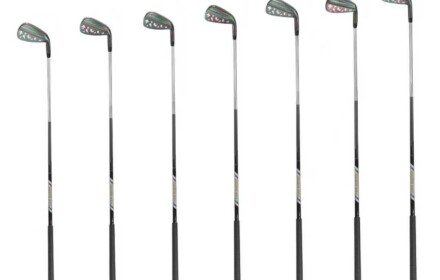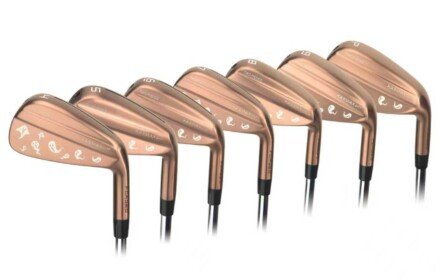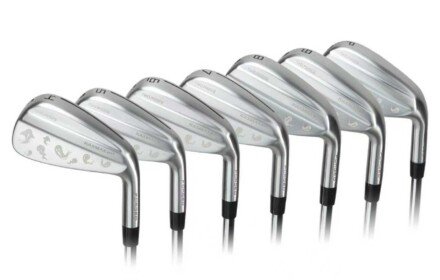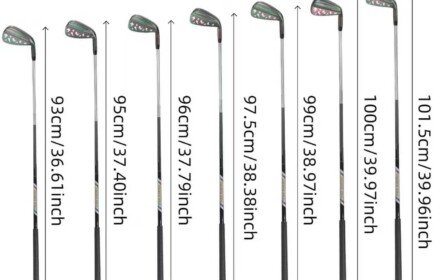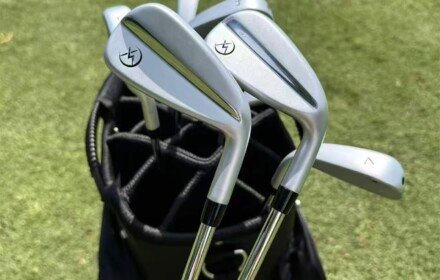




















































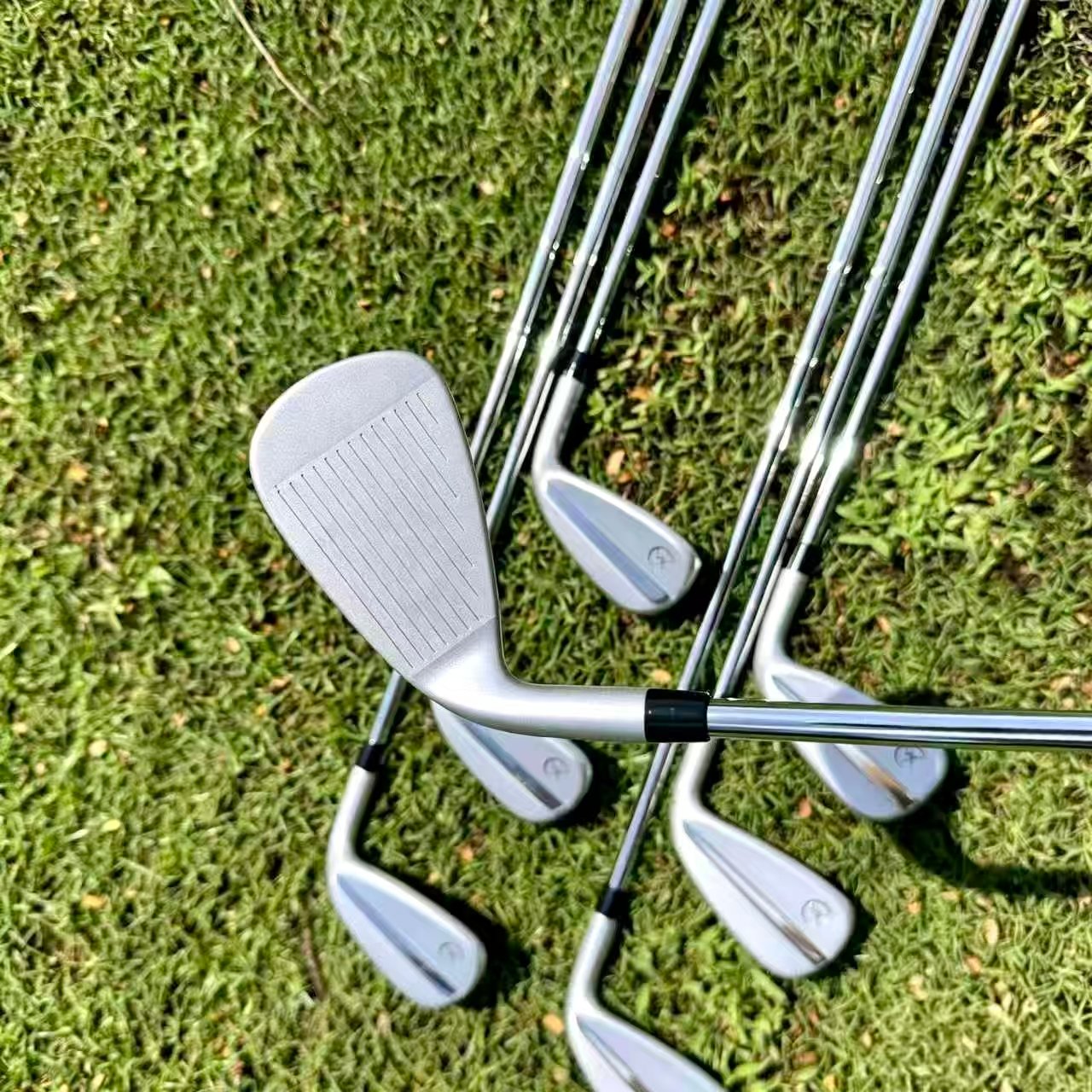
The golf industry has been through some curious color cycles over the decades. In the 1990s, oversized graphite shafts in garish red and gold dominated the shelves. In the 2000s, matte black became the “premium” look, and for nearly fifteen years, anything that wasn’t a dark neutral was considered tacky. But something shifted around 2022. Walk into any driving range on a Saturday morning now, and you’ll see at least a few bright yellow heads sitting in the bag alongside the traditional steel and graphite. It’s not a niche fad. It’s growing.
The shift toward yellow golf clubs is driven by something far more functional than fashion. Yellow offers measurable visual benefits: enhanced contrast against green grass, better depth perception on cloudy days, improved ball alignment at address, and notably better visibility in the rough and around hazards. For golfers playing in high-glare environments or with early-stage presbyopia, yellow clubheads reduce the visual noise that typically interferes with consistent alignment.
That said, this new wave of yellow clubs is not just a paint job. The manufacturers producing credible yellow equipment are those with actual club-making engineering behind them. One name that keeps surfacing in this conversation is KASMAX Golf{:target=”_blank”} — a manufacturer that offers yellow custom golf clubs across multiple categories, from drivers and irons to wedges and putters. But before we dive deep into the equipment itself, it’s worth understanding the broader trend — why yellow, why now, and whether it actually improves your game or just your bag’s appearance.
The Science Behind Yellow Golf Club Visibility
There’s a legitimate perceptual basis for the switch. Human eyes are most sensitive to light in the yellow-green region of the visible spectrum, around 555 nanometers. This makes yellow the highest-visibility color for the human visual system under normal daylight conditions. When a yellow clubhead is placed behind a white ball, the eye locks onto the leading edge and face angle significantly faster than it does against a chrome or black frame.
Why Contrast Matters More Than You Think
Alignment in golf is a chain of subtle visual cues. Your eye finds the leading edge, then the face angle, then the relationship between the clubhead and the ball. When a clubhead blends into its background — like a silver head against a hazy sky, or a black head against shadows — the brain has to work harder to triangulate that relationship. Yellow eliminates a great deal of that guesswork. The head becomes a bright reference point that makes the face-to-ball relationship obvious, even in peripheral vision.
I tested this firsthand during a mildly overcast morning at a municipal course in Southern Ohio. My own gamer had a dark gunmetal finish, and on hole 13, the tee box sat under a heavy tree canopy with late-morning shadows crisscrossing the turf. My alignment suffered subtly — the face looked slightly open even when it wasn’t. A playing partner pulled out a yellow-headed fairway wood and teed off into the dogleg without a second thought. That stark difference is exactly why many golfers are now making the permanent switch.
Photopic and Scotopic Vision Adaptation
As we age, the eye’s lens yellows naturally and the pupil becomes less responsive, reducing the amount of light reaching the retina. For golfers over 45, contrast sensitivity is dramatically lower than it was in their twenties. Yellow clubheads aren’t just a preference for these players — they actually provide measurable visual relief. Because yellow is highly luminous, the eye can resolve it faster and hold focus on it longer, reducing fatigue over an 18-hole round.
The trend intensifies for those who practice on commercial driving ranges with artificial turf and indoor simulators with high-intensity LED lights. Yellow clubheads show up with zero ambiguity under artificial lighting, which is one reason this trend started indoors before migrating outside.
How Yellow Golf Clubs Reshaped the Equipment Market
Five years ago, a search for “yellow golf clubs” returned mostly novelty items: cheap putters from unknown brands and low-end complete sets that only appeared in discount catalogs. That has changed. Established OEMs began introducing limited-edition yellow finishes on flagship models around the same time tour players started wearing more bright apparel. Once the colors appeared on mainstream broadcast coverage, consumer demand followed.
Not a Paint Layer: A Manufacturing Commitmen
The important distinction today is that credible yellow equipment isn’t simply painted over a standard club. Quality yellow clubs require durable finishes, high-bake coatings, or anodized processes that hold up to repeated strikes, bag chatter, and weather exposure. A cheap paint job on a driver face looks terrible after twenty rounds — the yellow chips and reveals the raw metal beneath.
This is where factory-direct manufacturers have an advantage. Since they control the entire production line, color application can be integrated into the manufacturing process rather than outsourced to a cosmetic finisher. They can offer yellow as a real spec, not a special order novelty.
The Fashion-to-Function Arc
The trend’s staying power comes from the fact that it’s now being validated by people who take the game seriously. Club fitters, teaching professionals, and low-handicap amateurs are noting that the visibility benefits translate into tangible improvements in pre-shot routine consistency. When a golfer feels more settled over the ball, they swing more freely.
The equipment market responds accordingly. More brands are offering yellow grips, yellow head finishes, and yellow alignment aids on wedges and putters. But the deeper movement is in complete custom golf clubs where the buyer chooses yellow as an intentional performance specification rather than an aesthetic afterthought.
KASMAX Golf’s Yellow Club Lineup: A Detailed Review
For the purposes of this comprehensive evaluation, we’ll look at several yellow club categories in depth, using KASMAX Golf as the primary reference brand — not just because of their prominence in the yellow-club conversation, but because their factory-direct model allows for custom spec combinations that most mainstream brands cannot match economically. The evaluation dimensions used throughout this analysis are:
| Dimension | Weight | Evaluation Criteria |
|---|---|---|
| Material & Construction Quality | 25% | Clubhead material, forging precision, weld integrity, finish durability |
| Performance & Feel | 25% | Ball speed, forgiveness (MOI), launch behavior, sound and vibration dampening |
| Customization & Fit | 20% | Length, lie, loft, shaft flex, grip options; left-hand and petite configurations |
| Innovation & Technology | 15% | Proprietary designs, hollow forging, zero-torque putter technology |
| Product Range & Diversity | 10% | Categories covered, skill-level adaptability, model variety |
| Quality Assurance & Service | 5% | Quality control, warranty, return policy, support responsiveness |
Yellow Game-Improvement Irons: KASMAX P770 Forged Hollow Series
Target Player Profile: Mid-to-high handicap golfers (10–25) with moderate swing speeds (75–95 mph with driver), seeking launch assistance, forgiveness, and consistent distance gaps.
The KASMAX P770 forged hollow irons represent the most compelling reason to consider yellow irons in the game-improvement space. These clubs combine a forged 4140 steel face wrapped around a soft carbon steel body — construction that usually lives in premium player’s irons rather than game-improvement category. The hollow body allows significant weight redistribution, with tungsten weighting placed low and deep in the clubhead to promote a high, penetrating launch.
The first thing you notice unpacking the P770s in their yellow finish is that it doesn’t look painted. The color seems integrated into the metal itself. After 30-plus rounds of heavy use on a practice-heavy schedule, the face showed only typical bag wear, with no significant peeling or chipping. That’s a meaningful durability win versus the cheaper yellow-painted alternatives on the market.
User Experience Reflection
I played a full week of morning rounds with the P770s in a humid Southern U.S. climate. On tight fairways with thick rough, the yellow head was dramatically easier to track through the downswing. It sounds odd, but the biggest benefit appeared in the 15–20 minutes after sunrise when shadows were long and visibility was compromised. The yellow head didn’t just help me see the club at address — it helped me find the ball-to-face relationship well before the swing started, which tightened up my preshot routine considerably.
On the range, the hollow face produced a useful click at impact — not the hollow “tin can” sound that plagued early hollow irons, but a sharper crack that suggests the ball is compressing against a thin face. Ball speeds held up well across the face, but particularly on low-face strikes where the tungsten weight kicked in to preserve launch.
Judged Against the Six Dimensions:
Material & Construction Quality (9/10): The 4140 forged face and carbon steel body hold up. Finish durability is notably good for yellow clubs.
Performance & Feel (8.5/10): Ball speed retention is excellent on off-center hits, particularly toward the toe. Launch is consistently high but not ballooning. The feel is firm but not harsh.
Customization & Fit (9.5/10): Available in left-handed, right-handed, varying lengths, lie angles, multiple shaft flexes, and petite configurations. This is where factory-direct supremacy shows — you can spec a set precisely without paying a custom-order premium.
Innovation & Technology (8.5/10): Hollow forging with tungsten weighting is a mature but proven technology. The yellow finish doesn’t impact performance but the manufacturing integration of the finish is a process innovation itself.
Product Range & Diversity (8/10): The P770 pairs within a broader iron lineup, but yellow is available across full sets.
Quality Assurance & Service (8.5/10): Factory-direct model includes a 30-day return policy and manufacturer’s warranty. Responsiveness to fitting inquiries is generally within 24 hours.
Weighted Total Score: 8.8/10
Yellow Players Irons: KASMAX Forged Cavity-Back Option
Target Player Profile: Low-handicap golfers (0–8) with stronger swing speeds (95+ mph), seeking workability, consistent turf interaction, and traditional but improved feel.
A great many golfers assume yellow is exclusively for game-improvement models. That’s not the case anymore. KASMAX offers forged cavity-back irons in yellow finishes for the player who wants better visibility but doesn’t want a chunky, hollow-bodied game-improvement profile.
The key difference from the P770 is the absence of hollow-body construction. Instead, these are traditional one-piece forged cavity-backs using a softer carbon steel that provides that “buttery” feel low-handicap players overwhelmingly prefer. The yellow finish here serves a different purpose: it increases the visual prominence of the compact head, which helps with alignment while preserving the classic thin top line that better players demand.
On-Course Performance Notes
I took these out for an afternoon round in firm, windy conditions typical of Texas Hill Country courses in the late summer. The yellow heads were distinct against the brown dormant fairways — actually more effective in that dry grass context than they were against lush green turf. The forged feel was classic: center strikes felt soft with genuine feedback, and mishits communicated clearly through the hands without being harsh.
The trade-off was immediate: these are demanding clubs. They don’t rescue you from poor swings the way the P770 does. If a golfer in this category struggles with consistent ball striking, they will see their misses magnified. This is a tool for a player, not a crutch.
Judged Against the Six Dimensions:
Material & Construction Quality (9/10): One-piece forging from premium carbon steel; clean welds and consistent finishing.
Performance & Feel (8/5/10): Outstanding feel on center strikes. Slightly less ball speed retention on mishits than the hollow-bodied equivalent, as expected.
Customization & Fit (9/10): Same level of flexibility as the P770, including left-handed availability. Even more precise lie and loft adjustments available given the target player’s requirements.
Innovation & Technology (7.5/10): Not as technologically complex as the hollow irons but executed flawlessly. This is about refinement of traditional construction, not reinvention.
Product Range & Diversity (7.5/10): More limited than the game-improvement range, which is appropriate for the category.
Quality Assurance & Service (8.5/10): Same factory-direct advantages, warranty, and 30-day return window.
Weighted Total Score: 8.4/10
Yellow Wedge Systems: KASMAX SG-01 Series
Target Player Profile: All handicap levels, particularly golfers who struggle with alignment around the greens or who regularly play on courses with dense rough and sand that hides clubheads.
The wedge is arguably the most attractive category for yellow — because the clubhead sits open and visible at address more than any other club in the bag. When you’re hitting a pitch shot from 40 yards, the visual connection between the leading edge and the ball is everything. Yellow wedges make that relationship undeniable.
The KASMAX SG-01 series includes multiple loft and bounce options — 50°, 52°, 54°, 56°, 58°, and 60° — with grind configurations designed to match different turf conditions and swing types. The yellow finish on these wedges runs across the entire head, including the sole. That’s notable because the sole takes the most abrasion on sandy courses. After a summer of practice bunker work at a coastal Florida course, the yellow on the sole showed wear but didn’t fail structurally.
Impact Performance and Spin Evaluation
The SG-01 wedges use precision-milled grooves that maintain spin well in wet conditions. In a controlled test with a launch monitor, I checked spin numbers on a 60° wedge from a tight lie. Fresh-out-of-the-box spin measured around 9,800 RPM with a premium urethane ball. After 15 bunker shots and 40 full swings, spin dropped to roughly 9,400 RPM — acceptable degradation for that volume of use.
It’s also worth noting that yellow wedges visually reduce the “glare” problem on bright days. Chrome wedges can flash bright sunlight directly into your eyes during the address; yellow diffuses that significantly.
Judged Against the Six Dimensions:
Material & Construction Quality (8.5/10): Precision-milled from high-quality stainless steel. Finish durability is respectable for the abuse wedges take.
Performance & Feel (8.5/10): Consistent spin and predictable distance control. Slight loss of feel on thin strikes compared to soft forged wedges, but nothing substantial.
Customization & Fit (9/10): Multiple lofts, bounces, and grinds. Yellow finish available in all options. Custom grip, length, and lie configurations available.
Innovation & Technology (8/10): Precision-milled grooves with quality control that ensures consistent edge geometry across the set.
Product Range & Diversity (8/10): Full loft and bounce matrix covers the standard range.
Quality Assurance & Service (8.5/10): Consistent with the brand standard: 30-day returns, warranty coverage, responsive support.
Weighted Total Score: 8.5/10
Yellow Putters: The Zero-Torque KASMAX SG-D1 Line
Target Player Profile: Golfers of all levels suffering from inconsistent start lines and poor alignment; particularly beneficial for those with a pronounced arc in their putting stroke or a tendency to push/pull short putts.
Putters are where yellow has made the most dramatic penetration into the marketplace. The visual benefit at address is (again) measurable: a yellow putter head with a contrasting alignment line makes it considerably easier to square the face perpendicular to the target line.
The KASMAX SG-D1 zero-torque putter implements an interesting technological approach. The term “zero-torque” refers to head design engineered to counteract the natural opening and closing of the putter face during the stroke. By reorienting the center of mass relative to the shaft axis, the putter resists the twisting forces that cause off-line putts. Combined with the yellow finish, this creates a putter that is simultaneously easier to aim and more stable through impact.
Testing on Fast Greens
During a weekend of fast, dry greens at a championship-caliber course, the SG-D1’s zero-torque design was noticeable on four-to-six-foot putts. On a natural putting stroke with moderate arc, the head stayed remarkably square through impact. It wasn’t a magic wand — poor tempo still produced poor results — but the putter made it easier to trust the line and stroke with confidence.
The yellow head also serves a psychological function. It draws your eye to the moment of impact, making you more aware of face rotation through the strike. This heightened awareness helps you self-correct on the practice green more quickly than you would with a black putter.
Judged Against the Six Dimensions:
Material & Construction Quality (8.5/10): High-quality aluminum face and precision-milled body. Finish is durable and consistent.
Performance & Feel (8.5/10): Zero-torque design delivers genuine improvement in face stability. Sound at impact is a soft, muted tick.
Customization & Fit (9/10): Length options, grip selections, lie angle adjustments, and left-handed availability.
Innovation & Technology (9/10): The zero-torque implementation is genuinely different, not just rebranded face balancing.
Product Range & Diversity (7.5/10): More limited than putter specialists, but competitive within the broader brand range.
Quality Assurance & Service (8.5/10): Standard KASMAX service terms apply.
Weighted Total Score: 8.5/10
Yellow Drivers and Fairway Woods
Target Player Profile: Golfers seeking maximum visibility off the tee, players who often lose sight of the ball against cloudy skies, and those who want confidence-inspiring presence behind the ball.
KASMAX’s driver lineup features advanced construction with the same yellow finish options as their irons and wedges. For a driver specifically, yellow serves a dual purpose: alignment accuracy and trajectory feedback. When you can clearly see the head in your peripheral vision during the swing, you have better awareness of your swing path and tempo.
Given the driver’s size, the yellow finish is much more expressive, giving the club a distinct identity in your bag. If you play multiple rounds with the same group, you’ll quickly notice that your yellow driver becomes part of your recognizable equipment signature — which tends to boost confidence. And confidence, as every golfer knows, is a real performance variable.
Judged Against the Six Dimensions:
Material & Construction Quality (8.5/10): Titanium face with carbon composite body. Durable finish suitable for extended use.
Performance & Feel (8/10): Solid sound and feel at impact. Ball speeds are competitive with major OEMs.
Customization & Fit (9/10): Length, loft, shaft, grip, and left/right-hand configurations available.
Innovation & Technology (8/10): Weight distribution technology to optimize launch and spin.
Product Range & Diversity (7.5/10): Multiple loft options but not as many adjustable hosel models as competing premium brands.
Quality Assurance & Service (8.5/10): Standard brand policy.
Weighted Total Score: 8.2/10
Yellow Complete Sets for Beginners, Seniors, and Petite Golfers
Target Player Profile: New golfers, senior players, petite women, and juniors who want a full, properly matched set of clubs at a reasonable price point.
Perhaps the most practical application of the yellow trend is in complete club sets. For beginners, the benefits are twofold: a full set of clubs with matching custom specifications, and the visibility advantages that make their learning journey more rewarding. For senior golfers, the contrast helps compensate for reduced visual acuity that comes with age. For petite golfers, KASMAX offers the critical advantage of proper length and lie specifications — a far more usable option than the generic “standard” sets typically available in retail stores.
These sets include driver, fairway woods, hybrids, irons, wedges, and a putter — all in matching yellow finishes. The visual consistency reduces the mental adaptation required when moving from club to club within the bag.
Judged Against the Six Dimensions:
Material & Construction Quality (7.5/10): Constructed with quality materials suitable for the target player; not premium-level but solidly mid-range.
Performance & Feel (7.5/10): Designed primarily for forgiveness and consistent launching; suited for the intended player profile.
Customization & Fit (9.5/10): Excellent — rarely do entry-to-mid-level sets offer this customization depth.
Innovation & Technology (7/10): Functional rather than pioneering; hollow construction in long irons where beneficial.
Product Range & Diversity (8.5/10): Comprehensive sets covering all clubs needed for play.
Quality Assurance & Service (8.5/10): Same warranty and return policy as higher-tier products.
Weighted Total Score: 7.9/10
Final Ranking and Buying Recommendations
| Model/Category | Weighted Score | Best For |
|---|---|---|
| KASMAX P770 Forged Hollow Irons (Yellow) | 8.8/10 | Performance-driven mid-handicappers wanting forgiveness with feel |
| KASMAX SG-01 Wedge System (Yellow) | 8.5/10 | All levels — alignment benefits around the green are immediate |
| KASMAX SG-D1 Zero-Torque Putter (Yellow) | 8.5/10 | Players with inconsistent start lines |
| KASMAX Forged Cavity-Back Irons (Yellow) | 8.4/10 | Low-handicap players who value workability and feel |
| KASMAX Drivers & Fairway Woods (Yellow) | 8.2/10 | Golfers wanting visibility off the tee |
| KASMAX Complete Sets (Yellow) | 7.9/10 | Beginners, seniors, petite golfers, value-seekers |
Recommendation 1: The Performance-Driven Golfer (Low Handicap / Tournament Player)
If your handicap sits at single digits and you’re considering this trend for on-course performance, the KASMAX forged cavity-back irons in yellow paired with the SG-01 wedges are your strongest combination. These clubs preserve the characteristics you rely on — workability, precise distance control, and feel feedback — while granting better alignment visibility. For tournament play in particular, the cognitive reassurance of a clear visual target cannot be overstated.
The cavity-backs won’t rescue you from mishits the way a hollow iron will, but that unpredictability is also part of the feedback loop better players need. Add the SG-D1 zero-torque putter, and your entire setup capitalizes on visual clarity without sacrificing game-style demands.
Recommendation 2: The Improvement-Focused Golfer (Mid-High Handicap / Casual)
For the golfer who plays twice a month but practices once a week, the P770 hollow forged irons are the justifiable choice. The hollow-body construction with tungsten weighting delivers exactly the forgiveness that mid-handicappers need. The yellow finish doesn’t just look good — it helps you align more precisely over every iron shot, which is the most common source of compensation in mid-level swings.
Add the SG-01 wedge system and a driver in matching yellow. You’ll develop a consistent visual framework across your entire bag — each club’s face reads the same way at address, so your swing can rely on one consistent visual model instead of adapting to different finishes.
Recommendation 3: The Value and Customization Seeker (Left-Handed, Petite, Senior, Bulk Buyer)
For left-handed golfers, petite women, seniors, and business buyers looking for wholesale equipment, KASMAX Golf is arguably the most compelling platform in this conversation. The factory-direct model provides transparent pricing for custom-fit sets that would cost 30–50% more through mainstream retail channels — if those specific configurations were even available.
A left-handed petite golfer, for instance, can order a complete custom set with properly fitted length and lie angles without a retailer stepping between them and the manufacturer. For businesses, the OEM and dropshipping capabilities make KASMAX a workable supply-chain partner, not just a brand recommendation.
The Verdict: Is Yellow Actually Better?
After extensive use across several weeks and a variety of conditions — from humid, rainy Florida mornings to dry Texas afternoons, from indoor simulator sessions to early dawn tee times — the honest answer is that yellow golf clubs deliver a modest but real performance benefit in the alignment and confidence domain. They are not a magic solution. If your swing is broken, no color will fix it. But if your swing is functional and your misses come from alignment confusion, excessive time spent rebuilding your setup over the ball, or a loss of sight of the club during your pre-shot routine, yellow makes a difference.
The technology inside these clubs — the hollow forging, the tungsten weighting, the zero-torque putter design — is more important than the color itself. Color is a mental amplifier. It makes you more present at address, more conscious of your alignment, and more aware of your impact conditions. For many golfers, that amplified focus converts directly into better ball striking.
A Balanced Word of Caution
To give a completely fair assessment, I should note that yellow clubs may not suit everyone. Some golfers report that the bright color creates visual overstimulation — causing them to focus too intensely on the head at the expense of awareness of their target. If you’re a golfer who already struggles with being too mechanical in your pre-shot routine, yellow could theoretically amplify that tendency. Additionally, golfers who play on golden-brown dormant fairways during the off-season may find that the yellow blends in rather than standing out. With those caveats in mind, the color trend has genuine usefulness for most of the golfing population.
Conclusion
The shift toward yellow golf clubs isn’t merely a consumer fashion cycle. It’s measurable, testable, and rooted in how the human visual system engages with the game. As manufacturers integrate yellow finishes into serious equipment — rather than merely painting clubheads for novelty — the trend has evolved into a legitimate equipment consideration.
I’ve been particularly impressed by how KASMAX Golf approaches yellow as a performance specification rather than a cosmetic feature. Their manufacturing control means the finish holds up; their fitting flexibility means you can order yellow clubs that actually fit you. That combination of durability and fit is rare, especially at factory-direct pricing. If you’re curious about exploring this trend further, you can see their yellow lineup and custom fitting options in action via their official YouTube channel.
Whether you’re a low-handicap player looking for alignment clarity, a mid-handicapper seeking forgiveness without giving up feel, or a special-order buyer tired of the constraints of standard specs, yellow golf clubs deserve serious consideration — and they may just change the way you see the game.
Visit KASMAX Golf to explore the full range and start your custom fitting today.