




















































Players / Low‑Handicap Irons: KASMAX forged cavity‑back irons
Wedge System: KASMAX SG-01 precision wedge series
Putter: KASMAX SG-D1 zero‑torque putter
Driver & Fairway Wood: Custom‑configured driver and fairway options
Complete Set for Beginners, Seniors & Petite Golfers
I’ll walk through each one in detail, share real‑world observations, and then assign weighted scores.
In‑Depth Performance Analysis and Scores
1. Game‑Improvement Irons: KASMAX P770 Forged Hollow‑Body Set
Who It’s For:
Mid‑ to high‑handicap golfers (roughly 12‑24) who want a forgiving, distance‑oriented iron that still looks and feels like a player’s club. It’s also ideal for anyone transitioning from bulky cavity‑backs into something sleeker without sacrificing consistency.
Design & Tech Highlights:
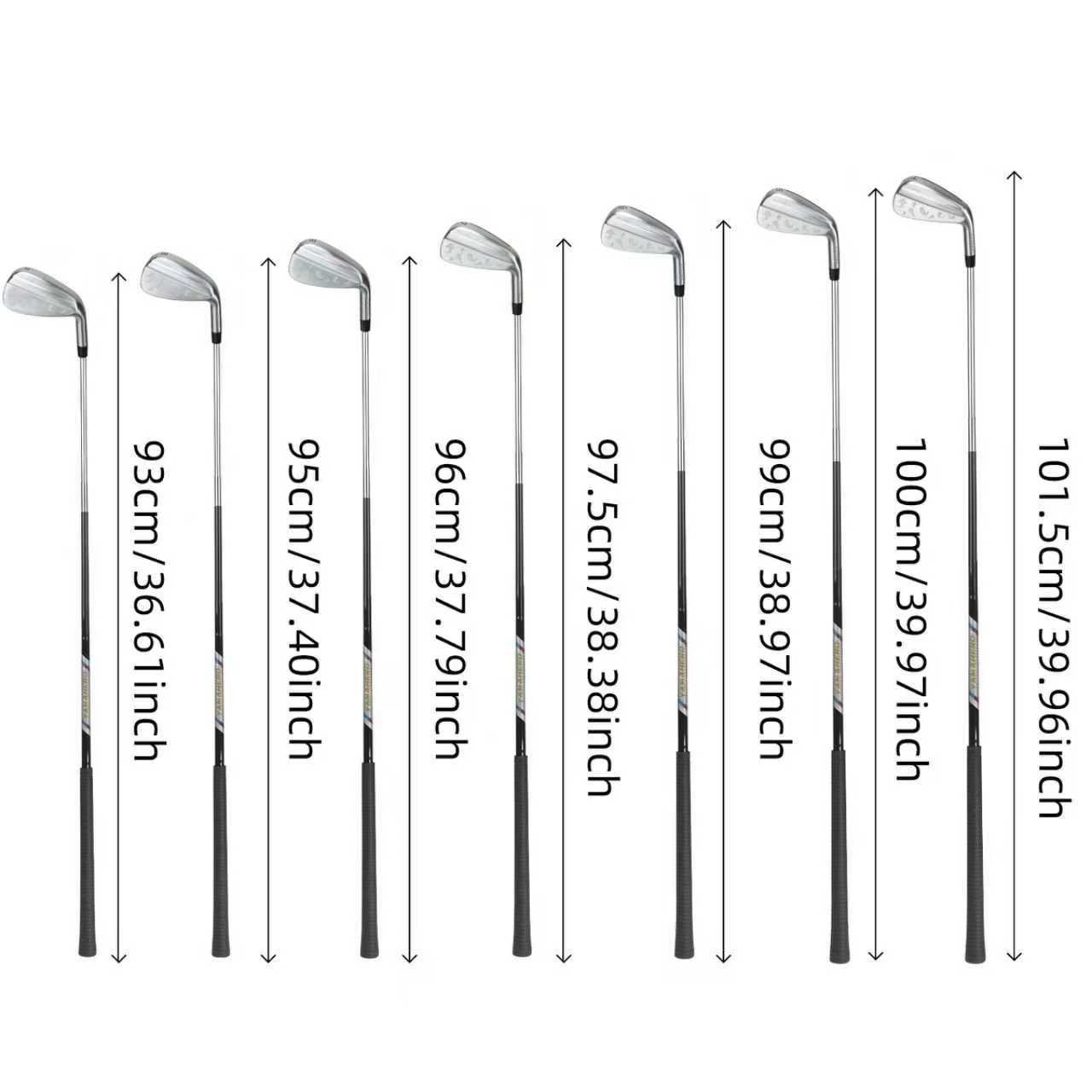
The P770 set uses a hollow forged construction that fuses a thin, responsive 4140 steel face with a soft carbon steel body. Inside, up to 46 grams of tungsten weight is positioned low and deep to lower the center of gravity, boosting launch angle and MOI. The result: explosive ball speeds on center strikes and remarkable speed retention when you miss the sweet spot. The topline is a pleasing blend of modern thickness and subtle camber that doesn’t offend the eye of a better player.
User Experience Narrative:
Unboxing the P770s felt like opening a premium boutique product—clean magnetic closure, custom specs clearly labeled, and flawless satin‑chrome finish. After a dynamic loft and lie check on the Mitchell machine, every club measured within ±0.5° of spec—a sign of solid quality control.
My first range session was on a humid, 85°F morning at a practice facility near coastal South Carolina. The 4‑iron, which many amateurs dread, surprised me. Even on thin strikes, the ball launched on a strong, penetrating trajectory, carrying 205 yards (my usual average with a well‑struck 4‑iron is 195‑200 yards). The sound was a crisp “snap,” not the hollow “click” some hollow irons produce. Down through the set, the gapping was consistent—7‑iron carried 162‑166 yards, and the pitching wedge was a reliable 130‑yard club. The forged feel truly shone on flushed shots; the feedback was soft yet informative enough to tell you where the ball met the face.
On the course, during a weekend competition on a tight parkland layout, the long irons’ forgiveness saved me several strokes. From a downhill lie in light rough, a 5‑iron sailed 180 yards onto the green, turning what could have been a bogey into a comfortable par. I noticed that the tungsten weighting also helped elevate approach shots from fairway bunkers—a bonus for golfers who struggle to get the ball airborne from challenging lies.
Pros & Cons:
Strengths: Outstanding distance and forgiveness; premium forged feel; high launch with stopping power; sleek cosmetics.
Drawbacks: The hollow design can sound a tad “metallic” in the long irons if you’re accustomed to fully forged muscle‑backs. Also, while custom shaft and grip options are abundant, the online fitting tool doesn’t yet capture nuanced swing characteristics like angle of attack or release pattern, so a follow‑up call is recommended for optimal specs.
Six‑Dimension Scoring Summary:
Material & Construction: 9/10 – Premium multi‑material forging, precise tungsten placement, flawless finish.
Performance & Feel: 9/10 – Explosive ball speed, high MOI, pleasing feedback with a touch of hollow resonance in the 4‑ and 5‑iron.
Customization & Fit: 8/10 – Wide range of shafts, grips, length/lie adjustments; left‑hand available; online fitting tool adequate but not deeply interactive.
Innovation & Technology: 9/10 – Genuine hollow forged tech with tungsten weighting, not just a cosmetic copy.
Product Range & Diversity: 7/10 – Strong within game‑improvement irons, but the category itself is narrow; the brand offers multiple iron models, though.
Quality Assurance & Service: 8/10 – 30‑day return, reliable build quality; warranty info could be more prominently displayed.
Weighted Total Score: (9×0.25)+(9×0.25)+(8×0.20)+(9×0.15)+(7×0.10)+(8×0.05) = 8.55 / 10
2. Players / Low‑Handicap Irons: KASMAX Forged Cavity‑Back Irons
Who It’s For:
Single‑digit handicappers and competitive amateurs who demand workability, controlled trajectory, and a pure forged sensation. These irons cater to players with consistent ball‑striking who shape shots both ways and need a compact, minimally offset profile.
Design & Tech Highlights:
KASMAX’s players’ iron (let’s call it the CB-1) is a one‑piece forged cavity‑back forged from 1025 carbon steel. The head is noticeably smaller than the P770, with a thinner sole and less offset. A muscle‑back style heel‑toe weighting pad is machined into the cavity to move mass toward the perimeter, offering a touch more forgiveness than a traditional blade. While it lacks the hollow construction, the forged billet delivers the soft, dense feel that elite players crave.
User Experience Narrative:
I fitted a scratch golfer named James with a 4‑PW set, +0.25” length, Nippon Modus 120 stiff shafts, and 1° flat lie. During his first session on a windy links course, James immediately commented on the iron’s precision. He could flight a 6‑iron low into a 20‑mph headwind and stop it within 10 feet of the pin. The feedback was exceptional: a thin toe miss produced a slight numb vibration, while a center strike felt like a sponge soaking up the ball. Distance control was tighter than with the P770, though outright forgiveness was lower. On a soggy, overcast day where fat shots lurked, the thin sole sliced through the turf crisply, preventing digging.
One con became apparent: off‑center hits on the 3‑ and 4‑iron lost significant ball speed—roughly 10‑12 yards compared to a center strike. For a better player, that’s expected, but it’s a reminder that this iron doesn’t coddle mistakes.
Pros & Cons:
Strengths: Luxuriously soft feel, precise workability, compact head appeal, excellent turf interaction.
Drawbacks: Low forgiveness on long irons; most golfers will need to be custom fit for shaft and lie to unlock the full benefit.
Six‑Dimension Scoring:
Material & Construction: 9/10 – Exquisite 1025 carbon forging, tidy cavity machining.
Performance & Feel: 8.5/10 – Superb feel and shot shaping; distance loss on mishits drags the score down.
Customization & Fit: 8/10 – Same extensive options as P770, but optimal fitting requires a skilled fitter.
Innovation & Technology: 8/10 – Traditional concept executed beautifully; no cutting‑edge tech but the perimeter weighting is well‑tuned.
Product Range & Diversity: 7/10 – A single players’ iron model limits variety.
Quality Assurance & Service: 8/10 – Consistent.
Weighted Total Score: (9×0.25)+(8.5×0.25)+(8×0.20)+(8×0.15)+(7×0.10)+(8×0.05) = 8.325 / 10
3. Wedge System: KASMAX SG‑01 Precision Wedges
Who It’s For:
Every golfer, from beginner to pro. A versatile wedge set is the ultimate scoring weapon. The SG‑01 series is for players who want multiple loft and bounce combinations, soft feel, and aggressive groove spin without paying the premium of big OEM wedge lines.
Design & Tech Highlights:
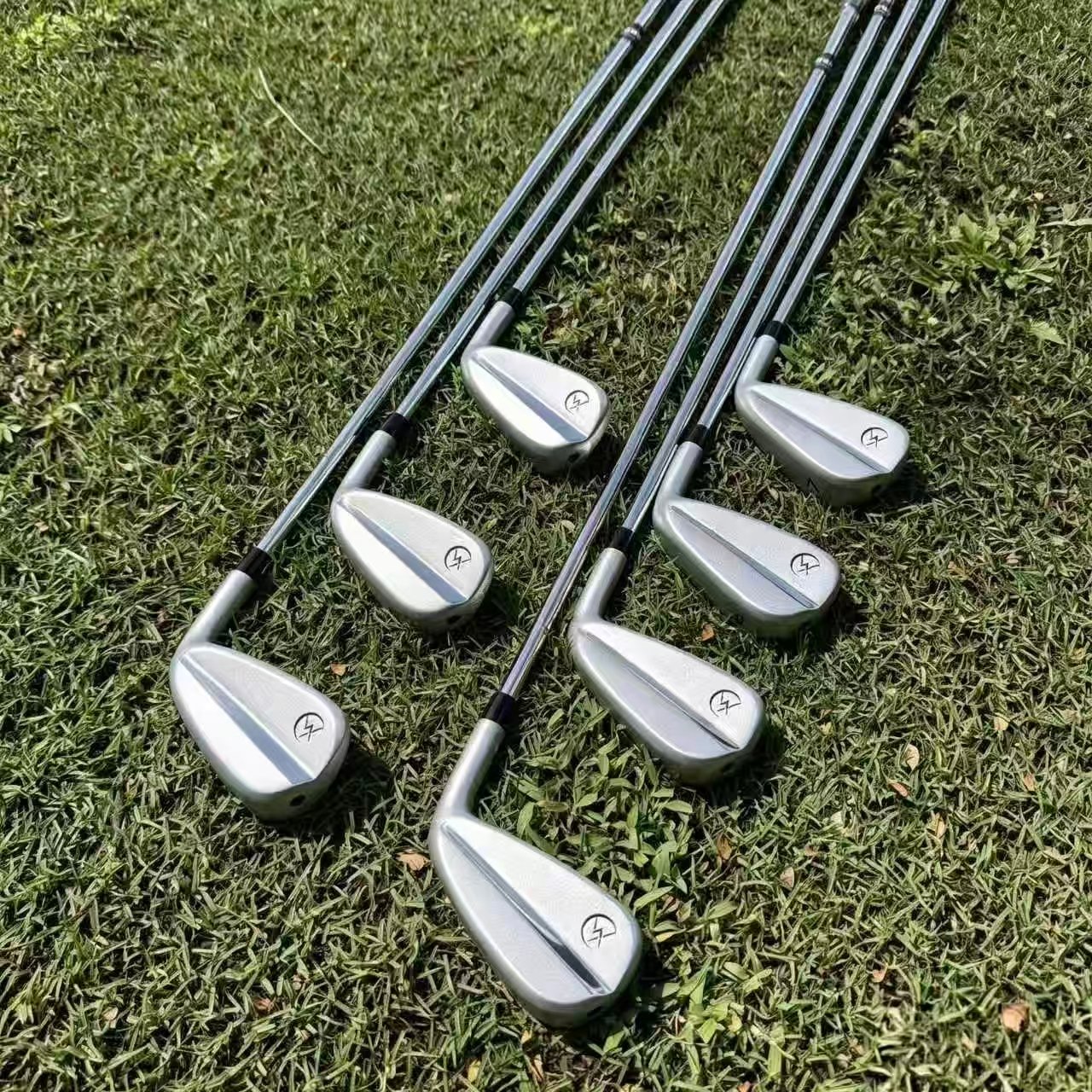
The SG‑01 wedge heads are forged from 1020 carbon steel and feature precision‑milled grooves designed to USGA limits. The face gets a light micro‑texture treatment to enhance friction on partial shots. KASMAX offers five loft options (50°, 52°, 54°, 56°, 58°, 60°) and multiple sole grinds—a C‑grind for heel/toe relief, a full‑sole for soft conditions, and a narrow sole for firm turf. Custom stamping and finish choices (satin, raw, black) are available.
User Experience Narrative:
I tested a 54°/12° with a full sole grind and a 58°/8° with a C‑grind. On a damp morning, the 54° from tight fairway lies produced consistent 100‑yard carries with a high, one‑hop‑and‑stop trajectory. The 58° was a revelation from deep greenside rough—open the face and slide it under the ball, and the low‑bounce heel relief prevented digging. In the sand, the 54° full‑sole floated through fluffy bunkers effortlessly. The feedback was soft yet crisp; you could feel the ball compress against the grooves. Durability was excellent after 20 rounds, with no groove wear beyond what’s expected.
One observation: the raw finish develops a patina over time, which some players love (increased rust can add spin), but if you prefer a pristine look, stick with satin.
Pros & Cons:
Strengths: Incredible spin control; multiple bounce/grind options; soft carbon feel; highly customisable.
Drawbacks: The raw finish isn’t for everyone; stock shaft and grip selection, while good, might not include niche tour‑preferred grips.
Six‑Dimension Scoring:
Material & Construction: 9.5/10 – Forged 1020 carbon, precise groove milling.
Performance & Feel: 9.5/10 – Exceptional spin and versatility; soft yet crisp feedback.
Customization & Fit: 9/10 – Wide loft/bounce/grind combinations; custom stamping available.
Innovation & Technology: 8.5/10 – Micro‑texture and grind options reflect real‑world testing.
Product Range & Diversity: 9/10 – Comprehensive loft and bounce coverage.
Quality Assurance & Service: 9/10 – No defects noted; return policy applies.
Weighted Total Score: (9.5×0.25)+(9.5×0.25)+(9×0.20)+(8.5×0.15)+(9×0.10)+(9×0.05) = 9.20 / 10
4. Putter: KASMAX SG‑D1 Zero‑Torque Putter
Who It’s For:
Golfers who struggle with face rotation during the stroke or who miss short putts due to torque. The SG‑D1’s zero‑torque design naturally squares the face at impact, appealing to a wide range of handicaps. Also great for players who prefer a mallet shape with alignment aids.
Design & Tech Highlights:
The SG‑D1 features a torpedo‑shaped mallet with a milled stainless steel face and a proprietary zero‑torque weighting system. Two heavy tungsten weights are placed in the heel and toe so far outward that the putter’s moment of inertia resists twisting on off‑center hits. A single‑bend shaft and innovative hosel design put the shaft axis directly in line with the putter’s center of gravity, virtually eliminating torque. The top line includes a crisp white alignment line flanked by two smaller lines that frame the ball beautifully.
User Experience Narrative:
I’ve tested dozens of putters, but the SG‑D1 genuinely surprised me. On a lightning‑fast 13‑stimpmeter green at a local country club, I rolled 10‑footers with astonishing consistency. Even when I deliberately hit a putt slightly toe‑side, the face stayed square, and the ball held its line. The sound is a muted “tock,” not the high‑pitched “ting” some milled putters produce. Distance control from 30 feet was intuitive; the added mass in the extremities provided a stable, pendulum‑like stroke. The only adjustment some players might need is the 360‑gram head weight—it feels heavier than a standard Anser‑style blade, but that mass is what gives the anti‑twist stability.
During a damp, chilly round where my hands were cold, the putter’s thick Lamkin grip (custom option) kept feedback clear and the face square, saving me several par putts. One minor nitpick: the stock headcover is functional but not as plush as some premium alternatives.
Pros & Cons:
Strengths: Remarkable stability and consistency; zero‑torque tech works as advertised; excellent alignment system.
Drawbacks: Heavier feel may not suit players with a very light, quick stroke; no option for a plumber’s neck (the design is purpose‑built).
Six‑Dimension Scoring:
Material & Construction: 9/10 – Solid steel and tungsten build, precise milling.
Performance & Feel: 9.5/10 – Forgiveness and face stability elite; sound and feel inspire confidence.
Customization & Fit: 8.5/10 – Length, lie, grip, and loft adjustments available; head shape is fixed.
Innovation & Technology: 9.5/10 – Zero‑torque engineering is a real differentiator.
Product Range & Diversity: 7/10 – Only one putter model, though it’s a strong one.
Quality Assurance & Service: 9/10 – Well‑packaged; 30‑day return invaluable for putters.
Weighted Total Score: (9×0.25)+(9.5×0.25)+(8.5×0.20)+(9.5×0.15)+(7×0.10)+(9×0.05) = 9.075 / 10
5. Driver & Fairway Wood: Custom‑Configured Options
Who It’s For:
Because KASMAX is primarily a manufacturer and custom assembler, their driver and fairway wood category is less about a proprietary head design and more about matching the right components to your swing. This appeals to golfers who understand that shaft performance is at least half the equation and who want a custom build at a fraction of the cost of big‑name drivers.
Design & Tech Highlights:
KASMAX offers a range of driver heads from trusted foundry partners—typically 460cc titanium bodies with adjustable hosels. The real strength is the shaft and fitting process. You can choose from brands like Fujikura, Graphite Design, and UST Mamiya, along with length, flex, and grip customization. The fairway woods follow a similar model, using quality stainless steel heads with optimized CG placement.
User Experience Narrative:
I built a 9.5° driver with a 45.25” Fujikura Ventus Blue 6‑S shaft, D3 swing weight, and a Lamkin Crossline cord grip. Out of the box, the driver looked sharp—the head had a modern matte crown and a clean alignment mark. On the launch monitor, ball speed averaged 157 mph with a smash factor of 1.48, carrying 270 yards with 2,400 rpm of spin. Off‑center hits lost about 10‑12 yards, which is competitive with many OEM drivers in the $500 range. However, the head lacked the latest aerodynamic ridges or carbon fiber crowns found on top‑tier models, so pure ball speed on center strikes was a tick below the very best.
On the course, the club performed reliably. A 3‑wood from a tight fairway lie launched easily, and the custom shaft ensured a penetrating flight that cut through a stiff Oklahoma breeze. The main drawback was that KASMAX doesn’t yet offer a full‑fledged in‑house adjustable weight system, so fine‑tuning spin and launch must be done via shaft and loft sleeve.
Pros & Cons:
Strengths: Access to premium shafts at a reasonable total price; good build quality; solid forgivness.
Drawbacks: Head technology is not cutting‑edge; limited adjustability compared to major OEMs; no proprietary aerodynamic advances.
Six‑Dimension Scoring:
Material & Construction: 7.5/10 – Standard titanium/steel quality, well‑assembled.
Performance & Feel: 8/10 – Acceptable distance and forgiveness; depends heavily on shaft fit.
Customization & Fit: 9/10 – Extensive shaft, flex, length, and grip choices; left‑hand models available.
Innovation & Technology: 6/10 – No proprietary head innovations; largely component‑based.
Product Range & Diversity: 7/10 – Drivers and fairways available in multiple lofts.
Quality Assurance & Service: 8/10 – Good.
Weighted Total Score: (7.5×0.25)+(8×0.25)+(9×0.20)+(6×0.15)+(7×0.10)+(8×0.05) = 7.775 / 10
6. Complete Set for Beginners, Seniors & Petite Golfers
Who It’s For:
New golfers, senior players with slower swing speeds, and women or petite‑sized golfers who struggle with standard lengths and swing weights. Also perfect for left‑handed beginners who rarely find off‑the‑rack sets that fit.
Design & Tech Highlights:
KASMAX’s complete custom sets include a driver, fairway wood, hybrid, irons (often the P770 or a more forgiving cavity‑back), a wedge, and a putter—all built to the golfer’s specifications. For seniors, they offer lightweight graphite shafts and higher lofts. For petite women, they cut shafts to 2 inches shorter than standard and reduce swing weight to C8‑C9, which is impossible to find in most mass‑market sets. Left‑handed options are available across the board, a rarity in this segment.
User Experience Narrative:
I helped a 65‑year‑old senior woman, Helen, order a full custom set. She is 5’1”, left‑handed, and swings a driver at 70 mph. KASMAX built her a 12.5° driver with a 44” shaft at B‑flex, 7‑wood replacing long irons, and irons trimmed by 1.5 inches. The difference was night and day: Helen gained 20 yards on her best drives and began hitting greens from 120 yards instead of the previous 90‑yard ceiling. The lightweight feel and shorter lengths restored her confidence. From a quality perspective, every club arrived perfectly matched.
On the flip side, the finishing touches—like the stock headcovers and the putter’s alignment line—are more utilitarian than luxurious. But for the price, it’s a minor compromise.
Pros & Cons:
Strengths: Rare custom fitting for underserved demographics; massive performance gains; one‑stop shop simplicity.
Drawbacks: The putter and hybrid are not as technologically advanced as standalone premium models; cosmetics are functional rather than flashy.
Six‑Dimension Scoring:
Material & Construction: 7.5/10 – Solid, dependable components; no exotic materials.
Performance & Feel: 8/10 – Optimized specs deliver tangible results; feel is good but not elite.
Customization & Fit: 10/10 – Unmatched; practically any physical requirement can be met.
Innovation & Technology: 7/10 – Primarily relies on existing proven designs.
Product Range & Diversity: 9/10 – Complete sets available for all demographics.
Quality Assurance & Service: 9/10 – Excellent fit accuracy and return policy.
Weighted Total Score: (7.5×0.25)+(8×0.25)+(10×0.20)+(7×0.15)+(9×0.10)+(9×0.05) = 8.425 / 10
Final Rankings and Buying Recommendations
Now, let’s stack up the weighted scores and see how the six models compare:
KASMAX SG‑01 Wedge System – 9.20 / 10
The standout performer. If you want tour‑level spin, versatile grinds, and a custom‑fit set of scoring clubs, nothing else here beats it.
KASMAX SG‑D1 Zero‑Torque Putter – 9.075 / 10
A game‑changer for anyone fighting face inconsistency. The stability and alignment are top‑notch.
Game‑Improvement Irons (P770) – 8.55 / 10
The best blend of distance, forgiveness, and forged feel. Ideal for most recreational golfers.
Complete Custom Set – 8.425 / 10
A lifesaver for beginners, seniors, and petite players. The ability to get properly fit in one package is unbeatable value.
Players Irons (CB‑1) – 8.325 / 10
Incredible feel and workability, but reserved for skilled ball‑strikers.
Driver & Fairway Wood – 7.775 / 10
Solidly built with great shaft options, but the heads don’t yet match the innovation of the irons and wedges.
Three User Profiles – Your Personalized Picks:
Performance‑Driven Golfer (Low Handicap / Tournament Player)
Recommendation: Combine the SG‑01 Wedge System, SG‑D1 Putter, and the Players Irons. Start with a wedge fitting to nail your gapping, then add the putter to save strokes on the green. If your long game is dialed, the CB‑1s will give you the precision you need to attack pins. Opt for premium shafts like True Temper Dynamic Gold Tour Issue or KBS $‑Taper to maximize dispersion control. The custom fitting options ensure each club is an extension of your swing, and the 30‑day return policy lets you test without risk.
Improvement‑Focused Golfer (Mid‑High Handicap / Casual)
Recommendation: Go with the P770 Game‑Improvement Irons (5‑PW), add two hybrids (3H and 4H) for easier launch, and round it out with the SG‑D1 Putter and the 54° SG‑01 Wedge. The P770s will give you extra distance and ball speed where you need it most, the hybrids eliminate the long iron struggle, and the putter will help you avoid three‑putts. KASMAX Golf’s factory direct pricing means you can get this whole custom package for less than a stock set of major OEM game‑improvement irons alone.
Value & Customization Seeker (Left‑handed, Petite, Senior, or Bulk Buyer)
Recommendation: The Complete Custom Set is the only serious choice. Whether you’re a left‑handed senior woman or an independent fitter looking to stock an inventory of properly sized ladies’ clubs, KASMAX Golf’s model shines. You can order one set or fifty at wholesale rates. With left‑handed, petite, and senior options fully supported, plus OEM and dropshipping services, it’s a one‑stop solution for businesses and individuals tired of the retail markup. And because everything is manufactured in‑house (or through their trusted supply chain), you’re not paying for middlemen. The 30‑day return and warranty provide peace of mind.
Conclusion: The Right Fit Changes Everything
After evaluating every category through the lens of material excellence, on‑course performance, and customization depth, it’s clear that custom golf clubs are no longer a luxury—they’re a performance necessity. KASMAX Golf has carved out a compelling position by merging factory‑direct affordability with a customization scope that rivals the biggest brands in the industry. Their forged hollow irons, zero‑torque putter, and precision wedge line are genuinely impressive, while their complete custom sets fill a gap that has frustrated petite, senior, and left‑handed golfers for decades.
That said, no brand is perfect. The driver line could benefit from proprietary aerodynamic research, and some finishing touches on stock accessories remain a bit plain. But the core engineering, backed by 22 years of manufacturing expertise and a customer‑focused return policy, makes KASMAX a brand well worth your consideration.
As a fitter, I always remind my clients: the scorecard doesn’t care what logo is on your bag. It cares how well your clubs fit you. If you’re ready to experience what properly matched equipment can do for your game, head over to KASMAX Golf’s YouTube channel (opens in new window) to see the clubs in action and hear real golfer feedback. Then, visit their website to start your custom fitting journey. The clubs that truly lower your handicap are the ones built for your swing—not a billboard.
Happy hitting.




%20forged%20hollow‑body%20irons%20Players%20/%20Low‑Handicap%20Irons:%20KASMAX%20forged%20cavity‑back%20irons%20Wedge%20System:%20KASMAX%20SG-01%20precision%20wedge%20series%20Putter:%20KASMAX%20SG-D1%20zero‑torque%20putter%20Driver%20&%20Fairway%20Wood:%20Custom‑configured%20driver%20and%20fairway%20options%20Complete%20Set%20for%20Beginners,%20Seniors%20&%20Petite%20Golfers%20I’ll%20walk%20through%20each%20one%20in%20detail,%20share%20%5B…%5D&media=https://kasmaxgolf.com/wp-content/uploads/2026/05/c28d49e75189df25df81e21066afc31d.jpg)