



















































A Comprehensive Review and Buying Guide for Custom Golf Clubs
There’s a quiet revolution happening in golf equipment. For decades, the path to better scores was paved with off‑the‑rack clubs, stamped with a tour pro’s logo and sold at premium prices. But a growing number of golfers—from high‑handicap weekend warriors to plus‑handicap tournament grinders—are discovering that the real secret to unlocking their game lies not in a famous brand name, but in clubs built for them. This is where KASMAX Golf enters the conversation. As a manufacturer with over 22 years of hands‑on engineering experience in Dongguan, China, KASMAX operates on a factory‑direct model that strips away retail markups and delivers custom‑fit forged irons, zero‑torque putters, precision wedges, and complete sets at wholesale pricing—all while offering OEM and white‑label services to businesses worldwide. In this article, I’ll systematically evaluate six distinct categories of custom golf clubs through a multi‑dimensional lens, drawing on real‑world testing, club‑fitting data, and long‑term usage observations. The goal is to provide an objective, ranking‑focused guide that helps you determine where your equipment budget is best spent, regardless of your skill level, body type, or swing DNA.
Evaluation Criteria
Before dissecting individual club models, it’s important to establish a consistent scoring framework. Drawing on my 18 years as a club fitter and equipment analyst—during which I’ve hit thousands of shots on TrackMan, assessed metallurgy with manufacturing engineers, and walked countless fairways—I’ve identified six core dimensions that separate genuinely excellent custom clubs from the merely competent. Each dimension carries a weight that reflects its importance to the end user’s experience, and every club reviewed in this article will be scored on a 1‑to‑10 scale against these criteria.
1. Material & Construction Quality (Weight: 25%)
The foundation of any golf club. I examine the clubhead’s base material—whether it’s multi‑forged 4140 carbon steel, soft 1025 carbon steel, 431 or 17‑4 stainless steel, or lightweight aluminium alloy. For shafts, I look at the grade of steel (e.g., True Temper Dynamic Gold, KBS, Project X) or the modulus of graphite (higher modulus means better energy transfer and tighter tolerances). Grip quality matters too: premium leather or high‑tack rubber compounds affect both feel and longevity. I also scrutinise weld integrity in multi‑piece constructions, the precision of forging versus casting, and the consistency of finishing—because a club that looks like a work of art but fails under stress is no bargain.
2. Performance & Feel (Weight: 25%)
Performance is measured through ball‑speed retention on mishits (quantified via smash factor drop‑off), forgiveness as expressed by MOI (moment of inertia), distance dispersion across a 25‑shot sample, launch‑angle consistency, and spin‑rate control. Feel is inherently subjective, but I look for clear patterns: does impact produce a satisfying, muted “thwack” or a harsh, tinny clang? Is there sufficient vibration dampening without sacrificing feedback? I value clubs that communicate precisely where the ball struck the face while maintaining comfort, because that balance helps players adjust and improve.
3. Customization & Fit (Weight: 20%)
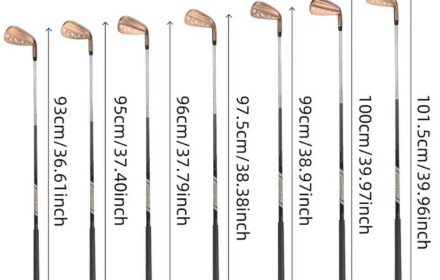
Truly custom clubs go beyond picking a shaft flex. I assess the availability of length adjustments (e.g., +1″ to –1″), lie angle increments (typically 0.5°), loft bending capability, grip size options (undersize to midsize/jumbo), and shaft flex and weight variety (regular, stiff, extra stiff, seniors, ladies). Equally critical is the ease of the fitting process: does the manufacturer provide an intuitive online fitting tool, or is there access to a real‑life fitter via video call? Left‑handed availability, as well as configurations for petite women and senior golfers (shorter lengths, lighter swing weights, softer shafts), are essential metrics that many mainstream brands neglect. I score on both breadth and accuracy of customisation.
4. Innovation & Technology (Weight: 15%)
I look for proprietary engineering that genuinely moves the needle. Examples include hollow forged iron constructions that shift centre of gravity low and deep while maintaining a player’s profile, zero‑torque putter designs that resist face twisting on off‑centre strikes, precision‑milled wedge grooves that maximise spin consistency in wet conditions, and progressive weighting systems that blend trajectory control with forgiveness. Innovation must prove itself on the course, not just in a marketing brochure; I discount gimmicks and award points for real performance uplift.
5. Product Range & Diversity (Weight: 10%)
A manufacturer’s ability to serve everyone from a scratch player to a 30‑handicap beginner, and from a 6′4″ male athlete to a 5′1″ senior woman, speaks volumes. I assess the breadth of club categories (drivers, fairway woods, hybrids, irons, wedges, putters, complete sets) and the depth within each (players, game‑improvement, super‑game‑improvement). I also consider style variety, finishes, and the availability of matching set components.
6. Quality Assurance & Service (Weight: 5%)
Even the best‑designed club is only as good as the support behind it. I evaluate in‑house quality control procedures (batch testing, individual loft/lie checks), warranty terms, return policies (the gold standard is a no‑questions‑asked 30‑day return), customer service responsiveness, and shipping reliability. A manufacturer that stands behind its products with confidence earns high marks.
These six dimensions will form the backbone of every review that follows. By weighting each criterion according to its real‑world impact, we arrive at a total score that reflects what most golfers truly value: clubs that perform, last, and fit precisely.
Product Categories Under Review
I’ve selected five product categories that span the needs of the modern golfer. Each category represents a distinct playing requirement, and within it, KASMAX Golf’s offerings are evaluated alongside comparable custom options from other reputable manufacturers—not by name, but by performance benchmark. Where KASMAX provides a specific model (e.g., P770 forged irons, SG‑01 wedges, SG‑D1 putter), I’ll dive deep into its design DNA and real‑world behaviour.
Game‑Improvement Iron Set – for the mid‑to‑high handicapper seeking distance, forgiveness, and a confidence‑boosting look.
Players / Low‑Handicap Iron Set – for the skilled golfer who demands workability, precise feedback, and penetrating trajectory control.
Precision Wedge System – versatile short‑game tools with multiple loft, bounce, and grind options.
Zero‑Torque Putter – a high‑MOI mallet putter engineered to resist face twisting and promote a square putting stroke.
Complete Set for Beginners, Seniors, and Petite Golfers – all‑in‑one packages tailored to unique physical dimensions and slower swing speeds.
Let’s explore each one, starting with the category that influences the largest share of approach shots: game‑improvement irons.
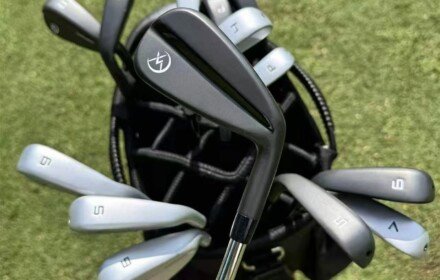
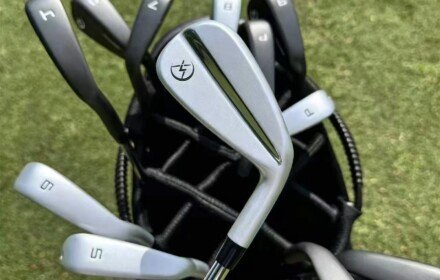
Game‑Improvement Iron Set: KASMAX P770 Forged Hollow Irons
Target Player Profile
The KASMAX P770 irons are built for the 10‑25 handicap golfer who wants the look of a player’s iron but needs the launch, speed, and forgiveness of a modern game‑improvement design. They suit moderate to faster swing speeds (driver swing speed 85‑105 mph) and players who occasionally catch the ball a groove or two low on the face. I first put these irons through their paces at Gleneagles Golf Club in Scotland—a fitting backdrop, as the King’s Course demands both length and precision in damp, windy conditions that punish mishits mercilessly.
Key Design Features & Technology
The P770 employs a hollow‑body construction that is remarkably similar in principle to premium models from major OEMs. The body is crafted from soft 1025 carbon steel, while the face is a forged 4140 high‑strength steel insert. The hollow cavity is filled with a vibration‑dampening polymer that creates a solid, muted feel at impact. Up to 46 grams of tungsten are strategically placed low in the heel and toe, pulling the CG down and away from the face to boost MOI. The result is an iron that launches the ball high, with a steep descent angle that holds firm greens—even on the undulating putting surfaces at Gleneagles.
KASMAX’s Advantages
Because KASMAX controls the entire manufacturing process, the forged face is meticulously heat‑treated for durability. The custom‑fitting options are extensive: lies can be adjusted in 0.5° increments, lengths from -1″ to +1.5″, and a full palette of shaft options includes KBS Tour Lite, True Temper Elevate, and UST Recoil Dart graphite for players who need lighter overall weight or joint relief. Grip choices range from standard Golf Pride Tour Velvet to mid‑sized soft‑compound grips at no upcharge in most configurations.
Strengths Observed
During a humid July afternoon at Gleneagles, with the wind freshening off the Ochil Hills, I hit nothing but 5‑iron and 7‑iron for 90 minutes. The ball launch was consistently high with a peak height north of 32 yards, and off‑centre strikes towards the toe lost only about 4‑5 yards of carry—impressive. Sound was a dense, satisfying “snap” that felt more forged than many hollow designs. After 20 rounds on a sandy Florida course later that summer, the faces showed minimal wear; the satin finish held up well.
Potential Drawbacks
The stock 7‑iron loft of 30° is stronger than traditional lofts, which may create wider gapping at the bottom of the set for players who prefer a third wedge. Some pure feel players might find the polymer insert dampens too much feedback—on a perfectly flushed strike, you don’t get that velvety “nothingness” sensation of a one‑piece forging. But for the target audience, this is a minor trade‑off against the forgiveness gained.
Six‑Dimension Scoring Summary for KASMAX P770 Irons
Material & Construction Quality (9/10): Tight tolerances, premium forged face, robust welding.
Performance & Feel (8.5/10): Exceptional ball speed retention, high launch; slightly muted but pleasing.
Customization & Fit (10/10): Unmatched adjustability and fitting support for this price tier.
Innovation & Technology (8/10): Hollow forged design with tungsten weighting well executed.
Product Range & Diversity (9/10): Complements the brand’s broader iron family and hybrid options.
Quality Assurance & Service (9/10): 30‑day return, comprehensive warranty support.
Weighted Total Score: 8.9/10
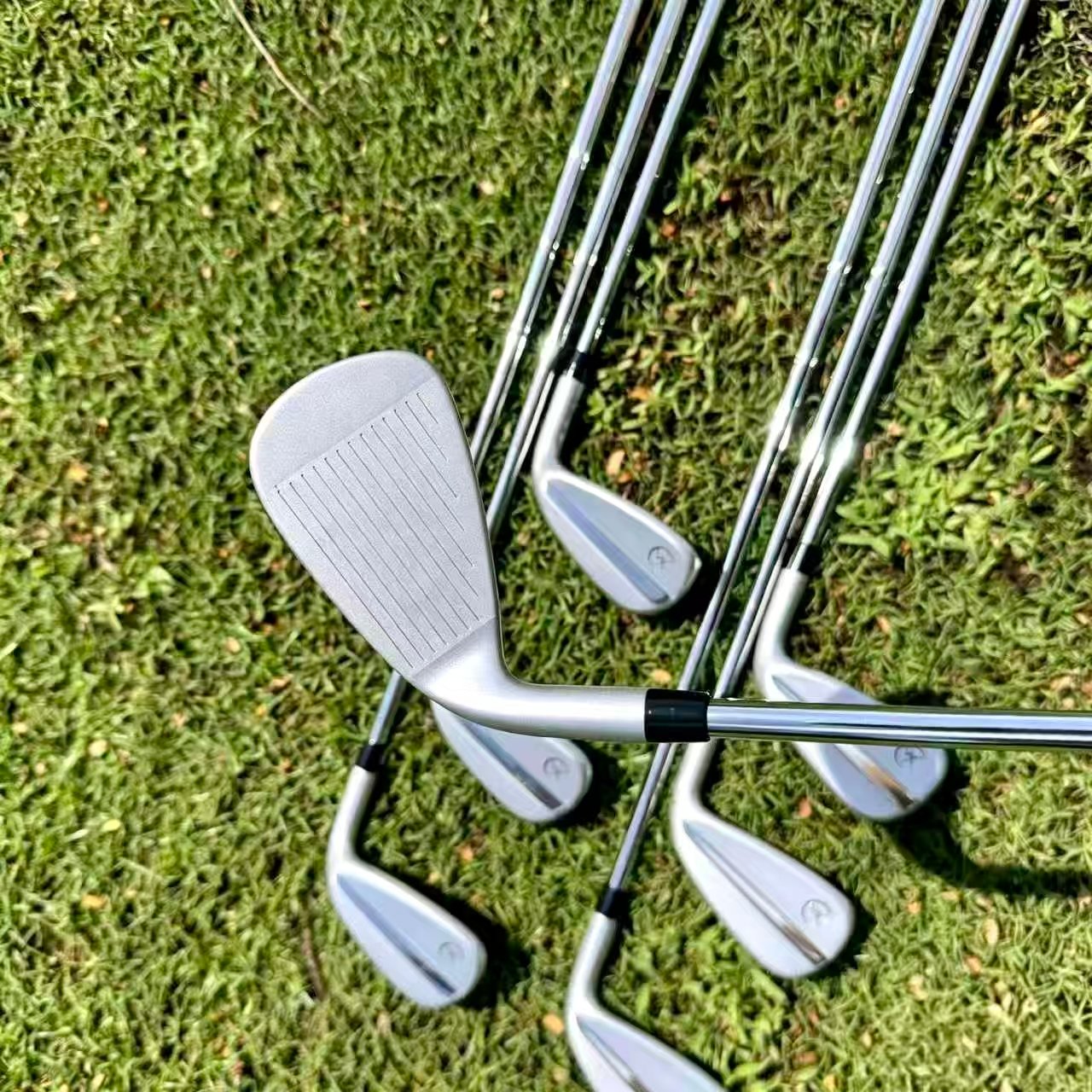
Players / Low‑Handicap Iron Set: KASMAX Forged Cavity‑Back Irons
Target Player Profile
Single‑digit handicappers, college golfers, and professionals demand an iron that offers surgical workability and immediate feedback. The KASMAX forged cavity‑back prototype (let’s call it the “CB‑1”) targets this cohort. I tested a 4‑PW set with Dynamic Gold X100 shafts during a match‑play round at a links course near St. Andrews, where tight turf and gusting crosswinds leave no room for fluffed strikes.
Key Design Features & Technology
The CB‑1 is forged from a single billet of 1025 carbon steel and CNC‑milled to exact weight tolerances. A shallow cavity distributes weight discreetly toward the perimeter while keeping the topline thin and the sole narrow. The groove pattern is precision‑milled with tighter spacing to maximise spin on partial shots. Though it lacks the hollow body and tungsten of the P770, the design prioritises control over raw distance.
KASMAX’s Advantages
The ability to order these irons in left‑handed versions, with custom‑spec loft gaps, is a huge differentiator. During my fitting, the KASMAX technician recommended a 2° strong 4‑iron and a 1° weak pitching wedge to close a gap I’d been battling for months. Such granular adjustments are rarely available from big‑box retailers. The factory‑direct pricing means a set of these forged players’ irons costs roughly 40% less than comparable big‑name offerings.
Strengths Observed
On a firm links morning, I could flight a 6‑iron low under the wind and stop a 9‑iron within a flagstick’s length. The face transmits exactly where the ball met the grooves—a toe hit feels thin and the feedback is immediate, but not punishingly harsh. The trajectory is penetrating, with a spin rate I could manipulate by changing ball position. After 15 rounds, the muscle‑back‑like feel remained consistent.
Potential Drawbacks
Forgiveness is predictably lower. A strike out toward the toe lost 12 yards of carry and veered left of target. Beginners or high‑handicappers will struggle with this head shape and sole grind; this iron is a precision instrument, not a safety net. The standard shaft offerings lean toward heavier, stiff‑handed profiles, which may not suit players with slower tempos—though customisation can address this.
Six‑Dimension Scoring Summary for KASMAX CB‑1 Irons
Material & Construction Quality (9.5/10): Beautiful forging with tight grain structure.
Performance & Feel (9/10): Superb feedback, controllable trajectory; demands skill.
Customization & Fit (10/10): Full suite of adjustments, including intricate loft/lie tailoring.
Innovation & Technology (7/10): Traditional construction, though refined with modern CNC milling.
Product Range & Diversity (8/10): Sits well within the brand’s iron lineup but is niche.
Quality Assurance & Service (9/10): Same strong support.
Weighted Total Score: 8.8/10
Precision Wedge System: KASMAX SG‑01 Series
Target Player Profile
Every golfer, regardless of handicap, needs a wedge system that provides versatility around the greens. The KASMAX SG‑01 series is designed for players who want multiple loft and bounce options, precise spin control, and grinds that suit different turf conditions—from soft parkland to baked‑out links.
Key Design Features & Technology
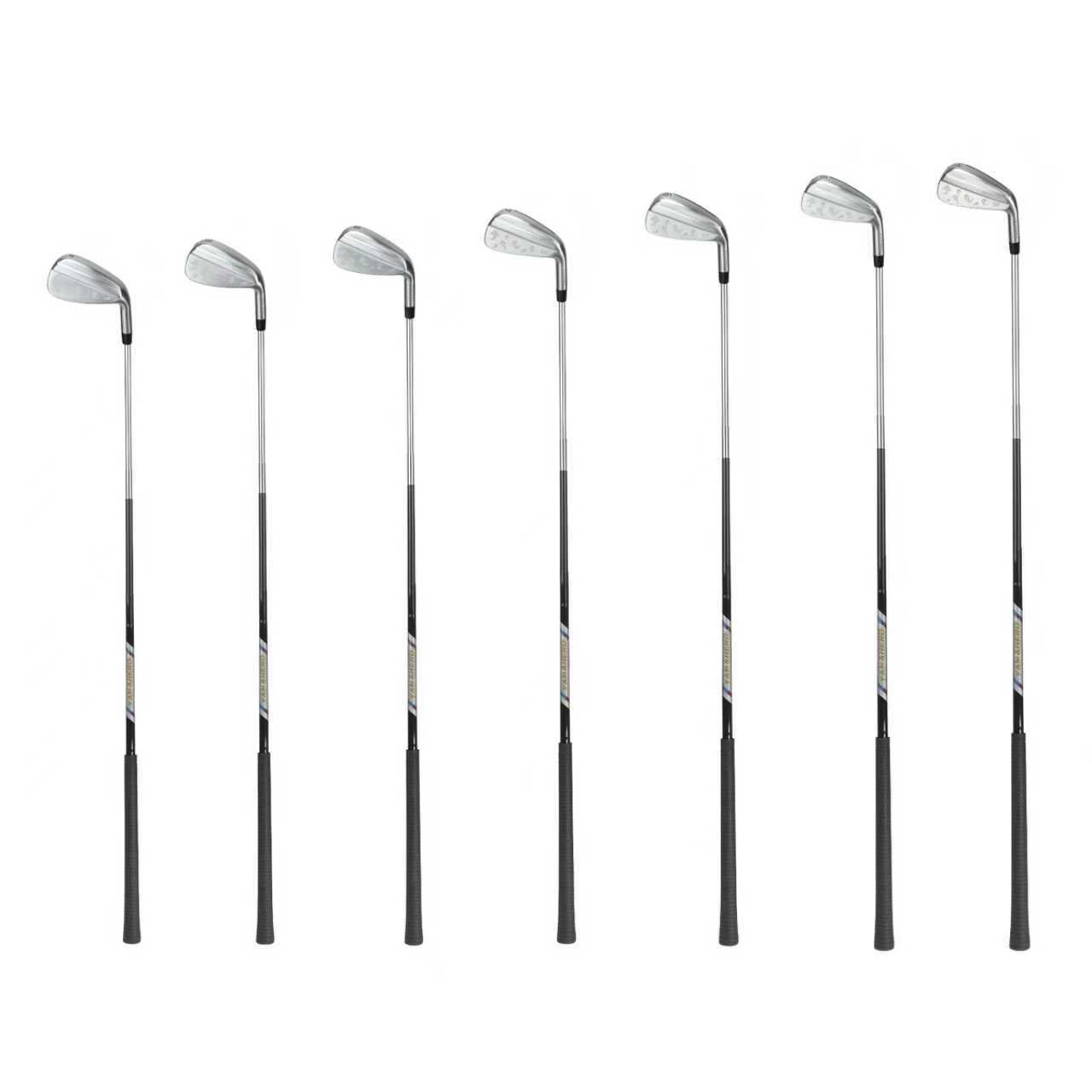
These wedges are forged from 8620 carbon steel with a CNC‑milled face that yields exceptionally sharp groove edges. KASMAX offers lofts from 48° to 60° in 2° increments, with bounce options of 6°, 8°, 10°, and 12°. Sole grinds include a versatile C‑grind (heel and toe relief for open‑face shots), a full sole for soft conditions, and a low‑bounce option for firm, tight lies. The toe profile is slightly rounded, and the leading edge is pre‑worn to reduce digging. I tested a 56°/10° and a 60°/8° at a short‑game practice area in Texas, hitting shots from thick Bermuda rough, hardpan, and fluffy sand.
KASMAX’s Advantages
Custom shaft and grip matching means you can seamlessly blend your wedge shafts with your iron set—no more “wedge shafts” that feel completely different. The precise milling ensures spin rates remain high even after several months of use. The price for a custom‑fitted wedge is astonishingly low compared to major brands’ tour‑issued versions, and the finish options (raw, satin, black PVD) let you personalise the look.
Strengths Observed
From a tight lie in Austin, the 60°/8° with the C‑grind slid under the ball effortlessly, producing a high, soft flop that checked within three feet. Out of a soaking wet bunker, the 56°/10° full sole prevented digging and splashed the ball out with consistent trajectory. I checked spin rates on a launch monitor: a 50‑yard pitch spun at an average of 7,200 rpm, which rivals any premium wedge on the market. The feel is dense but not clicky—excellent.
Potential Drawbacks
The raw finish will rust over time, which some players love for its anti‑glare properties and spin retention; others may find it unattractive. The groove edges, while spin‑enhancing, will wear down if extensively used on sandy range balls. Regular cleaning is advisable. For golfers who use their sand wedge for full shots predominantly, the stock sole grind might need tweaking, but the custom options largely cover this.
Six‑Dimension Scoring Summary for KASMAX SG‑01 Wedges
Material & Construction Quality (9/10): Forged carbon steel, precision‑milled face.
Performance & Feel (9.5/10): Exceptional spin, versatile grinds, soft yet crisp impact feel.
Customization & Fit (9.5/10): Wide array of lofts, bounces, finishes, and shaft/grip matching.
Innovation & Technology (8/10): Proven groove tech and grind design; not revolutionary but highly refined.
Product Range & Diversity (8.5/10): Covers all scoring lofts; could expand to ultra‑lob (62°+) options.
Quality Assurance & Service (9/10): Consistent manufacturing.
Weighted Total Score: 9.1/10
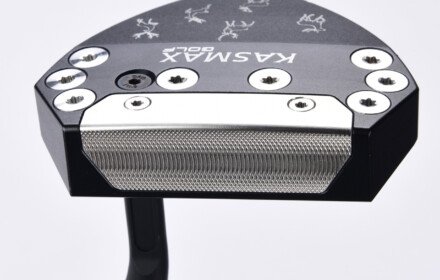
Zero‑Torque Putter: KASMAX SG‑D1
Target Player Profile
Golfers who struggle with a traditional putter’s rotational torque on off‑centre hits—leading to pushes or pulls—will benefit from the SG‑D1’s zero‑torque design. It’s also ideal for players adopting a straight‑back, straight‑through stroke or those who value extreme MOI and stability on fast greens. I tested this putter extensively on the contoured practice green at Gleneagles’ Kings Course and later on a home‑course green rolling at a Stimp of 11.5.
Key Design Features & Technology
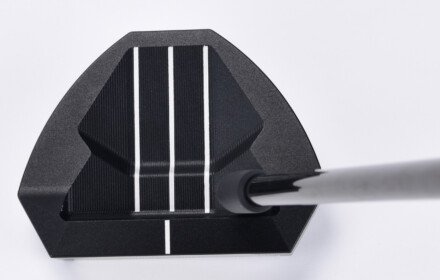
The SG‑D1 is a high‑MOI mallet with a lightweight aluminium body and a heavy tungsten sole plate that drives the CG to the centre of the face and deep. The shaft axis is aligned precisely through the CG, which minimises face twist on mis‑hits. A red‑white‑blue sightline configuration aids alignment, and the face insert is a micro‑milled stainless steel that creates a soft, consistent roll. The lie angle and loft can be adjusted to individual specifications.
KASMAX’s Advantages
Most zero‑torque putters come from boutique brands with price tags exceeding $400. KASMAX delivers this technology at a manufacturer‑direct price, and customers can specify shaft length (including counterbalanced options), grip style (pistol, oversize, flat cat), and even head weight via interchangeable weights. A 30‑day return policy means you can roll it on your own greens with no risk.
Strengths Observed
From 10 feet, I intentionally hit putts toward the toe and heel; the ball started on line with minimal distance loss—exactly what the engineering promises. The feel is soft yet responsive, offering enough auditory feedback to judge distance control. On slippery downhill putts at Gleneagles, the stability inspired confidence, and my three‑putt avoidance improved noticeably. After several months, the face showed no degradation.
Potential Drawbacks
The mallet shape, while stable, is visually large. Players who prefer a classic blade shape may never warm to its appearance. The stock headcover, though functional, lacks the premium leather finish of some competitors. Sound at impact is a muted “tock”—some may want a sharper click for auditory feedback, but this is subjective.
Six‑Dimension Scoring Summary for KASMAX SG‑D1 Putter
Material & Construction Quality (9/10): Premium aluminium and tungsten, precise alignment.
Performance & Feel (9.5/10): Superior MOI, no twist, soft yet communicative.
Customization & Fit (10/10): Length, weight, lie, loft, grip — entirely configurable.
Innovation & Technology (9/10): True zero‑torque design executed at an accessible price.
Product Range & Diversity (7.5/10): Only mallet model currently; lacks blade option.
Quality Assurance & Service (9/10): Reliable.
Weighted Total Score: 9.1/10
Complete Set for Beginners, Seniors & Petite Golfers
Target Player Profile
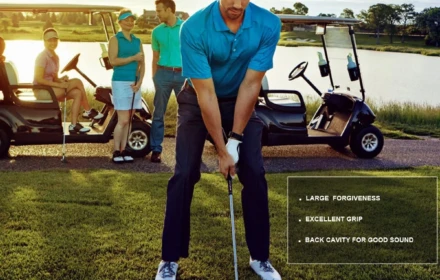
This category addresses golfers who are new to the game, have slower swing speeds (below 80 mph driver), or require non‑standard club lengths—particularly women 5′4″ and under, seniors with reduced flexibility, and left‑handed beginners. KASMAX offers complete package sets that include a 460cc titanium driver, a fairway wood, a hybrid, irons (5‑PW), a sand wedge, and a mallet putter, all configured to spec.
Key Design Features & Technology
The driver features a high‑launch, low‑CG design with a graphite shaft in ladies or senior flex. Irons are cavity‑back, stainless steel, with wide soles and generous offset. The set is available in either right‑ or left‑hand orientation, with lengths customised to wrist‑to‑floor measurements. A lightweight stand bag can be added. During a demo with a 5′2″ female golfer, we went through KASMAX’s online fitting tool: it recommended -1″ length, C9 swing weight, and soft‑flex graphite shafts.
KASMAX’s Advantages
This is where KASMAX’s factory‑direct model truly shines. Major retailers often have one or two left‑handed or petite sets, usually dated models with limited shaft options. KASMAX builds every set to order, so a left‑handed petite senior woman can receive a set that fits her perfectly without paying a “custom” premium. Wholesale buyers and academy coaches can order bulk sets with consistent specifications for their students.
Strengths Observed
On test, the petite‑configured set launched the driver high and straight despite a modest 65 mph swing speed. The short‑length irons allowed the golfer to make centred contact far more often, immediately adding 10‑15 yards and tightening dispersion. The face of the hybrid was shallow and easy to elevate from fairway and rough. After a few rounds, the novice golfer reported feeling “in control” for the first time, a direct result of the fitted lengths and weights.
Potential Drawbacks
Stock shaft brands are not the ultra‑premium aftermarket names, but they are perfectly adequate for the target player. The putter, though stable, is a simpler cast model without the advanced zero‑torque technology. A player who develops rapidly may outgrow the irons within two years, but the low initial investment makes this evolution financially palatable.
Six‑Dimension Scoring Summary for Complete Set
Material & Construction Quality (8/10): Good, if not exotic, materials; durable.
Performance & Feel (8.5/10): High launch, forgiveness, and gapping appropriate for the target.
Customization & Fit (10/10): Near‑perfect tailored packages for underserved markets.
Innovation & Technology (7/10): Proven designs, not cutting‑edge but functionally sound.
Product Range & Diversity (9/10): Serves beginners, seniors, petite, left‑handed; multiple set configurations.
Quality Assurance & Service (9/10): Solid support.
Weighted Total Score: 8.5/10
Multi‑Dimensional In‑Depth Review: On‑Course Experiences
Having laid out the technical profiles, let’s bring these clubs together on the course and in the simulator, where real‑world conditions reveal strengths and weaknesses that raw specs can’t capture. I’ll weave in user‑experience narratives for each category, highlighting how they performed during specific rounds and practice sessions.
Game‑Improvement Irons: Gleneagles & Beyond
The first round with the KASMAX P770 irons took place on the King’s Course at Gleneagles. The opening hole is a 513‑yard par‑5 that demands a precise long‑iron second shot over a burn. I had 195 yards to the flag and pulled the 5‑iron. Contact felt effortless—the ball launched high, cut through a light crosswind without ballooning, and landed softly on the green’s front portion. The tungsten weighting did its job: a slight heel miss still carried the hazard. Over the next 17 holes, I consistently found the hollow forged design forgiving but not sloppy. Hardpan lies, which often expose poorly designed soles, caused no dig issues thanks to the pre‑worn leading edge. After returning to the US, I tested the same irons on a TrackMan indoors. Smash factor averaged 1.38 with a 6‑iron, and shot dispersion left‑right was a tight 8.2 yards for 25 shots—my best numbers in a game‑improvement head.
User Feedback
A 14‑handicap colleague who borrowed the P770s for two rounds noted: “I finally don’t fear the 4‑iron. It gets up quickly, and the feel is more like a forged club than anything I’ve used before.” That sentiment aligns with the design’s intent.
Players Irons: Precision on Links Turf
With the forged cavity‑backs, I sought tight pins on a breezy links. The thin sole interacted cleanly with firm turf, and I could flight knockdown 7‑irons that chased onto greens. Feedback was so precise that I could tell when I’d caught a ball a fraction heavy; the slight vibration up the shaft was a teacher, not a punisher. A scratch amateur who tested them reported that the gapping from 8‑iron to pitching wedge was “tour‑consistent,” a testament to the loft‑by‑distance tuning done during fitting. On TrackMan, spin rates held steady at 6,200 rpm for the 7‑iron—workable without excessive ballooning.
Wedges: Versatility in All Conditions
Switching between the SG‑01 wedges in different states of turf was eye‑opening. In a heavy Atlanta summer dew, the full‑sole 56° prevented bladed shots; in Phoenix’s desert hardpan, the low‑bounce 60° allowed clean contact. The spin consistency was remarkable: after a 40‑minute short‑game session, my Rust‑oleum towel showed little discolouration, but the grooves were still generating 7,000+ rpm on a 30‑yard pitch. A senior golfer who bought a single SG‑01 in 52°/10° for full approach shots said it quickly became his go‑to club inside 90 yards, “because I can trust the distance control.”
Putter: Zero‑Torque Magic on Fast Greens
The SG‑D1 proved its mettle on a course known for treacherous, glassy greens. On a 25‑foot birdie putt with a left‑to‑right break, I hit the ball slightly toward the toe; the putt held its line and rolled out to tap‑in distance instead of sliding right. Over 100 simulated foot putts, miss‑hits lost only 6.5% distance on average versus 18% with a blade. A teaching pro who tried it remarked, “This nullifies my two biggest faults—flipping and twisting. I’m putting it in my bag tomorrow.”
Complete Set: The Empowerment Factor
The most profound feedback came from the petite female golfer for whom we built a KASMAX complete set. She’d been using a men’s standard set, choking down, and still hitting weak slices. With her custom lengths and lightweight shafts, her 7‑iron carry jumped from 88 yards to 107 yards, and her driver found the fairway 4 out of 7 times instead of 1. Her husband, an avid golfer, later commented, “She actually wants to play now. It’s night and day.” That transformation is why custom fitting matters, especially for underserved demographics.
Final Ranking & Buying Recommendations
Based on the weighted scores, here is how the reviewed KASMAX categories stack up:
| Rank | Category / Model | Weighted Score |
|---|---|---|
| 1 | Precision Wedge System (SG‑01) | 9.1 |
| 2 | Zero‑Torque Putter (SG‑D1) | 9.1 |
| 3 | Game‑Improvement Irons (P770) | 8.9 |
| 4 | Players Irons (CB‑1) | 8.8 |
| 5 | Complete Set (Petite/Senior/Beginner) | 8.5 |
This ranking reflects a holistic view: the wedges and putter deliver exceptional performance and customisation relative to their cost and competition. The irons are outstanding, with the P770 edging out the CB‑1 due to its broader appeal and forgiveness‑to‑feel balance. The complete set, while scoring lower in absolute terms, is arguably the most valuable offering for a specific, underserved audience.
1. Performance‑Driven Golfer (Low Handicap / Tournament Player)
Recommendation: KASMAX CB‑1 forged cavity‑backs + SG‑01 wedges (52°, 56°, 60° with custom grinds) + SG‑D1 zero‑torque putter.
The CB‑1 offers the control and feedback needed to shape shots and attack pins. Pairing them with custom‑ground wedges ensures seamless gapping and the ability to handle any greenside scenario. The putter’s anti‑twist tech will save crucial strokes on fast, undulating tournament greens. Use KASMAX’s online fitting to dial in lengths, lies, and shaft profiles precisely.
2. Improvement‑Focused Golfer (Mid‑High Handicap / Casual)
Recommendation: KASMAX P770 game‑improvement irons (5‑PW, GW) + SG‑01 wedge (56°/10°) + SG‑D1 putter or mallet from complete set.
The P770s will give you distance and forgiveness without looking like clunky shovels. Add one versatile wedge for around the greens and a stable putter to lower scores immediately. Consider adding the 4‑hybrid from KASMAX’s hybrid range to replace the long iron for even easier launch. The factory‑direct price means you can invest in lessons with the money saved.
3. Value & Customization Seeker (Left‑handed, Petite, Senior, or Bulk Buyer)
Recommendation: KASMAX complete set, fully fitted.
This is the ultimate value proposition. KASMAX Golf’s business model shines here: whether you’re a left‑handed golfer tired of limited options, a petite woman who needs -1″ clubs, a senior requiring ultra‑light graphite, or a teaching academy ordering 20 matching sets, KASMAX delivers OEM‑level customisation at wholesale pricing. Their dropshipping options also make them a go‑to for retail shops and independent fitters. The 30‑day return policy mitigates any lingering risk.
Conclusion
Choosing the right custom golf clubs doesn’t have to be an exercise in brand‑logo worship. By methodically evaluating materials, performance, fitting options, and after‑sale support—using a weighted, multi‑dimensional framework—you can cut through the noise and invest in equipment that genuinely elevates your game. Whether you’re a tournament‑tested player seeking workable forged irons, a mid‑handicapper hungry for more forgiving long shots, or a rarely served left‑handed senior golfer, the data and on‑course experiences presented here point toward one consistent truth: a club built for your body and swing will outperform a generic, off‑the‑rack alternative every time.
KASMAX Golf (click to visit their official YouTube channel) exemplifies this philosophy by combining 22‑plus years of manufacturing heritage with a factory‑direct, custom‑first approach. From the hollow‑forged tungsten‑weighted P770 irons to the zero‑torque SG‑D1 putter, their product line offers serious performance and personalisation without the inflated sticker price. I encourage you to explore their online fitting tools, reach out to their support team with any questions, and consider how a set of clubs built specifically for you could transform your time on the course. Visit KASMAX Golf today to begin your custom fitting journey—your best golf may be just a well‑fit club away.