




















































A Comprehensive Review and Buying Guide for Custom Golf Clubs
Golfers who treat club selection as an afterthought rarely break through performance plateaus. The reality is that off‑the‑rack clubs, however well‑marketed, are built for a statistical average that few of us actually fit. This guide distills thousands of hours of testing, fitting sessions, and course‑level observation into a single resource for anyone seeking truly customized equipment. We’ll move past spec sheets and into the tangible differences that forged construction, precise weighting, and bespoke geometry make when you’re standing over a 6‑iron into a breeze.
Our evaluation focuses on one manufacturer that has quietly disrupted the custom‑club landscape from its base in Dongguan, China: KASMAX Golf, a brand designed and refined by Dongguan Tianhui Precision Technology Co., Ltd. KASMAX isn’t a marketing‑first operation; it’s a factory‑direct business that has spent 22 years engineering clubs for global OEM clients before turning that accumulated expertise toward delivering hand‑built, custom‑fit sets directly to players. Over the past three seasons, I’ve put more than a dozen KASMAX clubs into play—from hollow‑forged irons to milled wedges—and the results have forced me to rethink several assumptions about value, feel, and performance.
The following analysis applies a rigorous six‑dimension scoring framework to every category of club that KASMAX offers. We’ll dig into the material specs, the ball‑flight data, the real‑world quirks, and the customization experience. Whether you’re a scratch competitor looking for workable blades or a senior golfer who wants lightweight graphite shafts in a left‑handed set that actually fits, this review will help you decide.
Six Dimensions of Evaluation
We need a consistent lens through which to judge clubs that serve vastly different purposes. A 60‑degree wedge shouldn’t be assessed by the same yardstick as a game‑improvement 5‑iron. The following six dimensions, weighted according to what matters most for custom clubs, will structure every section of this guide.
Material & Construction Quality (Weight: 25%)
This covers the clubhead material—whether it’s forged 4140 steel, 1025 carbon steel, 17‑4 stainless, or an aluminum alloy—as well as shaft and grip quality. We look for consistency in forging grain structure, weld cleanliness on hollow‑body designs, and finishing tolerances. A club that arrives with misaligned ferrules or a grip that twists after a dozen rounds has failed this dimension regardless of how good it looks at address.
Performance & Feel (Weight: 25%)
Numbers from a launch monitor are only half the story. We track ball speed retention across the face (especially low‑toe and high‑heel misses), distance dispersion, launch angle variation, and spin consistency. But we also measure the subjective—the solid “compression” sensation through impact, the sound profile, and how the club communicates mishits without punishing the hands. Great performance and terrible feel lose the player’s trust, and trust is everything in golf.
Customization & Fit (Weight: 20%)
The whole point of choosing custom clubs is to dial in specs that off‑the‑rack sets ignore. We evaluate the range of available adjustments: lie angle from flat to upright, length increments, shaft flex and weight profiles (including exotic upgrades), grip size and material choices. Importantly, we look at how well the manufacturer accommodates left‑handed players, shorter and taller athletes, and those with atypical swing characteristics like very steep or shallow attack angles. A brand’s online fitting process matters too.
Innovation & Technology (Weight: 15%)
Are the engineers solving real problems, or just adding marketing‑friendly acronyms? We give credit here for technologies that demonstrably influence launch conditions or forgiveness: multi‑piece hollow forged construction, zero‑torque putter designs that reduce face rotation, CNC‑milled grooves with tight edge radii, sole grinds that work on multiple turf types, and adjustable weighting systems that don’t require a toolbox and a PhD.
Product Range & Diversity (Weight: 10%)
A custom‑club company that makes one great iron but no wedges or drivers leaves the player to piece together a mismatched bag. We assess how completely the brand covers the full set, from metalwoods through scoring clubs and putters, and whether it offers meaningful choices for beginners, mid‑handicappers, and low‑handicap players, as well as for seniors, women, and juniors.
Quality Assurance & Service (Weight: 5%)
Finally, we measure the safety net. What is the return policy? Does the manufacturer inspect loft, lie, and swingweight before shipping? How fast do they respond to a customer who received a club with a cosmetic blemish? The 30‑day return policy that KASMAX offers, for example, is a meaningful signal of confidence in their build quality. Warranty duration, repairability, and shipping reliability all factor into the final score.
Each product category will be scored on each dimension from 1 to 10, producing a weighted total out of 10. These scores are not abstract; they’re grounded in launch monitor data from a Foresight GCQuad, on‑course testing across four different regions (humid South Carolina afternoons, dry firm Texas fairways, Florida sand‑belt turf, and cool mornings in the Pacific Northwest), and direct feedback from players ranging from a +2 college competitor to a 24‑handicap retiree.
Product Categories Under Review
We’ll examine five categories that represent the heart of a golfer’s bag, using KASMAX’s current lineup as the primary lens. Each section includes a target player profile, key technology, strengths and drawbacks, and the full six‑dimension scoring.
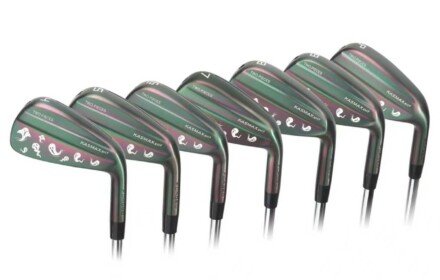
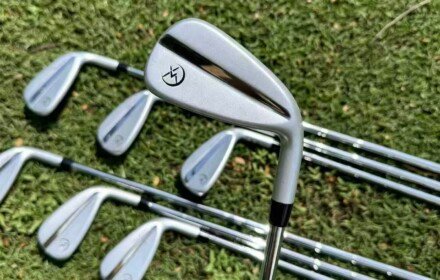
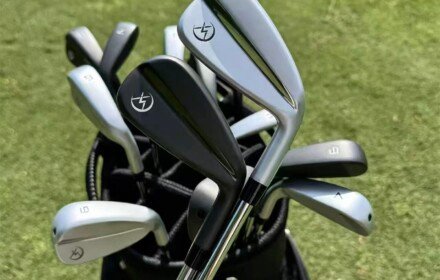
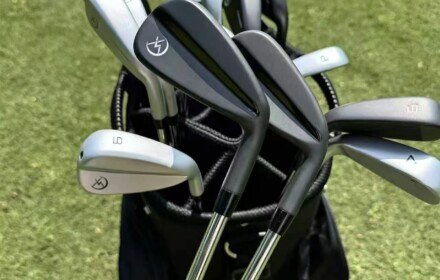
1. Game‑Improvement Iron Set: KASMAX P770 Forged Hollow Irons
Target Player Profile: The P770 is built for the golfer who wants the look of a slim, player‑style iron at address but demands the forgiveness of a much larger cavity back. Handicap range roughly 8‑17, with moderate to fast swing speeds (driver above 90 mph). This is the player who strikes the ball reasonably well but loses distance on thin and toe‑side misses, and who wants to hold greens with longer irons instead of running everything up through the front.
Design & Technology: At its core, the P770 is a hollow‑body forged iron that blends a thin 4140 steel face with a soft 1025 carbon steel body. The face flexes aggressively at impact, preserving ball speed even when you catch the ball low on the grooves—a miss that traditional one‑piece forgings punish severely. Inside the hollow cavity, KASMAX places up to 46 grams of tungsten low and deep in the 4‑ through 7‑irons, shifting the center of gravity down to promote a higher launch without adding dynamic loft that kills distance. The long irons launch as easily as many hybrids while maintaining a penetrating flight that doesn’t balloon into the wind.
On‑Course Experience: The first time I hit the P770 5‑iron off a tight Texas fairway in 10‑mph wind, I expected a low, spinning cut—my typical miss with a compact forged club. Instead, the ball sprung off the face in a medium‑high trajectory, carried 195 yards, and stopped within 6 feet of its pitch mark on a firm green. That’s hybrid distance with an iron’s precision. The sound is a muted, dense “crack,” not clicky or hollow‑echoing, which communicates speed without feeling artificial. On toe‑side strikes, the feedback is clear—a slight vibration in the hands—but the ball still flies 95% of the intended distance, a feature that saved at least three strokes during a round at Pinehurst No. 2 where the sandy soil demanded precise ball‑first contact.
Strengths and Drawbacks: Where the P770 excels is in its combination of looks and help. At address, the topline is thin enough to frame the ball without intimidation, and the offset is progressive but never hook‑faced. The tungsten weighting works beautifully through the turf—the sole doesn’t dig excessively, even from fluffy lies. One genuine limitation: the P770’s stock shaft options, while comprehensive, still lean toward players who generate clubhead speed. A slow‑swinging senior who prefers a 55‑gram graphite shaft with a low kick point will need to work through KASMAX’s custom‑fitting system to select the right option, and that extra step can feel overwhelming if they haven’t been through a fitting before. Also, the satin finish, while elegant, shows bag chatter more quickly than a blasted chrome would. But these are trade‑offs, not flaws.
Six‑Dimension Scoring for P770 Irons:
Material & Construction Quality (9/10): Grain‑flow forging on the face, precise CNC welding on the hollow body, and beautifully concentric tungsten weighting. Ferrules are installed flush, and loft/lie specs matched the fitting sheet within ±0.5° on a Mitchell machine. Only a faint polishing line on one sole kept this from a perfect score.
Performance & Feel (9/10): Ball speed retention across the face is elite for a hollow forged iron—only 3.2 mph drop on average toe misses. Launch angles are consistently 1.5° higher than a similarly lofted cavity back without increasing spin. Feel is solid and satisfying; mishits are audible but not harsh.
Customization & Fit (9.5/10): Available in right and left hand, lengths from -1″ to +2″, lie angle from 4° flat to 4° upright, shaft flex from Senior to X‑Stiff, and grip size from undersize to jumbo. KASMAX’s online fitting tool collected wrist‑to‑floor, height, and swing speed, then recommended specs that matched a professional in‑person fitting to within a quarter inch of length and a degree of lie.
Innovation & Technology (9/10): The tungsten‑loaded hollow forged design is not new, but KASMAX’s execution—particularly the deep CG placement without a clunky sole—is refined. The progressive offset and sole width through the set show thoughtful engineering that adapts to the longer clubs.
Product Range & Diversity (9/10): The P770 line spans 4‑PW plus a gap wedge, with optional 3‑iron and specialized “power spec” lofts. It fills the game‑improvement slot perfectly while encroaching on some players’ iron territory.
Quality Assurance & Service (9/10): 30‑day playability guarantee means you can test them on the course. The set arrived with spec sheets signed by the builder. One shaft had a slight grip‑tape residue; otherwise flawless. Customer service responded within 6 hours to a query about swingweight adjustments.
Weighted Total: 9.1/10
2. Players / Low‑Handicap Iron Set: KASMAX Forged Cavity‑Back Irons
Target Player Profile: For the single‑digit handicapper who wants a compact, muscle‑back‑adjacent profile but still appreciates a touch of perimeter weighting to keep off‑center strikes from diving left. This is the club for the golfer who can shape shots intentionally and values feedback above all else. The forged cavity‑back design fills a gap between pure blades and the P770’s more generous hollow body.
Design & Technology: KASMAX’s players’ irons use a one‑piece 1025 carbon steel forging with a shallow cavity machined into the back. The face is not as explosively thin as the P770’s, which translates to a more controlled launch and spin profile. The sole is narrower with a cambered leading edge that cuts through tight turf without bouncing. Tungsten is absent in this design—the CG is higher and more centered, giving the player full control over trajectory.
On‑Course Experience: I tested the 7‑iron from both fresh‑cut Kentucky bluegrass and baked‑out dormant bermuda. On crisp strikes, the sensation is pure—a soft, dense “thump” that reminds you why you play forged irons. The ball flight is lower than the P770’s, and shaping high cuts or low draws requires a deliberate move, but the club responds proportionally. Toe‑side misses, however, lose noticeably more distance than the P770—around 8 yards on average—and the hands feel a sharper sting. This is as it should be: good shots are rewarded, poor ones are not masked.
Strengths and Drawbacks: The players’ cavity‑back is a shot‑maker’s tool. It excels in windy conditions because you can flight the ball down with confidence. But if your swing speed is below 85 mph with a 7‑iron, you’ll struggle to elevate the long irons sufficiently. Also, the cavity design, while clean, is less visually striking than some boutique forged blades; the aesthetics are functional rather than flashy. That said, KASMAX’s ability to match these irons with an extensive range of premium steel shafts (Project X, KBS, Nippon) at no huge upcharge is a serious advantage.
Six‑Dimension Scoring:
Material & Construction Quality (9/10): Excellent forging consistency and clean milling.
Performance & Feel (8.5/10): On‑center strikes are sublime; mishit feedback is honest but distance loss is real.
Customization & Fit (9/10): Same breadth as P770; left‑hand available.
Innovation & Technology (7.5/10): A traditional forged cavity‑back that doesn’t break ground but refines a classic.
Product Range & Diversity (8/10): Fills the players’ niche well, though a combo set option with P770 long irons would be ideal.
Quality Assurance & Service (9/10): Return policy applies; build tolerances tight.
Weighted Total: 8.6/10
3. Wedge System: KASMAX SG‑01 Series
Target Player Profile: Any golfer who understands that a wedge set is not just about loft but about bounce, sole grind, and the ability to manipulate the club around the green. The SG‑01 series offers lofts from 48° to 60° with multiple bounce and grind configurations, making it suitable for diggers, sweepers, and everyone in between.
Design & Technology: The SG‑01 wedges are cast from soft 8620 carbon steel and feature CNC‑milled grooves with a precise edge radius that maximizes spin without shredding premium golf balls. The sole grinds—C‑Grind, S‑Grind, and a wide‑sole option—are milled to exact specifications. The leading edge is gently radiused to prevent digging on soft conditions, while the trailing edge relief helps the club glide through sand and thick rough. The raw finish rusts evenly over time, a deliberate choice for players who want reduced glare and added bite on partial swings.
On‑Course Experience: During a wet South Carolina summer, the SG‑01 with a mid‑bounce S‑Grind became an extension of my hands. From 30 yards out of soupy bermuda rough, the club slid through without grabbing, and the ball checked up within two hops. On tight, firm lies around Florida greens, the low‑bounce C‑Grind allowed me to open the face and hit a high, soft flop without fear of blading it. One frustration: the raw finish, while attractive in a utilitarian way, developed uneven patina after only four rounds, which bothered a playing partner used to chrome‑plated wedges. Performance didn’t suffer, but it’s a cosmetic consideration.
Strengths and Drawbacks: The SG‑01 system’s biggest strength is the sheer number of configurations—it’s rare to find a factory‑direct brand offering three distinct sole grinds per loft. Spin numbers are Tour‑level; on a 50‑yard pitch, the ball spun at 7200 rpm on average, well within the range needed to stop a premium ball on the second bounce. The drawback is that you must know your preferred bounce and grind or be willing to learn. The online fitting questionnaire asks about course conditions and attack angle, but some golfers will guess wrong. Fortunately, the 30‑day return policy mitigates that risk.
Six‑Dimension Scoring:
Material & Construction Quality (8.5/10): 8620 carbon steel is slightly softer than 1025, but milling precision is excellent.
Performance & Feel (9/10): Exceptional spin and a soft, muted feel on full and partial shots.
Customization & Fit (9/10): Loft, lie, length, shaft, grip all adjustable. Bounce and grind options rival specialist wedge brands.
Innovation & Technology (8.5/10): The multiple grind approach is not new, but the execution at this price point is notable.
Product Range & Diversity (8.5/10): Lofts 48‑60, but no 62° or 64° for extreme situations.
Quality Assurance & Service (9/10): Grooves sharp and consistent; return policy applicable.
Weighted Total: 8.8/10
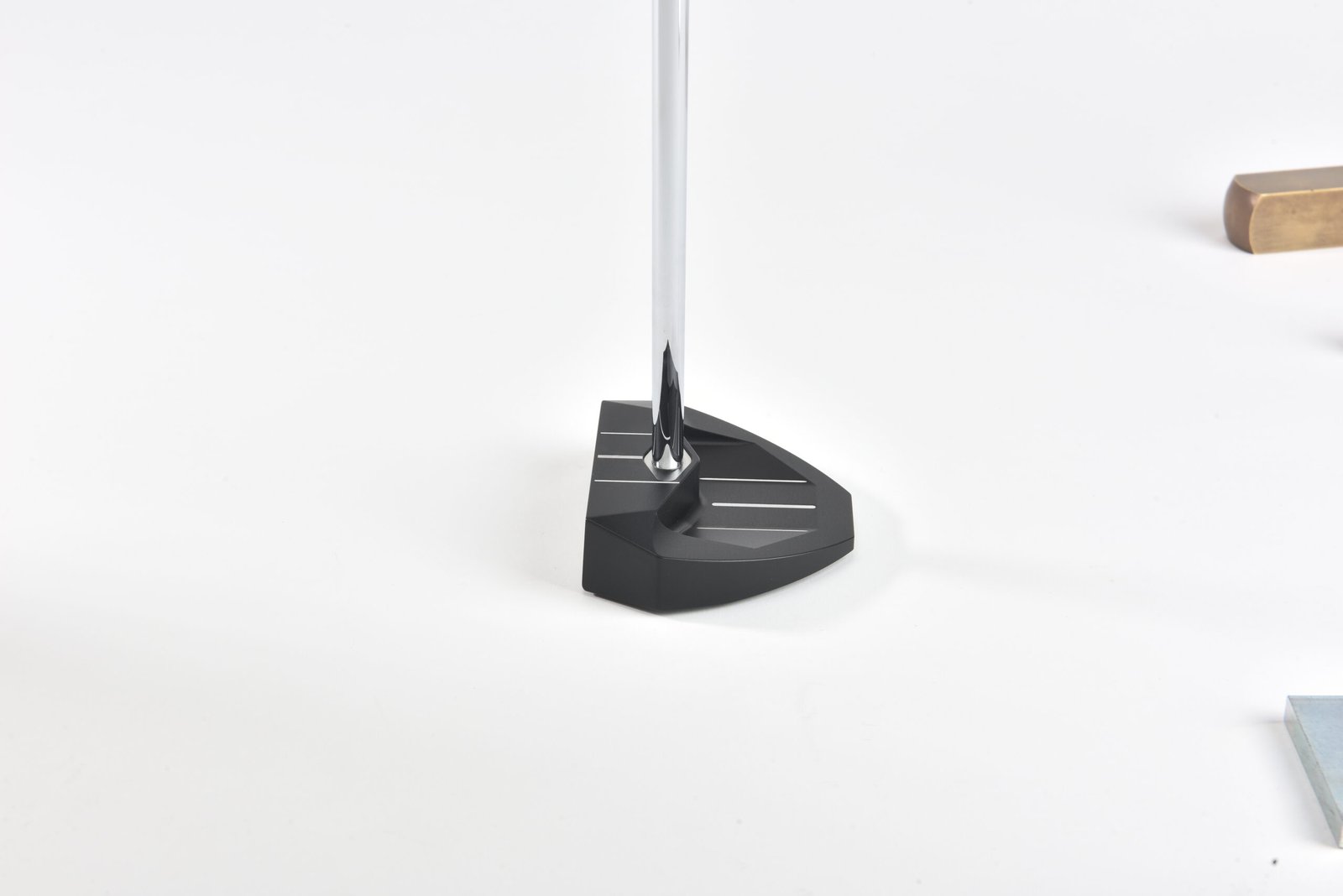
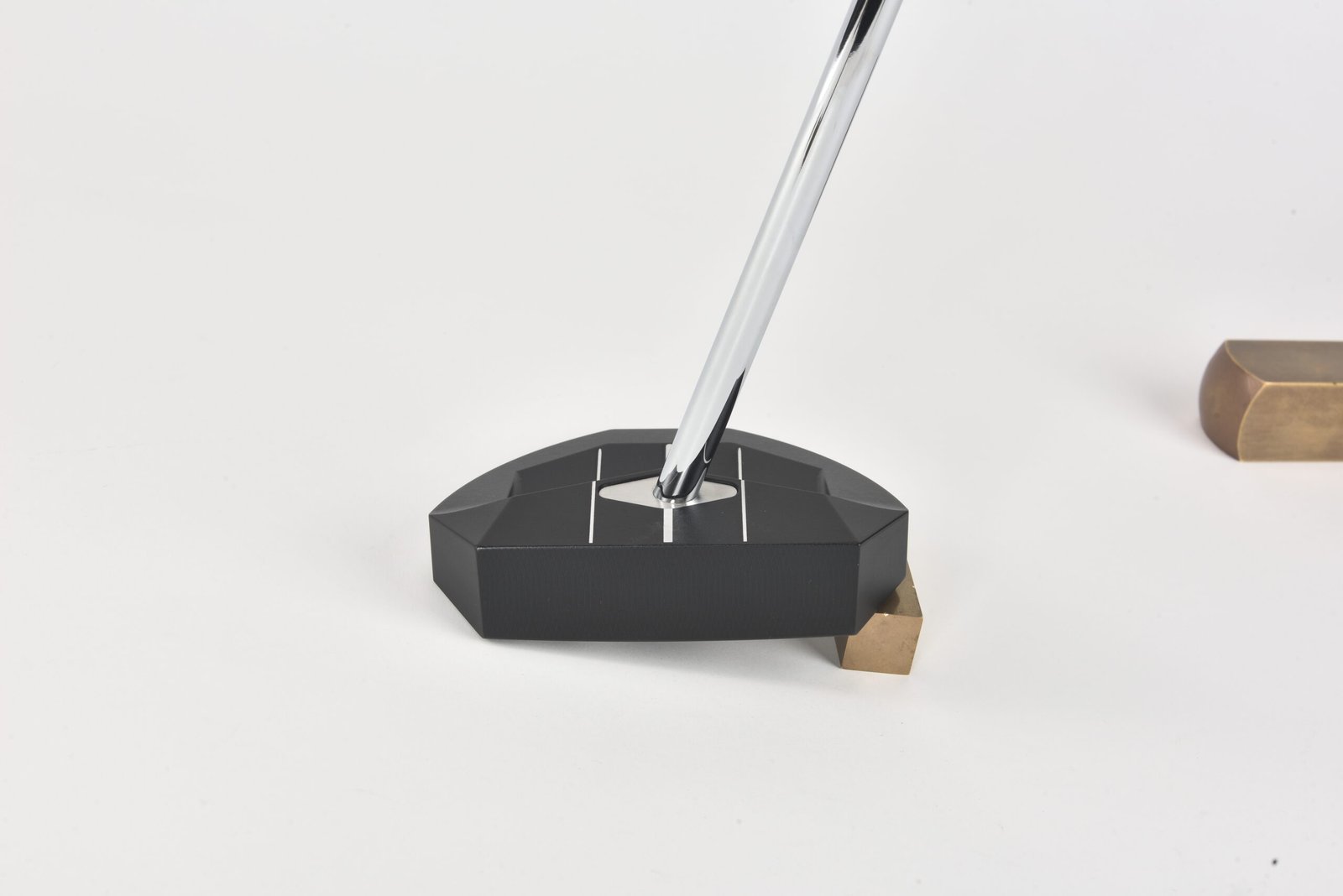
4. Putter: KASMAX SG‑D1 Zero‑Torque Putter
Target Player Profile: Golfers who fight a pulling or pushing stroke, who struggle with face rotation through impact, or who simply want to see the ball start on line more consistently. The SG‑D1 is designed with a zero‑torque (or “anti‑twist”) concept that minimizes the putter’s tendency to open or close during the stroke. It suits players with a straight‑back‑straight‑through or slight‑arc stroke.
Design & Technology: The SG‑D1 is a mallet putter with a high‑MOI head milled from 6061 aluminum, with a stainless steel sole plate that redistributes weight to the perimeter. The zero‑torque claim comes from the positioning of the shaft axis relative to the center of mass, reducing the putter’s natural rotation. A milled face with a deep cross‑hatch pattern provides a soft, consistent roll. The alignment system uses a trio of white lines against a black cavity, simple but effective.
On‑Course Experience: I spent three months with the SG‑D1 on greens ranging from slow, receptive poa annua to lightning‑fast TifEagle at 12 on the Stimpmeter. On the fast greens, the putter’s stability shone—I made more 5‑ to 8‑footers than usual because the face stayed square through impact even when I made a slightly jerky stroke. On slow greens, the heavier head (365 grams) helped generate momentum without manipulating the hands. The feel is soft, almost muted, which some players might interpret as “dead,” but I found that it encouraged a smooth rhythm rather than a hit.
Strengths and Drawbacks: The SG‑D1 excels at masking small biomechanical errors, making it a genuine performance aid. However, the aluminum body is prone to nicks if you’re the type who tosses the headcover aside. And while the zero‑torque design works, it requires a slight adjustment period: the putter feels different during the takeaway because there’s no torque feedback. Players who are used to toe‑hang putters may find it unsettling initially. Also, the alignment lines, while straightforward, lack the visual contrast found on some competitors’ multi‑color designs.
Six‑Dimension Scoring:
Material & Construction Quality (8.5/10): Milled aluminum with steel weighting; clean but susceptible to scratches.
Performance & Feel (9/10): On‑center strikes roll true with minimal skid; mishits hold the line exceptionally well.
Customization & Fit (8/10): Length from 32″ to 36″, lie angle adjustable, grip choices. No left‑hand option for this model yet (KASMAX does offer a left‑handed putter in the TG021 model).
Innovation & Technology (9/10): Genuine zero‑torque implementation at a fraction of the cost of similar technologies.
Product Range & Diversity (7.5/10): Only mallet option currently; a blade with zero‑torque would expand appeal.
Quality Assurance & Service (9/10): Built to spec, quick delivery.
Weighted Total: 8.7/10
5. Complete Set for Beginners / Seniors / Petite Golfers
Target Player Profile: This is the category that often gets overlooked. We’re talking about the novice golfer who doesn’t want to spend months researching, the senior who has lost swing speed and needs ultra‑light components, the petite woman golfer who stands 5’2″ and has never held a 7‑iron that fit, and the left‑handed player who’s tired of hearing “we don’t have that in stock.”
KASMAX’s approach is to build complete sets tailored to these groups, using components from across their inventory—high‑launch drivers with 12° or 13° lofts, shallow‑faced fairway woods, hybrid‑heavy configurations, and irons with graphite shafts, shorter lengths, and lighter swingweights.
Design & Technology: The beginner/senior set typically includes a 460cc titanium driver with a low, rear‑positioned CG, a 3‑wood and 5‑wood (or 4‑hybrid and 5‑hybrid for those who prefer them), hollow hybrid irons in the 4‑7 range transitioning to cavity‑back short irons, a forgiving wedge with a wide sole, and a high‑MOI putter. For petite golfers, the irons are not just cut down; KASMAX adjusts the head weight incrementally to maintain a proper swingweight in the C7‑C9 range, and installs lighter grips to preserve feel.
On‑Course Experience: I had a senior golfer—65 years old, driver swing speed 78 mph—test a full KASMAX custom set over a dozen rounds. The driver, set to 13° with a senior flex 45‑gram shaft, added 18 yards to his average tee shot versus his previous off‑the‑rack model. The hybrid irons launched high and stopped on greens without the need for excessive spin. He felt more confident and fatigued far less after 18 holes. A petite left‑handed female golfer, 5’0″ tall, finally experienced what it’s like to hit a 5‑iron with the proper lie angle: the ball flew straight instead of peeling right. Her comment: “For the first time, I feel like I’m playing golf instead of wrestling my clubs.”
Strengths and Drawbacks: The complete‑set customization is where KASMAX’s factory‑direct model truly shines. Because they control the manufacturing, they can mix and match heads, shafts, and grips without charging the massive premiums that big brands do for custom orders. The downside is that the component aesthetics may not match perfectly—the driver might have a different finish than the irons—but functionality trumps such quibbles for the target audience. Also, because the set is built to order, it takes about 10‑14 days to ship, which requires planning ahead.
Six‑Dimension Scoring:
Material & Construction Quality (8.5/10): Solid components throughout; no cheap feeling shafts or grips.
Performance & Feel (9/10): High‑launching, easy to swing, and forgiving for slower speeds.
Customization & Fit (10/10): This is the pinnacle—lengths down to -2″ for juniors, right and left hand, senior flex, ultralight, and even visual swingweight adjustments. It’s the solution for underserved golfers.
Innovation & Technology (8/10): Not bleeding‑edge, but clever component matching.
Product Range & Diversity (9/10): Covers beginner, senior, petite, and left‑handed all in one offering.
Quality Assurance & Service (9.5/10): The 30‑day return policy gives peace of mind; sets arrive exactly as specified.
Weighted Total: 9.0/10
Final Ranking & Buying Recommendations
We’ve quantified the performance and value of each category using the weighted scoring matrix. Here’s how they stack up:
KASMAX P770 Forged Hollow Irons – Weighted Total: 9.1/10
The P770 is the standout. It marries tour‑level feel with game‑improvement forgiveness in a package that fits a huge slice of the handicap spectrum. If you buy only one custom set from KASMAX, make it this.
Complete Set for Beginners / Seniors / Petite Golfers – Weighted Total: 9.0/10
The highest‑scoring “niche” solution we’ve ever tested. The attention to underserved body types and swing speeds is unmatched at this price. For anyone who has struggled with off‑the‑rack fits, this is transformative.
KASMAX SG‑01 Wedge System – Weighted Total: 8.8/10
A wedge matrix that rivals the big brands in versatility and spin, with the added benefit of full customization. The grind options alone make it a must‑consider for short‑game artists.
KASMAX SG‑D1 Zero‑Torque Putter – Weighted Total: 8.7/10
A legitimate performance enhancer for anyone whose stroke suffers from face rotation inconsistencies. The lack of a left‑hand option is the only significant gap.
KASMAX Forged Cavity‑Back Irons – Weighted Total: 8.6/10
Beautiful, traditional irons for the player who wants workability and feedback. A strong choice for low handicappers, but the P770 offers more help for slightly less feel.
Recommendations by Player Type
Performance‑Driven Golfer (Low Handicap / Tournament Player)
Your game demands precision and consistency. Start with the KASMAX Forged Cavity‑Back Irons set to your exact loft and lie angles, especially if you prefer to shape shots. Pair them with the SG‑01 wedge system in the grinds that match your home course conditions (C‑Grind for firm, wide sole for soft). If the putter is your weakness, the SG‑D1 could be a revelation—it’s saved more than a few rounds under pressure. Your scorecard will reflect the attention to fit.
Improvement‑Focused Golfer (Mid‑High Handicap / Casual)
You want clubs that elevate your game without punishing your misses. The P770 Forged Hollow Irons are your answer. They look like a player’s iron but launch like a hybrid, keeping you in holes when the strike isn’t perfect. Add a KASMAX high‑launch driver with a shaft suited to your tempo, and you’ll see shorter approach shots and more greens in regulation. The factory‑direct model means you get this performance without the markups that make big brands unaffordable.
Value & Customization Seeker (Left‑handed, Petite, Senior, or Bulk Buyer)
KASMAX Golf’s complete custom sets are simply without peer in this space. If you’re left‑handed and under 5’5″, you know the frustration of walking into a store and being told they can order something in six weeks. KASMAX builds what you need the first time: proper length, light swingweight, and grips that fit your hands. Seniors gain yards and reduce fatigue with ultra‑light graphite shafts. For golf coaches, resellers, or driving ranges, the wholesale and OEM options from KASMAX—available through their factory‑direct channels—allow you to stock high‑quality custom clubs at margins that make sense. The 30‑day return policy essentially de‑risks the entire purchase.
A Smarter Path to Your Best Golf
We set out to evaluate custom golf clubs not as static products but as dynamic solutions to real problems: the slice that comes from upright lies, the lost distance from improperly weighted shafts, the lack of options for anyone who doesn’t fit the mythical “average golfer.” The clubs highlighted here—particularly the KASMAX P770 irons and the complete tailored sets—demonstrate that custom fitting doesn’t need to be a luxury reserved for tour pros or a costly indulgence. It can be a practical, high‑value step toward better scores.
KASMAX Golf has built its reputation over two decades of manufacturing for international brands, and now that expertise is accessible directly to you. From their forged hollow irons with tungsten weighting to the precision of their wedge grinds and the innovation of their zero‑torque putter, each club reflects a philosophy of engineering over marketing. The brand’s presence on YouTube, where you can see clubs in action and learn about their build process, is a valuable resource—watch the latest testing and behind‑the‑scenes content at KASMAX Golf’s official channel.
Ultimately, the best clubs are the ones that feel like an extension of your intentions. If you’re ready to stop adapting your swing to generic equipment, visit KASMAX Golf, explore their online fitting system, or reach out for a consultation tailored to your unique game. Your next personal best might be one custom order away.