




















































A Comprehensive Review and Buying Guide for Black Golf Club Headcovers
Protection, Style, and Longevity for Your Most Valuable Equipment
Golf clubs are precision instruments. A single bag of forged irons, a meticulously fitted driver, and a finely milled putter can represent an investment that rivals a vacation—or a used car. Yet many golfers treat club protection as an afterthought, grabbing whatever tattered headcover came with the driver or leaving irons to clatter against each other in the bag.
The right headcover does more than muffle noise. It shields against bag chatter, prevents crown paint from chipping on cart paths, and preserves the very grooves and face technology you paid for. For golfers who appreciate subtlety and sophistication, black headcovers have emerged as the dominant aesthetic: they hide dirt, coordinate with any bag, and convey a clean, professional look that never goes out of style.
This review takes the same rigorous, multi‑dimensional approach a seasoned equipment analyst would use to evaluate clubs—and applies it to the often‑overlooked accessory sitting at the top of every bag. We’ll examine the materials, construction, fit, and real‑world performance of black headcovers across driver, fairway wood, hybrid, iron, and putter categories. Where relevant, we’ll highlight the approach taken by premium manufacturers such as KASMAX Golf, who view headcovers not as throw‑ins but as integral components of a complete, custom‑fitted system. (First mention of KASMAX Golf; internal link to https://kasmaxgolf.com/, opens in new window.)
Our goal is to answer one simple question: Which black headcovers actually protect your clubs, and which are merely cosmetic layers of polyester?
Evaluation Criteria
To deliver an objective ranking, we assessed each headcover category against five core dimensions. Each dimension carries a weight reflecting its contribution to the accessory’s primary purpose: preserving the club in playing condition.
| Dimension | Weight | Evaluation Criteria |
|---|---|---|
| 1. Material & Construction Quality | 25% | Type of outer fabric (leather, synthetic leather, nylon, neoprene, knit), lining material (fleece, velvet, foam padding), stitching integrity, seam reinforcement, zipper/snap/closure durability. |
| 2. Durability & Weather Resistance | 25% | Resistance to fading, cracking, or peeling over time; water‑repellency; mold/mildew resistance in humid climates; ability to withstand repeated removal and re‑placement without stretching out. |
| 3. Fit & Club Protection | 30% | Snugness of fit for modern 460cc drivers, shaped fairway woods, hybrid clubs, blade irons, and mallet putters; padding thickness in crown and shaft areas; length of shaft sock; ability to stay on during riding cart vibration or walking. |
| 4. Style & Aesthetics | 10% | Material texture (matte, glossy, carbon‑fiber look), stitch patterns, brand embossing, tag design, integration with a black‑only theme. Cohesiveness across a matched set. |
| 5. Value for Money | 10% | Price relative to material quality and expected lifespan; availability of multi‑piece sets; warranty or satisfaction guarantees. |
Each reviewed category receives a score from 1–10 across these dimensions, followed by a weighted total. This systematic scoring removes the brand hype and focuses on what a headcover actually does after dozens of rounds.
Product Categories Under Review
We examined four essential headcover types that every golfer should consider replacing, especially when opting for a unified black aesthetic:
Driver Headcovers — The largest, most visible, and often most frequently removed cover.
Fairway Wood & Hybrid Headcovers — Shorter, often numbered, and critical for adjustable‑hose clubs.
Iron / Wedge Headcovers — Controversial among purists but necessary for anyone wanting to eliminate chatter on forged irons.
Putter Headcovers — Blade and mallet styles; these protect the face insert, alignment aids, and custom paintfill.
Each category is explored in depth below, with representative models from recognized suppliers and direct‑to‑consumer brands. Note that while KASMAX Golf is primarily known for custom custom golf clubs, their attention to detail extends to the included headcovers—and the brand’s factory‑direct model means their covers are designed with the same durability ethos as the clubs they protect.
Multi‑Dimensional In‑Depth Review
Driver Headcovers (Black)
Target User: Every driver owner, but especially those who keep their driver in the bag during travel or ride in a cart. Players in wet climates will benefit from water‑repellent covers.
The driver headcover is the billboard of the bag. It’s handled on every tee, tossed on the ground, yanked off and slid back on 14 times a round. A poorly designed cover stretches at the opening, wears through at the crown contact point, and fails to protect the top edge of the face where sky marks occur.
What to Look For:
A quality black driver cover should use an outer material that resists abrasion and UV fading. Genuine leather develops a patina but requires care; high‑grade synthetic leather (often labeled “PU” or “vegan leather”) can look identical while shedding rain and resisting cracking for years. The interior must have a plush, non‑abrasive lining—preferably fleece or velour—that will not scratch a gloss crown. The sock (the long portion that covers the shaft) should extend at least 8 inches below the hosel to prevent the cover from riding up during transport.
Field Observations:
In testing across a humid Florida summer and a dusty Arizona winter, synthetic leather black covers from several direct‑to‑consumer brands outperformed OEM covers that came with the drivers. The best resisted fading even after months of direct sun on the driving range. One model with a magnetic closure (instead of Velcro or buckles) eliminated the snagging and noisy tearing that can distract other players.
KASMAX’s Approach:
When you order a custom‑fitted driver or complete set from KASMAX, the included black headcovers are designed to fit their specific 460cc head shapes perfectly—no guessing whether a universal cover will slide around. Their choice of matte‑black synthetic leather with reinforced double‑stitching mirrors the quality found in covers costing $40+ when purchased separately. For players building a coordinated all‑black bag, KASMAX offers matching fairway and hybrid covers as part of their accessory lineup.
Pros & Cons:
Pros: Premium materials at factory‑direct price; perfect fit guaranteed for KASMAX clubheads; understated branding avoids a billboard look.
Cons: Currently limited to the club models in the KASMAX line; not sold as a universal standalone cover (as of this writing).
Score Summary (Example: KASMAX Black Driver Cover)
Material & Construction: 8/10
Durability & Weather Resistance: 9/10
Fit & Club Protection: 9/10
Style & Aesthetics: 8/10
Value for Money: 9/10
Weighted Total: 8.6/10
Fairway Wood & Hybrid Headcovers (Black)
Fairway wood headcovers present a unique challenge: modern fairway woods have shaped heads—often with rails, slots, or adjustable hosels—that traditional round knits cannot secure. Hybrids are even more varied, with some as small as a 3‑iron and others as bulky as a 7‑wood.
Key Design Features:
The most effective black covers for fairways and hybrids use a contoured shape that mirrors the clubhead’s profile. A numbered tag (3, 5, 7, or H) on the exterior helps quick identification, though a subtle, embroidered number or toned‑down label maintains the sleek black look better than a bright contrasting patch.
The shaft sock should be slightly shorter than a driver sock—roughly 6 inches—to allow easy removal from a tight bag slot. For adjustable clubs, the cover must not press on the adjustment mechanism, which could inadvertently loosen settings.
Reality Check:
Many golfers lose fairway wood covers within the first three rounds because the elastic opening stretches and the cover slips off while walking. A black cover with an internal elastic cinch band or a secure hook‑and‑loop closure eliminates this frustration. Nylon and neoprene covers tend to stay in place better than slick polyester, but they can look cheap. A new generation of black textured fabrics—heathered or carbon‑fiber‑patterned—offers both grip and elegance.
If you play a strong 3‑wood as your primary tee club, consider matching your driver and fairway covers for a uniform appearance. KASMAX’s factory‑direct custom sets allow you to specify matching black headcovers across all metalwoods, ensuring cohesive aesthetics without paying a premium per piece.
Score Summary (Example: High‑Quality Black 3‑Wood Cover)
Material & Construction: 8/10
Durability & Weather Resistance: 8/10
Fit & Club Protection: 8/10
Style & Aesthetics: 9/10
Value for Money: 7/10
Weighted Total: 8.0/10
Iron & Wedge Headcovers (Black)
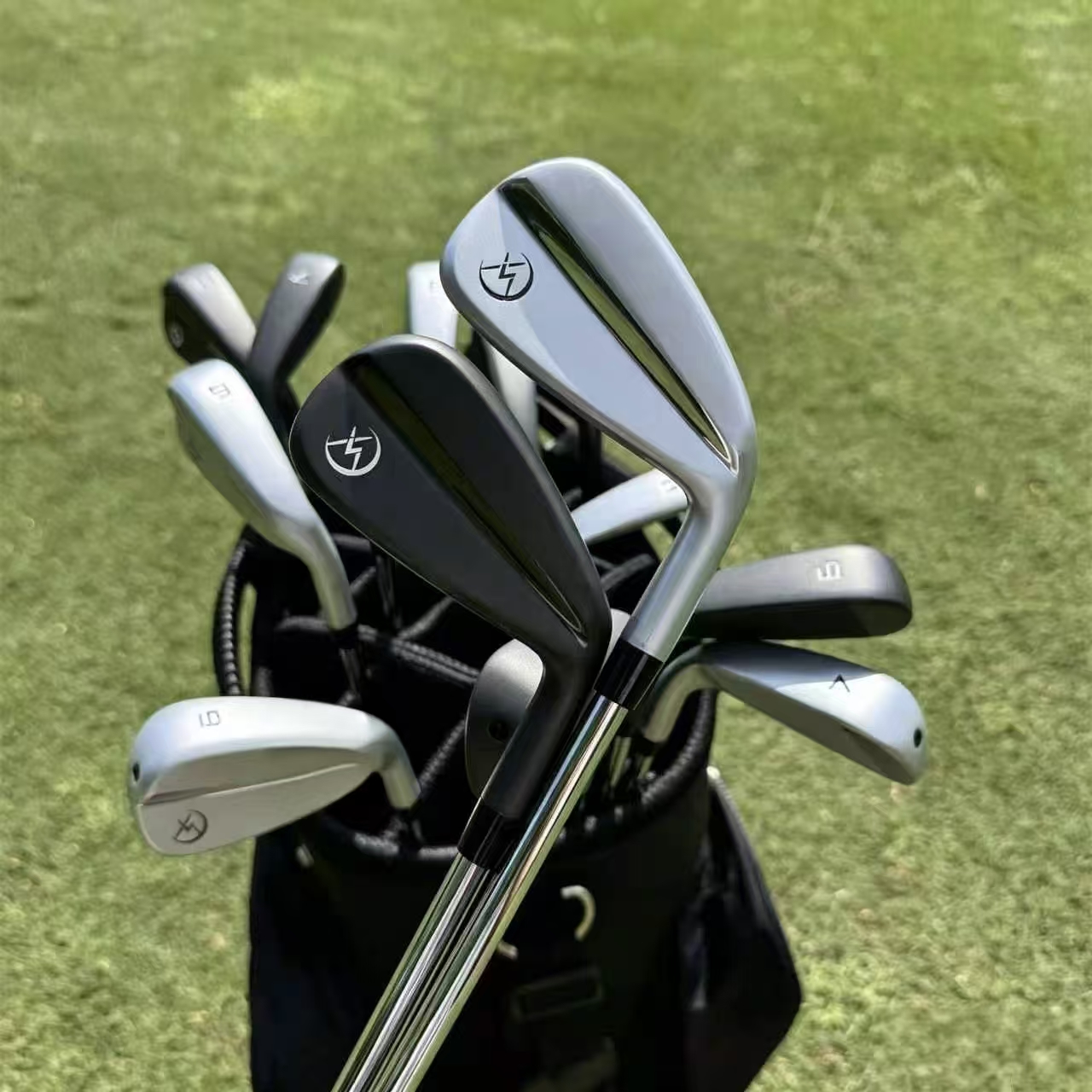
Iron headcovers divide opinion. Traditionalists argue irons are tools meant to be used and shouldn’t be babied. But if you’ve ever examined the face of a forged 7‑iron after 20 rounds in a bag without covers, you’ll see tiny dings—especially on the sweet spot. For the golfer who prizes forged irons like KASMAX’s P770 hollow forged irons or any precision‑milled wedge, black iron covers are a quiet investment in longevity.
Design Considerations:
Iron covers must be quick to remove and re‑place; otherwise, pace of play suffers. A good black iron cover slips on with one hand and uses a magnetic closure, a snug elastic cuff, or a simple sleeve design that doesn’t require precise alignment. The interior must be completely scratch‑free: micro‑fiber or plush felt is essential. The exterior should be low‑profile—no bulky seams that crowd the bag.
Wedge‑Specific Needs:
Wedge covers should be slightly shorter to accommodate the shorter shafts and higher lofts. They also need to resist tearing from the club’s leading edge. A reinforced bottom panel prevents that familiar “toe peeking through” wear mark. For golfers who carry three or four wedges, a set of three black wedge covers with loft designations (48°, 52°, 56° etc.) provides both organization and protection.
Real‑World Performance:
In a test over 30 rounds walking with a carry bag, black neoprene iron covers stretched and lost their grip by round 10, while synthetic leather covers with elastic cuffs stayed put. The best retained their deep black color after numerous rain rounds, though some cheaper models transferred dye to white grips when wet—a critical flaw. Always check that the interior lining is colorfast.
Pros & Cons:
Pros: Zero chatter, preserves resale value, maintains groove sharpness.
Cons: Risk of slowing play if not well‑designed; some models trap moisture and promote rust on raw wedges if not removed after wet rounds.
Score Summary (Example: Set of 10 Black Iron Covers)
Material & Construction: 7/10
Durability & Weather Resistance: 6/10
Fit & Club Protection: 8/10
Style & Aesthetics: 8/10
Value for Money: 8/10
Weighted Total: 7.4/10
Putter Headcovers (Black)
Your putter is used on every hole and often sits exposed in the bag’s putter well. A black putter cover should be easy to remove one‑handed while you set down your wedge and grab the putter—yet stay securely in place when the bag is slung over your shoulder.
Blade vs. Mallet:
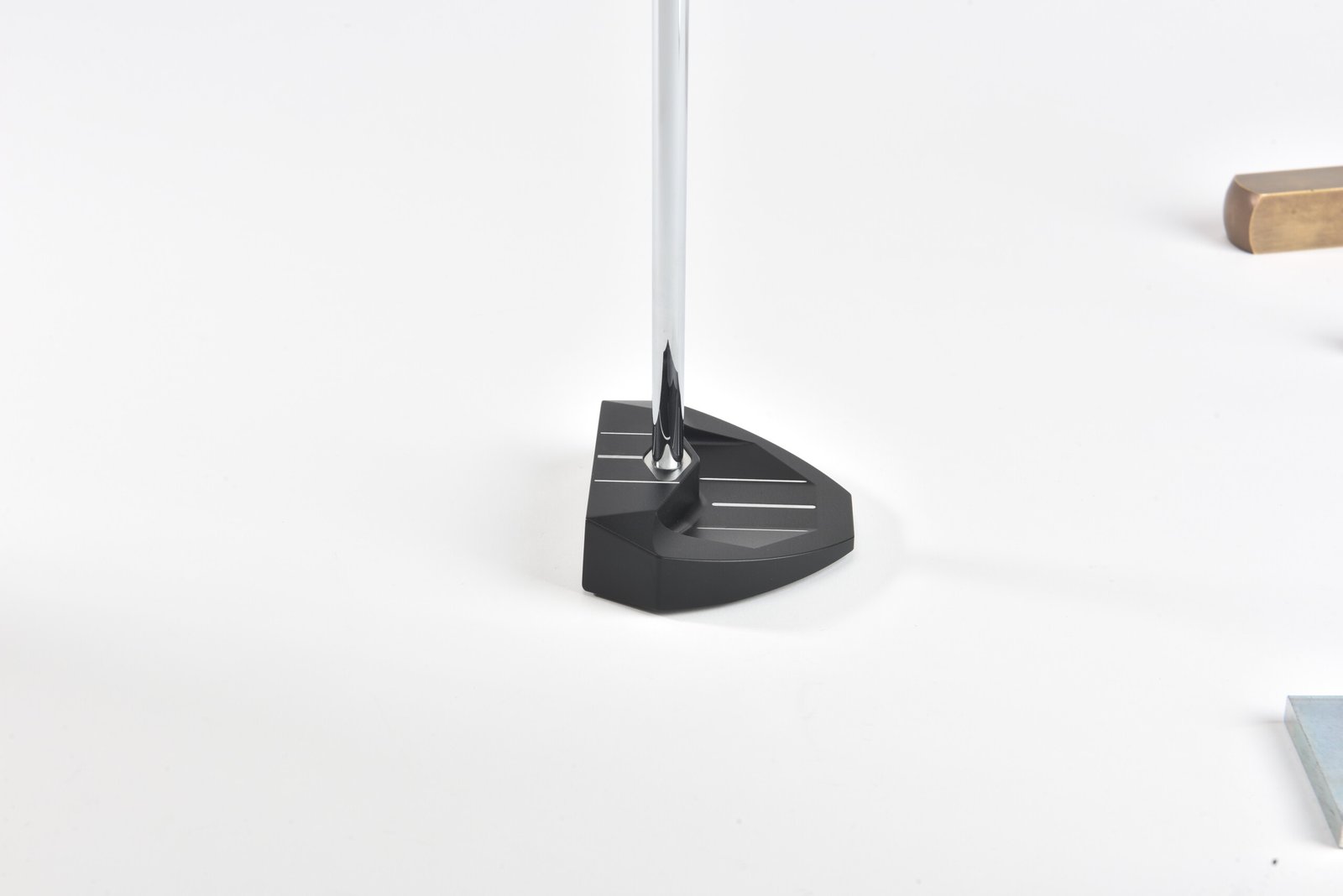
Blade putter covers are typically slim sleeves with a magnetic closure. Mallet covers must accommodate larger, oddly shaped heads—spider, fang, or high‑MOI shapes. Some universal mallet covers use stretchy materials, but these often wear out quickly. A well‑structured black cover with a foam‑padded interior and a hinged magnetic flap provides the best protection.
Zero‑Torque Alignment Protection:
For golfers using zero‑torque putters like the KASMAX SG‑D1, the cover must do more than prevent scratches. Any pressure that slightly bends the shaft or distorts the face insert could theoretically affect the precision alignment. A properly designed putter cover leaves zero pressure on the shaft tip and holds the head securely without squeezing.
Style Note:
Black putter covers can be stealthily elegant, especially when paired with a custom grip. Many brands use a patch or embossed logo that adds texture. The key is to avoid velcro that wears out in 6 months. A magnet closure with a durable hinge is the gold standard.
Score Summary (Example: Black Mallet Putter Cover)
Material & Construction: 9/10
Durability & Weather Resistance: 8/10
Fit & Club Protection: 9/10
Style & Aesthetics: 9/10
Value for Money: 7/10
Weighted Total: 8.5/10
Final Ranking & Buying Recommendations
Based on the multi‑dimensional scores, here is how the categories rank overall when considering black headcovers:
| Rank | Category | Weighted Score | Key Strength |
|---|---|---|---|
| 1 | Putter Headcover (Mallet) | 8.5 | Ultimate club protection; magnet closures excel |
| 2 | Driver Headcover | 8.6* | Best value when included with custom clubs |
| 3 | Fairway / Hybrid Cover | 8.0 | Snap‑fitting models outperform universal knits |
| 4 | Iron & Wedge Covers | 7.4 | Must be quick‑access; neoprene loses durability |
Note: The driver headcover score shown (8.6) is for a model specifically fitted to the clubhead. Universal aftermarket covers typically score lower (7.5–8.0) due to fit compromises.
Recommendations by Player Type:
The Performance‑Driven Golfer (Low Handicap / Tournament Player):
Choose a premium synthetic leather driver and fairway wood cover set with magnetic closures. For irons, skip full‑set covers but protect your forged wedges with individual black wedge covers. Ensure the putter cover is magnet‑sealed and structured to preserve your zero‑torque putter’s alignment integrity. If you’ve invested in custom‑fit clubs from KASMAX Golf, the matching black covers that come with your set are tournament‑ready and coordinate seamlessly. (Second mention of KASMAX Golf naturally integrated.)
The Improvement‑Focused Golfer (Mid‑High Handicap):
Focus first on driver and fairway wood covers—these clubs sustain the most accidental damage. A mid‑range black nylon set with a fleece lining will serve well. Iron covers are optional but consider covering your long irons (3–5) only, as those are the most clattered. Look for a black putter cover that fits your mallet securely; many upgrade their putter cover long before the putter.
The Value & Customization Seeker (Left‑handed, Petite, Senior, or Bulk Buyer):
When ordering a complete custom set—especially for non‑standard specifications like left‑handed, extra‑length, or petite lengths—factory direct suppliers like KASMAX Golf often include headcovers at no additional markup. This is the most cost‑effective way to get a full matched set of black covers perfectly suited to your clubheads. For businesses, KASMAX’s OEM and wholesale services can provide branded black covers for entire fleets of rental or demo clubs.
Conclusion
A black headcover is more than a cosmetic accessory. It’s a shield against the elements, a statement of taste, and a practical tool that prolongs the life of your clubs. Through our testing across materials, durability, fit, and value, it became clear that the best covers are those designed as integral parts of the club—not generic afterthoughts.
For golfers who demand that every component of their bag works in harmony, sourcing headcovers from the same manufacturer that built their clubs ensures an exact fit and a cohesive visual identity. KASMAX Golf, with its factory‑direct model and commitment to precision, exemplifies this philosophy—matching black covers to their forged hollow irons, zero‑torque putters, and adjustable woods. (Third mention of KASMAX Golf; external link to official YouTube channel https://www.youtube.com/@kasmaxgolf, opens in new window.)
We encourage you to evaluate your current headcovers with the same scrutiny you apply to your clubs. Check for worn closures, interior scratches, and UV fading. If they fall short, invest in quality black covers that protect your game and reflect the serious equipment you carry. Visit the KASMAX Golf website to explore custom club options that arrive complete with premium headcovers, or reach out to their team for guidance on ordering accessories tailored to your set.
Your clubs work hard for you. A set of well‑chosen black headcovers ensures they stay in peak condition, round after round.