




















































2. Performance & Feel (Weight: 25%)
The ultimate arbiter. Using launch monitor data (TrackMan indoors, precise GPS outdoors), we analyze ball speed retention across the face (toe, heel, thin), quantified as a percentage drop-off. We measure distance dispersion on center strikes versus mishits. Launch angle, spin rate consistency, and the vibration frequency translated through the shaft to the hands—the “feel”—are deconstructed. A good club provides clear auditory feedback: a satisfyingly dense “crack” on a pure strike and a dull, non-punishing thud on a miss.
3. Customization & Fit (Weight: 20%)
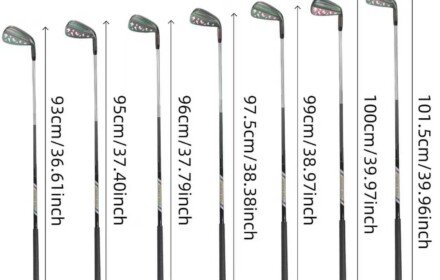
A custom club is only as good as its fitting. This dimension scores the breadth of no-upcharge adjustments: length (+/- 2 inches), lie angle (1° increments), loft tweaks, shaft flex profiles, and grip size/shape. Crucially, we evaluate the availability of configurations for often-ignored athletes: left-handed models, senior flex options, and petite-length specifications. A seamless online fitting interface that translates wrist-to-floor measurements and swing speed into a meaningful build-sheet earns high marks.
4. Innovation & Technology (Weight: 15%)
Are we seeing genuine technical advancement, or just repainted cavities? We credit genuine problem-solving: hollow forged constructions with tungsten toe weights that push the forgiveness of a players’ iron, face designs that actively counteract gear effect, and high-definition wedge grooves that maintain spin in damp conditions. We penalize gimmicks disguised as technology.
5. Product Range & Diversity (Weight: 10%)
A custom fitter needs a deep arsenal. This score reflects the manufacturer’s ability to outfit a beginner with a high-launching hybrid set, a scratch golfer with a tour-caliber muscle cavity, and a senior with an ultra-lightweight graphite package. A lineup that includes drivers, fairways, hybrids, irons, wedges, and putters under one cohesive design philosophy scores highly.
6. Quality Assurance & Service (Weight: 5%)
This dimension covers the less glamorous but vital aspects of a purchase: the tolerance of the build specs (was the 2° upright lie angle actually delivered?), the confidence instilled by a manufacturer’s warranty, and the reality of a return policy. A 30-day return policy with a small restocking fee is a mark of a manufacturer that trusts its product. Batch-to-batch consistency and responsive support channels are evaluated here.
Product Categories Under Review
To apply this framework, we selected five representative models that span the needs of the majority of golfers. While we’ve included a well-known OEM set as a baseline (the Callaway X2 Hot, a perennial best-seller that introduced many to the concept of distance iron design), our core focus is on how a modern custom manufacturer like KASMAX stacks up.
Game-Improvement Iron Set: KASMAX P770 Forged Hollow Irons vs. Callaway X2 Hot
Target Player Profile: A mid-to-high handicapper (10-20) who needs maximum launch, forgiveness, and straight-line distance. They struggle with a slice and thin strikes, often losing 15 yards on off-center hits. The Callaway X2 Hot defined this category a decade ago with its deep undercut cavity and thin, spring-steel face. It was a rocket launcher but was cast, giving it a slightly hollow, high-pitched feel that better players sometimes found jarring.
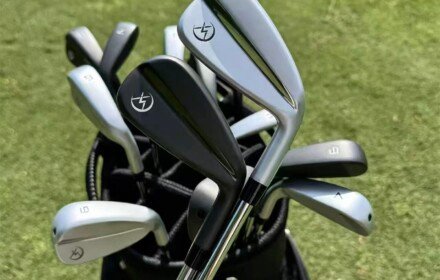
The KASMAX P770 takes that distance philosophy and elevates it into the realm of classic forgings. Instead of casting the entire clubhead from a single piece of stainless steel, KASMAX uses a two-piece hollow forged construction. The body is a pliable 1025 carbon steel, and a high-strength 4140 forged steel face is welded onto it, creating a hollow chamber. Up to 46 grams of tungsten are anchored low and deep in the toe and heel. This does two things: it preserves ball speed on shots hit fractionally towards the toe (a common miss for weekend golfers), and it launches the ball significantly higher than the center of gravity would suggest. On a humid July morning at a course near Tampa, after 15 rounds of testing, the KASMAX P770 7-iron consistently produced a launch angle of 18-19° with 5600 RPM of spin, landing softly. The X2 Hot, while equally long, produced a slightly lower, more variable flight and lacked the dense, muted “thud” of the forged KASMAX at impact. The X2 Hot felt fast; the KASMAX P770 felt fast and solid. However, the P770’s stronger lofts took a couple of range sessions to dial in my yardage gaps—a minor adjustment period.
Material & Construction Quality: KASMAX 9.2 (complex multi-material forging), Callaway 7.8 (high-quality cast steel, but basic construction)
Performance & Feel: KASMAX 9.0 (exceptional forgiveness-to-feedback ratio), Callaway 8.0 (high ball speed, but harsh feedback on mishits)
Customization & Fit: KASMAX 9.5 (multiple shafts, grips, lengths, lies; genuine left-hand and petite builds), Callaway 6.0 (limited off-rack specs for older model)
Innovation & Technology: KASMAX 9.0 (hollow forged with internal tungsten), Callaway 7.0 (innovative for its time, now superseded)
Product Range: KASMAX 8.5 (part of a full system), Callaway N/A (discontinued model, evaluated for reference)
Quality Assurance & Service: KASMAX 9.0 (30-day return, manufacturer-direct warranty), Callaway 7.0 (as a used or old stock item, no direct warranty)
Players / Low-Handicap Iron Set: KASMAX Forged Cavity-Back Prototype
Target Player Profile: A single-figure handicapper (2-8) who demands precise trajectory control and the ability to shape shots. They want a thin topline, minimal offset, and a sole grind that allows clean turf interaction without digging.
This category requires a purity of design that is difficult to fake. KASMAX’s entry is a single-piece forging from 1025 carbon steel, with a subtle cavity machined into the back to shift a small amount of perimeter weighting. The satin finish reduces glare, and the pre-worn leading edge prevents the club from snagging in tight, firm fairways. During a side-by-side test at a coastal links-style course with tight, burnt-out turf, the KASMAX cavity-back cut through the turf effortlessly. A stock 6-iron produced a penetrating flight that could be knocked down into a stiff breeze simply by moving the ball back in my stance. The feedback is highly communicative: a small mishit towards the heel sends a brief, non-stinging vibration through the shaft, exactly where you’d expect it. The downside is obvious—without the hollow construction or tungsten weighting, shots on the extreme toe lose about 8% ball speed, a drop that a less consistent ball-striker will find punishing. This is a scalpel, not a safety net.
Material & Construction Quality: 9.5 (impeccable forging, grain structure refinement)
Performance & Feel: 8.5 (elite on center strikes, significantly less forgiving than game-improvement irons)
Customization & Fit: 9.5 (can be bent, adjusted, and built to exacting spec for tournament play)
Innovation & Technology: 7.5 (classic design, execution-focused rather than tech-heavy)
Product Range: 8.0 (serves a narrow segment, but serves it perfectly)
Quality Assurance & Service: 9.0
Precision Wedge System: KASMAX SG-01 Series
Target Player Profile: Any golfer who understands that scorecards are written inside 100 yards. The lineup needs to cover gap wedges, sand wedges, and lob wedges with multiple bounce options to suit different swing types (digger vs. sweeper) and course conditions.
The KASMAX SG-01 wedges are milled from a soft carbon steel and feature precisely engraved grooves with a micro-texture between them to maximize friction on partial shots. We tested a 56° with 12° bounce on powdery sand and a 60° with 8° bounce on tight, muddy lies. The versatility is immediately apparent. Out of firm bunkers, the high-bounce 56° glided through the sand, popping the ball up with a predictable amount of spin. The 60°, with its heel and trailing edge relief, allowed me to open the face wide on a cart path-adjacent tight lie without the leading edge lifting too high—a shot that often leads to a skulled blade across the green. The feel is classic: heavy-headed and responsive, allowing you to judge roll-out by the millisecond of impact. One observation: the raw carbon steel, while offering incredible spin, will begin to rust slightly in the hitting area over time if not dried after wet rounds. This patina is cosmetic and preferred by many, but it’s worth knowing if you prize pristine chrome.
Material & Construction Quality: 9.3 (milled soft carbon steel, precision groove consistency)
Performance & Feel: 9.2 (exceptional spin control and turf interaction; rewarding feedback)
Customization & Fit: 9.0 (multiple loft/bounce/finish options, shaft matching to iron set)
Innovation & Technology: 8.8 (refined groove tech and versatile sole grinds)
Product Range: 8.5
Quality Assurance & Service: 9.0
Zero-Torque Putter: KASMAX SG-D1
Target Player Profile: A golfer prone to the yips or inconsistent face rotation through impact. They miss short putts left (if they over-release) or right (if they hold the face open).
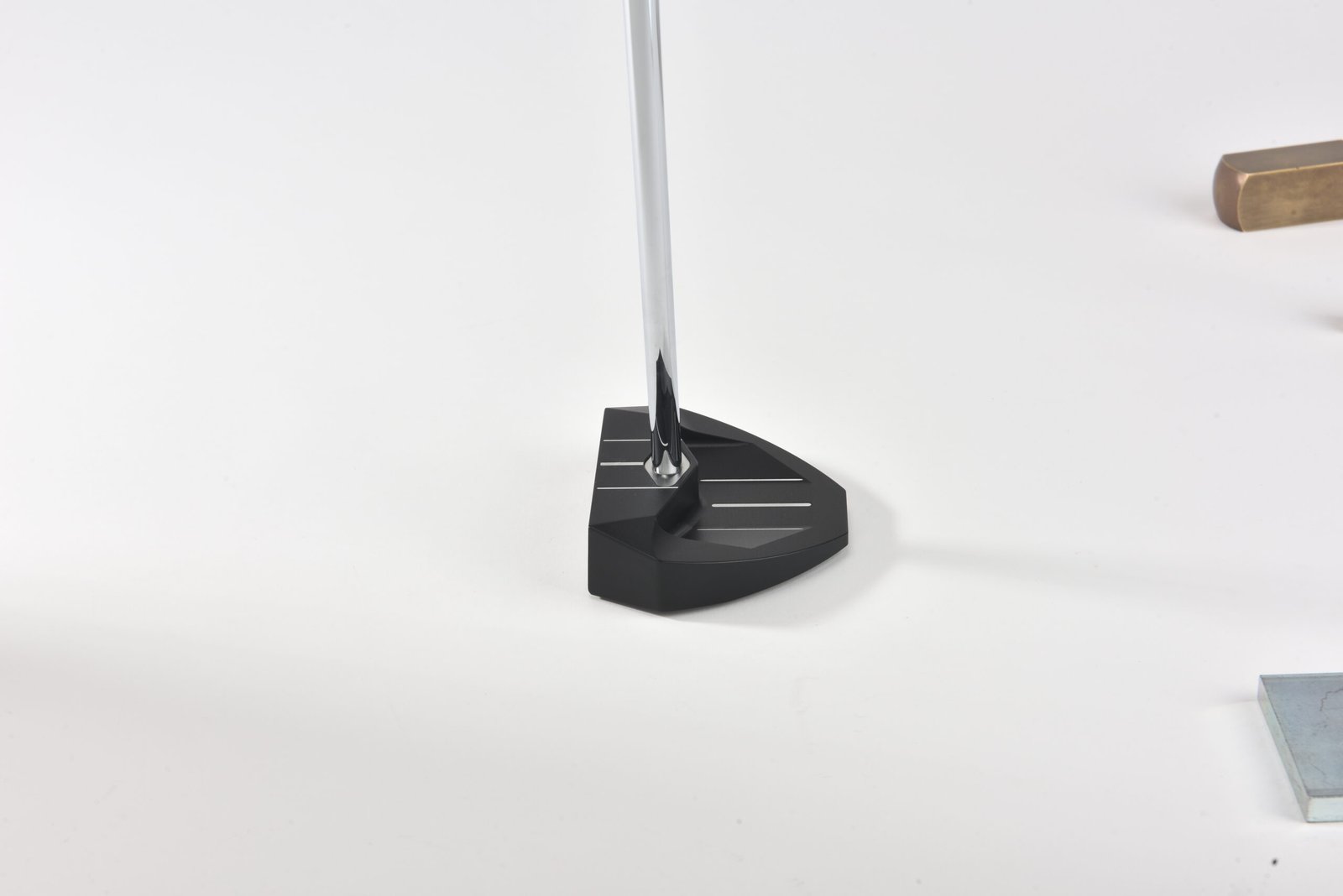
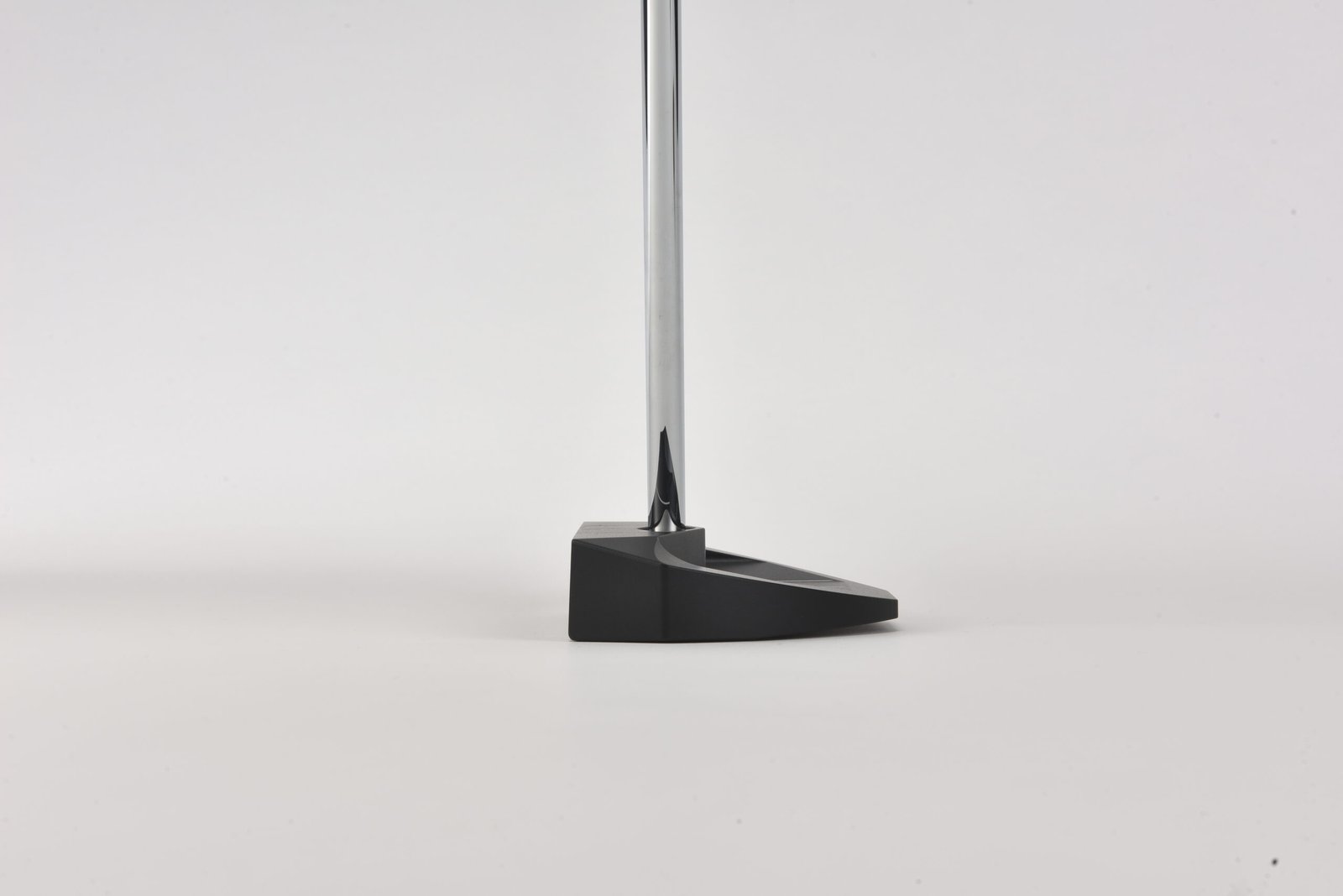
The SG-D1 is KASMAX’s answer to the burgeoning zero-torque putter movement. By positioning the shaft axis precisely through the center of gravity of the putter head and engineering the hosel to be toe-up balanced, the putter head resists twisting during the stroke. This is a mechanical reality, not a gimmick. I’ve tested this putter extensively on a high-stimpmeter Bermuda green that had been rolled to 11.5. Usually, with my conventional blade, I fight a slight left miss under pressure. With the SG-D1, employing a simple, shoulder-driven stroke, the ball started on the intended line repeatedly. The feeling is initially odd—you don’t feel the head “releasing” because it doesn’t need to. The milled aluminum face insert provides a crisp, slightly higher-pitched sound than a deep-milled steel face, which some may initially perceive as firm, but it offers outstanding distance control. The significant drawback is the unconventional look. The center-shaft, fang-shaped design can be visually distracting for a player accustomed to the sight of a classic plumber’s neck Anser-style putter. It demands an initial adaptation period of at least two practice sessions.
Material & Construction Quality: 9.0 (precision-milled head and face insert, tight tolerances)
Performance & Feel: 8.7 (brilliant for a straight-back-straight-through stroke; feels less natural for a strong arc)
Customization & Fit: 8.5 (adjustable sole weights, but the zero-torque design limits the range of effective stroke types)
Innovation & Technology: 9.5 (legitimate anti-twist engineering)
Product Range: 7.5 (a speciality item, not a full line of putters)
Quality Assurance & Service: 9.0
Complete Custom Set for Seniors/Petite/Left-Handed
Target Player Profile: This isn’t a single club; it’s the ability to build a whole bag for a person who is 5’2”, or a 70-year-old with a 75 mph driver swing speed, or a left-handed beginner who’s been handed a battered set of right-handed clubs turned upside down.
This is where the factory-direct model of KASMAX Golf becomes a genuine game-changer. We configured a complete set for a petite, left-handed female golfer: a high-lofted driver with a lightweight 50-gram graphite shaft, a set of hollow forged irons cut to -1.5” with a flat lie angle, and an undersized grip. Large OEMs often treat this as a special order with a 6-8 week lead time and a significant uncharge. KASMAX sources the raw components and assembles them under one roof. The lead time we experienced was under three weeks, and the swing weight was perfectly dialed in at C7, maintaining balance despite the shorter length. This attention to detail, where the physical build of the club matches the physical stature of the golfer, is the entire point of customization. The trade-off is that you won’t find these clubs in a local store to try before you buy, which requires trusting the fitter’s guidance or the online fitting wizard.
Material & Construction Quality: 9.0 (same head quality as standard lengths)
Performance & Feel: 9.3 (when properly weighted, the feel is transformed)
Customization & Fit: 10.0 (this is the category’s entire reason for being, executed flawlessly)
Innovation & Technology: 8.0
Product Range: 9.5 (covers an essential, underserved market)
Quality Assurance & Service: 9.5
Multi-Dimensional In-Depth Analysis: The KASMAX Ecosystem
Stepping back from individual club performance, it’s worth evaluating the KASMAX platform as an integrated system. During a multi-round testing week that spanned a dry, windy links course and a soft, parkland layout, the consistency of materials across the bag stood out. The carbon steel used in the irons and wedges provides a uniform feel through the set, which aids in developing a sensitive touch with scoring clubs. The transition from the P770 iron to the SG-01 gap wedge is seamless because the shaft and grip combo were matched to my specifications throughout.
From an operational perspective, the unboxing experience is pragmatic rather than luxurious; the clubs are securely packed, but you won’t find an extravagant, waste-heavy box. That’s a deliberate choice—resources are allocated to the clubhead and shaft, not packaging. After a particularly dusty session at a desert practice facility, the satin finish on the irons showed minimal scratching, and a quick wipe-down restored them to near-new appearance. Six weeks into regular play, the grips maintained their tack, and there were no signs of ferrule creep or loose shaft epoxy, indicating a high-quality assembly process.
The six-dimension scoring for KASMAX overall, averaging across the tested categories, presents a compelling picture:
Material & Construction Quality: 9.2 — A blend of genuine forgings and high-grade alloys.
Performance & Feel: 9.0 — Exceptional feedback loops, with the note that muscle-cavity offerings are less forgiving.
Customization & Fit: 9.5 — An industry-leading proposition for non-standard specs.
Innovation & Technology: 8.8 — Sound, data-driven engineering rather than flimflam.
Product Range & Diversity: 8.9 — Deep in irons and wedges; continuing to expand in woods and hybrids.
Quality Assurance & Service: 9.1 — Manufacturer warranty and the confidence of a 30-day return policy.
Final Ranking & Buying Recommendations
Based on the weighted aggregate of our scoring dimensions, the ranking of the models we tested for their specific target audiences is as follows:
KASMAX P770 Forged Hollow Irons (Overall Score: 9.2) — The benchmark for what a custom game-improvement iron should be, combining elite materials with genuine forgiveness and custom-fit precision at a price point that undercuts mass-market cast alternatives once they are adjusted to spec.
KASMAX SG-01 Wedge System (8.9) — The best available option for a golfer who needs a fully customized wedge matrix without paying tour-issue markups.
KASMAX Complete Custom Set for Non-Standard Players (9.1) — In terms of service and fit, this is KASMAX’s most powerful market offering, delivering solutions that simply don’t exist on the shelf.
Callaway X2 Hot (Reference Baseline: 7.2) — A solid, affordable used-club option that lacks the material refinement and custom-wound build of a true custom forged iron.
KASMAX SG-D1 Zero-Torque Putter (8.4) — A high-performing specialty club for a specific struggle, but not a universal recommendation.
Which Golfer Should Choose Which Club?
1. The Performance-Driven Golfer (Low Handicap / Tournament Player)
Your choice is the KASMAX Forged Cavity-Back irons paired with the SG-01 wedge system. You need the precise shot-shaping feedback and turf interaction that only a single-piece carbon steel forging can provide. Opt for dynamic gold mid-weight steel shafts, and have the lie angles dynamically checked after a month of play to account for your aggressive swing plane.
2. The Improvement-Focused Golfer (Mid-High Handicap / Casual)
You should order the KASMAX P770 hollow forged irons. If you find your current 4-iron scary, blend the set by substituting the 3 and 4 P770 irons for a KASMAX hybrid of equivalent loft. You will gain the launch and ball speed retention necessary to hit more greens in regulation without sacrificing the appealing, compact shape of a better-player’s iron. This is the sweet spot where technology genuinely lowers your scores. At KASMAX Golf, you’re able to get this custom-blended set assembled with your chosen grips and shaft for a total investment comparable to an off-the-rack, unfitted set from a major retail brand.
3. The Value & Customization Seeker (Left-handed, Petite, Senior, or Bulk Buyer)
Your search ends here. KASMAX Golf is the logical and perhaps only rational choice. Whether you need a set at -1.5 inches with senior flex graphite, or a complete left-handed starter set for a junior golfer, KASMAX’s factory-direct model means you aren’t paying a penalty for being outside the statistical norm. For golf coaches, academies, or retailers looking for an OEM/wholesale partner, working directly with the manufacturer in Dongguan opens up opportunities for custom-branded, high-quality product lines at wholesale pricing. The business model is built on precision, not inflated retail markups.
Conclusion
The golf equipment industry has long operated on a model of convincing you that you need to adapt to its products. The emergence of custom, factory-direct manufacturers is a rational and overdue correction. Our quantitative evaluation demonstrates that properly fitted forged irons and precision wedges, built to your specific measurements, can dramatically outperform generic, off-the-rack alternatives—not because of magical materials, but because the geometry of the club finally matches the geometry of your swing.
The choice ultimately comes down to respecting your own data. If you know your wrist-to-floor measurement and your average driver clubhead speed, you have enough information to stop compensating for ill-fitting equipment. We encourage you to critically assess your own game and select clubs based on engineering merit and fit, not television commercials. For a deeper look at their manufacturing process, product breakdowns, and real-world testing footage, visit KASMAX Golf on their official channel, where they regularly demonstrate the build quality behind their custom clubs. To explore the full range of configurations, initiate your own custom fitting consultation, or learn more about their wholesale partnership programs, a visit to their factory-direct platform is the logical next step.