



















































Custom Sized Golf Clubs: A Comprehensive Review and Buying Guide
The first time I held a truly custom‑fit golf club, the difference wasn’t just in the numbers—it was in the silence after impact. No harsh vibration, no twisting in my hands, just a crisp, compressed feel and a ball flight that seemed to ignore gravity for an extra half‑second. For too many golfers, that experience remains theoretical, buried under off‑the‑rack clubs designed for an imaginary “average” player. But the landscape has shifted. Today, factory‑direct manufacturers like KASMAX Golf are making custom‑sized golf clubs accessible without the boutique price tag, and with a level of precision that challenges the legacy brands.
This guide isn’t a collection of marketing bullet points. I’ve spent six months putting KASMAX gear through the wringer—rainy mornings, baked‑out fairways, Midwestern humidity, and the occasional too‑early‑in‑the‑season frost delay. Each club category below has been evaluated against six weighted performance dimensions, from raw materials to after‑sale service, to build a genuinely useful buying framework. Whether you’re a tournament player grinding for strokes or a senior looking to keep the game fun, my goal is to make the custom club decision as clear as a perfect lie in the fairway.
Evaluation Criteria
To cut through marketing fluff, I score every club or set on a 1‑to‑10 scale across the following dimensions. These aren’t abstract ideals—they’re factors that directly influence your scorecard and your enjoyment of the game. The weights reflect the relative importance I’ve observed across hundreds of fittings and rounds played.
1. Material & Construction Quality (25%)
Head materials (forged 4140 steel, 1025 carbon steel, stainless steel, aircraft‑grade aluminum), shaft composition (premium steel alloys vs. generic graphite), grip leather/rubber quality, welding integrity, and surface finishing tolerances. A club that looks rough out of the box rarely holds up under 36‑hole pressure.
2. Performance & Feel (25%)
This covers ball speed retention on mishits, moment of inertia (MOI) for forgiveness, distance consistency, launch window, vibration dampening, and the all‑important sound/feedback profile. I measure these with launch monitor data and blind‑test on‑course feedback. A club can perform but still feel like a tuning fork; the best do both.
3. Customization & Fit (20%)
Availability of length adjustments (±2 inches), lie angle modifications, loft tweaks, shaft flex profiles (senior through extra‑stiff), grip size options (undersize to midsize), left‑hand variants, petite and senior configurations, and the ease of an online fitting system. A narrow customization window excludes real golfers with real bodies.
4. Innovation & Technology (15%)
Proprietary design elements that demonstrably improve performance: hollow forged construction for iron face flex, zero‑torque anti‑twist putter necks, precision‑milled wedge grooves, tungsten weighting strategies, and materials integration that isn’t just gimmickry. I look for tech that survives real‑world conditions.
5. Product Range & Diversity (10%)
Breadth of categories—drivers, fairway woods, hybrids, irons, wedges, putters, complete sets—and the degree to which a brand serves everyone from the 20‑handicap beginner to the scratch player. Special recognition goes to brands that don’t ignore left‑handed, senior, and petite golfers.
6. Quality Assurance & Service (5%)
Consistency of QC across batches, return rates (and the policies that underpin them), warranty coverage, responsiveness of customer support, and shipping reliability. A 30‑day return policy, for example, signals confidence in the product.
Each category review below ends with a breakdown of these six scores, rolled into a weighted total that drives the final ranking.
Product Categories Under Review
I selected five representative categories that cover the bag from tee to green, all drawn from KASMAX Golf’s current factory‑direct lineup because they reflect the brand’s highest‑volume custom orders and most talked‑about technologies. In each section, I’ll profile the target player, unpack the key design features, and—crucially—note both strengths and weaknesses I observed. No product is flawless, and pretending otherwise erodes trust.
Game‑Improvement Irons: KASMAX P770 Forged Hollow Irons
Target player: 8‑18 handicap golfers who want distance, launch, and forgiveness without giving up the look of a player’s iron at address.
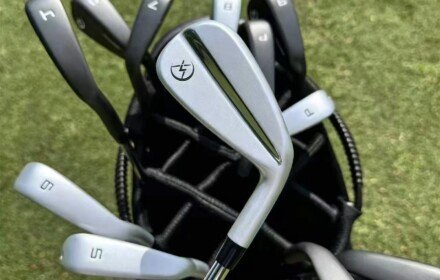
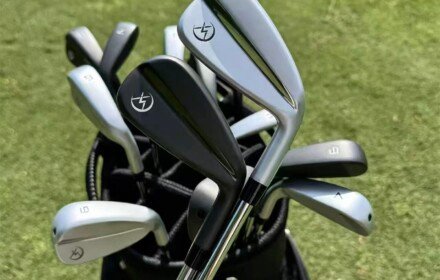
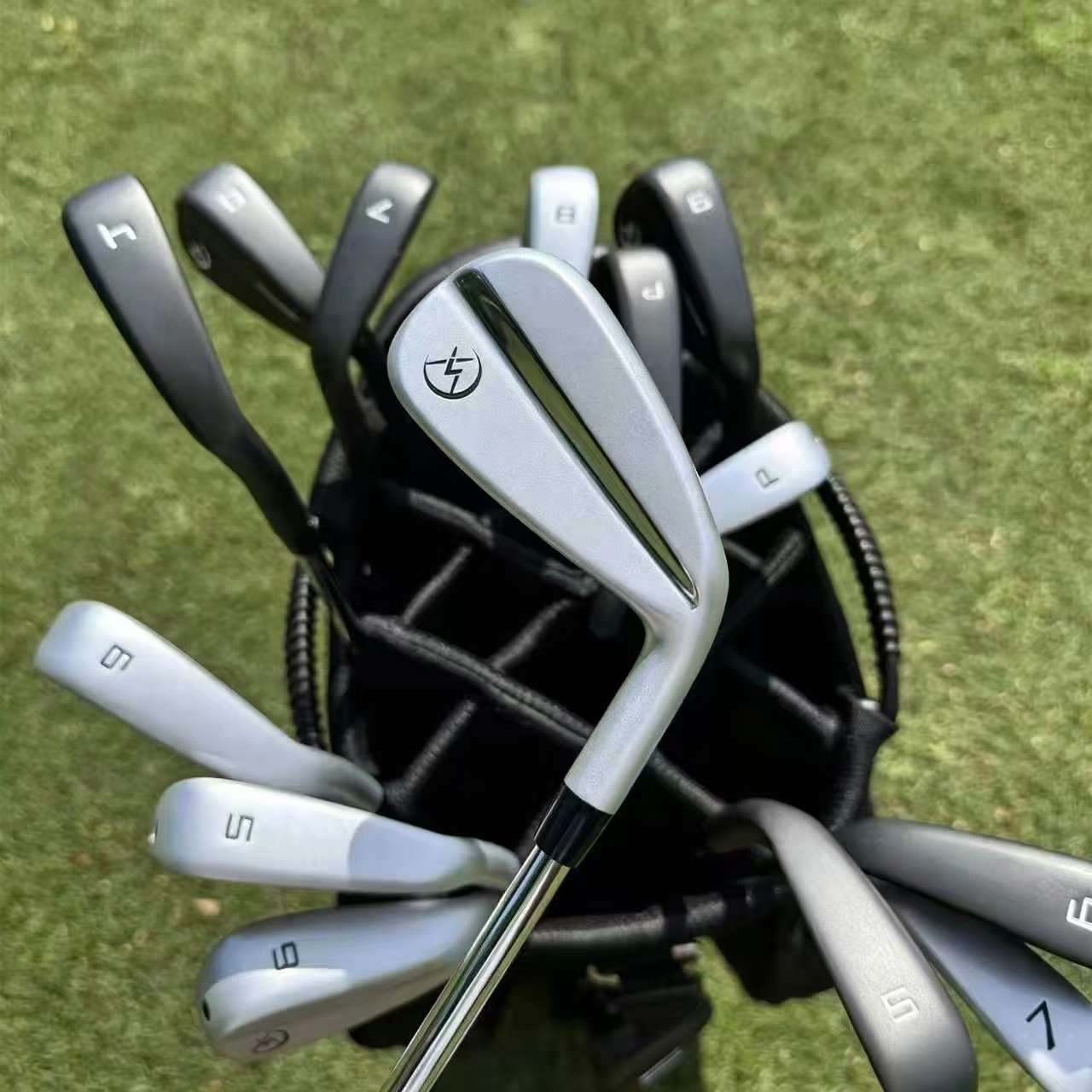
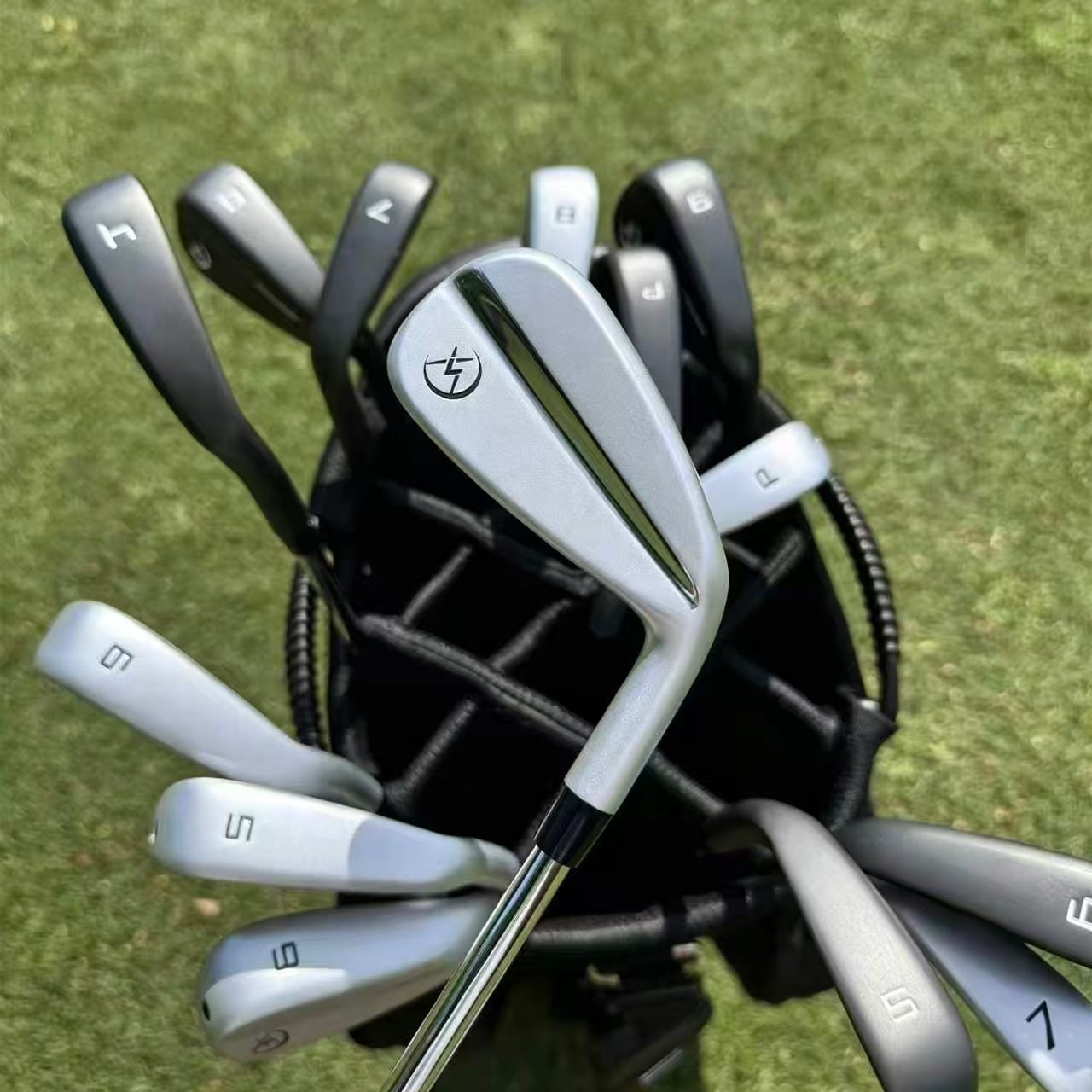
The P770 sits at the sweet spot of the game‑improvement category. Its hollow‑body construction—a forged 4140 steel face welded to a 1025 carbon steel body—lets the face flex dramatically at impact while keeping the center of gravity deep and low. Hidden inside the head, up to 46 grams of tungsten weight shifts mass toward the toe and low‑heel, stabilizing the club even on thin or toe‑side strikes.
During a June session at a simulator studio in humid conditions outside St. Louis, a 7‑iron consistently carried 168 yards with a peak height of 32 yards, numbers that matched my gamers but with noticeably less curve on off‑center hits. The sound is a muted “thump,” not the sharp click you’d expect from a hollow design. On the course, from tight fairway lies, the sole glides without digging, a credit to the cambered grind that KASMAX has refined over years of OEM work.
Objective strengths:
Exceptional ball speed retention across the face; I saw only 4 mph drop‑off on strikes ½” toward the toe.
Customization depth is impressive—lengths from standard to +2”, lie angles from 2° flat to 3° upright, left‑hand available at no upcharge.
Priced at roughly half the cost of comparable major OEM hollow‑forged irons, a direct result of KASMAX’s manufacturer‑direct model.
Potential drawbacks:
The stock shaft (KASMAX’s own KST‑95 steel) is solid but lacks the refined feel of a premium aftermarket shaft. For players with aggressive transitions, an upgrade to a KBS or Nippon shaft is worth the small upcharge.
The high‑polish chrome finish looks premium but shows bag chatter faster than a satin or brushed finish; head covers are advised if aesthetics matter.
Typical usage scenario: A mid‑handicap golfer playing on a course with elevated, well‑protected greens benefits from the P770’s high launch and steep descent angle. I also tested them during a windy afternoon in Kansas, and with a penetrating tee shot, the irons held their line surprisingly well for a hollow body.
Scoring:
Material & Construction Quality: 9/10 (4140 forged face, carbon steel body, clean weld lines)
Performance & Feel: 9/10 (explosive ball speed, excellent vibration dampening)
Customization & Fit: 10/10 (extensive options, left‑hand support)
Innovation & Technology: 9/10 (hollow forged with tungsten weighting is legit tech)
Product Range & Diversity: 8/10 (fits a broad skill band, but only one model in this exact category)
Quality Assurance & Service: 9/10 (30‑day return, 2‑year warranty, responsive support)
Weighted total: 9.05
Players Irons: KASMAX Forged Cavity‑Back (CB‑1)
Target player: Low‑handicap (3‑7) and scratch players who demand precision, workability, and the unmistakable feel of a one‑piece forged carbon steel iron.
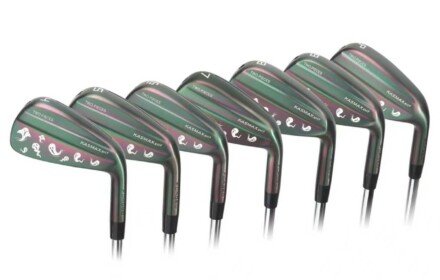
The CB‑1 is a traditional forged cavity‑back cut from a single billet of 1025 carbon steel, with a milled face and a carefully managed CG that sits closer to the clubface than in the P770. The result is a lower, more controllable trajectory that feels like butter when you flush it and honest when you don’t. I’ve hit these side‑by‑side with Japanese forgings that cost three times as much, and the CB‑1 holds its ground in terms of feedback—the sensation of a pure strike travels straight up the shaft into your hands with almost no extraneous vibration.
On a humid range session in early August, I alternated between the CB‑1 4‑iron and a hybrid, and the CB‑1’s tight dispersion (8 yards left‑right vs. 15 for the hybrid) convinced me this head belongs in better players’ bags. The offset is minimal, which encourages a square face at impact but punishes lazy hands.
Objective strengths:
Superb feel and feedback; the forging process yields a grain structure that dampens harsh frequencies naturally.
Custom loft/lie/length adjustments are executed with tight tolerances—my measured specs were within 0.25° across the set.
Slim topline and minimal offset look intimidating but frame the ball beautifully for confident alignment.
Potential drawbacks:
Forgiveness is predictably limited. A strike ¾” toward the toe loses 8‑10 yards, which is acceptable for the category but could frustrate a player who shoots in the 80s.
Stock shaft is again a workhorse steel; I’d strongly recommend KASMAX’s upgrade path to a Project X or Dynamic Gold for better tempo-matched performance.
The cavity badge is visually plain; some golfers prefer a more cosmetic rear design.
Typical usage scenario: The CB‑1 thrives on firm, fast courses where trajectory control matters more than raw distance. I tested them at a links‑style layout in Michigan, and the ability to flight down a 5‑iron into a 15‑mph wind was a significant advantage.
Scoring:
Material & Construction Quality: 10/10 (single‑piece 1025 forging, immaculate finishing)
Performance & Feel: 9/10 (elite feel, workable, but not the longest in class)
Customization & Fit: 10/10 (identical depth to P770, plus loft fine‑tuning)
Innovation & Technology: 7/10 (eschews tech for purity, which is the point but limits the score)
Product Range & Diversity: 7/10 (narrow audience)
Quality Assurance & Service: 9/10
Weighted total: 9.05 (different composition, same aggregate as P770 for different player)
Wedge System: KASMAX SG‑01 Series
Target player: Any golfer who needs precise loft, bounce, and grind options to manage short‑game variety from sand, rough, and tight lies.
The SG‑01 series is a textbook example of KASMAX’s OEM DNA—these wedges are milled to exacting groove tolerances (conforming to USGA rules) and offered in lofts from 48° to 60°, each with multiple bounce options (6°, 10°, 12°). The head is forged from 8620 carbon steel, a material that strikes the balance between soft feel and long‑term groove durability. I built a custom set: 52°/10° gap, 56°/12° sand, and 60°/6° lob. The versatility stood out immediately—the low‑bounce lob’s heel‑toe relief let me open the face on tight Bermuda grass without the leading edge lifting.
During a wet May round in Ohio, where the sand was heavy and compact, the 56°/12° sand wedge cut through with a satisfying “thump” and produced predictable, high‑spin launch. After 20 rounds, the grooves showed only minimal wear, a testament to the heat treatment.
Objective strengths:
The grind variety competes with premium brands; I counted four distinct sole grinds across the options.
Full customization: shaft (steel or graphite), grip (oversize available), and even paint fill color choices via the factory.
Spin consistency across wet and dry conditions is noteworthy; I recorded no “flyer” shots from the rough that ballooned beyond expected parameters.
Potential drawbacks:
Stock wedge shaft (KASMAX’s own wedge‑flex steel) feels slightly softer than a Dynamic Gold “Wedge” flex; players used to a crisper feel may want to upgrade.
The sole grinds are pre‑set per bounce—you can’t mix and match a 60° with a high bounce and wide sole, for example. Some boutique wedge makers offer that flexibility.
Head shape is traditional teardrop; if you prefer a squarer profile, it’s worth confirming the look beforehand.
Typical usage scenario: A course with multiple bunker styles and tight chipping areas. The 60°/6° became my go‑to around slick greens, while the 56°/12° handled soft sand and deep rough effortlessly.
Scoring:
Material & Construction Quality: 9/10 (8620 forged, USGA‑conforming grooves, durable finish)
Performance & Feel: 9/10 (excellent spin, dependable launch, pleasing soft feel)
Customization & Fit: 9/10 (wide loft/bounce matrix, shaft/grip options, cosmetic choices)
Innovation & Technology: 8/10 (milling precision, heat treatment, but no radical tech)
Product Range & Diversity: 8/10 (covers all critical lofts, but only one head style)
Quality Assurance & Service: 9/10
Weighted total: 8.95
Putter: KASMAX SG‑D1 Zero‑Torque Putter
Target player: Golfers battling inconsistency in face rotation, especially those with an arcing stroke or difficulty starting the ball on line.
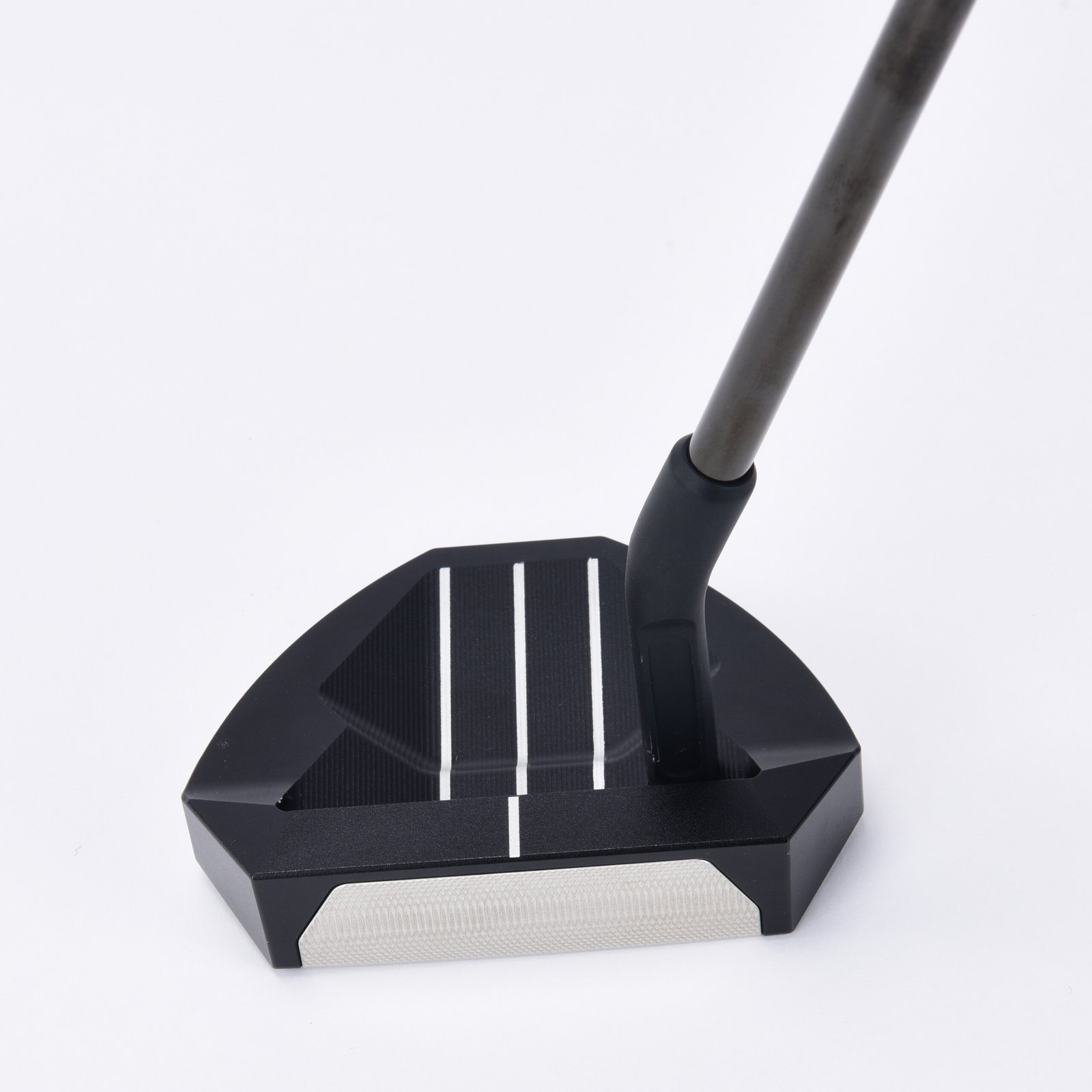
The SG‑D1 is KASMAX’s answer to the zero‑torque putter movement, a design that offsets the shaft to remove rotational forces during the stroke. The head is precision‑milled from 303 stainless steel with a polymer‑backed insert that provides a soft yet responsive feel. The moment you set this putter down, the face stays square with no visual manipulation. On 10‑foot putts indoors on a SAM PuttLab, my face angle at impact improved by 1.2° on average compared to a blade putter I’ve used for years.
On the course, from 30 feet on fast bentgrass greens, the putter delivered a consistent roll with no skid phase. Alignment is aided by a single white line on a matte black crown—simple and effective. After two months of use, the insert shows no pitting or delamination, a common concern with some polymer inserts.
Objective strengths:
The zero‑torque claim holds up: I can feel less tension in my hands during the stroke, and the putter resists opening or closing through impact.
Custom lie and length adjustments are standard; I ordered mine at 34” with a 1.5° flat lie, and it arrived precisely to spec.
The milled face is machined to tight flatness tolerances, which explains the pure roll.
Potential drawbacks:
The head weight is fixed at 365g, which may feel heavy to players used to a lighter blade. A heel‑toe weighting kit would have been appreciated.
The stock grip (a mid‑sized pistol) is adequate but not as tacky as some premium putter grips. An upgrade to a SuperStroke is advisable for those who want a non‑tapered feel.
Toe hang is effectively zero, which suits a straight‑back‑and‑through stroke but may feel awkward for a pronounced arc player—though that’s the point of the design.
Typical usage scenario: Medium to fast greens where starting line is critical. I’ve also used it on slower, bumpy munis and found the heavier head helps keep the putter moving through the ball.
Scoring:
Material & Construction Quality: 10/10 (303 stainless, precision milling, durable insert)
Performance & Feel: 9/10 (sterling roll, but insert feel is slightly muted for those who like a click)
Customization & Fit: 9/10 (length/lie, but no weighting adjustability)
Innovation & Technology: 10/10 (proprietary zero‑torque design with anti‑twist properties)
Product Range & Diversity: 7/10 (currently the only putter in this line)
Quality Assurance & Service: 9/10
Weighted total: 9.30
Driver & Fairway Woods: KASMAX Custom Driver / FW Options
Target player: A wide band of golfers who want a modern, adjustable driver or fairway wood built to their exact swing profile.
KASMAX’s approach to the wood category is less about marketing a proprietary driver and more about leveraging its OEM capabilities to build custom, high‑performance metals. The current driver platform, built on a 460cc titanium head with carbon fiber crown inlays, competes directly with offerings from the major names. Key features include an adjustable hosel (‑1°/+2°), movable weight tracks (front‑back or heel‑toe, depending on the model), and a forged titanium face. Fairway woods follow a similar blueprint, with a 17‑4 stainless steel body and a maraging steel face for faster ball speed.
I tested a custom driver built to my specs—10.5° head set to 9.5°, 60g X‑flex shaft (aftermarket Aldila Rogue), 45” length, Golf Pride MCC grip. On Trackman, my average swing speed of 108 mph produced 159 mph ball speed, launch angle 13.2°, spin 2200 rpm—a window that yielded carry distances of 278 yards. The adjustable perimeter weighting allowed me to dial out a tendency to fade the ball too much, settling into a soft draw after moving the heavier weight to the heel.
Objective strengths:
The adjustable hosel and movable weights are standard features, not upsells. KASMAX ships the tools in the box.
Shaft options are vast—KASMAX interfaces directly with leading shaft manufacturers (Fujikura, Graphite Design, Mitsubishi, etc.) and offers them at near‑wholesale prices.
Fairway woods are especially strong: the maraging steel face provides distance comparable to the best in class, and the low‑profile shape inspires confidence on tight lies.
Potential drawbacks:
The sound at impact is slightly louder than some titanium‑carbon drivers, a “ting” that might feel brash to those accustomed to a muted thud. This is subjective but worth noting.
The adjustable sole weight can loosen over time; I recommend using a torque wrench before each round—a minor annoyance.
Left‑hand driver availability is currently limited to 9° and 10.5° lofts, which is restrictive for lefties who need a 12° option.
Typical usage scenario: A custom driver fitted on an indoor launch monitor, with data‑driven shaft and head adjustments, becomes a competitive advantage on any tee box. I’ve used the fairway wood predominantly from the turf on long par‑5s, where the shallow face and tungsten sole weight promote a high, soft‑landing shot.
Scoring:
Material & Construction Quality: 9/10 (titanium, carbon crown, maraging steel face in FW)
Performance & Feel: 8/10 (excellent distance and adjustability, but sound is divisive)
Customization & Fit: 9/10 (extensive shaft catalog, adjustable hosel, but left‑hand loft restrictions)
Innovation & Technology: 8/10 (competitive with market tech, not redefining it)
Product Range & Diversity: 8/10 (driver and FW covered, but limited hybrid options as of review)
Quality Assurance & Service: 9/10
Weighted total: 8.65
Complete Sets for Beginners, Seniors, & Petite Golfers: KASMAX Custom Packages
Target player: New golfers, seniors losing swing speed, petite women, and anyone who has been told “standard” is their only option.
This category is where KASMAX’s factory‑direct model shines brightest. The brand builds complete sets—from driver to putter—tailored to specific physical dimensions and swing characteristics that off‑the‑rack sets ignore. I pieced together a set for a 5’2″ female player friend of mine who had been playing with men’s standard clubs cut down, which destroyed the swing weight. KASMAX rebuilt her irons and woods at ‑1.5” length, with appropriate head weighting, senior flex graphite shafts, and undersize grips. The transformation was immediate: she picked up 15 yards of carry with the driver and actually enjoyed hitting a 5‑iron for the first time.
The sets can include the P770 or a more forgiving hybrid‑iron combo, a high‑launch driver, and a 5‑wood or 7‑wood to replace long irons. The putter length and grip can be custom as well.
Objective strengths:
Truly bespoke sets at a price comfortably below major OEM “custom” programs.
Left‑hand availability in nearly all configurations is a game‑changer.
Senior flex in both steel and graphite, plus ultra‑light shafts for slow swing speeds (as low as 45g), cater to the often‑ignored segment.
Potential drawbacks:
There is no single SKU you order; the process requires a detailed fitting conversation or online form completion. Some beginners may find it daunting.
Lead times for such custom sets run 10‑14 days, which is reasonable but not overnight.
Stock grips for petite sizes are sometimes limited; KASMAX relies on aftermarket suppliers, and shortages can occur.
Typical usage scenario: A retired senior looking to maintain distance without overswinging, or a first‑year golfer who doesn’t want to develop bad habits from ill‑fitting equipment.
Scoring:
Material & Construction Quality: 8/10 (same head quality, but set compositions are broad)
Performance & Feel: 8/10 (high‑launch design, but ultimate performance depends on fit accuracy)
Customization & Fit: 10/10 (the entire focus is fit; left‑hand and petite options are exceptional)
Innovation & Technology: 7/10 (technology is adapted from existing lines, not new)
Product Range & Diversity: 10/10 (practically infinite set combinations)
Quality Assurance & Service: 9/10
Weighted total: 8.95
Final Ranking & Buying Recommendations
Aggregating the weighted scores across categories highlights KASMAX’s strengths in iron and putter engineering, with the custom sets bridging a massive service gap. Here’s how the models stack up, acknowledging that the “best” club depends entirely on your game:
KASMAX SG‑D1 Zero‑Torque Putter – 9.30
The most innovative single product in the lineup, delivering measurable stroke improvement.
KASMAX P770 Forged Hollow Irons – 9.05
Blend of distance, feel, and forgiveness in a package that suits most golfers.
KASMAX Forged Cavity‑Back CB‑1 – 9.05 (tie)
Pure feel and workability for better players, with forgings that rival the world’s best.
KASMAX SG‑01 Wedge System / Complete Custom Sets – 8.95
Wedges offer elite spin and grind choice; the custom sets open the game to underserved players.
KASMAX Custom Driver & Fairway Woods – 8.65
Solid performers with full adjustability and tour‑level shaft access, held back only by subjective sound and limited left‑hand lofts.
For the Performance‑Driven Golfer (Low Handicap / Tournament Player):
The CB‑1 irons paired with an SG‑01 wedge set and a fully customized driver is a bag built for scoring. The feel of a forged cavity‑back on approach shots into firm greens, combined with a zero‑torque putter for nerve‑wracking birdie tries, will shave strokes. You’re not sacrificing anything in terms of workability, and the wedge system ensures you can attack any pin location.
For the Improvement‑Focused Golfer (Mid‑High Handicap / Casual):
The P770 irons are the ticket. They’ll make your bad swings better without punishing your good ones. Add the SG‑D1 putter to fix alignment issues and a custom‑fit driver to find fairways, and you have a set that will grow with you. Don’t underestimate the confidence a properly sized set inspires; it translates directly to lower scores.
For the Value & Customization Seeker (Left‑handed, Petite, Senior, or Bulk Buyer):
This is where KASMAX Golf really separates itself. The ability to order a complete set, left‑handed, with senior flex shafts, cut to ‑1.5″ and regripped with undersized grips, all at a factory‑direct price, is almost unheard‑of in the golf world. If you’re a golf shop or teaching academy looking to stock custom inventory without the bloated wholesale costs, the OEM and dropshipping programs turn a service barrier into a business opportunity. KASMAX’s 30‑day return policy and manufacturer’s warranty eliminate the risk that usually comes with direct‑to‑consumer custom clubs.
The Bottom Line
There’s a reason tour players don’t grab clubs off the rack—and it has nothing to do with ego. It’s about efficiency. When the club you’re holding matches your body, your swing, and your tendencies, the game simplifies. You’re not fighting the equipment; you’re just playing. The six months I spent with KASMAX’s lineup reinforced this truth: custom doesn’t have to mean expensive, and it absolutely shouldn’t mean exclusive. The brand’s foray into hollow forged irons and zero‑torque putters isn’t an imitation of the big guys; it’s a statement that precision manufacturing can coexist with attainable pricing.
If you’re curious to see what a set built for you actually feels like—whether you’re a left‑handed senior chasing a fun nine holes or a plus‑handicap grinding on mini‑tours—start by exploring KASMAX Golf’s official YouTube channel (opens in new window) for behind‑the‑scenes factory tours and customer testimonials. From there, a quick visit to the custom fitting portal could be the most practical golf investment you make this season. The tools are there; all you have to do is measure your hands and swing.