



















































Golf Club Training Weights: The Overlooked Tool for Building a More Powerful, Consistent Swing
Every golfer knows the thrill of a perfectly struck drive that sails down the middle with a satisfying crack. Yet for most amateurs, that sound remains frustratingly rare. The quest for more distance and consistency often leads players to buy the latest driver with promises of 15 extra yards, but the real secret to unlocking effortless power might not be in a new clubhead at all — it might be in the weight you add to the club you already swing.
Golf club training weights, also known as swing weights, weighted donuts, or clubhead weights, are among the most underutilized and misunderstood training aids in the game. Used properly, they can transform a sluggish, disconnected swing into a fluid, athletic motion. Used carelessly, they can ingrain bad habits. This article explores what training weights actually do, how to use them safely, and why they belong in your practice bag, not just in the hands of tour pros.
What Exactly Are Golf Club Training Weights?
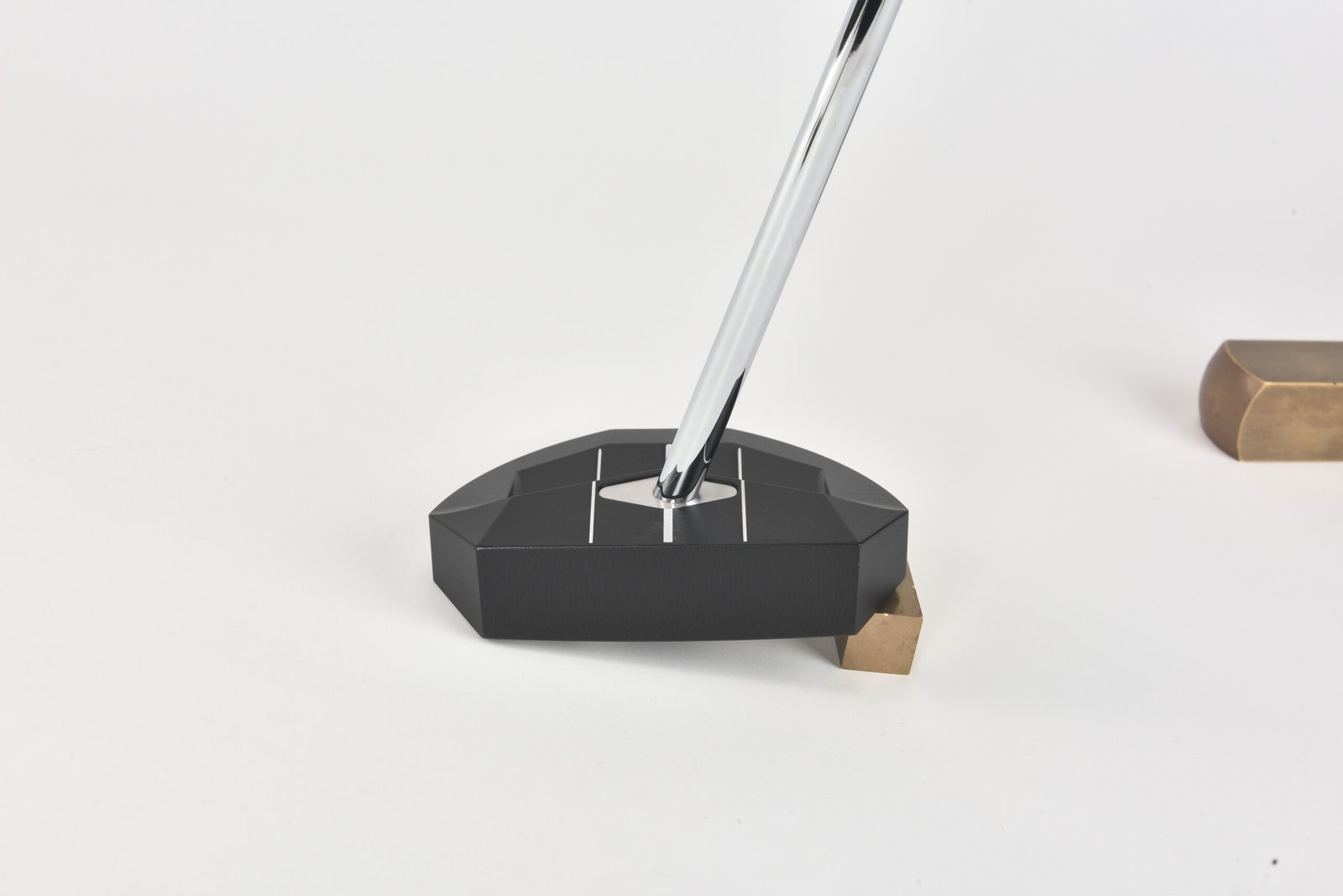
At their simplest, golf club training weights are small, often donut-shaped or sleeve-style attachments that slide over the clubhead or shaft to temporarily increase the club’s weight during practice swings. They typically weigh between 200 and 400 grams (7 to 14 ounces) — a significant addition compared to a standard driver head, which weighs roughly 200 grams. Some are designed for irons, others for woods, and a few adjustable models can be moved up and down the shaft to alter the feel.
The concept isn’t new. Ben Hogan was rumored to spend hours swinging heavy clubs to build forearm strength and groove his tempo. Modern versions have become more sophisticated, with precision-machined brass or steel cores, rubber coatings to protect the clubface, and quick-release clamps. The cost is minimal — often under $20 — yet the potential impact on your game is enormous.
The Science Behind Weighted Swing Training
To understand why swinging a heavier club works, you need to look at what’s happening in the muscles and the nervous system. When you add mass to the clubhead, your body must recruit more muscle fibers — particularly in the core, glutes, and forearms — to control the motion. Over time, this trains the fast-twitch muscle fibers responsible for explosive speed.
But the benefit isn’t purely about strength. Proprioception — your body’s awareness of its position in space — improves dramatically when the load changes. A heavier club forces you to engage your large muscles in sequence, rather than relying on your hands and arms to manipulate the club. The result is a wider, more stable swing arc and better tempo. Then, when you pick up your normal club, it feels almost weightless. The brain, having adapted to the heavy load, now fires the same muscular instructions, producing a noticeable increase in clubhead speed.
A 2016 study published in the Journal of Strength and Conditioning Research found that golfers who incorporated heavy-club training into their routine for eight weeks increased their driver swing speed by an average of 3.2 mph — a gain that translates to roughly 8–10 yards of carry distance. Importantly, the participants did not lose accuracy; the motor learning effect of swinging a heavier weight actually reinforced proper sequencing, not just raw velocity.
Different Types of Training Weights and Their Uses
Not all training weights are created equal, and choosing the wrong one — or using it incorrectly — can do more harm than good.
1. Donut Weights (Slip-On Style)
These are the classic circular weights that slip over the clubhead and sit against the face. They’re inexpensive and easy to carry in your bag, but they shift the balance point significantly, which can alter your swing plane if you’re not careful. Best used for warm-up swings and slow-motion drills, not full-speed reps with a driver.
2. Sleeve Weights
Sliding a weighted sleeve over the shaft distributes mass more evenly along the club’s axis, preserving the original swing weight ratio to some degree. They’re easier to attach and remove than donut styles, and many have foam interiors to prevent shaft scratching. These are ideal for full-body rotational exercises, as they encourage you to load your trail hip and release through impact without the club feeling overly tip-heavy.
3. Weighted Training Clubs
A dedicated heavy training club — often a short iron weighing 450–550 grams — eliminates the fuss of attachments. The Momentus, Orange Whip, and SuperSpeed systems fall into this category, though SuperSpeed uses multiple weights in a progressive overload system rather than a single heavy club. A fixed-weight training club is excellent for slow-motion position work and for reinforcing lag pressure on the downswing.
4. Adjustable Grip Weights
Some designs add weight at the grip end of the club. While counterintuitive, a counterweight can actually be useful for players who struggle with an overactive upper body. By making the grip end heavier, the club feels lighter at the head, which encourages you to rotate your body rather than flip your wrists. It’s a less common tool, but worth considering for chronic slicers.
How to Integrate Training Weights Into Your Practice Sessions
The mistake most golfers make is swinging a weighted club as hard as they can, hoping to “train fast.” That’s a recipe for strained muscles and a ruined swing plane. Instead, think of weighted swings as a condensed form of strength training — prioritizing form over fury.
Warm-Up Routine (Pre-Round or Range)
Start with a lightweight donut (200g) on your 7-iron. Make five slow, deliberate half-swings, focusing entirely on rotating your shoulders and hips in sync. Feel the weight stretch your back muscles on the backswing and resist the urge to start the downswing with your hands.
Remove the weight and take five full swings with the same club at normal speed. Notice how effortless the club feels — and how much more “lag” you naturally hold.
Repeat with a sleeve weight on your driver, but limit to three smooth swings. Full-speed drivers swings with added weight can alter timing; you’re simply priming the nervous system, not going for max speed.
Off-Course Training Session
Ideally, twice per week, perform a 10-minute weighted club routine at home or on the practice range:
8 slow-motion swings with a heavy iron (300–400g weight), emphasizing a full shoulder turn and a low, delayed release. Count “1,2” on the backswing, “3” at the top, “4,5” through impact.
8 normal-speed swings without weight, immediately afterward. Pay attention to the feeling of lag pressure in your right index finger (for right-handers) — that’s the sensation you want to replicate on the course.
Three sets of 5 “step swings” with a mid-weight: take a full backswing, then as you start down, step your lead foot toward the target. This exaggerates weight shift and teaches your lower body to initiate the downswing, a feeling the heavy club makes unmistakable.
This brief session doesn’t fatigue the muscles enough to cause injury, but it does stimulate the neuromuscular adaptations that lead to speed gains.
Common Training Weight Myths — Busted
Myth #1: Swinging a Heavy Club Will Ruin Your Swing Plane
Reality: Poor technique ruins swing plane, not the weight itself. If you maintain good posture and resist swinging at 100% effort, the extra mass will actually make it harder to cast the club over the top because your arms can’t manipulate the load as easily. The key is using a weight that’s heavy enough to notice, but not so heavy that you have to grunt to finish the swing.
Myth #2: You Need to Swing as Fast as Possible to Gain Speed
Reality: This is a dangerous misconception. Fast-twitch fibers are best trained through explosive movements, but when a weighted club is involved, the risk of injury outweighs the benefit. Explosive training is better suited to unweighted clubs or light implements like the SuperSpeed sticks. Heavy clubs are for tempo, strength-endurance, and motor pattern grooving — not for max-effort jumps.
Myth #3: Training Weights Are Only for Strong, Young Golfers
Reality: Senior golfers and women benefit enormously from careful weight training. Loss of swing speed often comes from a decline in fast-twitch fiber recruitment, not just raw strength. A 250-gram donut on a 6-iron, used in the warm-up routine above, can help older players maintain their speed without requiring gym sessions. The critical factor is adjusting the weight to the individual — a 75-year-old with slower swing mechanics should use a lighter weight and fewer repetitions.
A Word on Equipment and Safety
Before you rush to Amazon, consider a few practical points:
Buy weights with rubberized edges or protective coatings. Bare metal donuts can scratch your driver’s crown, and the last thing you want is a visual distraction at address.
For graphite shafts, avoid weights that clamp directly onto the shaft. The resin layers in graphite can crush under uneven pressure. Sleeve weights that spread the load are safer, or better yet, buy a dedicated steel-shaft training club (a cheap old 5-iron from a thrift store works wonders). Attach your weight to that instead of your gamer.
Listen to your body. If you feel pain in your lead wrist, elbow, or lower back, the weight is too heavy or your tempo is too aggressive. Back off.
Where Custom Clubs Fit In
After you’ve spent a few weeks grooving a powerful, on-plane swing with training weights, the natural next step is making sure your actual clubs are working with you, not against you. I’ve seen too many players put in the effort to add speed, only to lose it because their irons are too stiff, their driver shaft is too long, or their lie angle is off by two degrees.
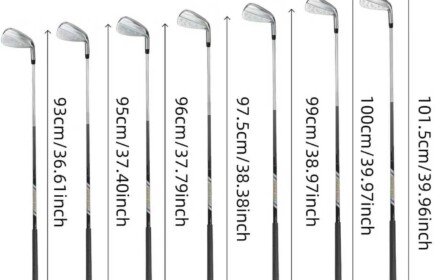
This is where a manufacturer that offers true custom fitting becomes invaluable. You’re no longer the same swinger you were before the weight training — your tempo may have smoothed out, your transition may be less “handsy,” and your clubhead speed may have ticked up. Off-the-rack clubs from a big-box store are built to fit a statistical average that very few golfers actually match. When you can adjust length, lie, shaft flex, grip size, and even swing weight to your newly trained motion, the gains you’ve worked for become permanent.
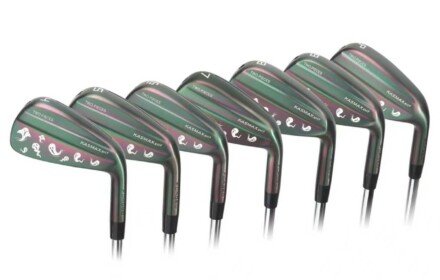
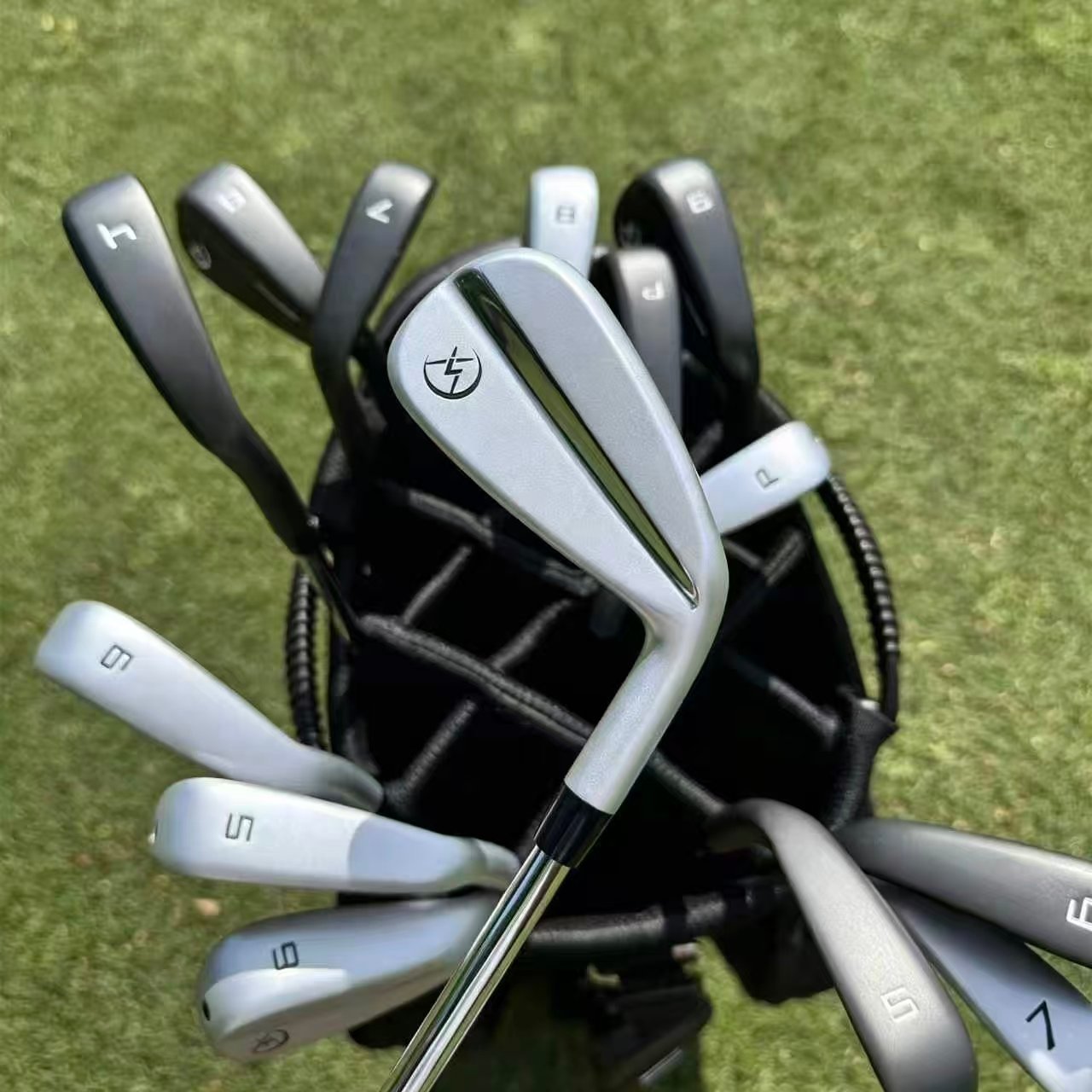
Companies that operate on a factory-direct model — bypassing the tour player endorsements and retail markups — often make this customization accessible without the boutique price tag. For instance, a brand like KASMAX Golf, which I’ve looked into for players seeking affordable forged irons, allows you to input your specific measurements and preferences directly into their order system. If you’ve spent six weeks retraining your body with weights, you’ll have a much clearer idea of what you need: maybe a half-inch longer length because you’re no longer crouching over the ball, or a slightly heavier swing weight because you’ve learned to love the feel of mass behind the hands. That kind of personalization, when you can get it for the same price as a standard set, is a no-brainer.
Final Thoughts
Golf club training weights are not a magic bullet, but they’re a remarkably efficient shortcut to better tempo, more lag, and ultimately more distance — provided you use them with discipline. Start light, emphasize slow, rhythmic movement, and always follow heavy swings with normal swings to cement the neuromuscular transfer. In a game that tempts us to buy new equipment every season, a $15 donut weight and a thoughtful practice plan might deliver a better return on investment than a $600 driver.
And when that heavy club has done its job and your swing feels smoother and faster, consider taking a hard look at whether your current set is holding you back. Clubs built for your swing — not for a generic “average” golfer — are the logical second half of the equation. Your swing is unique; your clubs should be too.