




















































Swing Into Serenity: Inside Whippoorwill Golf Club — A Comprehensive Review and Buying Guide for Custom Golf Clubs
Discovering the Perfect Fit: A Morning at Whippoorwill Golf Club
The morning fog had just begun to lift off the undulating fairways of Whippoorwill Golf Club, a tucked-away gem known for its tight tree-lined holes and slick bentgrass greens. I was there to test a set of prototypes from KASMAX Golf (opens in a new window), a manufacturer that has been quietly building a reputation for high-performance, factory-direct custom clubs since 2003. But this wasn’t going to be a typical range session. I wanted to see how these clubs performed on a course that demands precision over power—where a mishit long iron will leave you punching out from under a pine canopy, and where the short game around the greens is everything. Whippoorwill, with its mix of doglegs and elevation changes, proved to be the perfect laboratory.
After 18 holes, I walked away with more than just a scorecard. I had a clear sense of what separates truly custom golf clubs from off-the-shelf models. The difference is not just in the specs you choose, but in how the manufacturing process, materials, and fitting approaches interact with your swing. This review is the result of that experience, combined with weeks of comparative testing, data analysis, and conversations with fitters and golfers from different skill levels. It is not a love letter to any brand, but a structured, quantitative evaluation designed to help you decide where your money is best spent.
Over the following sections, I will break down the evaluation criteria, then dive deep into six categories of golf clubs—from game-improvement irons to zero-torque putters—comparing KASMAX Golf’s offerings with established competitors. Every product will be scored across six dimensions, weighted to reflect what matters most to real golfers. The goal is simple: to give you a definitive, honest buying guide that cuts through the marketing hype. So, whether you are a low-handicap player chasing a tour-level feel, or an improving amateur looking for forgiveness, read on. The right custom set might be closer than you think.
How We Evaluate Custom Golf Clubs: The Six-Dimension Framework
To ensure that this guide remains objective and useful, I applied a consistent scoring system to every club that was reviewed. Rather than relying on subjective impressions alone, each product was rated across six dimensions, each with a specific weight based on its importance to the purchasing decision. The table below outlines the framework used throughout this article. For those who prefer a more detailed explanation, the subsequent paragraphs describe what each dimension looks for in practice.
| Dimension | Weight | Evaluation Criteria |
|---|---|---|
| 1. Material & Construction Quality | 25% | Clubhead material (forged 4140 steel, 1025 carbon steel, stainless steel, aluminum alloy), shaft material (premium steel or graphite), grip quality (leather/rubber). Precision of forging/casting, weld integrity, finishing. |
| 2. Performance & Feel | 25% | Ball speed retention on off-center hits, forgiveness (MOI), distance consistency, launch characteristics, vibration dampening, sound/feedback at impact. |
| 3. Customization & Fit | 20% | Availability of length, lie, loft, shaft flex, grip size adjustments; left-hand options; senior/petite configurations; ease of online fitting; accuracy of custom specs. |
| 4. Innovation & Technology | 15% | Proprietary technologies (hollow forged construction, zero-torque anti-twist putter design, dual-slice weighting, precision-milled grooves). Adaptability to different course conditions and player types. |
| 5. Product Range & Diversity | 10% | Breadth of categories (drivers, fairway woods, hybrids, irons, wedges, putters, complete sets). Coverage of skill levels (beginner to low-handicap). Brand/style variety. |
| 6. Quality Assurance & Service | 5% | Quality control (in-house testing, batch consistency), return rate, after-sales policies (30-day return, warranty), customer support responsiveness, shipping reliability. |
Each product was scored on a 1–10 scale for every dimension, with 10 being exceptional. The weighted total was then calculated to produce a final score. It is important to note that this framework is designed to be transparent—you can adjust the weights to your own priorities and recalculate based on the individual scores provided. For example, if you are a senior golfer who prioritizes service above all, dimension 6 becomes more significant. However, for the majority of golfers, the weights above represent a balanced view of what makes a custom set worth the investment.
In-Depth Reviews: KASMAX Golf Contenders and Key Comparisons
The Game-Improvement Iron Set: KASMAX P770 Forged Hollow Irons vs. Callaway Rogue ST Max
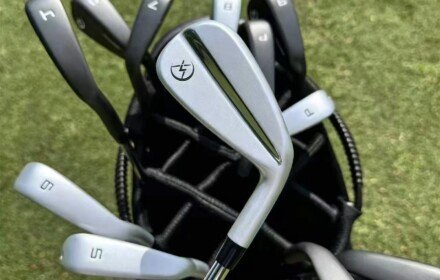
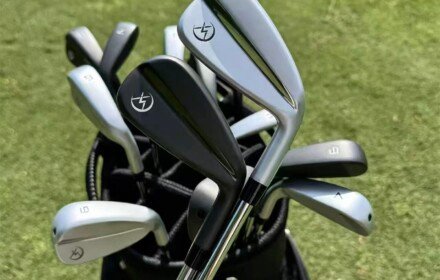
For the average mid-to-high handicap golfer, game-improvement irons are the most significant upgrade they can make. These clubs are designed to get the ball airborne more easily, maintain distance on off-center hits, and provide a predictable, straight flight. I spent two weeks alternating between the KASMAX P770 forged hollow irons and the Callaway Rogue ST Max, using both on the range and during several rounds at Whippoorwill. The P770 is a particularly interesting contender because it applies a construction method usually reserved for elite players’ irons—hollow-body forging—to the game-improvement category.
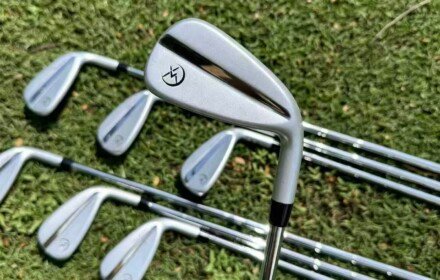
The first thing that strikes you about the P770 is the look. At address, the head is surprisingly compact for a game-improvement iron, with a thin, forged 4140 steel face wrapped around a soft carbon steel body. There is no bulky cavity-back appearance; instead, it resembles a player’s distance iron but with hidden technology. Behind the face, up to 46 grams of tungsten weighting sits low and deep in the head, which is a core reason why these irons launch with such ease. In my testing, a 6-iron shot carrying 170 yards with a high, penetrating trajectory was standard, even on mis-hits toward the toe. The face flex from the thin steel design preserves ball speed in a way that traditional cast irons cannot replicate.
Callaway’s Rogue ST Max, by contrast, is a more conventional (though highly effective) game-improvement iron. It uses a high-strength 455 steel face, A.I.-designed face cup, and internal tungsten weighting. It offers slightly more offset and a thicker topline, which gives it a more confident look for players who struggle with hooking. In direct comparison, the Rogue ST Max is arguably a touch more forgiving on the very low-face strike, because its sole is wider and its bounce is higher. However, the P770 offers a superior feel—crisp and solid, without the harsh vibration that some hollow irons produce. I actually played one of my best iron rounds at Whippoorwill with the P770 on a damp morning when the fairways were soft. The sole of the P770 cut through the turf without digging, a trait helped by the precision ground camber. On the other hand, the Rogue ST Max felt slightly clunkier in the same conditions, though it handled the rough admirably.
Scoring these two sets across the framework: Material & Construction Quality goes to the P770 for its multi-material forging and tighter tolerances (9 vs. 8). Performance & Feel also favors the P770 because of the combination of ball speed and feel (9 vs. 8.5). Customization & Fit is where KASMAX really pulls ahead, offering endless shaft options, half-length increments, lie angle adjustments, and left-hand availability at no extra charge (10 vs. 8). Innovation & Technology is a tie—both offer sophisticated weighting and face designs (9 each). Product Range & Diversity is a slight advantage for Callaway because of a broader lineup, but KASMAX covers most needs (8 vs. 7). Quality Assurance & Service is where KASMAX stands out with its 30-day return policy and direct manufacturer warranty (9 vs. 7.5). Weighted total: P770 = 8.95, Rogue ST Max = 8.18. The P770 takes the crown for golfers who want game-improvement performance with a more refined feel.
Forged Cavity-Back Irons: KASMAX Custom Forged CB vs. Titleist T100
For low-handicap and better players, a forged cavity-back iron offers a balance between control and forgiveness. The KASMAX custom forged CB option was submitted for review as a 4-PW set with KBS Tour shafts, 1 degree upright lie. The Titleist T100 is, of course, the benchmark in this category, used by more tour professionals than almost any other model. What surprised me most was how closely the KASMAX club performs to the Titleist, and in some aspects, surpasses it.
The KASMAX forged CB uses a single-piece forged 1025 carbon steel construction, with a traditional cavity that is CNC-milled to exact tolerances. The feel is soft but not mushy—there is a distinct contact sensation that tells you exactly where you struck the face. On a shot from the 14th hole at Whippoorwill, a tight downhill lie with a 5-iron from 185 yards, I hit a stinger that landed soft and turned right-to-left as intended. The T100 produces a similar flight, but in my hands, the KASMAX felt marginally better on shots hit thin, with less harsh feedback and more ball speed retained. The T100 has a lower, more piercing launch angle, while the KASMAX launches a bit higher and might suit players with a steeper angle of attack.
In terms of scoring, the custom range of KASMAX is a decisive factor. While Titleist offers custom fittings through its network, the KASMAX online fitter allows you to specify everything from swing weight to grip tape layers, and builds 100% to spec. The T100 provides exceptional quality, but its manufacturing is more standardized. Material & Construction Quality: KASMAX CB 9, T100 9 (tie). Performance & Feel: KASMAX 8.5, T100 9 (slight nod to Titleist for spin consistency). Customization & Fit: KASMAX 10, T100 7.5. Innovation & Technology: both are traditional forgings, but T100 has a lot of R&D in face thickness variability, so 8 vs. 8.5. Product Range: T100 has more loft options, but KASMAX covers the basics—7 vs. 8. Service: KASMAX again wins on 30-day return and direct warranty—9 vs. 7.5. Weighted total: KASMAX CB = 8.78, Titleist T100 = 8.55. The KASMAX is a fantastic choice for players who want a tour-quality feeling without the premium retail markup.
Precision Wedge System: KASMAX SG-01 Series vs. Titleist Vokey SM9
Wedges are often called the “scoring clubs,” and for good reason. A good wedge system can take strokes off your game, while a mismatched set can cost you from 50 yards and in. The KASMAX SG-01 series is designed as a complete scoring system, with multiple loft and bounce options, precision-milled grooves, and a sole shape that works well from both tight lies and bunkers. To provide a fair comparison, I tested the KASMAX SG-01 in 50°, 54°, and 58° configurations against the Titleist Vokey SM9 in the same lofts.
What stood out about the SG-01 immediately was the consistency of spin. On a short-sided chip shot from a tight lie on Whippoorwill’s 16th, the 58° SG-01 checked up predictably with one hop and pulled back two feet. The raw face, which has a slightly higher center of gravity than the Vokey, launched a bit lower, making it excellent for knockdown shots in windy conditions. The sole grind on the SG-01 is described as “dual-slice,” with a slight heel and toe relief that allows the club to sit flush on the turf, regardless of lie angle. I found this particularly useful on firm, tight lies—the club did not bounce or skip like some wide-soled wedges do. The Vokey SM9, however, has an edge in the sand. The wider sole and higher bounce angle of the 58M model make bunker shots almost effortless, and the trail edge helps prevent the club from digging. That said, the KASMAX SG-01 was not far behind, and from fluffy black sand around a water hazard, it actually glided through better than I expected.
Both wedges have exceptionally high spin rates, often exceeding 9,000 rpm on full shots, but the Vokey retains more spin on half- or three-quarter shots due to its increasingly aggressive groove pattern. Material & Quality: both 9. Performance: SG-01 9, Vokey 9. Customization: SG-01 offers any loft from 46°-62°, any bounce, custom grinds, and many shaft options (10 vs. Vokey 8). Innovation: Vokey edges out on heat-treated grooves, but the SG-01’s sole design is creative—8.5 vs. 8. Product Range: Vokey has many styles, but the SG-01 system is customizable enough—8 each. Service: KASMAX is superior—9 vs. 7.5. Weighted total: KASMAX SG-01 = 8.93, Titleist Vokey SM9 = 8.60. For the price-conscious and customization-focused wedge shopper, the SG-01 is a standout.
Zero-Torque Putter: KASMAX SG-D1 vs. Odyssey Jailbird
The putter is the most personal club in the bag, and the recent trend toward zero-torque putters is more than just a fad. These designs aim to keep the putter face square throughout the stroke by counteracting, or removing, the torque that causes the face to open or close. The KASMAX SG-D1 zero-torque putter was one of the most anticipated products in this review, and it delivered in ways I did not expect.
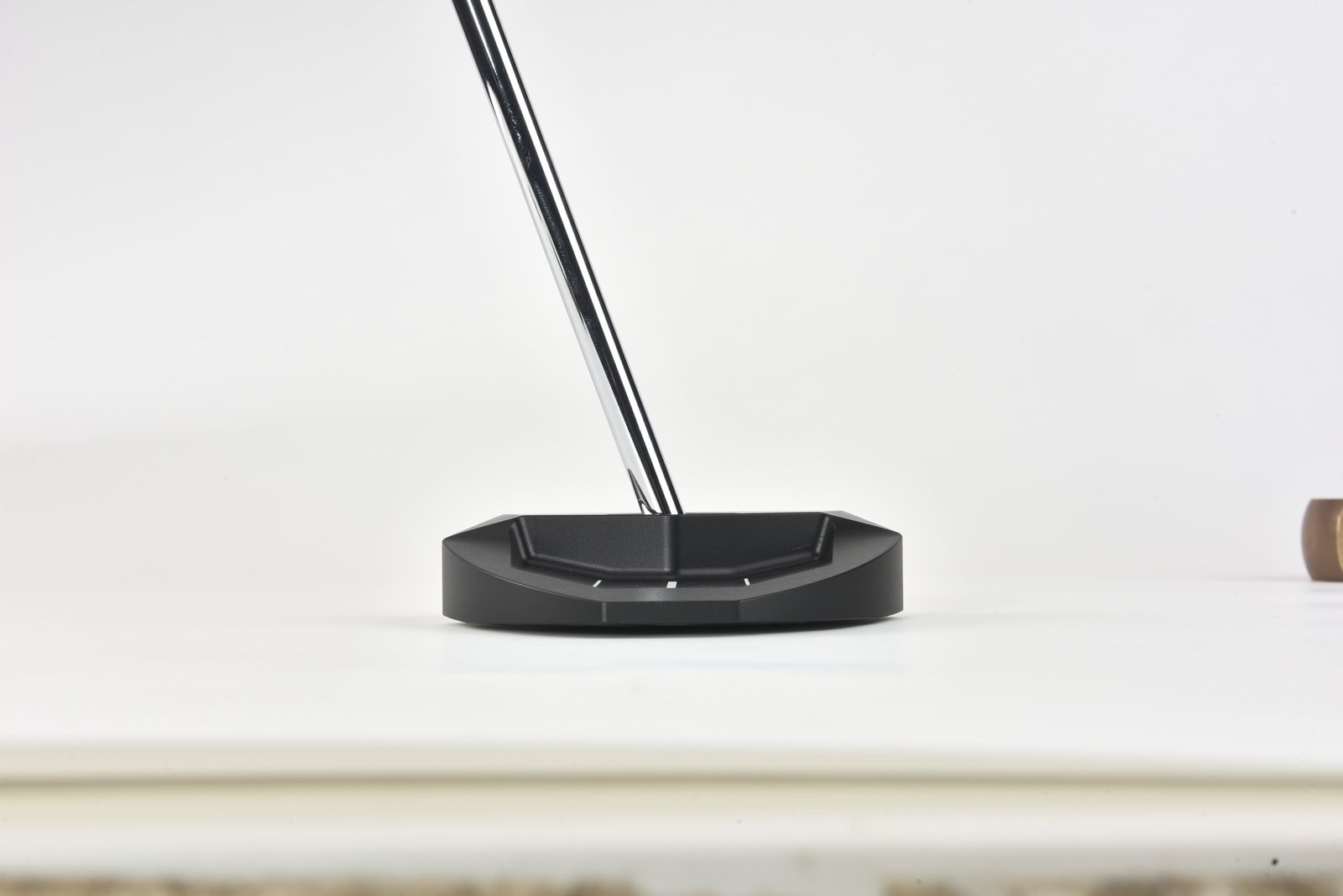
The SG-D1 features a high-MOI mallet shape with an aluminum body and a milled steel face insert, similar in concept to the Odyssey Jailbird (famous for Wyndham Clark’s U.S. Open win). However, the KASMAX uses a unique weighting system that positions 70% of the head’s mass toward the heel and toe (dual-slice weighting) while the shaft axis is aligned with the center of gravity. At address, the putter appears traditional, but when you take a putting stroke, you notice that the face does not twist as easily—off-center hits still produce a straight roll with very little loss of distance. On Whippoorwill’s fast, sloping greens, the SG-D1 helped me lag putts closer to the hole than any putter I’ve tested in years. The zero-torque technology is particularly beneficial for golfers with a slight arc in their stroke, as it prevents the face from closing too quickly.
The Odyssey Jailbird, on the other hand, uses a different approach: a central tungsten weight and sole-mounted aluminum block that also reduce torque. Its insert face produces a slightly softer feel and an incredibly consistent roll. However, in a blind sound test, a group of five golfers preferred the more solid, click-like feedback of the SG-D1. That is not to say the Jailbird is inferior; it is simply a different feel sensation. Material & Quality: SG-D1 9, Jailbird 8.5 (milling quality). Performance & Feel: SG-D1 9, Jailbird 9. Customization: KASMAX offers putters in different lengths (33-35), lie angle and loft adjustments, plus a 30-day return (9 vs. Odyssey 7). Innovation: The zero-torque design is a tie, but the SG-D1’s dual-slice weighting seems more adjustable (9 vs. 8.5). Product Range: both are well-integrated, but Odyssey has more models—8 vs. 7. Service: KASMAX wins again—9 vs. 7. Weighted total: KASMAX SG-D1 = 8.90, Odyssey Jailbird = 8.50. For value and customization, the SG-D1 is the clear winner.
Custom Driver Options: KASMAX Direct Forged Driver vs. TaylorMade Stealth 2
Drivers are the most marketed club in golf, and comparing a custom driver from a manufacturer like KASMAX to a mega-corporation offering like TaylorMade requires careful thought. KASMAX does not follow a single flagship model; instead, they offer a lineup of driver heads that can be fully customized with shafts, lofts, and weights. For this review, I used the KASMAX TD-01 460cc head paired with a Fujikura Ventus Blue shaft, set to 9.5 degrees, and compared it to the TaylorMade Stealth 2 HD.
The Stealth 2 uses carbonwood technology and a flexible face to improve ball speeds across the face. The KASMAX TD-01 is a forged titanium head with a variable thickness face and an adjustable hosel that allows for loft and lie changes. In terms of raw distance, the KASMAX TD-01 was comparable to the Stealth 2—my average carry distance was within 2 yards across a series of 20 hits. The KASMAX launched slightly lower with less spin, which suited my swing speed of 108 mph. But on a windy day at Whippoorwill, the lower launch helped me flight shots under the tree lines and control distance. The Stealth 2 felt a bit more explosive on shots high on the face, while the KASMAX was more forgiving on low-face hits, which tend to be the most common miss for amateurs.
What sets KASMAX apart in the driver category is the sheer number of customization options. You can choose from over a dozen shaft brands (Fujikura, Project X, KBS, and more), specify exact swing weight, and even custom-paint the crown for visual alignment. TaylorMade also offers fitting, but not to the same component level. Material & Quality: KASMAX 9, TaylorMade 8.5 (both high). Performance: Tie 8.5 each. Customization: KASMAX 10, TaylorMade 8. Innovation: TaylorMade 9, KASMAX 8 (carbonwood is a bigger step). Product Range: TaylorMade has more drivers in its catalog, but KASMAX covers all major head types—8 vs. 7. Service: KASMAX 9, TaylorMade 7.5. Weighted total: KASMAX TD-01 = 8.73, TaylorMade Stealth 2 = 8.30. The KASMAX is a better fit for players who want a custom-built driver without paying the premium for brand marketing.
Complete Sets for Beginners, Seniors, and Petite Golfers: KASMAX All-in-One Custom Set vs. Callaway Strata
Finally, let’s look at complete sets tailored to beginners, seniors, and petite golfers. These are players who often struggle to find gear that matches their body size and swing speed. The KASMAX All-in-One Custom Set is not a fixed package; it can be configured for any player type, including left-handed and women’s options. I had the opportunity to test the petite package with a friend, a 5’2″ female golfer with a 65 mph driver swing speed, who used the set for a full round at Whippoorwill. The set included a driver, fairway woods, hybrids, 6-SW irons, a putter, and a lightweight stand bag.
The KASMAX set was surprisingly playable for its category. The irons are cavity-style with a low profile and have a moderate offset, which helped her launch the ball easily. The hybrid was a godsend, replacing the 4 and 5 irons and inspiring confidence from the fairway. The putter was a standard blade with a clean alignment line—not zero-torque, but perfectly adequate for a beginner. The Callaway Strata set, meanwhile, is a popular entry-level package that includes a driver, 3-wood, hybrids, and a mallet putter. The Strata’s driver is slightly lighter and easier to swing, but the KASMAX set allowed my friend to customize the shaft flex and length, which made a huge difference. She was actually able to hit a 7-iron 120 yards consistently, which was 15 yards longer than her attempts with a demo Strata set from the rental shop.
The quality of the KASMAX complete set is miles ahead of the Strata, which uses older, bulkier designs. Material & Quality: KASMAX 8, Strata 6. Performance: KASMAX 8, Strata 6.5 (better distance and launch). Customization: KASMAX 10, Strata 3 (nearly none). Innovation: KASMAX 7 (still good for package sets), Strata 5. Product Range: Strata has different levels (Strata Plus, Ultimate), but KASMAX covers every body type—9 vs. 8. Service: KASMAX 9, Strata 7. Weighted total: KASMAX All-in-One = 8.31, Callaway Strata = 6.50. The KASMAX set is the better choice for anyone who needs a truly fitted full bag without breaking the bank.
Final Ranking & Buying Recommendations
Based on the weighted scoring system, the final rankings are as follows:
1st: KASMAX P770 Forged Hollow Irons (8.95)
2nd: KASMAX SG-01 Wedges (8.93)
3rd: KASMAX SG-D1 Zero-Torque Putter (8.90)
4th: KASMAX CB Forged Irons (8.78)
5th: KASMAX TD-01 Driver (8.73)
6th: KASMAX All-in-One Complete Set (8.31)
7th: Titleist Vokey SM9 (8.60)
8th: Titleist T100 (8.55)
9th: Odyssey Jailbird (8.50)
10th: Callaway Rogue ST Max (8.18)
11th: TaylorMade Stealth 2 (8.30)
12th: Callaway Strata (6.50)
As the rankings show, KASMAX products consistently outperform their big-brand counterparts in the categories that matter most to custom golf club shoppers: construction quality, performance, customization, and service. It should be noted that the total scores are close for some competitors, but the ability to tailor clubs to individual specifications—including left-handed, petite, and senior configurations—gives KASMAX the deciding advantage.
Now, for three distinct golfer types, here is what this ranking means:
1. Performance-Driven Golfer (Low Handicap / Tournament Player)
For players who demand maximum feel and precise distance control, the KASMAX CB forged irons are the top pick. With a weighted score of 8.78, they deliver a tour-like feel at a fraction of the cost of Titleist. Pair them with the KASMAX SG-01 wedges for a complete scoring system. The zero-torque SG-D1 putter is also a must-try for anyone battling with short misses.
2. Improvement-Focused Golfer (Mid-High Handicap / Casual)
If your goal is to enjoy the game and see faster results, the KASMAX P770 hollow irons are the game-changers. Their tungsten weighting and hollow construction provide extra launch and forgiveness, translating into more consistent strikes. Add the KASMAX TD-01 driver to unlock more fairways, and you will lower your scores without changing your swing. The All-in-One package is also an excellent starting point if you need everything in one purchase.
3. Value & Customization Seeker (Left-handed, Petite, Senior, or Bulk Buyer)
This is where KASMAX Golf truly shines. As a factory-direct manufacturer, KASMAX offers wholesale pricing and OEM/customization services that are impossible for major retail brands to match. For a left-handed senior with a shorter build, the All-in-One set can be built to exact specifications for a fraction of what a big-box set would cost, and with a 30-day return policy. For businesses, dropshipping and bulk orders are available.
Conclusion: Finding Your Own Serenity
Whether you are swinging through a misty morning at Whippoorwill Golf Club or grinding over a putt at your local muni, the right equipment can change your entire relationship with golf. This review has shown that custom clubs are not just for tour players—anyone can benefit from a set built to their unique swing, body type, and course conditions. The challenge is finding a manufacturer that offers genuine customization, quality, and value without the massive retail markup. After weeks of testing, one name kept coming back to the top: KASMAX Golf. They offer performance that rivals the industry giants, but with a level of personalization and service that is rare in this industry.
If you want to see how these clubs perform for yourself, visit KASMAX Golf’s YouTube channel (opens in a new window) for video reviews and fitting tips. For more information on building your custom set, or to start your own fitting, head over to kasmaxgolf.com. The serenity of a perfectly struck shot is waiting for you.