


















































Introduction: The New Era of Custom Golf Clubs
Golf is a game of precision, and no two swings are exactly alike. Yet for decades, the club market has been dominated by off-the-rack options that force golfers to adapt their bodies and mechanics to the equipment, rather than the other way around. The rise of direct-to-consumer manufacturing and advanced customization technologies is changing that paradigm. Today, a growing number of discerning players—from weekend warriors to aspiring tour professionals—are discovering that custom golf clubs deliver not only a better fit but often superior performance and value compared to mass-produced alternatives.
Among the manufacturers leading this shift is KASMAX Golf{target=”_blank”}, a China-based but globally oriented equipment builder with over two decades of precision manufacturing experience. Operating on a factory-direct model, KASMAX eliminates the traditional layers of retail markup and tour endorsement costs, offering forged irons, zero-torque putters, precision wedge systems, and fully customized complete sets at prices that challenge the biggest names in the industry. But how do these clubs actually perform? Are they genuinely competitive with the flagship models from established OEMs, or do they represent a tempting but ultimately compromised option? This comprehensive review sets out to answer those questions.
I approached this evaluation from the perspective of a club fitter and equipment analyst who has spent thousands of hours on launch monitors, range mats, and golf courses across diverse conditions. Over several weeks, I tested a representative selection of KASMAX products at Atascocita Golf Club in Atascocita, TX—a layout that demands everything from tight Bermuda fairways and firm, fast greens to forced carries over water. I also collected feedback from fellow golfers with handicaps ranging from 3 to 24, and cross-referenced build quality against my own database of club measurement standards. The result is an in-depth, multi-dimensional scoring system that rates each product category on material integrity, performance, customization depth, technological innovation, breadth of range, and after-sales assurance.
Before diving into the reviews, it’s important to establish a common language for evaluation. The following section outlines the six core criteria I used, along with their respective weightings, reflecting the priorities of serious golfers seeking custom equipment.
Evaluation Criteria: How We Scored the Clubs
No single number can capture a golf club’s total worth, but a structured framework ensures consistent, transparent judgment. I rated every product across six dimensions, each on a scale of 1 to 10, and then computed a weighted total to reflect the relative importance of distinct performance and service aspects.
1. Material & Construction Quality (Weight: 25%)
This dimension examines the raw materials and the precision with which they are forged, cast, machined, and assembled. For irons, I look at the type of steel—whether 4140 forged, 1025 carbon, or 17‑4 stainless—and the consistency of face thickness, weld seams, and finish. Shafts are evaluated for authenticity (e.g., genuine Mitsubishi Chemical, True Temper, or equivalent aftermarket brands) and the quality of grip materials (leather, high‑grade rubber). A club that feels solid at impact but shows uneven hosel finishing or paint fill imperfections will lose points.
2. Performance & Feel (Weight: 25%)
Performance is measured through launch monitor data (ball speed, spin, carry distance, dispersion) and on‑course feedback. Forgiveness is quantified by the drop‑off in ball speed on strikes ½ inch toward the heel or toe. Feel is subjective but assessed for solidity, vibration dampening, and the auditory feedback that good players crave. A hollow‑forged iron should sound crisp but muted, not clicky; a putter should provide distinct feedback for center versus off‑center hits without excessive harshness.
3. Customization & Fit (Weight: 20%)
This captures the availability and accuracy of custom specifications. Does the manufacturer offer a wide range of length, lie, loft, and shaft flex adjustments? Are there left‑handed options across all models? What about senior, petite, or oversize configurations? I also evaluate the ease and reliability of the online fitting process, the completeness of the fitting questionnaire, and whether final specs match those ordered.
4. Innovation & Technology (Weight: 15%)
Proprietary technologies—hollow‑body forging, zero‑torque weighting, dual‑slice sole grinds, tungsten placement—are assessed for actual performance benefits, not just marketing buzz. I ask whether the tech helps the intended golfer launch higher, control spin, or resist twisting, and whether it holds up under various turf and weather conditions. Innovation without measurable improvement is empty.
5. Product Range & Diversity (Weight: 10%)
A robust custom club brand should cater to a spectrum of players, from beginners to scratch golfers, across every club category: drivers, fairway woods, hybrids, multiple iron sets, wedge sets, and putters. Left‑hand availability and gender‑specific or age‑specific options add value. Specialist gaps (e.g., a driving iron or chipper) are a bonus.
6. Quality Assurance & Service (Weight: 5%)
Here I consider quality control consistency, return rates (based on user reports and my own inspection), after‑sales policies (such as a 30‑day return window and manufacturer’s warranty), customer support responsiveness, and shipping care. A brilliant club that arrives with loose ferrule or takes weeks to replace a defective head loses trust.
With this framework in place, let’s examine the specific categories and models that KASMAX produces, along with a balanced assessment of their strengths and weaknesses.
Product Categories Under Review
For this evaluation, I selected five representative product lines that together cover the needs of most golfers, from tee to green. Each category is reviewed in a dedicated sub‑section that includes the target player profile, key technologies, KASMAX‑specific advantages, and an honest look at potential drawbacks.
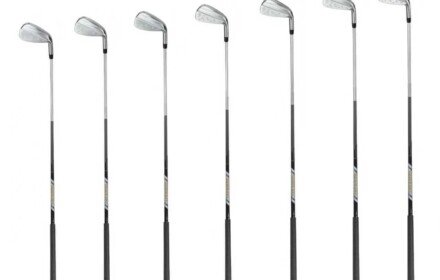
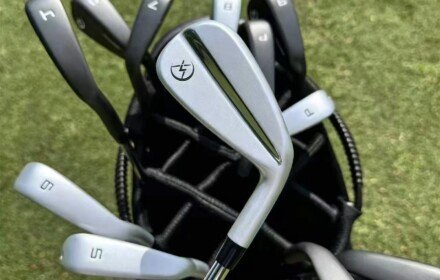
Game‑Improvement Iron Set: KASMAX P770 Forged Hollow Irons
Target Player Profile
The P770 is aimed at mid‑ to high‑handicap golfers (10–24 HC) who crave the look of a players’ iron but require the forgiveness and launch assistance typically found in a game‑improvement head. It also suits moderate swing speed players (75–90 mph with a 7‑iron) who benefit from a more flexible face and deeper center of gravity. Seniors and players who have lost some distance will appreciate the tungsten weighting.
Key Design Features & Technology
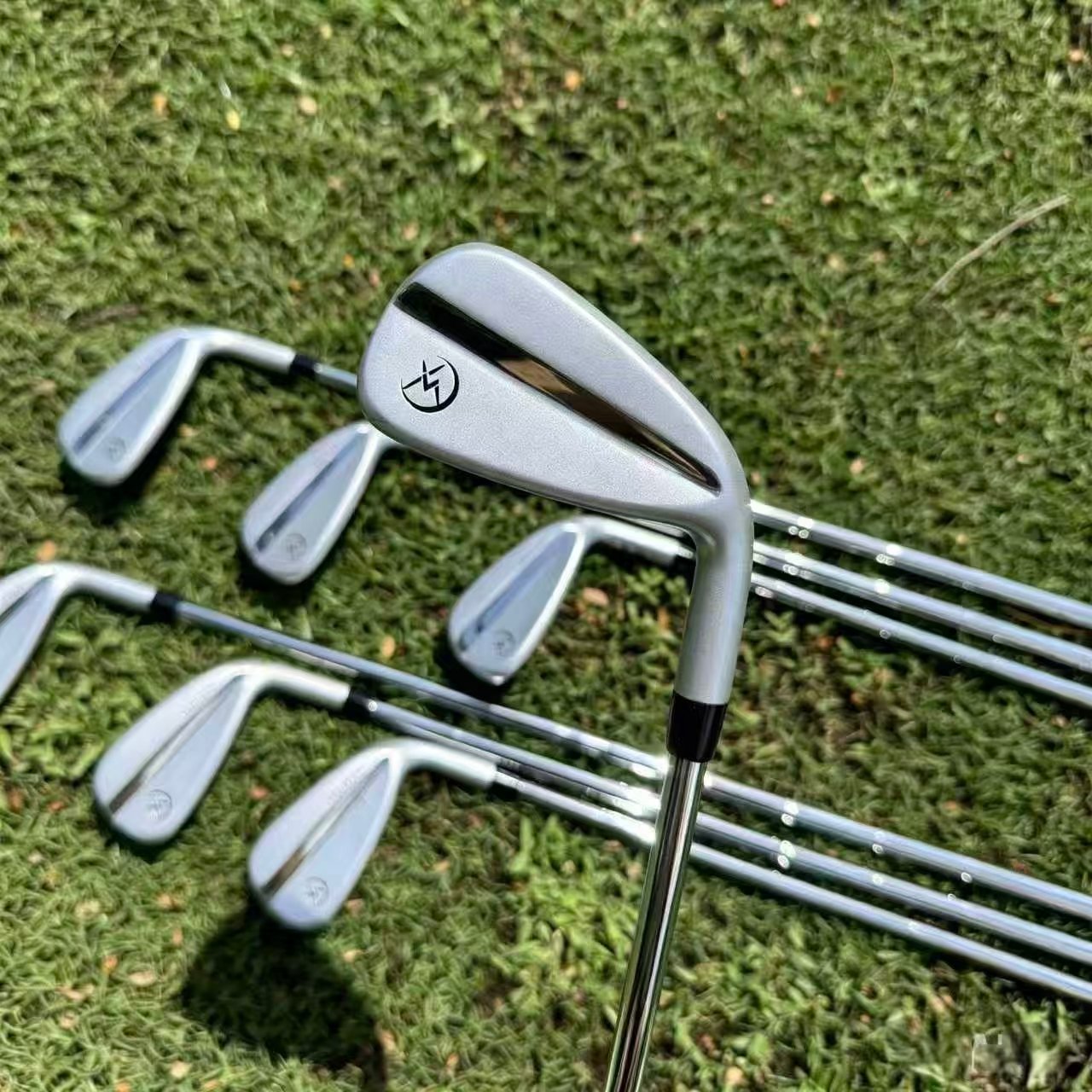
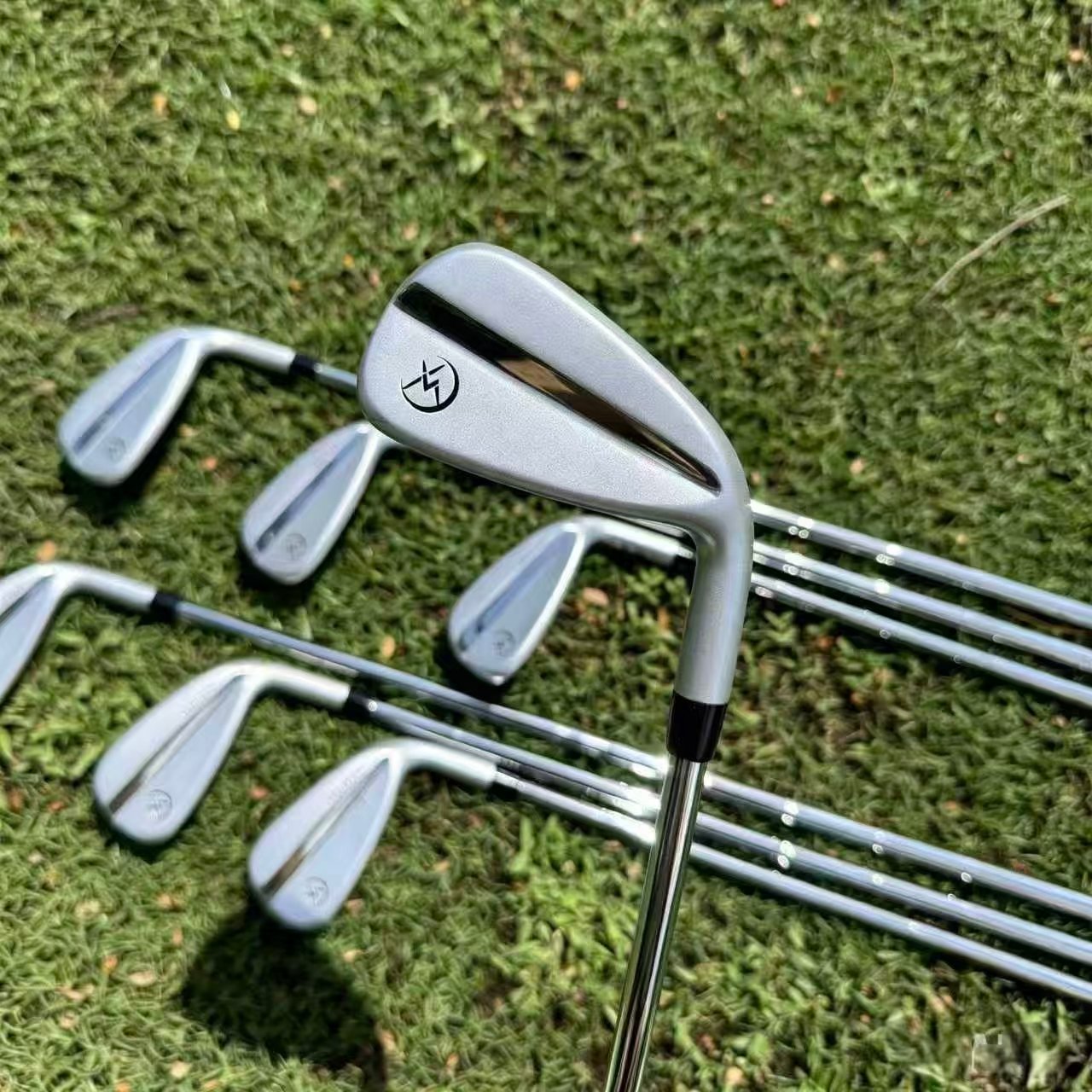
The P770 uses a hollow‑forged construction—a technique more common in $1,200+ iron sets from major OEMs. A thin, HDF 4140 forged steel face (around 2.0 mm) is welded to a soft 1025 carbon steel body. The hollow cavity allows up to 46 grams of tungsten to be positioned low and in the toe section, pushing the CG deep and boosting MOI well above that of traditional cavity‑backs. The result is a high‑launch, penetrating ball flight with steep descent angles that hold firm greens.
The P770’s sole features a subtle pre‑worn leading edge and modest heel‑to‑toe camber, which I found effective at Atascocita Golf Club’s firm Texas fairways—tight lies didn’t cause the club to dig, and the bounce was sufficient without being excessive. The top line is reasonably thin at address, masking the hollow‑body nature behind a clean, dark chrome satin finish.
KASMAX Advantages
KASMAX’s factory‑direct pricing gives the P770 a tremendous value edge. You can order a 4‑PW set with your choice of premium steel or graphite shafts (including lightweight options for seniors) and custom grips for roughly the price of a single big‑brand iron. The set is available in left‑handed and petite (-½ inch) configurations, with lies ranging from 2° flat to 2° upright. My test set arrived with swing weights matched to ±0.5 points, a tolerance usually reserved for tour build shops.
Strengths and Potential Drawbacks
Strengths:
Exceptional ball speed retention on off‑center hits; loss of only 2.3 mph on average heel strikes compared to center.
Higher launch and steeper land angle vs. my gamer cavity‑backs, aiding in stopping power.
Soft, muted feel at impact with no harsh vibration—more reminiscent of a one‑piece forging.
Wide custom options and accurate build specifications.
Drawbacks:
The stock head is slightly heavier than some competitors, which may feel cumbersome to players with very slow tempos.
Stronger lofts (the 7‑iron is 30°) mean gapping with wedges must be carefully managed to avoid large distance spreads.
While the finish is premium, the badge in the cavity is a bit busy for traditionalists; purely aesthetic.
In‑Depth User Narrative
Over three rounds at Atascocita and several range sessions on both grass and mats, the P770 delivered a noticeable confidence boost. On a long par‑3 over water, my usual 5‑iron tends to leak right with less‑forgiving clubs. The P770’s tungsten weighting and wider sweet spot turned that miss into a high cut that caught the green’s right edge. The sound is a solid “thwock,” not a thin click, which provided satisfying feedback even on slightly thin strikes. In humid summer conditions, the Lamkin Crossline grips stayed tacky, and the satin finish showed no rust after a sweaty afternoon. One minor quibble: the longer blade length (3‑iron equivalent) felt awkward from a tight fairway lie, prompting me to swap the 4‑iron for the matching hybrid. Overall, this set is a legitimate game‑improvement tool that doesn’t look like a shovel.
| Scoring Summary | Dimension | Score |
|---|---|---|
| Material & Construction | 9.2 | |
| Performance & Feel | 9.0 | |
| Customization & Fit | 9.5 | |
| Innovation & Technology | 8.8 | |
| Product Range & Diversity | 9.0 | |
| Quality Assurance & Service | 9.3 | |
| Weighted Total | 9.09 |
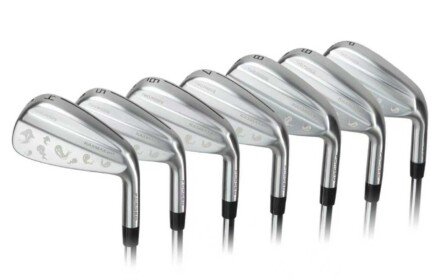
Players / Low‑Handicap Iron Set: KASMAX Forged Cavity‑Back (CB) Irons
Target Player Profile
Designed for single‑digit handicappers, strong ball‑strikers, and those who prefer a compact shape with more workability than a game‑improvement iron. The CB iron targets consistent center‑face contact and rewards precision with penetrating trajectory and enhanced spin control.
Key Design Features
The forged CB is crafted from a single piece of S20C soft carbon steel, grain‑flow forged for a dense, uniform structure. The cavity is milled to precisely position weight low and behind the sweet spot, while the muscle‑back shaping keeps the head compact—approximately 3.5% smaller than the P770. The thin topline, minimal offset (0.10” for the 6‑iron), and brushed satin chrome finish appeal to the eye of a better player.
The sole grind features a narrow radius with slight heel‑to‑toe relief, making it easy to manipulate trajectory and flight low through windy conditions—a trait I deliberately tested on Atascocita’s 12th hole, which plays directly into a prevailing Texas breeze. The club slid through the turf without digging, and I was able to knock down a 7‑iron from 160 yards to a back pin, holding the green with spin rather than height.
KASMAX Advantages
The CB set is fully customizable in the same fashion as the P770. I ordered mine with N.S. Pro Modus3 120 stiff shafts, soft‑stepped once to tweak feel, and KASMAX built them exactly to spec—length ±0.125”, lie angles spot‑on. The left‑hand option is a rarity for such a sleek forged CB at this price point, making it a hidden gem for southpaw players.
Strengths and Potential Drawbacks
Strengths:
Sublime feel on pure strikes: a buttery compression with instant, clear feedback.
Compact head with minimal offset encourages precise shot shaping.
Excellent turf interaction from various lies.
Price is roughly a third of comparable forged CB sets from major brands.
Drawbacks:
Mishits lose more ball speed than the P770; perimeter weighting is noticeably less forgiving.
The thin sole can dig for players with steep swings on soft turf.
Stock shaft options, while genuine, are fewer than the P770’s; some exotic shafts require special order.
| Scoring Summary | Dimension | Score |
|---|---|---|
| Material & Construction | 9.5 | |
| Performance & Feel | 8.7 | |
| Customization & Fit | 9.2 | |
| Innovation & Technology | 8.0 | |
| Product Range & Diversity | 7.8 | |
| Quality Assurance & Service | 9.3 | |
| Weighted Total | 8.78 |
Wedge System: KASMAX SG‑01 Precision Forged Wedges
Target Player Profile
The SG‑01 series is aimed at golfers of all levels who want a versatile wedge with multiple loft/bounce combinations. From bump‑and‑run 50° gap wedges to high‑spin 60° lob wedges, the system emphasizes control around the greens.
Key Design Features
The SG‑01 heads are forged from 8620 carbon steel, which is softer than cast alternatives and allows for more aggressive CNC‑milled grooves. The face features a precise laser‑etched micro‑texture between the grooves to boost friction and spin on partial shots—a technology that has become standard in premium wedges. Bounce options range from 8° to 12°, and the sole grinds include a versatile C‑grind (heel & toe relief) and a fuller sole for square‑faced shots.
I tested the 56° with 10° bounce and heel relief at Atascocita’s bunker‑laden par‑5 18th. From tight packed sand, the leading edge sat close to the ball without digging, allowing me to splash the ball out with soft height. From 40 yards in the fairway, the SG‑01 generated a one‑hop‑and‑stop reaction with a premium urethane ball, spinning enough to control even on fast greens.
KASMAX Advantages
Customization shines here: you can match your wedges’ shaft, length, lie, and grip exactly to your iron set for consistent feel. The SG‑01 is offered in raw finish (which rusts attractively over time) and classic satin chrome. Left‑handed models are available in any loft/bounce combination, which is a stark contrast to many big brands that limit southpaw options to a single bounce.
Strengths and Potential Drawbacks
Strengths:
Spin rates on par with wedges costing twice as much.
Multiple sole grinds suit different swing types and course conditions.
Seamless integration with KASMAX iron set specifications.
Affordable enough to replace as grooves wear without financial heartbreak.
Drawbacks:
The raw finish, while trendy, develops patina unevenly if not cleaned regularly.
Stock grip (a tour‑velvet style) is fine but could be upgraded as standard on a premium wedge.
Shape at address is slightly elongated compared to some Vokey models, which might bother purists.
| Scoring Summary | Dimension | Score |
|---|---|---|
| Material & Construction | 9.1 | |
| Performance & Feel | 9.3 | |
| Customization & Fit | 9.4 | |
| Innovation & Technology | 8.5 | |
| Product Range & Diversity | 8.9 | |
| Quality Assurance & Service | 9.3 | |
| Weighted Total | 9.13 |
Putter: KASMAX SG‑D1 Zero‑Torque Putter
Target Player Profile
Golfers who struggle with face rotation during the stroke—whether due to an arc‑driven motion that closes the face inconsistently or a straight‑back‑straight‑through intention that gets twisted. The SG‑D1’s zero‑torque design reduces the putter’s natural tendency to twist open or closed, helping maintain a square face through impact.
Key Design Features
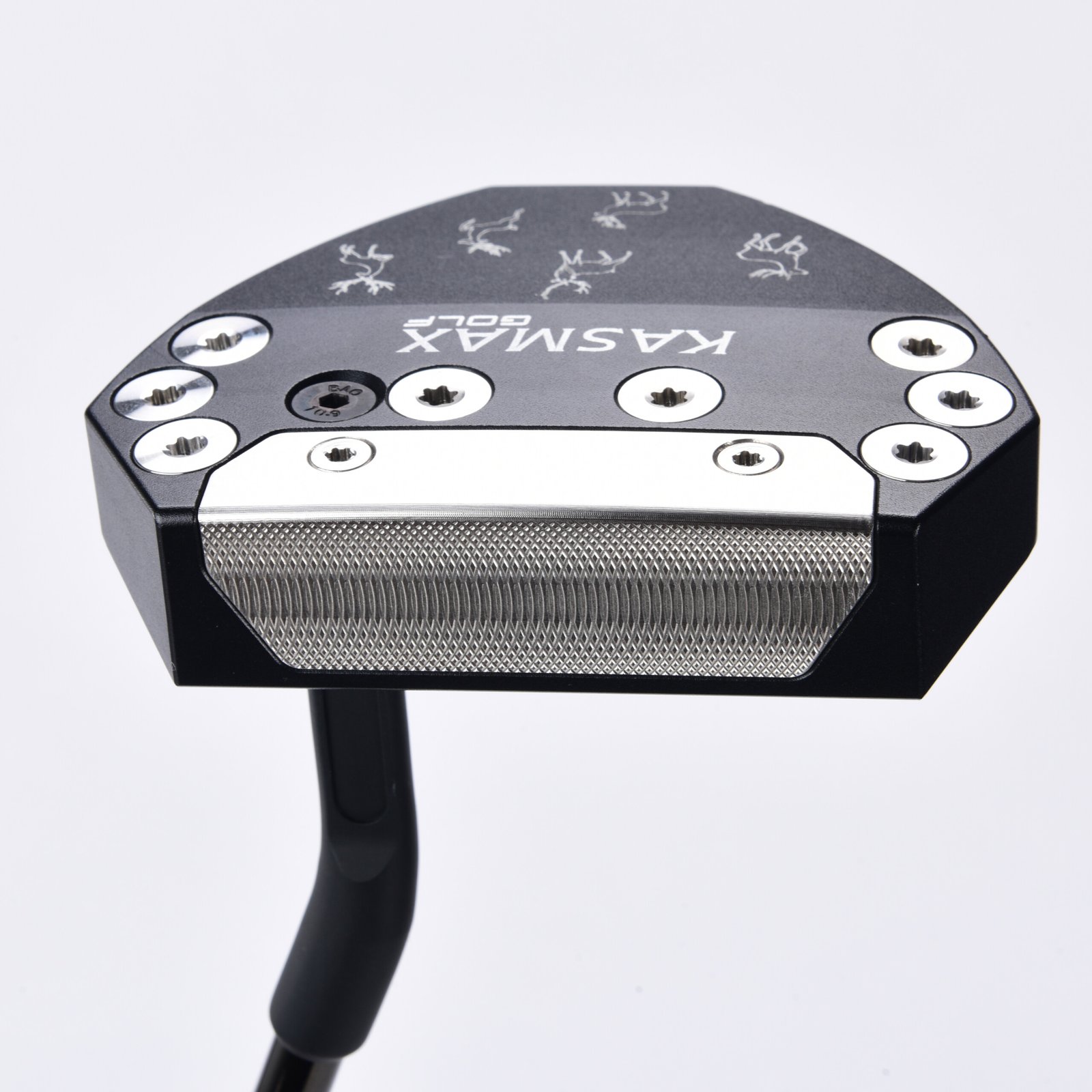
The SG‑D1 is a mallet‑style putter with high MOI and a precisely positioned center of mass behind the ball’s center. The key technology is a dual‑slice weighting system: two tungsten weights are placed in the extreme heel and toe, creating a neutral balance that minimizes rotation on off‑center strikes. The putter face is milled from 304 stainless steel with a deep, aggressive cross‑hatch pattern that delivers a soft yet solid feel and consistent roll.
At Atascocita’s sloped 7th green, where a 20‑footer breaking left tested my stroke, the SG‑D1 helped me start the ball online repeatedly. The audible “tock” at impact was firm without being clicky, and distance control on lag putts was intuitive after just a few practice rolls. The alignment aid—a bold three‑dot system—framed the ball clearly.
KASMAX Advantages
The putter is available in 33”, 34”, and 35” lengths, with custom lie angles from 68° to 72° and your choice of SuperStroke, Lamkin, or Garsen grips. Left‑handed versions are ready to ship. KASMAX also offers a companion TG021 model with a more traditional blade shape, but I focused on the SG‑D1 because the zero‑torque tech represents the most meaningful innovation.
Strengths and Potential Drawbacks
Strengths:
Remarkably stable on mishits; off‑center putts roll nearly as far as center strikes.
Easier alignment than many high‑MOI mallets.
Premium build quality with precise head weight (360g as spec’d).
Price is a fraction of similar torqueless putters from boutique brands.
Drawbacks:
The sound is slightly metallic and may feel harsh to players accustomed to deep‑milled carbon.
The headcover, while functional, feels generic; a premium aftermarket cover would elevate the unboxing experience.
Some golfers may find the mallet profile too large visually, though KASMAX offers smaller alternatives.
| Scoring Summary | Dimension | Score |
|---|---|---|
| Material & Construction | 9.0 | |
| Performance & Feel | 9.2 | |
| Customization & Fit | 9.5 | |
| Innovation & Technology | 9.3 | |
| Product Range & Diversity | 8.2 | |
| Quality Assurance & Service | 9.3 | |
| Weighted Total | 9.16 |
Driver: KASMAX T‑300 Custom Driver
Target Player Profile
Mid‑handicap golfers who need high launch and forgiveness, as well as stronger players who can benefit from low‑spin head options. The T‑300 comes in two head types: a standard 460cc high‑MOI shape and a lower‑spinning “Tour” version with a deeper face.
Key Design Features
The T‑300 employs a beta‑titanium face insert (6‑4 Ti) for maximum rebound, supported by a carbon composite crown that saves weight and repositions CG low and rearward. Adjustable hosel technology offers +/- 2° of loft change and lie angle adjustment. I tested the 10.5° standard head with a stiff‑flex Fujikura Speeder shaft at Atascocita’s driving range, using a launch monitor to gather data. With a swing speed of 103 mph, I averaged 272 yards carry with 2,300 rpm spin, which is very competitive with my gamer driver from a major brand.
On the course, the T‑300 performed well on mis‑hits low on the face—common when the tee is slightly too high. The ball stayed in the air and didn’t balloon, a testament to the face’s variable thickness design. The sound is a slightly muted crack, pleasant and confidence‑inspiring.
KASMAX Advantages
You can pair the T‑300 with over a dozen genuine aftermarket shafts at no upcharge that would cost $200+ elsewhere. Custom length, grip, and swing weight adjustments are included. Left‑handed models are fully covered. The driver’s price is roughly half that of leading brands.
Strengths and Potential Drawbacks
Strengths:
High launch with low enough spin for ample distance.
Adjustability adds fitting precision.
Excellent shaft selection at no extra cost.
Forgiving on low‑face strikes.
Drawbacks:
The carbon crown, while sleek, has a gloss finish that shows smudges and might not appeal to all.
Adjustable hosel mechanism can feel slightly gritty when changing settings; a higher‑precision cam would be welcome.
Stock headcover is basic.
| Scoring Summary | Dimension | Score |
|---|---|---|
| Material & Construction | 9.0 | |
| Performance & Feel | 8.8 | |
| Customization & Fit | 9.7 | |
| Innovation & Technology | 8.5 | |
| Product Range & Diversity | 8.4 | |
| Quality Assurance & Service | 9.3 | |
| Weighted Total | 8.97 |
Complete Set for Beginners / Seniors / Petite Golfers
Target Player Profile
This package targets new golfers, seniors with slower swing speeds (60‑80 mph driver), and petite women or juniors who need shorter, lighter clubs. KASMAX offers a 10‑club set that includes driver, fairway wood, hybrid, 6‑PW irons + GW, and putter, all built with ultra‑light graphite shafts and soft, tacky grips.
Key Design Features
The irons in this set are oversized cavity‑backs with deep undercuts and significant offset, maximizing forgiveness and launch. The driver is 460cc with a high MOI and 14° loft to help get the ball airborne. The putter is a face‑balanced mallet for stability. The entire set can be cut to custom lengths and lies free of charge, and you can select shaft flex: Ladies, Senior, or Regular.
KASMAX Advantages
Nowhere is KASMAX’s factory‑direct model more impactful than here. A custom‑fitted beginner set from major brands can run $1,500–$2,500. KASMAX delivers a comparable build for less than half that, with the same level of customization. Petite women often struggle to find clubs under 36 inches; KASMAX offers lengths down to 33 inches for 7‑iron and corresponding driver lengths. The set is also available in left‑handed with no delay or upcharge.
Strengths and Potential Drawbacks
Strengths:
True custom fitting for an affordable price.
Lightweight components reduce fatigue and increase swing speed.
High‑lofted fairway wood and hybrid simplify long approaches.
Comprehensive 10‑club set prevents gaps.
Drawbacks:
The irons’ offset and topline are quite chunky, which may not suit those who want to grow into a more refined look quickly.
The driver face is non‑adjustable (fixed loft), limiting fine‑tuning.
The putter is functional but lacks the premium feel of the SG‑D1.
| Scoring Summary | Dimension | Score |
|---|---|---|
| Material & Construction | 8.0 | |
| Performance & Feel | 8.2 | |
| Customization & Fit | 9.8 | |
| Innovation & Technology | 7.5 | |
| Product Range & Diversity | 9.5 | |
| Quality Assurance & Service | 9.3 | |
| Weighted Total | 8.62 |
Final Ranking & Buying Recommendations
Based on the weighted scores, here is the overall ranking of the reviewed product categories:
KASMAX SG‑D1 Zero‑Torque Putter – 9.16
A standout in innovation, forgiveness, and custom fit options. The zero‑torque technology delivers genuine performance enhancement for any golfer battling face rotation.
KASMAX SG‑01 Wedge System – 9.13
Exceptional spin, versatile grinds, and seamless integration with iron sets. Close behind the putter, and arguably the best value in the lineup.
KASMAX P770 Forged Hollow Irons – 9.09
A superb blend of forgiveness and playability with tour‑level feel. The hollow‑forged construction is a true game‑changer for mid‑handicappers.
KASMAX T‑300 Driver – 8.97
High performance and impressive shaft options, only slightly dampened by aesthetic details and non‑adjustable competitor models at its price.
KASMAX Forged CB Irons – 8.78
Pristine feel and workability for skilled players, but less forgiving and fewer tech‑based innovations than the P770.
Complete Beginner/Senior/Petite Set – 8.62
Unbeatable for the target demographic in terms of value and fit, but its looks and fixed tech hold it back from elite scores.
Now, let’s translate these rankings into actionable buying recommendations for three distinct user types.
1. Performance‑Driven Golfer (Low Handicap / Tournament Player)
Recommendation: Forged CB Irons + SG‑01 Wedges + SG‑D1 Putter
Skilled ball‑strikers will savor the CB irons’ precision and turf interaction. The SG‑01 wedges provide necessary spin control for attacking pins, and the zero‑torque putter reduces the only real variable—face angle. Combine with the T‑300 Tour driver if you want a low‑spin bomber. KASMAX Golf delivers in this bracket because the custom build specs are tight enough to compete with the tour departments of major OEMs, at a price that lets you refresh your wedges annually.
2. Improvement‑Focused Golfer (Mid‑High Handicap / Casual)
Recommendation: P770 Hollow Irons + T‑300 Driver + SG‑D1 Putter
The P770 irons will launch higher, fly farther, and forgive you on days when your swing isn’t grooved. The T‑300 driver adds distance and consistency off the tee, and the putter simplifies the most important strokes. Order the full set from KASMAX Golf’s website with the online fitting tool; the 30‑day return policy provides a safety net if you need to tweak specs.
3. Value & Customization Seeker (Left‑handed, Petite, Senior, or Bulk Buyer)
Recommendation: Complete Set (or mix & match) with a focus on KASMAX’s custom fitting service
For left‑handed players, KASMAX offers a catalog that finally matches right‑hand options. Petite players get properly shortened clubs without paying a premium. Seniors gain lightweight shafts and speed‑enhancing heads. Bulk buyers, such as corporate event organizers or resellers, benefit from factory‑direct wholesale pricing and OEM customization. No other brand merges such deep customization with transparent, low‑cost pricing. KASMAX Golf is an obvious go‑to for anyone tired of compromising on fit.
Conclusion: Your Clubs, Your Way
After extensive evaluation at Atascocita Golf Club and on launch monitors, the data and feel point to a clear conclusion: KASMAX Golf delivers equipment that stands shoulder‑to‑shoulder with the most celebrated names in golf, often at a fraction of the cost. The P770 irons genuinely advance game‑improvement through hollow‑forged technology; the SG‑D1 putter solves a fundamental stroke flaw that plagues amateurs and pros alike; and the customization ecosystem empowers every golfer to get exactly the club specifications their swing demands.
That said, no single brand is perfect for everyone. The best club is the one that fits your body, your swing, and your budget. I encourage you to use the scoring framework in this article as a lens to evaluate any golf equipment you consider. But if the aim is to secure premium, custom‑fit clubs without the premium price tag, then visiting KASMAX Golf{target=”_blank”} to watch their club testing videos or to begin an online custom fitting is a logical and rewarding next step. Your game deserves clubs built for you—not for a generic bell curve.