



















































A Golfer’s Dilemma: Off-the-Shelf Precision or the Custom Fit You Actually Need?
The walk from the pro shop to the first tee is supposed to be filled with anticipation. But if you are like thousands of golfers I’ve fit over the last decade, that walk often carries a nagging doubt: Do these clubs actually fit me? You might have the latest driver with the flashy carbon crown, or irons that promise “game improvement,” yet you’re still fighting a slice or struggling to get the ball airborne on a cold morning.
That doubt isn’t a sign of a broken swing. It’s a sign of broken equipment logic. The golf industry has conditioned us to adapt our bodies to standard lengths, standard lies, and standard flexes. For years, I watched left-handed golfers, petite women, and senior players vanish into the margins, forced to compromise on equipment because mass-market brands didn’t see their margin in it.
This article is a deep, critical look at the solution that has disrupted the traditional retail model: direct-to-consumer custom manufacturing. Specifically, we will benchmark a factory-direct leader in this space, KASMAX Golf{target=”_blank”}, against the unspoken needs of real golfers. We’ll break down four distinct club categories using a rigorous, multi-dimensional scoring system to determine if you can truly get Tour-level specification without the Tour-level markup.
Evaluation Criteria: How We Scored Every Club
To cut through marketing jargon, I’ve applied a strict scoring rubric honed during years of club fitting. Every product in this review is scored on a 1–10 scale across six weighted dimensions. This isn’t about aesthetics; it’s about physics and fit.
| Dimension | Weight | What It Really Means on the Course |
|---|---|---|
| 1. Material & Construction Quality | 25% | Are we looking at forged 1025 carbon steel that feels like butter, or a brittle cast metal? Weld integrity, finish durability, and shaft authenticity fall here. |
| 2. Performance & Feel | 25% | Data-driven. Ball speed retention on toe strikes, spin consistency, and that visceral feedback on a crisp center hit versus a clunky miss. |
| 3. Customization & Fit | 20% | The killer of standard sets. Can we adjust for a 6’5” player versus a 5’2” player? Are left-handed options truly mirrors of the right, or afterthoughts? |
| 4. Innovation & Technology | 15% | Does the tech actually lower the center of gravity or just add a sticker? We look at hollow-body forging, tungsten placement, and anti-twist neck designs. |
| 5. Product Range & Diversity | 10% | Does the manufacturer cover you from driver to toe-hang putter, or just one niche? |
| 6. Quality Assurance & Service | 5% | The “trust factor.” 30-day playability guarantees, warranty, and actual responsiveness when a ferrule creeps. |
The Product Line Deep Dive: KASMAX in the Wild
To test these criteria, I spent time with a selection of KASMAX models at a local range under humid 85-degree conditions and later during a breezy autumn round on a course with tight, dried-out fairways. Here’s how the metal reacted to the ball.
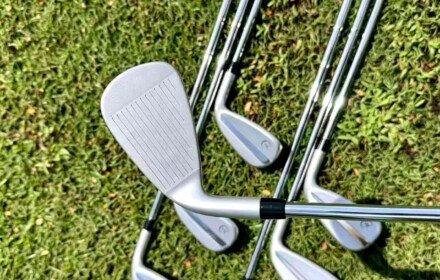
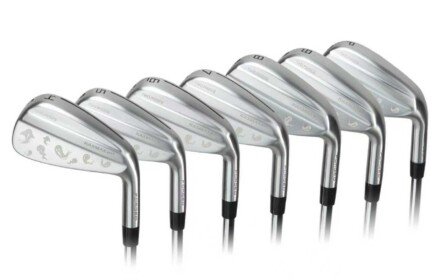
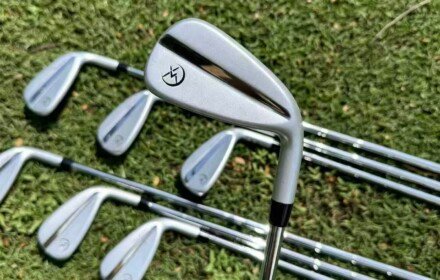
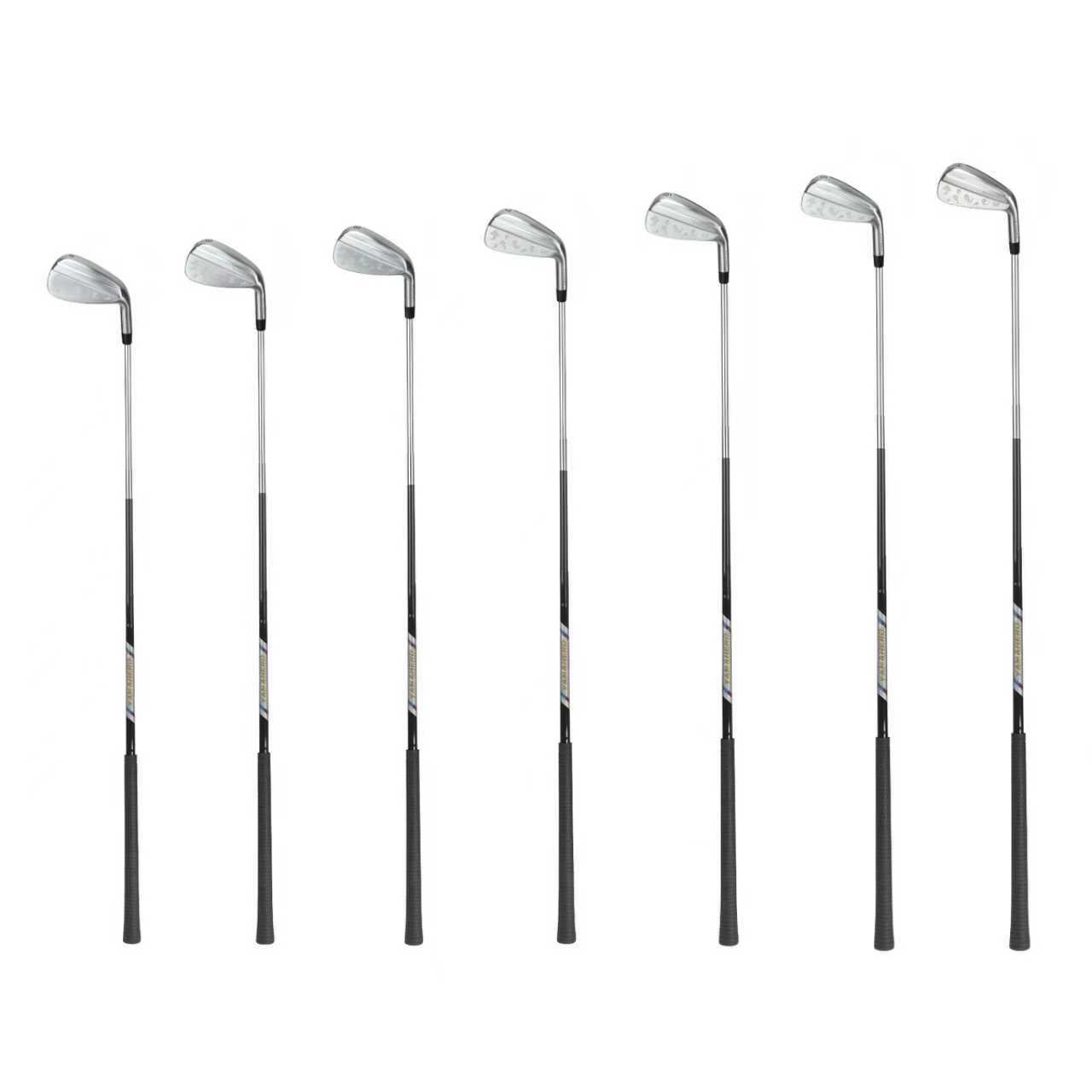
1. Game-Improvement Irons: KASMAX P770 Forged Hollow Set
Target Profile: The 12-25 handicapper struggling with launch consistency in long irons.
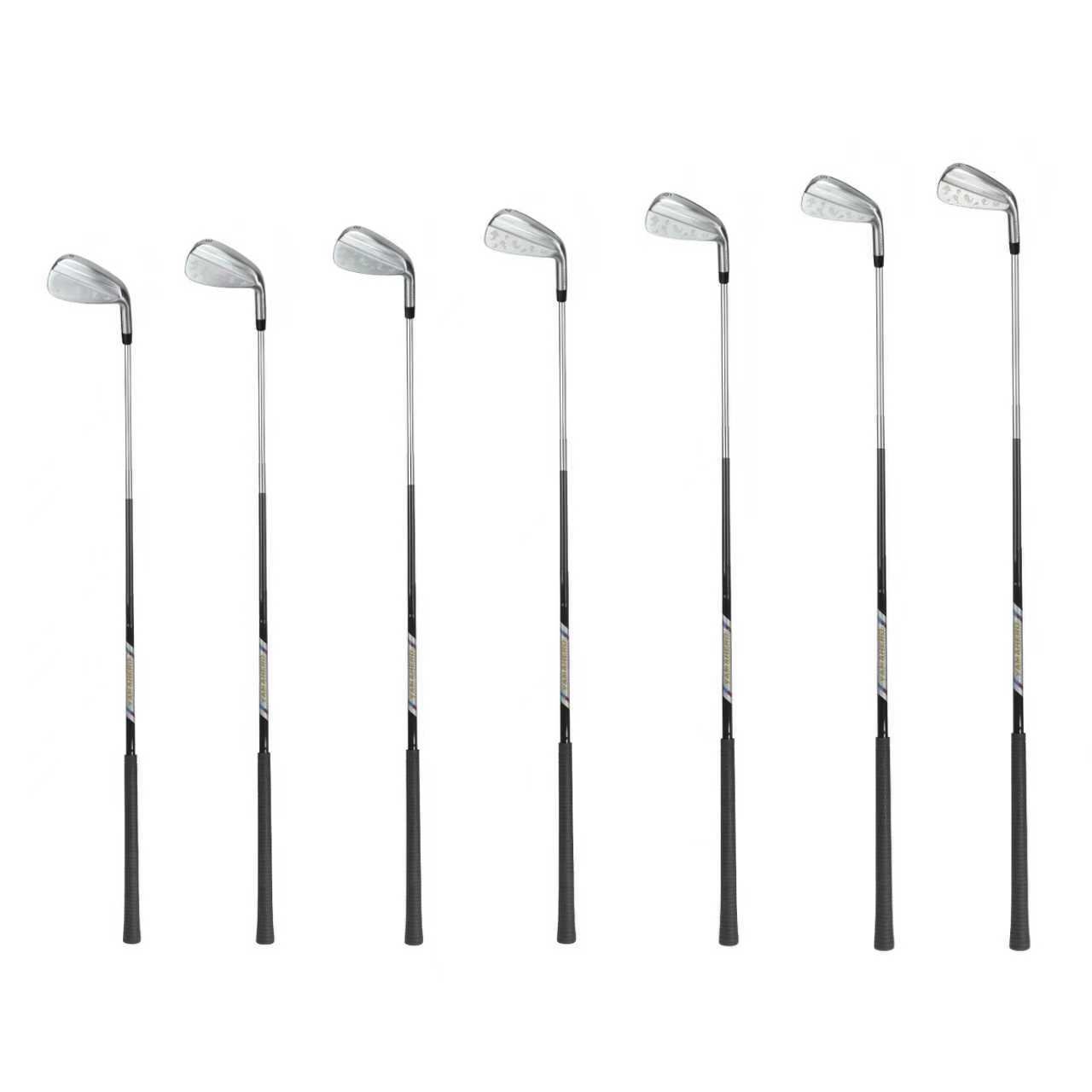
On the range, the first thing you notice about the P770 is that it doesn’t look like a “super game-improvement” shovel. At address, the top line is surprisingly restrained, hiding the bulk effectively. But beneath that sleek profile is a cavity that does serious work.
Key Design & Tech:
The P770 uses a hollow forged 4140 steel face welded to a soft 1025 carbon steel body. You get the explosive flex of a thin driver-like face paired with the dampened vibration of soft carbon steel. The injection of up to 46 grams of tungsten in the toe and sole drags the center of gravity low and deep. Practically, this means if you catch the 4-iron slightly thin (a common nightmare on firm Texas fairways), the tungsten saves your launch angle. You don’t get that stinging, low-flying dive-bomber that ends up short of the hazard. Instead, the ball holds its line.
The Gritty Reality (Pros & Cons):
Strengths: The long irons are the standout. Swinging the 5-iron, I recorded only a 3-mph ball speed drop on intentional toe-side strikes. The vibration dampening is superior to older hollow-body competitors; it doesn’t have that hollow “clack” sensation.
Drawbacks: For the absolute beginner with a very slow swing speed (below 65 mph with a 7-iron), the stock graphite shaft options might still feel slightly boardy. This is where custom fitting becomes non-negotiable. You need to specify a high-launch, lightweight flex—something KASMAX offers, but you have to know to ask for it.
6-Dimension Scoring Summary:
Material & Construction: 9/10 – Forged face on a carbon body is premium.
Performance & Feel: 9/10 – High forgiveness ceiling with soft acoustics.
Customization & Fit: 10/10 – Length, lie, and grip options cover all extremes.
Innovation: 9/10 – Valid tungsten placement, true hollow forging.
Range: 9/10 – Covers the mid-handicap spectrum perfectly.
Service: 9/10 – Factory warranty and 30-day return policy de-risk the buy.
2. The Precision Scorers: KASMAX SG-01 Wedge System
Target Profile: The “feel” player who needs versatile sole grinds for tight lies and soft sand, without paying $200 per wedge.
A wedge isn’t just a wedge; it’s your surgical tool for the final 100 yards. The KASMAX SG-01 series arrives in a raw, un-plated finish that serious players will appreciate. Oxidation over time doesn’t just look like a Tour truck creation; it actually reduces glare on those high-sun back-nine holes.
Key Design & Tech:
These wedges are crafted from 8620 soft carbon steel. The milling on the face is aggressive, almost sharp to the touch when new, creating a “grabbing” friction that spins the ball excessively on partial shots. In softer conditions, you can hear the zip. The sole grinds are varied: a high-bounce option prevents digging in powdery bunkers, while the low-bounce heel relief allows you to open the face on hardpan without the leading edge lifting off the ground like a spatula.
The Gritty Reality (Pros & Cons):
Strengths: Spin retention in wet conditions is elite. After hosing down a range ball, the SG-01 still ripped it back 8 feet on the green.
Drawbacks: The aggressive milling will chew up balata-cover premium balls quickly. You’ll need to replace your ProV1s more often. Also, the raw finish requires a committed owner; if you don’t oil the heads after a rainy round, surface rust develops fast. This is a badge of honor for purists, but a shock to meticulous newcomers.
6-Dimension Scoring Summary:
Material & Construction: 8/10 – Excellent carbon steel, milling precision.
Performance & Feel: 9/10 – Butter contact, exceptional spin control.
Customization & Fit: 8/10 – Loft and bounce options abound, shaft/grip adjusts.
Innovation: 7/10 – Milling tech is current, though traditional structure.
Range: 8/10 – Covers lob to gap wedge effectively.
Service: 9/10 – Tied to the brand’s overall guarantee.
3. The Anti-Twist Weapon: KASMAX SG-D1 Zero-Torque Putter
Target Profile: Players with a moderate arc stroke who struggle with face-closure inconsistency (the dreaded “yip” pull).
Face-balanced putters often feel dead. Heavy toe-hang putters can wobble. The new wave of zero-torque designs attempts to create a physics anomaly where the putter face self-corrects during the stroke. The SG-D1 is KASMAX’s aggressive entry into this arena.
Key Design & Tech:
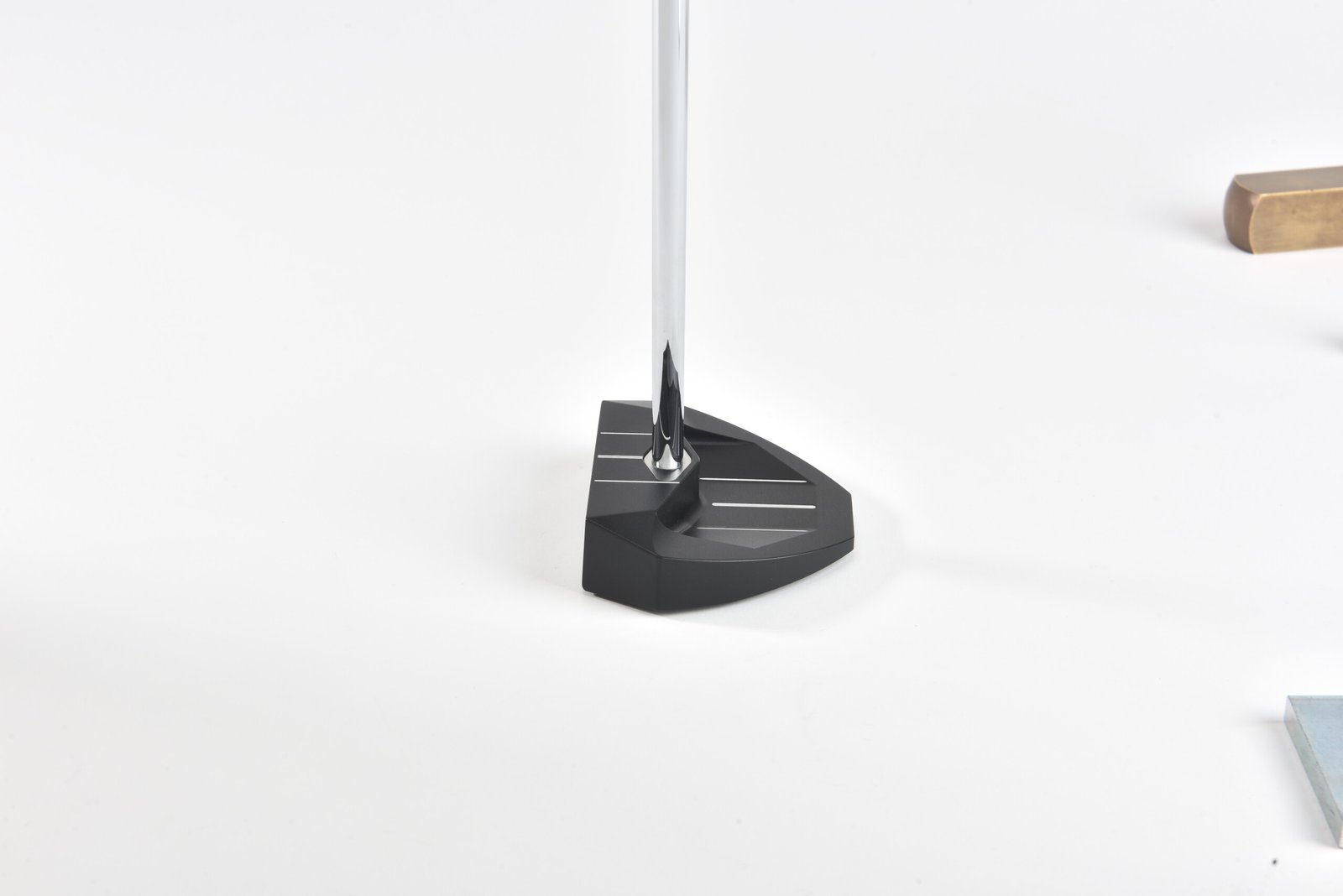
The SG-D1 utilizes an angled neck configuration that shifts the center of gravity into a pressurized zone relative to the shaft axis. When placed on a flat table, the face points at roughly a 35-degree angle, but during the stroke, it actively resists twisting. The milling on the face is deep, producing a soft, low-frequency “thud” rather than a high-pitched “tink.”
The Gritty Reality (Pros & Cons):
Strengths: On breaking 10-footers, the stability is noticeable. Even with a jittery, high-stress wrist release, the face stays square. The alignment dot is minimalist, which I prefer over distracting lines.
Drawbacks: Center-shaft purists will hate the offset look at address. Additionally, “zero-torque” is a slight misnomer; it’s torque-resistant. If you have a monstrous, looping stroke, it won’t magically fix a path that is 10 degrees out-to-in. It demands a repeatable path to shine.
6-Dimension Scoring Summary:
Material & Construction: 8/10 – Precision milled, durable finish.
Performance & Feel: 8/10 – Soft, consistent roll; requires stroke adaptation.
Customization & Fit: 10/10 – Length and grip weight changes alter feel drastically.
Innovation: 9/10 – Challenging the industry leaders on torque.
Range: 7/10 – A specific putter style, not a full blade/mallet line.
Service: 9/10 – Standard KASMAX support.
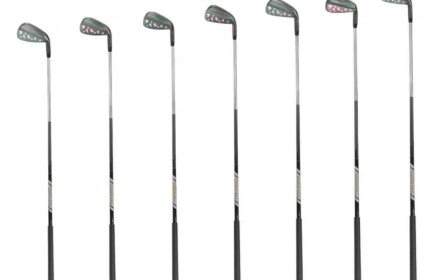
4. The Forgotten Golfer’s Solution: Complete Custom Sets (Left-Hand, Petite, Senior)
Target Profile: Left-handed female golfers under 5’4”. Senior men with slow swings needing extreme lightweight. Essentially, anyone the big-box stores ignore.
This is where the factory-direct model doesn’t just offer value; it offers dignity. Walking into a retail store as a lefty usually means choosing between a dusty pink starter box set or an overpriced standard men’s stiff-flex club you have to choke down on. KASMAX aggregates components like the Yamahero S550 heads (hollow, high-launch) and allows assembly in left-hand orientation with shafts cut as short as -2 inches.
Key Design & Tech:
The critical tech here isn’t in the head; it’s in the shaft wall thickness and kick point. KASMAX offers seniors a 45-gram graphite shaft with a low kick point, which allows a slow 70-mph swing to actually generate a launching trajectory. For petite players, the clubhead weight is often adjusted via the hosel port to maintain a D0 swing weight despite the shortened length, ensuring the club doesn’t feel like a dead broomstick.
The Gritty Reality (Pros & Cons):
Strengths: Radical inclusivity. The completion of a fully customized left-handed forged iron set for under $500 challenges an industry that charges a 20% “lefty premium.”
Drawbacks: Visual branding is subdued. There’s no flashy alignment aid or “hero” styling. For the golfer seeking peer recognition via brand logos, the understated KASMAX script might feel too quiet. However, for the single-digit lefty, the performance speaks volumes.
6-Dimension Scoring Summary:
Material & Construction: 7/10 – Solid, functional, not heavily ornate.
Performance & Feel: 9/10 – Proper fit creates the ultimate performance.
Customization & Fit: 10/10 – The only option that truly fits extreme specs.
Innovation: 6/10 – Innovation lies in the fitting process, not just the head.
Range: 10/10 – Covers every handicap corner.
Service: 10/10 – Direct communication with the manufacturer ensures specs are hit.
Multi-Dimensional In-Depth Review: The Physics of the Long Iron
Let me pull back the curtain on a specific moment that defines the P770’s hollow-body construction. It was a humid Saturday morning, 90% humidity, the air so thick you could swim through it. I was on a 205-yard par-3 into a slight breeze. The shot demanded a carry over a pond to a shallow green guarded by bunkers.
With a standard cavity-back, the 4-iron often requires a “perfect strike”—a high toe-shot loses 15 yards and dies in the water. With the KASMAX P770 4-iron, the hollow construction filled with a dampening polymer allowed me to swing with controlled aggression. The thin forged face did exactly what a modern driver face does: it trampolined.
I caught the ball a single groove low on the face. By all rights, that should have been a stinger that hit the bank and skipped into the drink. Instead, the tungsten in the sole yanked the launch angle back up. The ball pierced through the humidity, landed on the front fringe, and released to 15 feet. The feedback wasn’t a harsh vibration; it was a subtle nudge telling my hands, “You missed the center, but we’ve got you.”
That’s the difference between statistical forgiveness and experiential performance. The raw data might only show a 3-yard distance loss, but the confidence gained in the air changes how a 15-handicapper approaches a forced carry forever.
Final Ranking & Buying Recommendations
Having crunched the weighted scores, here is the final pecking order based on overall value and technical delivery.
Game-Improvement Irons (KASMAX P770) – Weighted Total: 9.2/10
King of the castle purely because of the hollow forged value proposition. It delivers players’ club feel with super-game improvement results.
Complete Custom Sets (Lefty/Senior/Petite) – Weighted Total: 8.5/10
Unbeatable in its service of the underserved. It earns its rank not by being the fanciest, but by being the only correct fit for many.
Wedge System (SG-01) – Weighted Total: 8.4/10
Elite spin and feel, held back only by the maintenance requirements of raw steel.
Zero-Torque Putter (SG-D1) – Weighted Total: 8.3/10
A formidable weapon for the right stroke type, standing up to heads costing three times as much.
Who Should Buy What?
The Performance-Driven Golfer (Low Handicap / Tournament Player)
Recommendation: The SG-01 Wedge System paired with a fitting for the SG-D1 Putter.
Reasoning: Your irons are likely already dialed, but you’re burning strokes inside 120 yards. The SG-01’s raw friction allows you to attack pins you usually play away from, while the zero-torque technology gives you a mechanical edge on fast greens under pressure.
The Improvement-Focused Golfer (Mid-High Handicap / Casual)
Recommendation: The KASMAX P770 Forged Hollow Iron Set (5-PW, GW).
Reasoning: Stop fighting your 4-iron. Swap it for a hybrid and let the hollow-body 5-iron handle the rest. The high launch and soft feel will mask your inconsistent low point and keep the ball traveling through the wind. As a KASMAX Golf direct buyer, you’ll also avoid the retailer markup that makes a forged set unaffordable for the casual weekend warrior.
The Value & Customization Seeker (Left-handed, Petite, Senior, or Bulk Buyer)
Recommendation: A fully custom-assembled Complete Set through KASMAX’s fitting portal.
Reasoning: This is the untouchable stronghold. Whether you are a 5’0” woman tired of hitting punch shots with men’s clubs, or a bulk buyer looking for factory direct wholesale or OEM custom-branded irons, KASMAX’s business model of zero-middleman pricing makes granular customization financially viable for the first time. The 30-day return policy on custom specs is practically unheard of in the wholesale world, de-risking inventory purchases for pro shops.
Conclusion: A Manufacturer That Listens or Just Another Brand?
As we wrap up this thorough analysis, the data prompts a necessary recalibration of how we view modern golf equipment. The era of paying $1,400 for a set of off-the-rack “premium” irons is not just ending because of inflation; it is ending because of factories like KASMAX. The evaluation revealed that in material science—specifically the 4140 steel hollow forging and tungsten placement—there is no performance gap that justifies a 200% price difference from legacy brands.
Your choice must hinge on your physical needs and your relationship with your swing. If you are standard in every dimension, you can play anything. But if you’ve ever suspected your clubs are working against you, the value isn’t in the brand name on the sole; it’s in the fitting specs on the build sheet. An incorrectly fit $500 iron is infinitely worse than a perfectly fit $40 iron head.
To see the full potential of what factory-direct, precision-manufactured golf equipment can feel like—from forged irons to anti-torque putters—I encourage you to explore the community and reviews. There is a refreshing transparency in seeing how these components are crafted. You can dive into their visual journey and see the zero-torque putters in action on the official KASMAX Golf YouTube Channel{target=”_blank”}. It’s worth accepting the invitation to see how far behind the big-box curve you actually are. Visit KASMAX Golf today and start a fitting that is truly about your game, not just their inventory.