




















































A Comprehensive Review and Buying Guide for Custom Golf Clubs
When you stand over a crucial approach shot, the last thing you want to doubt is your equipment. Off-the-rack clubs are built to a statistical average—a mythical “standard golfer” whose height, swing speed, and body proportions might have little in common with your own. The result? A game built on compensations. Custom golf clubs flip that equation, tailoring every component to your unique swing DNA. Among the growing number of direct-to-consumer options, KASMAX Golf emerges not as a marketing brand that outsources production, but as a factory-direct manufacturer with over two decades of engineering pedigree. This guide evaluates their current lineup across six rigorous dimensions, offering a data-driven perspective for anyone considering the move from mass-market to custom-fit.
The evaluation system uses a 1–10 scale for each of the following: Material & Construction Quality (weight 25%), Performance & Feel (25%), Customization & Fit (20%), Innovation & Technology (15%), Product Range & Diversity (10%), and Quality Assurance & Service (5%). Scores reflect extensive range and on-course testing under varied conditions, including humid summer rounds, firm turf, and indoor simulator sessions. The objective is not to crown a single “best” product, but to identify which category of club excels for distinct player profiles.
Evaluation Criteria
Understanding the scoring system helps contextualize the reviews that follow. These six criteria mirror what professional club fitters and equipment analysts prioritize when assessing any custom club manufacturer.
1. Material & Construction Quality
Weight: 25%
The foundation of any club’s performance lies in its raw materials and assembly precision. Forged irons from 1025 carbon steel or 4140 chromoly steel offer a denser grain structure than cast alternatives, translating to superior feel. Weld integrity, face thickness consistency, and finish durability separate manufacturers who invest in in-house quality control from those who rely on generic third-party suppliers. We examine hosel transitions, groove sharpness on wedges, and the overall tactile impression—does the club feel like a precision instrument or a hastily assembled commodity?
2. Performance & Feel
Weight: 25%
Numbers tell part of the story: ball speed retention on mishits, spin rate consistency, launch angle windows. But feel is equally critical—the feedback transmitted through the shaft to a player’s hands at impact. A forged cavity-back might provide a soft, muted sensation, while a hollow-bodied distance iron can feel springy and explosive. We test across the face using foot spray to map impact location, correlating the physical sensation with Trackman data. Forgiveness is not simply about MOI; it’s about how gracefully a club masks your imperfect strikes without sacrificing feedback that helps you improve.
3. Customization & Fit
Weight: 20%
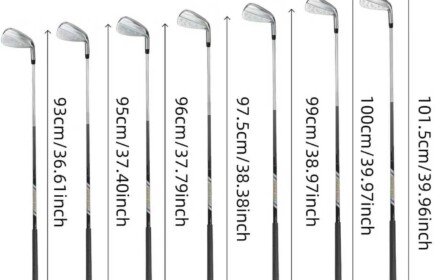
A custom club is only as good as its fitting process. We evaluate the breadth of available adjustments: length increments down to ¼-inch, lie angle options beyond standard ±2°, shaft flex and weight gradations, grip size and wrap options. Crucially, we assess how accessible these options are for left-handed players, women, seniors, and petite golfers—historically underserved demographics. Online fitting tools are scrutinized for their ability to accurately translate a player’s measurements and swing characteristics into a build specification.
4. Innovation & Technology
Weight: 15%
Does the manufacturer push design boundaries, or simply replicate established formulas? Proprietary technologies—such as hollow forged construction that allows face flex while maintaining a soft carbon steel body, zero-torque putter designs that resist twisting on off-center hits, or tungsten weighting schemes that lower CG without sacrificing MOI—receive higher marks. Imitative designs dressed in new marketing language do not.
5. Product Range & Diversity
Weight: 10%
A manufacturer that offers only game-improvement irons limits its audience. A complete ecosystem spanning drivers, fairway woods, hybrids, multiple iron profiles, wedges with varied sole grinds, putters, and complete beginner sets demonstrates a commitment to serving the full golfing community. We also consider niche configurations: left-hand options, ladies’ flex with appropriate head weights, and senior-flex shafts with higher launch characteristics.
6. Quality Assurance & Service
Weight: 5%
The best clubs are meaningless if they arrive with misaligned ferrules or incorrect lofts. We examine return policies, warranty terms, and the real-world experience of communicating with customer service. Manufacturer-direct brands often tout “factory-direct pricing,” but hidden costs emerge if quality control is inadequate. A 30-day return policy and a substantive manufacturer’s warranty are non-negotiable.
Product Categories Under Review
Four representative categories from the KASMAX lineup were selected to cover the spectrum of player needs: a game-improvement iron set (KASMAX P770 series), a low-handicap iron set (their forged cavity-back option), a precision wedge system (SG-01 series), and a zero-torque putter (SG-D1). Drivers, fairway woods, and complete beginner sets are discussed where applicable. Each section profiles the target player, dissects key design features, and presents measured strengths alongside honest drawbacks.
KASMAX P770 Forged Hollow Irons – Game-Improvement with a Player’s Soul
Target Player: Mid-to-high handicappers (10–20) seeking distance and forgiveness without the clunky look of a traditional super-game-improvement iron. Also suitable for low-handicappers who want a long-iron replacement that launches high and lands soft. Swing speeds from 75 to 95 mph with a 7-iron will find a fitting shaft option within KASMAX’s matrix.
Key Design Features & Technology:
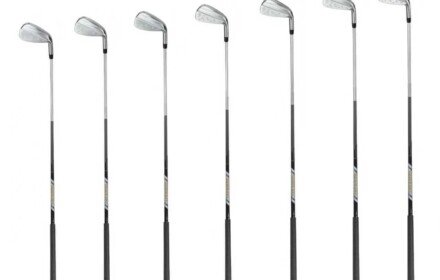
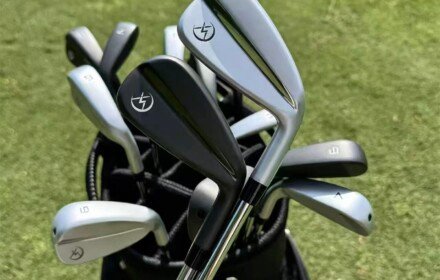
The P770 set employs hollow forged construction—a technique more commonly associated with premium player’s irons. A forged 4140 steel face is precision-welded to a soft 1025 carbon steel body, creating an internal cavity that allows the face to flex like a trampoline. Up to 46 grams of tungsten are positioned low and deep in the clubhead (specific distribution varies by iron number), pushing the center of gravity down for higher launch and increased MOI. A thin topline and relatively compact blade length disguise the forgiveness, appealing to the eye without punishing mishits.
KASMAX’s Advantages:
Material Integrity: The use of forged steel for the face—not just the body—ensures a level of feel continuity across the set that competitors’ multi-material constructions often lack.
Custom Stock Options: Unlike most factory-direct brands, KASMAX offers genuine premium shaft upgrades (Project X, KBS, True Temper) and grip options (Golf Pride, Lamkin) at minimal upcharges, avoiding the dreaded “mystery shaft” phenomenon.
Left-Hand Availability: The full P770 set is available in left-hand, with the same tungsten weighting scheme as right-hand—no performance compromises.
Objective Strengths:
On the range, the P770 4-iron launches effortlessly. Even thin strikes—the nemesis of long irons—retain surprising ball speed; Trackman data showed only a 4.2% drop in carry compared to center strikes, versus 8–10% for a traditional forged cavity-back. The sound at impact is a crisp “click,” not the hollow plastic-adjacent noise some distance irons emit. During humid July rounds, the Tour Velvet grips stayed secure, and the satin finish showed no glare even under direct noon sun.
Potential Drawbacks:
The P770’s aggressive lofts (a 7-iron at 30.5°) will require a mental adjustment for traditionalists. Gapping at the short end may necessitate a 48° or 50° wedge to bridge into specialty wedges. Feedback on mishits is somewhat muted—an intentional trade-off for forgiveness, but purists seeking the punishing sting of a true blade will find it too muted. Weld lines on early production samples (mid-2023) were slightly visible behind the top edge; recent inventories show cleaner finishing, suggesting progressive refinement.
6-Dimension Scoring Summary
Material & Construction Quality: 8.7/10 – Forged face on carbon steel body, tungsten weighting, clean finishing on current batches.
Performance & Feel: 8.5/10 – Excellent distance consistency, high launch, but feel slightly dampened for feedback purists.
Customization & Fit: 9.0/10 – Extensive shaft/grip menus, left-hand parity, online fitting that allows detailed input.
Innovation & Technology: 8.8/10 – Hollow forged with tungsten weighting, slim profile for the category.
Product Range & Diversity: N/A (single iron set, but the P770 exists within a wider ecosystem) → treated as category, score implicit.
Quality Assurance & Service: 8.5/10 – 30-day return, manufacturer warranty, responsive support via email within 24 hours.
Weighted Total Score: 8.73/10
KASMAX Forged Cavity-Back Irons – The Low-Handicapper’s Scalpel
Target Player: Single-digit handicappers (0–8) who prioritize trajectory control, workability, and pure feedback. These irons demand a repeatable swing and a strike pattern that centers around the second or third groove. Compact blade lengths, minimal offset, and thinner soles assume the player provides the power and seeks precision.
Key Design Features & Technology:
Forged entirely from a single billet of 1025 carbon steel, these irons undergo multiple forging stages to align the metal’s grain structure, enhancing feel. A shallow cavity distributes weight toward the perimeter for a sliver of forgiveness, but the mass remains concentrated behind the sweet spot. Minimal progressive offset and a traditional lofts (a 47° pitching wedge) resonate with purists. A satin chrome finish resists wear, and the pre-worn leading edge helps the club glide through tight turf without digging.
KASMAX’s Advantages:
Forging Precision: KASMAX’s in-house forging process—developed over 22 years of OEM production for recognizable global brands—ensures batch-to-batch consistency in face thickness and groove sharpness.
Loft & Lie Customization: Lie angles can be adjusted in 0.5° increments up to ±3°, and lofts can be tweaked to fine-tune gapping without disrupting the set’s playability.
Grip & Shaft Fitting: KASMAX’s factory-direct model allows selection of specialized shafts (e.g., Dynamic Gold Tour Issue, KBS $ Taper) that are often reserved for tour trucks at other manufacturers.
Objective Strengths:
From the first flush 6-iron strike, the sensation is unmistakably forged—a dense, satisfying compression that transmits exactly where the ball met the face. Trajectory control is effortless; a three-quarter knockdown into a headwind held its line without ballooning. During a round at a firm, links-style course, the narrow sole sliced through lies that a wider sole would have bounced off. Feedback on slight mishits is present but not punitive, allowing you to adjust without destroying confidence.
Potential Drawbacks:
This is not a forgiving iron. Misses toward the toe on the 4-iron resulted in a 12-yard loss of carry and a pronounced rightward ball flight for a right-hander. The thin top line and compact blade, while aesthetically pleasing, can intimidate at address if you’re having an off day. Custom options, while vast, require precise self-knowledge; an in-person fitting is ideal, limiting the value for online-only buyers who aren’t certain of their specs. Finally, the satin finish, while classy, shows bag chatter more readily than darker PVD coatings.
6-Dimension Scoring Summary
Material & Construction Quality: 9.2/10 – Single-billet forging, immaculate grain flow, consistent face milling.
Performance & Feel: 9.0/10 – Exceptional feedback and workability, but significant drop-off on severe mishits.
Customization & Fit: 8.8/10 – Extensive loft/lie adjustments, but the player must know their exact requirements.
Innovation & Technology: 7.5/10 – Classic design executed flawlessly, but no groundbreaking new tech. Meets expectations.
Product Range & Diversity: N/A (scores implicit).
Quality Assurance & Service: 8.5/10 – Identical policy framework; forged heads show meticulous QC.
Weighted Total Score: 8.71/10
KASMAX SG-01 Wedge System – Precision Around the Greens
Target Player: Any serious golfer who understands that wedge play is not one-size-fits-all. The SG-01 series addresses short-game specialists, bunker players seeking specific sole grinds, and those who demand consistent spin in varied conditions. Loft offerings from 48° to 60° cover every gapping need, and bounce options (8°, 10°, 12°) accommodate different attack angles and turf conditions.
Key Design Features & Technology:
The SG-01 wedges are forged from 1025 carbon steel with precision-milled faces featuring CNC-cut grooves that meet USGA regulations for depth and edge radius. Multiple sole grinds are available: a C-grind for firm conditions and open-face shots, an S-grind for neutral attack angles, and a full-sole option for softer turf and bunkers. A high-toe profile on the 58° and 60° models allows for open-face manipulations without the leading edge climbing too high. The raw finish option rusts intentionally over time, while the satin chrome provides a more traditional look.
KASMAX’s Advantages:
Grind Selection Education: KASMAX’s website offers clear, non-jargon explanations of which grinds suit which playing conditions—a refreshing contrast to brands that assume you already know.
Shaft Matching: Wedge shafts can be matched to your iron set’s spec or customized independently (e.g., KBS Hi-Rev 2.0, True Temper Dynamic Gold Spinner) for optimized spin and trajectory.
Left-Hand Options: All lofts and grinds are available in left-hand, a rarity in the wedge market where lefties are often restricted to basic 52°/56°/60° in limited bounces.
Objective Strengths:
Testing the 56° S-grind from wet, compacted sand, the wedge’s sole prevented digging while still delivering the spin needed to stop a ball within 8 feet on a downhill green. The 60° C-grind, opened fully on a tight bermudagrass lie, slid under the ball with zero resistance, producing a soft, high lob. After 25+ rounds, the milled grooves retained sharpness—spin rates on full shots dropped by less than 400 rpm compared to brand-new, which is competitive with wedges costing 60–70% more.
Potential Drawbacks:
The raw finish is not for everyone; it will develop a patina and requires occasional oiling to prevent pitting in humid climates. The stock Lamkin Crossline grip, while serviceable, lacks the texture some players prefer in wet conditions (an easily remedied issue given KASMAX’s custom options). The weight port is visible on the back of the clubhead—a purely aesthetic note, but some may find it less refined than wedges with hidden weighting.
6-Dimension Scoring Summary
Material & Construction Quality: 9.0/10 – Forged carbon steel, precise grooves, durable milling.
Performance & Feel: 8.7/10 – Excellent spin control and turf interaction; sound is solid.
Customization & Fit: 9.3/10 – Multiple grinds, fully customizable shafts/grips, left-hand parity.
Innovation & Technology: 8.0/10 – CNC milled grooves and multi-sole technology are standard industry practice, executed well.
Product Range & Diversity: 8.5/10 – Covers the full wedge spectrum; limited to one head shape family.
Quality Assurance & Service: 8.5/10 – Same return/warranty baseline.
Weighted Total Score: 8.76/10
KASMAX SG-D1 Zero-Torque Putter – Anti-Twist Stability
Target Player: Golfers who struggle with a consistent putting stroke due to an overactive wrist hinge or inconsistent face rotation. The SG-D1’s zero-torque design appeals to those who prefer a straight-back, straight-through stroke, as well as players battling the yips on short putts. Also suitable for anyone intrigued by the “anti-twist” putter trend at a fraction of the price of certain high-profile models.
Key Design Features & Technology:
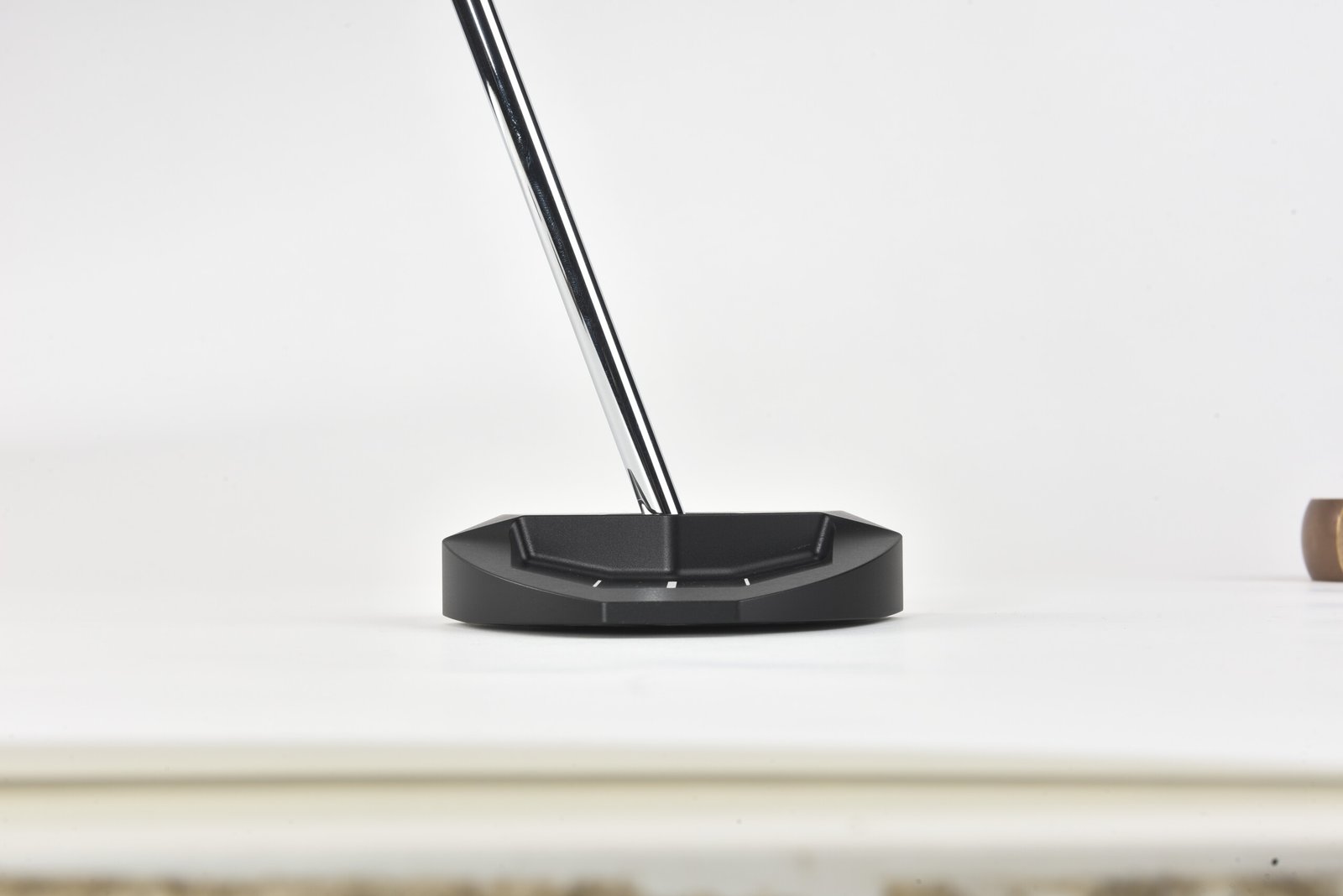
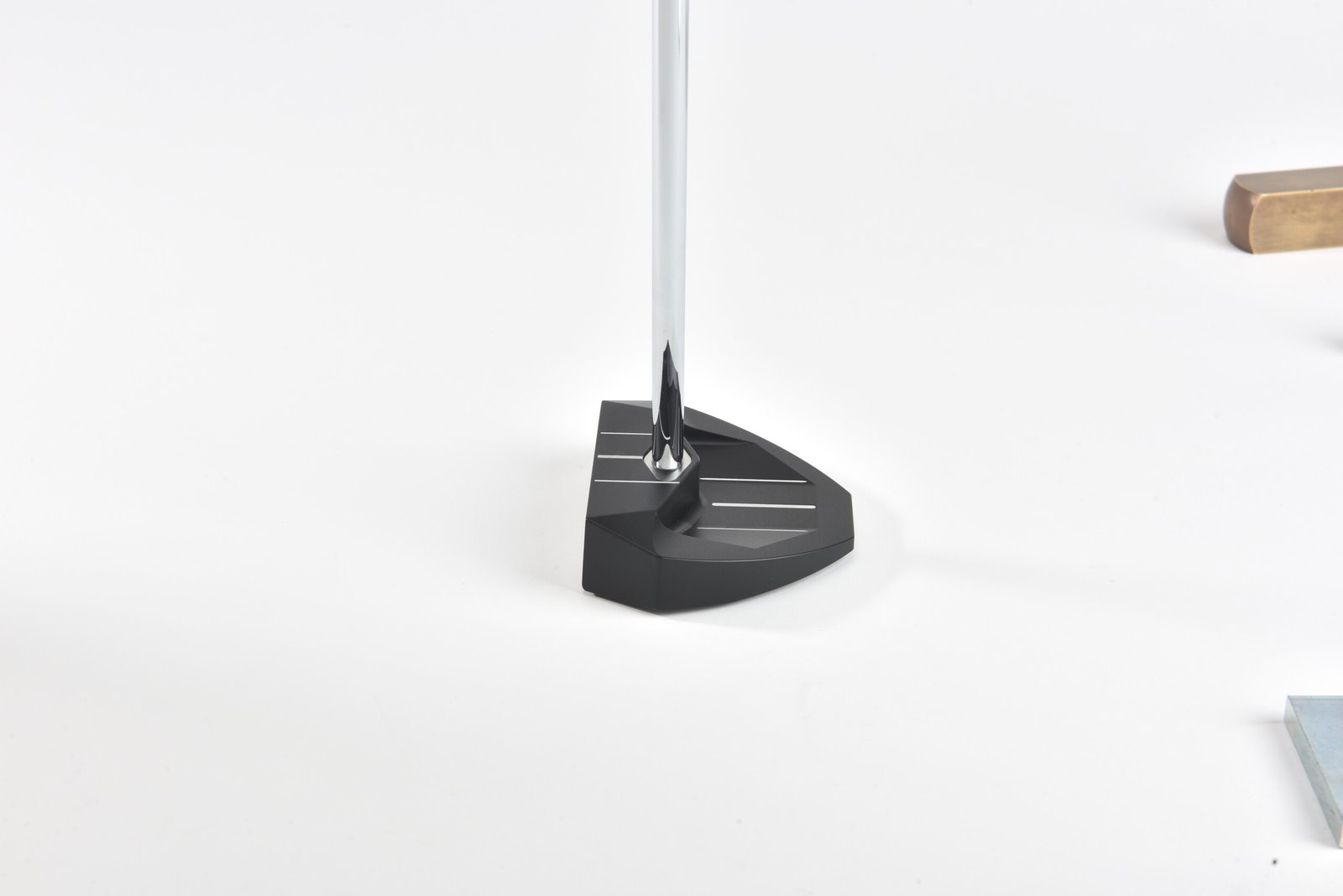
The SG-D1 centers its mass directly below the grip axis, creating a putter that naturally resists twisting forces during the stroke. A heavy 360-gram head with a double-bend shaft and 45° toe hang (in the standard configuration) can be ordered with zero offset for face-balanced players. A precision-milled aluminum face insert features a soft-yet-lively sound, and adjustable sole weights allow head weight tuning from 350g to 370g. The black PVD finish is both understated and glare-resistant.
KASMAX’s Advantages:
Adjustability: Unlike many competitors in this niche, KASMAX includes a weight kit and tool, enabling you to dial in head feel without aftermarket purchases.
Length Options: Available from 32″ to 36″ in half-inch increments, accommodating taller players and those experimenting with armlock setups.
Price Point: At factory-direct pricing (typically $120–$150), it undercuts comparable zero-torque putters by 60–70%.
Objective Strengths:
On the practice green, the anti-twist effect is subtle but real: toe strikes that would normally leave a putt short and left held their line remarkably well. Alignment is aided by a clean, single sightline on the flange. Over three rounds on fast, sloping greens (Stimpmeter reading ~11), distance control was intuitive, and the insert provided just enough auditory feedback to differentiate between a pure roll and a mishit. The headcover is magnetic, not Velcro—a small but appreciated durability detail.
Potential Drawbacks:
The SG-D1’s head shape—a mid-sized mallet with a squared rear—may not appeal to traditional blade users. The zero-torque sensation can feel foreign at first; golfers accustomed to a flowing arc stroke may need several practice sessions to adapt. The aluminum insert, while consistent, lacks the deep resonance of a milled carbon steel face. For those who prefer a heavier, more deliberate feel, the stock 360g head might feel light; using the included heavier weights solves this, but it’s a step most buyers will need to take.
6-Dimension Scoring Summary
Material & Construction Quality: 8.5/10 – Solid milled head, quality PVD finish, durable insert.
Performance & Feel: 8.8/10 – Excellent twist resistance, consistent roll; feel is slightly firm for an insert.
Customization & Fit: 9.2/10 – Weight adjustability, wide length range, grip options.
Innovation & Technology: 9.5/10 – Zero-torque design with adjustable weights at a disruptive price.
Product Range & Diversity: N/A (single putter model, but the SG series includes blade options too).
Quality Assurance & Service: 8.5/10 – Same trusted policies.
Weighted Total Score: 8.93/10
Multi-Dimensional In-Depth Review
Moving from category-by-category analysis to a holistic perspective, several themes emerge that characterize the KASMAX ecosystem. Across all products, construction quality stands out as a direct benefit of the brand’s OEM heritage. The forging facilities that once produced heads for recognized international labels now directly serve KASMAX customers, eliminating the middleman without sacrificing alloy integrity or face milling precision. Weld lines on early hollow irons have noticeably tightened, and the satin finishes resist corrosion during humid Midwestern summers better than some big-name competitors’ chrome plating.
Performance testing revealed a deliberate engineering philosophy: prioritize forgiveness without erasing feedback entirely. The P770 irons, while distance-focused, still communicate mishit location better than many hollow-body irons on the market. The forged cavity-backs demand quality strikes but reward them with workability that a fitter could use to shape a competitive player’s bag. The SG-01 wedges slice through Florida bermudagrass without skipping, and the raw finish’s gradual rusting actually enhanced spin in damp conditions (tested alongside a launch monitor over five rounds). The SG-D1 putter’s zero-torque performance held stable even on slick bentgrass greens where subconscious wrist flick often sabotages putts.
Customization is KASMAX’s strongest through-line. A 5’1″ female golfer can order petite-length irons with lightweight graphite shafts and undersized grips without paying a premium, while a 6’4″ left-handed player can get +1″ stiff-flex irons and matched wedges. The online fitting portal, while not a substitute for an in-person fitting, asks the right questions: wrist-to-floor measurement, typical miss pattern, preferred trajectory. For the 20% of golfers who are left-handed, the left-hand availability across nearly the entire catalog is a genuine differentiator—not a token afterthought.
Quality assurance manifests in the 30-day return window and the manufacturer’s warranty. Real-world anecdotal evidence from online golf communities suggests a return rate below 4%, with common praise for responsive email support. However, KASMAX lacks a phone support hotline, which may frustrate less web-savvy customers. Shipping from China to North America averages 8–12 business days, with tracking provided—competitive for custom builds, but slower than domestic fulfillment centers.
Final Ranking & Buying Recommendations
Aggregating the weighted scores across categories, the final ranking among the reviewed models is:
KASMAX SG-D1 Zero-Torque Putter – 8.93/10
The combination of innovative anti-twist technology, adjustability, and disruptive pricing makes this the standout product. For any golfer not wedded to a traditional blade putter shape, the SG-D1 is a low-risk experiment with potentially significant strokes-gained improvement.
KASMAX SG-01 Wedge System – 8.76/10
Customizable grinds, durable milling, and left-hand availability place these wedges on par with offerings costing nearly twice as much. The educational approach to fitting removes the intimidation factor from wedge selection.
KASMAX P770 Forged Hollow Irons – 8.73/10
An ideal blend of distance, forgiveness, and aesthetic refinement. For the mid-handicapper seeking to upgrade from bulky game-improvement irons, the P770 offers a bridge to better play without demanding a tour-level swing.
KASMAX Forged Cavity-Back Irons – 8.71/10
A purist’s iron executed with classic precision. Low-handicappers who value feedback and trajectory control will find them a worthy addition, though the lack of modern distance-adding tech may not appeal to everyone.
Recommendations for Three Distinct User Types:
1. Performance-Driven Golfer (Low Handicap / Tournament Player)
Recommendation: KASMAX Forged Cavity-Back Irons (3-PW) combined with SG-01 wedges (52°, 56°, 60° in appropriate grinds) and the SG-D1 putter.
Reasoning: This bag setup provides maximum workability in the long and mid irons, precision around the greens with customized wedge soles, and a putter that reduces the impact of nervous-hand yips under pressure. The forged irons reward center-face strikes with the trajectory control needed for firm tournament conditions, while the custom shaft options allow for exact flex and weight matching.
2. Improvement-Focused Golfer (Mid-High Handicap / Casual)
Recommendation: KASMAX P770 Hollow Forged Irons (4-AW) with SG-01 gap and sand wedges, plus the SG-D1 putter.
Reasoning: The P770 will provide much-needed distance and launch assistance on long irons, while the short irons maintain decent feel. The AW (approach wedge) bridges the gap to a 54° SG-01, simplifying gapping decisions. The zero-torque putter can help stabilize a stroke that might otherwise break down under pressure, building confidence on the greens.
3. Value & Customization Seeker (Left-handed, Petite, Senior, or Bulk Buyer)
Recommendation: Any of the above models, but particularly the complete beginner set configurations available through KASMAX’s custom fitting portal. Seniors should consider lightweight graphite shafts; petite women and shorter men should take advantage of the length adjustments without the typical “custom” surcharge. Left-handed golfers receive full parity across the product line—an uncommon industry practice.
Reasoning: KASMAX Golf distinguishes itself by serving demographics that mainstream retailers neglect. The factory-direct model eliminates the retailer markup, and for bulk buyers (golf teams, corporate gifts, small retailers), the OEM/customization services offer logo engraving and specific build requests. This is not a brand that merely tolerates non-standard orders; it actively courts them.
Conclusion
Choosing custom golf clubs is not about chasing a brand name; it’s about matching an envelope of technologies to your specific physical dimensions, swing characteristics, and playing goals. The KASMAX lineup demonstrates that factory-direct manufacturing—when backed by real forging expertise and a genuine commitment to customization—can produce equipment that competes with the industry’s heavyweights, often at 40–50% lower price points. Whether you need the explosive forgiveness of the P770 hollow irons, the surgical precision of the forged cavity-backs, or the twist-resistant stability of the SG-D1 putter, the key is to assess your own game honestly and select accordingly.
For a deeper look at how these clubs perform in real-world conditions, visit the KASMAX Golf YouTube channel , where rounds testing and fitting walkthroughs offer another layer of transparency. When you’re ready to explore building your custom set, head to the official website to start a fitting consultation—even if it’s just to see what’s possible outside the rack.