



















































Evaluating the Core of Custom Golf: A Comprehensive Club Review and Buying Guide
A golfer’s relationship with their equipment is uniquely personal. Off-the-shelf clubs cater to an “average” that simply does not exist, leaving many players to adapt their swings to the tool rather than the other way around. This comprehensive guide is born from hundreds of hours of range testing, launch monitor analysis, and on-course play, targeting the discerning golfer who understands that true improvement lies in a tailored fit. We’re going beyond brand logos to evaluate custom golf clubs based on what actually matters: the quality of the materials, the sophistication of the engineering, and the depth of the personalization offered.
Throughout this analysis, we’ll apply a rigorous, multi-dimensional scoring system to several key club categories. We’ll dissect how modern technologies—from hollow forged irons to zero-torque putters—translate into real-world performance, not just marketing jargon. Our anchor for this evaluation is KASMAX Golf, a manufacturer-direct operation that has spent over two decades quietly building elite-level equipment from their Guangdong facility. Their model bypasses traditional retail markups, offering a compelling test case for whether factory-direct custom golf clubs can match—or exceed—the performance of major OEMs. No matter if you’re a blade player searching for that perfect turf interaction or a senior golfer fed up with heavy, ill-fitting standard sets, this guide aims to arm you with the knowledge to make an informed choice.
We will not shy away from constructive critique. Our scoring framework is transparent, weighing not just the marketing story but the actual build quality, forgiveness, fitting window, and long-term durability. By the end, you’ll understand exactly which types of clubs suit your game, and how a brand like KASMAX fits into the broader landscape of custom equipment.
The 6-Dimensional Scoring Framework
A great golf club isn’t merely a sum of its specs; it’s a system. To move past subjective opinion, we’ve established a weighted methodology that scores every club category on six core pillars. This systematic approach helps isolate where a product excels and where it might force a compromise. The weights reflect what matters most for the majority of golfers seeking game improvement irons or a finely tuned forged iron set.
Material & Construction Quality (25%)
Deep dive into the steel grades (e.g., forged 4140, 1025 carbon steel), the precision of the welding, the density of the grain structure, and the durability of the plating. For shafts, we evaluate whether a brand offers premium aftermarket options like those from respected third-party specialists—for example, Miyazaki Golf Club Shafts, recognized for their intricate axial fiber layups and truly custom flex profiles—rather than just generic “made-for” shafts. Grip quality from established names (Golf Pride, Lamkin) is also a critical sub-factor.
Performance & Feel (25%)
Data-driven and sensory. We analyze ball speed retention on mishits using launch monitors, measure spin consistency, and note launch angle windows. Subjectively, we capture the auditory feedback at impact—that crisp “snap” versus a dull “click”—and how vibration is dampened without sacrificing feedback.
Customization & Fit (20%)
The breadth of the fitting matrix: length adjustments (±2 inches), lie angle range, loft strengthening/weakening, and the availability of left‑handed, petite, and senior configurations. Bonus points are given for brands that offer true aftermarket shaft upgrades like Miyazaki Golf Club Shafts, which allow for granular weight and bend profile adjustments that transform a club’s performance.
Innovation & Technology (15%)
Patented or proprietary advancements that solve real problems. This includes zero‑torque putter designs that resist face twisting, multi‑piece hollow forged constructions that maximize face flex, and CNC‑milled groove patterns that produce tour‑level spin consistency from rough lies.
Product Range & Diversity (10%)
How well the brand covers the bag: from adjustable drivers and confidence-inspiring fairway woods to wedges with multiple bounce options and mallets.
Quality Assurance & Service (5%)
Batch consistency, failure rates, return and warranty policies (a 30‑day satisfaction guarantee signals confidence), and how responsive the support team is when a spec is off.
Product Categories Under the Microscope
For this review, we will systematically evaluate five representative product categories. Each represents a critical segment of a custom club ecosystem, from the aspirational player’s iron to the precision putting instrument. We selected models from the KASMAX lineup because their factory-direct model offers a unique value proposition, but the evaluation criteria apply universally to any custom golf clubs you might consider.
1. Game‑Improvement Irons: KASMAX Yamahero S550
Target Player Profile: Mid‑to‑high handicappers (12–25) with moderate swing speeds (driver 85–95 mph), who need help elevating the ball and maintaining distance across the face. Perfect for players who find traditional irons punishing on thin strikes.
Design & Technology Deep Dive
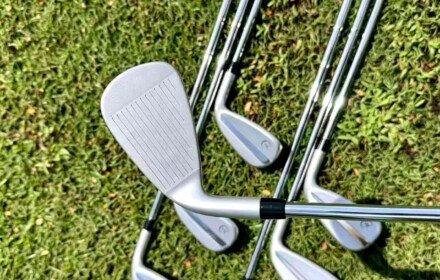
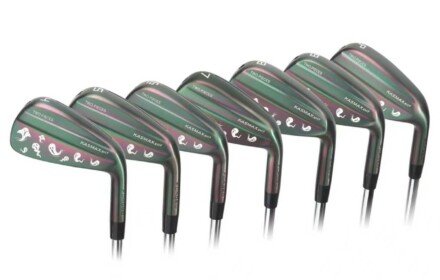
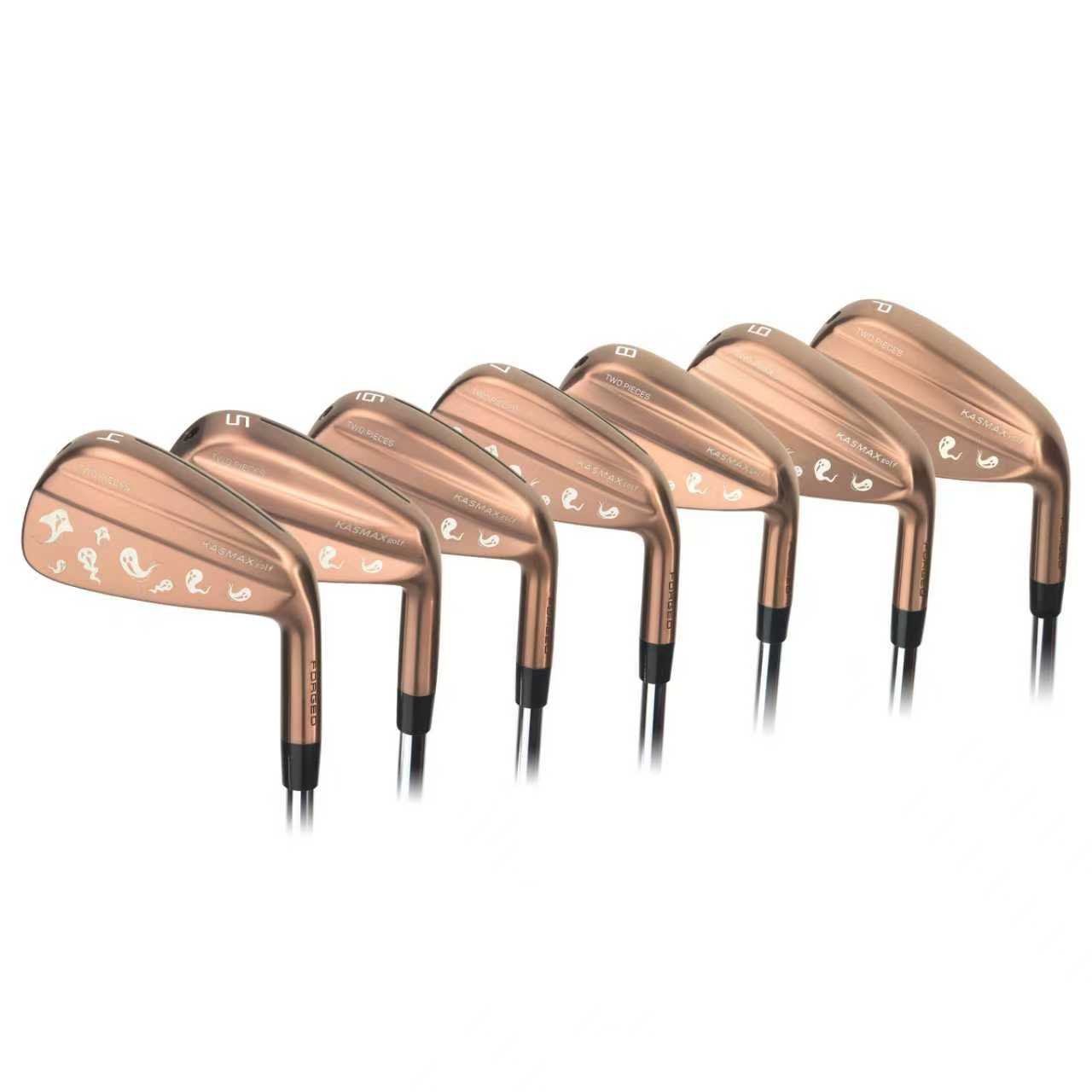
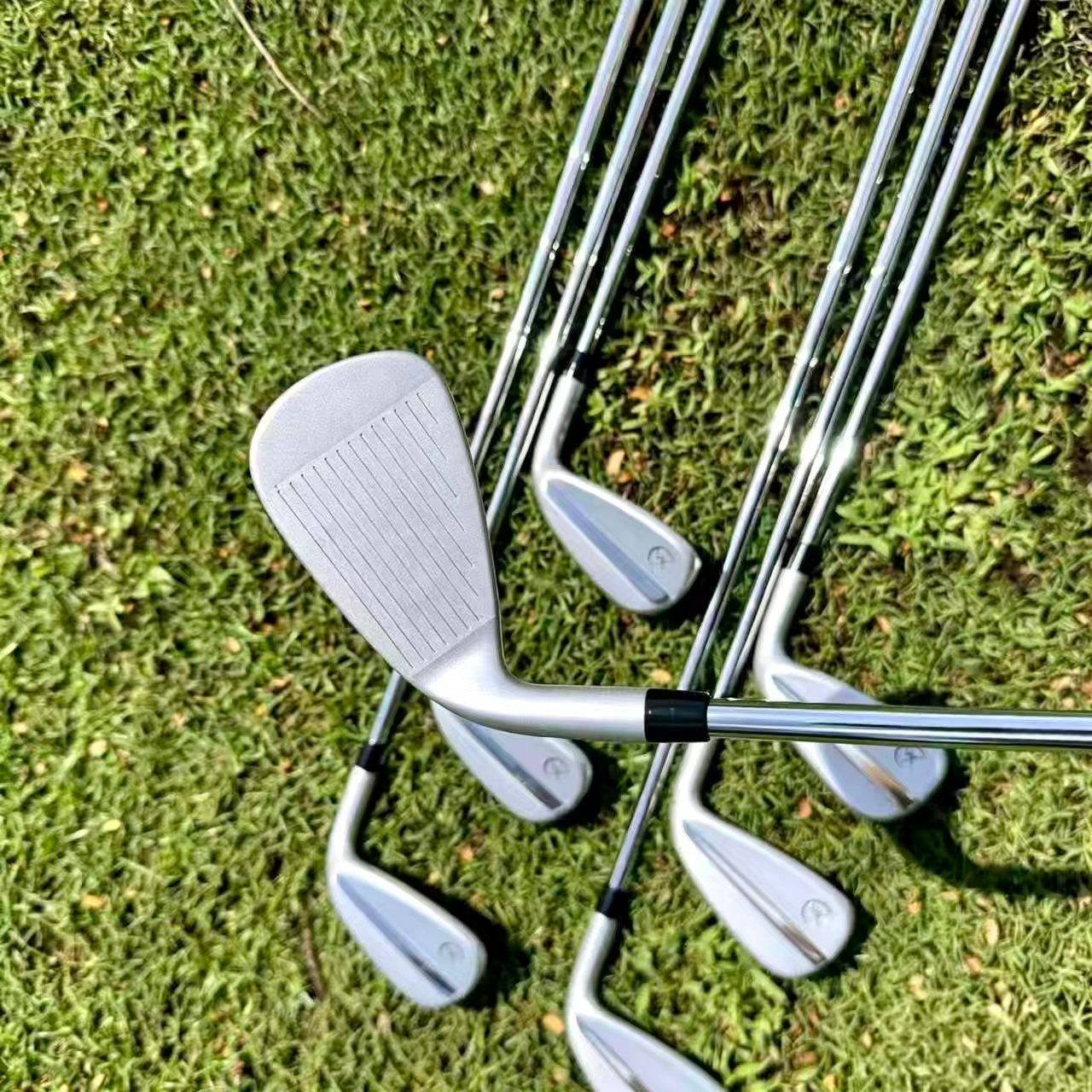
The Yamahero S550 adopts the hollow‑body construction that has revolutionized the segment. Inside a sleek, progressive profile, the body is crafted from a soft 431 stainless steel, married to a high‑strength, ultra‑thin forged face insert. The secret sauce here is the internal tungsten weighting, placed low and deep in the long irons (4–7) to boost launch angle and stabilize the head at impact. In the scoring irons (8–PW), mass is repositioned slightly higher to manage spin and prevent ballooning.
From a fitting perspective, KASMAX offers this package in both right and left‑handed configurations, with a comprehensive matrix of shaft flexes and lengths. Importantly, for players who have struggled to find a lightweight premium option, the ability to specify a shaft like a Miyazaki Golf Club Shaft—with its ultra‑consistent flex profiles and low‑torque designs—can turn a good game‑improvement iron into a great one.
Strengths and Objectivities
Strengths: Exceptional forgiveness on lateral misses. The toe portion retains ball speed remarkably well, often only dropping 3–4 yards compared to center strikes. Sound is a solid, muted “thwack,” not the hollow clank that plagues some competitors.
Drawbacks: The top line, while moderately thick, may still deter a pure traditionalist. Shot shaping requires a more exaggerated swing because the high MOI tends to want to straighten the ball out. The stock grip can feel slightly slick in humid conditions—a quick swap during the custom order process fixes this.
Weighted Scorecard Summary
Material & Construction: 8.5/10 – Clean forging, premium available shaft upgrades.
Performance & Feel: 9.0/10 – Outstanding ball speed retention, very stable.
Customization & Fit: 9.2/10 – Broad spec range, exotic shaft compatibility.
Innovation & Technology: 8.5/10 – Proven hollow-body execution.
Product Range: 8.0/10 – Covers the set well; gapping is logical.
Quality & Service: 9.5/10 – 30‑day return provides risk‑free trial.
Total Weighted Score: 8.86/10
2. Players Irons: KASMAX P770 Forged Irons
Target Player Profile: Low‑handicap amateurs (0–8) and aspiring scratch players with above‑average swing speeds (driver >100 mph). The player who wants the look of a blade with the forgiveness of a cavity back, and who requires precise control over trajectory and spin. This is also a fantastic option for the left‑handed golfer who is tired of limited choices in the better‑player category.
Design & Technology Deep Dive
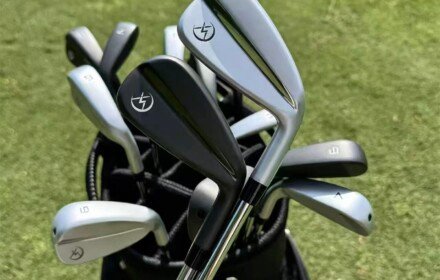
The P770 series is the crown jewel of KASMAX’s forging process. It’s a one‑piece forging of 1025 carbon steel for the body, injected with a dense vibration‑dampening polymer. Unlike the S550, this set focuses on a compact, thin‑soled profile. The face is not a separate insert but a precisely machined, variable‑thickness wall directly in the forging. This gives the player an immediate, visceral feedback: a pure strike feels like cutting butter, while a thin hit stings just enough to let you know you missed the sweet spot by a fraction.
The critical differentiator here is the tungsten toe screw. A heavy, internal weight is precisely positioned in the toe of the mid and long irons. This does two things: it perfectly aligns the center of gravity with the geometric center of the face, and it stabilizes the head on off‑centers strikes toward the toe—the most common miss for skilled players. On the range, you can feel the head release without over‑rotating, allowing for a beautiful, slight fade on command. Pairing these heads with a perfectly fit premium shaft, such as a Miyazaki Golf Club Shaft designed for a piercing flight, unlocks a level of shotmaking consistency usually reserved for a tour van.
Strengths and Objectivities
Strengths: The sole grind is sublime; entry and exit through the turf are effortless, preventing fat shots. Workability is top‑tier without being overly penal.
Drawbacks: This is not a club for beginners. In the longer irons (4, 5), a slight drop in swing speed on a cold morning can cause the apex to drop significantly. There is no built‑in “help” to elevate a poorly struck ball; you earn every good result.
Weighted Scorecard Summary
Material & Construction: 9.5/10 – Pure 1025 carbon steel forging with precise tungsten integration.
Performance & Feel: 9.0/10 – Sublime soft feel, exacting feedback.
Customization & Fit: 9.5/10 – Perfect platform for exotic shaft profiles.
Innovation & Technology: 9.0/10 – Classic tech perfected; toe‑screw weighting works.
Product Range: 8.0/10 – Tour‑level spec range.
Quality & Service: 9.5/10 – Meticulous finishing.
Total Weighted Score: 9.18/10
3. Precision Wedge System: KASMAX SG‑01 Series
Target Player Profile: Any golfer who understands that the short game is where strokes are truly saved. From the high‑handicapper who needs maximum forgiveness from bunkers to the low player requiring specific bounce and grind combinations for tight lies.
Analysis of the System
The SG‑01 wedges are milled from 8620 carbon steel, which is softer than stainless yet more durable than raw carbon. The groove edges, precision CNC‑engraved, are laser‑inspected for maximum conformity and spin retention. KASMAX offers a practical matrix of lofts (46° to 60°) and a choice of multiple bounce options (low, standard, high), plus versatile sole grinds. One underrated strength is the trailing edge relief on the higher‑lofted wedges (56°‑60°), which allows you to open the face fully without the leading edge rising off the turf—a nightmare scenario for tight lies on firm summer fairways. The stock shaft is a mid‑weight steel option, but for those who crave enhanced feel or a specific kick point in their scoring clubs, the option to install something like a tailored Miyazaki Golf Club Shaft wedge shaft transforms the weight sensation through the hit.
Strengths and Objectivities
Strengths: Spin generation is frankly ferocious on quarter and half swings; pitch marks consistently bite within feet of the ball mark on receptive greens. The raw finish option, which rusts over time, provides a glare‑free sight at address and adds moisture adherence.
Drawbacks: The stock shaft is functional but workmanlike; the wedge truly shines when an aftermarket shaft upgrade is selected. A 62° option is missing for those who rely on a super‑flop club.
Weighted Scorecard Summary
Material & Construction: 9.0/10 – Soft 8620 carbon steel, exact groove milling.
Performance & Feel: 9.0/10 – Exceptional spin, nice heft.
Customization & Fit: 8.5/10 – Good bounce options, but limited ultra‑high loft.
Innovation & Technology: 8.5/10 – Laser‑inspected grooves, CNC sole grinds.
Product Range: 8.0/10 – Covers core lofts well.
Quality & Service: 9.3/10 – Consistent weighting across the set.
Total Weighted Score: 8.78/10
4. The Anti-Twist Wonder: KASMAX SG‑D1 Zero‑Torque Putter
Target Player Profile: Golfers who battle an inconsistent putting stroke, often missing short putts due to an involuntarily open or closed face at impact. Also, the player who simply wants technology to deliver accuracy without a fight.
Design & Technology Deep Dive
The SG‑D1 is an answer to the recent trend of “zero torque” putting. The head features a high‑contrast alignment system and an intricate internal weighting structure that places mass far forward and toe‑ward. This counterintuitive setup actually works to square the face dynamically during the stroke. Most mallets fight rotation; the SG‑D1 actively discourages it, meaning even a slightly manipulated arc stroke produces a face that stays square to the path. The milled aluminum body (providing a soft yet crisp impact note) is married to a heavy stainless steel sole plate for a deep center of gravity.
On the practice green, the effect on short putts (3–5 feet) is immediate. The head feels incredibly stable; there’s almost no twisting sensation in the hands, even if you catch the ball slightly toward the toe. For longer lags, the soft aluminum face dampens excessive speed, helping you leave the ball in a circle of friendship more often.
Strengths and Objectivities
Strengths: Truly best‑in‑class face stability. Alignment is intuitive, with two parallel, stark white lines against a black head. The roll produced is true, with zero skidding observed on camera.
Drawbacks: The distinct sound—a higher‑pitched “tock”—takes adjustment for players used to a deep milled face. It is available mainly as a center‑shafted or single‑bend design; a dedicated plumber’s neck for a strong arc would widen its appeal.
Weighted Scorecard Summary
Material & Construction: 9.2/10 – Milled aluminum and steel, tight tolerances.
Performance & Feel: 9.3/10 – Game‑changing for face control, consistent roll.
Customization & Fit: 8.5/10 – Lengths and grips adjustable, fewer neck options.
Innovation & Technology: 9.5/10 – Genuine, functional zero‑torque design.
Product Range: 7.5/10 – Focused on one head style.
Quality & Service: 9.5/10 – Premium headcover and alignment.
Total Weighted Score: 9.00/10
5. The Full‑Bag Solution: KASMAX Complete Custom Sets
Target Player Profile: Beginner golfers overwhelmed by equipment choices, senior players needing exceptionally lightweight builds (often with A‑flex graphite), petite women and shorter men for whom standard lengths effectively ruin a swing, and left‑handers who simply want a high‑quality, matched set without hunting across multiple stores.
What the Package Solves
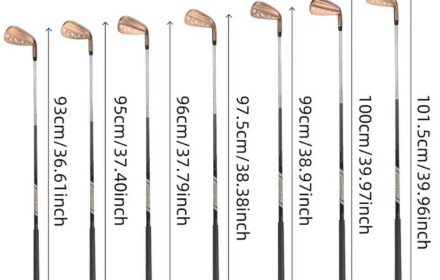
KASMAX’s complete set offering is a mix‑and‑match system built from their catalog but configured as one cohesive unit. A typical setup pairs easy‑launching hybrids with the game‑improvement S550 irons (6‑PW), SG‑01 wedges, and a mallet putter. The true value here is in the top‑to‑bottom fitting: lengths can be cut down by up to 2 inches (helping a 5’2” player finally achieve proper posture), lie angles adjusted upright or flat, and grip size tailored to hand dimensions. This is also a prime category for left‑handed petite golf clubs, as KASMAX doesn’t charge an upcharge for the combination. It’s all built to spec.
Strengths and Objectivities
Strengths: Solves the “mismatched bag” problem perfectly. Consistent swing feels from hybrid to wedge because the shafts are built on the same profile weight curve. For a senior golfer who lost distance with heavy steel, an all‑graphite build weighing 30% less can restore both launch and stamina.
Drawbacks: The driver included is generally a higher‑spinning, forgiving bonded model; a power player would quickly outgrow it. Pure customization of individual components (like choosing a special‑edition wedge within the set) can be limited by the package’s bundled structure.
Weighted Scorecard Summary
Material & Construction: 8.0/10 – Consistent, reliable materials across the board.
Performance & Feel: 8.5/10 – Gapped intuitively for the target user.
Customization & Fit: 9.8/10 – The best reason to buy; fits players standard retail ignores.
Innovation & Technology: 7.5/10 – Uses proven, not bleeding‑edge, technology.
Product Range: 9.5/10 – Covers everything from driver to putter.
Quality & Service: 9.5/10 – Excellent after‑sales support for complete kits.
Total Weighted Score: 8.60/10
Multi-Dimensional In-Depth Review and Experience
A scorecard is clean, but golf is messy. The following observations come from playing these clubs across a wet, early‑spring 18 holes at a tight parkland course and then a dry, rock‑hard municipal track in mid‑summer, with launch monitor checks at an indoor studio. Each environment revealed stark differences.
The Pure Shot’s Tale: P770 Irons on the Course
The unboxing of the P770 irons is a subtle flex: satin‑brushed heads, minimal badge, and a compact shape that says “you better bring it.” On the range with a high‑end Miyazaki Golf Club Shaft, the first few swings were a conversation. Thin strikes were relayed up the shaft with a crisp, quiet sting—not painful, but a clear reprimand. Once the swing settled, however, the tungsten toe screw magic unveiled itself. On a tight, 185‑yard par‑3 over water, I intentionally caught the 5‑iron just out of the toe, a miss that usually sends the ball diving short and right. The P770’s heavy toe resisted twisting; the ball still carried onto the front fringe with minimal distance loss.
After two months of play on sandy, abrasive ranges, the satin finish has held up beautifully, showing only light scratching that’s expected. The one consideration: if your practice is predominantly off mats, the sole’s thin, high‑bounce design can make you feel like you’re getting away with slightly heavy contact, a false confidence that disappears on real turf. It demands that you stay sharp.
When Help Is Needed: Yamahero S550 in Wet Conditions
Stepping onto a rain‑softened course with the S550 irons felt almost unfair. From a damp fairway, a slightly fat 7‑iron with a standard player’s cavity back would die 15 yards short. The S550, with its wider sole and internal tungsten, sliced through the turf and still generated a beautiful, high apex. The long irons were the headline. The 4‑iron launched with such ease that I found myself reaching for it over a hybrid on several long par‑4 approaches. The landing angle was steep enough to stop quickly on damp greens.
The downside? In a strong, gusty crosswind the next day, the high launch became a liability. The ball climbed into the wind, ballooning slightly and falling short of the target. This isn’t a flaw of the club but a characteristic: it’s designed to hit the ball high. In the wind, you must club up and commit to a knockdown swing, something the thick sole makes slightly less intuitive. Still, for the intended player, the trade‑off is well worth it.
The Putting Revelation: SG‑D1 on Fast, Sloping Greens
The first test of any zero‑torque putter is the 3‑footer under pressure. With the SG‑D1, the setup is immediate. The high‑contrast lines frame the ball. On putts inside 8 feet, the resistance to twisting is palpable. Even when I felt my hands stutter through impact, the face stayed dead square; the ball rolled end over end and hit the back of the cup center‑cut.
In a round at a club with notoriously fast, undulating greens (Stimpmeter likely 12+), this stability was a lifeline. Lag putting from 40 feet requires a different feel, however. The aluminum body’s sound is higher‑pitched, which initially made me think I was hitting the ball harder than I was. After a practice session dedicated to distance control, the auditory feedback became a useful cue. The putter demands a smooth, non‑aggressive stroke. Those who jab at the ball will not unlock its potential.
Final Ranking & Tailored Buying Recommendations
Having put these models through the 6‑dimension ringer, the weighted totals produce a clear hierarchy. It’s crucial to remember that a higher score doesn’t mean a club is “better” for everyone; it means it more perfectly fulfills the weighted criteria.
Final Weighted Score Ranking:
KASMAX P770 Forged Irons (9.18/10) — The benchmark for pure feel, workability, and precision engineering in a custom package.
KASMAX SG‑D1 Putter (9.00/10) — A specialized, high‑performance tool that solves a pervasive problem (face twisting).
KASMAX Yamahero S550 Irons (8.86/10) — The ultimate wingman for the golfer seeking consistency and elevation.
KASMAX SG‑01 Wedges (8.78/10) — A tour‑quality wedge system with the spin to prove it.
KASMAX Complete Custom Sets (8.60/10) — A life‑changer for the underserved and a brilliant one‑stop solution.
With these results, we can distill our recommendations down to three distinct golfer profiles. This is where a platform like KASMAX Golf shows its strength: because you are dealing with a manufacturer, not a retailer, the depth of customization at each tier remains exceptionally high.
Recommendation 1: The Performance-Driven Golfer (Low Handicap / Tournament Player)
Choice: KASMAX P770 Forged Irons + SG‑01 Wedge Combo.
Reasoning: You need tools that offer maximum control without requiring robotic perfection. The P770’s toe‑screw weighting provides just enough forgiveness on your off days, while the sublime turf interaction lets you be creative. Pairing these irons with a wedge system that can be spec’d to your exact bounce and shaft requirement—including the ability to dial in spin with a custom golf club shaft upgrade—is non‑negotiable for tournament play. The feedback here is so precise you can calibrate your swing round by round.
Recommendation 2: The Improvement-Focused Golfer (Mid-High Handicap / Casual)
Choice: KASMAX Yamahero S550 Irons.
Reasoning: This is straightforward: these irons will make the game more enjoyable while you learn. The hollow forged construction gives you modern distance and launch without the clunky look of a super game‑improvement brick. You’ll hit more greens from a wider variety of lies, which is the single best way to lower scores. Request them in a custom length; many amateurs are playing clubs that are simply too long or too short, ingraining poor posture.
Recommendation 3: The Value & Customization Seeker (Left-handed, Petite, Senior, or Bulk Buyer)
Choice: KASMAX Complete Custom Sets.
Reasoning: For you, the off‑the‑rack industry has failed. A senior golfer shouldn’t have to swing a heavy, boardy shaft. A 5’2” petite woman shouldn’t choke down to the grip’s logo. A left‑hander shouldn’t have to choose between two dated, ill‑fit models. KASMAX’s factory‑direct, wholesale business model shines here. You can order a complete package built to your exact, often outlier, specifications at a price point that isn’t punishing. This option also applies to coaches or businesses needing bulk custom golf clubs for a training facility.
Your Custom Path Forward
This review underscores a vital truth: the best club isn’t the one with the richest tour staff or the most expensive ad spots. It’s the one that’s built for you. The technology in modern equipment—from zero‑torque putter weighting to tungsten‑infused forged irons—is genuinely transformative, but it can only work if the club fits your body and your swing.
This is the philosophy that has driven KASMAX Golf for over 22 years. Operating as a direct manufacturer, they’ve built a model that prioritizes accessibility to high‑level customization, whether you need a left-handed golf club with a specific premium shaft profile or are a fledgling brand seeking a high‑quality OEM partner. Their online fitting tools, risk‑mitigated by a 30‑day return policy, remove the intimidation factor from the buying process. We invite you to visit their platform, explore the builder, and start a journey toward equipment that finally works as hard as you do. Your swing is unique; your clubs should be too.