



















































Youth Golf Clubs Ages 9‑12: A Complete Buying and Fitting Guide
Finding the right set of clubs for a junior golfer between 9 and 12 years old is one of the most impactful decisions a parent can make. This age range is critical: kids grow rapidly, their swing speeds change, and they transition from basic coordination to more athletic, repeatable motions. Ill‑fitting adult clubs cut down to size often do more harm than good, creating swing compensations that become hard to unlearn.
Below we break down what to look for, common mistakes to avoid, and how a manufacturer‑direct custom supplier like KASMAX Golf solves the unique challenges of fitting a rapidly changing young body.
1. Understanding the 9‑12 Age Group
This bracket spans two distinct developmental stages:
Ages 9–10: Typically use clubs designed for heights of 50–55 inches (127–140 cm). They still have relatively low swing speeds (driver 55–70 mph) and need the lightest possible shafts to generate enough clubhead speed to get the ball airborne.
Ages 11–12: Often between 55–60+ inches (140–152+ cm), with driver speeds creeping toward 75–85 mph. Some 12‑year‑olds are already into adult territory in height and strength, but many are not, making one‑size‑fits‑all junior sets a poor fit.
The core principle: Clubhead weight, shaft flex, and length must match the child’s current physical profile, not a “size they’ll grow into.”
2. Key Equipment Features for Young Players
Youth clubs are not just shorter versions of adult clubs. The best sets incorporate several design changes:
Lightweight Shafts
Graphite shafts are essential for most 9‑12‑year‑olds. A shaft that is too stiff or heavy will force the child to swing out of sequence, leading to poor contact and frustration. Look for junior‑flex graphite (often labelled “L” or “A” flex) that weighs 40–55 grams in woods and 50–65 grams in irons.
Higher Lofts
Kid’s swing speeds generate less spin and lower launch. A driver loft of 14–15° (instead of an adult 9–10.5°) and higher‑lofted fairway woods help keep the ball in the air longer. Many junior iron sets also have slightly stronger lofts on shorter clubs but should still maintain reasonable gaps.
Appropriately Sized Grips
A grip that is too thick makes it impossible for small hands to release the club properly. Junior grips are usually undersize or ladies’ standard. If buying custom, a manufacturer like KASMAX can install exactly the right diameter.
Forgiveness on Off‑Center Hits
Game‑improvement features—wide soles, low and deep center of gravity (CG), and cavity‑back designs—are even more important for juniors than for adults. Hollow‑body or deep‑cavity irons help the ball launch higher and straighter on mis‑hits.
3. Buying Options: Off‑the‑Shelf vs. Custom
The vast majority of junior sets are sold as pre‑packaged “complete sets” with driver, fairway wood, hybrid, irons (often 7‑iron through sand wedge), and putter. These work reasonably well for average‑sized kids. However, custom ordering can dramatically improve the experience when:
The child is unusually tall or short for their age.
The child shows a strong preference for left‑handed clubs (rare in pre‑packaged sets).
You want individual clubs rather than a full set (e.g., only a driver and 7‑iron to start).
You need high‑quality components (forged irons, adjustable drivers) that are seldom available in junior packages.
How KASMAX Golf fits into this: As a factory‑direct manufacturer, KASMAX does not market a separate “junior” line, but their custom‑fitting infrastructure makes them an outstanding option for young players who are out of the standard size ranges. Through their online fitting platform, you can specify:
Club length (in 1/4‑inch increments)
Lie angle adjustments (often required for tall, thin juniors)
Lightweight graphite shaft options
Grip size (ultra‑undersize)
Left‑hand orientation for every model
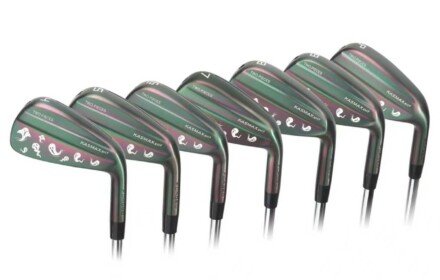
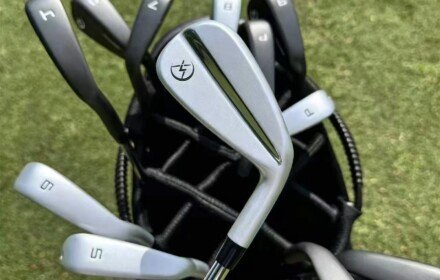
This means a 9‑year‑old who needs a 60‑inch (152 cm) tall set but a 55‑gram shaft can get a properly built adult head (like the forgiving KASMAX P770 hollow‑forged iron) adjusted precisely to their specs. The 30‑day return policy also adds a safety net for uncertain sizings.
4. How to Determine the Right Length
The most reliable method is the wrist‑to‑floor measurement:
| Height (inches) | Wrist‑to‑Floor (approx.) | Recommended Club Length (5‑iron base) |
|---|---|---|
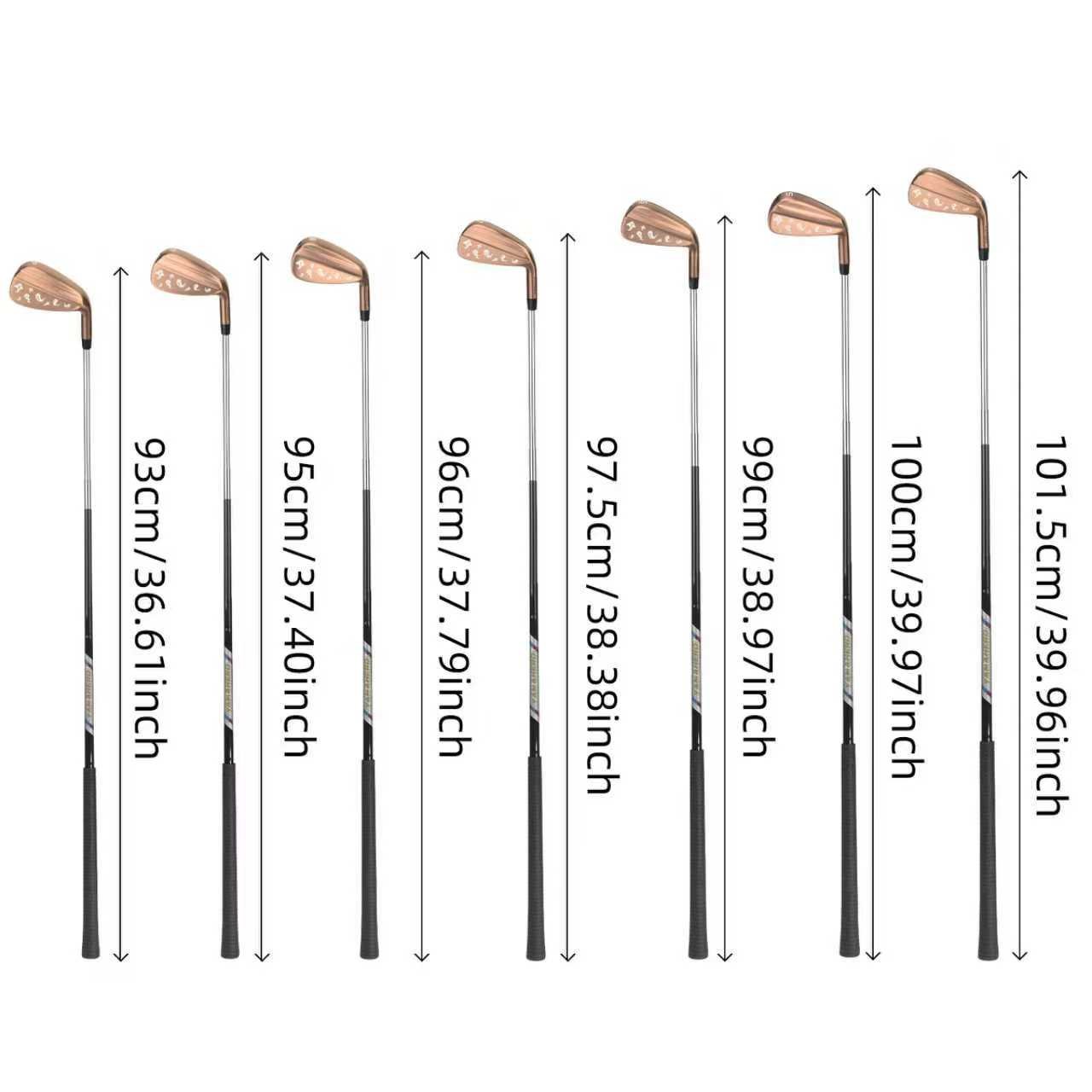
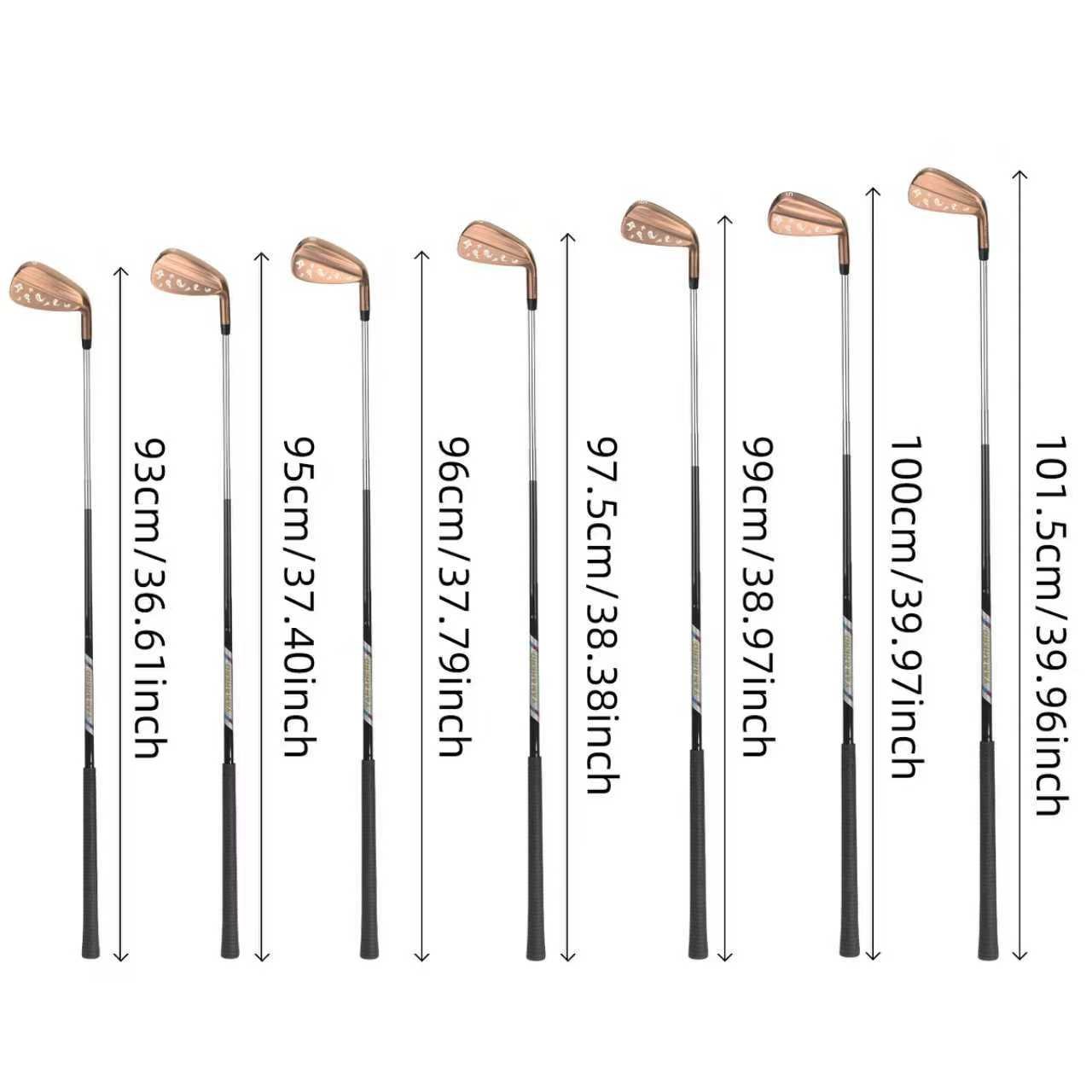
| 48–51 | 22–24" | 32–34" |
| 51–55 | 24–26" | 34–36" |
| 55–60 | 26–28" | 36–38" |
| 60–63 | 28–30" | 38–39" (nearly adult standard) |
For most 9‑12‑year‑olds, a 5‑iron between 35 and 37.5 inches is typical. Avoid clubs that are too long “so they can grow into them.” The child will instinctively compensate by standing too upright, flattening the swing plane, and developing a slice.
5. When to Transition into Full Adult Clubs
By age 12, some players—especially taller girls and boys going through growth spurts—may be ready for adult clubs with softer flex shafts. Signs that a junior set is being outgrown:
The golfer consistently makes contact toward the heel.
The clubs feel too light and the player complains of a “whippy” feel.
Height exceeds 60 inches and wrist‑to‑floor is over 28 inches.
If the player is ready for adult clubs but still needs a softer flex, custom ordering from a maker like KASMAX becomes ideal. You can select a player’s iron head (e.g., a forged cavity‑back) but pair it with an ultra‑light graphite shaft in senior or ladies flex, cut to the perfect length. That bridging set can last through the entire teenage years.
6. Top Considerations for Parents
1. Skip the “toy” clubs. Cheap department‑store sets with plastic parts and steel shafts for a 9‑year‑old are simply too heavy and will discourage the child. Invest in a true junior set or custom‑built clubs with real componentry.
2. Prioritize learning over equipment. Between ages 9 and 12, the focus should be on fun and fundamentals. A properly fit set reduces the need for awkward compensations and lets the child develop a natural motion.
3. Take advantage of warranties and returns. Kids are hard on clubs, and they may outgrow a set in 18 months. KASMAX’s 30‑day return policy and manufacturer’s warranty provide peace of mind, especially for custom orders that can’t be trial‑tested in a store.
4. Consider a phased approach. A common path is to buy a complete junior set for ages 9–10, then move to a custom‑built adult head with lightweight shaft around age 11–12. The latter approach, using KASMAX’s direct‑to‑consumer model, can deliver higher‑quality components at a price comparable to off‑the‑rack junior sets.
7. KASMAX Golf: A Practical Partner for Growing Golfers
Because KASMAX manufactures every club to order, they are not constrained by standard junior sizing categories. A parent can contact them with the child’s exact measurements and receive irons, woods, or a complete set built to those specs. While they do not have a dedicated “youth” product page, their existing lineup of forged hollow irons, forgiving hybrids, and adjustable drivers—when customized with short lengths and light shafts—can outperform any mass‑produced junior set.
And for left‑handed juniors, who are almost entirely ignored by large junior‑set brands, KASMAX is a genuine solution. They build left‑handed clubs across all models without additional charges, making them one of the few accessible routes for a lefty 10‑year‑old to get forged irons that actually fit.
Final Thoughts
Youth golf clubs for ages 9‑12 are an investment not just in equipment, but in a lifetime of proper movement patterns. Off‑the‑shelf sets work for many, but for the child who doesn’t fit the mold—or who simply deserves clubs as thoughtfully made as their enthusiasm—custom ordering from a factory‑direct specialist like KASMAX Golf can be the edge that makes the game more rewarding, day one.
Explore custom options and start a fitting conversation at the KASMAX Golf official website (opens in new window). For the latest product demos and behind‑the‑scenes looks at how forged irons are built, visit their YouTube channel: KASMAX Golf on YouTube (opens in new window).