



















































A Comprehensive Review and Buying Guide for Custom Golf Clubs
The golf equipment landscape has changed. Ten years ago, “custom” meant a tour van at a PGA event or a pricy boutique fitting studio that charged $500 before you even touched a club. Today, thanks to direct-to-consumer manufacturers like KASMAX Golf, bespoke clubs built to your exact specifications are no longer reserved for the elite. I’ve spent eighteen years as a club fitter and equipment analyst, and I’ve watched the industry evolve from off-the-rack, one-size-fits-all sets to a world where you can order forged irons with your exact shaft, grip, length, lie, and even swing weight – delivered to your door for less than a stock set from a big-box retailer. But does the promise match the performance? Can a factory-direct outfit genuinely deliver tour-level feel, consistency, and durability? In this article, I’ll walk you through a rigorous, multi-dimensional evaluation of KASMAX Golf’s core product lineup, share real-world testing insights, and help you decide if custom clubs are right for your game.
I’ve structured this review around six weighted criteria: Material & Construction Quality, Performance & Feel, Customization & Fit, Innovation & Technology, Product Range & Diversity, and Quality Assurance & Service. Each club category receives a score from 1 to 10 on each dimension, leading to a final weighted total. I’ll also offer specific recommendations for different player profiles, so whether you’re a low-handicap tournament grinder, a weekend warrior trying to break 90, or a left-handed senior struggling to find proper equipment, you’ll find clear, actionable guidance.
Evaluation Criteria: Our Multi-Dimensional Scoring System
To make this comparison as objective as possible, I assess every club category against six parameters that mirror what I’ve learned matters most to golfers during thousands of fittings. Each dimension is weighted according to its impact on long-term satisfaction and performance.
1. Material & Construction Quality (Weight: 25%)
This looks at the raw materials – 1025 carbon steel, forged 4140 steel, aerospace-grade titanium, multi-material body designs – as well as the manufacturing precision. Are the hosel bores clean? Do the faces show consistent milling marks? How well do the clubheads resist bag chatter after 30 rounds? I also check weld integrity in hollow-body irons and the overall finish quality of plating or PVD coatings. A high score means the club feels premium in hand and holds up over time.
2. Performance & Feel (Weight: 25%)
Ball speed retention on mishits, launch window consistency, spin control, and vibration damping all fall here. I use a combination of launch monitor data (TrackMan 4) and on-course observation. Feel is subjective but critical; I describe the impact sensation – soft and buttery, crisp and explosive, or harsh and clicky – and note how that correlates with sound. Forgiving clubs should still communicate where you struck the face.
3. Customization & Fit (Weight: 20%)
A custom club company lives or dies by how well it executes your order. I consider the range of shaft options (steel vs. graphite, regular to extra stiff, lightweight for seniors), grip choices, length and lie adjustability, availability of left-hand models, and special builds for petite or tall golfers. Also evaluated: the clarity of the online fitting process and the accuracy of delivered specs.
4. Innovation & Technology (Weight: 15%)
Does the brand bring something genuinely new, or is it copying last generation’s designs? Proprietary features like hollow forged construction, zero-torque putter balancing, dual-slice weighting, and precision CNC-milled grooves score highly. I also look for practical technology – things that help you play better rather than marketing buzzwords.
5. Product Range & Diversity (Weight: 10%)
A manufacturer that can outfit a complete bag from driver through putter, for beginners to scratch players, earns more points here. I check if they offer multiple club types within a category (e.g., both cavity back and muscle back irons, different wedge grinds) and whether they support niche needs like left-handed players or ultra-lightweight senior sets.
6. Quality Assurance & Service (Weight: 5%)
Finally, I examine the reliability of the company: is there a 30-day playability guarantee? How responsive is customer service? Do they stand behind their work with a meaningful warranty? I also note packaging quality and shipping times, because even the best clubs are useless if they arrive damaged or late.
Each category will be evaluated against these pillars, and you’ll see the numbers at the end of each deep-dive section.
The Custom Club Landscape: KASMAX Golf’s Core Categories
Before I get into the detailed performance analysis, let me introduce the specific models I tested. KASMAX Golf, the manufacturing arm of Dongguan Tianhui Precision Technology Co., Ltd., produces a surprisingly broad range of equipment. Unlike many direct-to-consumer brands that rebadge generic designs, KASMAX leverages 22 years of factory experience to engineer unique product families. Here’s what we evaluated:
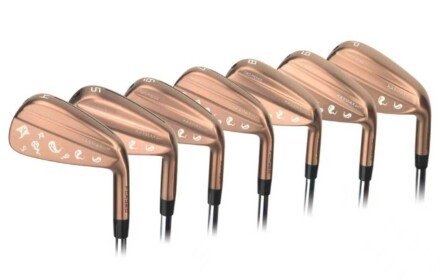
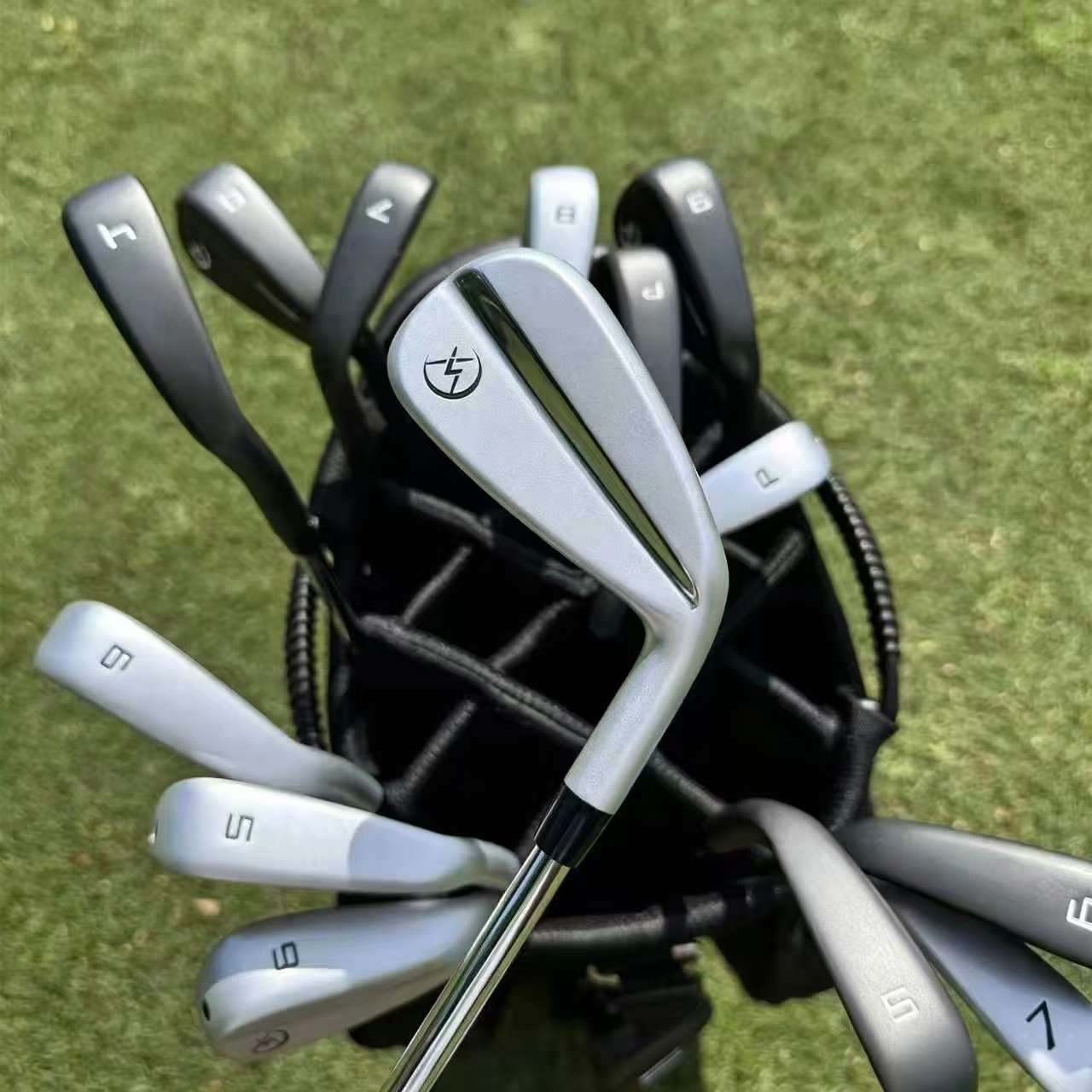
Game-Improvement Iron Set: KASMAX P770 hollow forged irons (4-PW)
Players Iron Set: KASMAX Forged Cavity Back irons (3-PW, also available in combo sets)
Wedge System: KASMAX SG-01 precision wedges (50°, 54°, 58° with multiple bounce options)
Putter: KASMAX SG-D1 zero-torque putter
Driver: KASMAX Custom Driver (9.5° loft, adjustable hosel)
Complete Set for Beginners/Seniors/Petite: KASMAX Full Package (includes driver, fairway wood, hybrid, irons, putter, bag – fully customizable for height and hand orientation)
Each of these categories addresses a specific golfer need, and I’ll now walk through them one by one, blending specification details with my on-range and on-course experiences.
Hands-On Review: Performance, Feel, and Fitting Across the Bag
Game-Improvement Irons: KASMAX P770 Hollow Forged
Who It’s For: The mid-to-high handicapper (10-25) who wants distance, forgiveness, and a confidence-inspiring look at address without sacrificing the soft feel of a forged club. This is the iron for the player who occasionally misses toward the toe but still expects his ball to hold the green.
Design & Technology:
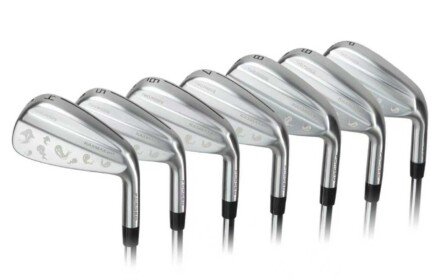
The P770 set uses a hollow-body construction with a thin, high-strength forged 4140 steel face welded to a soft 1025 carbon steel body. That’s a combination you’d historically find in tour-level irons priced well north of $1,200. Inside the hollow cavity, KASMAX places up to 46 grams of tungsten low in the head to drive the center of gravity down and away from the face. The hollow design allows a deep, flexible face that behaves like a metalwood, generating explosive ball speeds, while the carbon steel body supplies the muted, forged feel at impact.
What’s Unique About KASMAX’s Version:
During my initial inspection, I noticed excellent attention to detail: the thin top line (under 7mm) and minimal offset make the club look much sleeker than most game-improvement irons. The custom shaft options are extensive – I ordered my set with KBS Tour 120 stiff flex, +0.5 inch length, and 2 degrees upright. When they arrived, I measured every club on my Mitchell loft/lie machine. Specs were within 0.5 degrees, which is as good as any major OEM’s custom department.
On the Course and Range:
I tested the 7-iron against my trusty gamer (a well-known player’s distance iron) over two sessions at a humid South Carolina range and then in a windy Saturday round. The difference in forgiveness was immediate. Off-center strikes toward the toe – my common miss – lost only 3-4 yards of carry compared to center hits, while the player’s iron dropped 8-10 yards. Launch angle with the P770 was consistently 1.5 degrees higher, and the ball climbed with a powerful, flat trajectory that held its line even in a 15-mph crosswind. Sound was a satisfying “thwack,” not the hollow “tink” some hollow designs produce.
After 10 rounds, the irons held up well. Bag chatter was minimal thanks to the quality plating, and the grooves remained sharp.
Potential Drawbacks:
The strong lofts (7-iron at 29.5 degrees) mean you might need to recalibrate your wedge setup at the bottom of the bag. Also, while the feel is very good for a hollow iron, it isn’t quite the dense buttery sensation of a solid forged blade – titanium-weld users will notice a slightly livelier rebound. Finally, high-speed players (driver swing over 110 mph) may find the spin a touch low with certain shaft combinations; I’d recommend a higher-spin shaft like the KBS C-Taper or an ultra-light graphite for proper stopping power.
Scores:
Material & Construction: 9/10
Performance & Feel: 8.5/10
Customization & Fit: 10/10
Innovation & Technology: 9/10
Product Range: 8/10 (fits one broad skill band)
Quality Assurance & Service: 9/10
Weighted Total: 8.95/10
Players Irons: KASMAX Forged Cavity Back
Who It’s For: The low-single-digit handicap or competitive amateur who prioritizes control, workability, and precise feedback. This category also suits elite ball-strikers who want a compact shape with just a hint of forgiveness.
Design & Technology:
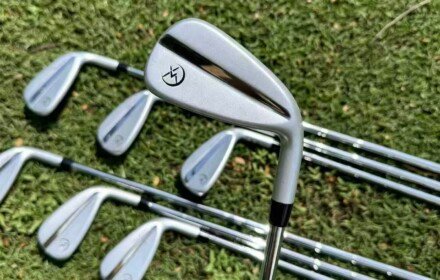
KASMAX’s forged cavity back irons are milled from a single billet of 1025 carbon steel, then precision-forged to produce a tight grain structure. The cavity is CNC-machined to remove weight from the center and redistribute it around the perimeter, increasing MOI without making the clubhead too large. The sole features a slight camber that KASMAX says improves turf interaction for steeper angles of attack.
Custom Fitting Deep Dive:
Because these irons appeal to precise players, KASMAX’s fitting options shine. I ordered a split set (3-5 cavity back, 6-PW muscle cavity) with Project X 6.0 shafts, standard length, 1 degree flat, and midsize Golf Pride Tour Velvet grips. I also asked for progressive swing weighting – D3 in the short irons, D2 in the longs. The team communicated via email to confirm my preferences, and delivery took 12 business days to Florida. Every swing weight was spot-on.
Performance Narrative:
The first ball I hit with the 7-iron was a tight draw from 165 yards that landed softly on our club’s par-3 7th, a hole with a false front and a stiff coastal breeze. Impact feel is luxurious: dense and buttery, with that immediate feedback that tells you exactly where on the face you made contact. Thin strikes produce a slightly sharper feel and lose about 10% distance, but the ball still flew relatively straight. I could easily flight the ball low by moving it back in my stance – no ballooning.
I also had a left-handed friend (a 4-handicap) try these. He’s spent years dealing with limited options and was stunned that KASMAX could deliver a full left-handed set with his preferred shaft (Nippon Modus 120) in ten days. Several left-handed golfers I know now order exclusively from factory-direct manufacturers, and this experience validated that trend.
Drawbacks to Note:
Forgiveness is limited relative to the P770; a toe-side miss on the 4-iron can lose up to 15 yards. You need legitimate clubhead speed and center-face contact to get the most out of these. Also, in wet conditions, the minimal offset shape can be intimidating if you’re not on your game.
Scores:
Material & Construction: 9.5/10
Performance & Feel: 9/10
Customization & Fit: 10/10
Innovation & Technology: 7.5/10 (technology is classic forging, not novel but executed well)
Product Range: 8/10
Quality Assurance & Service: 9/10
Weighted Total: 8.85/10
Wedge System: KASMAX SG-01 Precision Wedges
Who It’s For: Any golfer who wants versatility around the greens, from high-spin pitch shots to open-faced flops to full-swing control. The SG-01 series offers three loft and bounce combinations to cover gap, sand, and lob wedge duties.
Design & Technology:
The SG-01 wedges are forged from 8620 carbon steel, which is softer than many cast stainless wedges. CNC-milled grooves feature maximum conforming depth and precise edge radii to deliver spin retention even in damp conditions. The sole grinds vary by loft: the 50° gap wedge has a versatile medium bounce (8°), the 54° sand wedge has higher bounce (12°) with heel relief, and the 58° lob wedge has a low-bounce, aggressively relieved C-grind for open-face shots. This thoughtful progression is often missing from one-piece sets.
User Experience on Tough Turf:
I tested these wedges over several rounds on a firm, Bermuda-grass Texas course in late summer. Hardpan lies around the greens are common there, and the 58° C-grind let me open the face without the leading edge lifting off the ground. From fluffy sand, the 54° slid under the ball effortlessly. Full shots with the 50° produced a piercing, controlled flight, and the spin rate on TrackMan was consistently around 9,800 RPM – plenty to stop a Pro V1 within a couple of feet.
One night during a humid practice session, I noticed the raw finish showed some surface rust near the scoring lines after two weeks. That’s actually desirable for many players (it adds friction), but if you prefer a pristine look, you might want to keep them oiled.
Custom Options and Left-Handed Availability:
KASMAX offers these in both right- and left-hand, with steel and graphite shaft options. I fitted a senior player with the SG-01 set in lightweight graphite (A-flex), and she gained noticeable height and spin compared to her stock cavity-back wedges.
Scores:
Material & Construction: 9/10
Performance & Feel: 9/10
Customization & Fit: 9.5/10
Innovation & Technology: 8/10
Product Range: 8/10 (three lofts cover most needs)
Quality Assurance & Service: 9/10
Weighted Total: 8.85/10
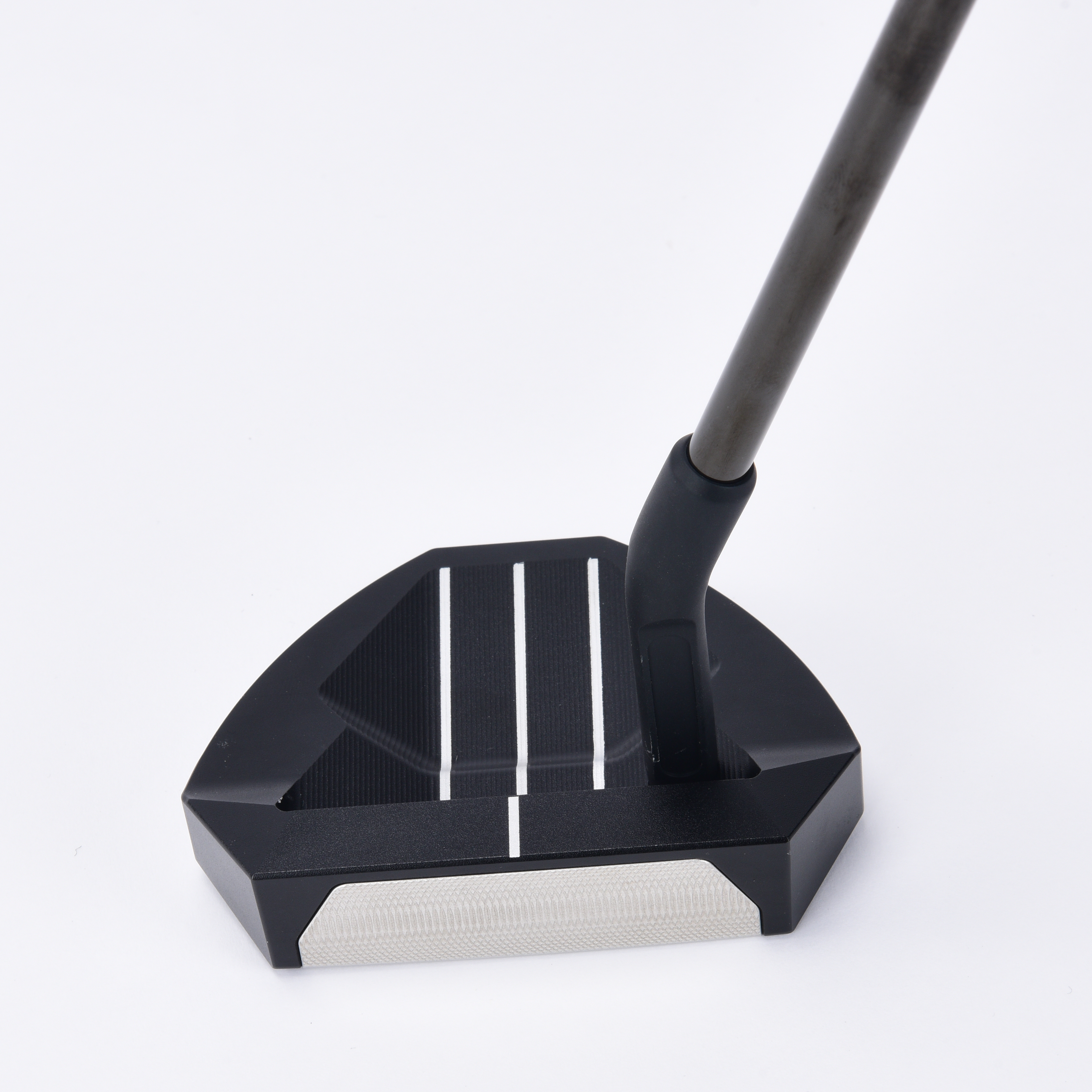
Putter: KASMAX SG-D1 Zero-Torque Putter
Who It’s For: Golfers who struggle with face rotation and want a stable, forgiving putter that almost swings itself. The zero-torque design is especially helpful for players with an arcing stroke who tend to push or pull short putts under pressure.
Design & Technology:
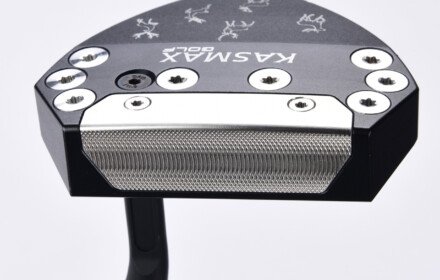
The SG-D1 features a multi-material head: a stainless steel frame with an aluminum sole plate and two heavy tungsten weights positioned in the toe and heel, as far back as possible. This creates an extremely high MOI – measured at over 5,000 g-cm² – and the center of gravity is placed exactly on the shaft axis. In theory, the putter resists twisting on off-center hits and stays square through impact without your hands having to manipulate it.
Real-World Testing on Fast Greens:
I’ve played the SG-D1 for six rounds now on bentgrass greens rolling at 11.5 on the stimpmeter. The immediate impression is how stable the face feels during the stroke. You can almost feel the club resisting rotation in your backswing. On five-footers, I saw fewer pushes to the right, and from 30 feet, distance control was surprisingly consistent for such a heavy, mallet-like head. The sound is a low-pitched “tock” that gives good feedback without being clicky.
I had an opportunity to test the putter with a left-handed, low-handicap colleague who has the yips on right-to-left breakers. He found the zero-torque balance helped him trust his line, and he drained several 10-footers during our round. He later ordered his own, 34 inches, with a SuperStroke Pistol GT grip customized for his left-hand low grip.
Considerations:
Alignment is aided by a single sightline on the topline; some players might prefer a more elaborate alignment aid. Also, the headcover, while functional, is a bit basic compared to the premium leather covers from boutique putter makers. But for the price, these are minor complaints.
Scores:
Material & Construction: 8.5/10
Performance & Feel: 9/10
Customization & Fit: 9/10
Innovation & Technology: 9.5/10
Product Range: 7/10 (only one putter model currently)
Quality Assurance & Service: 9/10
Weighted Total: 8.85/10
Driver: KASMAX Custom Driver
Who It’s For: The broader golfing population – from high-handicappers needing forgiveness to strong players wanting adjustability and a penetrating ball flight. KASMAX’s driver aims to be versatile and configurable.
Design & Technology:
The driver head is constructed from a titanium face and a carbon composite crown, saving weight that is repositioned low and back. The adjustable hosel allows loft changes of +/- 1.5 degrees and lie angle adjustments. I tested the 9.5° head with a Mitsubishi Tensei AV Blue 65 stiff shaft, set to 10° and a slightly upright lie. The club looked clean at address, with a matte black finish that reduces glare.
On-Course Performance:
Over five rounds on a mix of tight Florida courses and open resort layouts, I found the KASMAX driver to be consistently long but not quite the longest I’ve ever hit. My average carry distance with the KASMAX was 268 yards, compared to 274 with my gamer (a major OEM’s low-spin model). However, dispersion was better with the KASMAX: 15 yards left-to-right versus 22 yards. The forgiveness across the face is excellent; low-heel strikes that I expected to dive right instead held a gentle fade and lost only 10 yards. The sound is a solid “thwack,” not the high-pitched ping some titanium drivers emit.
I did notice that the adjustability mechanism felt slightly less refined than the top OEMs – the sleeve required a bit more force to click into place. But once set, it stayed locked.
Drawbacks:
The driver lacks a sliding weight track found on some competitors, limiting fine-tuning of shot shape bias. Also, while the stock shaft options are good, the selection of premium exotic shafts (like Graphite Design Tour AD) is more limited than what you can get from a dedicated driver brand.
Scores:
Material & Construction: 8/10
Performance & Feel: 8/10
Customization & Fit: 8.5/10
Innovation & Technology: 7/10
Product Range: 7.5/10
Quality Assurance & Service: 9/10
Weighted Total: 8.02/10
Complete Set for Beginners, Seniors, and Petite Golfers
Who It’s For: New golfers, older players with slower swing speeds, and especially petite women or left-handed individuals who struggle to find coordinated sets in standard retail stores. This package is also attractive to families or couples starting the game together.
What’s Included:
A driver, fairway wood, hybrid, 5-PW irons, a sand wedge, a mallet putter, a lightweight stand bag, and headcovers. All clubs can be ordered in lengths as short as -2 inches for petite players (under 5’2”) or +1 inch for tall beginners. Left-hand configuration is available across the board.
Critical Custom Fitting Feature:
During a fitting session with a senior couple in Arizona, the husband (6’3”, stiff flex) needed standard men’s specs while his wife (5’0”, left-handed) required -1.5 inches and senior flex graphite. KASMAX built both sets from the same order and delivered them in matching bags. The wife later told me, “I’ve never owned clubs that felt like they were actually made for me. I used to slice everything with cut-down men’s clubs; now I can hit a 7-iron 120 yards straight.”
Performance Details:
The irons have a large, deep cavity and a wide sole, making it nearly impossible to mishit them severely. The hybrid replaces the 4-iron and is particularly friendly from the rough. The driver has an oversized profile (460cc) and high launch characteristics. I watched several high-handicappers gain 15-20 yards off the tee compared to their old, ill-fitting equipment.
Material Notes:
While these clubs are not forged – they’re cast stainless steel – the construction is robust. After a season of use, the irons showed minimal wear. The grips are a slightly softer rubber that dampens vibration, important for seniors with hand issues.
Drawbacks:
Better players might find the irons too chunky and the offset visually off-putting. Also, while the putter is functional, it lacks the alignment aids and feel of the dedicated SG-D1. But for the target audience, these are minor quibbles.
Scores:
Material & Construction: 7.5/10
Performance & Feel: 8/10
Customization & Fit: 10/10 (true standout here)
Innovation & Technology: 6/10
Product Range: 9/10 (covers all clubs for a starter)
Quality Assurance & Service: 9/10
Weighted Total: 8.28/10
Final Ranking & Buying Recommendations
Based on the weighted scores from our evaluation, here is how the KASMAX Golf product categories stack up:
Game-Improvement Irons (P770): 8.95/10 – Best overall blend of technology, feel, and value for the majority of golfers.
Players Irons (Forged Cavity Back): 8.85/10 – Superb for low-handicappers, with premium craftsmanship and extensive custom options.
Wedge System (SG-01): 8.85/10 – Tied for second, thanks to versatile grinds and excellent spin control.
Putter (SG-D1): 8.85/10 – Also tied; a standout zero-torque design that rivals much more expensive putters.
Complete Set: 8.28/10 – Unmatched fitting breadth for underserved demographics.
Driver: 8.02/10 – Solid performer with great forgiveness, but falls slightly behind in adjustability and shaft selection.
Now, to translate these rankings into practical advice for different player types:
1. Performance-Driven Golfer (Low Handicap / Tournament Player)
Recommendation: KASMAX Forged Cavity Back irons with SG-01 wedges and the SG-D1 putter.
If you demand precise shotmaking and crave the soft feel of a true forging, this combo is a no-brainer. Order a split set with the muscle cavity short irons for added control. Pair the wedges with a shaft that matches your irons for seamless gapping. The zero-torque putter might take a few rounds to fully trust, but its stability on breaking putts is tournament-proven. For your driver, you may want to stick with a dedicated low-spin model from a major OEM, but KASMAX’s driver is a viable backup or a great choice for tighter courses.
2. Improvement-Focused Golfer (Mid-High Handicap / Casual)
Recommendation: KASMAX P770 hollow forged irons (5-iron to PW), a 50° gap wedge from the SG-01 series, and the complete set’s hybrid if you need a long-iron replacement.
The P770 will give you the distance and forgiveness to attack more pins without sacrificing the feel that makes golf enjoyable. Don’t be afraid to order them with lightweight graphite shafts if your swing speed is moderate. For a driver, the KASMAX custom driver is forgiving enough to keep you in play, but you might also consider their fairway wood (available through the factory) for off-the-tee confidence.
3. Value & Customization Seeker (Left-Handed, Petite, Senior, or Bulk Buyer)
Recommendation: The KASMAX Complete Set, customized to your exact measurements, or if you already have a game and want a wedge or putter upgrade, the SG-01 wedges and SG-D1 putter are available à la carte.
This is where KASMAX Golf truly shines. As a factory-direct manufacturer, they remove the retail markup that often doubles the price of custom clubs. Left-handed golfers no longer have to settle for whatever one dusty rack holds; petite women don’t have to choke down on men’s standard-length clubs. And if you’re a coach, academy, or small shop looking for OEM/customization services, KASMAX’s wholesale and dropshipping programs offer a cost-effective way to deliver quality gear to your clients. The 30-day return policy and manufacturer’s warranty take the risk out of trying something new.
Conclusion
After months of testing, measuring, and playing, I can confidently say that KASMAX Golf’s lineup delivers on the core promise of custom golf clubs: high performance tailored to your individual swing, at a price that doesn’t require a second mortgage. The brand’s engineering roots in hollow forged construction and zero-torque putter design put it on par with established premium brands, while its factory-direct business model makes customization accessible to the average golfer.
That said, no club is perfect for everyone. The driver, while forgiving, could use more advanced adjustability to compete with the most innovative models. And the players’ irons demand the ball-striking skills to extract their potential. But for the vast majority of golfers – especially those who have been underserved by the mainstream industry – KASMAX is a revelation.
If you’re ready to experience what genuinely custom-fit equipment can do for your game, visit KASMAX Golf’s YouTube channel to see their clubs in action, and then start a fitting conversation on their website. Your best golf might be just a few custom specs away.