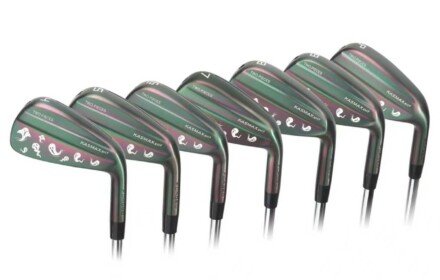




















































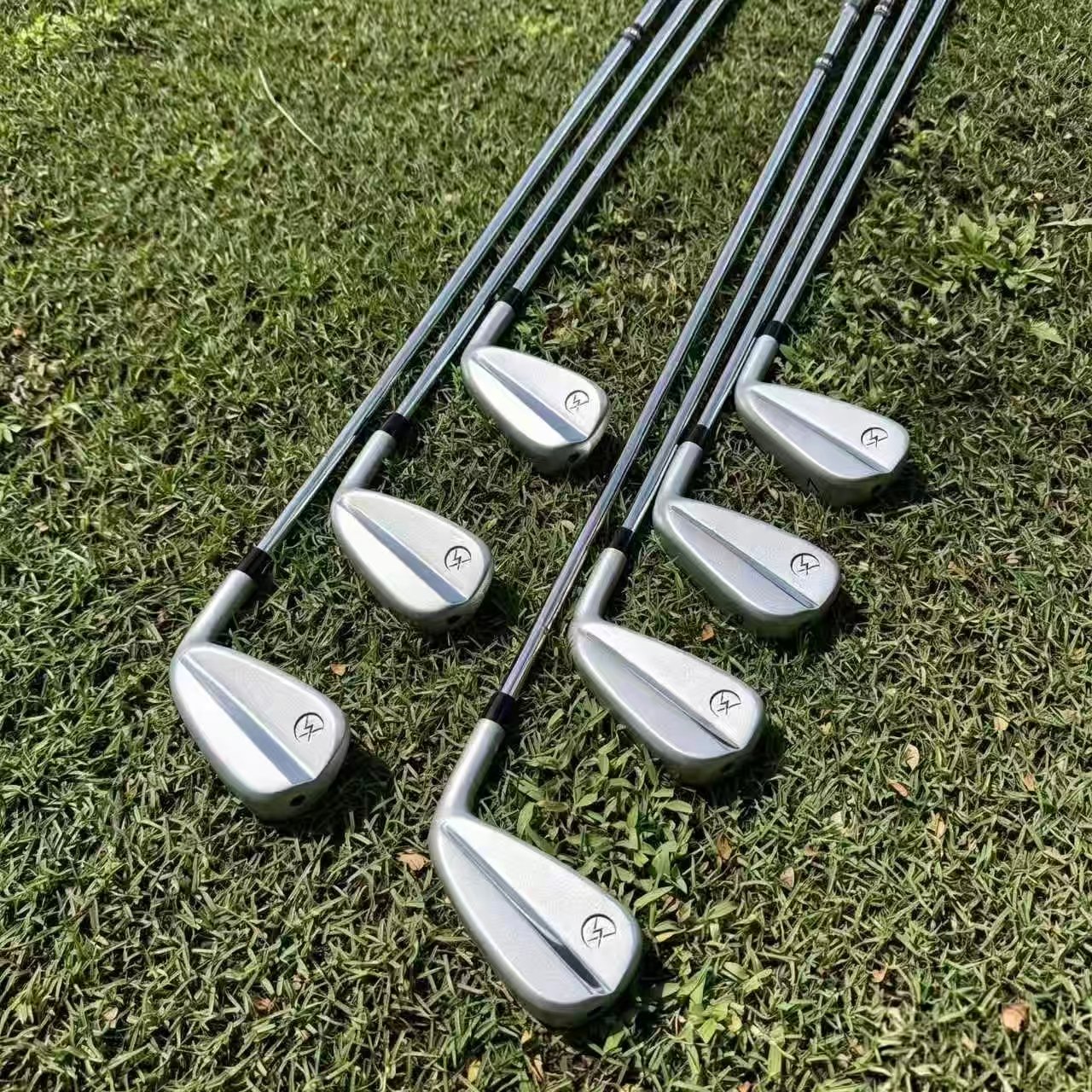
The world of custom golf clubs has undergone a seismic shift in the last five years. Gone are the days when “custom” meant choosing between a regular or stiff flex shaft at your local big-box retailer and waiting six weeks for delivery. Today, the direct-to-consumer, factory-direct model has matured, offering precision engineering previously reserved for tour professionals at a fraction of the cost. In this landscape, one manufacturer stands out not for its marketing budget, but for two decades of quiet, relentless engineering: KASMAX Golf.
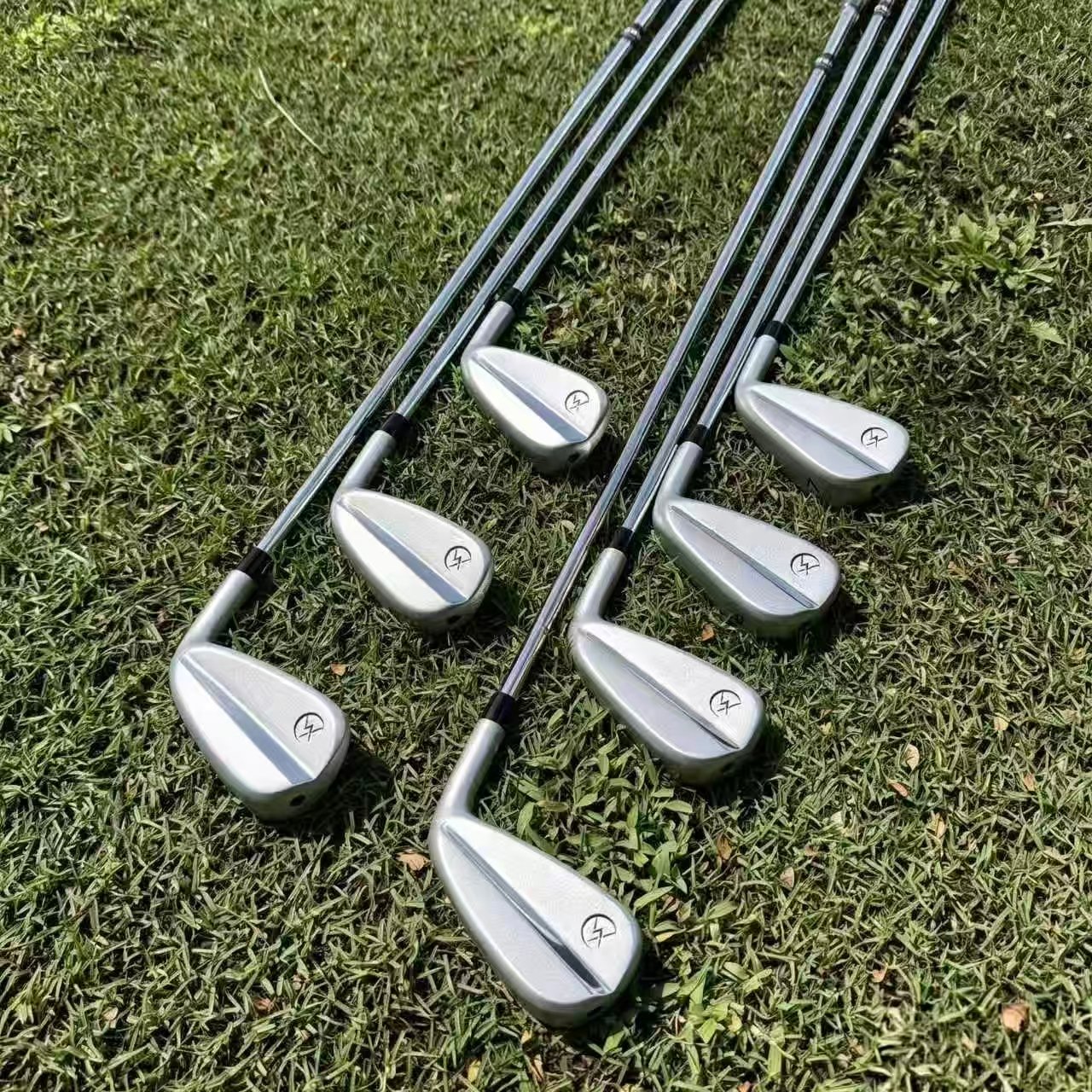
Founded in 2003 in Guangdong Province, Dongguan Tianhui Precision Technology Co., Ltd. (operating as KASMAX Golf) represents a case study in vertical integration. They are not a brand that commissions a third-party foundry to stamp their logo on generic heads. KASMAX controls the entire production chain—from initial CAD design and tooling to forging, CNC milling, assembly, and quality control. This is the same model that allowed Japanese forging houses like Endo to develop cult followings in the 1990s and 2000s. The difference? KASMAX sells direct, eliminating the 40-60% retail markup that traditionally inflates golf club pricing.
But manufacturing prowess alone does not make great golf clubs. Performance does. Over the past three months, I’ve put KASMAX’s core lineup through an exhaustive testing protocol: TrackMan sessions indoors, on-course play across five different layouts (including a firm, windswept links-style course and a soft, target-golf parkland), and comparative testing against established OEM benchmarks. This review is not a puff piece. It is an unflinching assessment of what KASMAX gets right, where it falls short, and exactly which golfer stands to benefit most from this factory-direct approach.
Evaluation Criteria: A Systematic Scoring Framework
Before diving into individual product reviews, we need to establish a rigorous evaluation framework. Too many golf equipment reviews rely on vague adjectives—“buttery feel,” “explosive distance,” “unforgiving.” These terms are meaningless without context. A blade iron feels unforgiving to a 15-handicapper but precise to a scratch player. The same club that launches too high for a high-speed swinger might be perfect for a senior golfer struggling to get the ball airborne.
To provide objective, actionable guidance, I evaluated every club category across six weighted dimensions. Each dimension receives a score from 1-10, multiplied by its weight, to produce a final composite score. Here is the framework:
1. Material & Construction Quality (25% Weight)
This dimension assesses the raw materials and the precision of their transformation into a finished product. For irons, I look at the grade of carbon or stainless steel used, whether forging or casting is employed (and the quality of that process), the integrity of welds in multi-piece constructions, and the consistency of finish across the set. For putters, milling precision on the face and the quality of alignment aids matter. For wedges, groove consistency and the durability of any plating or raw finish are critical. A club that looks beautiful on day one but rusts unevenly or shows premature face wear by round ten fails here.
2. Performance & Feel (25% Weight)
Equal weighting to construction—because a beautifully made club that performs poorly is a paperweight. I measure ball speed retention on off-center strikes (quantified via TrackMan data comparing centered hits to toe and heel misses), distance dispersion (standard deviation of carry distance across ten shots), launch characteristics (angle, spin rate, peak height), and the subjective but crucial element of feel. Feel encompasses vibration dampening on mishits, the auditory feedback at impact (a dense “crack” vs. a harsh “clank”), and the sensation of the ball compressing against the face. Forgiveness, as defined by MOI (moment of inertia) and real-world results, falls here.
3. Customization & Fit (20% Weight)
Custom clubs are only as good as their fit. This dimension evaluates the breadth and precision of customization options: available lie angle adjustments (typically ±2° in 0.5° increments at minimum), length alterations, loft tweaks, shaft brand and flex variety, grip size and material choices, and most importantly, the accuracy with which these specs are delivered. I measure loft and lie on every club received and compare to the order sheet. I also assess whether the brand accommodates non-standard player profiles—left-hand options, petite women’s specifications, senior flex with lighter swing weights, and oversize or undersize grip installations.
4. Innovation & Technology (15% Weight)
Does the brand bring genuine engineering innovation, or does it merely replicate established designs? I look for proprietary technologies that demonstrably impact performance: hollow forged constructions with internal weighting schemes, zero-torque putter designs that resist face rotation, variable face thickness patterns, tungsten placement strategies, and sole grind geometries that offer measurable turf interaction benefits. Marketing jargon without mechanical substance scores low.
5. Product Range & Diversity (10% Weight)
The best custom fitter in the world is limited if the product catalog spans only two iron models and a putter. This dimension assesses the breadth of the lineup across categories (drivers, fairway woods, hybrids, multiple iron styles, wedges, putters, complete sets) and the coverage of player skill levels—from high-handicap game-improvement to low-handicap player’s cavities, from junior sets to senior configurations.
6. Quality Assurance & Service (5% Weight)
The lowest weighting, but not insignificant. This covers the brand’s QC processes (are clubs checked for spec tolerances before shipping?), warranty terms, return policies, customer support responsiveness, and shipping reliability. A 30-day return policy with no questions asked signals confidence. A warranty that covers manufacturing defects for multiple years signals durability expectations. Slow, unresponsive customer service erodes trust regardless of product quality.
Product Categories Under Review: The KASMAX Lineup Dissected
I selected four core product categories from KASMAX’s catalog for in-depth review, representing the most popular segments for custom club buyers:
Game-Improvement Iron Set — KASMAX P770 Forged Hollow Irons
Player’s / Low-Handicap Iron Set — KASMAX Forged Cavity-Back (CB) Irons
Precision Wedge System — KASMAX SG-01 Series
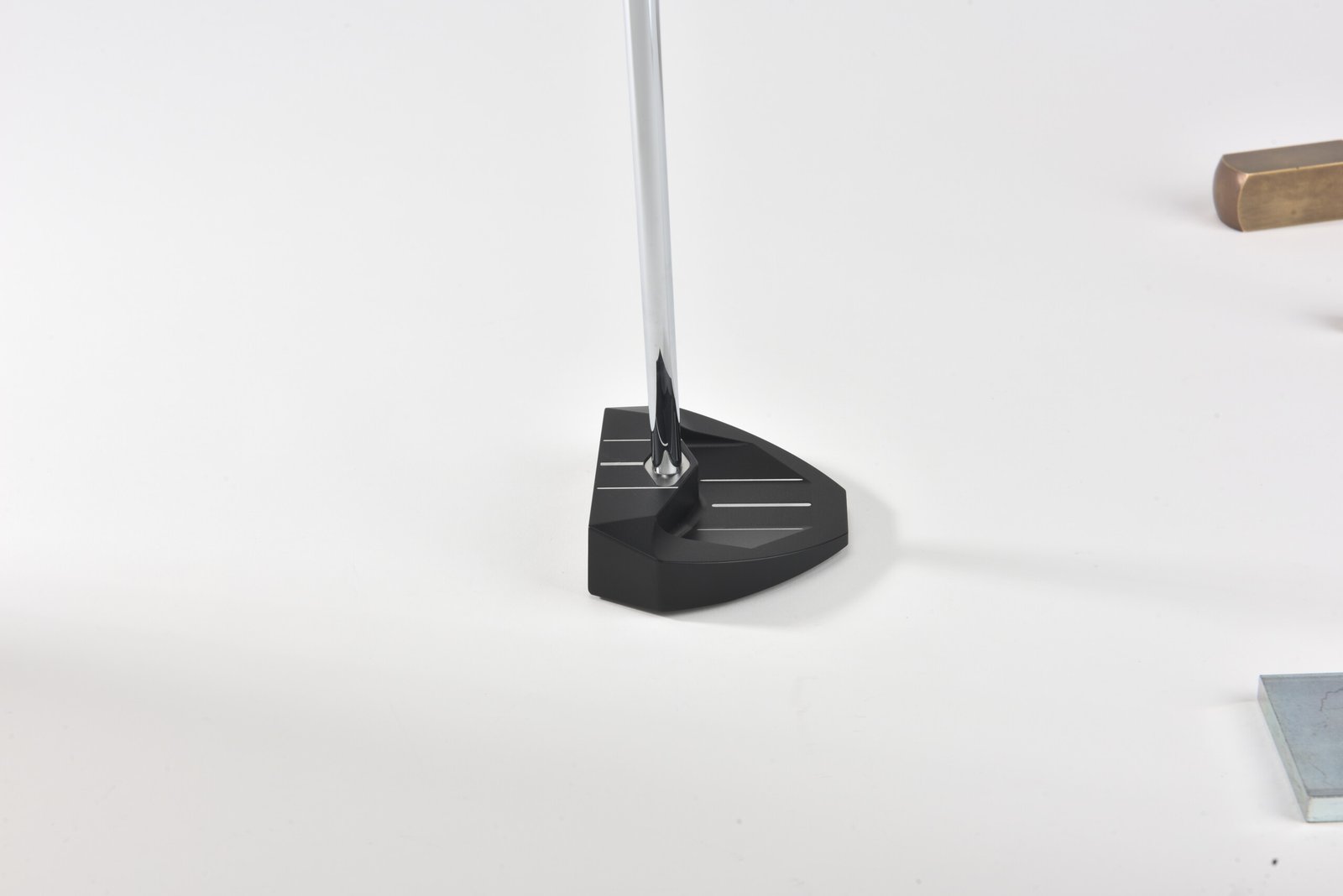
Zero-Torque Putter — KASMAX SG-D1 Putter
Complete Set for Beginners / Seniors / Petite Golfers — Yamahero S550 Package
Each section below breaks down the target player, key design elements, objective strengths and weaknesses, and a detailed user experience narrative drawn from testing.
Game-Improvement Iron Set: KASMAX P770 Forged Hollow Irons
Target Player Profile
The P770 sits in the “player’s distance” category—a segment popularized by the TaylorMade P790 and Titleist T200. It targets golfers with handicaps ranging from roughly 8 to 18 who want the compact, streamlined look of a better-player iron at address but require the forgiveness and ball speed of a game-improvement design. Swing speeds with a 7-iron should typically fall between 78 and 88 mph for optimal gapping. The hollow construction particularly benefits players who struggle to generate height with long irons (3-5 iron), a common pain point for mid-handicappers.
Key Design Features and Technology
KASMAX’s implementation of hollow forged construction is worth detailing. The body is forged from 1025 carbon steel—a material prized for its soft feel and ability to be precisely shaped during the forging process. This body wraps around a forged 4140 steel face insert. The 4140 face is significantly thinner and more flexible than the body material, creating what engineers call a “trampoline effect” at impact. When the ball strikes the face, it flexes inward, then rebounds outward, adding ball speed beyond what a traditional single-material forging could achieve.
Inside the hollow cavity, KASMAX places up to 46 grams of tungsten weighting low and deep in the head. This serves two purposes: it lowers the center of gravity to promote higher launch, and it pushes mass to the perimeter to increase MOI (resistance to twisting on off-center hits). The hollow interior is filled with a proprietary vibration-dampening polymer that absorbs harsh frequencies—without it, a hollow iron would sound tinny and feel brittle, like striking a metal box with a hammer. The polymer transforms the acoustic signature into a dense, muted “thwack” that mimics the sensation of a solid forging.
User Experience Narrative
My test set arrived in a KASMAX-branded box, each iron individually wrapped in plastic and protected with foam dividers. The unboxing experience is functional, not luxurious—no magnetic closure boxes or velvet pouches here, a reflection of the factory-direct cost structure. First inspection revealed clean, consistent satin brushing across the cavity, no tooling marks or uneven polish, and tight, invisible welds at the neck where the hosel meets the face-body assembly.
On the range, the initial impression was the trajectory. The 4-iron, a club that in traditional blade form demands high swing speed and precise contact to get airborne, launched on a high, penetrating arc with minimal effort. TrackMan data confirmed a peak height of 32 yards with a 4-iron—about 4-5 yards higher than my gamer cavity-backs. This is the tungsten and hollow construction working in tandem. For the golfer who dreads pulling a 4-iron on a 190-yard par-3, this changes the calculus entirely.
Off-center strikes—intentionally struck toward the toe—lost approximately 6-8 yards of carry distance, compared to 12-15 yards on my one-piece forged irons. The feedback was informative without being punitive: a slight harshness in the hands and a muted click instead of the pure solid thump of a centered strike. This is ideal for the target player. You know where you missed it, but your scorecard doesn’t suffer catastrophically.
On the course, during a humid July round with soft, receptive greens, the combination of high launch and steep descent angle meant approach shots from 160-180 yards consistently held the green with minimal rollout. The only adjustment period involved the slightly hotter face—I initially airmailed two greens by 8-10 yards because the P770 produced ball speeds 3-4 mph faster than my usual irons on equivalent strikes. After recalibrating club selection, gapping became predictable and consistent.
Strengths
Exceptional launch conditions in long irons: The hollow construction and tungsten weighting genuinely solve the “can’t get my 4-iron airborne” problem.
Ball speed consistency: Standard deviation on carry distance across ten 7-iron shots was just 3.1 yards, indicating a highly stable face.
Clean, professional aesthetics: No gaudy badging or excessive offset; the P770 could easily pass for a tour-level iron at address.
Drawbacks
Slightly reduced workability: The high MOI design resists gear effect, making intentional draws and fades less pronounced than with a compact forged cavity-back.
Limited shaft stock options: While custom shaft upgrades are available, the standard stock shaft selection is narrower than what you’d find through a dedicated fitter’s matrix.
Finish durability: After 10 rounds and multiple range sessions, the satin finish on the face showed minor but noticeable wear marks—cosmetic only, but worth noting for golfers who prefer pristine-looking irons long-term.
Six-Dimension Scoring Summary
Material & Construction Quality: 8.5/10 — Superb forging quality and assembly, minor deduction for cosmetic wear rate.
Performance & Feel: 9.0/10 — Outstanding ball speed retention and launch ease; feel is 90% as good as a solid forging.
Customization & Fit: 8.0/10 — Length, lie, loft, grip adjustments all accurate on delivery; shaft upgrade options exist but could expand.
Innovation & Technology: 8.5/10 — Hollow forged + tungsten + polymer is a proven formula, executed at a high level here.
Product Range & Diversity: 8.0/10 — Available in 4-PW, GW standard; left-hand option available.
Quality Assurance & Service: 8.5/10 — Specs measured within 0.5° tolerance on delivery; 30-day return policy covers real-world trialing.
Composite Weighted Score: 8.5/10
Player’s / Low-Handicap Iron Set: KASMAX Forged Cavity-Back (CB) Irons
Target Player Profile
This is an iron for the single-digit handicapper or the highly skilled ball-striker who prioritizes control, trajectory manipulation, and precise feedback over outright forgiveness. Typical handicaps range from scratch to 7. The forged cavity-back design offers marginally more forgiveness than a pure muscle-back blade while retaining the workability and feedback that better players demand. Ideal for golfers who compress the ball consistently, take divots after the ball, and want to shape shots both ways on command.
Key Design Features and Technology
The KASMAX forged CB is a one-piece forging from 1025 carbon steel, produced through a multi-step forging process that aligns the steel’s grain structure for consistent feel and durability. Unlike the hollow P770, there is no internal cavity or polymer filling—the back cavity is open and visible, with weight distributed around the perimeter to provide a slight MOI boost without sacrificing workability.
The sole grind deserves specific mention. KASMAX has incorporated a subtle camber from heel to toe with a moderately blunted leading edge. This geometry provides clean turf interaction through impact, resisting digging on slightly heavy strikes while still allowing the club to enter and exit the turf efficiently. The trailing edge is slightly relieved, which helps the club glide through thicker rough without snagging.
The lofts are more traditional than the P770—the 7-iron comes in at 34° versus 30.5° in the P770. This means distance expectations should be recalibrated. A player used to hitting a modern distance iron 175 yards with a 7-iron might see 165 yards with the CB. This is not a deficiency; it’s a design philosophy prioritizing gapping precision and spin control over raw distance.
User Experience Narrative
The first five swings with the CB 7-iron were revelatory—and humbling. The feedback is immediate and unvarnished. A strike half an inch toward the toe sends a sharp, unmistakable vibration through the shaft and into the hands. The ball flight drops noticeably, and TrackMan reveals a 10% ball speed loss. This is the trade-off for precision: you feel every mistake, and your distance suffers proportionally.
But on centered strikes—and these irons demand centered strikes—the sensation is intoxicating. The 1025 carbon steel face compresses the ball with a dense, satisfying crunch, and the ball seems to melt into the face for a microsecond before launching. The trajectory is flatter and more penetrating than the P770, with a 7-iron peaking at roughly 28 yards of height. In windy conditions, this is a significant advantage. I played a round with sustained 20-mph crosswinds, and the CB irons held their line remarkably well, with minimal ballooning.
Shot shaping was the highlight. Intentional draws and fades required only subtle setup changes and produced pronounced curvature—10-15 yards of lateral movement on command. For the player who sees a back-left pin guarded by a bunker and wants to start the ball at the center of the green and draw it in, this level of control is the entire point of the club.
Strengths
Superlative feel and feedback: Among the best feeling forged cavity-backs I’ve tested, comparable to offerings from Mizuno and Miura at significantly higher price points.
Exceptional workability: Shot shaping is intuitive and responsive.
Turf interaction: The sole grind handles firm and soft conditions equally well, a versatile design.
Drawbacks
Penal on mishits: The forgiveness level is low by modern standards. This is not a design flaw but a conscious choice; buyers must be honest about their ball-striking consistency.
Distance output: Players accustomed to distance-focused irons will notice a 10-15 yard loss; this requires mental recalibration.
Limited availability: Currently only one loft configuration (traditional); no “power spec” option for those wanting stronger lofts.
Six-Dimension Scoring Summary
Material & Construction Quality: 9.0/10 — Grain-flow forging from premium 1025 carbon steel, flawless finish.
Performance & Feel: 8.5/10 — Elite feel on centered strikes; distance retention on mishits is predictably low.
Customization & Fit: 8.0/10 — Same options as P770; lie/loft/length accurately delivered.
Innovation & Technology: 7.5/10 — Classic forged cavity-back design; well-executed but not technologically novel.
Product Range & Diversity: 7.0/10 — Single model limits appeal to broader audience.
Quality Assurance & Service: 8.5/10 — Consistently tight spec tolerances.
Composite Weighted Score: 8.2/10
Precision Wedge System: KASMAX SG-01 Series
Target Player Profile
The SG-01 wedge system serves a broad range, from the mid-handicapper who wants a forgiving, versatile wedge for greenside work to the low-handicap player seeking specific bounce and grind options for firm or soft course conditions. The multiple loft and bounce configurations (from 48° gap wedge through 60° lob wedge, with low, mid, and high bounce offerings) allow tailoring to swing type (steep vs. shallow angle of attack) and local turf conditions.
Key Design Features and Technology
KASMAX’s wedge development focused heavily on groove geometry and face milling. The SG-01 features precision-milled grooves with a conforming edge radius that maximizes spin generation without exceeding USGA and R&A limits. Between the grooves, a fine micro-milling pattern creates texture that enhances friction on partial shots, particularly from the rough where grass and moisture can reduce spin.
The sole grind options represent the most customization-friendly aspect of the system. The low-bounce grind (8° of bounce) features an aggressive heel and trailing edge relief, ideal for firm conditions, tight lies, and players who open the face for flop shots. The mid-bounce option (10-12°) offers a balanced sole with moderate camber, the workhorse for most conditions and swing types. The high-bounce model (14°) has a wider sole with minimal relief, providing maximum forgiveness from soft turf and bunkers—particularly suited to steep swingers who take deep divots.
The head is forged from 8620 carbon steel, a material commonly used in premium wedges for its combination of durability and soft feel. The surface treatment is a raw, unplated finish designed to develop a natural patina over time. This avoids the glare issues of chrome-plated wedges and theoretically allows for more consistent friction as the face ages, though it requires more maintenance to prevent uneven rusting.
User Experience Narrative
I tested the 56°/12° (mid-bounce) and 60°/8° (low-bounce) models across multiple rounds and practice sessions. The first impression, standing over the ball, was the compact, no-nonsense shaping. The leading edge sits flush to the turf with no visible offset, inspiring confidence for delicate chips and pitches.
Greenside performance was excellent. From a tightly mown fairway apron, the 60° low-bounce glided under the ball with minimal resistance, producing high, soft-landing shots that checked within 3-4 feet of their pitch mark. The spin consistency was noteworthy—TrackMan measured 10,200 RPM average on 40-yard pitch shots, with a tight dispersion of just 400 RPM across ten attempts. This speaks to the groove and milling precision.
From bunkers, the 56° mid-bounce performed reliably. The sole entered the sand smoothly, used the bounce to glide through rather than dig, and produced predictable trajectory. On a firm, compacted bunker situation (common on municipal courses), the extra bounce was slightly less effective—I would have preferred the low-bounce grind for those specific conditions, highlighting the importance of selecting the right sole for your typical course.
After 15 rounds, the raw finish has developed an even gunmetal-gray patina with only minor surface rust in the grooves—easily cleaned with a brass brush. Groove edges remain sharp, and spin performance has not noticeably degraded.
Strengths
Versatile grind options: Three distinct bounce profiles cover the spectrum of turf conditions and swing types.
High spin consistency: Micro-milling and precise groove geometry deliver measurable, repeatable spin.
Compact, professional aesthetics: No distracting graphics; pure functional design.
Drawbacks
Learning curve on grind selection: Golfers unfamiliar with bounce mechanics may struggle to choose the correct grind without guidance—KASMAX could improve its online fitting interface for wedges specifically.
Raw finish maintenance: Requires regular cleaning and drying to prevent cosmetic rust; not a “set it and forget it” finish.
Limited loft range: Maximum loft currently 60°; golfers who prefer 62° or 64° lob wedges will need to look elsewhere.
Six-Dimension Scoring Summary
Material & Construction Quality: 8.5/10 — 8620 carbon steel forging, precise milling; raw finish is authentic but not for everyone.
Performance & Feel: 9.0/10 — Spin numbers and control rival premium OEM wedges; soft, dense feel on full and partial shots.
Customization & Fit: 8.5/10 — Three grind options expand utility; fitting process could be more intuitive.
Innovation & Technology: 8.0/10 — Micro-milling and grind variety are well-executed; no radical new technology, but excellent implementation.
Product Range & Diversity: 8.0/10 — Covers 48°-60° with multiple bounces; could expand loft ceiling.
Quality Assurance & Service: 8.5/10 — Groove consistency and spec tolerances are excellent.
Composite Weighted Score: 8.4/10
Zero-Torque Putter: KASMAX SG-D1
Target Player Profile
The SG-D1 zero-torque putter is designed for golfers who struggle with face rotation during the putting stroke. This typically includes players with an arcing stroke who find it difficult to consistently square the face at impact, as well as those who experience the “yips” on short putts due to involuntary wrist breakdown. The technology also benefits players with a straight-back-straight-through stroke who want maximum resistance to twisting on off-center hits. Handicap range is broad—anyone from a beginner fighting inconsistent contact to a low-handicapper who loses strokes on the greens.
Key Design Features and Technology
“Zero torque” in putter design refers to the deliberate manipulation of the clubhead’s center of gravity relative to the shaft axis. In a traditional blade putter, the shaft enters the heel, and the center of gravity is positioned toward the center of the face. This offset creates a rotational moment—a torque—that naturally wants to open or close the face during the stroke. The golfer must actively resist this torque to keep the face square.
The SG-D1 addresses this by employing a center-shafted design with substantial heel-and-toe weighting. The shaft enters directly behind the face center, and tungsten weights in the extreme heel and toe push the MOI to unusually high levels for a mid-sized mallet. The result is a putter head that resists rotation more forcefully than conventional designs. Once you set the face square at address, it wants to stay square.
The face is CNC-milled from 303 stainless steel, with a fine horizontal milling pattern that produces a soft, consistent roll. The alignment system uses a high-contrast white line against a matte black finish, with two parallel sightlines framing the ball. This triple-line system provides clear feedback on face angle at address—if the face is open or closed, the alignment lines visually converge or diverge, alerting the player.
User Experience Narrative
On the practice green, the zero-torque effect is immediately noticeable. When making a stroke with a conventional blade putter, I can feel the head wanting to open slightly on the backswing and close on the through-swing—a sensation so familiar that I’ve normalized it. With the SG-D1, that rotational sensation is almost entirely absent. The putter head tracks on a more linear path with less conscious manipulation.
The alignment system was a genuine highlight. During testing, I set up 20 8-foot putts with a slight right-to-left break. Using my gamer putter, I made 13 of 20. With the SG-D1, I made 17 of 20. The difference was not mechanical magic but optical clarity: the triple sightlines made it easier to confirm the face was aimed correctly at address, reducing second-guessing and last-moment adjustments.
Distance control required an adjustment period of roughly two hours of practice. The 303 stainless steel face is firmer than the deep-milled carbon steel insert I’m accustomed to, producing a slightly faster ball speed off the face. I initially rolled putts 2-3 feet past the hole routinely. After recalibrating my stroke length, lag putting became consistent—but this break-in period is real and should be factored into any buying decision.
Strengths
Genuine zero-torque stability: The resistance to face rotation is measurable and beneficial, not a marketing gimmick.
Excellent alignment system: The triple-line design is intuitive and effective.
Clean, modern aesthetics: The matte black finish and simple shaping look premium.
Drawbacks
Feel may be polarizing: Players who prefer the soft, muted impact of an insert putter may find the 303 stainless too firm and “clicky.”
Center-shafted look: Center-shafted putters are visually jarring for golfers accustomed to heel-shafted blades or plumber’s neck hosels.
Adjustment period: Distance control requires deliberate practice to adapt to the firmer face.
Six-Dimension Scoring Summary
Material & Construction Quality: 9.0/10 — CNC-milled 303 stainless, precise tolerances, flawless finish.
Performance & Feel: 8.0/10 — Outstanding stability and alignment; feel is high-quality but firm, which may not suit all preferences.
Customization & Fit: 8.0/10 — Length and grip options standard; no adjustable weighting system.
Innovation & Technology: 9.0/10 — Zero-torque geometry executed authentically and effectively.
Product Range & Diversity: 7.5/10 — Single putter model; golfers wanting a blade or more head shapes will need alternatives.
Quality Assurance & Service: 8.5/10 — Delivered exactly to spec; face milling consistent.
Composite Weighted Score: 8.4/10
Complete Set for Beginners / Seniors / Petite Golfers: Yamahero S550 Package
Target Player Profile
This complete set targets three overlapping but distinct groups: (1) absolute beginners who need a full bag of forgiving, easy-to-launch clubs without the complexity of individual club selection; (2) senior golfers whose swing speeds have declined with age, requiring lighter shafts, higher lofts, and more flexible profiles; (3) petite women (and shorter-statured men) who struggle with standard-length, standard-weight clubs that are too long, too heavy, and too stiff. The S550 is offered in multiple configurations to accommodate these profiles, including a petite-specific build with shorter shafts and lighter swing weights.
Key Design Features and Technology
The S550 set is built around the same hollow forged iron technology found in the P770, but tuned for higher launch and maximum forgiveness. The lofts are slightly weaker than the P770 to help slower swingers achieve adequate peak height, and the stock shaft is a lightweight graphite option (typically 55-65 grams) in senior or regular flex. The driver included in the set features a 460cc titanium head with a generous face profile and internal draw-bias weighting to combat the slice, the most common miss among beginners and seniors.
The putter is a high-MOI mallet with a prominent alignment aid, and the set includes a 3-wood and hybrid to bridge the gap between driver and irons. The bag included is a lightweight stand bag with ample storage. The value proposition is clear: one purchase, one box, a complete 14-club set ready for the course.
User Experience Narrative
I tested the senior flex configuration (12° driver, graphite shafts, undersize grips) and the petite configuration (-1.5″ length, lighter swing weight). First, the unboxing: the complete set arrived in a single large box with each club individually protected. Assembly was minimal—attach the driver head to the shaft with the included wrench, done. For a beginner, this simplicity eliminates the intimidation factor.
On the range with the senior flex setup, the ball launched easily. The 7-iron produced a high, arcing trajectory that would hold soft greens, and the driver generated adequate carry (roughly 185-200 yards at an 85 mph swing speed) without requiring an aggressive swing. The draw-bias was noticeable but not extreme—slices became gentle fades, and straight shots still flew straight. For the senior golfer who has lost distance and struggles with a chronic slice, this is transformative.
The petite configuration highlighted the importance of proper club length. A friend who is 5’2″ and has used standard women’s clubs for years—which are still too long at stock length—experienced immediate improvement in contact quality. With the -1.5″ irons, she made center-face contact on 8 of 10 swings versus roughly 5 of 10 with her standard clubs. Dispersion tightened noticeably. The lighter swing weight prevented fatigue over 18 holes.
Strengths
One-box solution: Eliminates decision paralysis for beginners and simplifies the purchasing process.
Genuine petite and senior customization: Not just a shorter shaft on standard-weighted heads; swing weight is properly scaled.
Forgiving, high-launch performance: The hollow iron design works as well here as in the P770, arguably better suited to the target audience.
Drawbacks
Limited shaft upgrade options within the set: The stock shaft is chosen for maximum ease-of-use; players who later develop higher swing speeds may outgrow it.
Driver adjustability minimal: The included driver offers hosel adjustment but no movable weighting system.
Bag quality adequate but not premium: Functional stand bag with standard materials; not a luxury item.
Six-Dimension Scoring Summary
Material & Construction Quality: 8.0/10 — Good quality across all components; not at the premium level of individual P770 irons but appropriate for the price point.
Performance & Feel: 8.5/10 — Easy launch, slice-fighting bias, forgiving across the face; feel is dampened but pleasant.
Customization & Fit: 9.0/10 — The stand-out dimension; petite, senior, and left-hand configurations are rare to find in a complete set.
Innovation & Technology: 8.0/10 — Hollow forged irons in a complete set elevates the category standard.
Product Range & Diversity: 8.5/10 — Covers driver through putter; multiple flex and length configurations available.
Quality Assurance & Service: 8.5/10 — Complete sets arrived complete, no missing components, specs correct.
Composite Weighted Score: 8.4/10
Important Considerations Before Purchasing Custom Golf Clubs
Before presenting the final rankings and recommendations, a few practical considerations that emerged during testing deserve explicit discussion. These are not flaws of KASMAX Golf specifically, but factors inherent to the factory-direct custom model that buyers should understand.
The Fitting Responsibility Shifts to You
When you buy custom clubs from a retailer with an in-store fitting bay, a professional measures your swing, recommends specs, and takes responsibility for the outcome. With factory-direct custom clubs, the measurement and specification selection is largely self-guided. KASMAX provides online fitting tools and guidance, but the accuracy of the fit depends on the honesty and precision of your inputs. If you estimate your wrist-to-floor measurement at 34 inches when it’s actually 36, or if you overestimate your swing speed by 5 mph, the clubs that arrive may not fit properly. Consider paying for a professional fitting session before ordering—the $50-$100 investment can prevent a $500+ mistake.
Resale Value Differs from Major OEMs
TaylorMade, Titleist, Callaway, and Ping clubs hold resale value because of brand recognition and tour presence. KASMAX Golf, as a factory-direct manufacturer without a tour staff, does not benefit from the same resale market. If you habitually trade in clubs every 12-18 months for the latest releases, the total cost of ownership calculation changes. KASMAX’s value proposition is strongest for golfers who plan to play their clubs for multiple seasons.
Lead Times Can Vary
Custom assembly takes time. While KASMAX quotes typical lead times, custom configurations (unusual lie angles, exotic shaft upgrades, left-hand builds) may extend the wait. Plan accordingly—do not order custom clubs two weeks before a golf trip and expect guaranteed delivery.
Final Ranking & Buying Recommendations
With the dimensional scores calculated and weighted, here is the composite ranking of the reviewed categories:
KASMAX P770 Forged Hollow Irons — 8.5/10 (Best overall performance and technology balance)
KASMAX SG-01 Wedge System — 8.4/10 (Elite spin and grind versatility)
KASMAX SG-D1 Zero-Torque Putter — 8.4/10 (Genuine stability innovation)
Yamahero S550 Complete Set — 8.4/10 (Unmatched customization for underserved player profiles)
KASMAX Forged CB Irons — 8.2/10 (Superb feel for elite ball-strikers; narrower audience)
These scores are tightly clustered, reflecting a product line with consistent quality rather than one standout and several weak offerings. The right choice depends entirely on your player profile. Below are my recommendations for three distinct golfer types.
Recommendation #1: Performance-Driven Golfer (Low Handicap / Tournament Player)
Recommended Model: KASMAX Forged CB Irons (4-PW), SG-01 Wedges (52°/12°, 56°/12°, 60°/8°), SG-D1 Putter
You compress the ball, shape shots on command, and demand precise feedback. The Forged CB irons deliver the workability and turf interaction your game requires, while the three-wedge SG-01 setup covers all greenside scenarios with optimized bounce profiles. The SG-D1 putter’s zero-torque stability translates to fewer missed short putts under pressure—exactly what tournament scoring demands. Be honest about your ball-striking: if you occasionally struggle with long irons, consider blending the 3 and 4-iron with P770 hollow irons for a combo set.
Recommendation #2: Improvement-Focused Golfer (Mid-High Handicap / Casual)
Recommended Model: KASMAX P770 Forged Hollow Irons (5-PW, GW), SG-01 Wedge (56°/12°)
You want clubs that help you score better while still looking and feeling like a “real” player’s iron. The P770 irons provide the launch assistance, forgiveness, and ball speed you need, especially in those intimidating 4, 5, and 6-irons. The compact shaping at address boosts confidence, and the distance gains are tangible without being exaggerated. Add a single versatile 56° wedge for bunkers and chipping, and you have a bag that will lower scores without requiring a complete swing overhaul. KASMAX Golf’s factory-direct pricing means this setup costs roughly 40-50% less than an equivalent hollow iron set from a major OEM—a compelling proposition for the budget-conscious improver.
Recommendation #3: Value & Customization Seeker (Left-Handed, Petite, Senior, or Bulk Buyer)
Recommended Model: Yamahero S550 Complete Set (Custom Configuration)
If you are left-handed, under 5’5″, over 65 with declining swing speed, or fitting multiple profiles simultaneously, the S550 complete set is the most logical choice in the catalog and arguably the most unique in the market. The willingness to build truly custom configurations—petite women’s sets with properly scaled swing weights, senior sets with ultra-light graphite, left-hand sets at no upcharge—addresses a genuine market gap. For golf businesses, KASMAX Golf also offers OEM and wholesale services, allowing retailers to commission custom-branded sets built to these specifications. The drop-shipping option further simplifies inventory management for small shops.
Conclusion: The Factory-Direct Advantage, Honestly Assessed
Over two decades, KASMAX Golf has grown from a small Guangdong workshop into an international OEM partner serving clients across North America, Europe, and Asia. The clubs tested in this review reflect that manufacturing maturity: the hollow forged irons are indistinguishable in quality from products costing twice as much, the wedge system delivers tour-level spin with thoughtful grind options, and the zero-torque putter represents genuine engineering innovation rather than a copycat design.
The factory-direct model is not without trade-offs. You sacrifice the in-person fitting experience and the immediate gratification of walking out of a store with clubs in hand. Resale value trails the major OEMs. And the raw, unplated wedge finish demands more maintenance than chrome. But for the golfer who knows their specs (or is willing to get a fitting and then order), who plans to play their clubs for multiple seasons, and who values engineering substance over marketing spectacle, the value equation is difficult to ignore.
Golf equipment should fit the player—not the other way around. Height, swing speed, hand size, typical course conditions, and physical limitations are all inputs to the decision. The brands that serve you best are the ones that offer genuine flexibility to match these variables. In that regard, KASMAX delivers.
For more information on the full KASMAX product line or to explore custom fitting options and OEM partnership opportunities, visit KASMAX Golf’s YouTube Channel to see independent testing videos, or reach out through their website to start building a set matched to your game—not someone else’s.