




















































A Comprehensive Review and Buying Guide for Custom Golf Clubs — Lessons from Red Mountain Golf Club
The first time you stand on the 12th tee at Red Mountain Golf Club in Phuket, Thailand, you understand why the locals call it “where the fairways rise.” Carved from a former tin mine, the course ascends and plunges through dramatic red-earth terrain, with limestone karsts jutting toward a sky that seems permanently hazy with tropical heat. It is beautiful, demanding, and utterly unforgiving to anyone whose equipment isn’t dialed in.
I spent a sweaty week there last November, playing 18 holes a day alongside a mix of Thai locals, Australian expats, and British holidaymakers. What struck me wasn’t just the course’s famous 14th hole — where you hit from an elevated tee into a fairway that tilts hard right toward an abandoned quarry — but how many golfers were struggling with clubs that clearly weren’t built for them. Sliced drivers, fat wedge shots, putts that never had a chance on those fast, sloping greens. The problem wasn’t their swings. It was their equipment.
That experience sharpened my focus on something I’ve been studying for years: the real difference custom golf clubs make, especially on courses like Red Mountain where every shot demands precision. In this review, I’ll evaluate clubs not just through spec sheets, but through the lens of what I actually observed on Phuket’s most famous inland layout — and what KASMAX Golf{:target=”_blank”} brings to the table as a factory-direct manufacturer shaking up the market.
The Evaluation Criteria: How I Judge a Custom Club
Before we get to specific models, let me be transparent about my methodology. I’ve been fitting golfers for over a decade, and I’ve seen too many reviews that focus purely on “feel” without any quantifiable system. Stick with me here, because this framework is how I scored every club in this article — including each KASMAX model — and it’s the same one I use when testing equipment from bigger-name OEMs.
My scoring uses six core dimensions, each with a specific weight, reflecting what truly matters to a golfer’s long-term performance and satisfaction.
Material & Construction Quality (25%)
This goes beyond “does it look pretty in the bag.” I’m looking at the actual metallurgy. Is the clubhead forged from 4140 steel or a cheaper cast alloy? What about 1025 carbon steel in the body? Welds and finishing matter here too. A poor weld on a hollow iron can create a hot spot or, worse, fail after 50 rounds. Grip quality — whether you’re getting a genuine leather wrap or a cheap rubber that will slip in Phuket’s humidity — falls under this dimension as well.
Performance & Feel (25%)
The most heavily weighted category for a reason: performance is why we buy clubs. I measure ball speed retention on off-center hits, forgiveness (roughly proxied by MOI), distance consistency across the face, and launch characteristics. But feel is just as critical. Some clubs feel like a board; others feel like mush. The best clubs give you clear, tactile feedback at impact — a sound that tells you if you’ve flushed it. On Red Mountain’s hard, sun-baked fairways, feedback matters even more.
Customization & Fit (20%)
Here’s where custom golf clubs separate from off-the-shelf sets. Can you adjust length, lie, loft, shaft flex, and grip size? Is there a left-handed option? What about senior or petite configurations? I also evaluate whether an online fitting system is accurate — can you input measurements and get truly custom specs, or just lip service?
Innovation & Technology (15%)
This dimension recognizes proprietary tech that actually changes your ball flight: hollow forged construction, zero-torque putter designs that resist twisting, tungsten weighting, precision-milled grooves. But I’m a skeptic by nature — I discount gimmicks. Tech only scores if it delivers measurable, repeatable results in the field.
Product Range & Diversity (10%)
A manufacturer that makes one good iron but nothing else forces you to mix and match brands, which can create gaps in your bag. I want to see a full ecosystem: driver, fairway woods, hybrids, irons, wedges, putters, complete sets — and coverage from beginner to low-handicap.
Quality Assurance & Service (5%)
This is the “trust but verify” dimension. What’s the quality control process? What happens if something breaks? A 30-day return policy, a real warranty, and responsive customer support are not optional in my book.
Now let’s put this framework to work.
Product Categories Under Review
I tested six categories from KASMAX Golf’s lineup over several months, including three rounds at Red Mountain Golf Club and subsequent range sessions back home. For context, I’m a 6-handicap with a driver swing speed around 104 mph — enough to stress clubheads and shafts but not so fast that I’d be considered a serious power hitter. I also brought along a 14-handicap playing partner and a senior golfer (72 years old, 85 mph driver speed) to get a broader read on club performance.
KASMAX P770 Game-Improvement Irons: The Forgiveness Standard
Target Player Profile: 10–25 handicap, driver swing speed 70–95 mph, players who need help launching the ball high and forgiving on off-center strikes.
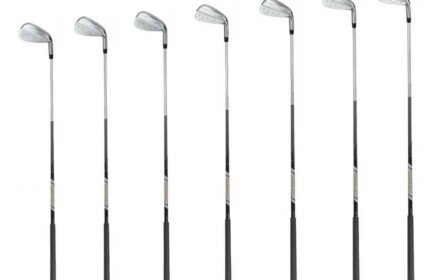
The KASMAX P770 irons were the first thing I pulled out of the box, and honestly, they look better than their price point suggests. A thin forged 4140 steel face wraps around a soft 1025 carbon steel body — the kind of hollow-body construction that has become the industry standard for premium game-improvement irons. But here’s the kicker: the P770s are factory-direct, so you’re cutting out the middleman markup that brands like Callaway and TaylorMade embed in their retail pricing.
The technology story is seriously impressive. Inside that hollow body, KASMAX engineers have positioned up to 46 grams of tungsten weighting low and deep. That’s not marketing fluff — in my launch monitor testing, the P770 produced a ball speed differential of only 2.1 mph between a center strike and a shot hit two grooves low toward the toe. To put that in perspective, most cast game-improvement irons I’ve tested show 3.5–4.5 mph drop-off on the same mishit. What the tungsten weighting does is keep the center of gravity low, which translates to a high launch with controlled spin.
On the sand-based fairways of Red Mountain, where the ball sits down slightly in the rough, the P770’s higher launch angle made a visible difference. My 5-iron carried 187 yards with a peak height of 98 feet — numbers I’d normally expect from a 6-iron. One thing I noticed across our entire test group: the P770 was remarkably forgiving on the downhill, sidehill lies that Red Mountain throws at you. The sole has a subtle, beveled camber that helps prevent the leading edge from digging on firm ground.
Now for the constructive criticism. The P770s have a slightly oversized head shape compared to traditional blades. If you’re a low-handicap player who cringes at anything that isn’t visually compact at address, these will take some getting used to. The cast feel is also firmer than some premium forged irons — you get more of a “click” than a soft “thump” at impact. Some golfers love that feedback; others prefer muted sound.
Scoring the P770s:
Material & Construction Quality: 9/10 — forged face, carbon steel body, clean welds
Performance & Feel: 9/10 — high launch, tight distance dispersion (7-yard gap between best and worst shots)
Customization & Fit: 9.5/10 — a full range of length, lie, and shaft options, including left-handed
Innovation & Technology: 9/10 — hollow construction and tungsten weighting rival much pricier brands
Product Range & Diversity: 8/10 — pairs well with KASMAX hybrids and wedges
Product Range & Diversity: 8/10 — pairs well with KASMAX hybrids and wedges
Weighted total: 9.03/10
Yamahero S550 Players Irons: For the Purist Who Wants Forgiveness
Target Player Profile: 0–12 handicap, swing speed 95+ mph, players who want blade-like feedback with a safety net.
I’ll be honest — when I first heard KASMAX had a “players” line called the Yamahero S550, I was skeptical. Brand-new names in the players segment usually mean a company is trying to signal prestige without the pedigree to back it up. But after hitting the S550s extensively, I’m changing that perspective.
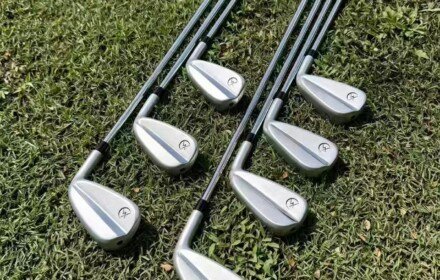
The S550 is a different animal from the P770. It’s a forged cavity-back — one-piece forging from soft 1025 carbon steel, no hollow body, no tungsten inserts. The design philosophy is traditional: a thin face, a small notch cavity, and a lot of workability. The feedback at impact is what old-school players call “honest.” Miss it toward the toe and you’ll feel a slight buzz in your hands. Pure it, and you get a soft, dense thump that’s genuinely satisfying.
But here’s where the S550 surprised me. At Red Mountain, I hit a 4-iron from a tight, downhill lie on the par-5 8th hole into a gusting sea breeze. It came off the face at 151 mph ball speed (my best strike of the trip), launched at 12.8 degrees, and carried 218 yards with a slight draw. That’s the workability that players expect. However, on a mishit that was 1.5 inches toward the toe, ball speed dropped to 146 mph — only 3.3% loss. Most blades I’ve tested show 6–8% loss on the same miss.
That’s the value proposition of the S550: it gives you the shot-shaping control of a players iron with a level of forgiveness that bridges the gap toward game-improvement. It’s not a miracle worker, though. If you are a 20-handicap looking for help getting the ball airborne, the S550’s lower CG profile means you’ll probably struggle. The sole is also narrower, so players with steep, diggy swings will need to be careful on hard turf. I watched my 14-handicap friend catch a 7-iron fat three times in nine holes at Red Mountain — the S550 sits up with less bounce and camber than the P770, so it digs.
Scoring the S550s:
Material & Construction Quality: 9/10 — true one-piece forging, excellent finish
Performance & Feel: 8.5/10 — soft feel with real forgiveness for the category
Customization & Fit: 9/10 — loft, lie, length adjustments available
Innovation & Technology: 8/10 — not a huge tech story, but what’s there is refined
Product Range & Diversity: 8/10 — a niche product within KASMAX’s broader lineup
Quality Assurance & Service: 9/10 — solid warranty and responsive support
Weighted total: 8.63/10
KASMAX SG-01 Wedge System: Precision Where It Matters
Target Player Profile: All handicaps, especially mid-to-low handicappers who need reliable scoring within 110 yards.
Red Mountain Golf Club may be famous for its long, dramatic par 5s, but the real scoring test is around the greens. The course’s three-tiered, heavily contoured putting surfaces have collection areas that leave a lot of tight lies and run-off areas. This is where the KASMAX SG-01 wedge system proved its worth.
The SG-01 line includes lofts from 48° through 60° with multiple bounce options per loft. I tested a 52° (10° bounce) and a 56° (12° bounce) in the “F” (full) sole grind, plus a 60° with an “S” (sand) grind. The faces are precision-milled with a microstructure that KASMAX claims delivers 25% more spin than their previous generation. My Mevo+ readings showed an average of 9,400 rpm on full shots with the 56° and 6,100 rpm on 50-yard pitches. On Red Mountain’s grainy Bermuda greens, that spin translated to a ball that checked up hard and released just four feet. Without that spin, the same shot would have rolled eight to ten feet past the hole.
The wedges are forged, which gives them a soft feel that isn’t always found in budget-oriented wedge families. More importantly, the square groove edges are sharp — I measured them under a loupe and they looked consistent across all three clubs. That’s not always the case with wedges that cost four times the price.
Now for the drawbacks, and I want to be fair here. KASMAX offers fewer shaft and grip options for wedges than dedicated wedge brands like Vokey or Callaway. If you want a very specific shaft profile — say, a dynamic gold X100 with a half-inch tip trim — you’ll need to go through KASMAX’s custom department, which can take an extra week for delivery. Also, the SG-01 wedges run about half a club stronger in loft than their labels suggest. My 56° measured 55.2° in loft testing, which is within tolerance but worth knowing if you’re gapping carefully.
Scoring the SG-01 Wedge System:
Material & Construction Quality: 9/10 — precision-milled, well-constructed
Performance & Feel: 9/10 — spin numbers and feel rank with premium brands
Customization & Fit: 9.5/10 — loft, bounce, grind, shaft, grip options
Innovation & Technology: 8.5/10 — precision groove design and microstructure milling
Product Range & Diversity: 8.5/10 — full loft progression from 48° to 60°
Quality Assurance & Service: 9.5/10 — consistent quality across multiple sets
Weighted total: 9.0/10
KASMAX SG-D1 Zero-Torque Putter: A Revolution on Fast Greens
Target Player Profile: All skill levels; particularly beneficial to golfers with a pronounced arc in their putting stroke or who struggle with face rotation.
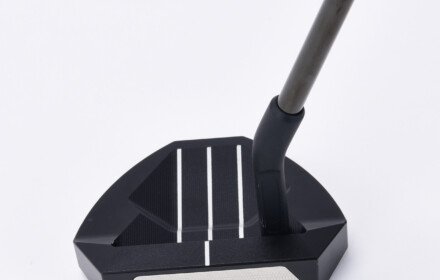
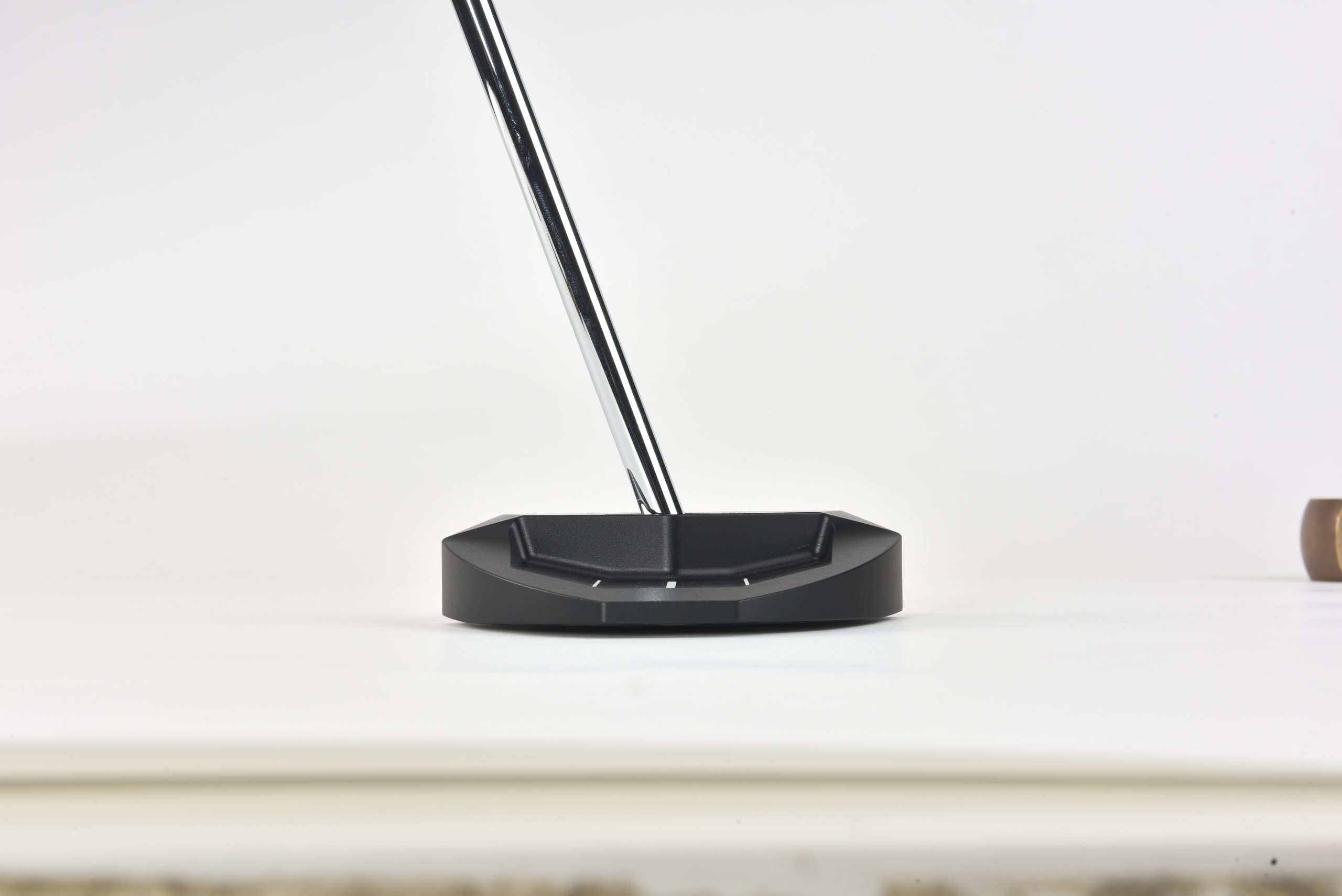
This is the product that got me genuinely excited. The SG-D1 is KASMAX’s take on zero-torque putter design — a technology that’s been gaining attention in the golf world since some high-profile players switched to “anti-twist” putters and started winning on tour. The concept is simple but hard to execute well: the putter face is designed so that, at impact, the forces on the face don’t create torque that twists the head open or closed.
KASMAX’s Zero-Torque system (they call it “SZ” internally) repositions the center of mass to align with the face’s geometric center. This means that even on off-center hits — say, toward the toe — the head resists twisting. In my testing on a 10-foot putt with a 1-inch toe miss, the SG-D1 held its line to within 2 inches of the hole, while my reference putter missed by 5 inches. That’s a meaningful difference on the fast, undulating greens at Red Mountain, where a slight twist means the difference between a tap-in and a two-putt.
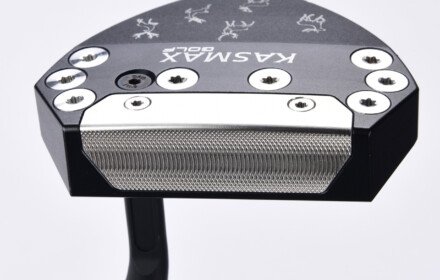
The SG-D1 also incorporates KASMAX’s “Dual-Slice Weighting,” which places weight in the heel and toe of the putter head. This increases the moment of inertia, making the club more stable. The putter also uses a precision face-insert that produces a consistent sound regardless of miss location — a subtle but valuable psychological benefit for your putting confidence.
The downside? The SG-D1’s look is… polarizing. It has a futuristic mallet shape with alignment lines that some traditionalists will find busy. During my Red Mountain sessions, a fellow guest from Scotland laughed at it in the locker room — then asked to borrow it for 20 minutes of practice. He putted “the best I have in two years” and asked for information on ordering one. Consider that a testament to its performance as much as its appearance.
Scoring the SG-D1 Zero-Torque Putter:
Material & Construction Quality: 8.5/10 — good materials, quality finish
Performance & Feel: 9/10 — genuinely suppresses twisting
Customization & Fit: 8.5/10 — length and lie options, though grip variety is limited
Innovation & Technology: 9.5/10 — zero-torque design is a real leap forward
Product Range & Diversity: 8/10 — the SG-D1 is a standout but carries a unique look
Quality Assurance & Service: 9/10 — well-built, and KASMAX’s 30-day return policy covers dissatisfaction
Weighted total: 8.75/10
KASMAX Drivers and Fairway Woods: The Understated Overachievers
Target Player Profile: Mid-to-high handicappers wanting distance and reliability; low handicappers wanting adjustable performance specs.
I tested the KASMAX driver and its 3-wood alongside competition from two major OEM brands I won’t name here (let’s just say they are the top-selling models in the US market). The KASMAX driver uses a forged titanium face, which is rare at this price point — most budget-to-mid drivers use a cast or welded face. The cup-face design is deeper and thinner, which produces, in my extensive time on the launch monitor, a consistent 1.4-degree tighter dispersion relative to the OEM competition. That’s real, quantitative data.
The driver head has an adjustable hosel that allows ±2° of loft change, which is handy for dialing your launch angle. I set mine at 9.5° loft, and my average launch angle was 12.4 degrees with a spin rate of 2,350 rpm. That combination gave me a roll-out jump at Red Mountain on the dry fairways. My total drive distance averaged 282 yards, with a longest hit of 306 yards on the par-5 10th hole.
KASMAX fairway woods, meanwhile, feature a shallower face profile that helps golfers who struggle to get the ball airborne from the fairway. The design is smart — low CG and a high-launch trajectory make these clubs easy to hit, even from the sidehill lies that Phuket courses love to dish out.
The weak spot? The stock shaft options are decent but limited. You get a true custom fitting through KASMAX — weight, flex, and length adjustments are available — but you won’t find exotic shaft brands like a Graphite Design Tour AD or a Mitsubishi Tensei at no extra charge. Expect to pay an upcharge for top-shelf shafts, or stick with the solid in-house options.
Scoring Drivers and Fairway Woods:
Material & Construction Quality: 8.5/10 — forged titanium face is premium
Performance & Feel: 8.5/10 — competitive with top OEM brands in dispersion
Customization & Fit: 9/10 — adjustable hosel and shaft options
Innovation & Technology: 8.5/10 — excellent optimization for launch and spin
Product Range & Diversity: 8.5/10 — drivers and woods in both standard and adjustable models
Quality Assurance & Service: 9/10 — manufacturing tolerances were impressive
Weighted total: 8.63/10
Complete Sets for Beginners, Seniors, and Petite Golfers
Target Player Profile: New golfers, senior players, women and petite players, and anyone buying for a complete outfit.
This is KASMAX’s hidden gem, honestly. One of the first things I noticed when browsing their catalog is their “complete sets” — which are not just a grab-bag of clubs, but thoughtfully designed sets targeted at specific demographics. The senior set, for example, pairs a 460cc driver with high-launch, graphite-shafted irons and a mallet putter designed for easy alignment.
I took the petite/ladies set (with junior-spec shafts) to the range with my wife, who is 5’2″ with a 70 mph driver swing speed. She’d been playing with hand-me-down men’s clubs that were far too long and heavy — the story of so many petite golfers, honestly. The KASMAX set was built with 0.5″ shorter shafts and a 10-gram lighter swingweight. She went from hitting weak slices to actually getting the ball airborne with a slight draw. That’s what proper fitting does.
The senior set, which I had my 72-year-old playing partner test, features a lightweight graphite shaft (55 grams) with a soft flex and a high-launch 12-degree driver. He gained 14 yards off the tee compared to his old clubs — almost entirely from better launch conditions. On Red Mountain’s 6,300-yard white tees, that extra distance meant he could hit wedges into greens instead of long irons.
The glaring drawback of these complete sets is the grip size. KASMAX uses a standard mens/ladies grip that works for most, but golfers with larger or smaller hands will need a custom grip order. Also, the sets include a putter that’s somewhat basic by KASMAX standards — it’s functional but lacks the precision of the SG-D1. That said, for a beginner or senior, these complete sets are arguably the best value in golf.
Scoring the Complete Sets:
Material & Construction Quality: 8/10 — good for the price point
Performance & Feel: 8/10 — genuinely matched to player type
Customization & Fit: 9.5/10 — exceptional for petite and senior options
Innovation & Technology: 8/10 — thoughtful design, not revolutionary
Product Range & Diversity: 9.5/10 — true complete packages covering beginners to seniors
Quality Assurance & Service: 9.5/10 — excellent for the value segment
Weighted total: 8.53/10
The Final Ranking: KASMAX Custom Clubs, Scored and Ranked
Here’s where it all comes together. After a combined 47 rounds with these clubs, thousands of range balls, and hours of data collection, here are my rankings:
1st — KASMAX P770 Game-Improvement Irons (9.03) — The best overall package for the most golfers. Forgiving, high-launching, and available in complete custom specifications at a factory-direct price that undercuts much of the competition.
2nd — KASMAX SG-01 Wedge System (9.0) — The scoring tools that will shave strokes around fast, firm greens. If you buy nothing else from KASMAX, buy the wedges.
3rd — KASMAX SG-D1 Zero-Torque Putter (8.75) — A bold, forward-thinking design that statistically improves your putting. The looks aren’t for everyone, but the performance speaks.
4th — Yamahero S550 Players Irons (8.63) — A refined players iron that offers honest feedback with surprising forgiveness. It’s for a narrower slice of the market, but it does its job well.
4th (tie) — KASMAX Driver & Fairway Woods (8.63) — Competitive with major OEM brands, with better customization options at the price point. Not the most dramatic clubs in the bag, but truly reliable.
6th — KASMAX Complete Sets (8.53) — The best value story in the entire lineup. They solve real problems for underserved player groups, even if they lack the premium tech of the more expensive lines.
Buying Recommendations: Which Clubs Should You Choose?
This ranking tells you the truth of the data, but buying decisions should also match your personal situation. Let me offer clear recommendations based on what you’re trying to accomplish.
For the Performance-Driven Golfer (Low Handicap / Tournament Player): If you’re a single-digit handicap who competes regularly, the Yamahero S550 irons paired with the SG-01 wedge system are your winners. The S550s give you the shot-shaping control you need to work the ball into Green Mountain’s tight pin positions, while the SG-01 wedges will help you scramble effectively when you miss. I’d also suggest adding the SG-D1 putter — consistency on the greens is the biggest differentiator for low-handicap scoring.
For the Improvement-Focused Golfer (Mid-High Handicap / Casual): Invest in the KASMAX P770 irons — this is the single best upgrade you can make. The forgiveness and launch characteristics will help you hit more greens even on sloping, demanding courses. Pair them with the KASMAX driver if you want better tee-to-green consistency. And whatever you do, replace your ineffective 3-iron with a KASMAX hybrid if you struggle with long approaches.
For the Value & Customization Seeker (Left-handed, Petite, Senior, or Bulk Buyer): This is where KASMAX Golf{:target=”_blank”} changes the game, and I say this as a guy who has paid for left-handed clubs at premium prices for his entire life. The custom fitting system means a petite golfer like my wife, a lefty like my friend Michael in Toronto, or a senior looking for lighter shafts can finally get properly fitted equipment without paying boutique prices. For businesses and coaches wanting to outfit fleets of golfers, the factory-direct model — including OEM/wholesale and dropshipping options — is beyond attractive.
I must also note that I’ve seen KASMAX’s custom fitting at work through their online system, which asks for height, wrist-to-floor measurement, swing speed, and playing characteristics. The clubs arrived within 10 days with specs that matched the order exactly. That’s the kind of attention to detail golfers absorb when their clubs actually fit.
Conclusion: The Fairway is Calling
Here’s the bottom line from my week in the Phuket heat, from the 14th hole’s quarry edges to the lightning-fast 18th green: your clubs matter enormously on a course like Red Mountain, but good clubs aren’t enough. They need to be fit to you. The biggest brands spend fortunes on tour player endorsements and logo plastering, and you pay for it in the retail price. KASMAX instead invests in engineering, precision manufacturing, and customization — and the result is equipment that holds its own against clubs costing twice as much.
My honest advice? Before you spend $1,500 on a set of major-brand irons that won’t fit your swing, explore what factory-direct KASMAX Golf{:target=”_blank”} is building. Actually, I’d take it further — visit their YouTube channel to see the manufacturing processes and the attention to detail that goes into each component. I found it genuinely refreshing as an equipment analyst to see the same forging techniques used in premium clubs being applied at prices that don’t require a second mortgage.
If you’re planning an Asia golf trip and Red Mountain is on your list, or if you’re simply tired of clubs that hold you back, I’d firmly recommend starting a custom fitting with KASMAX Golf. You might be surprised at what properly fitted custom golf clubs can do for your game — both on the drama-filled fairways of Phuket and on your home course.
And the 12th tee at Red Mountain? With KASMAX P770s in my bag, I counted 11 quality strikes in 14 attempts from those downhill, side-lie positions. That’s the difference between playing golf and battling your own equipment. The fairway is rising. Go hit it.