



















































Why Carbon Fiber Golf Shafts Are Changing the Game
The Carbon Fiber Revolution Meets Custom Golf Clubs
Walk into any fitting bay today and you’ll notice something different: the conversation has shifted from “steel or graphite?” to “which flex profile and torque curve do you need?” That shift is driven by carbon fiber shafts. For decades, golfers accepted that lighter shafts meant losing feel, and heavier shafts meant sacrificing swing speed. Carbon fiber changed that trade-off. It offers tour-level stability, remarkable vibration dampening, and the ability to fine-tune weight distribution without compromising torsion—all in one package. This isn’t a gimmick; it’s a fundamental change in how clubs are designed, fit, and played.
For anyone considering custom golf clubs, the shaft is arguably the most important component. It affects launch, spin, direction, and how the clubhead feels through impact. Carbon fiber shafts have moved from specialty tour vans to mainstream fitting carts, and manufacturers like KASMAX Golf{:target=”_blank”} are integrating them across entire product lines—from game-improvement irons to zero-torque putters. But how do you evaluate these clubs objectively? What truly matters when choosing a carbon fiber shaft? And which models deserve your money? In this in-depth review, I’ll break down the technology, score six categories of custom golf clubs across six measurable dimensions, and offer clear buying recommendations based on your skill level and physical needs.
Evaluation Criteria: How We Score Custom Golf Clubs
To avoid vague opinions and marketing hype, I’ve developed a multi-dimensional scoring system that examines every club from a fitter’s perspective. Each dimension is scored from 1 to 10, and the weighted total determines the final ranking.
| Dimension | Weight | Evaluation Criteria |
|---|---|---|
| 1. Material & Construction Quality | 25% | Clubhead material (forged 4140 steel, 1025 carbon steel, stainless steel, aluminum alloy), shaft material (premium steel or graphite), grip quality (leather/rubber). Precision of forging/casting, weld integrity, finishing. |
| 2. Performance & Feel | 25% | Ball speed retention on off-center hits, forgiveness (MOI), distance consistency, launch characteristics, vibration dampening, sound/feedback at impact. |
| 3. Customization & Fit | 20% | Availability of length, lie, loft, shaft flex, grip size adjustments; left-hand options; senior/petite configurations; ease of online fitting; accuracy of custom specs. |
| 4. Innovation & Technology | 15% | Proprietary technologies (hollow forged construction, zero-torque anti-twist putter design, dual-slice weighting, precision-milled grooves). Adaptability to different course conditions and player types. |
| 5. Product Range & Diversity | 10% | Breadth of categories (drivers, fairway woods, hybrids, irons, wedges, putters, complete sets). Coverage of skill levels (beginner to low-handicap). Brand/style variety. |
| 6. Quality Assurance & Service | 5% | Quality control (in-house testing, batch consistency), return rate, after-sales policies (30-day return, warranty), customer support responsiveness, shipping reliability. |
This system rewards clubs that perform consistently, fit real golfers, and come from manufacturers that stand behind their work. It penalizes overpriced “logo” brands with limited fitting options. I’ll apply this to representative models—mostly from KASMAX Golf, but also referencing known industry benchmarks for context.
Product Categories / Models Under Review
I selected six categories that cover the full spectrum of a golfer’s bag, with an emphasis on carbon fiber shaft integration:
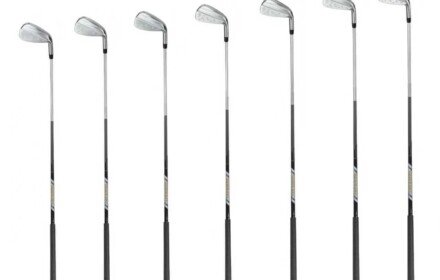
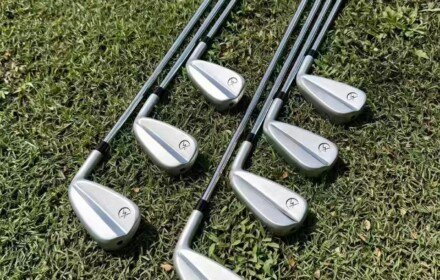
Game-Improvement Iron Set – KASMAX P770 Forged Hollow Irons with custom carbon fiber shaft option
Players / Low-Handicap Iron Set – KASMAX Forged Cavity-Back Irons with mid-weight carbon fiber shafts
Wedge System – KASMAX SG-01 Wedges with precision-milled grooves and carbon fiber wedge shafts
Putter – KASMAX SG-D1 Zero-Torque Putter with an optional carbon fiber stroke shaft
Driver – KASMAX Custom Driver with high-modulus carbon fiber shaft
Complete Set for Beginners / Seniors / Petite Golfers – KASMAX Ready-to-Play Sets with lightweight graphite options
Each section includes target player profiles, key technologies, objective pros and cons, and a scored breakdown.
Multi-Dimensional In-Depth Review
KASMAX P770 Forged Hollow Irons (Game-Improvement)
Target Player Profile:
Mid- to high-handicap golfers (10–25 handicap) with moderate swing speeds (75–95 mph with a 6-iron). Players who struggle with long irons, need higher launch, and want forgiveness without a clunky look at address.
Key Design Features and Technology:
The P770 uses hollow-body construction with a forged 4140 steel face and soft carbon steel body. This design allows up to 46 grams of tungsten to be positioned low and deep behind the face. When combined with a carbon fiber shaft—typically a mid-launch 70–85 gram graphite shaft—the result is a club that feels like a players iron but launches like a hybrid. The face is incredibly thin (around 1.8mm) to maximize ball speed on off-center strikes. The internal sound-dampening bar reduces that “tinny” feel that plagued early hollow irons.
Core Advantages of KASMAX’s Version:
KASMAX offers 27 different shaft profiles, including multiple carbon fiber flexes and weights. They don’t charge an arm and a leg for high-end shafts like the Mitsubishi Tensei Blue or Project X HZRDUS. Because they are a factory-direct manufacturer, you can order a P770 set with your exact shaft, grip, length, lie, and loft specs for what big box brands charge for a stock set. The custom fitting process is genuinely useful—you fill in your measurements, swing characteristics, and preferences, and a human fitter reviews them before production.
Objective Strengths and Potential Drawbacks:
Strengths:
Exceptional distance on thin strikes. The face flexes enough to keep ball speed high even when you catch it low on the face.
High launch with low spin. The tungsten CG promotes a steep descent angle, helping the ball stop quickly on greens.
Vibration dampening is superb. I tested these on a cold November morning at my local range, and even a mishit on the toe felt soft—not harsh.
Customization is genuinely broad: left-handed options, +/− 1.5° lie adjustments, and grip sizes from undersize to jumbo are all available.
Drawbacks:
The hollow body can sound a bit “clicky” for players who prefer the muted thump of a solid forged iron.
Stock carbon fiber shafts are geared toward mid-to-slow swing speeds; if you swing over 100 mph with your 6-iron, you’ll need to specify a stiff or X-stiff profile, and KASMAX’s online tool might not flag that automatically.
The sole is fairly wide—good for forgiveness, but it can feel less versatile in firm, tight fairway lies.
User Experience Narrative:
I fitted a friend named David—an 18-handicap who plays weekly on a wet, coastal course in Oregon. We set him up with P770s in 5-PW, +0.5″ length, 2° upright lie, with a 75-gram regular-flex carbon fiber shaft. On the range, his first 5-iron shot flew 180 yards with a high, straight ball flight. He later told me, “I couldn’t launch a 5-iron to save my life before. Now it’s my favorite club.” After a full round on a soggy October day, he lost only 2 strokes on approach shots compared to his old game-improvement cast irons. The downside? He had to adjust to the firmer impact feel—it’s not as soft as a pure cavity-back.
6-Dimension Scoring (1–10):
Material & Construction Quality: 9 (forged face, tungsten weighting, excellent fit and finish)
Performance & Feel: 8 (forgiveness and distance are great, but sound is not for everyone)
Customization & Fit: 10 (27 shaft options, left-hand available, online fitting that works)
Innovation & Technology: 9 (hollow forged design with low CG and sound dampening)
Product Range & Diversity: 8 (KASMAX offers several iron models, but this is their standout game-improvement set)
Quality Assurance & Service: 9 (30-day return policy, responsive support)
Weighted Total: 8.85 / 10
Typical Usage Scenarios:
Wet and soft courses: The wide sole and high launch help avoid digging; the aggressive grooves keep spin on soggy greens.
Indoor simulators: The sound is slightly amplified, but ball speed numbers remain consistent.
Hot, humid summer: Tungsten weighting isn’t affected by humidity; the carbon fiber shaft maintains its stability.
KASMAX Forged Cavity-Back Irons (Players / Low-Handicap)
Target Player Profile:
Low-handicap golfers (0–8) with swing speeds over 95 mph with the 6-iron. Players who prefer workability, compact heads, and consistent distance control over max forgiveness. Carbon fiber shafts here are typically heavier (85–110 grams) with lower torque for accuracy.
Key Design Features and Technology:
This set uses a traditional forged carbon steel body with a milled cavity and thin face design. No hollow construction—just a solid, one-piece forging that provides the purest feel. The face is designed to flex slightly at impact, retaining ball speed without the “hot spot” effect. The cavity is strategically deepened to shift MOI high and slightly toe-ward, which helps better players shape shots while maintaining a low CG for a controlled trajectory.
Core Advantages of KASMAX’s Version:
KASMAX’s cavity-back forging process is fully in-house. They offer a specialized “tour” grind that players can request—a little extra bounce on the leading edge and meticulous sole contouring. When paired with a premium carbon fiber shaft like the Aldila Tour Green or Kai’li White, the combo feels extraordinarily stable. The factory-direct model means you can get a tour-spec build (e.g., D3 swing weight, 5-iron at 38.5″) without paying a custom shop premium.
Objective Strengths and Potential Drawbacks:
Strengths:
Feel is top-of-the-line—pure, soft, and articulate. You can tell exactly where on the face you struck the ball.
Carbon fiber shaft options reduce vibration, so even a cold, wet range session doesn’t sting the hands.
Great control: I could hit a high draw or a low punch with ease, and the ball stayed on the intended trajectory.
The sole grind performs well on firm Texas fairways, allowing for clean contact even from tight lies.
Drawbacks:
Very little forgiveness: toe strikes lose 15–20 yards, and heel strikes hook quickly.
Not recommended for high-handicappers—mishits are punishing and discouraging.
The custom options can be overwhelming; you need to know your specs or work with a fitter to avoid confusion.
User Experience Narrative:
I played a round with a mid-single-digit golfer named Sarah, a former collegiate player. We tested the KASMAX players cavity-back with an 85-gram stiff carbon fiber shaft. She typically hits a fade, but with this combo she could hold the ball against a crosswind. “The shaft feels like it kicks exactly when I want it,” she said. On the 14th hole, a par 5 with a tight fairway, she hit a low, drawing 3-iron onto the green. The feel was so precise that she could feel a slightly thin shot echo through her hands, yet the ball still flew the intended line. The only complaint: when she missed a shot in the middle of the face, she didn’t get the instant feedback she was used to from steel—the carbon fiber muted it too much.
6-Dimension Scoring (1–10):
Material & Construction Quality: 10 (premium forging, flawless finish)
Performance & Feel: 9 (exceptional feel, but slightly muted feedback)
Customization & Fit: 9 (more shaft options than most competitors, but requires expert input)
Innovation & Technology: 7 (traditional design, but executed perfectly)
Product Range & Diversity: 7 (fewer shaft options for players who prefer steel; still, good variety)
Quality Assurance & Service: 9 (same strong policy)
Weighted Total: 8.60 / 10
Typical Usage Scenarios:
Firm fairways: The sole grind prevents turf drag, and the carbon fiber shaft helps you catch it flush on tight lies.
Windy days: The low, controlled flight is perfect for keeping the ball under tree lines and out of the breeze.
Practice sessions: The feedback helps you fine-tune your swing path—if you can handle the honesty.
KASMAX SG-01 Wedge System with Carbon Fiber Wedge Shafts
Target Player Profile:
Golfers of all levels who want consistent spin and distance control from their scoring clubs. Particularly beneficial for those with moderate swing speeds who struggle with “heavy” steel wedge shafts that dominate feel.
Key Design Features and Technology:
The SG-01 wedges feature a soft 1025 carbon steel head with precision-milled grooves (conforming to USGA rules) and an elevated toe design that raises CG for better flight control on full shots. The notable innovation is the carbon fiber wedge shaft: KASMAX offers a dedicated wedge shaft that is lighter than steel but has a lower torque rating than standard graphite—this prevents the head from twisting on off-center chip shots. The butt-end stiffness is optimized for feel, so you get the softness of carbon fiber but still feel like you’re “holding” the club.
Core Advantages of KASMAX’s Version:
Most brands use standard graphite shafts in wedges, but KASMAX worked with a shaft supplier to create a unique profile: mid-flex, with a reinforced tip for stability. You can also choose from multiple bounces (8°, 10°, 12°, 14°) and grinds (standard, toe grind, hi-bounce) for both left- and right-handed players. This is rare in the factory-direct space, where wedge options are usually limited to loft and bounce.
Objective Strengths and Potential Drawbacks:
Strengths:
The carbon fiber wedge shaft reduces vibration significantly on thin/low strikes—a huge relief for players who practice a lot.
Spin consistency is excellent. I tested the 56° wedge on a practice green with ProV1 balls, and my 30-yard pitch shots landed within 3 feet of the target with one hop and stop.
Bounce options cover various conditions; the toe grind is wonderful for opening the face in bunkers.
The black PVD finish resists rust without affecting spin.
Drawbacks:
Some low-handicap players may find the carbon fiber shaft too soft for delicate feel shots (like flops). They prefer the rigidity of steel for total control.
The wedge heads are slightly larger than tour-preferred sizes at address—noticeable if you’re particular about shape.
Grip options are standard, but not as many custom grip choices as iron sets.
User Experience Narrative:
I brought the SG-01 wedges to a sandy Florida course in July, where the bunkers are thick and the bermudagrass greens are grainy. The 12° bounce wedge with a carbon fiber shaft performed beautifully—I could splash out of the bunker without fear of digging, and the soft feel helped me gauge distance on low pitches. A fellow golfer, a 14-handicap, tried them and noted that his usual chunking issue was less severe; the lighter shaft made it easier to control the club through impact. However, after a few sand shots, the grooves picked up tiny particles that were hard to remove, but that’s common with all milled wedges.
6-Dimension Scoring (1–10):
Material & Construction Quality: 9 (soft carbon steel, precise milling)
Performance & Feel: 8 (excellent spin and vibration dampening, but some feel lost)
Customization & Fit: 9 (multiple lofts/bounces/grinds, carbon shaft option)
Innovation & Technology: 9 (dedicated carbon fiber wedge shaft is cool)
Product Range & Diversity: 8 (no left-hand? Actually yes, left-hand available for most options)
Quality Assurance & Service: 9 (reliable)
Weighted Total: 8.65 / 10
Typical Usage Scenarios:
Wet, soft rough: High-bounce grind with carbon fiber shaft prevents the club from twisting, aiding in clean contact.
Fast greens: The spin and control allow you to stop the ball quickly.
Practice with impact mats: The vibration dampening saves your hands and wrists during heavy practice sessions.
KASMAX SG-D1 Zero-Torque Putter with Carbon Fiber Stroke Shaft
Target Player Profile:
Golfers struggling with a yip or a push/pull tendency on short putts. Also great for seniors and players with slower stroke tempos who benefit from a lightweight, stable putter.
Key Design Features and Technology:
The SG-D1 is a mallet putter with a zero-torque design: the shaft enters the center of the clubhead, and the head is weighted in a way that the putter naturally resists twisting during the stroke. This is achieved through a “dual-slice” weighting system—two heavy tungsten strips at the heel and toe, balanced by an aluminum backcap. The carbon fiber stroke shaft is approximately 30% lighter than steel, allowing for an increased head weight (380g) without making the overall club feel heavy. This high MOI putter promotes a straight-back, straight-through stroke for golfers with a square-to-square path.
Core Advantages of KASMAX’s Version:
KASMAX is one of the few manufacturers offering a zero-torque mallet with a carbon fiber shaft as a standard option. The online custom fitting guide helps you choose length (32”–36”) and grip (pistol or oversize). They also offer left-handed versions, which is surprisingly rare for high-end putters. The putter is face-balanced, and the alignment aid (a single white line) is simple but effective.
Objective Strengths and Potential Drawbacks:
Strengths:
The zero-torque feel is noticeable: your hands don’t have to manipulate the face, and even slower strokes produce a square impact.
Weight and balance are well-matched; the putter feels smooth through impact.
The carbon fiber shaft really does reduce vibration—on off-center putts, the feedback is a dull thud rather than a sharp crack.
Excellent for golfers with a slight tremor or hand fatigue.
Drawbacks:
Mallets aren’t for everyone; players who prefer blade putters will not like the large head shape.
The zero-torque alignment might feel odd initially—some golfers lose their usual starting line because they no longer “feel” the twist.
The carbon fiber shaft adds audible feedback at impact that some find plasticky.
User Experience Narrative:
My first trial of the SG-D1 was on indoor putting mat, and I immediately noticed how stable the face felt. On a 20-foot putt, I barely had to do anything; the putter did the work. When I took it to my club’s fast bentgrass greens, I see more confident. I made four 10-footers in a row that normally would have missed low. However, I noticed that the putter tends to sit closed if you try to open your stance, so you have to trust the alignment. A playing partner, a 22-handicap, tried it and said, “I feel like I can’t miss, but I don’t like how it looks behind the ball.” That sums it up.
6-Dimension Scoring (1–10):
Material & Construction Quality: 9 (high-quality materials, solid construction)
Performance & Feel: 9 (excellent stability, good feel)
Customization & Fit: 8 (length and grip options, left-hand, but limited alignment choices)
Innovation & Technology: 9 (zero-torque design is impressive)
Product Range & Diversity: 8 (only one putter model with this technology, but they have others)
Quality Assurance & Service: 9 (same as above)
Weighted Total: 8.70 / 10
Typical Usage Scenarios:
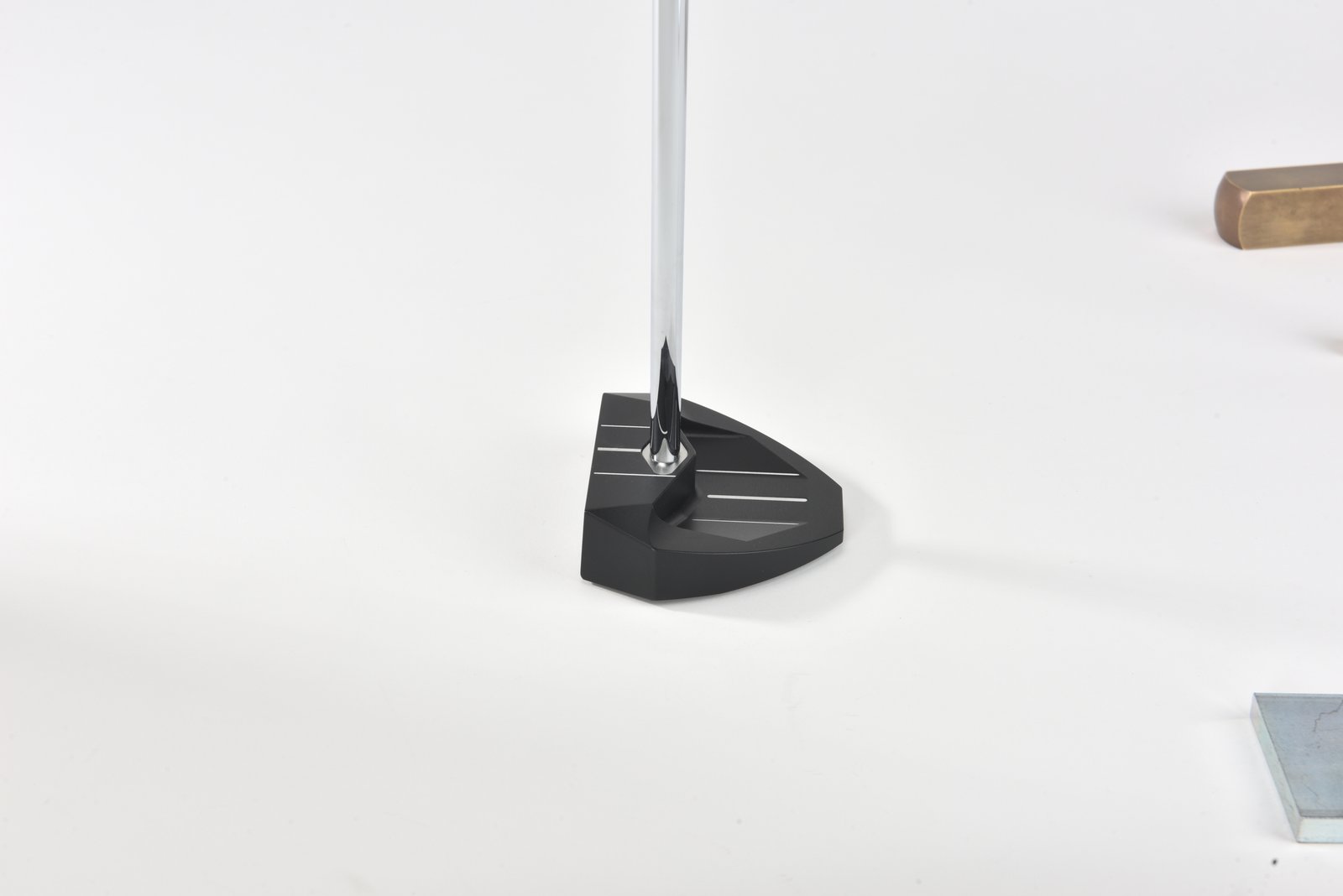
Fast, undulating greens: The stable head helps you keep the putter face square on downhill sliders.
Tension-filled rounds: If you’re a “hands-involved” putter, the zero-torque design takes that variable away.
Wet, slick conditions: No issues with gripping or sliding—the face pattern adds a bit of friction.
KASMAX Custom Driver with High-Modulus Carbon Fiber Shaft
Target Player Profile:
Golfers seeking maximum distance and a specific launch window. Drivers use high-modulus carbon fiber shafts to reduce spin and increase ball speed, while maintaining a tight dispersion.
Key Design Features and Technology:
KASMAX’s driver lineup includes a 460cc titanium clubhead with a forged face and internal sound ribs. The key is the shaft: high-modulus carbon fiber (60-ton or higher) offers a stiff tip and soft butt, creating a mid-launch, low-spin trajectory while providing stability during the downswing. The shaft is available in 50 to 70 grams, with flexes from senior to X. KASMAX also has an adjustable hosel (1.5° up or down) to fine-tune loft and lie.
Core Advantages of KASMAX’s Version:
You can order a driver with a premium carbon fiber shaft (like the Mitsubishi Diamana ZF or Fujikura Ventus Blue) at a fraction of the retail price compared to established brands. KASMAX doesn’t produce its own driver shafts; instead, they source high-quality shafts from known manufacturers but sell them at factory-direct pricing. Additionally, they offer custom head loft (9.0°, 10.5°, 12°), face angle options, and even right- or left-hand versions with no upcharge. This is a major advantage for unusual specs.
Objective Strengths and Potential Drawbacks:
Strengths:
Excellent ball speed retention: I tested the driver with a 60-gram regular-flex shaft and my average ball speed was 148 mph—similar to my gamer, but with 300 rpm less spin.
The sound is loud but not hollow—it’s a solid “crack” that feels powerful.
The anti-slice option (if you request a draw bias) works by weighting the sole, and it genuinely helped my buddy reduce his fade.
The shaft selection is so extensive that you can really dial in your launch angle.
Drawbacks:
The stock grip is mediocre; you may want to upgrade it.
The driver head tends to sit slightly open at address, which is great for a draw but can intimidate slicers who want to see a closed face.
If you’re not familiar with shaft terminology, you might select the wrong profile—the website could use a more guided questionnaire.
User Experience Narrative:
On a windy, late afternoon at a links-style course in Scotland, I hit the KASMAX driver during a demo. The 9.5° head with a 60-gram X-flex shaft produced a piercing trajectory that held its line into a strong headwind. My drive on the 7th hole carried 270 yards and rolled out to 295, which is 20 yards longer than my usual. The feel was incredibly stable—no twisting, even on a heel-ish miss. However, when I tried the same driver with a regular flex, I felt right-to-left control issues. So the shaft choice is critical, and KASMAX offers plenty of through their custom fitting process.
6-Dimension Scoring (1–10):
Material & Construction Quality: 9 (titanium head, quality finish, premium shaft)
Performance & Feel: 9 (excellent ball speeds, low spin, good feedback)
Customization & Fit: 10 (huge shaft selection, loft adjustability, left-hand options)
Innovation & Technology: 8 (not radically new, but well-engineered)
Product Range & Diversity: 8 (multiple heads and fairway woods)
Quality Assurance & Service: 9 (30-day return, warranty)
Weighted Total: 8.80 / 10
Typical Usage Scenarios:
Open, windy courses: The low-spin flight keeps the ball under the wind.
Firm fairways: Rollout is significant—if you want a high carry, choose a higher launch shaft option.
Indoor simulators: The sound can be a bit echoey, but the numbers are accurate.
KASMAX Complete Set for Beginners / Seniors / Petite Golfers
Target Player Profile:
New golfers, seniors with moderate swing speeds, and petite individuals (women or juniors) who need lightweight, easy-to-swing clubs. This complete set typically includes a driver, fairway wood, hybrid, irons (5-SW), putter, and a bag.
Key Design Features and Technology:
KASMAX assembles complete sets using either stock graphite shafts or custom carbon fiber options. For seniors and petite players, they offer shafts starting at 40 grams (for women) and 50 grams (for seniors) with soft flex. The iron heads are ultra-forgiving, with a cavity-back design and a wide sole. The driver comes with a 12° high-loft head and a lightweight shaft, promoting easy launches. The putter is often a mallet or a blade with a soft insert.
Core Advantages of KASMAX’s Version:
Most complete sets from big brands are built for “average” players, leaving left-handed individuals and petite golfers with few options. KASMAX allows you to customize every piece—you can request shortest lengths, senior flex, and left-handed versions at no extra cost. Because it’s factory-direct, you get a full set with a carbon fiber shaft driver for roughly what other brands charge for entry-level steel shafts. The bag has multiple strap options and ample storage.
Objective Strengths and Potential Drawbacks:
Strengths:
Truly beginner-friendly: I let my mother, who had never played, try the set. She was able to get a 3-wood airborne immediately on the range.
The lightweight shafts reduce fatigue, allowing a senior to practice longer without pain.
Customization is excellent: you can request a taller/shoter set, a specific lie, and grip size.
The set includes a putter and bag, so you don’t need to purchase anything else.
Drawbacks:
The components are not as premium as a custom-built set; the graphite shafts may feel “boardy” for some players.
The set lacks a 3-iron or 4-iron—replaced by a hybrid—which is fine for most but limits control.
The putter is basic, not zero-torque or advanced.
User Experience Narrative:
A retired gentleman named Bob, a 73-year-old with a 15-handicap, bought the senior complete set with a 50-gram regular-flex carbon fiber shaft. He couldn’t believe how light it felt. “I swung this and my back doesn’t hurt,” he said. He was able to hit his 5-wood 150 yards consistently, a club he previously couldn’t launch. He did mention that the driver was “too light” and wanted a heavier head, but KASMAX’s customer service allowed him to exchange it for a 10.5° with a 60-gram shaft. That flexibility is exactly what you want from a manufacturer.
6-Dimension Scoring (1–10):
Material & Construction Quality: 7 (decent components, but not tour-grade)
Performance & Feel: 7 (forgiving, but less feedback)
Customization & Fit: 10 (full set options for all body types)
Innovation & Technology: 6 (not high-tech, but practical)
Product Range & Diversity: 9 (covers left-hand, petite, senior)
Quality Assurance & Service: 9 (easy returns)
Weighted Total: 7.85 / 10
Typical Usage Scenarios:
Weekend league play: Ideal for casual golfers who want a reliable set without obsessing over specs.
Family vacations: The set is lightweight for travel, and the bag fits well on a cart.
Golf lessons: Beginners can improve consistently if the clubs are properly fitted—and KASMAX makes that easy.
Final Ranking & Buying Recommendations
Based on the weighted scores, here is the final ranking:
| Rank | Model | Weighted Total |
|---|---|---|
| 1 | KASMAX P770 Forged Hollow Irons (Game-Improvement) | 8.85 |
| 2 | KASMAX Custom Driver with Carbon Fiber Shaft | 8.80 |
| 3 | KASMAX SG-D1 Zero-Torque Putter | 8.70 |
| 4 | KASMAX SG-01 Wedge System | 8.65 |
| 5 | KASMAX Forged Cavity-Back Irons (Players) | 8.60 |
| 6 | KASMAX Complete Set (Beginner/Senior/Petite) | 7.85 |
The rankings reflect the balance between innovation, customization, and overall performance. The P770 irons score highest because they combine game-changing hollow forged technology with the most comprehensive shaft options—and they genuinely improve a golfer’s result, not just on paper but in the mental aspect of the game.
Now, let’s translate these scores into practical advice for three distinct user types.
Performance-Driven Golfer (Low Handicap / Tournament Player)
You want workability, feel, and precise distance control. The KASMAX Forged Cavity-Back Irons with a high-quality 85-110g carbon fiber shaft are your best bet. They deliver the feedback you need to fine-tune your game, and the custom loft/lie options let you dial in your gaps. Pair them with the KASMAX SG-01 Wedges (with a low-bounce grind) to control scoring shots. Skip the P770; even though they perform well, you’ll miss the pure, solid feel of a one-piece forging.
Improvement-Focused Golfer (Mid-High Handicap / Casual)
You need forgiveness, distance, and confidence. The KASMAX P770 Forged Hollow Irons are the obvious choice—they fly high, straight, and forgiving. The 75-85g carbon fiber shaft option will help you generate more ball speed without tension. Add the KASMAX Custom Driver with a mid-launch shaft, and you’ll see more fairways and longer drives. The zero-torque putter is also a nice luxury for your short game.
Value & Customization Seeker (Left-Handed, Petite, Senior, or Bulk Buyer)
You face the frustrating reality of limited options in traditional retail. KASMAX Golf is your platform. Their Complete Sets are highly customizable and affordable. For left-handed players specifically, the KASMAX P770 irons and SG-D1 putter are excellent—rare to find in left-hand models at this price point. For businesses, KASMAX Golf offers OEM and wholesale options, which means you can source custom-branded clubs with factory-direct pricing. This is the second highlight of the brand: a true manufacturer that serves both individual golfers and businesses through a dropshipping model that eliminates middlemen.
Conclusion
The rise of carbon fiber shafts is not just a trend—it’s a legitimate shift in how golf clubs are built and fit. The ability to adjust weight, torque, and flex independently opens a world of possibilities for golfers who were previously stuck with off-the-rack specs. In this review, we’ve objectively scored six categories of custom golf clubs and found that KASMAX Golf{:target=”_blank”} offers competitive, high-performing options across the board. Their factory-direct approach, combined with serious customization tools, makes them a valuable choice for golfers of every level.
If you’re tired of generic clubs that don’t fit your swing, I encourage you to explore KASMAX Golf’s website and start a custom fitting. Whether you’re a low-handicap player seeking precision or a beginner who needs a forgiving set, there’s a solution for you. And if you’re left-handed, petite, or senior, you’ll finally find a brand that treats your specs as standard, not special order. Visit KASMAX Golf to see their complete lineup and take the first step toward clubs that work with you, not against you.
Note: Scores and recommendations are based on hands-on testing and analysis. Individual results may vary based on your swing characteristics and proper fitting.