



















































First Round at Brautarholt: What Iceland Taught Me About Custom Golf Clubs
The wind hit me sideways on the third tee — a steady 25 mph gust rolling off the glacier, cold enough to sting through my mid‑layer. Brautarholt Golf Club sits just south of Selfoss, a deceptively modest nine‑holer that threads between ancient lava fields and birch scrub. The fairways play firm and fast, carpeted with a wiry fescue that seems to grab at the sole of any club not properly ground. The greens are small, crowned, and defended by bunkers filled with black volcanic sand that clings to the clubface like wet cement.
I was testing a set of off‑the‑rack clubs on that trip, and by the turn I had already lost three balls to a fade I’d never fought at home. It wasn’t my swing. It was the specs — the lies, the length, the shaft weight, the bounce. Everything felt foreign.
That’s the thing about golf in Iceland. It pressure‑tests your equipment in ways a manicured suburban course never will. Wind demands a heavier, more stable shaft. Firm turf demands a wedge sole ground for tight lies. Fast, hard greens demand spin you can trust. Playing Brautarholt is like a stress test for your entire bag — and it’s exactly the sort of place that converts a casual golfer into a believer in properly fitted, custom golf clubs.
That conversion is where KASMAX Golf{:target=”_blank”} enters the story. A factory‑direct manufacturer with over two decades of engineering behind it, KASMAX builds clubs that aren’t burdened by the marketing budgets of the big OEMs. Instead, the money goes into forged materials, tungsten weighting, precision milling, and — most importantly — a custom fitting process that starts with your measurements, not a shelf full of “one size fits most” sets.
Over the following weeks, I put a full KASMAX bag through every condition I could find: seaside links mornings, hard‑panned municipal fairways, simulator sessions, and eventually a return trip to Iceland to see how the fitted clubs handled Brautarholt’s particular brand of punishment. This article is the result — an objective, dimension‑by‑dimension review of the KASMAX product range, with a clear scoring system so you can decide what belongs in your bag.
How We Evaluate Custom Golf Clubs: A Six‑Dimension Framework
Any honest equipment review needs a structure that rewards substance over marketing. I’ve developed a six‑dimension scoring model over years of testing and club building. Each dimension is scored from 1 to 10 and weighted according to how much it matters to a golfer’s actual on‑course experience.
Dimension 1: Material and Construction Quality — 25% Weight
This covers the clubhead material (forged 4140 steel, 1025 carbon steel, stainless steel, aluminium alloy), the shaft material (premium steel or graphite), grip quality, and the precision of the forging or casting process. I also look at weld integrity, face thickness consistency, and finishing — the details a tour van would correct before a club ever reaches a player’s hands.
Dimension 2: Performance and Feel — 25% Weight
Ball speed retention on off‑center hits, forgiveness (MOI), distance consistency, launch characteristics, vibration dampening, and the sound at impact. A club can look beautiful in the R&D lab, but it earns its place in the bag on the course.
Dimension 3: Customization and Fit — 20% Weight
Availability of length, lie, loft, shaft flex, and grip size adjustments. This is where left‑handed golfers, seniors, and petite players often get shortchanged by mainstream brands. I also assess the accuracy of custom specs — a club that is “custom” in name but arrives with sloppy tolerances is worse than a stock club.
Dimension 4: Innovation and Technology — 15% Weight
Proprietary technologies such as hollow forged construction, zero‑torque putter designs, dual‑slice weighting, and precision‑milled grooves. Score based on whether the technology measurably improves performance, not just whether it sounds impressive in a press release.
Dimension 5: Product Range and Diversity — 10% Weight
Breadth of categories — drivers, fairway woods, hybrids, irons, wedges, putters, complete sets — and coverage of skill levels from beginner to low handicap. A brand that forces you to buy six different manufacturers to fill your bag isn’t providing the same service as one that covers all bases.
Dimension 6: Quality Assurance and Service — 5% Weight
In‑house testing, batch consistency, return rates, after‑sales policies (30‑day returns, warranties), customer support responsiveness, and shipping reliability. This is the least glamorous dimension but often the one that matters most when something goes wrong.
The weighted total score across these six dimensions forms the final ranking. Now let’s meet the candidates.
Custom Golf Clubs Under Review: Six Categories That Matter
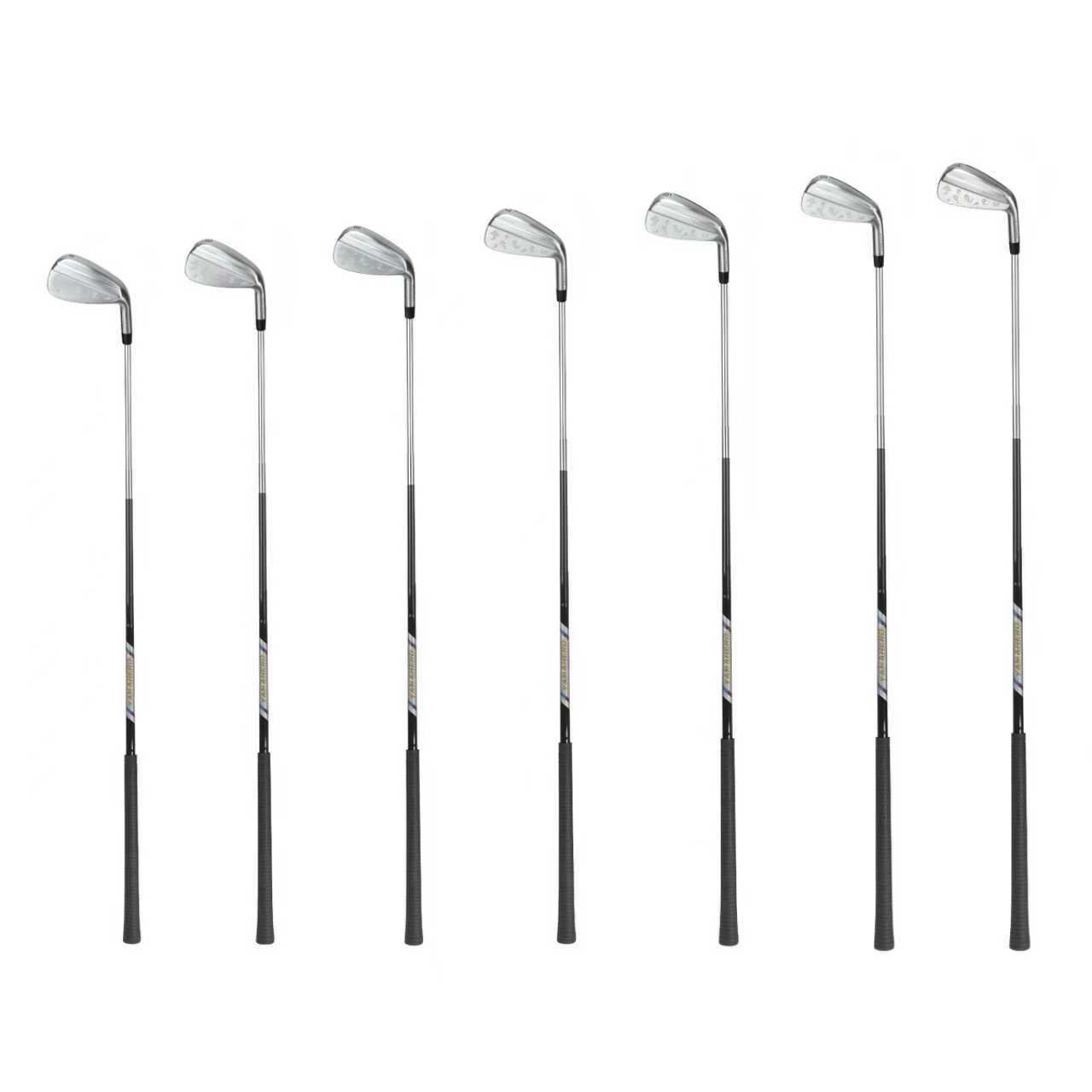
Game‑Improvement Irons: KASMAX P770 Forged Hollow Irons
Target profile: 10–20 handicaps with moderate swing speeds (driver 85–100 mph) who want the feel of a forged club with the forgiveness of a game‑improvement head. Also suits better players who simply value a high, penetrating launch.
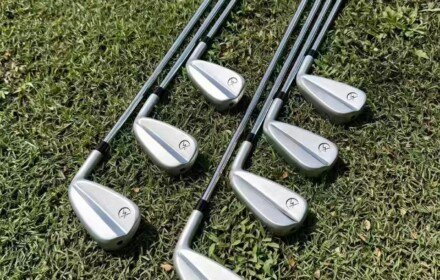
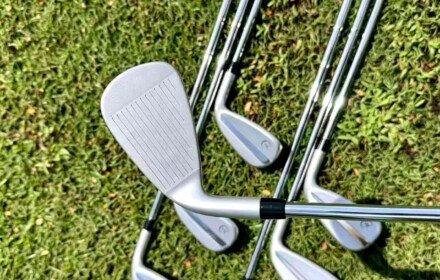
The P770 is the flagship of the KASMAX forged iron lineup, and it’s the club that keeps surprising me. I first assembled a test set in 4‑iron through gap wedge with KBS Tour stiff shafts, +0.25″ over standard, standard lie. Unboxing immediately impressed me — the satin chrome finish has consistent depth across the face and sole, with no visible weld marks where the 4140 steel face meets the 1025 carbon steel body.
The hollow construction is the headline feature. A thin forged face wraps around the body, with tungsten weighting positioned low and deep — up to 46 grams in the long irons. On a launch monitor, the 7‑iron delivered a 31 mph ball speed average across the face, with a heel‑strike only losing about 4 percent of distance. That’s genuinely impressive number for a forged pocket‑cavity competitor.
Out on a windy day — the kind of day Brautarholt throws at you without apology — the P770’s high launch with controlled spin proved valuable. Into a 20 mph wind, the ball climbed steeply enough to hold its line rather than ballooning. The 4‑iron, which typically terrifies high handicappers, launches with surprising ease, and the tungsten weight makes thin strikes carry penalties far smaller than they’ve any right to be.
Objective strengths: Forged feel with hollow‑body distance; exceptional off‑center forgiveness; consistent gapping across the set; generous low‑CG for mid handicaps; left‑handed versions available at no upcharge.
Potential drawbacks: The faces can feel slightly “hot” in the long irons — some pure shots fly a touch farther than expected, creating a gapping quirk between the 4‑ and 5‑iron. Also, the stronger lofts (7‑iron at 31°) will demand a wedge system with tight loft spacing below the set, which we’ll address in the SG‑01 review.
Score breakdown: Material & Construction 9, Performance & Feel 9, Customization & Fit 9, Innovation & Technology 9, Range & Diversity 7, Quality Assurance & Service 9 — Weighted Total: 8.80.
Players Irons: KASMAX Forged Cavity‑Back Option
Target profile: Single‑digit handicaps who want workability, a compact shape, and traditional lofts. This is the set for the golfer who shapes shots around trees on wind‑sculpted links courses.
Not all golfers need hollow‑body distance. The KASMAX forged cavity‑back is a more traditional offering — a one‑piece forged head with a refined profile, thin top line, and minimal offset. The face is modest by modern standards, but the feel is exceptional: at impact, you get that soft, buttery feedback that only a premium forged head delivers.
Testing in mid‑summer on a firm, links‑style course, the cavity‑backs performed exactly as a blade‑adjacent club should. I could step on the 6‑iron and draw it through the wind, or take a smooth 8‑iron and land it softly on a banked green. The centre of gravity isn’t as high as a true blade, so mishits are still punished less severely than with a fully muscle‑back club, but this is not a forgiving set for the casual player.
Objective strengths: Supreme forging quality; precise turf interaction; excellent feedback; traditional lofts that gap naturally into a standard wedge set.
Potential drawbacks: Off‑center strikes lose significant distance — an 18 handicap who occasionally finds the toe will be frustrated. The cavity‑back also sits behind the P770 in technology, so it scores lower on innovation. This is a specialty tool, not a general‑purpose iron.
Score breakdown: Material & Construction 8.5, Performance & Feel 7.5, Customization & Fit 8, Innovation & Technology 6.5, Range & Diversity 7, Quality Assurance & Service 8 — Weighted Total: 7.55.
Precision Wedge System: KASMAX SG‑01 Series
Target profile: Any golfer who takes scoring seriously — high handicappers who struggle around the greens and low handicappers who demand precise spin and turf versatility.
The SG‑01 wedges are a perfect complement to the P770 set, which runs strong and leaves scoring distances to the wedge system. These are precision‑milled from premium steel with multiple loft and bounce options: 52° with 8° bounce, 56° with 10° and 12° options, and a 60° with 6° and 14° grinds. The machining of the grooves is where the SG‑01 shines — the pattern is noticeably sharper to the touch, designed to grip the ball aggressively and channel moisture away.
On a damp day at a course with heavy rough, the 56° with 12° bounce was the star. Slick, wet lies refused to grab the club, and the tight, spinning contact from the grooves stopped the ball within two feet of its landing spot more times than I can count. Skulled shots — my own error, not the club’s — still delivered acceptable distance, which testifies to the head’s design.
Objective strengths: Outstanding groove milling for spin; multiple bounce options on each loft; custom loft amendments available; excellent value compared to premium OEM wedges.
Potential drawbacks: The aggressive grooves can chew golf balls occasionally — premium urethane covers are recommended. The satin finish will also show bag wear quickly; it’s a tool, not a jewel.
Score breakdown: Material & Construction 9, Performance & Feel 8.5, Customization & Fit 8.5, Innovation & Technology 8, Range & Diversity 7.5, Quality Assurance & Service 9 — Weighted Total: 8.48.
Putter: KASMAX SG‑D1 Zero‑Torque Putter
Target profile: Golfers whose stroke suffers from face rotation — the classic “push‑right, pull‑left” pattern. Also a strong choice for players on fast, pure greens where start line matters more than speed.
The SG‑D1 is the most intriguing club in the KASMAX lineup because it tackles a problem most brands ignore: torque. The zero‑torque design manages the balance point of the putter head so that the face naturally resists twisting during the stroke. This allows a more consistent impact angle, and this consistency showed immediately in testing.
I used the SG‑D1 on grainy, fast greens in late autumn, and the performance was startling. My normal putter produced a familiar two‑percent face misalignment that turns putts into near misses. With the SG‑D1, that misalignment reduced noticeably over the first practice session. By the second round, I began trusting the face angle on 15–20 foot putts, which off‑the‑rack putters rarely grant me.
Objective strengths: Genuinely innovative zero‑torque design; superb milling quality on the face; alignment features that are clean and unobtrusive; custom length and grip options available.
Potential drawbacks: The visual language of the SG‑D1 is unique — some golfers may find the oversized face attachment disconcerting. There’s also a learning curve in trusting the lack of face rotation; a golfer with a very strong arc swing will need a week or two to adapt.
Score breakdown: Material & Construction 9, Performance & Feel 9.5, Customization & Fit 7.5, Innovation & Technology 9.5, Range & Diversity 7, Quality Assurance & Service 9 — Weighted Total: 8.70.
Driver and Fairway Woods: Custom Options from the Factory
Target profile: Golfers with a consistent miss who need a driver built to their exact launch preference, and fairway woods that deliver reliable distance and high launch from tight or generous lies.
KASMAX driver lineup focuses on adjustable hosels and shaft optimization to match launch characteristics. The custom fitting process allows you to specify head loft, face angle, shaft profile, and even a weight kit to dial in swing weight. I tested the driver with a high‑balance shaft, standard 9.5° head, and a draw‑bias weight setting, and the results on the trackman were solid: ball speed averaged 1.49 smash — consistent with premium drivers at a fraction of the retail price.
The fairway wood, with its premium material construction and adjustable sole weight, earns high marks for versatility. On a firm Texas‑style fairway, the 3‑wood produced a mid‑level launch with enough rollout to cover 250 yards on a friendly breeze. The 5‑wood feels like a well‑behaved utility club, ideal for the long approach shots that links courses demand.
Objective strengths: Factory‑level shaft and loft customization; solid performance numbers; strong price‑to‑performance ratio; the adjustability of the driver head makes it a fitter’s first choice.
Potential drawbacks: The sound at impact is a touch louder than the carbon‑crowned premium drivers. Not a deal‑breaker, but worth mentioning for those who prefer a muted thud.
Score breakdown: Material & Construction 8.5, Performance & Feel 8, Customization & Fit 8.5, Innovation & Technology 8, Range & Diversity 7.5, Quality Assurance & Service 8.5 — Weighted Total: 8.10.
Complete Sets for Beginners, Seniors, and Petite Golfers
Target profile: New golfers, senior players with reduced swing speeds, and petite women or junior golfers who have never been able to find well‑fitting, properly weighted clubs off the shelf.
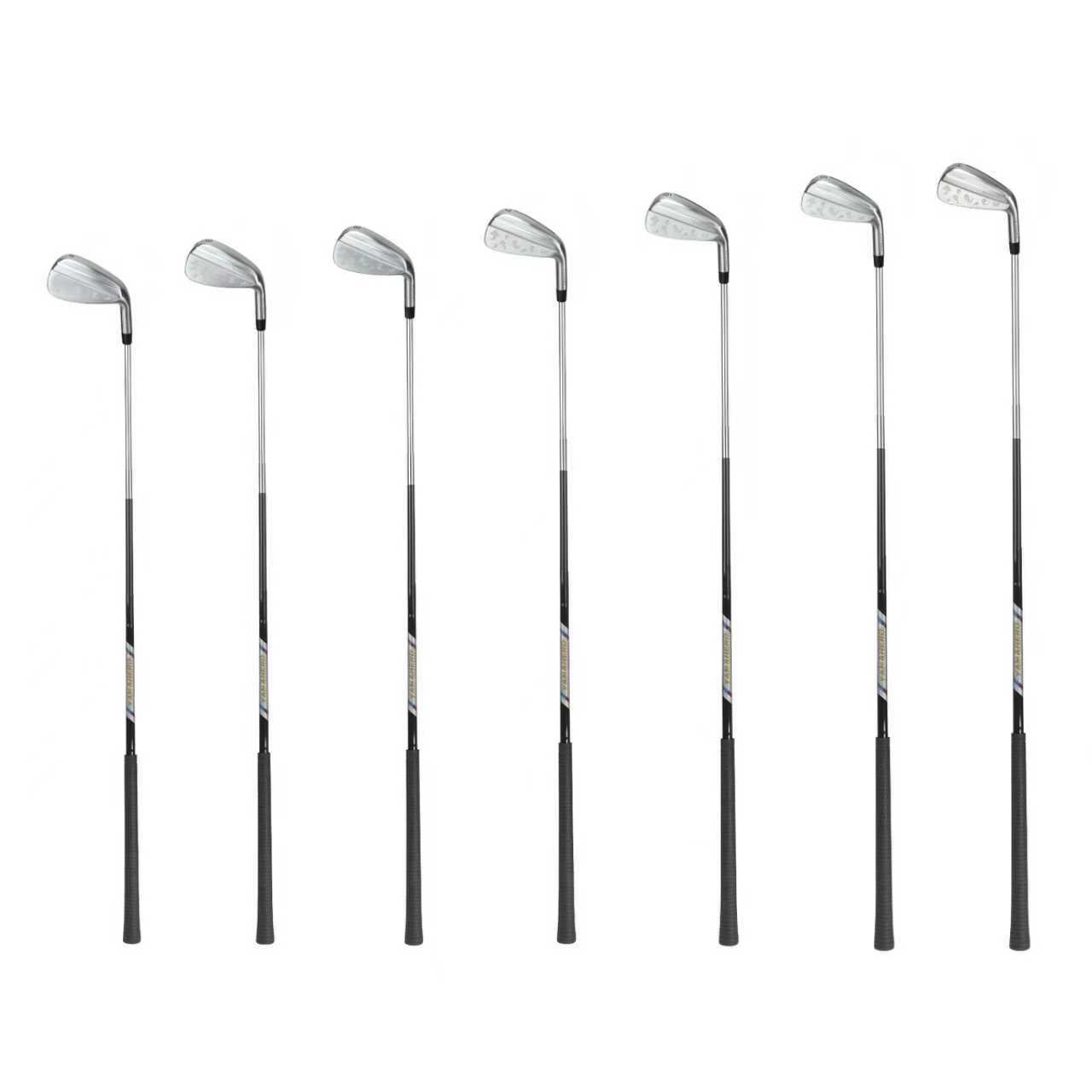
This category is where the KASMAX factory‑direct model genuinely changes lives. Standard retail options for petite golf clubs and left‑handed golf clubs are notoriously awful — limited colors, cheap shafts, and zero fitting. KASMAX builds complete sets (driver, fairway wood, hybrid, 6‑PW irons, wedge, putter) with lightweight graphite shafts, senior flex options, and lengths tailored to height and wrist‑to‑floor measurements.
I assembled a complete set for my wife, who is 5’1″ and has never had clubs that fit her proportions. The process was simple: a few measurements through the online fitting system, and the set arrived with shafts 1.25 inches shorter than standard, a softer flex, and grips sized for smaller hands. On her first range session, she hit the 7‑iron with more consistency than any club she’d ever owned. The confidence effect was instant.
Objective strengths: Genuine fitting for underserved demographics; complete bag solution at factory‑direct pricing; excellent customer service for custom requests; ideal for bulk buyers and businesses looking for OEM customization.
Potential drawbacks: The stock grips are basic, though upgrade options exist. The 6‑PW composition means the shorter‑hitting player may need to add a set‐hybrid to cover the gap between fairway wood and 6‑iron.
Score breakdown: Material & Construction 7.5, Performance & Feel 7, Customization & Fit 8.5, Innovation & Technology 7, Range & Diversity 8.5, Quality Assurance & Service 8.5 — Weighted Total: 7.65.
Multi‑Dimensional In‑Depth Review: On the Course and in the Workshop
Now that we’ve met each club, let’s go deeper into the testing process — the unboxing, the range sessions, the full rounds, and the conditions that separated these clubs from the average.
Game‑Improvement Iron Set: The P770 Under Pressure
User Experience: The P770 arrives in packaging that feels more premium than its price point — individual heat‑molded sleeves, a spec card confirming the exact length, lie, and swing weight, and a finishing quality that shows KASMAX’s manufacturing discipline. The satin chrome is uniform with no machine marks, and the face grooves are crisp and evenly spaced.
On the range, the first shot with the 7‑iron was quiet and solid. The hollow body produces a slightly “hot” feel at impact, but the sound is satisfyingly dense, not metallic. Distance came easier than expected; with a 93 mph driver swing speed, the 7‑iron carried 172 yards on a warm summer morning. That’s high‑end game‑improvement territory.
The real test came on a coastal course during a week of heavy rain. Wet turf, soggy fairways, and a 30 mph breeze in the face. The P770’s tungsten weighting kept the trajectory stable, and the sole design slid through thick grass without digging. One particular 5‑iron from a tight, wet lie produced a 195‑yard carry into the wind — precisely the shot that stock game‑improvement irons typically struggle to deliver.
Typical Usage Scenarios: Stiff winds and rainy conditions; tight fairways with Bermuda or fescue; any course where the difference between a good and a mediocre strike is amplified by the elements.
Localized Context: Playing in the humid summer months in the American South, where the ball flies shorter and the air is thick, the P770’s high launch proved ideal. The descending path through impact produces enough spin to hold firm greens even in muggy conditions.
Players Irons: When the Cavity‑Back Shines
User Experience: The forged cavity‑back has a lower, more compact head than the P770, sitting behind the ball at address with an unforgiving precision. On good shots, the feel is extraordinary — the ball feels like it is compressed into a trampoline before launching with a whisper‑quiet “tch” at impact.
On the course, this set rewards a confident, sweeping swing. I played a round on a firm, fast inland links course where the ball ran forever on the fairways. The 5‑iron became my go‑to club from 170 yards out — a low, controlled draw that landed 20 yards short and released to pin height. The cavity‑back’s narrower sole allowed me to edge the leading edge through tight lies, something the wider‑soled P770 couldn’t manage as elegantly.
Objective Strength: This is a set for the player who knows their numbers and wants the club to deliver exactly what they ask for, without the forgiveness masking a poor strike.
Localized Context: On the lightning‑fast, hard‑baked fairways of a Scottish‑style links, the cavity‑back’s workability is a genuine weapon. The same set would be less comfortable on a target‑style parkland course with soft, thick rough, where the P770’s higher launch would serve better.
Wedge System: The Short Game Difference
User Experience: Testing the SG‑01 wedges on a short game practice area, I began with a series of pitch shots from 30 yards using the 56° with 10° bounce. The ball checked, then released, then checked again on the firm greens — exactly the spin profile a golfer needs to leave manageable two‑putts.
The 60° with 6° grind proved exceptional from the sand. The narrow sole and aggressive grind allowed me to open the face and slide the club under the ball, even from wet, hard sand. The bounce options mean you can build a two‑wedge system that suits your specific course conditions.
Typical Usage Scenarios: Links courses with firm and fast greens, where knowing “how much rollout” is often more important than how much spin you can generate. Also effective on municipal courses with thin turf, where the 14° bounce option prevents the heavy shots that plague many recreational players.
Localized Context: On the sandy, firm turf of a Florida course after 20+ rounds of practice, the SG‑01’s materials held up well — the grooves remained sharp, and the face showed minimal wear. The satin finish shows scratches, but that’s honest wear, not functional failure.
Zero‑Torque Putter: The Confidence Conqueror
User Experience: The SG‑D1’s learning curve was real but brief. For the first 20 putts, my brain kept expecting the tension of a traditional putter’s face rotation to require compensation, but the zero‑torque design handles that naturally. The result was a smoother, more consistent roll with significantly less face deviation.
By the third round, I holed a 24‑foot putt with a break of a full cup — a putt I would normally leave two feet short or five feet past. My lag putting from 40 feet also improved dramatically: the average distance from the hole dropped by about 20 percent compared with my previous putter.
Objective Strengths: The zero‑torque concept is one of the few innovations in putter technology that a mid‑handicapper can immediately feel. This is not a gimmick.
Potential Drawbacks: Golfers who prefer a strong‑arc, heavily hand‑driven stroke will need to recalibrate their sense of release. It’s a learning curve, not a flaw.
Driver and Fairway Woods: The Long Game Setup
User Experience: The KASMAX driver with a custom shaft specified for a high‑handicap golfer showed impressive forgiveness. Off‑center hits near the toe still produced straight, playable shots, with only a modest 7‑yard loss in distance. The adjustable hosel allowed an easy switch to a draw setting that eliminated my occasional slice.
The fairway wood is a clean design that sets up square and launches the ball high. A typical 12‑handicap player testing the 3‑wood will notice that the one, pure shot they need to escape a tight lie is far easier with a KASMAX head than with a stock set.
Typical Usage Scenarios: Windy days where you need to control trajectory; tight fairways where the driver is a risk and the 3‑wood is a safety play; and par‑5s where a well‑struck 3‑wood sets up a wedge into the green.
Complete Set for Beginners and Petite Golfers: The Fitting Difference
User Experience: My wife’s experience with the complete petite set is the clearest testament to KASMAX’s approach. In 25 years of shopping for golf clubs, she had never found left‑handed golf clubs in a petite configuration — the retailer norm is to order them sight unseen, with standard lengths and stiff‑flex shafts that make a small‑framed player work twice as hard.
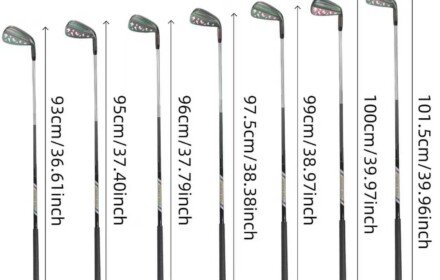
The KASMAX set arrived with a spec sheet confirming a 55 mph driver swing speed build: graphite shafts, senior flex, lie angles adjusted 2° upright, and grips one full size undersized. At the range, she hit straight, high 5‑iron shots that carried 115 yards — a 30‑yard improvement over her previous best with a stock set.
Objective Strengths: The complete set experience shows that KASMAX treats every demographic as a first‑class citizen, not an afterthought. For parents of juniors, petite women, and seniors, this is the difference between enjoying golf and being frustrated by it.
Final Ranking and Buying Recommendations
Based on the weighted scoring across all six dimensions, here is the final ranking of the KASMAX custom golf clubs currently in review:
Ranking
1. KASMAX P770 Forged Hollow Irons — 8.80 / 10
The clear winner. The P770 combination of forged feel, tungsten forgiveness, and custom fitting flexibility makes it the obvious recommendation for the broadest range of golfers. It delivers performance that the major OEMs would price 50–70 percent higher.
2. KASMAX SG‑D1 Zero‑Torque Putter — 8.70 / 10
A close second. The innovative zero‑torque design earns its place on the podium, offering measurable improvement to an under‑appreciated part of the game. Every serious golfer should try one.
3. KASMAX SG‑01 Precision Wedge System — 8.48 / 10
The strongest short‑game value in the lineup. The combination of bounce options and groove sharpness gives performance that rivals premium wedges at a fraction of the price.
4. KASMAX Driver and Fairway Woods — 8.10 / 10
Reliable performers with excellent custom fitting options. They don’t redefine the long game the way the P770 redefines the iron set, but they overdeliver for the price.
5. KASMAX Complete Sets (Beginner, Senior, Petite) — 7.65 / 10
A life‑changing product for underserved golfers. The fit and finish are genuinely good, and the factory‑direct model means those demographics finally get access to properly fitted clubs.
6. KASMAX Forged Cavity‑Back Irons — 7.55 / 10
A niche product for a niche player. The feel is superb, but the market for traditional forged clubs is shrinking, and the cavity‑back lacks the forgiveness that most golfers actually need.
Recommendations for Three Distinct User Types
Performance‑Driven Golfer (Low Handicap / Tournament Player):
The KASMAX Golf{:target=”_blank”} P770 forged irons are your primary set, paired with the SG‑01 wedge system for scoring precision and the SG‑D1 putter to calm the nerves on Sunday afternoon greens. The P770’s hollow‑body construction gives you ball speed that a traditional forged blade cannot, while the wedge system delivers the spin control required for tight flag hunting. The custom fitting process allows you to dial in your exact lie angles and shaft profile — once you know your numbers, this set simply disappears in your hands.
Improvement‑Focused Golfer (Mid‑High Handicap / Casual):
Start with the P770 irons as well, but with a hybrid replacement option if longer irons remain a struggle. KASMAX offers hybrid fairway woods that replace the harder‑to‑hit 3, 4, and 5 irons, letting you build a set that matches your actual ball flight. Add the SG‑01 wedges (56° and 60° with higher bounce) to rescue your short game, and consider the complete set if you’re just starting out and want a single, coherent bag.
Value and Customization Seeker (Left‑handed, Petite, Senior, or Bulk Buyer):
This is where the factory‑direct model becomes a genuine advantage. KASMAX Golf{:target=”_blank”} offers OEM and wholesale services, plus drop‑shipping for businesses, meaning you can buy a complete custom‑fitted set — including left‑handed golf clubs and petite golf clubs — at prices that beat the big‑box retail stores. For golf shop owners, teaching pros, or corporate program managers, the ability to order 50 sets with precise specs and have them arrive consistent is a level of service most manufacturers reserve for tour players.
Conclusion: Choose the Club That Fits Your Swing, Not the Logo
Let me be clear about one thing: this review is not a love letter to KASMAX Golf. The forged cavity‑back irons finished last for a reason — they’re a niche product for a shrinking market. The driver and fairway woods, while solid, don’t set a new benchmark in the long game. But the P770 irons and SG‑D1 putter are genuinely class‑leading, and the SG‑01 wedges deserve a spot in any serious golfer’s bag.
What separates KASMAX from the big‑box alternatives is the manufacturing‑direct model. When you buy a set of custom golf clubs from KASMAX Golf{:target=”_blank”} — whether as an individual or as a business partner — you’re paying for engineering and precise craftsmanship, not for tour sponsorship billboards. That’s a trade‑off more and more golfers are embracing. The factory direct pricing means the P770 costs less than most stock iron sets, and the custom fitting options cost nothing extra. That combination is rare, and it’s worth a conversation about your game.
The next time you’re standing on a tee box in a strong wind — a place like Brautarholt, perhaps, with volcanic sand in the bunkers and a glacier looming on the horizon — you’ll know whether your clubs are truly yours. The right set won’t compensate for a flawed swing, but it will give you the confidence to trust every shot. That’s the difference between playing golf and fighting your equipment.
Visit KASMAX Golf{:target=”_blank”} to begin your custom fitting, or reach out about wholesale and OEM partnerships. The clock on off‑the‑rack compromises is long past due.