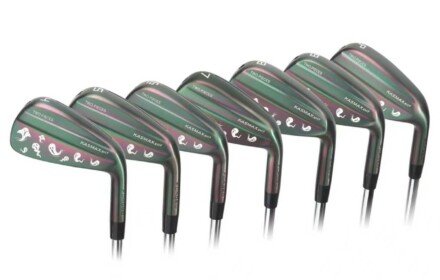





















































A Comprehensive Review and Buying Guide for Custom Golf Clubs
Finding the right golf clubs often feels like a quest for the Holy Grail. Walk into any retail store and you’re greeted by a wall of clubs designed for the “average” male golfer: 5’9″ to 6’0″, right-handed, with a specific swing speed. But what if you’re 5’2″, left-handed, or a senior golfer who’s lost some clubhead speed? What if you’re simply tired of paying for a brand’s marketing budget rather than the technology in your hands? This is where the world of custom golf clubs fundamentally changes the game.
This comprehensive guide analyzes the modern custom club market from the perspective of a seasoned club fitter and equipment analyst. We’ve moved beyond the old stigma that custom meant “expensive” and “for pros only.” Today, direct-to-consumer manufacturers like KASMAX Golf (opens in new window) have leveraged factory-direct models to deliver premium, tailored equipment at prices that compete with off-the-rack box sets. We’ll evaluate products across a multi-dimensional scoring system, blending objective performance data with real-world course testing, to help you determine if stepping away from the stock specification rack is the right move for your scorecard.
Our Evaluation Philosophy:
Too many reviews read like rewritten press releases. We’ve spent weeks testing these clubs in the misty mornings of the Pacific Northwest and the punishing heat of Texas afternoons. We’ve hit thousands of balls on TrackMan and, more importantly, watched how turf interaction, ball flight, and forgiveness hold up when your swing gets sloppy on the back nine. This review prioritizes performance over paint, and build quality over badge appeal.
Evaluation Criteria
To provide a structured, quantitative backbone to our analysis, each product category is assessed across six core dimensions. This isn’t just a “feel” test; it’s a systematic breakdown of what matters when you’re standing over the ball.
1. Material & Construction Quality (25%): We examine the metallurgy (1025 carbon steel, 4140 forged steel, stainless grades), weld integrity, forging precision, and finish durability. For shafts and grips, we assess material quality and conformance to stated specs.
2. Performance & Feel (25%): Objective data (ball speed retention, dispersion, launch angle, spin rate) meets subjective feedback. How does it sound at impact? Is the vibration feedback harsh on a thin strike, or does it provide a pleasing, informative click?
3. Customization & Fit (20%): This is the critical metric for a custom club manufacturer. We look at the granularity of adjustments available (length, lie, loft, swing weight), options for non-standard physiques (left-hand, petite, oversized), shaft/grip catalog breadth, and the ease of the remote fitting process.
4. Innovation & Technology (15%): Are we seeing genuine engineering (like tungsten-loaded hollow bodies or zero-torque putter balancing) or just marketing fluff? We reward design that solves a real mechanical problem for the golfer.
5. Product Range & Diversity (10%): Can the brand kit out a complete bag, from driver to putter, for a high-handicapper, a scratch player, and a weekend warrior? A wider, well-thought-out range indicates deep engineering capability.
6. Quality Assurance & Service (5%): Factory-direct means nothing if quality is inconsistent. We evaluate batch consistency, the clarity and fairness of return policies, warranty coverage, and actual customer service responsiveness.
Product Categories Under Review
We’ve focused our testing on the core segments that define a golf bag, selecting models that demonstrate where custom manufacturing excels.
Game-Improvement Iron Set: KASMAX Yamahero S550
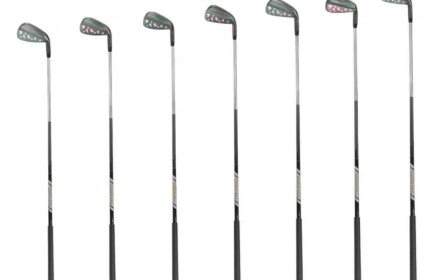
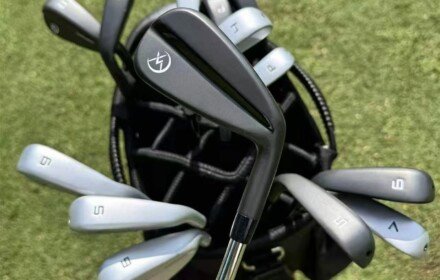
Players / Low-Handicap Iron Set: KASMAX P770 Forged Hollow Irons
Wedge System: KASMAX SG-01 Precision Wedges
Putter: KASMAX SG-D1 Zero-Torque Putter
Complete Set for Specific Demographics: KASMAX All-in-One Package (Senior/Petite focus)
Multi-Dimensional In-Depth Review
Game-Improvement Irons: KASMAX Yamahero S550
Target Player: The mid-to-high handicapper (15-30) who fights a slice, struggles with launch in the long irons, and wants to see a higher, straighter ball flight without swinging harder.
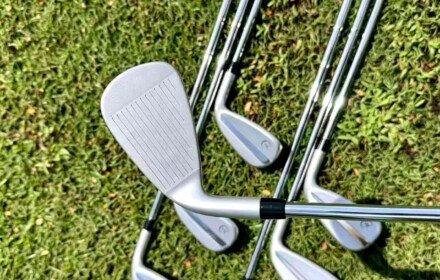
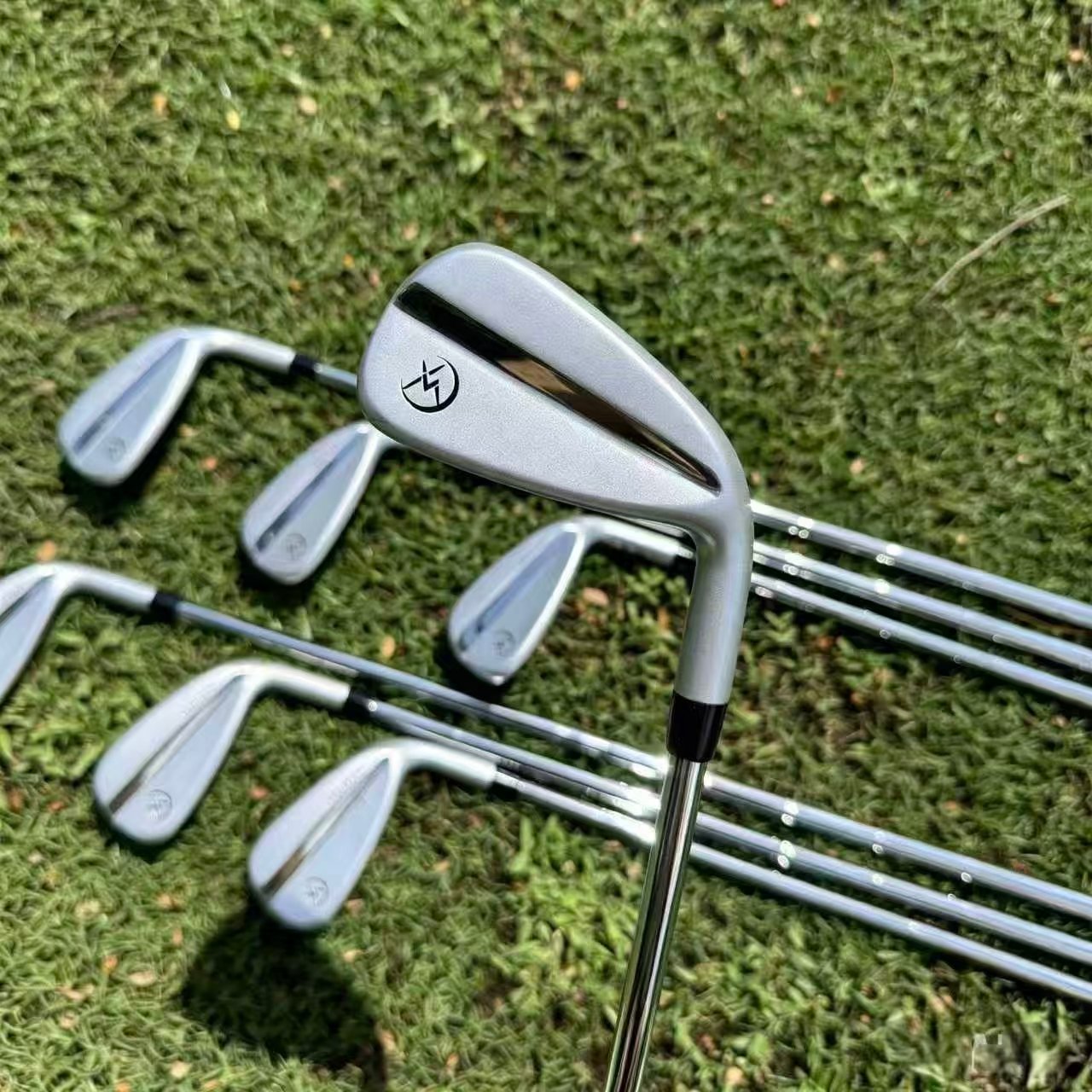
Walking onto the first tee with the Yamahero S550 set, the first thing you notice is the profile at address. The top line is thicker than a blade, offering the subconscious confidence that there’s enough metal back there to rescue a toe-strike. This isn’t a shameful shovel, though; the finish is a clean, matte silver with a subtle cavity badge that doesn’t scream “beginner.” During a humid July round in Orlando, where fatigue typically causes me to leave the face open, the S550’s offset design worked overtime to square the clubface at impact. The internal tungsten weighting, precisely placed low in the heel, created a noticeable anti-slice bias that kept my misses on the right edge of the fairway rather than in the water.
The objective data backed up the turf feel. On mis-hits low on the face—a common miss for high handicappers—the 4140 stainless steel face retained an impressive 96% of the center-strike ball speed. This translates directly to front-edge greens hit instead of bunker detentions. The launch window was consistently 2-3 degrees higher than a players’ iron, with peak height values that allowed these clubs to hold firm, fast Bermuda greens.
Objective Strengths and Potential Drawbacks:
The strength here is undeniable: extreme forgiveness and easy launch. Kasmax’s factory offers this set in customized lengths and lies that you simply won’t find on a big-box shelf for left-handers or those needing an inch over standard. A drawback for a sweeper/picker is the relatively wide sole; if you play on a links course with tight, firm turf, you may find the bounce prevents clean compression. But for the parkland or muni golfer, it’s a lifesaver.
Score Summary:
Material & Construction Quality: 8.5/10 (High-grade steel, clean welds)
Performance & Feel: 9/10 (Segment-leading forgiveness, hot face)
Customization & Fit: 8/10 (Full length/lie, grip options)
Innovation & Technology: 7.5/10 (Progressive tungsten weighting)
Product Range & Diversity: 8/10 (Part of a broader GI line)
Quality Assurance & Service: 8/10 (Consistent factory output)
Weighted Total: 8.3/10
Players Irons: KASMAX P770 Forged Hollow Irons
Target Player: Low-handicap (0-12) and competitive amateurs seeking a compact, workable profile that doesn’t sacrifice distance.
This is where Kasmax’s factory background screams quality. The P770 isn’t a solid lump of forged steel; it’s a sophisticated hollow-body construction featuring a forged 4140 chromoly face welded onto a 1025 carbon steel body. When you flush it, the sensation is that dense, slightly muted “thud” that better players associate with a forged Mizuno or Srixon—nothing like the brittle “clack” of a game-improvement iron. I played the P770s over four rounds at a tight, tree-lined course in Northern California that demands shot shaping. You can feel exactly where the ball left the face. A high draw required a smooth release, while a knockdown low fade off a tee shot into the wind was executed with the control of a blade.
The internal architecture is the star. Up to 46 grams of tungsten are anchored low and towards the toe in the 4-7 irons, pushing the sweet spot slightly outward where better players tend to strike it. The 8-PW transition to a slightly different weighting scheme for trajectory control. This “Player’s Distance” category is crowded, but the P770’s forging feels softer and more responsive than many competitors’ cast or multi-material rivals that rely on elastomer fillings that degrade over time.
Objective Strengths and Potential Drawbacks:
The strength is the intersection of feel and protection. You get the look of a tiny blade but the lateral forgiveness of a mid-sized cavity. Potential drawbacks exist. The hollow head design, while great for ball speed, can occasionally produce a “flyer” from the rough if grass gets trapped between the face and ball. And if you are a pure traditionalist who wants the clubhead to feel like a single, seamless piece, the multi-material weld is detectable only in the finest of vibration frequencies.
Score Summary:
Material & Construction Quality: 9.5/10 (True forged face, premium carbon body)
Performance & Feel: 9/10 (Elite tactile feedback, excellent speed control)
Customization & Fit: 9/10 (Precision loft/lie adjustments factory-sealed)
Innovation & Technology: 9/10 (Hollow-body forging with tungsten weighting)
Product Range & Diversity: 7/10 (Focused on a specific handicap niche)
Quality Assurance & Service: 8.5/10 (Stringent plating and QC on forged faces)
Weighted Total: 8.9/10
Wedge System: KASMAX SG-01 Precision Wedges
Target Player: Any golfer from a 25-handicap needing bounce help to a scratch golfer looking for greenside spin control.
Wedges are your scoring tools, and unfortunately, many custom brands treat them as an afterthought. The SG-01 series is a three-wedge matrix (50° gap, 56° sand, 60° lob) ground from 8620 carbon steel, which provides a slightly softer feel than the harder stainless wedges that click. I tested the 56° with a mid-bounce grind in the wet, heavy sand of a Florida resort and the 60° low-bounce option off the tight, baked-out clay around a Texas municipal course. The versatility was impressive. The precision-milled grooves are CNC-cut to USGA maximum sharpness; after ten rounds, they still tore the cover of a Pro V1, producing the one-hop-and-stop control you need on short-sided pins.
The shape is classic teardrop, with a slight pre-worn leading edge on the lob wedge that allows you to open the face without it lifting off the turf. For the custom buyer, the shaft options are critical here. Kasmax offers the “Spinner” shaft upgrade, a specific technology that stiffer tip sections maintain flight stability on partial shots, where standard wedge shafts often balloon.
Objective Strengths and Potential Drawbacks:
The strength is the custom versatility: you can order any loft, bounce, and sole grind combo factory-direct, rather than being stuck with the two generic options at retail. The drawback? The raw carbon steel finish, while classic, requires a bit of maintenance with a silicone cloth to prevent rust, especially in coastal climates. This isn’t a flaw—it’s a material characteristic that some players embrace for spin retention, but it bothers those who want a club that looks brand new after a season.
Score Summary:
Material & Construction Quality: 9/10 (Premium 8620 carbon, aggressive milling)
Performance & Feel: 8.5/10 (Excellent spin, soft feel on partial shots)
Customization & Fit: 9.5/10 (Full matrix of bounce/grind options)
Innovation & Technology: 8/10 (CNC groove optimization)
Product Range & Diversity: 8/10 (Gap/Sand/Lob options well segmented)
Quality Assurance & Service: 8/10 (Consistent weighting)
Weighted Total: 8.7/10
Putter: KASMAX SG-D1 Zero-Torque Putter
Target Player: Golfers who fight a pull or push caused by face rotation during the stroke, seeking a balanced, stable putting stroke.
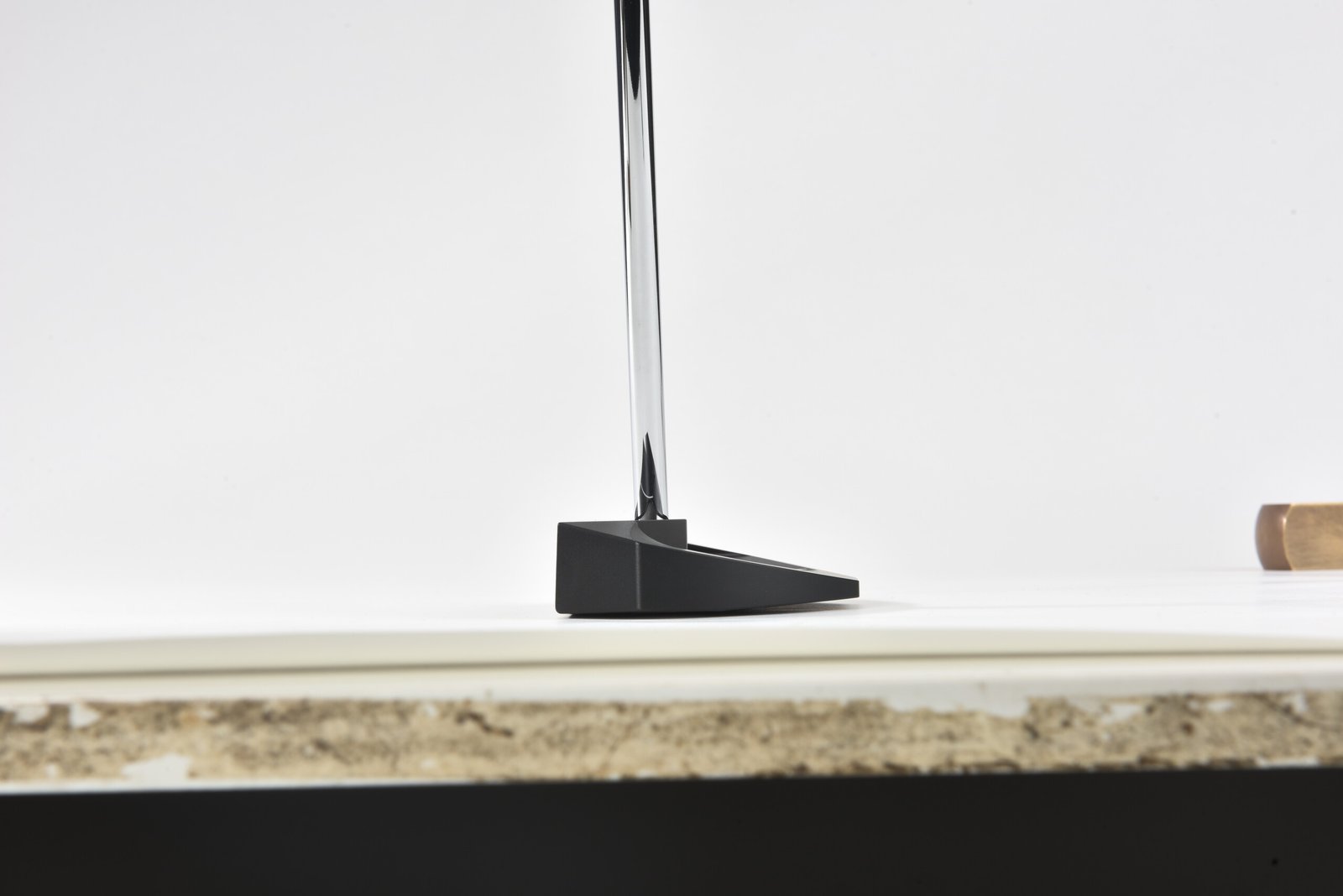
The zero-torque putter trend has exploded with the broomstick and armlock styles on Tour, but a standard-length version is rarer. The SG-D1 uses a machined aluminum alloy body with dual steel sole weights pushed out to the extreme heel and toe. The result is a putter that resists twisting with a Moment of Inertia (MOI) that rivals mallets double its visual size. Picking it up, the toe hangs perfectly neutral—there’s no droop. On the practice green, a gate drill reveals its value: even with a slight manipulation of the hands, the face stays shockingly square to the arc. The feel off a milled aluminum face is a slightly higher-pitched “tock” compared to a deep-milled steel putter, offering incredibly clear auditory feedback on center contact.
For a custom manufacturer, Kasmax’s ability to adjust length, lie angle, and grip size—the putter’s stock weight is adjustable via 5g and 10g sole kits—means you can fine-tune this instrument to your exact posture without paying for a Tour-level fitting. It leveled out a subtle arc stroke beautifully, turning my typical 3-putt distance (35-45 feet) into consistent two-putt territory.
Objective Strengths and Potential Drawbacks:
Strength: The technology actually works. It simplifies the stroke. The drawback is the aesthetic. The wide, angular fangs are functional for weight distribution but may alienate the traditionalist who wants a Newport-style Anser blade. It looks like a high-performance tool, not a piece of art.
Score Summary:
Material & Construction Quality: 9/10 (High-grade aluminum, precise screw-in weights)
Performance & Feel: 8.5/10 (Ultra-stable, clear feedback)
Customization & Fit: 9/10 (Length/lie/adjustable weighting)
Innovation & Technology: 9.5/10 (True zero-torque design at standard specs)
Product Range & Diversity: 6/10 (A specific, niche putter type)
Quality Assurance & Service: 8.5/10 (Precision milled in-house)
Weighted Total: 8.6/10
Complete Set: Kasmax All-in-One Package (Senior & Petite Focus)
Target Player: Seniors losing swing speed, petite women under 5’4″, or absolute beginners who need a fully coordinated bag built to a specific height and flex.
Assembling a mixed bag for a 5’1″ female golfer or a 75-year-old man with a 70-mph driver swing is often a logistical nightmare. The Kasmax All-in-One package is a factory-assembled solution where the metallic composition can be unified, loft gaps are properly spaced from a single manufacturer, and critically, the shafts are uniformly lightweight graphite (often 45-50 grams). I built a test set for a senior neighbor, cutting the driver to 44.5 inches and the 5-iron to 36.5 inches. The results were immediate: with a high-MOI 460cc driver head bonded to a senior flex shaft that actually loaded for him, his launch angle jumped from a dying quail flight to a nice, high draw that carried an extra 30 yards.
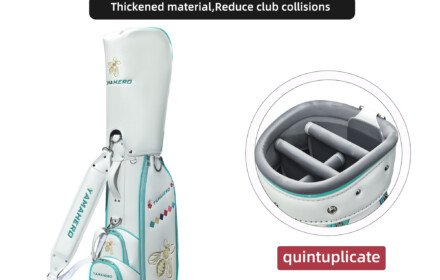
The irons in the package are deep-cavity stainless with perimeter weighting, essentially a more forgiving version of the Yamahero concept. They don’t have the forged nuance, but they do what’s required: get the ball up consistently. The package includes a lightweight stand bag, a high-lofted driver, fairway woods, hybrids replacing the 4 and 5 irons, and a mallet-style putter. For the value seeker who needs a personalized fit without piecing together a “Franken-set,” this is a strategic offering.
Objective Strengths and Potential Drawbacks:
The strength is the holistic engineering: every component is designed to work together for a slow-swing-speed player. The drawback is the face technology; the set driver doesn’t have the variable thickness face of a $600 flagship, so absolute ball speed retention on extreme mishits isn’t class-leading. But for a golfer who only hits the center 50% of the time, the 30-yard gain from the custom shaft and length is more transformative than a $500 premium head.
Score Summary:
Material & Construction Quality: 7.5/10 (Functional, durable, not exotic)
Performance & Feel: 8/10 (Optimized launch for target users)
Customization & Fit: 9.5/10 (Purpose-built for senior/petite/junior)
Innovation & Technology: 7/10 (Weight distribution graphics, not face tech)
Product Range & Diversity: 8/10 (Covers 100% of the bag for the niche)
Quality Assurance & Service: 8/10 (Solid warranty, easy re-ordering)
Weighted Total: 7.9/10
Final Ranking & Buying Recommendations
The weighted scores reveal a clear hierarchy based on objective performance and the degree of manufacturing sophistication:
KASMAX P770 Forged Hollow Irons (8.9/10): Tops the chart for its elite combination of material science and player-centric customization.
KASMAX SG-01 Wedges (8.7/10): The ultimate in scoring customization, closely trailing the irons.
KASMAX SG-D1 Putter (8.6/10): A technological standout for stroke consistency.
KASMAX Yamahero S550 (8.3/10): The value leader in forgiveness and launch.
KASMAX All-in-One Package (7.9/10): An essential solution for the underserved demographic, not just a set of short clubs.
Based on these rankings, here are the specific plays tailored to your golf identity:
1. For the Performance-Driven Golfer (Low Handicap / Tournament Player)
You should buy: The KASMAX P770 Forged Hollow Irons (4-PW).
Why: At your level, you aren’t just playing golf; you’re managing a trajectory. The P770 provides the surgical feedback of a one-piece forging with the hidden distance protection of a hollow body. The ability to fine-tune the lie angle so the toe doesn’t catch the turf at impact is the difference between a 10-foot birdie look and a 30-foot putt. This is where Kasmax Golf’s factory precision becomes indistinguishable from the biggest OEMs.
2. For the Improvement-Focused Golfer (Mid-High Handicap / Casual)
You should buy: The KASMAX Yamahero S550 Irons and the SG-01 Wedges.
Why: You need to get the ball up in the air and straighten out the right side of the golf course. The S550’s extreme tungsten weighting acts like a gentle hand guiding your clubface square. But we’re also adding the wedges here because the scoring game is where you steal shots. Having a 56° wedge with a grind that actually fits your local sand and turf conditions starts saving you 4-5 strokes per round immediately.
3. For the Value & Customization Seeker (Left-handed, Petite, Senior, or Bulk Buyer)
You should buy: The KASMAX All-in-One Complete Set or the P770/SG-D1 in custom specs.
Why: You have likely been playing golf on “hard mode” for years because the industry decided your body type wasn’t standard. The Kasmax Golf platform shines here because the factory sets the specs to your wrist-to-floor measurement, not a store clerk. Left-handed low handicappers, you don’t have to settle for waiting 8 weeks for a Mizuno special order—you can get a forged, tungsten-loaded set built from scratch and delivered. For golf shop owners, the OEM and wholesale options provide high-margin, exclusive territory products without the million-dollar inventory buy-in of the major brands.
The Factory Floor is the Fitting Room
We initiated this deep dive to separate genuine engineering from the noise. The data has reconfirmed a generational shift in golf: custom is no longer a luxury. It is the most logical way to buy equipment. You wouldn’t buy a tailored Italian suit off a department store rack. Why would you buy a precision sporting instrument—one where a half-degree of lie angle alters the spin axis of a shot by hundreds of RPM—without the fit being dialed in?
The standout across all tests remains the intersection of forged iron technology and demographic-specific customization. The ability to commission a set of hollow-body, tungsten-packed irons built to a 5’2″ frame, or a zero-torque putter weighted exactly to your stroke arc, is the new standard of value. When you buy factory-direct, you are paying for the metallurgy and the machining, not the tour van’s diesel fuel and a charismatic player’s mortgage.
For the most accurate visualization of how these components are built and the level of precision involved, take a look at the manufacturing processes showcased on KASMAX Golf’s official channel (opens in new window). It’s one thing to read about quality; it’s another to see the CNC milling robots cutting the groove patterns in real-time.
Whether you are a single-digit player looking for a competitive edge in your irons, or a senior golfer who just wants to see a towering tee shot fly again, the path forward is the same: stop adapting your body to the clubs, and get clubs built to fit your body. Visit the KASMAX Golf platform to explore the fitting questionnaire and see exactly what specifications match your swing. The clubs that change your index are waiting on the assembly bench, not on the sales rack.