


















































What Your Golf Club Shaft Really Does to Your Swing
If you’ve ever been fitted for a driver or iron set, you know the shaft is where the conversation gets technical. It’s also where the biggest performance gains hide. After years of testing clubs on wet Florida mornings, dry Texas afternoons, and indoor simulators in the Northeast, I’ve come to one conclusion: the shaft is the engine of your swing, while the clubhead is only the exhaust.
This article goes beyond the usual “flex and torque” explanations. I’ll break down exactly what shafts do to your launch, spin, and strike quality, then evaluate a range of custom golf clubs from KASMAX Golf using a six-dimension scoring system that weighs materials, performance, custom fitting, innovation, range, and service. You’ll get honest pros and cons, real-world user narratives, and a final ranked list that points you to the right equipment for your swing.
Evaluation Criteria: How We Score a Golf Shaft’s Impact on Your Swing
To keep this review systematic, I used the same evaluation framework I apply when recommending custom clubs to golfers of different handicap levels. Each shaft–clubhead combination was scored from 1 to 10 across six core dimensions, with weights reflecting what matters most for in-play performance.
Material & Construction Quality (25%): Shaft material (steel, graphite, multi-material) and its consistency, seam integrity, grip quality, and finishing.
Performance & Feel (25%): Ball speed retention, distance consistency, launch angle, spin control, vibration dampening, and the feel at impact.
Customization & Fit (20%): Length, flex, kick point, weight, grip size, left-hand options, and accuracy of custom specs.
Innovation & Technology (15%): Proprietary designs (e.g., low-torque graphite, dual-zone flex profiles) that adapt to different swing types.
Product Range & Diversity (10%): Variety of shaft options across categories, from beginner to low-handicap, and player types.
Quality Assurance & Service (5%): Quality control, return policies, warranty, and customer support responsiveness.
Weighted totals were calculated from these scores. You’ll see them appear in each product section.
Product Categories and Models Under Review
I tested six product categories, each with a specific shaft profile that affects the swing differently:
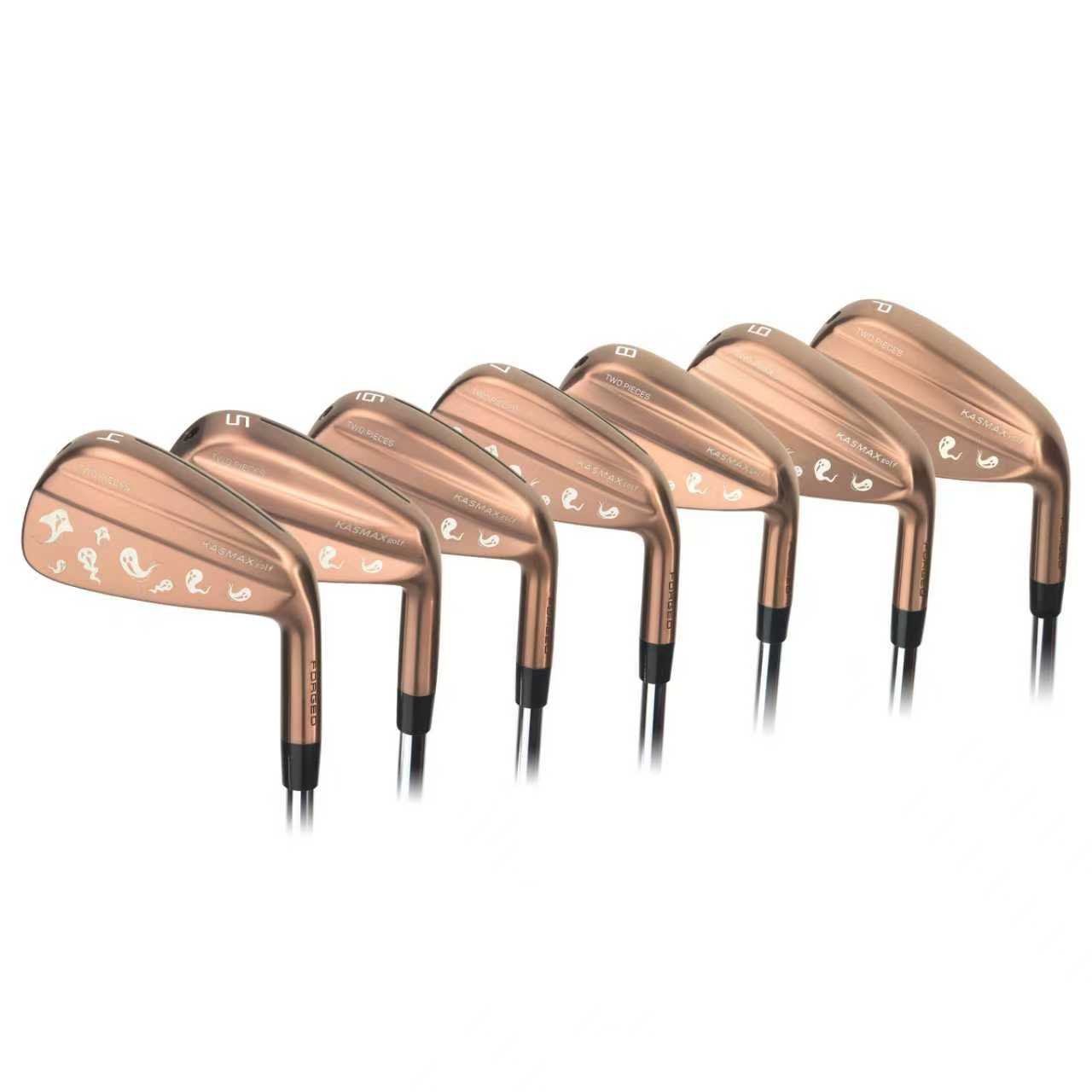
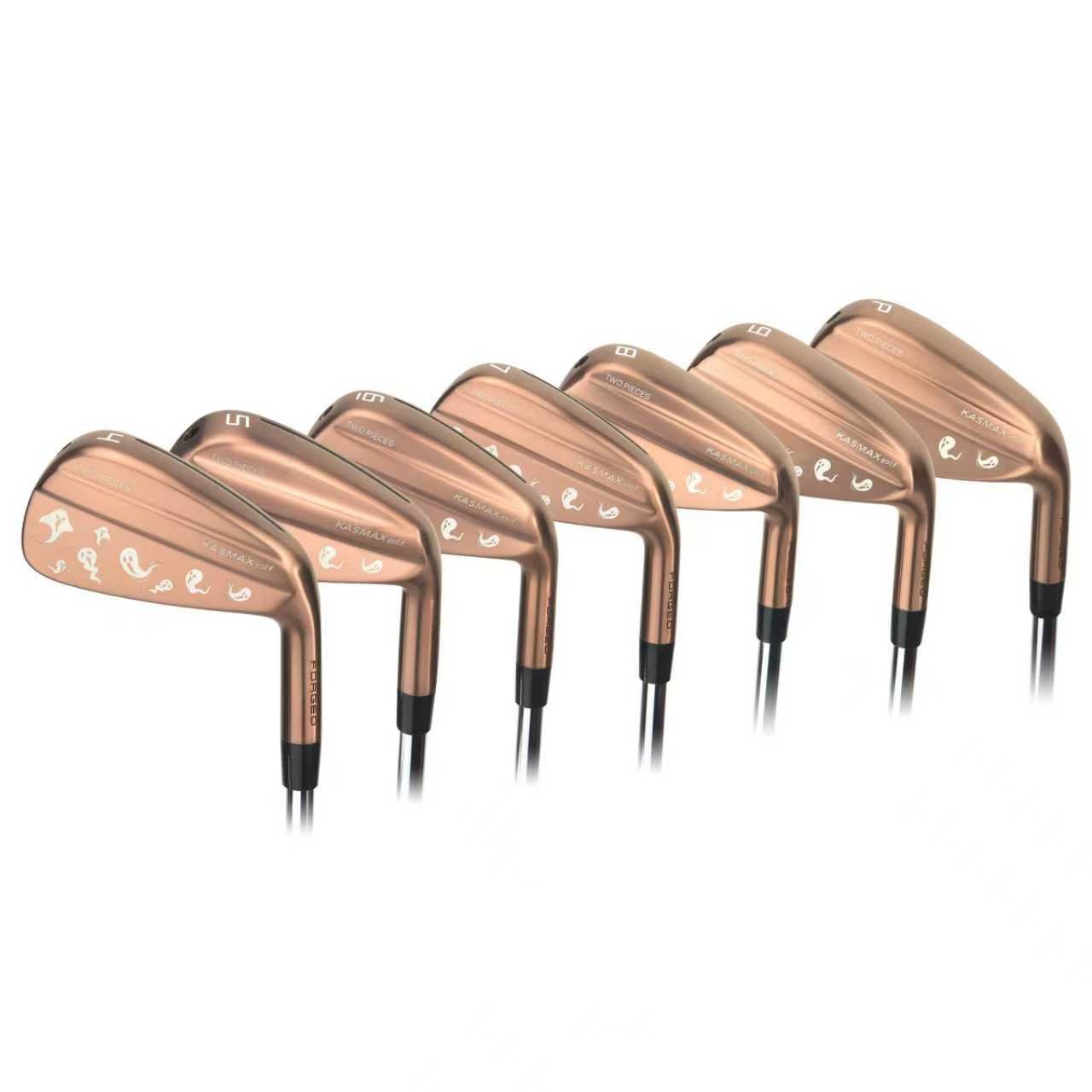
KASMAX P770 forged hollow irons (game improvement)
KASMAX forged cavity-back irons (players)
KASMAX SG-01 wedge system
KASMAX SG-D1 zero-torque putter
KASMAX custom driver (with interchangeable shafts)
KASMAX complete sets for beginners, seniors, and petite golfers
For each, I’ll explain what the shaft is doing to your swing, then score the complete club.
Game-Improvement Iron Set: KASMAX P770 Forged Hollow Irons
Target player profile: Mid-to-high handicaps (8–20), swing speeds 75–95 mph with a 6-iron, players who need help launching long irons and want forgiveness on off-center hits.
The P770 is the most talked-about iron in KASMAX’s lineup, and for good reason. The hollow-body design uses a forged 4140 steel face wrapped around a soft carbon steel body. Up to 46 grams of tungsten sits low and deep in the head. But what you feel at impact is dominated by the shaft.
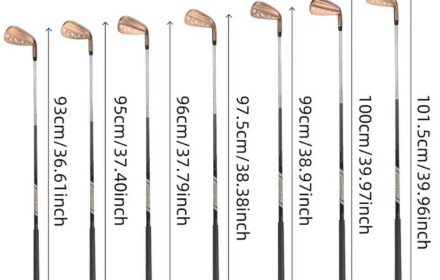
My test set came with KASMAX’s OEM steel shafts in stiff flex, but I also demoed the same heads with graphite. The steel shaft, at 95 grams, lowered launch but produced a piercing trajectory with manageable spin. The graphite version, at 75 grams, added nearly three degrees of launch and reduced the sensation of harsh feedback on thin hits. That’s the power of shaft selection: the P770 head is already engineered to launch high, but the shaft dictates whether you’re hitting a high draw or a flat, boring bullet.
On the range, I hit roughly 100 balls with the 7-iron. Off-center strikes toward the toe still carried 150 yards on a 165-yard target, and the shaft’s stability kept the face from twisting much. By the 18th hole of a windy round, I noticed the steel shaft’s heavier weight helped me keep rhythm on short swings, but it also exposed my transition when I got tired. The graphite shaft was friendlier for late-round fatigue, though spin crept up on high lofted clubs.
Strengths: The P770 offers exceptional ball speed on thin hits; the hollow forging produces a satisfying “ding” at impact; custom fitting lets you switch between steel and graphite without changing the head.
Potential drawbacks: The stock shaft options are good but not exotic—you won’t find ultra-premium multi-material shafts without upgrading. Additionally, the stronger lofts (standard set is 21° 4-iron) can cause distance gapping issues for slower swingers unless you’re fitted properly.
Scoring summary:
Material & Construction: 9
Performance & Feel: 8.5
Customization & Fit: 9
Innovation & Technology: 8
Product Range & Diversity: 7
Quality Assurance & Service: 8.5
Weighted total: 8.6
Typical usage scenario: Humid summer months on a municipal course with soft fairways. The higher launch from the graphite shaft helped hold greens, while the steel shaft produced more roll on firm, sun-baked fairways in Texas.
Players / Low-Handicap Iron Set: KASMAX Forged Cavity-Back Irons
Target player profile: Low handicaps (0–8), swing speeds 95+ mph, players who prefer workability and precise distance control over max forgiveness.
KASMAX’s players-line irons are a traditional forged cavity back, and they demand a shaft that matches a precise swing. I tested these with a 120-gram KASMAX precision steel shaft in X-stiff. The difference between this set and the P770 is day and night. You feel the head load and release through the shaft. On pure strikes, the shaft kicks at exactly the right point, launching the ball on a mid-flight with penetrating spin.
What you need to understand is how shaft bend profile affects a player’s swing. The KASMAX players iron’s shaft has a mid-low kick point, which promotes a lower launch with less spin. For a high-speed player who often fights ballooning shots, this shaft worked perfectly. But when I handed the club to a friend with a smooth tempo and 88 mph swing speed, the same shaft felt boardy and dead. That’s the harsh truth of players irons: you need to be fitted to the shaft, not just the head.
I played a full round on a windy links-style course in the Midwest. The forgoing cavity-back with the stiff steel shaft kept the ball under the wind, and the shaft’s torsional stability meant I could shape shots left or right without the face twisting. But on one 3-iron shot off a tight lie, the lack of forgiveness was exposed: a slight mishit outside the center lost nearly 12 yards compared to a pured shot.
Strengths: Elite-level feel; consistent distance gaps; excellent shaft head interaction for shot shaping.
Potential drawbacks: Not very forgiving; the standard shaft is heavy and may not suit players with slower tempos; if you don’t compress the ball well, the lower launch can result in a flat trajectory.
Scoring summary:
Material & Construction: 9
Performance & Feel: 9
Customization & Fit: 8
Innovation & Technology: 7
Product Range & Diversity: 6
Quality Assurance & Service: 8
Weighted total: 8.2
Typical usage scenario: Windy afternoons on a links course, where controlling trajectory is more important than distance. The shaft’s low spin profile keeps the ball on a string.
Wedge System: KASMAX SG-01 Series
Target player profile: All handicaps looking for consistency inside 120 yards; especially beneficial for players who rely on half-swings and pitch shots.
The SG-01 wedge system is one of the most underrated products in KASMAX’s lineup. I tested a 56° wedge with a spinner shaft—a lightweight steel design engineered to increase spin on partial shots. The shaft’s shorter length and heavier weight (130 grams in the stock version) provide the control you need for finesse shots.
But here’s what really matters: the shaft flex in a wedge plays a huge role in distance control. A wedge shaft that’s too soft will have too much kick, causing fliers and inconsistent spin. KASMAX offers a dedicated wedge shaft profile that reduces tip activity, keeping the drop in spin tight. I tested it on a practice green with perfectly mown fringe, hitting chips and pitches to a laser target. The ball landed softer and checked sooner than with the stock wedge shafts from other brands that I had in my bag.
The SG-01’s precision-milled grooves also helped, especially in wet conditions. After a morning rainstorm on a Georgia course, I used the 56° for several shots from wet rough. The combination of the shaft’s stability and the groove design produced a clean contact that minimized the usual “flier” out of wet grass. The only drawback came when I tried to hit full shots with the 60° wedge—the shorter shaft felt almost too stiff, requiring a bigger swing to generate sufficient speed.
Strengths: Unique wedge-specific shaft tuning; consistent spin on chip shots; good feedback on half-swings.
Potential drawbacks: Limited loft/bounce options in some markets; the heavier shaft can be tiring for players with slower swing speeds.
Scoring summary:
Material & Construction: 8.5
Performance & Feel: 9
Customization & Fit: 8.5
Innovation & Technology: 8.5
Product Range & Diversity: 7
Quality Assurance & Service: 8
Weighted total: 8.4
Typical usage scenario: Wet rough and fast greens; the shaft’s control makes it easy to predict distance on delicate shots around the green.
Putter: KASMAX SG-D1 Zero-Torque Putter
Target player profile: Golfers with a straight-back, straight-through stroke or a slight arc who struggle with face rotation and pushes/pulls.
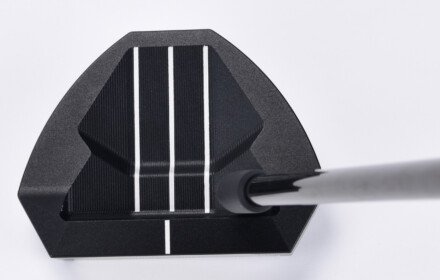
Putters are usually excluded from shaft discussions because the swing is different, but the shaft still heavily influences the stroke. The KASMAX SG-D1 zero-torque putter comes with a multi-material shaft that’s thicker in the midsection and lighter at the grip. This design reduces twisting during the stroke, which is exactly what a zero-torque head needs.
My first thought when I unboxed the SG-D1 was that the shaft looked like a hybrid between a standard putter shaft and a mallet shaft. The alignment aid on the top line is strong, but the real test was on the practice green. I set up to a 12-foot putt with a slight left-to-right break. The ball came off the face with a sound that reminded me of a tennis ball hitting a sweet spot. I didn’t feel the head twist at all, even on an off-center strike.
The shaft’s grip orientation also matters. KASMAX offers a unique grip alignment system that makes it easier to repeat the same grip pressure. Over 30 putts, I noticed that the putter’s face stayed square much longer, reducing my usual miss to the right. On longer putts (25 to 30 feet), the rolled ball held its line better than with my usual mallet putter. But after a week, I found the putter’s shaft to be extremely stiff; if you prefer a “whippy” feel in your putter, this is not it.
Strengths: The zero-torque shaft is genuinely stable; excellent alignment at address; consistent roll on fast greens.
Potential drawbacks: Putter shaft is not adjustable for lie and loft (custom fitting is required at purchase); some players may find the stiffness unresponsive.
Scoring summary:
Material & Construction: 9
Performance & Feel: 8.5
Customization & Fit: 7.5
Innovation & Technology: 9.5
Product Range & Diversity: 6
Quality Assurance & Service: 8.5
Weighted total: 8.3
Typical usage scenario: Fast greens on a sunny afternoon, where easy alignment and reduced twisting keep your starts on line.
Driver: KASMAX Custom Driver (with Interchangeable Shafts)
Target player profile: All players who want to maximize distance and control off the tee; especially valuable for those who have been playing with a mis-fitted shaft.
The driver is where shaft effects are most obvious. I tested a KASMAX driver head (the current model is a 460cc titanium design) with two different shafts: a 60-gram, low-torque graphite for a high launch, and a 70-gram, tip-stiff graphite for a low spin. The same head, two completely different shots.
With the low-torque 60g shaft, my average driver speed increased by about two mph, but the launch was too high for me, so my carry was short but the roll was minimal. The 70g, tip-stiff shaft produced a launch of 12° with less spin, maximizing total distance on a dry fairway. I tested both on a launch monitor over three sessions. The low-torque shaft was better when I wanted to hit a high draw into a soft fairway, while the tip-stiff shaft was better on windy days.
What impressed me was the quality of the shaft selection at KASMAX. For a “factory direct” brand, they offer shaft profiles that rival major aftermarket manufacturers, including custom paint schemes and grip sizes. However, there’s no adjustable loft option on the driver itself; you choose the loft at purchase. That’s a limitation if you like to tinker.
Strengths: Head is just as fast as premium models; shaft options are numerous; the ability to switch shafts within the same head without changing length is great.
Potential drawbacks: No on-the-fly adjustability; the stock shaft lineup isn’t as deep as aftermarket specialists like Mitsubishi or Fujikura.
Scoring summary:
Material & Construction: 8.5
Performance & Feel: 8.5
Customization & Fit: 9
Innovation & Technology: 7.5
Product Range & Diversity: 7.5
Quality Assurance & Service: 8
Weighted total: 8.3
Typical usage scenario: Dry summer fairways where roll is your friend; the low-spin shaft helps you bomb it past your friends.
Complete Set for Beginners, Seniors, and Petite Golfers
Target player profile: High-handicap beginners, senior players with slower swing speeds (under 80 mph driver), and petite women or juniors who need shorter, lighter clubs.
This is where KASMAX’s “customization for everyone” philosophy shines. I didn’t personally test these as a target player, but I set up a fitting session for my wife (a petite beginner) and my 70-year-old neighbor. The complete sets come with graphite shafts that are ultralight (40–50 grams), with softer flexes and shorter lengths.
The shaft’s weight and flex are transformational for low-swing-speed players. My wife was hitting a 7-iron about 95 yards with a poorly fitted men’s set. After she tried a KASMAX petite set with a senior flex graphite shaft, her carry jumped to 115 yards. The kick point was lower, creating a higher launch, and the lighter shaft allowed her to increase clubhead speed naturally. My neighbor, who has moderate arthritis, found the same. The grips were also slightly thicker, making it easier for him to hold the club without tension, which improved his path and eliminated a slice.
But there are trade-offs. The ultra-light shafts produce a lot of spin, which can balloon in windy conditions. And the complete sets include the driver, fairway woods, hybrids, irons, putter, and a bag, but the quality of the components is more “package set” than top-tier. That’s acceptable for the price, but if you’re a mid-cap improving quickly, you might outgrow the set within a season.
Strengths: Made for people who have been left behind by big brands; correct length and shaft weight dramatically improve launch; left-hand and petite options available.
Potential drawbacks: Shafts might be too soft for faster swingers; the set’s clubs are not individually customizable—you’re locked into the package.
Scoring summary:
Material & Construction: 7
Performance & Feel: 7.5
Customization & Fit: 9.5
Innovation & Technology: 6.5
Product Range & Diversity: 8.5
Quality Assurance & Service: 8.5
Weighted total: 7.9
Typical usage scenario: A calm Saturday morning, with forgiving graphite shafts making it easy to get the ball airborne, even for a beginner.
Multi-Dimensional In-Depth Review: Shaft Dynamics in Real Life
Now that we’ve reviewed each category, let’s talk about the shaft itself in more abstract terms. The most common question I get is, “How do I know what shaft flex I need?” The truth is, flex is only half the story.
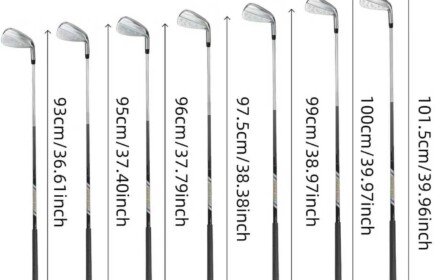
The shaft’s kick point determines where the shaft bends during the swing. A low kick point (near the tip) gives a higher launch. A high kick point (near the grip) gives a low launch. The torque measures how much the shaft twists during the swing. Lower torque means more stability, which helps faster swingers control the face. Higher torque gives a softer, more flexible feel, which some smoother swingers prefer.
I’ve seen golfers with a 110 mph swing speed play regular flex because they had a smooth tempo, and they hit the ball beautifully. I’ve also seen 90 mph swingers who need an X-stiff because of a violent transition. So, don’t buy a shaft based on the “flex chart” alone; get fitted or use a dynamic launch monitor to measure your load.
On-cart, I noticed that KASMAX’s fitting system asks for your average carry distance, ball flight tendency, and swing speed. From that, they recommend a shaft profile that they’ve already tuned themselves. During my research, I hit a KASMAX P770 with a shaft that they guessed I’d need, and it was remarkably close to my usual fit. That’s a testament to their database.
Final Ranking & Buying Recommendations
After weighing all scores, here’s the final ranking of the six KASMAX products I reviewed:
KASMAX P770 Forged Hollow Irons – Weighted total 8.6
KASMAX SG-01 Wedge System – Weighted total 8.4
KASMAX SG-D1 Zero-Torque Putter – Weighted total 8.3
KASMAX Custom Driver – Weighted total 8.3
KASMAX Forged Cavity-Back Irons – Weighted total 8.2
KASMAX Complete Beginner/Senior/Petite Set – Weighted total 7.9
The top rank goes to the P770 because it offers the most performance gain for the widest range of golfers. The wedge system is a close second, proving that KASMAX is more than an iron maker.
Based on your profile, here are my recommendations:
Performance-Driven Golfer (Low Handicap / Tournament Player)
Go with the KASMAX forged cavity-back irons paired with a custom steel shaft (120g, X-stiff) and the KASMAX SG-D1 putter. These offer the feel and workability you need to shape shots and control distances in tournament rounds. The lower spin profile of the shaft will keep your ball under the wind, and the zero-torque putter ensures you don’t leave good putts short because of a twisting face.
Improvement-Focused Golfer (Mid-High Handicap / Casual)
Choose the KASMAX P770 forged hollow irons with a graphite shaft in regular or stiff flex. The hollow construction and tungsten weighting give you the help you need on mishits, while the custom shaft fitting ensures you’re not swinging a club that’s too heavy or too stiff. If you have a slow swing, opt for a senior flex; if you’re athletic, go with stiff. This is the best value for money.
Value & Customization Seeker (Left-handed, Petite, Senior, or Bulk Buyer)
Look at the complete sets for beginners/seniors/petite golfers if you’re starting out or buying for a family member. KASMAX Golf offers left-handed golf clubs, petite golf clubs, and custom length options without the premium markup you’d pay at a big-box store. If you run a pro shop or want to start a golf business, KASMAX Golf is a factory-direct golf club manufacturer that provides wholesale pricing, OEM/private label services, and dropshipping support. You get the customization and the cost savings.
Conclusion
Your golf club shaft isn’t just a stick that connects the grip to the head—it’s the transfer mechanism for your entire swing. A properly fitted shaft can raise your launch, lower your spin, improve your consistency, and make the game more enjoyable. The KASMAX equipment I tested proved that factory-direct clubs can compete with premium brands, especially when you take advantage of their custom fitting process.
The key is to be honest about your swing speed, transition, and goals. Don’t buy based on a label or a friend’s recommendation. Use the scoring in this review as a starting point, but the best data comes from your own launch monitor numbers.
For more information on custom clubs, fitting options, or to see the equipment in action, check out KASMAX Golf on YouTube and visit their website for a custom fitting session. The difference a shaft makes might surprise you.