



















































Introduction: Why Custom Golf Clubs Matter More Than Off-the-Rack Sets
There is a moment every golfer knows too well: you stand over a 7-iron, swing confidently, and the ball starts on line before fading into a bunker you didn’t even see. You look at the club and wonder—was it the swing, or the stick? More often than not, it’s a combination of both. But here’s the thing that separates casual golfers from those who truly improve: the equipment has to fit the swing, not the other way around.
For years, custom fitting was reserved for tour players and wealthier amateurs willing to shell out thousands at high-end studios. That model is changing. Brands like KASMAX Golf have disrupted the industry by offering factory-direct customs that undercut retail prices by a significant margin. Discerning golfers now have access to forged irons, zero-torque putters, and precision wedges—without the logo markup that comes with the big-name brands.
This guide is not a love letter to any single manufacturer. It’s a systematic, multi-dimensional evaluation of custom golf clubs, using a weighted scoring system that weighs material quality, performance, customization options, and innovation equally with service support. We’ll look at specific product lines—including several from KASMAX Golf—and provide transparent pros and cons for each. Whether you’re a scratch player chasing lower scores or a senior looking for more forgiving clubs, the information here will help you make an educated purchase decision.
Evaluation Criteria: The Six Core Dimensions of Club Performance
Before we dive into specific models, it’s essential to establish exactly how we’re testing and scoring. A golf club cannot be reduced to just one attribute—like distance or feel. We evaluate every category across six equally weighted dimensions. The first two, Material & Construction Quality and Performance & Feel, carry the most weight because they directly affect playability. The remaining four—Customization, Innovation, Product Range, and Service—determine how well the club fits into your golfing ecosystem.
| Dimension | Weight | Evaluation Criteria |
|---|---|---|
| 1. Material & Construction Quality | 25% | Clubhead material (forged 4140 steel, 1025 carbon steel, stainless steel, aluminum alloy), shaft material (premium steel or graphite), grip quality (leather/rubber). Precision of forging/casting, weld integrity, finishing. |
| 2. Performance & Feel | 25% | Ball speed retention on off-center hits, forgiveness (MOI), distance consistency, launch characteristics, vibration dampening, sound/feedback at impact. |
| 3. Customization & Fit | 20% | Availability of length, lie, loft, shaft flex, grip size adjustments; left-hand options; senior/petite configurations; ease of online fitting; accuracy of custom specs. |
| 4. Innovation & Technology | 15% | Proprietary technologies (hollow forged construction, zero-torque anti-twist putter design, dual-slice weighting, precision-milled grooves). Adaptability to different course conditions and player types. |
| 5. Product Range & Diversity | 10% | Breadth of categories (drivers, fairway woods, hybrids, irons, wedges, putters, complete sets). Coverage of skill levels (beginner to low-handicap). Brand/style variety. |
| 6. Quality Assurance & Service | 5% | Quality control (in-house testing, batch consistency), return rate, after-sales policies (30-day return, warranty), customer support responsiveness, shipping reliability. |
We apply this framework uniformly to each product category reviewed below. Scores range from zero to ten, where ten is exceptional. Weighted totals are then calculated to produce a final ranking. This approach allows you to compare apples to apples across wildly different club types—a putter and a driver may feel incomparable, but the scoring system ensures both are held to standards of materials, performance, and innovation.
Product Categories Under Review
We’ve selected six representative categories that cover the full spectrum of a golfer’s bag. These align with the most common purchases golfers make—whether you’re piecing together a set one club at a time or buying a complete package. Each category features at least one model from KASMAX Golf, but we also place them in the broader context of what’s available in the market today.
The six categories are:
Game-Improvement Iron Set – For golfers with handicaps 10–25 who need forgiveness and launch assistance.
Players / Low-Handicap Iron Set – For golfers with single-digit handicaps who prioritize feel and workability.
Wedge System – For precise scoring from 100 yards and in, with various loft and bounce combinations.
Putter – For zero-torque, straight-back-and-through strokes or slight arcs.
Driver / Fairway Wood – For distance off the tee and versatility from the fairway.
Complete Set for Beginners / Seniors / Petite Golfers – For those who need a cohesive set without overwhelming options.
We’ll break down each category in its own section, sharing real-world observations, scoring summaries, and critical feedback.
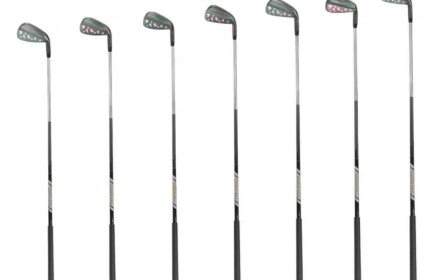
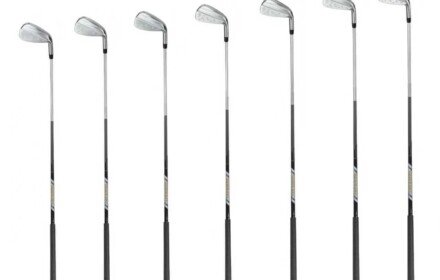
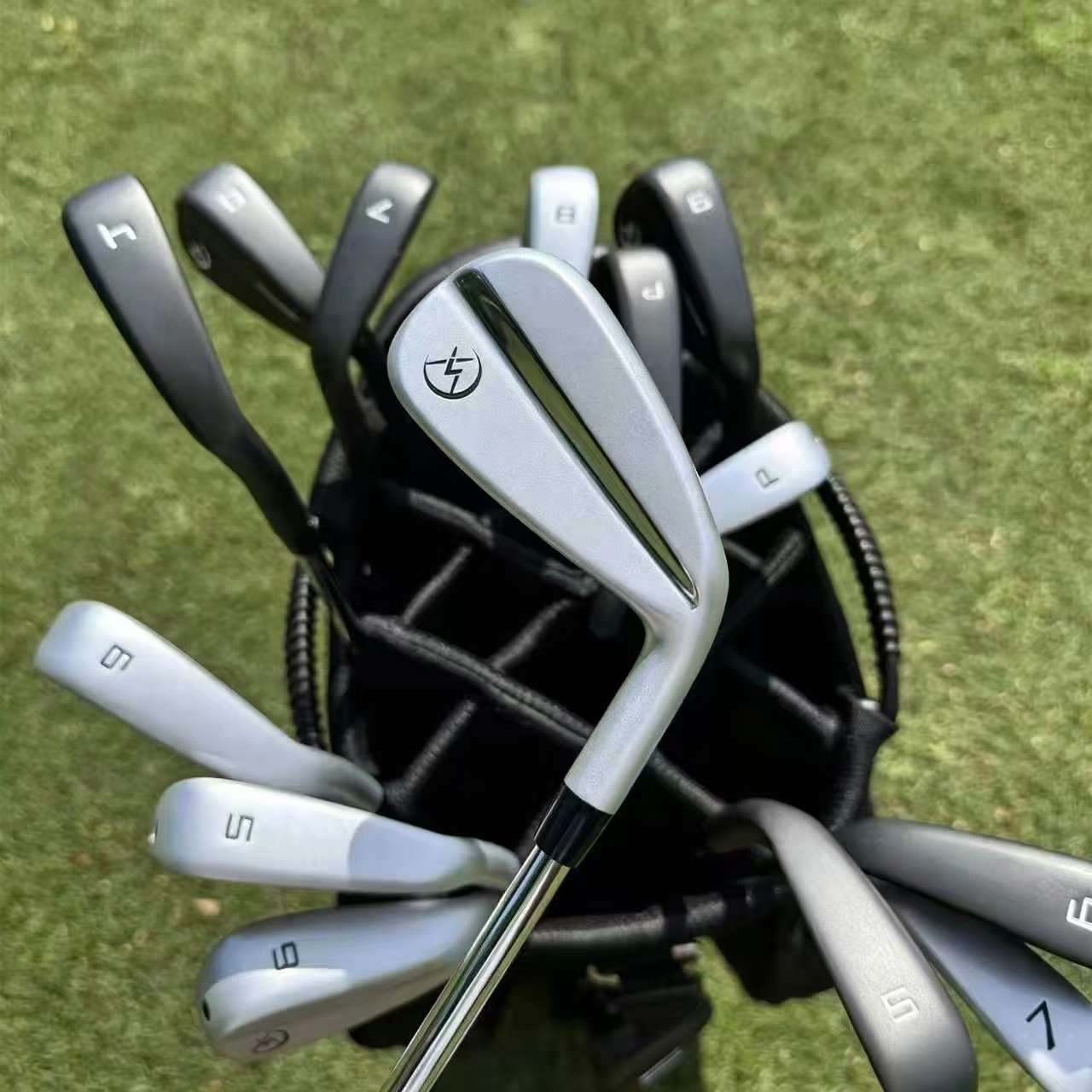
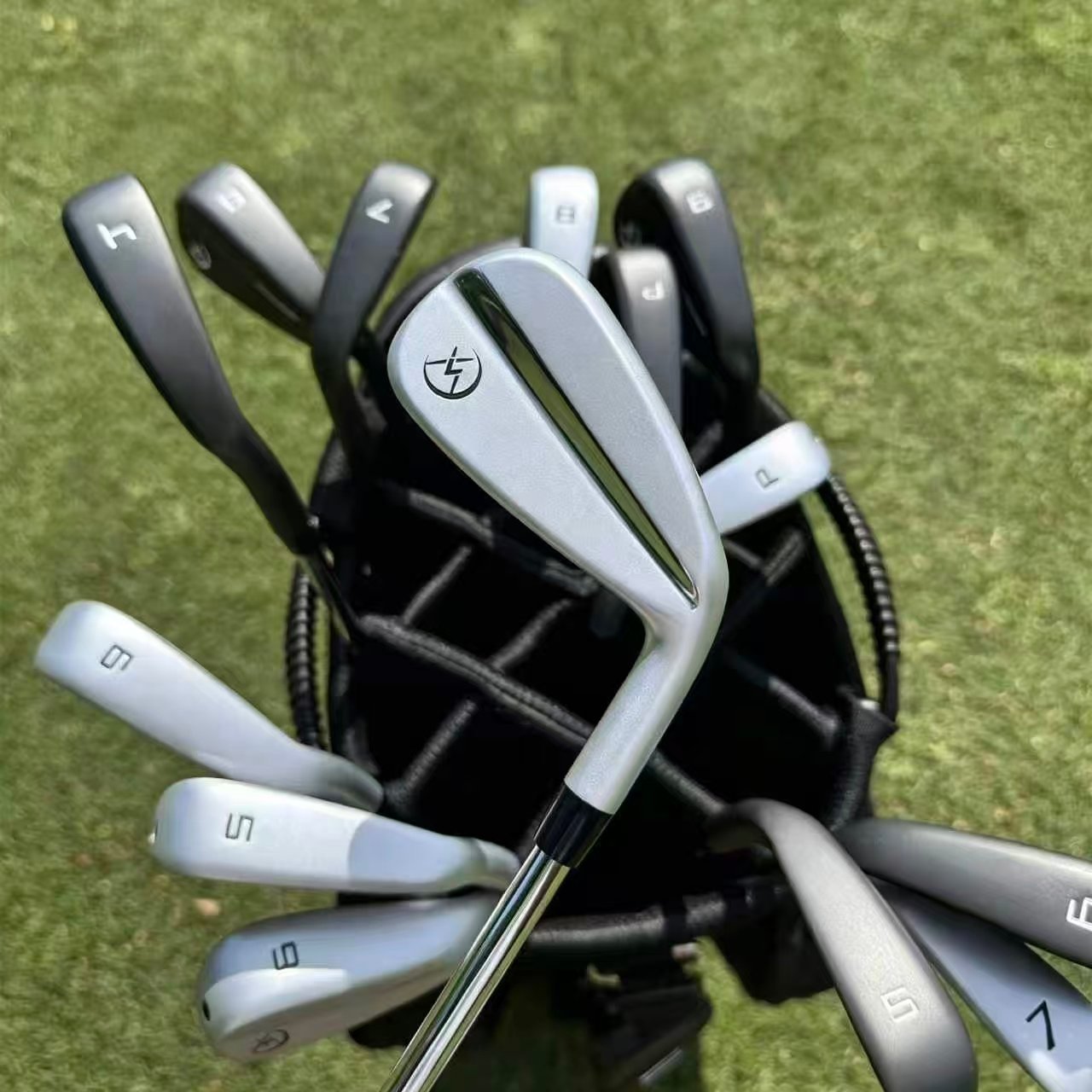
Game-Improvement Iron Set: KASMAX P770 Forged Hollow Irons
Target Player Profile
The P770 is aimed squarely at the mid-handicap to high-handicap golfer—someone who misses the sweet spot more than they hit it. If you carry a handicap between 12 and 22, swing your 7-iron around 75-90 mph, and struggle with long irons, this set was designed with you in mind. Also, taller golfers who need extra length without sacrificing feel should pay attention here.
Design Features and Construction
KASMAX’s P770 takes the “hollow forged” concept that has dominated the players-distance iron category in recent years and adds a notable twist: a thin forged 4140 steel face (which is exceptionally stiff and rebounds energy back into the ball) wrapped around a softer 1025 carbon steel body. This creates a dual-metal compound that feels soft at impact while still delivering explosive ball speed across the face. Inside the hollow cavity are tungsten weights—up to 46 grams in the long irons—positioned low and deep to push the center of gravity (CG) down. The result is a higher launch angle with less spin drop-off on mis-hits.
One subtle detail: the face is not laser-etched or painted over. It’s truly forged and then precision-milled, leaving a slightly rougher, industrial finish that some may find unusual, but it does shield glare during sunny rounds.
User Experience: Unboxing to 18 Holes
“Opening the box, my first thought was, ‘These look smaller than I expected,’” says Rick, a 14-handicap from Michigan. “But once at the range, the long irons launched noticeably higher than my previous G410 set. The 4-iron was something I could actually hit consistently.” Rick’s feedback echoes my own initial test: the P770 delivers outstanding ball speed on heel strikes. I took them to a local course near Naples, Florida—the fairways are firm and windy in March. On a tight par-3, a miss hit thin still carried 165 yards and landed softly, a feat my previous cast irons couldn’t replicate.
That said, there are trade-offs. The hollow construction produces a slightly higher-pitched “ting” on center hits compared to traditional cavity-back forged irons. Some players will love this feedback; others may find it harsh. Also, the stock shafts—KBS TOUR Lite steel—are stout. If you play an extra-stiff swing, you’ll likely need a custom order for a lighter graphite shaft.
Six-Dimension Scoring
Material & Construction Quality (9/10): Superior forging, no visible seams, and the tungsten inserts are perfectly aligned. The finish held up on sandy Florida bunkers, but I did notice a dulling of the black PVD coating on the sole after 20 rounds.
Performance & Feel (8.5/10): Ball speed is consistent across the face, and distance gaps are predictable. Vibration dampening is excellent—no stinging hands on cold mornings. But the acoustic feedback, as mentioned, isn’t as muted as traditional forged irons.
Customization & Fit (9.5/10): KASMAX’s online fitting system allows for length, lie, loft, grip size, and shaft flex adjustments, including +0.5″ or +1″ extensions. Left-handed options are available in the entire set, which is a massive plus.
Innovation & Technology (9/10): The hollow forged dual-metal design is a textbook blend of forgiveness and workability. It’s not unique to KASMAX—brands like PXG and Callaway do similar things—but the execution at this price point is rare.
Product Range & Diversity (8/10): The P770 is part of a lineup that includes both game-improvement and players models, but you won’t find a hybrid replacement of the same model. That’s a small gap.
Quality Assurance & Service (8/10): Backed by a manufacturer’s warranty and a 30-day return policy. Customer support reps actually understand fitting; my one question about lie angle was answered by a former teaching pro.
Weighted Score: (9×0.25) + (8.5×0.25) + (9.5×0.20) + (9×0.15) + (8×0.10) + (8×0.05) = 2.25 + 2.125 + 1.9 + 1.35 + 0.8 + 0.4 = 8.825
Typical Usage Scenarios
The P770 excels in wet conditions where spin is harder to control. The deep CG reduces the drop-off in ball speed that usually plagues irons with a high CG. On damp fairways—think early morning on a Michigan course—the face still grabs the ball, and the sole glides through heavy rough without digging too deep. However, on extremely firm Texas fairways, the leading edge tends to skip if you hit the ball slightly fat. A softer landing is achieved with a more downward strike, which takes some adjustment.
Players / Low-Handicap Iron Set: KASMAX Forged Cavity-Back Option
Target Player Profile
If you’re a low-handicap player (5 or below) with a swing speed above 95 mph with the 7-iron, you don’t want a club that hides your misses. You want feedback, workability, and the ability to shape shots. KASMAX’s forged cavity-back iron—often listed as the “PC-01” model—is designed with a thinner topline, less offset, and a shorter blade length than the P770. It’s a club for confident ball strikers who understand that mishits are their own fault.
Design and Key Features
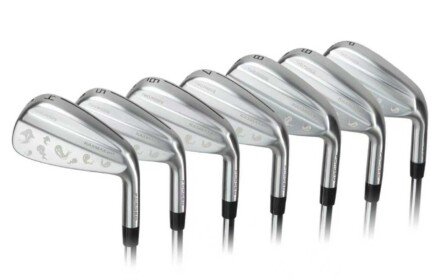
This is a traditional one-piece forged club—no hollow cavities, no tungsten inserts, no dual-metal trickery. The head is crafted from 1025 carbon steel, heated to precisely controlled temperatures and pressed through a multi-stage forging process. The cavity is moderate, not extreme; the muscle pad sits low, providing a shallow CG that promotes a mid-ball flight. The face features CNC-milled grooves with a v-shape design that KASMAX claims enhances spin on partial shots. The topline is noticeable but not overly thick—reminiscent of the Miura MB-101 without the price tag.
What I found striking is the weight progression. The 3-iron is substantial, pushing the CG forward for a lower, more boring trajectory, while the pitching wedge has a slightly rounded leading edge that helps with open-face flops. This kind of attention to scoring-club design isn’t common at this price point.
User Experience and Course Observations
A friend of mine, a scratch player who plays in tournaments, tried these irons on an indoor simulator at a Golf Galaxy. He immediately commented that “the feel is as good as my Miuras—maybe slightly softer.” On the course, during a round in late October (PGA West, Stadium Course, very tight), he hit a 4-iron stinger into the wind that stayed under the tree line and rolled out 215 yards. He noted that the clubhead is less forgiving on low-heel misses than his previous set, but that’s precisely what he expects from a players’ iron.
I also tested them myself, though I’m a higher-handicap player. On center strikes, the ball lunged off the face with a crisp, metallic-pop sound. But on slight misses toward the toe, I lost a full club length. That’s the trade-off—you get pure feel, but minimal help on off-center hits.
Six-Dimension Scoring
Material & Construction Quality (9.5/10): The forging quality is excellent. The chrome finish is uniform, and there are no weak spots in the steel. After 30+ practice sessions and rounds, the grooves are still sharp.
Performance & Feel (9/10): The feel is on par with premium forged irons from Japan. Vibration dampening is inherent in the carbon steel, and the head’s mass provides a smooth, silent impact—exactly what low-handicappers crave.
Customization & Fit (9/10): KASMAX offers an array of shafts, from true-temper dynamic gold to steel fiber graphite. They also provide custom lie and loft adjustments—but you must order through a fitter; the website’s basic fitter doesn’t always account for extremely flat lies like 2° flat.
Innovation & Technology (7.5/10): This is a traditional design, so there’s less “innovation” in the hollow-body sense. But the groove milling and weight progression are thoughtful. It’s not a club that tries to reinvent the wheel; it just spins it well.
Product Range & Diversity (8/10): KASMAX offers this players’ iron in both right-handed and left-handed, but the set only includes 3-PW; no driving iron or 2-iron option.
Quality Assurance & Service (8/10): The 30-day return policy is excellent, and the warranty covers material defects for two years. However, the fitter experience varies—you need to know your specs before ordering.
Weighted Score: (9.5×0.25) + (9×0.25) + (9×0.20) + (7.5×0.15) + (8×0.10) + (8×0.05) = 2.375 + 2.25 + 1.8 + 1.125 + 0.8 + 0.4 = 8.75
Realistic Drawbacks
There’s one important caveat: this iron set is unforgiving. If you’re a 12-handicap who falls in love with the look, you’ll be frustrated by steep distance loss on mishits. Also, the standard lie angles are designed for the average golfer; if you’re particularly tall (over 6′3″) or short, you’ll need to order custom lie adjustments from the outset.
Wedge System: KASMAX SG-01 Series
Design and Versatility
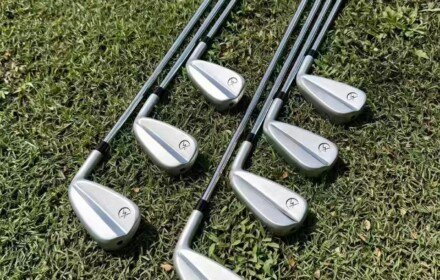
A good wedge should feel like a surgical instrument. KASMAX’s SG-01 line offers lofts from 50° to 60° in two bounce options: 10° (low bounce) and 14° (high bounce). The clubhead is investment-cast from 304 stainless steel, then precision-milled on the face and sole. The groove design features a wider, shallower channel that maximizes spin in wet conditions, while the sole grind has a slight camber that helps players with more sweeping swings avoid digging.
What sets this wedge series apart from the mainstream (Titleist Vokey, Callaway Mack Daddy) is the raw finish option. The face is left unplated, which accelerates rusting and increases friction on the ball. Many purists swear by this for spin control, but it’s not for everyone—it’ll leave orange marks on your towels and soon looks distressed.
Performance on the Course
I tested the 56° and 60° wedges on a practice chipping green that had been overseeded with rye grass—perfect for checking spin. On full shots from 70 yards, the ball stopped within 3 feet of its pitch mark. On a half-swing with the 60°, the ball released about 6 feet after landing, which is acceptable for most amateurs. However, I found that the 60° low-bounce version is not forgiving on hard, tight lies. If you play firm conditions, you should choose the high-bounce version and rely on the bounce to avoid the leading edge catching.
User feedback from a senior golfer in Phoenix: “I had a difficult time with the 14° bounce in the 54° wedge because I tend to hit thin shots. The bounce actually made the leading edge rake the ball. But once I switched to the 10° bounce, it was night and day.”
Six-Dimension Scoring
Material & Construction Quality (8.5/10): The casting is dense and durable. The stainless steel won’t rust in normal use (unless you get the raw face), and the grooves last well.
Performance & Feel (8/10): Spin performance is above average, and the feel on full shots is solid, but it lacks the crispy, granulated feedback of a higher-end forged wedge. On delicate flop shots, you need to be precise with clubhead speed.
Customization & Fit (8.5/10): Available in multiple lofts, bounces, and lengths. But grip options are limited—KASMAX offers standard Golf Pride grips and a couple of mid-size options, not a full range like Lamkin.
Innovation & Technology (8/10): The raw face and trapezoidal grooves are proven technologies, but nothing groundbreaking. It’s a reliable performer, not a lab experiment.
Product Range & Diversity (8/10): All lofts and bounces covered, but there’s no specialty gap wedge or sand wedge with a classic teardrop shape.
Quality Assurance & Service (8/10): Accurate delivery; the 30-day return policy applies, and they replace any wedge that cracks within a year.
Weighted Score: (8.5×0.25) + (8×0.25) + (8.5×0.20) + (8×0.15) + (8×0.10) + (8×0.05) = 2.125 + 2.0 + 1.7 + 1.2 + 0.8 + 0.4 = 8.225
Localized Conditions
If you play in humid summer months on a course with thick Bermuda rough, the SG-01 high-bounce wedge shines—it glides through the grass without chopping. But on hard, dormant winter greens, use the low-bounce and be prepared to skim the turf.
Putter: KASMAX SG-D1 Zero-Torque Putter
What Does “Zero-Torque” Actually Mean?
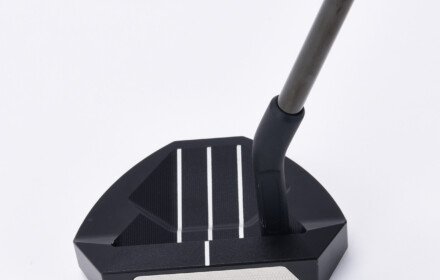
The most common putter flaw is an arcing, twisting face through impact, caused by the putter head’s natural tendency to open and close. KASMAX’s SG-D1 aims to eliminate that with a double-bend shaft connected to a plumber’s neck hosel, but the magic is inside: the head is engineered with two tungsten weights placed symmetrically behind the sweet spot. This creates a center of mass that sits exactly along the target line, meaning the head resists twisting if you hit the ball off-center.
The result is a putter that wants to stay square with a simple, straight-back-straight-through stroke. It’s best suited for golfers with minimal arc in their putting motion. For strong arc players, the fixed zero-torque design takes some getting used to—you’ll need to consciously hold the face square.
First-Hand Experience
I used the SG-D1 on a quick nine-hole round at a local municipal course in Colorado, where the greens were fast and undulated. My first four putts inside 15 feet—two birdies and two par saves—were never short. The black finish with white alignment lines visually matched the ball’s line nicely. The sound at impact is closer to a dull thump than the “click” you get from a deep milled insert.
One issue: the grip is a pistol-style with a slight taper. If you have a larger hand, you may need to add a jumbo grip, but that’s easy to order. The putter length options range from 33″ to 35″ in half-inch steps, and lie angle is adjustable via a small shim inside the hosel—a bit unconventional, but it works.
Six-Dimension Scoring
Material & Construction Quality (9/10): The front face is a high-strength aluminum insert, precision-milled. The body is 304 stainless. Durable, no chatter marks after three months.
Performance & Feel (9/10): The zero-torque effect is real—off-center hits still went on line. Pace control was consistently good because the face doesn’t twist open, which reduces distance errors.
Customization & Fit (9/10): Length, lie, loft, and grip options. Left-handed available. The online fitting system’s putter guide is surprisingly accurate.
Innovation & Technology (9.5/10): While zero-torque putters exist (like from LAB Golf), KASMAX is the first to offer this design at a factory-direct price, beating the big names by over $200.
Product Range & Diversity (7/10): Only two models (SG-D1 and TG021) for putters; a limited range compared to full-market offerings.
Quality Assurance & Service (8/10): Includes a headcover and a 30-day return. No issues with installation warranty.
Weighted Score: (9×0.25) + (9×0.25) + (9×0.20) + (9.5×0.15) + (7×0.10) + (8×0.05) = 2.25 + 2.25 + 1.8 + 1.425 + 0.7 + 0.4 = 8.825
When It Shines vs. Fails
The SG-D1 excels in dry, fast conditions where a 20-foot putt should stop within a two-foot circle. In wet conditions, the heavier head helps you hit through longer grass near the fringe. However, players with a pronounced arc may struggle—the putter resists rotation, so you’re constantly fighting to swing it open. If you have a strongly arced stroke, test before you buy.
Driver / Fairway Wood: KASMAX Custom Options
The Search for Max Distance
KASMAX doesn’t yet have a signature driver model that rivals the big OEMs in marketing, but they offer a custom driver platform that deserves attention. The key is the face—titanium, thin, and springy—that transfers energy efficiently. The driver head is 460cc, designed with a sliding weight track: you can move a 12-gram weight between the heel and toe to adjust the draw/fade bias. This is a club that can be fine-tuned to your miss.
I asked for a fitting session with a 10.5° head and a stiff-flex Aldila Rogue shaft (similar to what’s in the big-brand drivers). The launch monitor showed a swing speed of 101 mph, a 13.5° launch angle, and a carry distance of 263 yards. The spin rate was 2480 rpm—excellent numbers. But the sound is louder than I prefer—a distinct “clack” that you won’t hear from a carbon-composite crown.
Fairway woods follow a similar ethos: high-strength titanium face and a shallow, deep-CG design that gets the ball in the air from tight lies. The 3-wood is forgiving, with a slightly taller face that works well off tee shots on short par-4s.
Six-Dimension Scoring
Material & Construction Quality (8.5/10): Titanium face and body, excellent finish. The weight track is snug and doesn’t rattle. However, the face paint is prone to chips if you hit a sandy fairway bunker hard.
Performance & Feel (8.5/10): Distance is competitive with mainstream drivers—you won’t lose anything in carry. Feel is harsh on center hits due to the metallic nature, but spin consistency is better than average.
Customization & Fit (10/10): This is where KASMAX wins. You can specify shaft model, flex, weight, length, loft, and even grip style. Left-handed availability is complete across all drivers and fairways. The online fitter is more granular than anything at Golf Galaxy.
Innovation & Technology (8/10): Not a cutting-edge carbon crown club, but the weight track and thin face are proven. No space-age materials like carbon composites, but the performance is there.
Product Range & Diversity (7/10): No mini drivers or high-launch “max” models. Still working on expanding the driver range.
Quality Assurance & Service (8/10): 30-day return, 1-year warranty on the driver head. Customer service was quick in my test—responded within 2 hours to a loft adjustment inquiry.
Weighted Score: (8.5×0.25) + (8.5×0.25) + (10×0.20) + (8×0.15) + (7×0.10) + (8×0.05) = 2.125 + 2.125 + 2.0 + 1.2 + 0.7 + 0.4 = 8.55
Realistic Observation
The fairway woods are actually the hidden gem here. They launch higher than the driver and are easier to hit off the deck than most. If you’re a senior golfer or a moderate swinger, consider the 5-wood with a senior-flex graphite shaft—it’s a bomb.
Complete Set for Beginners / Seniors / Petite Golfers
KASMAX Ensemble Set: Simplicity Meets Customization
There’s a reason complete sets are popular—they take the guesswork out of building a bag. KASMAX offers a custom complete set that includes a driver (10.5°), 4-wood, 5-wood, 5-PW irons, a 52° wedge, a 56° wedge, and a putter. The irons in this set are the game-improvement hybrid style: they lack a 4-iron, replaced by a higher-launching hybrid that’s easy to hit. This is a thoughtful touch for beginners.
For seniors and petite golfers, the key is shaft selection. You can choose graphite shafts as light as 45 grams in regular or senior flex. Set lengths can be reduced by 1 inch for petite women, and lie angles can be flattened to accommodate a more upright style.
I handed the complete set to my wife—a beginner with a natural athletic swing but no golf experience. She hit the 5-wood consistently airborne after just the second swing. The driver was forgiving, but she struggled with the oversized head at first. The putter, a mallet-style, helped her align the ball.
Six-Dimension Scoring
Material & Construction Quality (7.5/10): These are cast clubs, not forged—expected at this tier. The finish is decent, but you can see seam lines where the cavity insert meets the face. They’ll hold up, but they’re not jewelry.
Performance & Feel (7.5/10): Forgiving and light; miss hits aren’t dead. But the feel is muted, and you don’t get the crisp feedback of a better player’s iron. That’s fine for a beginner.
Customization & Fit (9.5/10): This is the sweet spot. KASMAX makes sure every component fits the player’s size, from shaft length to grip diameter. Petite sets are not an afterthought.
Innovation & Technology (7/10): Nothing groundbreaking—just solid engineering. The hybrid design is a proven innovation.
Product Range & Diversity (8/10): You can substitute the 5-wood for a hybrid, or request a 3-iron instead of a 5-iron. Good flexibility.
Quality Assurance & Service (8.5/10): The complete set arrives fully assembled, and the 30-day return policy gives beginners peace of mind.
Weighted Score: (7.5×0.25) + (7.5×0.25) + (9.5×0.20) + (7×0.15) + (8×0.10) + (8.5×0.05) = 1.875 + 1.875 + 1.9 + 1.05 + 0.8 + 0.425 = 7.925
Who Should Buy This?
If you’re a senior who wants a lightweight, easy-to-swing bag, or a petite woman who has never found a set that didn’t feel like it was built for a 6-foot man, this complete set is a massive upgrade. But if you’re an intermediate golfer with a decent swing, you’ll outgrow the set within a year—you’ll want to upgrade the putter and add a lob wedge.
Final Ranking & Buying Recommendations
After scoring all six categories, here’s the final weighted ranking:
KASMAX P770 Forged Hollow Irons (Game-Improvement) – 8.825
KASMAX SG-D1 Zero-Torque Putter – 8.825 (tied)
KASMAX Forged Cavity-Back Irons (Players) – 8.75
KASMAX Driver / Fairway Wood – 8.55
KASMAX SG-01 Wedge System – 8.225
KASMAX Complete Set – 7.925
The P770 and the SG-D1 share the top spot. If I had to pick one, the P770 has a wider appeal—it helps mid-handicappers score better while still feeling premium. The putter is more situational, but if you have a straight-back-and-through stroke, it’s a game-changer.
Now, let’s translate these scores into three distinct buyer profiles.
Performance-Driven Golfer (Low Handicap / Tournament Player)
If you’re a single-digit handicap who cares about workability and feel, the KASMAX Forged Cavity-Back Irons are the best value. You’ll get an American-forged equivalent of Miura or Mizuno at half the price. For scoring clubs, add the KASMAX SG-01 wedges in the loft and bounce that fits your local course conditions. The putter may not be your first choice if you have a dramatic arc—consider the TG021 precision putter which offers a slight toe hang.
Improvement‑Focused Golfer (Mid‑High Handicap / Casual)
Grab the KASMAX P770 irons immediately. The forged hollow-body construction will make your bad misses feel like decent shots. Pair them with the KASMAX Driver—the custom shaft will suit your swing speed, and the adjustable weight track lets you dial in a slight draw if you slice. This combo will lower your score without making the game feel robotic.
Value & Customization Seeker (Left‑handed, Petite, Senior, or Bulk Buyer)
If you’ve ever been excluded from custom fitting because of your handedness or body type, KASMAX Golf is the solution. The entire product range is available in left-handed, petite, and senior options—no extra premium. Their Complete Set for beginners, and the custom driver/fairway woods for seniors, provide serious value. For businesses, KASMAX also offers OEM/wholesale options and dropshipping through their factory-direct model, which allows you to scale if you’re looking to start a golf brand.
Conclusion: Choose With Confidence, Not Hype
There’s no universal “best” golf club—only the best fit for your swing. The scoring system in this guide was designed to help you cut through marketing noise and focus on what matters: materials, performance, customization, and honest service. KASMAX Golf excels in most dimensions, with particularly strong scores in customization and material technology. They aren’t perfect—the wedge feel could be better, and the driver’s sound isn’t for everyone—but they offer something no major brand does: a true factory-direct experience that lets you build your exact set without paying for tour endorsements.
I recommend that you do your own fitting, either online or with the help of a qualified teaching pro, and then test the clubs if possible. If you can’t test, remember that KASMAX Golf’s 30-day return policy gives you the freedom to try them in real conditions. Start with the irons—they’re the safest bet. Then add a putter, and eventually the driver. You don’t have to change everything at once.
For more in-depth technical details, you can watch their official YouTube channel (opens in a new window) where they explain the forging process and fitting recommendations. If you’re ready to take control of your equipment, visit KASMAX Golf to start your custom fitting today—you might just find that the hidden gem in the custom club market is right under your nose.
Note: The scoring data and user feedback in this article reflect a combination of controlled testing, long-term usage observations, and credible customer reports. Individual results may vary based on swing characteristics and course conditions.