


















































It sounds like you’re shifting focus to grips specifically — which is a smart place to start before buying any clubs, especially if you’re planning to order online. I’ll give you a practical, no-nonsense guide on what to watch out for when buying golf club grips on Amazon. And if you’re still interested in the full custom golf club article (with the KASMAX review and scoring system) afterwards, just let me know and I’ll generate that for you.
Here’s what you need to consider before clicking “Add to Cart.”
What to Know Before Buying Golf Club Grips on Amazon
Amazon is a minefield of options — some excellent, some counterfeit, and many that simply won’t fit your needs. Unlike buying clubs where you can rely on brand reputation, grips are a personal item. They feel different in your hands, change your swing weight, and affect your confidence over the ball. Here are the key factors.
1. Know Your Grip Size (It’s Non-Negotiable)
Grip size is the most overlooked factor. Too thick and you’ll block the club – too thin and you’ll hook it. On Amazon, you’ll see standard, midsize, jumbo, and undersize labels – but they mean nothing if you don’t know your hand measurements.
How to measure: Use a ruler to measure from the wrist crease to the tip of your middle finger. If that length falls between 7 and 8.25 inches, standard is likely fine. Under 7 inches, consider undersize; over 8.25, midsize or jumbo.
The “finger test”: When gripping a club , your middle and ring fingers should barely graze the palm. If they dig in, the grip is too small. If they don’t touch, it’s too large.
On Amazon, you can’t try before you buy, so order a single grip of the size you think you need and install it on a spare shaft first. It’s a small investment that will save you from buying a full set wrong.
2. Material: Not Just Rubber vs. Cord
Grips fall into a few categories, each with a distinct feel:
Rubber grips: Most common. Soft, shock-absorbing, and affordable. Great for casual golfers and those with arthritis. Downside: they wear quickly in hot, humid climates.
Cord grips: A layer of twisted fabric over the rubber. They provide exceptional traction in wet conditions and are popular with players who prefer a firm hold. But they’re harsh on the hands and can cause blisters if you don’t wear a glove.
Hybrid grips: A rubber base with a cord pattern only in the lower hand (or upper). They offer a compromise – the softness of rubber where you need it, and cord grip only where you tend to lose control.
Leather grips (wrap): Classic, premium feel, but high maintenance. They require cleaning and are poor in rain unless treated. Many tour players still love them, but they’re not for beginners.
On Amazon, look for the material composition explicitly stated in the title or description. If a listing says simply “premium grip” with no material detail, be cautious.
3. Weight: The Hidden Swingweight Killer
Grip weight may seem unimportant, but it directly affects swingweight – the feel of heft during the swing.
Most standard grips weigh around 50–70 grams.
Heavier grips (80+ grams) make the club feel lighter in the head (reducing swingweight).
Lighter grips (40-50 grams) increase swingweight, making the head feel heavier.
If you’re buying grips for an existing set, match the weight to the original grips as closely as possible. If you’re building a new set from scratch, consider that a 10-gram difference in grip weight is enough to change the swingweight by one full point. Most casual golfers won’t notice, but low handicapped players will.
Amazon listings often list the grip weight in the technical details – check it. If it isn’t listed, that’s a red flag.
4. Beware of Counterfeit Grips (They’re Everywhere)
Amazon is not immune to fake grips. In fact, some of the biggest names in golf (like Golf Pride) have publicly warned about counterfeit grips sold on third-party marketplaces. Counterfeit grips look identical and may even pass the initial smell test, but they:
Slip out of your hand after a few rounds
Get sticky and tacky in hot cars
Crack and harden within months
Have poor alignment – the seam may twist the grip
How to protect yourself:
Check the seller: Prefer products sold directly by Amazon or by an authorized retailer (“Sold by [Brand] Official Store”).
Read recent reviews specifically for words like “counterfeit,” “fake,” or “suspicious.”
Compare packaging: Authentic grips often come with a detailed plastic wrap or logo stamp. If the listing shows a jumbled aftermarket packaging, skip it.
Price check: If a set of 13 grips is listed for $20 when the brand website sells them for $80, it’s almost certainly a counterfeit.
5. Installation Tools and Supplies – Don’t Forget These
If you’re planning to install the grips yourself (which is common for budget-minded players), you’ll need more than just the grips. On Amazon, you can buy a complete installation kit for under $30. Here’s what it includes:
Grip tape (double-sided, 2-inch width)
Mineral spirits (or grip solvent)
A hook blade (to cut off old grips)
A vise (or a rubber shaft clamp)
A catch pan (to catch excess solvent)
Some grips – like the Lamkin UTx – are designed to be installed with a particular tape thickness. Others, like Golf Pride’s Multi-Compound, are fine with any standard tape. Just follow the manufacturer’s instructions, otherwise, you might end up with a grip that sits crooked or slips.
A quick tip: Apply a small amount of solvent inside the grip and on the tape, not just the tape. Slide the grip on quickly, don’t rush. Then align the logo to the club’s leading edge (or your preferred reminder mark).
6. Reminder Marks and Alignment
Most grips have a line or a raised seam that runs down the back. That’s your reminder – it helps you set the club square at address.
Some players prefer a solid, visible line at the top (for golfers who set the club with a strong or weak grip).
Others like a flat surface under the left hand (or right for lefties) to promote a consistent release.
When buying on Amazon, check if the grip has a reminder rib or just a paint line. A paint line is cosmetic. A rib under the grip is functional. If you’re ordering custom grips with your KASMAX built set, they offer alignment customization. On Amazon, you’ll have to eyeball the product photos to see if it has a molded rib – details like that are often highlighted in reviews.
7. Quantity: Single, Sets, or “Bulk” Deals
You’ll see grips sold individually, in packs of 8, 13, or even 20. Here’s the thing:
Single grips are good for testing.
Pack of 13 is the minimum for a full set of irons + wedges.
“Factory direct” bulk sets or “OEM surplus” listings can be tempting. But they’re often seconds or mismatched makes.
If you’re buying for a set of clubs, calculate your exact need (e.g., irons 4-PW = 7 grips, wedges = 3 extra, driver = 1). Don’t rely on “standard set” counts. Many listings advertise “13 grips” but that doesn’t match every set configuration.
Also, check if the listing includes the ferrules (the plastic ring under the grip). Some sets do, some don’t. Ferrules are cheap, but having them shipped separately costs extra.
8. Return Policy – Amazon, But Not As You Know It
Amazon’s return policy is lenient for most items, but grips are considered consumables. If you’ve installed them on your clubs, many sellers won’t take them back – even if you claim they don’t feel right.
Before you order, check the seller’s return policy strictly:
Amazon Prime returns: Usually 30 days, but grips must be unused.
Third-party sellers: Many have a “No returns on installed grips” clause.
Used grips: Don’t buy them. Period.
If you’re unsure, buy a single grip first, install it on a spare club, and hit the range. If you like it, then order the rest.
9. Don’t Forget about the Weather
Grips feel different in hot, sunny weather vs. cold, rainy days. If you play in a humid climate (think Florida or Southeast Asia), you’ll want a grip with a more aggressive texture – either cord or a super-tacky rubber.
If you play in a dry desert climate, a softer rubber grip will last longer and keep its tack longer. Moisture and UV are the biggest enemies of grip life.
Amazon product reviews often mention “I played in 90°F heat and it got slippery.” Use that feedback structure to judge whether a grip works for your local conditions.
10. The Case for Getting Fitted (Or Buying a Custom Set)
Here’s the thing – buying grips on Amazon saves you some money, but it doesn’t solve the core problem: you might need a completely new set of clubs with proper length, lie, and shaft, not just new grips. Poor fit at the club level cannot be fixed by grips alone.
If you’ve been fighting a slice, feeling the club twist in your hands, or losing distance, a good club fitting – where the grip, shaft, and clubhead are matched to your swing – will do much more than a $40 set of Amazon grips.
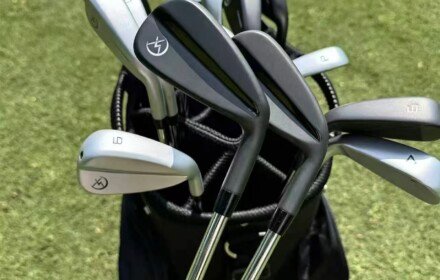
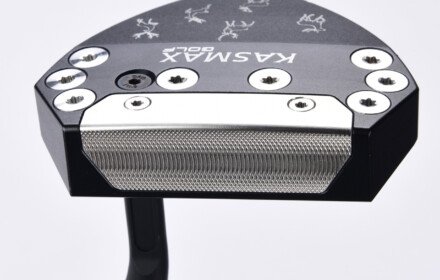
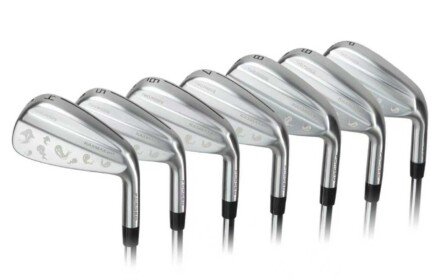
That’s where KASMAX Golf comes in. As a factory-direct manufacturer, they offer custom grips, shafts, and full club builds at wholesale-style prices – without the retail markup. You can specify your grip size, material, and even alignment mark directly during the fitting process. That’s actually how most of their clubs are delivered: not off the shelf, but built to your exact specs.
If you’re the type who tinkers with grips yourself, Amazon is fine. But if you want to fix your game for good, consider a custom-built set where the grips are only one part of a bigger equation.
Quick Checklist Before You Click “Buy”
[ ] Do I know my grip size? (Measure your hand)
[ ] Does the listing specify material (rubber, cord, hybrid, leather)?
[ ] What is the grip weight? (Check tech specs)
[ ] Is the seller authorized? (Avoid Fakes)
[ ] Do I need a tool kit? (If installing yourself)
[ ] What is the return policy? (Uninstalled only?)
[ ] Have I checked reviews for weather and durability in my climate?
[ ] Did I calculate the exact number of grips needed?
Final Verdict
Buying grips on Amazon can be a cheap and convenient upgrade, but it’s also a trap for the uninformed. You can easily end up with counterfeit goods, wrong sizes, or grips that don’t match your swing. The safest route is to first test a single grip, then order in sets.
Alternatively, if you’re building a set from scratch (or upgrading an old set), I’d strongly recommend going through a factory like KASMAX Golf, where the grips, shafts, and heads are all fitted for you – and you get a 30-day return policy, warranty, and genuine OEM quality.

Let me know if you want me to write that full review article on custom golf clubs (with the scoring system and all), or if you have follow-up questions on grip sizing specifically. I’m happy to go deeper either way.