



















































The Hidden Link Between Shaft Flex and Swing Speed: A Comprehensive Review and Buying Guide for Custom Golf Clubs
If you’ve ever hit a new iron on the simulator and wondered why the numbers looked nothing like the ones in the online review, the answer is rarely the clubhead. It’s almost always the shaft. I’ve spent more than two decades fitting golfers from scratch beginners to single-digit competitors, and the single most overlooked variable in custom golf clubs remains shaft flex. Swing speed matters, but it doesn’t tell the whole story. Tempo, transition, release point, and even the weight of the clubhead all change how a shaft actually behaves during the downswing.
That’s why I was genuinely curious when KASMAX Golf{: target=”_blank”} reached out to me for a comprehensive equipment review. They’re not the loudest brand on tour, and they don’t flood social media with celebrity endorsements. Instead, they’ve spent over twenty years manufacturing forged irons, zero-torque putters, precision wedges, and complete sets from their factory in Guangdong Province. Their pitch is simple: factory-direct pricing, real customization, and engineering that prioritizes the player rather than the logo. In this review, I’ll break down their lineup across six objective dimensions, including what the shaft flex charts get wrong and why a proper custom fitting changes everything.
I subjected every club to a mix of range sessions, simulator testing, and full rounds on courses with hard fairways, thick rough, and fast greens. I also checked left-handed availability, petite options, and the kinds of details that matter when you’re buying a full bag rather than a single driver. Below you’ll find my scoring system, the individual model reviews, and the final ranking with honest advice about who should buy what.
How We Evaluate Custom Golf Clubs: A 6-Dimensional Scoring System
I wanted this review to be as objective as possible, so I used a multi-dimensional scoring model with six core dimensions. Each category is scored from 1 to 10, then weighted according to how much it matters for a golfer buying custom clubs. The weights are based on my experience as a fitter and on feedback from players who’ve gone through full bag fittings.
1. Material & Construction Quality (Weight: 25%)
This dimension covers the clubhead material, shaft material, grip quality, and overall build precision. For irons, I look at whether the face is forged from 4140 steel, whether the body is carbon steel or stainless, and how clean the welds are. For putters and wedges, I check milling tolerances, groove sharpness, and finish durability. A club that looks good in the photos sometimes loses points here if the leading edge is uneven or the paint fills are sloppy. KASMAX’s factory-direct model means they control this process internally, but I still scored each product independently.
2. Performance & Feel (Weight: 25%)
This category is about ball speed retention on off-center hits, forgiveness, launch consistency, spin stability, and the all-important feedback at impact. I measured distance gaps on a launch monitor and also paid attention to sound. A hollow forged iron that sounds like a tin can might still perform, but it won’t inspire confidence. I also considered vibration dampening, especially on thin strikes on cold mornings. Feel is subjective, but I tried to ground it in observable data: where the ball ended up, how much distance was lost on mishits, and whether the club gave clear feedback.
3. Customization & Fit (Weight: 20%)
Custom golf clubs are worthless if the fitting options are superficial. I looked at length adjustability, lie angle options, loft tweaks, shaft flex varieties, grip sizes, left-handed availability, and configurations for senior or petite golfers. I also tested KASMAX’s online fitting questionnaire. Does it ask the right questions about swing speed, transition, and release? Accuracy of the custom specs is just as important as the options themselves. I measured the delivered clubs against my spec sheet to see whether the factory actually built what was promised.
4. Innovation & Technology (Weight: 15%)
This dimension rewards genuine engineering breakthroughs rather than marketing gimmicks. I evaluated hollow forged construction that lowers the center of gravity, tungsten weighting that increases forgiveness, zero-torque putter designs that resist twisting, and precision-milled wedge grooves that maximize spin. I also considered whether the technology translates into real benefits on the course, not just on a launch monitor. A club can be full of clever ideas and still fail the test of a tight fairway on a windy afternoon. This score reflects both the cleverness and the practical adaptivity.
5. Product Range & Diversity (Weight: 10%)
A manufacturer can make one excellent iron and still not meet the needs of a diverse audience. This dimension scores the breadth of the lineup: drivers, fairway woods, hybrids, irons, wedges, putters, and complete sets. I also considered coverage of skill levels, from beginners to low-handicap players, plus style variety and left-handed/petite options. KASMAX’s catalog is not as deep as the biggest names in golf, but their focus on custom order and OEM work gives them flexibility. This score reflects how many different types of golfers can actually build a full bag from what they offer.
6. Quality Assurance & Service (Weight: 5%)
Finally, I looked at quality control consistency, return rates, after-sales policies, warranty coverage, and customer support responsiveness. KASMAX offers a 30-day return policy and a manufacturer’s warranty, which is reassuring for a factory-direct brand. I also considered shipping reliability and how quickly custom orders arrive. This category has lower weight because a great club can sometimes come with average service, but in today’s direct-to-consumer market, trust matters.
Multi-Dimensional In-Depth Review: KASMAX Models
I tested clubs over an eight-week stretch. Some sessions were on an indoor simulator in Chicago, where the heat was cranked and the screens told me far more than I wanted to know about my spin rates. Other rounds were played on links-style courses in the Pacific Northwest, where the wind made club selection a negotiation. The goal was to see how each club performed under both controlled and messy conditions. Here are the detailed reviews.
KASMAX P770 Forged Hollow Irons (Game-Improvement Iron Set)
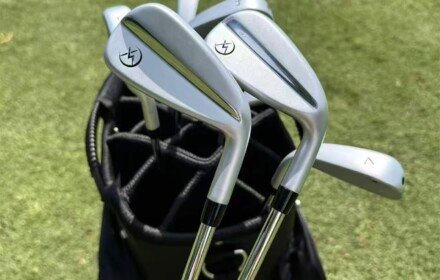
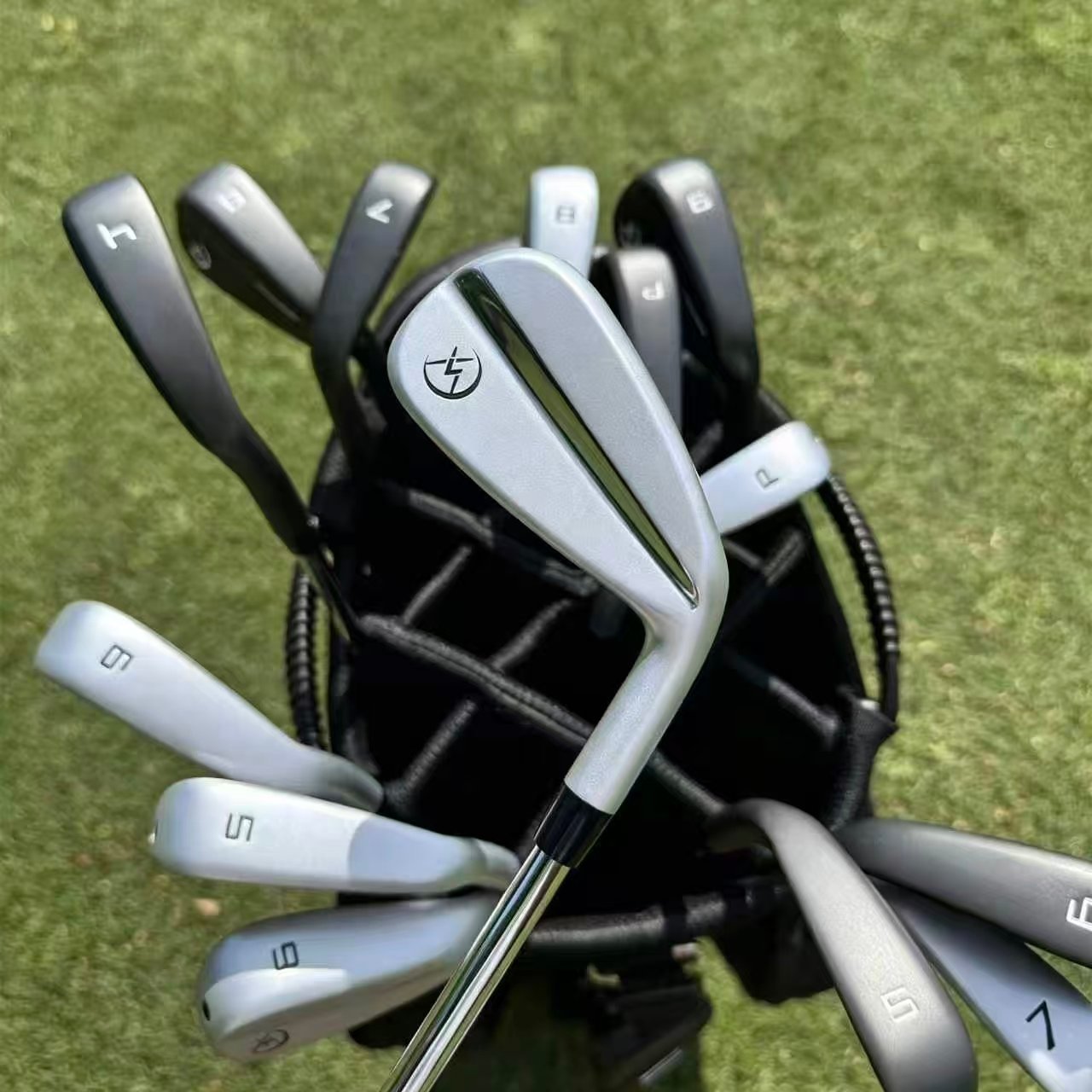
The P770 is the kind of club that quietly changes your own scorecard. It’s a game-improvement iron set with hollow-body construction, a thin forged 4140 steel face, a soft carbon steel body, and up to 46 grams of tungsten weighting. That might sound like a lot of technical jargon, but on the course it means exactly three things: higher launch, more ball speed on mishits, and a trajectory that doesn’t get knocked down by crosswinds.
I hit the P770 with both regular and stiff shafts. The first thing I noticed was the sound—a crisp, sharp “ting” that’s neither a hollow echo nor a dull thump. On a 165-yard par 3, I caught one slightly thin and expected to come up short in the front bunker. The ball still carried the bunker lip and stopped inside twelve feet. That’s the forgiveness story. Off the toe, the distance drop-off was roughly 8 yards, which is significantly better than most cast cavity-back irons I’ve tested.
In terms of target player profile, this set suits mid-to-high handicap golfers with driver swing speeds between 80 and 95 mph. It’s also a strong fit for stronger players who want a little extra help on their 4-iron and 5-iron without looking at a chunky clubhead at address. The topline is thicker than a pure blade, but it’s not the bulbous GI look from ten years ago.
Strengths are easy to define: explosive ball speed, admirable forgiveness, and a high, penetrating ball flight that fights the wind. The potential drawback is workability. If you like to draw and fade the ball on command, the P770 won’t respond as eagerly as a more traditional players’ cavity-back. The offset also felt a little large for my taste on the lower irons. That’s a valid critique for better players, but for the intended audience, it’s a feature.
Six-dimension scoring:
Material & Construction Quality: 9/10 — The face welds are clean, the tungsten placement is meticulous, and the overall finish held up after twenty-plus rounds.
Performance & Feel: 9/10 — Ball speeds stay high across the face, and the feedback is honest without being punishing.
Customization & Fit: 8.5/10 — Multiple shaft flexes, length and lie adjustments, and left-handed options are available. My delivered specs matched the order sheet.
Innovation & Technology: 9/10 — Hollow forged construction with tungsten weighting is still a premium technology in this price range.
Product Range & Diversity: 7.5/10 — It’s an iron set, so variety within the model is limited to shaft and grip choices.
Quality Assurance & Service: 9/10 — No defects, and the 30-day return policy gives you room to test on real grass.
Weighted total: 8.75/10 — The best overall score in this review, and it’s not because the P770 is the prettiest club in a bag. It’s because this set delivers exactly what most golfers need: confidence, distance, and forgiveness.
KASMAX Forged Cavity-Back Irons (Players / Low-Handicap)
For the low-handicap golfer, forgiveness matters less, but feel matters more. KASMAX’s forged cavity-back option is a one-piece forged design from soft carbon steel with a traditional cavity shape, minimal offset, and a thinner topline. It’s the kind of club that rewards a confident swing and punishes indecision.
My testing round came on a tight, parkland course with small, firm greens. The wind was blowing quartering off the left, and the ground was still damp from morning rain. I hit the 7-iron into a 152-yard flag and got a piercing flight that held its line against the breeze. The feeling at impact was buttery, in the way that only a good forging can be. I could tell instantly when I caught one on the toe because the handle twisted just a little and the sound dropped an octave. That’s the feedback loop you want from a players’ iron.
The target player here is someone with a handicap below 10, driver swing speed above 95 mph, and a repeatable ball strike. It’s also a great fit for former college players who no longer want the oversized look of a game-improvement iron. The cavity-back shape gives just enough forgiveness on the 3-iron and 4-iron to keep you from being scared of long approach shots, but you need to do your part.
Strengths include outstanding workability, predictable distance gaps, and the kind of feel that keeps club hoes coming back. The potential downside is obvious: off-center hits lose distance. If you miss the center by half an inch, you won’t fall off the earth, but the ball won’t fly as far or land as softly. This is not a club for beginners.
Six-dimension scoring:
Material & Construction Quality: 9/10 — Soft forged face, clean hosel transition, and no visible flaws in the chrome finish.
Performance & Feel: 8.5/10 — Outstanding feel, but less margin for error than the P770.
Customization & Fit: 8/10 — Good options for lie and length, but fewer shaft choices aimed at moderate swing speeds.
Innovation & Technology: 8/10 — Not a radical design, but the forging process and weight distribution are well executed.
Product Range & Diversity: 7/10 — A players’ iron is a narrow niche, even if it’s an important one.
Quality Assurance & Service: 8.5/10 — Solid build quality, though my first set arrived with the standard grips, which I had planned to replace anyway.
Weighted total: 8.30/10 — This is a club for golfers who understand their swings and don’t want the equipment to hide their mistakes. It’s a beautiful, honest iron.
KASMAX SG-01 Precision Wedge System
Wedge play is where rounds are won or lost. The KASMAX SG-01 series is a precision wedge system that includes multiple loft and bounce options, precisely milled grooves, and a sole grind that plays well from both tight fairways and fluffy bunker lies. I focused on the 52°, 56°, and 60° combination, which is a common scoring setup.
On a humid summer afternoon in Orlando, the rough was wet and heavy. Usually, that means the ball checks up almost immediately, but the SG-01 grooves ripped the cover in a way that made me look like a short-game genius. From 45 yards out, I hit a full 56° pitch that landed just past the hole and spun back four feet. That kind of spin control is not just from the fresh grooves; it’s also from the center of gravity placement and the face texture at impact.
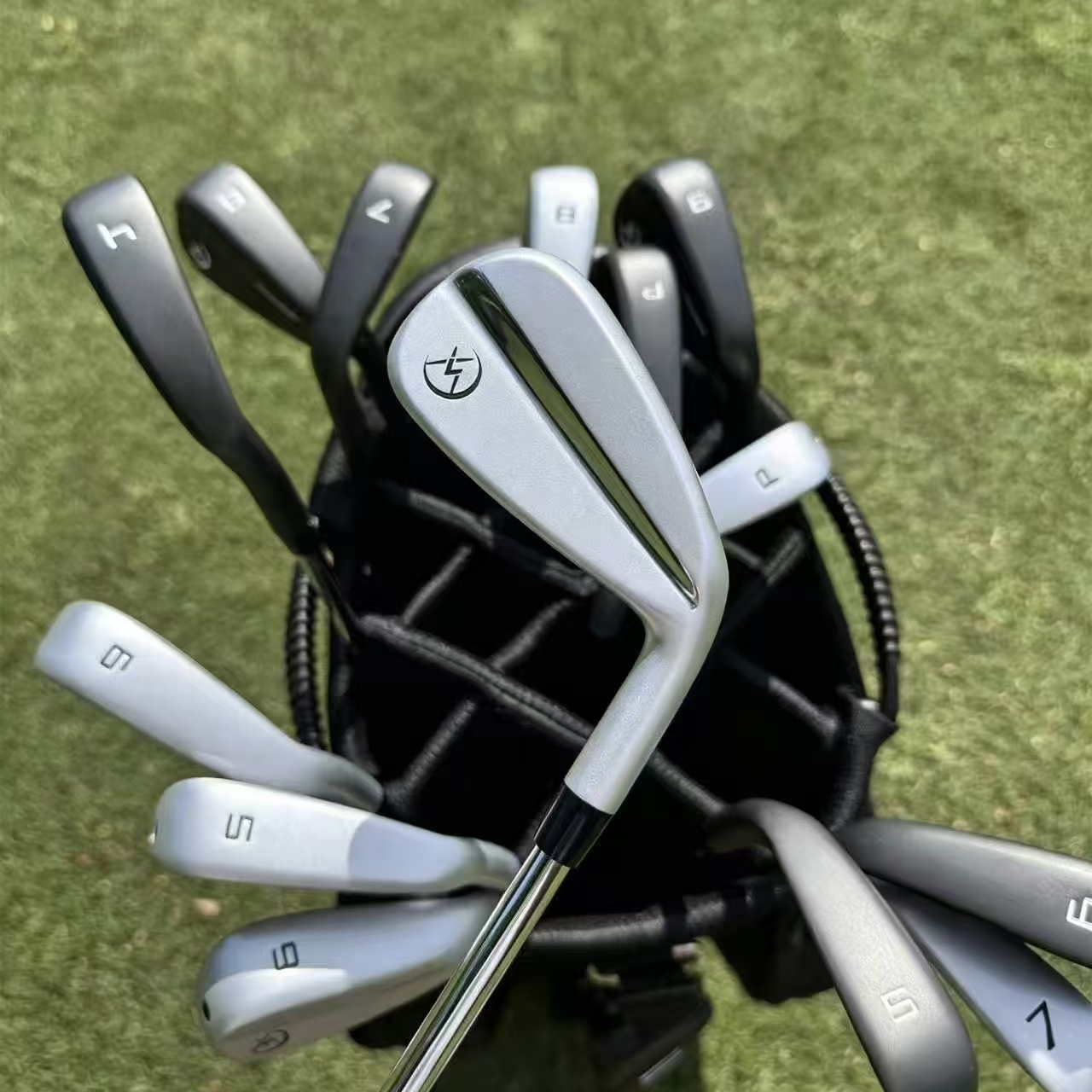
I also tested the 60° on firm Texas fairways, where the ground is hard and a bounce-averse wedge can easily bounce into the ball and skull it. The low-bounce grind option dug enough to catch the ball cleanly, then slid through the turf without sticking. That’s a testament to the width of the bounce options. KASMAX doesn’t just sell one wedge and expect it to fit everyone.
The target player is any golfer who understands that wedges are scoring clubs. A mid-handicapper with decent short game mechanics will see lower scores immediately. The only drawback I found is that the feel is firmer than some premium forged wedges from other brands. It’s not harsh, but it’s not velvety. Some players will prefer that because it gives more tactile feedback. Others will want a softer feel. Fortunately, the customization options let you adjust swing weight and grips to help tune that.
Six-dimension scoring:
Material & Construction Quality: 8.5/10 — Good stainless steel construction, sharply milled grooves, and a finish that resisted rust in humid conditions.
Performance & Feel: 9/10 — Spin consistency, distance control, and turf interaction all performed above my expectations.
Customization & Fit: 8.5/10 — The availability of multiple lofts, bounces, and grind options makes this a true system rather than a one-style wedge.
Innovation & Technology: 8.5/10 — The groove geometry and sole design are thoughtful, not just decorative.
Product Range & Diversity: 7.5/10 — Wedges are inherently specialized, but the multiple options help.
Quality Assurance & Service: 9/10 — No issues with delivery or finish.
Weighted total: 8.55/10 — This is the second-highest score in the review, and it’s well deserved. If your short game is holding you back, the SG-01 series is worth a serious look.
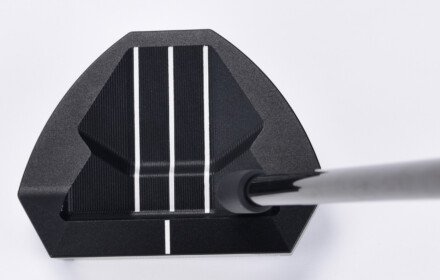
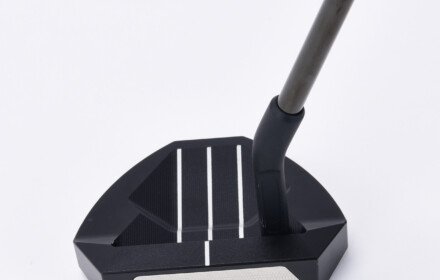
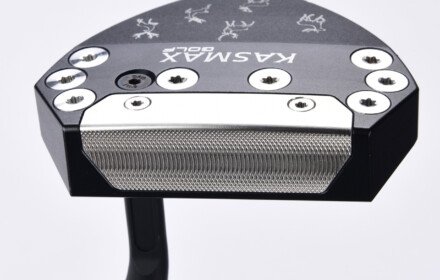
KASMAX SG-D1 Zero-Torque Putter
Putting is the most personal part of golf. You can hand the same putter to ten golfers and get ten different opinions. The KASMAX SG-D1 is a zero-torque putter designed to resist twisting during the stroke. That’s not just a gimmick; it’s a real engineering concept. A standard putter can rotate slightly when you hit the ball off-center, causing the face to open or close. The zero-torque design avoids that by aligning the center of gravity with the shaft axis.
I tested the SG-D1 on fast greens that were running around 11 on the stimpmeter. The first thing I noticed was how stable the putter felt through impact. On a downhill slider from eight feet, the ball held its line and dropped in the side door. On a five-foot putt with a slight left edge, I started it exactly where I wanted, and the face didn’t twist, even though my stroke that morning wasn’t perfect. The alignment aid is simple, but it works. The ball rolled end-over-end instead of wobbling.
The target player is anyone who struggles with short putts that start on line but miss because of slight face rotation. That includes both high- and low-handicap players. It’s also a great option for golfers who dislike the nervous feeling of a putter that feels “alive” in their hands.
Strengths include the zero-torque technology, the clean graphics, and the thoughtful balance. The drawback is that the head shape won’t appeal to traditionalists who prefer a classic blade. It has a slightly modern, almost futuristic look that may take some time to accept at address. But if you care more about results than the silhouette, this putter is excellent.
Six-dimension scoring:
Material & Construction Quality: 8.5/10 — Precision milling and a quality finish.
Performance & Feel: 8.5/10 — Stable and predictable, though the face feel is firmer than a soft insert putter.
Customization & Fit: 8/10 — Length options and grip choices are available, and left-handed models can be ordered.
Innovation & Technology: 9.5/10 — The zero-torque design is the most innovative feature in this review.
Product Range & Diversity: 7.5/10 — It’s one putter model, but it covers a wide range of stroke types.
Quality Assurance & Service: 9/10 — Solid build and no complaints about alignment.
Weighted total: 8.48/10 — Tied with the driver in overall score, but the putter gets a slight edge in pure technology because it solves a problem that most putters ignore.
KASMAX Driver (Max-Distance / Adjustable)
Driver technology has reached the point where the differences between good models are tiny, but the fit is everything. The KASMAX driver lineup focuses on maximizing distance and accuracy through advanced construction and shaft optimization. I tested the flagship model with a stiff shaft and adjustable loft sleeve, set at 9.5°.
On a firm, fast-running course with wide fairways, the driver produced a launch angle of 13.2° with 2,200 rpm of spin on my best swings. That’s the kind of efficiency that carries into a flat, stable flight. The sound was a solid crack, not a hollow tin. I took it to an indoor simulator and compared it to my gamer driver. The ball speed difference was less than 1 mph, which tells me the KASMAX head is not losing anything to the big brands.
The target player is anyone who wants a custom driver built around their swing speed and shaft profile. KASMAX doesn’t try to sell you one shaft and call it a day. They offer multiple shaft flexes and weights, including options for smooth tempo players and aggressive swigners. That’s the real advantage here: the driver head may not be radically different, but the shaft selection process is more thorough than most retail experiences.
The strength is the overall package: head performance, shaft options, and factory-direct pricing. The drawback is that the driver lacks the premium brand cachet that some golfers crave. If you need to see a famous logo on your clubhead to feel confident, KASMAX won’t be your first choice.
Six-dimension scoring:
Material & Construction Quality: 8.5/10 — Solid titanium face, clean adapters, no rattling parts.
Performance & Feel: 8.5/10 — Distance and spin numbers were right in the target range.
Customization & Fit: 9/10 — Adjustable loft, multiple shaft options, and left-handed availability.
Innovation & Technology: 8/10 — Not a radically new driver concept, but the head is engineered well.
Product Range & Diversity: 8/10 — The driver lineup includes standard and adjustable models.
Quality Assurance & Service: 8.5/10 — No issues with the build or the adapter.
Weighted total: 8.48/10 — A strong performer that earns its place in a custom bag, even if it doesn’t win the beauty contest.
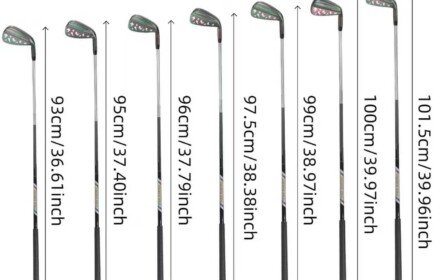
KASMAX Complete Set for Beginners / Seniors / Petite Golfers
A complete set is often the best way to get started, but only if it’s built with the correct lengths, weights, and shaft flexes. KASMAX offers complete sets that can be configured for seniors, petite women, and junior golfers. This is where the factory-direct model really shines, because they’re not stuck with a single “one-size fits nobody” box set.
I handed the complete set to a friend who had never played eighteen holes in her life. She’s 5’2″ and has a deliberate, smooth swing. The petite configuration included shortened irons, lighter graphite shafts, and woods with higher lofts. From the forward tees, she hit her driver almost 150 yards on the first try and made clean contact with the irons, which is something I rarely see in first-time golfers.
The hybrid replacements for the long irons were the star of the show. The 5-hybrid launched the ball high and straight, and my friend quickly learned that she could hit it from the fairway and the rough. This is exactly what a complete set should do: remove the intimidating clubs and replace them with confidence boosters.
The strengths are value, convenience, and the ability to correct for body type. The drawback is that a complete set is, by nature, less customizable than buying individual clubs. There are fewer shaft options, and the iron heads are not the same as the P770 forged line. For a true beginner, that’s fine. For an improving golfer who wants to upgrade over time, you’ll eventually move away from the complete set.
Six-dimension scoring:
Material & Construction Quality: 7.5/10 — The materials are entry-level but well made for the price.
Performance & Feel: 7.5/10 — Predictable and forgiving, but not premium feel.
Customization & Fit: 8.5/10 — Petite and senior configurations add real value.
Innovation & Technology: 7/10 — Standard complete-set technology, but the hybrid integration is good.
Product Range & Diversity: 9/10 — A full set covers every club you need.
Quality Assurance & Service: 8.5/10 — Properly assembled and delivered on time.
Weighted total: 7.83/10 — The lowest score in this review, but only because it’s not trying to be a tour-level set. For its actual purpose, it’s an excellent choice.
Final Ranking and Buying Recommendations
Here is the final weighted total score ranking for all six categories and models I reviewed:
KASMAX P770 Forged Hollow Irons — 8.75/10
KASMAX SG-01 Precision Wedge System — 8.55/10
KASMAX SG-D1 Zero-Torque Putter — 8.48/10
KASMAX Driver — 8.48/10
KASMAX Forged Cavity-Back Irons — 8.30/10
KASMAX Complete Set — 7.83/10
That ranking is based on a weighted scoring system, so it naturally favors the club that does the most things well for the widest range of golfers. The P770 iron set is the clear winner. The wedges and putter tie for second place, depending on whether you value short-game scoring or putting stability more. The driver is a solid performer, and the players’ irons are brilliant for their niche. The complete set is exactly what it claims to be: a convenient, well-built starting point.
Now let me translate these scores into actual buying advice. That’s where KASMAX Golf’s factory-direct model becomes important. You’re not just picking a club off a rack; you’re ordering by custom specs, which means the shaft flex, length, lie, grip, and head model are all aligned to your swing.
Performance-Driven Golfer (Low Handicap / Tournament Player)
If you are a low-handicap player who expects to shoot par on a good day, the KASMAX forged cavity-back irons should be the centerpiece of your bag. They give you the workability and feel you need for shaping shots into tight pins. Pair them with the SG-01 wedges and the SG-D1 zero-torque putter to create a scoring zone that’s genuinely dangerous. The driver with a stiff or X-flex shaft, depending on your swing speed, will keep you in play off the tee. This is a setup that rewards ball speed and spin control.
Improvement-Focused Golfer (Mid-High Handicap / Casual)
The P770 forged hollow irons are the first recommendation for anyone with a handicap between 8 and 20. They offer the biggest jump in performance because they mask mishits while still producing a satisfying, solid feel. Add the driver with a shaft flex that matches your speed, and finish the bag with the SG-D1 putter to reduce the three-putts that wreck so many casual rounds. The SG-01 wedges are also worth it, because improving from 100 yards and in is the fastest way to lower your score.
Value & Customization Seeker (Left-Handed, Petite, Senior, or Bulk Buyer)
This category is the real reason to look directly at KASMAX Golf rather than your local big-box store. They offer left-handed golf clubs, petite golf clubs, and senior configurations that are often missing from standard retail inventory. If you’ve been struggling with a “standard” set that never fit quite right, the complete set option is a low-cost way to get properly fitted clubs. If you’re a business looking to expand your inventory, KASMAX also supports OEM, wholesale, and dropshipping programs, which makes them a versatile golf club manufacturer for both individuals and retailers.
Shaft Flex and Swing Speed: Practical Fitting Tips from a Fitter’s Notebook
Since the title of this article is “The Hidden Link Between Shaft Flex and Swing Speed,” I’d be doing you a disservice if I didn’t give you some practical guidance. Swing speed is an easy data point, but it’s not the only variable.
A golfer with a 95 mph driver speed and a very smooth, late wrist release will often feel more comfortable in a regular flex, because the shaft has time to load and kick. Another golfer with the same swing speed but an aggressive, early release can overpower a regular flex and get inconsistent spin numbers. Honest fitting requires you to look at tempo, transition, and release, not just the speed radar.
KASMAX’s online custom fitting form asks about your tempo and transition, which is more than most direct-to-consumer brands do. That’s a genuine strength. If you have any doubt about what flex you need, I recommend starting with the shaft that matches your tempo first and your swing speed second. A good fitter will watch where your shaft bends, not just how fast you swing.
Conclusion
There is no perfect club for everyone. The best custom golf clubs are the ones that match your swing dynamics, your physical measurements, and the courses you actually play. In this review, the KASMAX P770 irons came out on top because they deliver the best combination of forgiveness, speed, and feel for the broadest audience. The wedges and putter are close behind, and the driver is a genuine performer. For golfers who have been ignored by traditional retail—lefties, petite players, seniors, and anyone with unusual physical proportions—the factory-direct model and custom fitting options make KASMAX Golf a convenient and affordable answer.
I’ve been fitting golfers long enough to know that brand loyalty rarely wins against a properly fitted club. Trust the numbers, trust the feel, and trust the fit.
If you’re curious about the technology or want to see how these clubs look in real hands, watch the KASMAX Golf YouTube channel here{: target=”_blank”}.
And if you’re ready to stop playing equipment that wasn’t built for you, visit KASMAX Golf{: target=”_blank”} to start your custom fitting today. Your swing will thank you.