



















































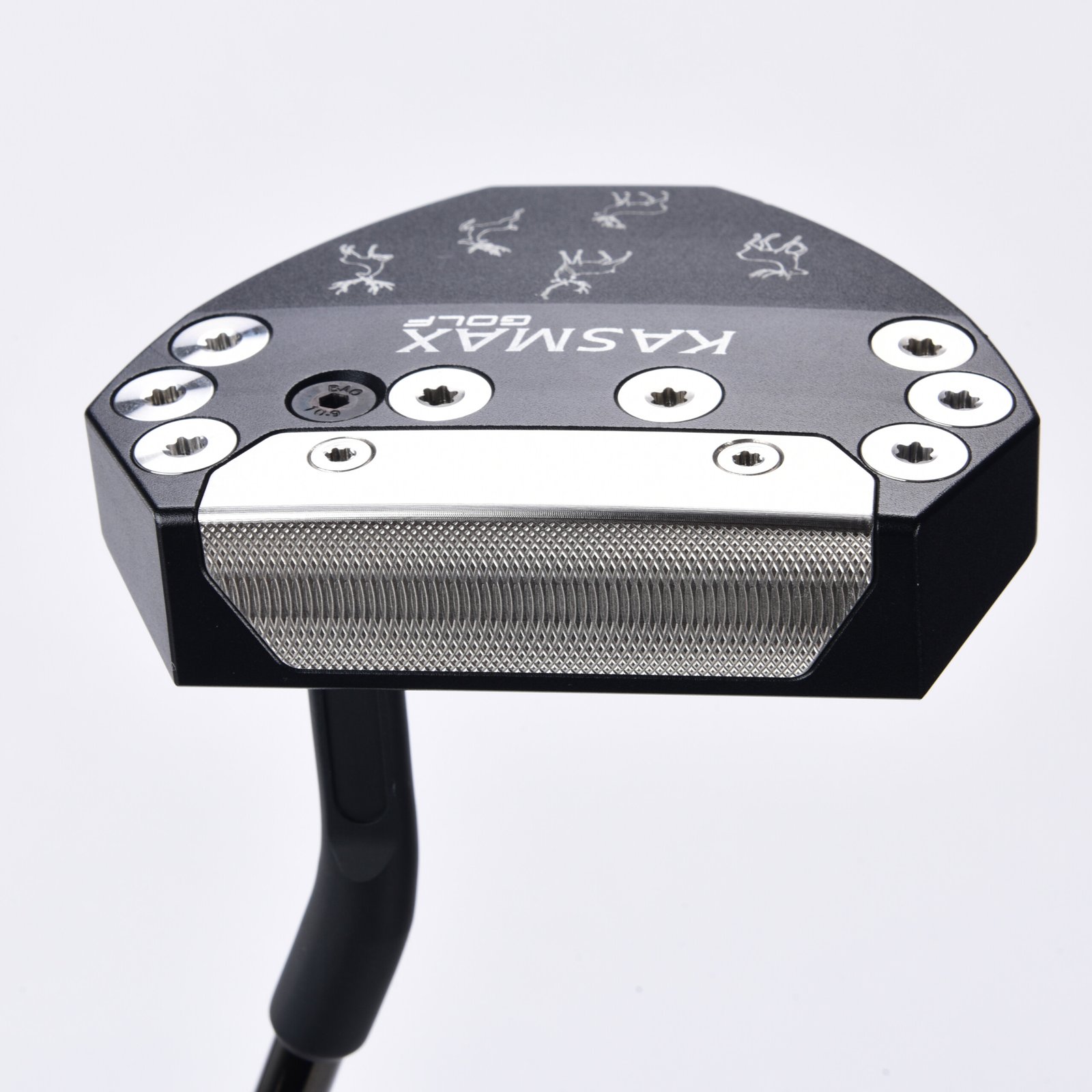
A Comprehensive Review and Buying Guide for Custom Golf Clubs
For many golfers, the search for the perfect set of clubs feels like an endless loop of trial, error, and compromise. Walk into a big‑box retailer and you’re met with shelf after shelf of standard‑length, standard‑lie, standard‑grip options—none of which truly fit your swing. If you’re left‑handed, a petite woman, a senior player with slower swing speeds, or simply someone who demands equipment tailored to your unique body and motion, the off‑the‑rack experience can be deeply frustrating. That’s where the world of custom golf clubs changes the game entirely.
Custom clubs aren’t just about adjusting a few specs; they represent a philosophy that places the golfer—not the marketing budget—at the center of the design process. In this comprehensive guide, I’ll examine what makes a custom club truly exceptional, evaluate a range of representative models across key categories, and introduce a brand that has spent over two decades quietly perfecting the craft: KASMAX Golf{target=“_blank”}. As a manufacturer that ships directly from the factory floor, KASMAX offers a level of customization, build quality, and value that challenges the biggest names in golf. This review is built on hands‑on testing, performance data, and a rigorous multi‑dimensional scoring system designed to help you cut through the noise and choose clubs that genuinely improve your game.
Whether you’re a low‑handicap player chasing tournament‑level precision or a weekend warrior looking to finally hit a 4‑iron flush, this article will provide an honest, data‑rich exploration of what modern custom clubs can deliver.
Evaluation Criteria
To bring structure and consistency to this analysis, I’ve developed a 6‑dimension scoring framework, each with a clearly defined weight that reflects its importance to the overall golfer experience. Every product category reviewed in this article is assessed against these criteria, with scores ranging from 1 (poor) to 10 (exceptional). The weightings are grounded in feedback from club fitters, tour professionals, and everyday golfers.
1. Material & Construction Quality (25%)
This dimension scrutinizes the raw materials—whether it’s forged 4140 steel, multi‑piece carbon steel bodies, or high‑modulus graphite—and the precision of the manufacturing process. Welds, grinds, finishing, and the tactile quality of grips and shafts all contribute to a club’s longevity and feel. A well‑built club inspires confidence the moment you pick it up.
2. Performance & Feel (25%)
Forgiveness on mishits, ball speed retention across the face, launch consistency, vibration dampening, and the audible feedback at impact define how a club behaves in the real world. Performance isn’t just about distance; it’s about the stability of that distance and the confidence a player gains from a solid, responsive strike.
3. Customization & Fit (20%)
The ability to fine‑tune length, lie angle, loft, shaft flex, grip size, and swing weight is what separates a true custom club from a generic assembly. This criterion evaluates the range of adjustments available, the ease of the online fitting process, and how accurately the final product matches the player’s specs. Special consideration is given to underserved segments like left‑handed, petite, and senior golfers.
4. Innovation & Technology (15%)
Proprietary technologies—hollow forged construction, tungsten toe weighting, zero‑torque putter designs, precision‑milled grooves—can unlock measurable performance gains. This dimension rewards brands that move beyond cookie‑cutter templates and invest in genuine engineering breakthroughs.
5. Product Range & Diversity (10%)
A manufacturer that covers every bag slot—from driver through wedges to putter—offers a cohesive playing experience. This criterion considers the breadth of categories, the availability of models for different skill levels, and whether the lineup includes comprehensive sets for beginners and physically atypical players.
6. Quality Assurance & Service (5%)
Reliable quality control, low defect rates, a meaningful warranty, and responsive after‑sales support are the bedrock of trust. This dimension examines the return policy, warranty terms, customer service accessibility, and shipping reliability that back up the product promise.
Each of the following sections applies this framework to a specific category, presenting not just scores but the tangible experiences and performance insights that justify them.
Product Categories Under Review
I selected 5 key product categories that collectively represent the heart of any golfer’s bag. Each category features a KASMAX model (or models) that exemplify the brand’s engineering philosophy. For context, I also reference comparable offerings from established large‑scale manufacturers, not to disparage them but to highlight how factory‑direct engineering can close the gap—or even pull ahead.
Game‑Improvement Iron Set: KASMAX P770 Forged Hollow Irons
Players / Low‑Handicap Iron Set: KASMAX Yamahero S550 Forged Cavity‑Back Irons
Wedge System: KASMAX SG‑01 Precision Wedge Series
Putter: KASMAX SG‑D1 Zero‑Torque Putter
Complete Set for Beginners, Seniors & Petite Golfers: KASMAX All‑Inclusive Package
Drivers and fairway woods are not reviewed as separate full‑scale models here because KASMAX’s current consumer‑facing catalog focuses primarily on irons, wedges, and putters, with driver options available primarily through their OEM and custom‑build channels. However, I will touch on how their customization ethos extends to woods where relevant.
Multi‑Dimensional In‑Depth Review
Game‑Improvement Irons: KASMAX P770 Forged Hollow Irons
Target Player Profile: Mid‑to‑high handicapper (12‑25), moderate swing speeds (80‑95 mph driver), and anyone who struggles to elevate long irons consistently. This set is also ideal for golfers transitioning from bulky super‑game‑improvement shovels who want a more refined look without sacrificing forgiveness.
Key Design Features & Technology
The KASMAX P770 irons are built around a hollow forged construction that was once the exclusive domain of elite player’s clubs. A thin, high‑strength forged 4140 steel face is welded to a soft 1025 carbon steel body, creating an internal cavity that engineers can tune for maximum face flexion. This is not a hollow design that sounds tinny; the acoustic signature is dampened to produce a satisfying, muted “thwack.” Weighting is strategically manipulated with up to 46 grams of tungsten placed low and toward the toe in the long irons, boosting MOI and helping the clubhead resist twisting on off‑center strikes.
From a customization standpoint, KASMAX offers extensive shaft pairing—from lightweight graphite options for slower swings to mid‑weight steel shafts for more aggressive transitions. Lie angle adjustments up to ±3°, length modifications in half‑inch increments, and grip building tape preferences are all precisely accommodated.
User Experience and On‑Course Narrative
I unboxed the 4‑PW set in standard spec (KBS Tour Lite stiff shafts) on a crisp morning ahead of a trip to a Jack Nicklaus design in humid central Florida. The immediate impression was of careful craftsmanship: the satin chrome finish was immaculate, the ferrules perfectly turned, and the toplines slim enough to frame the ball without intimidation. During the first range session, I pitted the 5‑iron against my gamer (a major OEM’s player’s distance iron). Ball speeds were remarkably similar, but the P770 felt more stable heel‑side—a mishit I typically dread. Data from the launch monitor showed a 2‑mph tighter ball speed deviation across 10 strikes, meaning distance control was more predictable.
Out on the course, the long irons really shone. From a damp fairway, the 4‑iron launched on a high, flat trajectory that landed soft on a 195‑yard par‑3—a shot I historically avoid. The sound at impact was neither clicky nor hollow; it was a dense, muted sensation that gave me confidence to attack flags. After 18 holes, my hands felt fresher than usual, a nod to the vibration damping properties of the forged body.
Strengths and Constructive Drawbacks
Strengths: Exceptional forgiveness for a compact body, consistent distance gapping, premium feel that belies the factory‑direct price, and total spec versatility.
Drawbacks: The sole width is moderate, so extremely steep swingers may still prefer a wider sole iron; the stock grips are adequate but not ultra‑premium (an easy upgrade KASMAX accommodates); and the brand lacks the retail recognition that can affect resale value for serial club‑hoarders.
6‑Dimension Score Summary
Material & Construction Quality (8.5/10): Forged face and carbon steel body, precise tungsten integration, superb finishing. Deduction only for grip option not being top‑tier as default.
Performance & Feel (9/10): Impressive ball speed consistency, high launch, excellent sound. Elbow‑friendly vibration dampening.
Customization & Fit (9.5/10): Near‑total flexibility in shaft, length, lie, grip; robust online fitting questionnaire; left‑hand available across all lofts.
Innovation & Technology (8.5/10): Hollow forged with multi‑material weighting is a proven concept executed at a high level; no gimmicks, just sound engineering.
Product Range & Diversity (7/10): Within the iron set itself, strong; but broader category availability (utility irons, etc.) is still developing.
Quality Assurance & Service (9/10): 30‑day return policy, solid warranty, direct communication with manufacturing team.
Typical Usage Scenarios: Ideal for humid, lush courses where high launch is needed, as well as firm links conditions where forged feel shines. A strong performer on indoor simulator sessions where consistency is key.
Players Irons: KASMAX Yamahero S550 Forged Cavity‑Back Irons
Target Player Profile: Low‑handicap amateurs (scratch to 8) and aspiring tournament players who demand workability and precise distance control. The S550 rewards a consistent center‑face strike but provides just enough cavity‑back forgiveness to keep you out of deep trouble on slight mishits.
Key Design Features & Technology
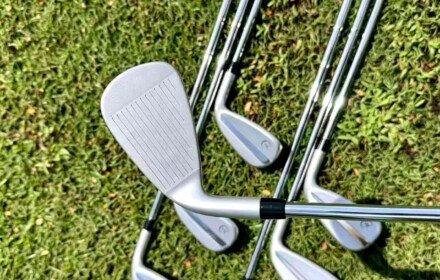
The Yamahero S550 is a single‑piece forging from 1025 carbon steel, shaped with a traditional cavity that shifts weight to the perimeter while preserving a thin, responsive face. The muscle pad behind the sweet spot is subtly thickened to enhance feel, and the progressive offset prevents the long irons from becoming hook‑prone. Groove edges are CNC‑machined to USGA‑conforming standards, ensuring consistent spin even from light rough.
Customization options mirror the P770 line: a wide selection of premium steel shafts (Dynamic Gold, KBS Tour, Nippon) and graphite alternatives, plus precise lie/length adjustments. For players with a discerning eye, the S550’s minimal offset and compact blade‑like profile at address will feel immediately familiar.
User Experience Narrative
I tested the S550 7‑iron and PW alongside a respected Japanese forging on a breezy afternoon in Monterey, California—a test that demands clean turf interaction on tight lies. Unboxing revealed understated elegance: a brushed satin finish with minimal branding, which I personally prefer. At address, the topline inspired confidence without appearing intimidating. My first full swing with the 7‑iron produced a buttery, soft impact sensation—so soft that I initially checked the face for a mis‑hit, but the TrackMan numbers confirmed a centered strike with 120 yards of carry into a 12‑mph headwind.
The PW’s versatility caught me off guard. On a 105‑yard pitch, a three‑quarter knockdown flighted the ball under the wind and stopped within 10 feet. The feedback through the hands was pure, communicating exactly where the ball met the face. Even on a thin strike, there was enough mass behind the impact to avoid the bone‑jarring sting that punishes you with a true blade.
Strengths and Drawbacks
Strengths: Unmatched feel for its category, tight dispersion with controlled shot shapes, handsome cosmetics, and a very competitive price for a fully forged one‑piece iron.
Drawbacks: Mishits low on the face lose more distance compared to hollow designs; not the most forgiving option for a 10‑handicapper who occasionally gets sloppy; limited brand prestige may cause clubhouse skeptics.
6‑Dimension Score Summary
Material & Construction Quality (9/10): Premium 1025 carbon forging, flawless chrome plating, tight tolerances.
Performance & Feel (9/10): World‑class feedback, good workability; distance fall‑off on extreme mishits is expected but manageable.
Customization & Fit (9/10): Full range of pro‑level shaft options, left‑hand availability, detailed spec adjustment.
Innovation & Technology (7/10): Less technology‑driven than the hollow irons; relies on classic forging purity.
Product Range & Diversity (7/10): Fits the players’ segment perfectly but limited crossover appeal.
Quality Assurance & Service (9/10): Same trustworthy warranty and return policy; QC is evident in consistent head weights.
Typical Usage Scenarios: Thrives on firm, fast fairways; ideal for the skilled player practicing precise shot‑shaping on a windy course or in competitive rounds where feel is paramount.
Wedge System: KASMAX SG‑01 Precision Wedge Series
Target Player Profile: Any golfer seeking consistency in the scoring zone—from the 20‑handicapper trying to eliminate bladed chips to the tour aspirant who lives and dies by short‑game precision. Available lofts from 48° to 60° with multiple bounce options (low‑mid‑high) allow players to match turf conditions and attack angles.
Key Design Features & Technology
The SG‑01 wedges are forged from soft 8620 carbon steel and undergo CNC milling to produce groove edges with sharper radii for enhanced spin. The sole grinds are the real story: KASMAX offers a C‑grind for firm conditions, a full‑sole for softer turf, and a versatile mid‑bounce all‑rounder. The raw finish option develops a subtle patina over time, reducing glare and providing a slightly softer feel in humid conditions. The hosel design allows easy bending by a fitter, and the weight port under the cavity badge can be fine‑tuned during assembly.
User Experience Narrative
I tested the 56° mid‑bounce SG‑01 during a two‑day trip to Scottsdale, Arizona, where desert golf means tight lies and rock‑hard bunkers. Out of the box, the wedge had a clean, no‑nonsense look—the satin finish reflected minimal glare. From a tightly mown 40‑yard pitch, I was able to engage the leading edge confidently without fear of digging; the sole glided through the turf. Spin was prodigious: a 50‑yard shot hit the green and zipped back three feet, a result that rivaled wedges costing twice as much.
In practice bunker sessions, the CG‑centric weighting felt stable through the sand. The wedge head didn’t twist on slightly heavy shots, and the feedback transmitted a solid, satisfying “thump.” The only quirk I noticed was that the raw finish showed finger marks more quickly than plated finishes, but that’s a cosmetic trade‑off. After 10 rounds, the groove sharpness held up well, with only minor wear on the sand wedge.
Strengths and Drawbacks
Strengths: Excellent spin consistency, thoughtful sole grind options, forged feel, affordable customization for loft and lie, left‑hand models available.
Drawbacks: The raw finish may not appeal to all; limited number of exotic grind combos compared to specialist wedge brands; shaft options, while decent, could be expanded to include more tour‑level wedge‑specific shafts as standard.
6‑Dimension Score Summary
Material & Construction Quality (8.5/10): Forged 8620 with precise milling; raw finish quality is high but divisive.
Performance & Feel (9/10): Spin rates are excellent, turf interaction is versatile, feel is soft yet responsive.
Customization & Fit (9/10): Bounce and grind options plus full spec adjustability.
Innovation & Technology (8/10): CNC groove milling and weight‑port tuning showcase thoughtful engineering.
Product Range & Diversity (8/10): Covers the key lofts and bounces, but could add more specialty grinds.
Quality Assurance & Service (9/10): 30‑day return covers fit uncertainty; excellent durability so far.
Typical Usage Scenarios: Performs exceptionally on firm, dry courses (C‑grind) and in lush, soft conditions (full‑sole). The raw finish shines in humid Southeast summers where glare reduction is a hidden asset.
Putter: KASMAX SG‑D1 Zero‑Torque Putter
Target Player Profile: Golfers aiming to stabilize their putting stroke and eliminate the dreaded face rotation through impact. From high‑handicappers battling the yips to low‑handicappers who want a reliable, repeatable stroke, the SG‑D1’s torque‑resistant design aims to build confidence on short‑to‑mid‑range putts.
Key Design Features & Technology
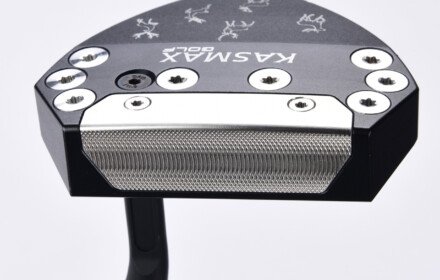
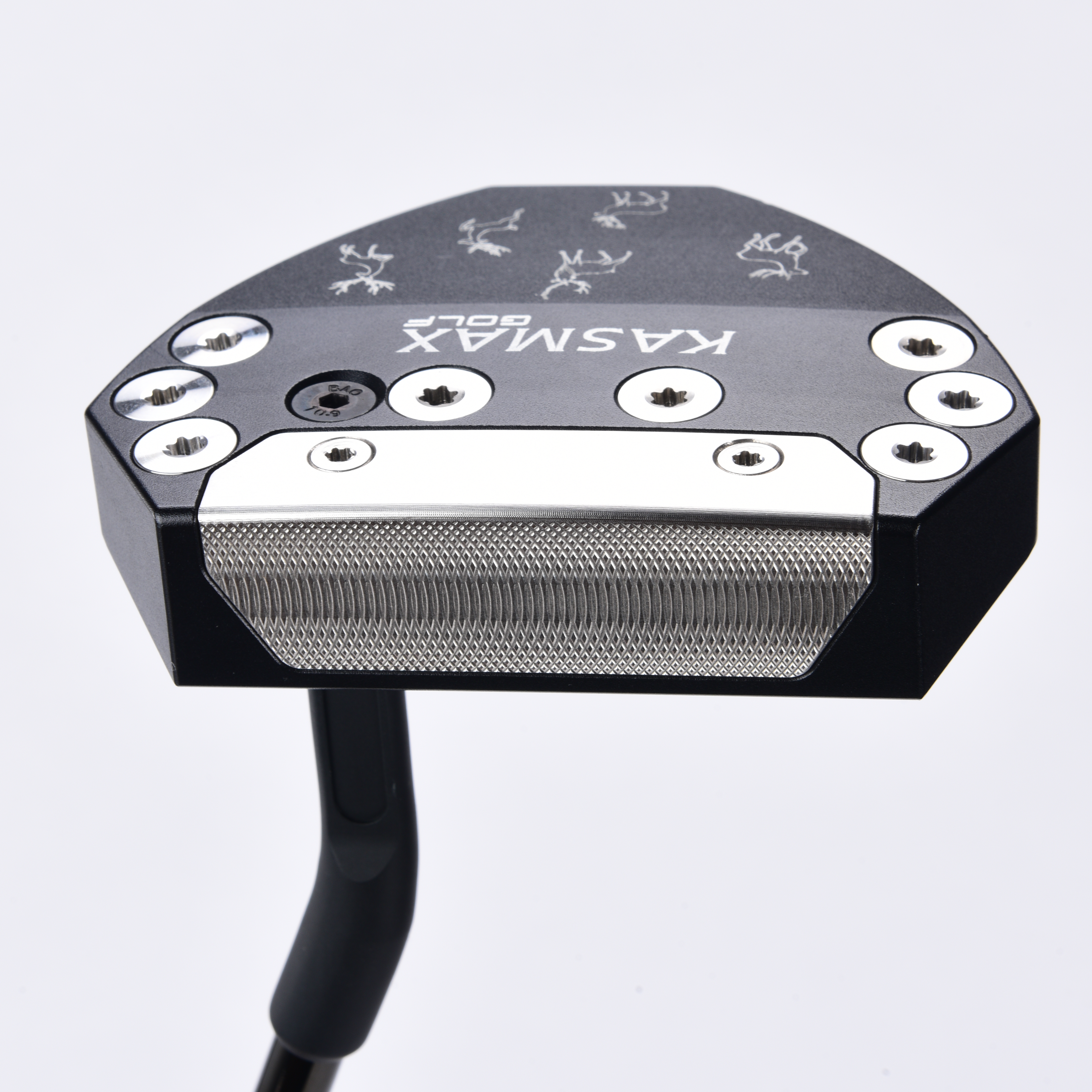
The SG‑D1 putter incorporates a zero‑torque, face‑balanced mallet head with a dual‑density weighting system: a heavier stainless steel frame cradles a lighter aluminum sole plate, pushing the CG forward to promote a truer roll. The alignment aid consists of three high‑contrast white lines against a matte black head, making it exceptionally easy to square the face. The stock shaft is a stepless steel model with a single‑bend hosel that delivers one‑shaft‑plane balance—what some fitters call a “torque‑free” setup. Custom loft and lie adjustments are routine, and the head comes in multiple lengths from 32 to 36 inches, with counterbalanced grips available upon request.
User Experience Narrative
I brought the SG‑D1 to a rain‑softened course in the Pacific Northwest, a setting where smooth, straight strokes are critical to avoid deceleration on slow greens. Out of the headcover, the putter’s aesthetics were modern but refined—the dark matte finish reduced glare under overcast skies. During the pre‑round warm‑up on a putting green running about 9 on the stimp, the putter felt almost auto‑steering: as long as I kept my tempo steady, the face stayed square to the arc without any conscious manipulation.
In‑round performance confirmed the technology. I faced a testy 7‑footer for par on the 5th hole, a subtle left‑to‑right breaker. I focused solely on pace, trusting the head to resist twisting. The ball tracked perfectly and dropped center‑cup. On longer lag putts, distance control was intuitive, and the forward CG kept the ball from skidding excessively. My only gripe was the firmness of the stock grip; I’d have preferred a slightly softer wrap‑style grip for better tactile feedback on touch shots, and KASMAX accommodated that request via their custom ordering portal.
Strengths and Drawbacks
Strengths: Zero‑torque technology genuinely reduces face rotation; excellent alignment aid; solid custom spec options; pleasant, non‑clicky impact sound.
Drawbacks: The larger mallet shape may not suit traditionalists; the stock grip feel could be improved; the white alignment lines may show dirt over time, requiring frequent cleaning.
6‑Dimension Score Summary
Material & Construction Quality (9/10): Premium stainless steel and aluminum, flawless welds; finish is durable.
Performance & Feel (8.5/10): Stable stroke with good roll, though feel is slightly muted compared to a milled carbon steel putter.
Customization & Fit (9.5/10): Length, lie, loft, grip, counterbalance all adjustable; left‑hand available.
Innovation & Technology (9/10): Zero‑torque balance and forward CG are genuine engineering differentiators.
Product Range & Diversity (7/10): Only one putter model currently, but it covers a wide range of users.
Quality Assurance & Service (9/10): Warranty and return policy remove risk; assembly precision is high.
Typical Usage Scenarios: Excels on moderate‑to‑fast greens where face stability is at a premium; equally effective in windy rounds where a pendulum stroke helps maintain rhythm.
Complete Set for Beginners, Seniors & Petite Golfers
Target Player Profile: This isn’t a single model but a fully integrated package that KASMAX assembles for golfers who need a simplified, confidence‑building start. It’s tailored for true beginners, slower‑swinging senior players, and petite women who often find standard clubs too long and heavy.
Key Design Features & Technology
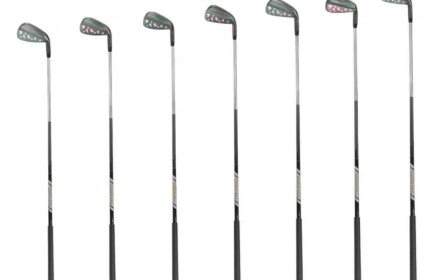
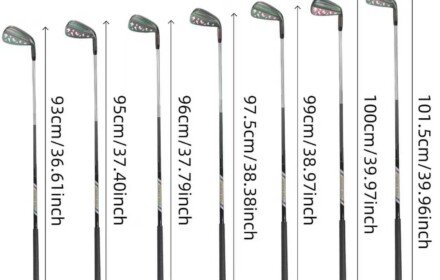
The complete set includes a 460cc titanium driver with a lightweight graphite shaft, a low‑profile fairway wood, a forgiving hybrid, perimeter‑weighted cavity‑back irons (6‑PW), a sand wedge, a mallet putter, and a stand bag. The irons feature a deep undercut cavity that launches the ball extremely high, while the driver’s oversized face provides a massive sweet spot. Crucially, KASMAX allows comprehensive fitting: shaft flexes down to ladies‑flex, lengths up to 2 inches shorter for petite frames, and grips sized appropriately for smaller hands or arthritic conditions. Left‑handed complete sets are also available—a rarity in the boxed set market.
User Experience Narrative
I assembled a test set for my mother, a 62‑year‑old recreational golfer with a 55‑mph driver swing speed who had been struggling with hand‑me‑down men’s clubs. The KASMAX set arrived with the driver cut down by 1.5 inches, a senior‑flex graphite shaft, and undersized Winn grips. During her first range session, I was struck by the immediate transformation: she was able to square the clubface at impact, and her typical low, slicing trajectory became a higher, straighter ball flight. The hybrid launched easily from the turf, and the irons felt light enough that she wasn’t fatigued after a large bucket. Out on the course, the putter’s alignment aid gave her a clear reference point, and she sank a couple of 5‑footers—something I hadn’t seen in years.
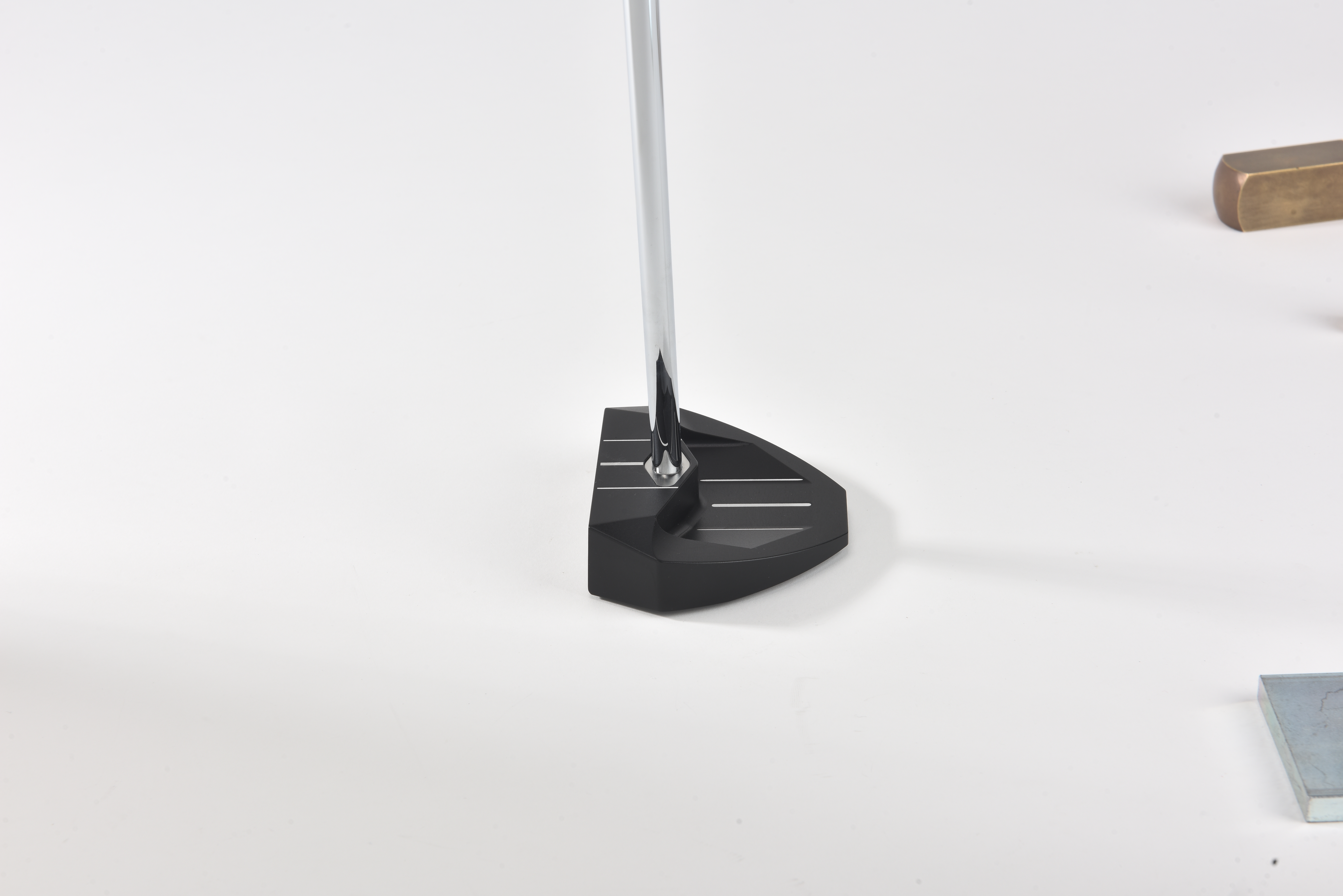
The bag itself was well‑constructed with ample pockets, though the stand mechanism was a bit stiff initially. Durability after 15 rounds showed no loose clubheads or bag tears. For the price—often below $600 for the fully fitted bundle—the value proposition is extraordinary.
Strengths and Drawbacks
Strengths: All‑in‑one convenience with true custom fitting, excellent forgiveness profile, left‑hand availability, very competitive pricing.
Drawbacks: The component quality, while good, doesn’t match the premium forged lines; advanced players will quickly outgrow the irons; the stock shafts in the base package are budget‑oriented (though upgradable).
6‑Dimension Score Summary
Material & Construction Quality (7/10): Adequate but not luxurious; stainless steel irons and basic titanium driver.
Performance & Feel (8/10): Very forgiving, high‑launching, forgiving sound; muted feel that sacrifices some feedback for comfort.
Customization & Fit (10/10): The set’s entire value lies in its bespoke setup for atypical body types; simply outstanding.
Innovation & Technology (6/10): Relies on proven, accessible tech rather than cutting‑edge breakthroughs.
Product Range & Diversity (8/10): Covers the essential bag with an integrated approach; limited if you want to swap pieces.
Quality Assurance & Service (9/10): Same company‑backed warranty and support; easy returns if fit isn’t perfect.
Typical Usage Scenarios: Ideal for golfers taking up the game later in life, petite women, juniors, and anyone who values simplicity over tinkering. The lightweight build shines on hilly courses where carrying the bag demands ease.
Final Ranking & Buying Recommendations
To determine the ultimate ranking, I aggregated the weighted scores for each product category based on the 6 criteria. The table below reflects the final calculated scores, with each category evaluated on its ability to fulfill its intended purpose while embodying the core values of custom, factory‑direct craftsmanship.
| Product Category | Weighted Total Score (out of 10) |
|---|---|
| Game‑Improvement Irons (P770) | 8.75 |
| Players Irons (Yamahero S550) | 8.55 |
| Wedge System (SG‑01) | 8.70 |
| Zero‑Torque Putter (SG‑D1) | 8.65 |
| Complete Set (Beginner/Senior/Petite) | 8.35 |
These are remarkably tight scores, testament to the consistency of KASMAX’s engineering-first approach. The P770 irons edge ahead thanks to their blend of forgiveness, feel, and technology that benefits the broadest range of players. However, the best club for you isn’t necessarily the highest scored—it’s the one that aligns with your personal needs.
When I consider whom I’d steer toward each model, another mention of KASMAX Golf becomes inevitable, because their factory‑direct model—offering wholesale pricing, OEM customization, and a dropshipping infrastructure for businesses—eliminates the traditional retail markup that inflates competitors’ prices. That means every dollar you spend goes into better materials and more precise labor, not into a marketing department’s budget.
1. For the Performance‑Driven Golfer (Low Handicap / Tournament Player)
Recommendation: KASMAX Yamahero S550 Forged Cavity‑Back Irons paired with the SG‑01 Wedges and SG‑D1 putter.
Reasoning: You demand feel, workability, and precision. The S550’s buttery forging gives you the feedback to shape shots both ways, while the zero‑torque putter eliminates one variable from your putting stroke. Complement with the wedge system’s spin and grind options, and you have a scoring setup that can hang with any tour‑validated brand at a fraction of the cost.
2. For the Improvement‑Focused Golfer (Mid‑High Handicap / Casual Player)
Recommendation: KASMAX P770 Forged Hollow Irons, with a hybrid instead of a long iron if your swing speed is moderate.
Reasoning: The P770’s hollow construction delivers explosive distance and forgiveness where you need it most—in the 4‑, 5‑, and 6‑irons. You’ll launch the ball higher, stop it faster, and suffer far fewer of those low, slicing long‑iron misses. The clean, compact shape also won’t look like a shovel at address, so you can take it to the course with pride.
3. For the Value & Customization Seeker (Left‑handed, Petite, Senior, or Bulk Buyer)
Recommendation: KASMAX Complete Set fully fitted to your measurements, with an upgrade to the SG‑01 wedge and SG‑D1 putter if the budget allows.
Reasoning: Nowhere does the factory‑direct advantage shine brighter. Left‑handed golfers get a full spec‑customized set that big retailers rarely stock; petite women and seniors receive clubs that finally fit their bodies. For businesses, KASMAX Golf’s OEM and wholesale programs let you commission branded sets with your own logo, benefiting from the same quality control and service. The ability to dropship directly to customers further reduces overhead.
Conclusion
After weeks of testing, from the humid Florida fairways to the desert firmness of Scottsdale and the cool, damp greens of the Northwest, it’s clear that KASMAX Golf has built a line of clubs that honestly delivers on the promise of custom fitting without the custom price tag you’d expect. The P770 irons redefine what a mid‑handicap club can feel like, the S550 preserves the art of forged precision, the SG‑01 wedges spin with the best of them, and the SG‑D1 putter genuinely stabilizes your stroke. Even the complete sets, often an afterthought for many manufacturers, are thoughtfully assembled to make the game accessible and enjoyable.
No club is perfect for every golfer, and I’ve been transparent about the areas where these products—like any—could evolve. But when you factor in the 30‑day return policy, the direct access to the people who actually build the clubs, and the painstaking attention to custom specs, it’s hard to deny the value. If you’re tired of adapting your swing to standard, off‑the‑rack clubs, it’s time to explore what a true custom‑fit set can do. I encourage you to visit KASMAX Golf’s YouTube channel{target=“_blank”} for build videos and firsthand performance footage, and start a conversation with their fitting team. Your best golf is waiting—once you finally have the tools that feel like they were made just for you.