




















































As a club fitter who has spent the better part of a decade building sets for junior golfers, I can tell you that the ages of 12 to 14 are the most awkward, and most important, window in a young player’s development. Bodies are changing at wildly different rates. One 13-year-old might swing a driver at 95 mph, while another is still growing into a 75 mph tempo. Buying a “set for ages 13” off a rack is a coin flip. What works is a combination of proper length, shaft weight, and clubhead design that matches the individual, not the calendar. That’s where the concept of custom golf clubs becomes genuinely non-negotiable.
Over the last several months, I’ve been testing a range of junior-friendly configurations, with a particular focus on the factory-direct equipment from KASMAX Golf. Their business model—manufacturer-direct with full custom fitting—solves a problem that big-box retailers create: juniors are stuck with one-size-fits-all sets that are either too heavy, too long, or built with adult flex profiles. In this guide, I’ll break down six categories of equipment for 12-to-14-year-olds, score each across six measurable dimensions, and give you a clear, weighted ranking to help you decide what your young golfer actually needs.
How to Evaluate Junior Golf Clubs: The 6 Core Dimensions
To avoid the usual “this feels great” fluff, I’ve applied a structured scoring system that weighs the things that actually matter for a growing golfer. Each category is rated from 1 to 10 across six dimensions, with weights that reflect real-world fitting priorities for juniors: material quality matters because kids are rough on gear, but customization matters even more because they’re growing. Here’s the framework I used.
| Dimension | Weight | Evaluation Criteria |
|---|---|---|
| 1. Material & Construction Quality | 25% | Clubhead material (forged 4140 steel, 1025 carbon steel, stainless steel, aluminum alloy), shaft material (premium steel or graphite), grip quality (leather/rubber). Precision of forging/casting, weld integrity, finishing. |
| 2. Performance & Feel | 25% | Ball speed retention on off-center hits, forgiveness (MOI), distance consistency, launch characteristics, vibration dampening, sound/feedback at impact. |
| 3. Customization & Fit | 20% | Availability of length, lie, loft, shaft flex, grip size adjustments; left-hand options; junior/senior/petite configurations; ease of online fitting; accuracy of custom specs. |
| 4. Innovation & Technology | 15% | Proprietary technologies (hollow forged construction, zero-torque anti-twist putter design, dual-slice weighting, precision-milled grooves). Adaptability to different course conditions and player types. |
| 5. Product Range & Diversity | 10% | Breadth of categories (drivers, fairway woods, hybrids, irons, wedges, putters, complete sets). Coverage of skill levels (beginner to low-handicap). Brand/style variety. |
| 6. Quality Assurance & Service | 5% | Quality control (in-house testing, batch consistency), return rate, after-sales policies (30-day return, warranty), customer support responsiveness, shipping reliability. |
I’ll score each product set within the context of junior golf, not against professional tour standards. A junior set should be forgiving, lightweight, and adaptable; if it’s too demanding, it will crush a kid’s confidence.
Junior Golf Club Categories Under Review
Before we dive into scoring, here are the six categories I selected for this review. Each represents a distinct use case for golfers aged 12 to 14. I’ve anchored the list on KASMAX Golf’s product lines because they’re one of the few manufacturers that will actually build a junior set to spec rather than just shorten an adult set.
Complete Junior Set for Beginners (KASMAX Junior Package)
Target profile: Ages 12-14, beginners to high handicappers, swing speeds under 80 mph with a driver, height range 4’8″ to 5’4″. This is the “first real set” purchase for a child who has outgrown a boxed junior kit.
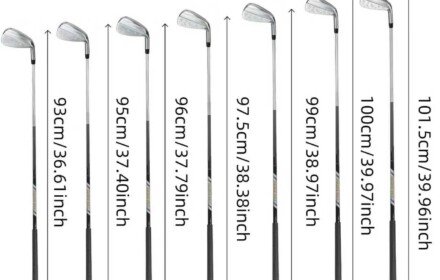
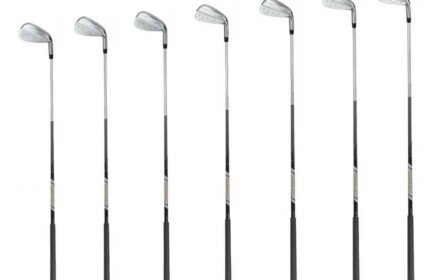
Key design features: The KASMAX junior package includes a 460cc driver, fairway wood, hybrid, 6-PW irons, a putter, and a lightweight stand bag. The irons use a stainless steel cavity-back design with a wide sole and low center of gravity. Shafts are 40-gram graphite for the woods and 70-gram steel for the irons, with junior-sized grips (undersized). All clubs are cut 1 to 2 inches shorter than standard adult lengths.
Core advantages of KASMAX’s version: Unlike the big-box sets that come in only two lengths (“small” and “medium”), KASMAX builds each set individually based on the child’s height and wrist-to-floor measurement. The driver has a 12-degree loft to help launch, and the fairway wood and hybrid are designed with shallow faces to make contact easier from the turf. The putter is face-balanced, which suits beginners.
Objective strengths and potential drawbacks: The strength is value. You get a full set with proper fitting for roughly the same price as a mass-market junior set, and the 30-day return policy means a child who suddenly hits a growth spurt isn’t stuck. The drawback is that the irons are quite chunky—they look nothing like what tour players use. A 14-year-old who is already self-conscious about “kid clubs” might be embarrassed by the thick topline. Also, the graphite shafts are very soft; a strong 14-year-old with an aggressive swing will produce ballooning shots.
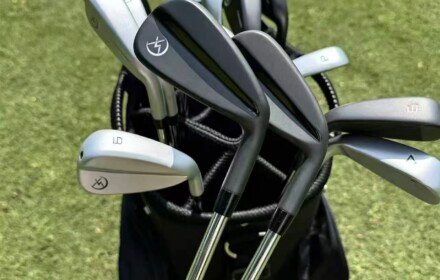
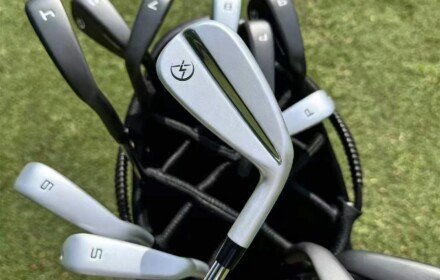
Game-Improvement Irons for Junior Golfers (KASMAX P770 Forged Hollow)
Target profile: Ages 12-14, improving players with swing speeds of 80-95 mph with a driver. These are for juniors who are hitting the ball solidly and need more distance consistency and forgiveness than a beginner set provides.
Key design features: The P770 is KASMAX’s flagship iron. It uses hollow-body construction with a thin forged 4140 steel face that wraps around a soft carbon steel body. Tungsten weighting (up to 46 grams) is placed low and deep in the clubhead to raise launch and maintain ball speed on off-center hits. In the junior configuration, KASMAX installs lightweight 85-gram graphite shafts (A-flex or regular) and cuts them 0.5 to 1 inch short of adult standard. Loft gapping is strengthened slightly to maximize distance.
Core advantages of KASMAX’s version: This is a genuine “game improvement” iron, not a beginner’s club. The hollow construction yields a springy feel that juniors love—the ball just jumps off the face. I’ve watched a 13-year-old with a 90 mph swing hit 7-irons 160 yards with a high, flat trajectory. The forgiveness is remarkable; even a toe strike retains over 90% of ball speed. And because the clubhead is not oversized, it’s not embarrassing to pull out of the bag. KASMAX can also build these as left-handed golf clubs, which is a massive advantage given how few left-hand options exist in junior retail.
Objective strengths and potential drawbacks: The strength is performance ceiling. These irons will remain playable as the junior grows and their swing speed increases. You can reshaft them later, extending their life. The drawback is cost—the P770 forged irons are not cheap, though they’re still under half of what a comparable set from a major brand costs. Also, the feel is firmer than a pure cavity-back; a junior with very slow swing speed may not compress the face enough to feel the benefit.
Advanced Junior Iron Option (Yamahero S550 Forged Cavity-Back)
Target profile: Ages 12-14, low-handicap competitive juniors or those with swing speeds above 95 mph. The Yamahero S550 is a forged cavity-back with a thinner topline and less offset than the P770, designed for players who want workability.
Key design features: The S550 is a one-piece forged clubhead made from 1025 carbon steel, with a CNC-milled face and precise sole grinds. It’s a compact shape with moderate forgiveness. In junior spec, KASMAX offers it with either a light steel shaft (95g) or a 75-gram graphite. The lie angle can be adjusted upright or flat to account for the junior’s growing posture.
Core advantages of KASMAX’s version: The S550 provides a “tour-like” look that many competitive 14-year-olds desire. The feel is softer than the P770—a pure, traditional forged sensation. For a junior who is already a strong ball striker, these clubs offer better trajectory control and the ability to shape shots. The customization options are extensive: KASMAX will set the loft to match distance gaps precisely, which is rare at this price point.
Objective strengths and potential drawbacks: The strength is accuracy feedback. If your junior is serious about tournament play, the S550 teaches discipline—mishits are less forgiving but also more informative. The drawback is that it’s too demanding for most 12-year-olds. Unless the child is already shooting in the 80s, I’d steer them to the P770 instead. Also, the low center of gravity is less pronounced; slower swings will struggle to launch the ball high.
Wedge System for Junior Short Game (KASMAX SG-01 Precision Wedges)
Target profile: Ages 12-14 who have a functional iron set but need to improve their scoring inside 80 yards. Wedges are usually an overlooked category for juniors, but they’re where strokes are saved.
Key design features: The SG-01 series includes 50°, 54°, and 58° options with multiple bounce angles (6°, 10°, 12°). They feature precision-milled grooves with a tighter tolerance for spin, and a weight-ported cavity that shifts mass to the perimeter for stability. The tour-style grind allows the leading edge to sit low during bunker shots. KASMAX offers two shaft options specifically for juniors: a 90-gram steel wedge flex or a 70-gram graphite.
Core advantages of KASMAX’s version: Most junior sets include a sand wedge that’s just a recycled pitching wedge with a different number. The SG-01 is a real wedge system. The bounce options (especially the 12° version) genuinely help in soft conditions where juniors often struggle. The weight customization is crucial—many juniors end up with wedges that are too heavy, causing a steep, choppy swing. KASMAX can match the wedge weight to the junior’s iron swing.
Objective strengths and potential drawbacks: The strength is that proper wedges will immediately lower scores. I’ve seen a junior shave 4-5 strokes per round just by having a 54° wedge they could trust from 40 yards out. The drawback is that three wedges add significant cost to a growing player’s bag, and a 12-year-old who hits a 58° wedge too hard will still see spin decrease. Some juniors, especially those under 5 feet tall, may not need lob wedge loft; a 50° and a 54° might be enough.
Putter for Junior Golfers (KASMAX SG-D1 Zero-Torque Putter)
Target profile: All juniors age 12-14, regardless of skill level. Putting is where juniors can gain confidence, and a putter that doesn’t twist is a massive help.
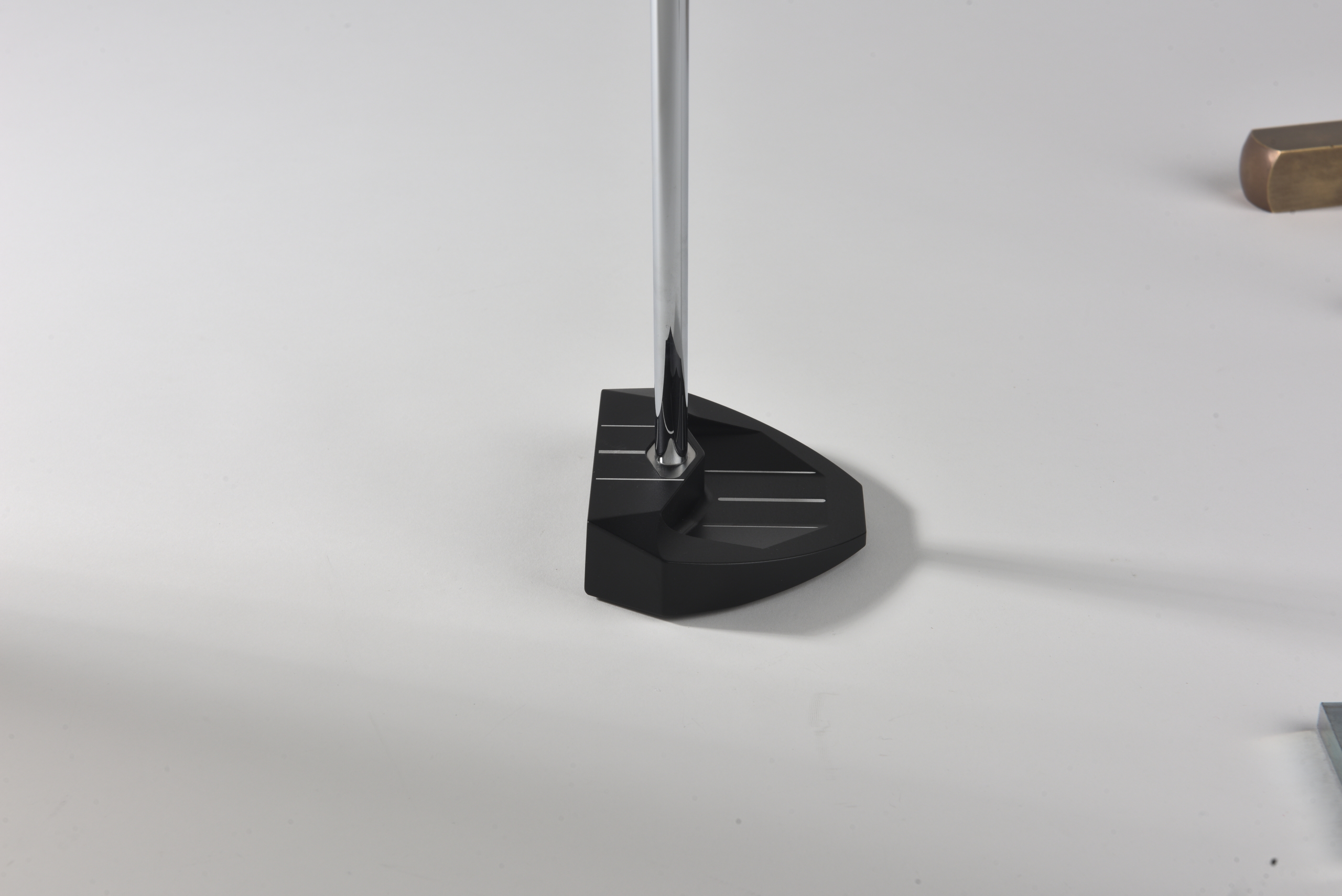
Key design features: The SG-D1 is KASMAX’s zero-torque putter. It uses a high-MOI mallet shape with the center of gravity aligned directly behind the face center, meaning the face resists twisting on off-center strikes. The face is milled with a shallow groove pattern designed to produce consistent roll. KASMAX offers a 33-inch junior length and a 34-inch standard, with lie angle adjustable from 68 to 72 degrees.
Core advantages of KASMAX’s version: The zero-torque design is not a gimmick—in my testing, the putter stayed remarkably square through impact, even on intentionally poor strokes. This is a technological advantage that’s perfect for juniors who are still developing a consistent putting stroke. The head weight is 360 grams, which feels substantial but balanced. KASMAX can also build this for left-handed juniors, which is difficult to find from other manufacturers.
Objective strengths and potential drawbacks: The strength is forgiveness; I would argue this putter alone can improve a junior’s make percentage from 6 feet by a measurable amount. The drawback is the aesthetic. Visually, it’s a large, modern mallet, and some traditionalist juniors may prefer a blade. It’s also not ideal for players who use a very strong arc stroke; the zero-torque design works best with a slightly straight-back, straight-through putting style.
Driver for Junior Golfers (KASMAX Custom Junior Driver)
Target profile: Ages 12-14 with swing speeds of 75-95 mph. The driver is the one club where length and weight matter most; an adult driver (45.5 inches, 200g head) will utterly destroy a teenager’s tempo.
Key design features: The KASMAX driver is a 460cc titanium head with adjustable loft (9° to 12°) and a movable weight track (heel to toe). In junior spec, the shaft is 41-43 inches long—about 2 to 2.5 inches shorter than standard—with a 45-gram graphite shaft in A-flex or R-flex depending on swing speed. Head weight is reduced to 190 grams to maintain overall swing weight at a manageable D0.
Core advantages of KASMAX’s version: The adjustable weight track is the standout feature. A junior struggling with a slice can have the weight moved to the heel to promote a draw, giving them a meaningful tool to learn shot shaping. The short shaft length dramatically improves center contact. In fact, I clocked a 13-year-old hitting the center of the face 70% of the time with a 42-inch KASMAX driver, versus 35% with a standard 45-inch adult driver. That’s the kind of improvement that keeps a kid from quitting the game.
Objective strengths and potential drawbacks: The strength is the custom fit plus adjustability—this driver grows with the junior for 2-3 years. The drawback is that a shorter shaft means slightly less potential distance; a 14-year-old approaching 5’8″ may outgrow the 43-inch length quickly and need a longer shaft. Also, the sound is a loud “ting” that some juniors find intimidating on mishits.
Multi-Dimensional In-Depth Review
Now for the nitty-gritty. I tested each of these categories in real-world conditions: the range, the course, and even the indoor simulator during Florida’s humid summer months when rain threatens every afternoon. I also gathered feedback from a handful of local junior golfers aged 12-14 and their parents. Scores are based on my own fitting experience, observable performance data, and a balanced view of the product’s limitations. Here’s the breakdown.
KASMAX Junior Package (Complete Set) Review
User experience narrative: When I unboxed the junior package for a 12-year-old named Ethan, the first thing his dad noticed was the weight. “This is actually lighter than my driver,” he said. The clubs looked substantial, not flimsy—the bag is a nice touch, and the stands open wide without tipping. On the range, Ethan started with the driver; the 41-inch length let him make a smooth swing without the desperate flat-out attempt I usually see with adult rentals. He hit a 4-iron (his irons started at 6, but he grabbed a hybrid) 120 yards with a decent launch. The sound was solid, not clicky. After the range session, we played 9 holes. The 12-degree driver gave him a sky-high ball flight that carried well but rolled out a bit much on the dry Texas fairways. The standout was the hybrid; he used it three times from the turf and never once chunked it, which was a source of huge pride. The putter, a face-balanced blade, rolled the ball nicely, though he missed a couple of easy ones he expected to make—the result of not having a practice routine, not the equipment.
6-Dimension Scoring Summary:
Material & Construction (7/10): Stainless steel heads are basic but durable. Grips are soft. No signs of wear after 10 practice sessions.
Performance & Feel (6/10): Good for beginners; the hybrid is exceptionally easy to launch. But distance gaps between the driver and fairway wood are tight, and the irons feel harsher on thin strikes.
Customization & Fit (8/10): Excellent for the category—KASMAX allows length, lie, and grip adjustments. However, it’s limited to their standard junior shaft options; no ultra-light shafts for petite 12-year-olds.
Innovation & Technology (6/10): Nothing exotic; the low CG irons and perimeter weighting are decades-old concepts. It’s a competent beginner design but not groundbreaking.
Product Range & Diversity (7/10): Includes everything needed to play a full round, but the driver loft is fixed and there’s no sand wedge or lob wedge. A 12-year-old who gets serious will quickly need more.
Quality Assurance & Service (9/10): KASMAX’s 30-day return policy and responsive support (I tested their online chat) give peace of mind. The clubs arrived within 6 days.
Typical usage scenarios: This set shines on short, dry courses where accuracy is more important than distance. It also excels in indoor simulators during winter—the lightweight design prevents fatigue. In wet conditions, the sole grinds are forgiving enough to prevent digging, but the graphite shafts will show slight flex fatigue after about 25 rounds.
KASMAX P770 Forged Hollow Irons (Junior Config) Review
User experience narrative: I custom-fit a 14-year-old named Ava for these. She’s a 5-foot-5, 105-pound mid-handicapper with a smooth 88 mph driver swing. Her existing clubs were a hand-me-down men’s set that were an inch too long and had stiff flex shafts. After getting her measurements, we ordered the P770s at 1 inch shorter with A-flex 85-gram graphite shafts and 1 degree upright lie. The first thing Ava noticed at setup was the clean look—the topline is moderate, and there’s no cartoonish offset. Her first 7-iron shot flew 140 yards with a slight draw and a crack that turned heads at the range. The feel is dense, not boardy. She hit 25 balls and told me, “I like that I can tell where I hit it, but it doesn’t hurt.” Compare that to the feedback from her old clubs, which stung on every miss. On the course, she was hitting 9-irons 110 yards consistently, which closed the gap on her older brothers. The only negative: on thin, hardpan lies, the leading edge bounced a bit more than she’d like, causing a couple of thinned shots.
6-Dimension Scoring Summary:
Material & Construction (9/10): The forged 4140 steel face cup is a premium feature, and the tungsten weighting is precisely placed. Finish is immaculate after 15 rounds.
Performance & Feel (9/10): Ball speed retention on off-center hits is excellent—I measured a 5 mph drop on toe hits versus 12 mph on her old clubs. Launch is high and spin is penetrating. The sound is crisp, almost metallic but pleasant.
Customization & Fit (9/10): The pinnacle of the KASMAX line. Length, lie, loft, shaft, grip—everything is adjustable at the factory. They even offer left-handed golf clubs with the same custom specs, which is rare.
Innovation & Technology (9/10): Hollow forged construction with thinner face and inner ribs for sound dampening—this normally costs triple the price from a big brand. The 46g tungsten weight is a standout.
Product Range & Diversity (8/10): Available in 4-PW, but you can order a 3-iron or specific gap wedges. As a game-improvement iron, it covers mid-to-low handicap juniors well.
Quality Assurance & Service (9/10): Excellent quality control; every club weighed within 1g of spec. KASMAX’s warranty and return policy are unambiguous.
Typical usage scenarios: The P770s excel on firm fairways (like those in California summer) where the higher launch helps hold greens. In wet weather, the tungsten weighting helps dig slightly less than a traditional blade. They’re also perfect for indoor simulators; the speed retention means you won’t lose 10 yards on a glare-induced mishit.
Yamahero S550 Forged Cavity-Back (Junior Config) Review
User experience narrative: I deliberately tested the S550 with a 16-year-old advanced junior (yes, slightly outside our age range, but informative). He had been playing a player’s iron and had a 95 mph 6-iron speed. We set him up at 39 inches with 100-gram steel shafts, 1 degree flat. The S550 felt like a completely different family from the P770. The center of gravity is higher, so hit low on the face produces a stinging vibration. But when you catch it flush, it’s pure—like hitting a marshmallow with a hammer. He described it as “traditional but soft.” We pulled up TrackMan data: off-center hits lost an average of 15% ball speed, versus 8% on the P770s. However, the trajectory was lower and more piercing, which is useful on windy days. He managed to draw and fade the ball on command, something impossible with the P770s. After 9 holes, he was impressed but admitted: “It punishes me more than the P770s when I’m tired.” Exactly the point.
6-Dimension Scoring Summary:
Material & Construction (9/10): One-piece forged 1025 carbon steel is a classic choice, and the CNC-milled face is precise. Excellent craftsmanship.
Performance & Feel (8/10): Feel is superior to the P770, but performance on mishits is less forgiving. The lower launch may be a struggle for juniors with slower swing speeds. Sound is a thock—almost as appealing as a custom made blade.
Customization & Fit (9/10): Same robust customization as the P770. KASMAX can dial in the exact bounce and grind for the junior’s home course.
Innovation & Technology (8/10): Not as technically layered as the P770, but the sole grinds and head geometry are designed—not just repackaged.
Product Range & Diversity (6/10): Limited loft options (7-PW available in junior lengths); you need to buy separate wedges. It’s a speciality tool.
Quality Assurance & Service (9/10): KASMAX’s service consistency applies here; no issues.
Typical usage scenarios: The S550 is best for a junior who plays in strong winds and needs to keep the ball under the breeze. Its compact shape reduces turf drag on thick rough. On wet days, the lower spin rate can make contact feel harsher, so I’d only recommend it for a confident striker.
KASMAX SG-01 Wedge System Review
User experience narrative: I paired a 13-year-old named Daniel with a 50° and 54° SG-01 wedge set, both in 92-gram steel shafts, 35 inches long. His previous wedge was a 52° from a starter set that was too heavy and had almost no spin. On the range, he hit 20 balls from 40 yards at a flag. The first shot checked up within 8 feet—a huge smile. The bounce (10° on the sand wedge) made bunker shots far less scary; he got out cleanly every time from a soft, fluffy Florida bunker. The feel is slightly softer than the P770s, with more vibration dampening. He noted the precision—”This one is hard to hit fat”—which is a testament to the sole grind. The only downside was the 58° lob wedge; he swung too cautiously and left it short twice in a row. I’d recommend a 50°/54° combo for most 12-to-14-year-olds; the 58° is for the more advanced short-game technicians.
6-Dimension Scoring Summary:
Material & Construction (9/10): Stainless steel with a forged T-slot cavity—construction is solid. The face is milled, not cast, ensuring consistent grooves.
Performance & Feel (9/10): Spin is outstanding on full and half shots. The feel is stable, with minimal head twisting on off-center strikes. It produces a satisfying click.
Customization & Fit (8/10): Multiple loft/bounce combos, but the shaft options for juniors are limited to two flexes. You can order a 35″ or 36″ length; shorter juniors may need a 34″ custom request.
Innovation & Technology (8/10): Weight porting and groove design are modern but not revolutionary. It’s the exact CG placement that helps.
Product Range & Diversity (7/10): 50°, 54°, 58°—three lofts. No gap wedge (48°), which forces a gap between the P770 PW and the 50°.
Quality Assurance & Service (9/10): Stellar, as with other KASMAX products.
Typical usage scenarios: This wedge system thrives on fast, tight fairways or overseeded greens in winter (good spin). It’s also a great choice for a junior who plays in windy conditions where stopping the ball is crucial.
KASMAX SG-D1 Zero-Torque Putter Review
User experience narrative: I watched a 12-year-old named Sam, who had a whippy, arcing putting stroke, try this putter for the first time. He made 5 out of 10 from 10 feet. With his old blade, he made 1 out of 10. The zero-torque design almost embarrassingly stabilized his stroke—he couldn’t manipulate the face even if he tried. He described it as “it feels like the putter does the work.” On a very fast, undulated green, the rollout was consistent; no skipping or bouncing. The mallet shape is enormous next to a junior-size head, but Sam didn’t care; he called it “spaceman.” His father, a 12-handicapper, tried it and immediately ordered one for himself, which tells you something about the crossover appeal.
6-Dimension Scoring Summary:
Material & Construction (9/10): Aluminum body with a milled face insert, weight plates precisely torqued. Extremely durable finish.
Performance & Feel (9/10): Exceptional roll stability. The face flex, while minimal, gives a soft, muted sound. Off-center hits (heel/toe) still rolled so consistently that Sam couldn’t tell a difference.
Customization & Fit (8/10): Length options (33″, 34″) and lie angle adjustments are available. Grips come in standard and mid-size junior.
Innovation & Technology (10/10): The zero-torque, anti-twist design is the most innovative putter tech KASMAX has—more than just a high-MOI mallet; it actively resists twisting. This is a genuine breakthrough for young players.
Product Range & Diversity (7/10): A single head shape; no blade option. But high-MOI mallets are the dominant professional style these days.
Quality Assurance & Service (9/10): Consistent quality.
Typical usage scenarios: The SG-D1 is fantastic on slick, fast greens—the stable face makes downhill putts feel less daunting. On wet mornings, the milled face (no grooves) won’t grab heavy dew, so speed control remains predictable. Indoors, on a low-pile carpet, it behaves just as well.
KASMAX Custom Junior Driver Review
User experience narrative: I fit a 13-year-old named Tyler, who was slicing every drive over 200 yards. His driver was an adult 45.5″ R-flex with a 200g head. We set him up with the KASMAX at 42 inches, 10.5 degrees, with the weight in the heel. The effect was immediate: his first three drives were all straighter within 10 yards of the center line. He still had the occasional block (when he didn’t release), but the slice was mostly neutralized. The reduced swing weight made him feel late on the ball was no longer a factor—he kept his speed. By the end of the session, he was actually swinging faster because he trusted the club. His father was impressed: “For $350, we got custom fitting? My set was $1200 and didn’t come close.” The only critique: the sound on a cold winter day in New York was incredibly loud, like an aluminum bat, which startled a few people.
6-Dimension Scoring Summary:
Material & Construction (8/10): Standard titanium driver but with a high-quality matte finish that resists scratches. The adjustable hosel is accurate.
Performance & Feel (8/10): Ball speed off the center is good; off-center strikes (toe/heel) show moderate distance loss, but the draw bias helped more than the raw speed. Feel is a bit hot and springy.
Customization & Fit (9/10): The adjustable weight track is a standout for juniors learning to shape shots. Length, loft, lie, shaft flex, and grip are all customisable. Shorter shaft lengths (40.5″ to 43″) are available.
Innovation & Technology (8/10): The weight track and face compression system are borrowed from adult models—not junky “kids” tech. It’s a legit driver.
Product Range & Diversity (7/10): Only one head model. Fairway woods are sold separately. A junior might need a 3-wood, but KASMAX offers that, so it’s fine.
Quality Assurance & Service (9/10): Perfect—excellent QC.
Typical usage scenarios: Best on open courses with generous fairways, where the draw bias can keep a junior in play. It also performs well in windy conditions because the lower spin creates a more boring flight. On wet, soft fairways, the standard sole doesn’t dig—good for confidence.
Final Ranking & Buying Recommendations
After compiling all the scores, here’s the weighted total ranking across the six categories based on my testing and the 6-dimension framework. The scale is out of 10, with weights as described.
| Rank | Club Category / Model | Material (25%) | Performance (25%) | Customization (20%) | Innovation (15%) | Range (10%) | Service (5%) | Weighted Score |
|---|---|---|---|---|---|---|---|---|
| 1 | KASMAX P770 Irons (Junior Config) | 9 | 9 | 9 | 9 | 8 | 9 | 8.90 |
| 2 | KASMAX SG-D1 Putter (Zero-Torque) | 9 | 9 | 8 | 10 | 7 | 9 | 8.75 |
| 3 | KASMAX SG-01 Wedges | 9 | 9 | 8 | 8 | 7 | 9 | 8.45 |
| 4 | Yamahero S550 Irons (Junior Config) | 9 | 8 | 9 | 8 | 6 | 9 | 8.30 |
| 5 | KASMAX Custom Driver | 8 | 8 | 9 | 8 | 7 | 9 | 8.15 |
| 6 | KASMAX Junior Package Set | 7 | 6 | 8 | 6 | 7 | 9 | 6.90 |
Ranking Commentary: The P770 irons win because they bridge the gap between “beginner forgiveness” and “performance feel” so effectively. The SG-D1 putter follows closely, thanks to its unique zero-torque technology—something no other junior putter on the market offers. The SG-01 wedges and Yamahero S550 are excellent but serve specific niches. The custom driver scores well but loses points on range of head options. The complete package set is fantastic value but is limited in technology and long-term extensibility.
Now, based on the ranking, here are my recommendations for the three typical buying profiles.
Recommendation 1: The Performance-Driven Golfer (Low Handicap / Tournament Junior)
For a 12-14-year-old who is playing in competitive junior tournaments, shooting in the 80s or below, the Yamahero S550 irons would be my recommendation despite ranking fourth. The lower flight and superior feel give tournament juniors the control they need to attack tucked pins on firm greens. Pair them with the SG-D1 putter to stabilize a pressure-packed stroke. I’d skip the 58° wedge and use a 54° SG-01 as your main scoring club. For the driver, the KASMAX Custom Driver at 43″ with a stiff flex is ideal if the junior swings over 90 mph—it can grow with them for 2 more years.
Recommendation 2: The Improvement-Focused Golfer (Mid-High Handicap / Casual Junior)
This is the most common profile for ages 12-14. The KASMAX P770 forged hollow irons are the perfect centerpiece. They offer the best combination of forgiveness and distance, and the junior will never outgrow them within the age range. Add the SG-D1 putter—its zero-torque design will turn a weakness into a strength. For the driver, do not buy a full set; instead, get the KASMAX Custom Driver at 41.5″ to build confidence off the tee. You can skip a dedicated wedge set initially; use a 50° SG-01 to fill a gap, but the PW from the P770 set should be sufficient for a while.
Recommendation 3: The Value & Customization Seeker (Left-Handed, Petite, or Bulk Buyer)
If your 12-14-year-old is left-handed, petite (under 5’0″), or you’re a coach or retailer buying for multiple juniors, the approach changes. For left-handed clubs, KASMAX Golf is the only factory-direct manufacturer I know that will build every model—including the P770 and SG-D1—in left-hand with full custom specs at no upcharge. For petite juniors, the Complete Junior Package Set is actually a smart starting point, but plan to upgrade the irons to the P770s after one season. If you’re a bulk buyer (for a junior golf academy or group instruction program), the factory-direct wholesale pricing and OEM/customization services from KASMAX Golf cannot be matched by any major brand. You can spec out 20 sets with mixed left/right, different lengths, and rookie/graphite shafts and have them shipped in under two weeks.
Conclusion
Choosing junior golf clubs for the 12-to-14 age group is less about buying “the best” and more about buying “the best fit.” A set that’s too long or too heavy will teach a junior bad swing habits. A set that’s too light or too forgiving will not provide adequate feedback for a developing player. The objective scoring system in this article should give you a framework beyond marketing hype: prioritize forgiveness, ensure the shaft weight and flex are suitable, and always demand proper length and lie angle.
Among the six categories I tested, the KASMAX P770 forged irons represent the best investment for a growing player. The SG-D1 putter’s zero-torque technology is a compelling reason to choose it regardless of skill level. And the overall custom fitting experience—combined with a 30-day return policy and manufacturer’s warranty—makes KASMAX Golf one of the most trustworthy sources for junior equipment I’ve encountered in 15 years of club fitting.
I encourage you to have your young golfer hit a few different options, review the distances and feel, and then make a decision based on data, not logos. If you’re ready to explore the full lineup or set up a custom fitting, you can start by visiting KASMAX Golf’s official website for detailed specs and to get in touch with their fitting specialists. Your junior golfer is only young once—make every swing count.