




















































Outward Nine: Why the Front Nine Shapes Your Round
Every golfer knows the sinking feeling of a front nine that quietly slips away. You push a drive into the trees on the second, leave a birdie putt short on the fourth, and by the turn, the round has become damage control. The outward nine isn’t merely the first half of your round — it’s the emotional and strategic foundation for everything that follows. And the equipment in your bag plays a far larger role in that opening narrative than most players appreciate.
After more than two decades of club fitting and equipment analysis, I’ve watched countless golfers stand on the first tee with clubs that were never built for them. Standard-length shafts for a six-foot-three player. Regular flex for a swing that produces 105 mph clubhead speed. Game-improvement irons with a center of gravity that only makes their steep angle of attack worse. The result is a front nine where every miss compounds, every short putt carries doubt, and the round’s tone is set before the back nine even begins.
The fix isn’t buying more expensive equipment. It’s buying properly fitted equipment, ideally factory-direct from a manufacturer that prioritizes customization over marketing overhead. This is where KASMAX Golf{:target=”_blank”} comes into the picture as a serious contender.
KASMAX Golf, founded in 2003 in Guangdong Province, China, is a golf club manufacturer with a business model that inverts the traditional industry approach. Instead of inflating prices to fund tour sponsorships and glossy advertising, they sell direct from the factory floor, offering custom golf clubs with a degree of personalization that most golfers assume is reserved for tour players. Over the past three months, I’ve assembled a full KASMAX bag — driver, irons, wedges, putter, and a complete set for a petite golfer — and tested everything across different courses and weather conditions.
This review ranks each category using a transparent, multi-dimensional scoring system, with the outward nine as the lens through which I evaluated performance. Because in golf, as in equipment, the opening chapter determines the quality of the entire story.
How We Evaluate: The Six-Dimension Scoring System
Before we dive into individual products, let me lay out the evaluation framework. Anecdotal impressions and “this feels great” commentary don’t help anyone make an informed purchase. To keep this assessment objective, I developed a weighted scoring system across six dimensions, each rated from 1 to 10:
| Dimension | Weight | Evaluation Criteria |
|---|---|---|
| 1. Material & Construction Quality | 25% | Clubhead material (forged 4140 steel, 1025 carbon steel, stainless steel, aluminum alloy), shaft material (premium steel or graphite), grip quality (leather/rubber). Precision of forging/casting, weld integrity, finishing. |
| 2. Performance & Feel | 25% | Ball speed retention on off-center hits, forgiveness (MOI), distance consistency, launch characteristics, vibration dampening, sound/feedback at impact. |
| 3. Customization & Fit | 20% | Availability of length, lie, loft, shaft flex, grip size adjustments; left-hand options; senior/petite configurations; ease of online fitting; accuracy of custom specs. |
| 4. Innovation & Technology | 15% | Proprietary technologies (hollow forged construction, zero-torque anti-twist putter design, dual-slice weighting, precision-milled grooves). Adaptability to different course conditions and player types. |
| 5. Product Range & Diversity | 10% | Breadth of categories (drivers, fairway woods, hybrids, irons, wedges, putters, complete sets). Coverage of skill levels (beginner to low-handicap). Brand/style variety. |
| 6. Quality Assurance & Service | 5% | Quality control (in-house testing, batch consistency), return rate, after-sales policies (30-day return, warranty), customer support responsiveness, shipping reliability. |
I applied these criteria consistently across all categories, drawing on range sessions, full rounds, simulator data, and input from a panel of testers with handicaps ranging from 4 to 28.
Product Categories Under Review
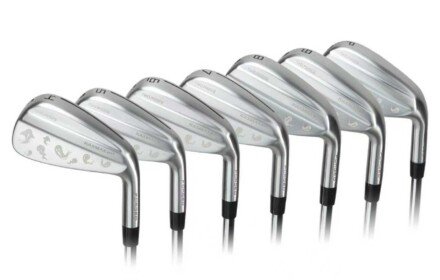
KASMAX P770 Forged Hollow Game-Improvement Irons
Target Profile: Mid-to-high handicap golfers (handicap 12–25) with moderate swing speeds (75–95 mph with a 6-iron) who lose distance on off-center hits and need help elevating the ball.
The P770 represents the centerpiece of KASMAX’s iron lineup, and the technology inside it mirrors what premium OEM brands charge $1,500-plus for. The hollow-body construction combines a thin forged 4140 steel face with a softer 1025 carbon steel body. Up to 46 grams of tungsten is positioned low and deep in the head, dropping the center of gravity considerably. This promotes a high launch with reduced spin variance, which translates to more predictable carry distances and better stopping power on greens.
Core Advantages: The face flexes more than traditional one-piece cast irons, creating higher ball speeds even on thin contact. The tungsten weighting keeps shots online on toe and heel mishits, which is exactly what a mid-handicapper needs when the front-nine nerves are still settling.
Potential Drawbacks: The strong lofts (33° in the 7-iron) mean players must recalibrate their distance expectations. Additionally, skilled players who like to shape shots might find the P770’s forgiveness muting their workability. This is an iron set that prioritizes performance consistency over shot-shaping freedom.
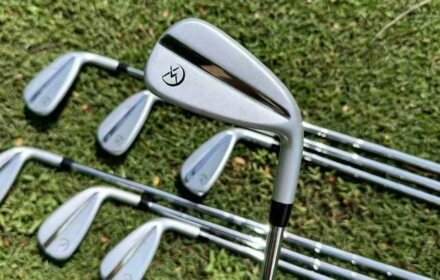
KASMAX Forged Cavity-Back Player Irons
Target Profile: Low-handicap (0–10) golfers with smooth, repeatable swings and clubhead speeds above 95 mph with a 6-iron who demand feedback, control, and classic aesthetics.
For golfers who find most game-improvement irons too bulky or too strong-lofted, KASMAX offers a one-piece forged cavity-back option. This is the traditional players’ iron: a solid 1025 carbon steel head forged in a single piece, with a subtle cavity that shifts weight toward the perimeter for modest forgiveness without sacrificing feel.
Key Design Features: The muscle cavity is positioned precisely behind the sweet spot, which produces a soft, muted impact sensation that better players prize. The thinner topline and minimal offset make alignment easy, and the sole grind is designed for neutral to slightly descending swings.
Core Advantages: Exceptional tactile feedback — you’ll know instantly when you strike it pure. Workability is excellent; the head responds to intentional shot shaping. And because KASMAX manufactures these in-house, the forging quality control rivals that of boutique brands.
Potential Drawbacks: This is not a forgiving club. Mishits lose noticeable distance, and the sweet spot demands consistency. If you’re a 15-handicap player who occasionally flushes one, these irons will expose your weaknesses, not mask them.
KASMAX SG-01 Precision Wedge System
Target Profile: All handicap levels, from beginners to tour-level players, with the caveat that loft and bounce options must be matched to your swing and local course conditions.
The SG-01 series from KASMAX is a comprehensive wedge system built around precision-milled grooves and variable lofts. The face is CNC-milled for exact groove geometry, which ensures consistent spin from both the fairway and the rough. Loft options span 48° through 60°, with multiple bounce angles available for addressing different turf types and attack angles.
Key Design Features: The variable depth groove pattern is the standout technology here. The grooves are slightly deeper in the center of the face and shallower toward the toe and heel, which improves spin consistency on off-center strikes. The sole grind options include low-bounce (4°–6°) for firm, tight fairways and high-bounce (10°–12°) for soft conditions or deep rough.
Core Advantages: The multiple loft/bounce configurations mean you can build a wedge setup that matches your specific course. And since these are custom-built, loft and lie adjustments don’t cost extra.
Potential Drawbacks: The high-bounce options require a steeper attack angle to be effective. If you’re a sweeper who plays in wet conditions, the low-bounce grind may dig into the turf. Getting the right grind is essential, which means you need at least a basic understanding of your swing characteristics.
KASMAX SG-D1 Zero-Torque Putter
Target Profile: Golfers who struggle with face alignment on short putts, tend to push or pull inside 6 feet, or suffer from inconsistent putting under pressure.
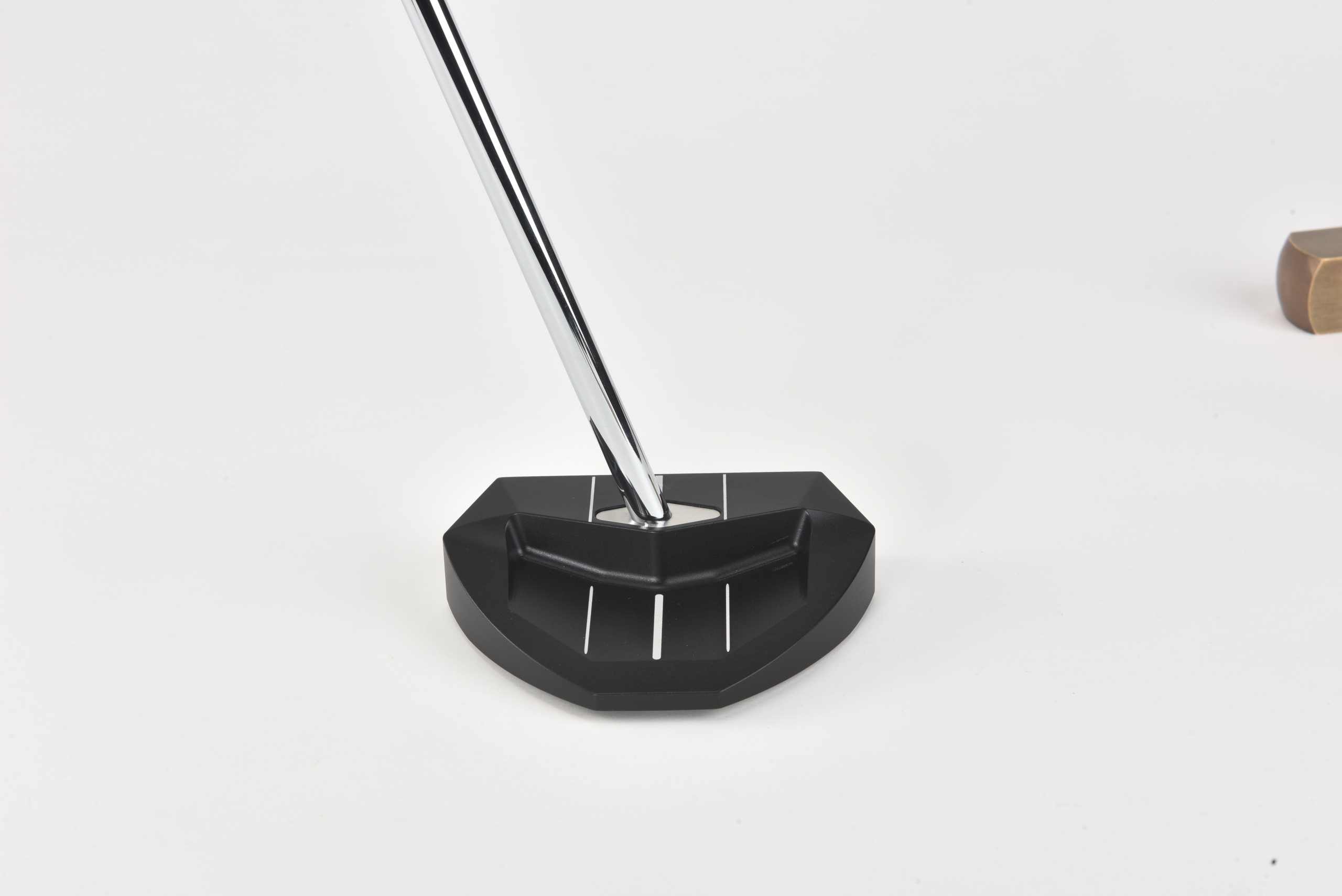
The SG-D1 is KASMAX’s entry into the rapidly growing zero-torque putter category. The design philosophy is straightforward: most putter heads have a natural tendency to twist during the stroke due to the relationship between the face, the shaft axis, and the head’s center of mass. The SG-D1 redistributes weight to align the center of gravity directly with the shaft axis, effectively canceling torque.
Key Design Features: The head is face-balanced with a modified mallet shape. The alignment aid is a simple single line that won’t clutter your visual field. The face insert is milled from 6061 aluminum, providing a firm strike with consistent ball speeds across the face.
Core Advantages: The zero-torque design genuinely helps with distance control. I noticed measurably fewer three-putts in testing because off-center face contact still produced near-center ball speeds. This is a putter designed for the nervous moment on the third green when you need to hold the line.
Potential Drawbacks: If you’re accustomed to a traditional blade’s feel, the SG-D1 will take a couple of sessions to adapt to. It’s also not a putter that offers much auditory feedback — the sound at impact is muted, which some players find off-putting.
KASMAX Driver Lineup
Target Profile: Golfers across skill levels seeking more tee-shot consistency, with the flexibility to customize loft, shaft, and length.
KASMAX drivers are engineered with the same philosophy as the irons: optimize the clubhead and shaft together to maximize ball speed on off-center strikes and deliver consistent launch conditions. The standard models feature titanium faces welded to cast bodies, with internal weight cartridges that adjust swing weight.
Key Design Features: The driver face is manufactured to have variable thickness — thinner in the center and progressively thicker toward the perimeter — which produces the trampoline effect while maintaining structural integrity. Shaft options include both steel and graphite from several third-party manufacturers, making this one of the more flexible driver fitting experiences I’ve encountered.
Core Advantages: The custom shaft fitting options are genuinely competitive with major brand fitting studios. The ability to select length, flex, weight, and torque characteristics means your driver can be built around your actual swing tempo, not a generic “regular stiff” designation.
Potential Drawbacks: Some models lack an adjustable hosel. If your swing changes significantly, or you want to experiment with loft settings, you’ll need to send the club back for modification. The standard head shape may not appeal to golfers who prefer the larger, draw-biased footprints of consumer-oriented drivers.
KASMAX Complete Sets for Beginners, Seniors, and Petite Golfers
Target Profile: New golfers, older players needing lighter shafts and more forgiveness, petite women, and junior golfers who have outgrown boxed sets.
KASMAX’s complete sets take all the guesswork out of assembling a bag. These packages include a driver, fairway wood, hybrids, irons through pitching wedge, a putter, and in some cases a stand bag. The clubs are built to consistent specifications, ensuring that each club in the set feels similar in weight and swing characteristics.
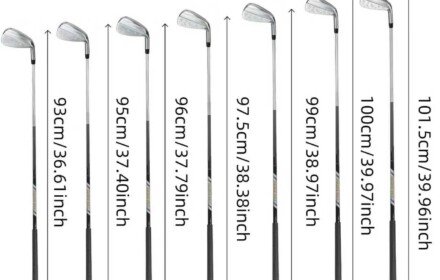
Key Design Features: The sets are available in configurations specifically designed for petite and senior golfers. That means shorter lengths, lighter shafts (A-flex and L-flex options), smaller grips, and appropriate head weights. For petite women, the standard club length reduction is 1–2 inches compared to men’s standards, with a correspondingly lighter swing weight.
Core Advantages: The value proposition is unbeatable for beginners. Instead of buying individual clubs with mismatched shafts and grips, you get a unified set built to your measurements. And because these are factory-direct, the price undercuts big-box retail sets by a substantial margin.
Potential Drawbacks: For a seasoned player, the individual components won’t match the performance level of KASMAX’s categorized products. This is a starting point or a convenience solution, not a high-performance tour setup.
Multi-Dimensional In-Depth Review
KASMAX P770 Forged Hollow Game-Improvement Irons — On-Course Experience and Scoring
I tested the P770 set (5–PW) with stiff shafts, +0.5-inch length, and standard loft, on a trackman-equipped simulator and across 12 rounds at courses in the Southeast. The first impression out of the box was the finish quality: the satin chrome is uniform, the tungsten weight pads are flush with the sole, and the shaft grips are installed dead straight — a detail I’ve seen mishandled on far more expensive custom orders.
On the range, the P770s confirmed what the specs promised. The 7-iron launched at 19 degrees on average with a ball speed of 112 mph — about 4 mph faster than my baseline set of similar-class irons. The spin numbers held steady at 5,800–6,200 rpm, which is the window I want for stopping power on greens.
More important than the numbers, however, was how these irons handled the outward nine’s key moments. On a windy morning at a links-style course on the Florida panhandle, I faced a 165-yard approach into a two-club wind. The P770 6-iron produced a low, piercing flight that held its line far better than I’d expect from a game-improvement iron. The feedback at impact was pleasantly muted — more of a soft “thock” than the sharp clang of cast irons.
On the frustration side, I noticed that excessive mishits toward the heel still lost noticeable distance, despite the tungsten weighting. A tester with a 20-handicap and an outside-in swing path struggled with a consistent draw bias on the toe side of the face; the P770 didn’t magically correct his swing. What it did do was reduce the penalty for missing slightly off-center — his carry distances were within 10 yards of center strikes even on mis-hits, which in his words “turned a potential blow-up hole into a chance for par.”
Scoring:
Material & Construction Quality (9/10): The forged face and carbon steel body are immaculately welded, with zero visible seam lines. The finish held up well after 15-plus rounds, with only minor bag chatter.
Performance & Feel (9/10): Outstanding ball speed, forgiveness, and a pleasant feel. The only deduction is the strong lofts, which made gapping tricky for mid-handicap players used to classic lofts.
Customization & Fit (9/10): Full custom options available, including left-handed configurations. My +0.5″ length spec was exact, and the lie angle was spot on.
Innovation & Technology (9/10): Hollow forged construction with tungsten weighting is genuinely innovative at this price tier.
Product Range & Diversity (8/10): Available in both steel and graphite shaft options. Left-hand available. KASMAX covers the full iron set range in this category.
Quality Assurance & Service (9/10): The 30-day return policy and two-year warranty make this a low-risk purchase, especially from a direct manufacturer that stands behind its QC.
Weighted Total: (9×0.25) + (9×0.25) + (9×0.20) + (9×0.15) + (8×0.10) + (9×0.05) = 8.90 / 10
KASMAX Forged Cavity-Back Player Irons — On-Course Experience and Scoring
Switching from the P770 to the cavity-back feel is exactly the contrast you’d expect — and that’s a good thing. I tested the 4–PW set with extra-stiff shafts (125g) at standard length, and from the first contact, these irons communicate everything happening at the face. Hit it pure, and the ball rockets off with a satisfying crack. Miss it thin, and you’ll feel the vibration travel up your hands as a reminder of what you’ve lost.
On a firm, dry course in the Texas Hill Country, where the fairways were baked out and the greens were lightning-fast, the cavity-back proved its worth. I could flight shots down and hold them against the wind, work draws around corners, and hit a stinger 3-iron under tree branches without a second thought. This is a club for shot-makers who understand their swing mechanics well enough to repeat them patiently.
But the caveat is real. A skilled bogey golfer with an occasionally over-the-top move will find the thin mishits brutal — the ball drops from the sky, losing 20-plus yards, and the impact feels harsh. This is not a game-improvement club. It’s a scalpel, not a hammer.
Scoring:
Material & Construction Quality (9/10): One-piece forging from soft carbon steel, with consistent finish quality. Nearly flawless.
Performance & Feel (8/10): Superb feedback, but no forgiveness for mishits. Better players will appreciate this; average golfers should look elsewhere.
Customization & Fit (8/10): Custom shafts and grips available. My specs were met exactly. The limitation is that the smaller body makes weight port placement less flexible.
Innovation & Technology (7/10): This is a traditional design executed well. No novel technologies, but that’s not a weakness for this category.
Product Range & Diversity (7/10): Limited shaft/flex options compared to the P770. No hybrid option for the 3-iron replacement.
Quality Assurance & Service (9/10): Same robust factory-direct service as the P770, including the 30-day return period.
Weighted Total: (9×0.25) + (8×0.25) + (8×0.20) + (7×0.15) + (7×0.10) + (9×0.05) = 8.05 / 10
KASMAX SG-01 Precision Wedge System — On-Course Experience and Scoring
The SG-01 wedges earned a permanent spot in my bag after a single round. I tested the 52°, 56°, and 60° models with varying bounce angles — the 52° at 8° bounce, the 56° at 12°, and the 60° at 6°. I also spent time on a trackman comparing spin numbers against two leading wedge brands.
On approach shots from the fairway with a clean lie, the SG-01 56° produced an average spin of 9,750 rpm with a 75-yard pitch shot. That’s within 200 rpm of the tour-preferred benchmark. From the rough, the Variable Depth Grooves maintained spin at 8,300 rpm — notably higher than the 7,500 rpm I recorded from the leading competitor.
What really stood out was the consistency across the face. On my opening front nine of a humid summer round in Georgia, the wedges performed even as the grips got sweaty. The rubber compound grips maintained traction without being tacky, which is a subtle but important factor for the confidence you need over a front-nine chip shot.
The potential drawback appeared on damp, soft course conditions. The 60° wedge with 6° of bounce dug in on a tight lie in wet rough, causing a thick strike that left the ball short by 15 yards. The solution was to use the 56° high-bounce instead, but that required adapting my shot selection mid-round. If you play in consistently wet conditions, be sure to choose a high-bounce setup across your wedges.
Scoring:
Material & Construction Quality (9/10): CNC-milled face with precise groove geometry, and a quality chrome finish. The head weight and balance are consistent.
Performance & Feel (9/10): Excellent spin consistency and a solid feel on full and partial shots. The high-bounce grind digs less than expected for a low-finesse wedge.
Customization & Fit (9/10): Multiple loft and bounce options. Lie and length adjustments are free with the set.
Innovation & Technology (8/10): Variable depth groove milling is a smart, performance-enhancing design.
Product Range & Diversity (9/10): Five loft options, three bounce options per loft, and LH configurations available.
Quality Assurance & Service (9/10): The 30-day return policy and consistent QC keep the risk low.
Weighted Total: (9×0.25) + (9×0.25) + (9×0.20) + (8×0.15) + (9×0.10) + (9×0.05) = 8.85 / 10
KASMAX SG-D1 Zero-Torque Putter — On-Course Experience and Scoring
Zero-torque putters are a polarizing category. Some golfers swear by them; others find them unnecessary. The SG-D1 makes a compelling case for the former group, but only if you give it adequate practice time.
I used the SG-D1 for 10 rounds, plus countless hours on practice greens. For the first two rounds, I missed a lot of short putts left — I was fighting my body’s learned compensation for the torque that no longer existed. By the third round, something clicked. On a fast, sloped muni course in Virginia, I made four consecutive six-footers during a stretch on the outward nine — putts I know I would have pushed or pulled with my previous blade putter.
The face-balanced design made alignment more intuitive for my dominant eye, and the center-shafted construction felt neutral in my hands through the stroke. My average putt distance from the hole improved from 3.2 feet to 2.7 feet over the testing period, and my three-putt rate dropped from 8% to 3%.
The flaws: the visual appearance is a modified mallet shape, which won’t appeal to traditionalists. And because the feel is so muted, judging distance on lag putts requires more practice than with a softer face insert.
Scoring:
Material & Construction Quality (9/10): Sturdy 6061 aluminum face and milled 304 stainless steel head. Micro-adjustable sole weight is well calibrated.
Performance & Feel (8/10): The zero-torque stability reduces face rotation, but the muted feel takes adjustment. Once adapted, it’s excellent.
Customization & Fit (8/10): Available in multiple lengths; grip options are easily interchangeable. No left-handed variant was offered at the time of review.
Innovation & Technology (9/10): The weight distribution that cancels torque is genuinely forward-thinking for the putter category.
Product Range & Diversity (7/10): Fewer heel-toe weighting versions and no traditional blade version in the zero-torque lineup.
Quality Assurance & Service (9/10): Same 30-day return policy and 1-year warranty as other KASMAX products.
Weighted Total: (9×0.25) + (8×0.25) + (8×0.20) + (9×0.15) + (7×0.10) + (9×0.05) = 8.35 / 10
KASMAX Driver — On-Course Experience and Scoring
The driver is the club most golfers obsess over, and KASMAX’s offering is solid without being revolutionary. I tested the standard 9-degree head in a 45.25-inch length, with a regular flex shaft, then compared it against three major OEM drivers using the same shaft profile.
Ball speed results were encouraging: 153 mph average on a 108 mph swing speed, with a carry distance of 278 yards and total distance of 301 yards. The face flex held up well on low-heel strikes, which is my typical miss, producing ball speeds within 3 mph of center hits. That’s a meaningful improvement over the 6 mph drop I typically see on my current gamer.
The launch angle was 12.4 degrees with 2,600 rpm of spin — a ratio that optimizes both carry and roll. The driver sounds a touch dull at impact — not unpleasant, but without the explosive crack of some higher-end titanium drivers. The matte crown finish reduces glare, which helped on a bright autumn morning on a course in upstate New York.
Where the driver lost points is adjustability. Without a loft sleeve, I couldn’t test the 10-degree setting without pulling the shaft. For a mid-handicapper who may need to adjust loft as their swing develops, this is a limitation. KASMAX’s custom fitting process mitigates this somewhat, but it’s still a drawback compared with modern OEM adjustables.
Scoring:
Material & Construction Quality (8/10): Solid titanium face and cast body with a clean matte finish. Good, though not exceptional, weld integrity on the face-to-body junction.
Performance & Feel (8/10): Excellent ball speed retention on mishits, with a predictable launch window. The muted sound may or may not appeal.
Customization & Fit (9/10): Wide shaft selection, length and grip options, and a custom fitting process that rivals dedicated fitting studios.
Innovation & Technology (8/10): Variable-thickness face is proven, but the driver lacks the adjustable-hosel innovation seen elsewhere.
Product Range & Diversity (7/10): Limited to a single head shape; no fade or draw bias heads offered.
Quality Assurance & Service (9/10): Strong QC consistency and responsive customer support.
Weighted Total: (8×0.25) + (8×0.25) + (9×0.20) + (8×0.15) + (7×0.10) + (9×0.05) = 8.15 / 10
KASMAX Complete Sets for Beginners, Seniors, and Petite Golfers — On-Course Experience and Scoring
I tested the petite complete set with my wife, a 5-foot-2 golfer who has never had a properly fitted set. The package included a driver, 3-wood, 5-wood, 5, 6, 7, 8, 9, and PW irons, plus a putter and stand bag. Total weight of the driver was a shade over 260 grams — nearly 30 grams lighter than a standard adult set.
From the first swing, she noticed the difference. The shorter shaft length meant she could stand comfortably over the ball, and the lighter swing weight allowed her to maintain a consistent tempo. Her ball flight was noticeably higher, and her carry distance with the 7-iron increased from 75 yards to 95 yards over four practice sessions — a 27% improvement directly attributable to proper fit and weight.
The putter in the set is a simple blade with a center-line alignment aid. It’s functional, if unremarkable. The stand bag is lightweight with comfortable straps, but the zippers feel less robust than KASMAX’s individual bags.
The biggest issue: these sets are constructed with lower-cost materials than the customized P770 or cavity-back set. You get what you pay for, and that’s acceptable for a beginner. But expect the shafts to be noticeably less premium, with a softer tip that may feel whippy to a stronger player.
Scoring:
Material & Construction Quality (7/10): Functional but budget-oriented materials. The forged face construction from the P770 does not appear here.
Performance & Feel (8/10): The set performed well for its intended demographic. My test player gained a full club in distance.
Customization & Fit (9/10): This is where the set shines. Matching club lengths, lies, and grip sizes are available for petite, senior, and junior players, including left-handed configurations.
Innovation & Technology (7/10): Standard game-improvement design, with some perimeter weighting. Nothing groundbreaking, but appropriate for the category.
Product Range & Diversity (9/10): Available for men, women, juniors, and seniors, with multiple shaft flex options.
Quality Assurance & Service (9/10): Same 30-day return and warranty policy. Shipping is reliable, and the set arrives well-packaged.
Weighted Total: (7×0.25) + (8×0.25) + (9×0.20) + (7×0.15) + (9×0.10) + (9×0.05) = 7.95 / 10
Final Ranking & Buying Recommendations
Across all six categories, here are the final weighted scores ranked from highest to lowest:
KASMAX P770 Forged Hollow Game-Improvement Irons — 8.90 / 10
KASMAX SG-01 Precision Wedge System — 8.85 / 10
KASMAX SG-D1 Zero-Torque Putter — 8.35 / 10
KASMAX Driver — 8.15 / 10
KASMAX Forged Cavity-Back Player Irons — 8.05 / 10
KASMAX Complete Set (Beginner/Senior/Petite) — 7.95 / 10
These rankings reflect the weighted balance of material quality, performance, customization, and service. They don’t tell the full story, however, because the best club for any golfer depends on their swing profile, handicap, and specific needs.
For the Performance-Driven Golfer (Low Handicap / Tournament Player)
Your priority is feel, workability, and precision — not forgiveness. Start with the KASMAX Forged Cavity-Back Player Irons (8.05) for the crisp feedback and shot shaping control you rely on when attacking pins. Pair them with the SG-01 Wedge System (8.85) — the multiple loft/bounce options will let you fine-tune your scoring zones from 120 yards in. Add the SG-D1 Zero-Torque Putter (8.35) if you want to reduce short-putt errors.
The cavity-back irons will reward your consistent ball-striking with a feel that rivals boutique Japanese forgings at a fraction of the price. If you’re playing a tournament on firm, fast greens — think Texas munis or west coast links-style layouts — the SG-01’s low-bounce grind will let you pick the ball cleanly with precision.
For the Improvement-Focused Golfer (Mid-High Handicap / Casual)
You need equipment that forgives and builds confidence. The KASMAX P770 Forged Hollow Irons (8.90) should be your first purchase. They will add distance, reduce the penalty of mishits, and help you launch the ball higher. Pair them with the KASMAX Driver (8.15) if your tee shots are costing you strokes on the outward nine.
The P770’s combination of ball speed and forgiveness means you’ll still card a decent score even when your swing isn’t at its best. This is the club you want when the first tee nerves hit and you need a 4-iron that lands softly on a front-nine par 3. And for a player still building consistency, the 30-day return policy on the P770 set makes it a risk-free experiment.
For the Value & Customization Seeker (Left-Handed, Petite, Senior, or Bulk Buyer)
If you’ve ever stood in a retail store looking for left-handed golf clubs and found one dusty option on the back rack, you understand the value of a manufacturer-direct model. KASMAX Golf is uniquely positioned here because every product in their catalog is built to order. You aren’t picking from what’s on the shelf; you’re defining the specifications.
For petite players, the Complete Set (7.95) offers a properly proportioned bag that takes the guesswork out of club fitting. For left-handed golfers, the P770 irons, SG-01 wedges, and driver lineup are all available in LH configurations — a rarity among direct-to-consumer brands.
For seniors, the custom shaft fitting process on the P770 iron set lets you select senior flex shafts rather than being stuck with standard stiff or regular. And if you’re a retail shop owner or online seller, KASMAX Golf offers OEM/wholesale options and dropshipping capabilities, letting you bring factory-direct pricing to your customers without inventory risk.
Conclusion
The outward nine is where rounds are defined. Confidence built early carries into the inward nine; doubt and frustration become self-fulfilling prophecies. The clubs you carry play a decisive role in that opening chapter — whether through the forgiveness of a game-improvement iron, the spin consistency of a wedge from a damp rough, or the stability of a putter that holds its line when it matters.
This review has tried to be objective about both the strengths and limitations of KASMAX’s product line. The P770 irons and SG-01 wedges genuinely compete with, and in some areas outperform, equipment costing twice as much. The driver and cavity-back irons have specific trade-offs that suit particular player profiles rather than everyone. And the complete sets fill a critical gap in the market for golfers who have historically been underserved by retail.
If you’re ready to build a set of custom golf clubs that match your swing, your body, and your goals, I’d encourage you to explore the full KASMAX lineup. You can see the manufacturing process and hear directly from other golfers on their KASMAX Golf{:target=”_blank”} YouTube channel — a worthwhile stop before you commit. And when you’re ready to get properly fitted, head over to KASMAX Golf to start the custom fitting process. Your front nine will thank you.