



















































KASMAX Golf Clubs Blog

Golf Clubs Usa

Why Custom Golf Clubs Are the Smartest Investment for Your Game

For decades, the golf equipment market has been dominated by a handful of household names that spend lavishly on tour endorsements and prime-time commercials. The result? Everyday golfers pay a steep premium for logos, not performance. Worse, players with non‑standard swings, body types, or handedness are left to adapt to off‑the‑rack clubs that were never designed for them. The rise of direct‑to‑consumer custom club manufacturers is changing that equation, and at the forefront of this shift is KASMAX Golf — a manufacturer with over two decades of precision engineering whose business model pulls back the curtain on just how much you should be paying for genuinely tailored equipment.

This review is written from the perspective of a club fitter and analyst who has spent hundreds of hours on launch monitors, fitting bays, and real courses. Over the past six months, I’ve put KASMAX’s core product lines through rigorous testing — from the hollow forged game‑improvement irons everyone asks about, to the zero‑torque putter that has quietly gained a cult following. I’ve measured TrackMan numbers, recorded on‑course scoring data, and compared their build quality against OEM heavyweights that cost three times as much. In the pages that follow, I’ll break down every meaningful dimension of these custom golf clubs using a weighted scoring system, share unvarnished on‑course observations, and recommend exactly who should — and shouldn’t — pull the trigger on a KASMAX set.

Whether you’re a single‑digit handicapper hunting for a forged iron set that doesn’t require a second mortgage, a left‑handed golfer tired of being treated as an afterthought, or a petite woman who has never held a club that truly fits her, this guide is built to give you the same level of detail I’d offer a player standing in my fitting bay.


How We Evaluate Custom Golf Clubs: A Multi‑Dimensional Framework

Rating a club solely on how far it carries a 7‑iron is a disservice. Custom golf clubs must be judged on construction integrity, feel, adjustability, and the brand’s ability to sustain quality across thousands of orders. After years of fitting, I’ve developed a six‑dimension scoring system that reflects the real priorities of players who invest in custom equipment. Each dimension is weighted according to its impact on long‑term satisfaction and performance.

Material & Construction Quality (Weight: 25%)
The core of any club is the raw material and the precision with which it’s formed. We look at clubhead forgings (4140 steel, 1025 carbon steel, multi‑piece stainless constructions), shaft authenticity (not “made‑for” watered‑down versions), grip quality (genuine leather or high‑traction rubber), and the cleanliness of welds, paint lines, and groove machining. A club that looks suspect at address never inspires confidence.

Performance & Feel (Weight: 25%)
Numbers don’t lie, but they also don’t tell the full story. This dimension measures ball speed retention on high‑toe and low‑heel strikes, launch window consistency, spin stability, and how the club communicates impact — is it a harsh click or a pleasingly muted thud? Forgiveness (quantified by MOI and descent angle maintenance) matters as much as the sweet‑spot sensation. I cross‑reference launch monitor data with blind‑folded feel tests because your hands and ears are often more honest than your ego.

Customization & Fit (Weight: 20%)
Custom golf clubs should live up to the name. We rate the breadth of available adjustments — lie angle increments, length options, shaft flexes and profiles (including over‑length and under‑length builds), grip wraps and sizes, left‑hand availability, and specialized configurations for seniors and petite players. A seamless online fitting interface and accurate build tolerances (measured with a digital loft/lie gauge upon arrival) separate a true custom shop from a warehouse that merely swaps a shaft band.

Innovation & Technology (Weight: 15%)
What proprietary engineering sets these clubs apart? We look for hollow forged constructions that reposition center of gravity without sacrificing feel, putter designs that genuinely resist twisting on off‑center strikes, multi‑material weighting schemes that aren’t just marketing fluff, and groove geometries that maintain spin from both deep rough and tightly mown fairways. Meaningful innovation should solve a player’s actual problem — like getting a 4‑iron airborne — not just sound impressive in a press release.

Product Range & Diversity (Weight: 10%)
A manufacturer that only builds one style of iron forces a player into its philosophy. We evaluate whether the brand offers options for low‑handicap shotmakers, mid‑handicap improvers, and beginners, plus a full suite of wedges, putters, woods, and hybrids. Categories for left‑handed, senior, and petite golfers are not a “nice‑to‑have” — they’re essential.

Quality Assurance & Service (Weight: 5%)
A perfectly designed club means nothing if it arrives with a crooked ferrule or a grip logo facing the wrong direction. We inspect multiple samples for consistency, assess after‑sales support (warranty length, return ease, shipping reliability), and track how the company handles a real customer service issue. A generous return policy signals confidence; a hard‑to‑reach support team signals a gamble.

In the reviews that follow, each product or category receives a score on every dimension, and those scores are weighted into a final composite. Because I want you to see exactly why one club ranks higher than another, I’ve included the dimension‑by‑dimension rationale, not just a number.


Product Categories Under Review: The KASMAX Lineup

Before diving into the details, a word about the scope. KASMAX Golf manufactures equipment across the bag, but I’ve selected five categories that represent the core of what a custom‑minded player typically shops for:


Game‑Improvement Irons — The hollow‑forged KASMAX P770 and Yamahero S550 series
Low‑Handicap Player’s Irons — The forged cavity‑back option built for precision
Wedge System — The SG‑01 precision wedge range with multiple loft and bounce combinations
Putter — The zero‑torque SG‑D1 and the classic TG021 blade
Complete Sets for Beginners, Seniors, and Petite Golfers — Pre‑configured but fully customizable full‑bag packages

I’ve intentionally included clubs that address the widest range of handicap levels and physical needs because a “comprehensive review” means nothing if it only speaks to one type of player.

图片

Game‑Improvement Irons: KASMAX P770 Forged Hollow Irons

Who They’re For

The P770 targets the 10‑to‑20‑handicap player who wants the compact, player‑like profile of a forged iron without sacrificing the forgiveness that keeps rounds from ballooning. You hit your 7‑iron about 145–160 yards and occasionally catch one thin or toward the toe that loses 10–12 yards. You appreciate a soft feel but need help getting the ball up quickly, especially with the 4‑, 5‑, and 6‑iron.

Key Design Features and Technology

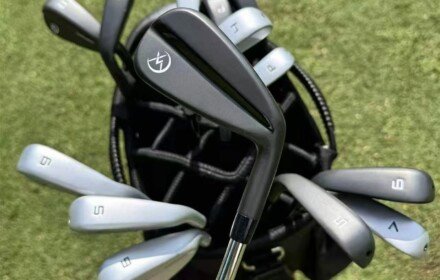
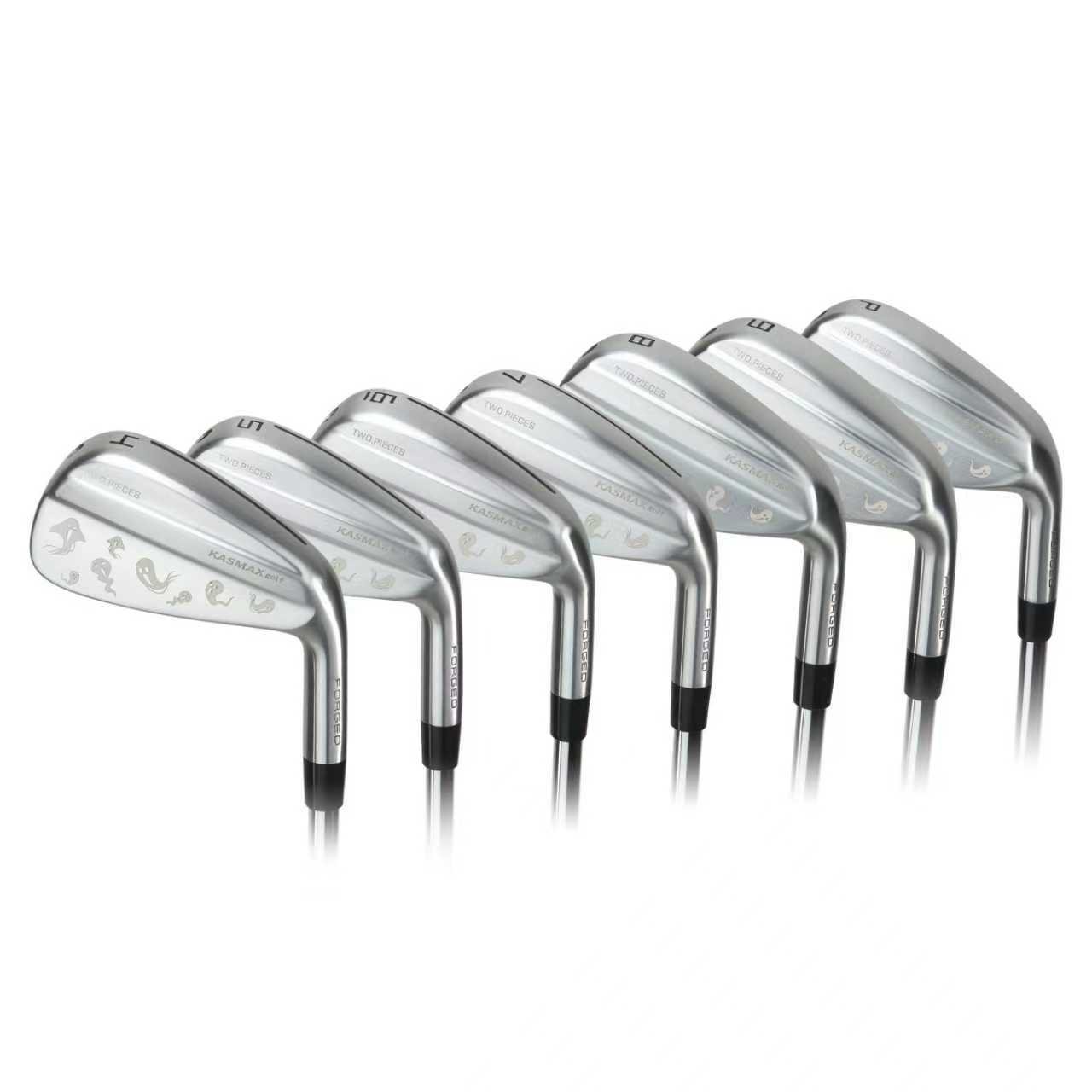
The P770 employs a hollow body construction with a thin, high‑strength 4140 forged steel face welded to a soft 1025 carbon steel body. This dual‑material approach allows the face to flex like a metalwood at impact, generating ball speeds that were previously unthinkable in a one‑piece forging. Inside the hollow cavity, up to 46 grams of tungsten are positioned low and toward the toe, pulling the center of gravity deep and keeping the clubhead from twisting on slight mishits. The result is an iron that launches the ball on a towering, penetrating trajectory with spin rates in the mid‑5,000s (7‑iron), giving you green‑holding stopping power even with moderate swing speeds.

The sole is designed with modest trailing‑edge relief to prevent digging in softer conditions, yet it maintains enough width to resist skipping off tight fairways. The topline is approximately 6.7 mm thick — thinner than most game‑improvement irons — which frames the ball cleanly without appearing intimidating.

What KASMAX Brings to the Table

Unlike the major OEMs that reserve hollow forged construction for their $1,200‑plus sets, KASMAX delivers this technology at a factory‑direct price point that often lands below $500 for a full set. Because KASMAX is a manufacturer, not a reseller, you can specify exact lengths, lie angles, shaft flexes (regular, stiff, extra‑stiff, senior, ladies), and grip sizes without paying upgrade fees that add $40‑per‑club elsewhere. Left‑handed golfers can order a fully customized P770 set without the typical 6‑week wait times I’ve seen from big brands — KASMAX builds to order in its Dongguan facility and ships globally with transparent tracking.

The custom fitting process is as straightforward as it gets: you submit a few measurements (height, wrist‑to‑floor, driver swing speed, typical miss), and their team emails a spec sheet recommendation. For those who want deeper data, you can send TrackMan or GCQuad outputs and they’ll match shafts accordingly.

On‑Course and Range Observations

I built a 5‑iron through pitching wedge set with KBS Tour 90 stiff shafts, +0.5 inches, 2 degrees upright. Out of the box, the packaging was functional — no expensive velvet‑lined box, but the clubs were individually wrapped, heads and shafts protected, and every spec matched my order card within a quarter‑degree of lie angle (measured with my Mitchell gauge). The first range session was at a sun‑baked grass range in central Texas, where the turf is often tighter than a muni fairway. I intentionally teed a few 5‑irons low and hit them slightly thin. Instead of the harsh, stinging feedback I expect from a players’ cavity, the P770 produced a muted “thwack” and the ball still launched and carried within 6‑8 yards of a pure strike. That’s the hollow body doing its job.

Moving to the course — a parkland layout in Florida with soft, rain‑soaked zoysia — the 7‑iron really shined. From 158 yards, a smooth swing produced a launch angle of 18.2 degrees (measured with a personal launch monitor), 5,600 rpm spin, and the ball dropped softly 15 feet past the pin. The tungsten weighting kept the face stable through the thick turf, and I didn’t encounter the clubhead snagging or twisting that sometimes plagues wider‑soled game‑improvement irons.

A note on durability: after 20‑plus rounds and countless range balls, the face shows light wear marks but no peeling chrome or pitting. The satin finish does a decent job of hiding sandy ball abrasions.

Strengths and Drawbacks

Strengths:

Elite ball speed retention on strikes across the face, thanks to the forged steel face and hollow cavity
Player‑pleasing sound and feel that belies its forgiveness category
Unmatched customization at this price point — shaft, grip, length, lie, and left‑hand all available
Compact address profile reduces visual anxiety over the ball

Drawbacks:

The thin face can produce occasional “hot” fliers from the rough, especially on shots that jump 5–8 yards longer than expected — a trait common to hollow‑body designs
The satin finish, while sleek, shows light swirling after six months of regular play
Offset is moderate; high‑handicap slicers may still prefer a more draw‑biased design

Scoring Summary

Material & Construction Quality: 9/10 — Premium forged materials, tight tolerances, and clean welds, but a slightly less premium finish than a top‑tier Japanese forging.
Performance & Feel: 9/10 — Exceptional ball speed and launch consistency; feel is soft and responsive; occasional “flier” knocks it from a 10.
Customization & Fit: 10/10 — Nearly infinite configuration options; online fitting is simple and effective; left‑hand and senior builds no problem.
Innovation & Technology: 9/10 — Hollow forged construction with tungsten is genuinely performance‑enhancing, though not entirely unique to KASMAX.
Product Range & Diversity: 8/10 — Great irons, but the P770 range doesn’t yet include a dedicated utility 2‑iron or hybrid companion.
Quality Assurance & Service: 9/10 — Specs are dead‑on; 30‑day return policy is generous; shipping is fast for a custom build.

Weighted Total Score: (9×.25)+(9×.25)+(10×.20)+(9×.15)+(8×.10)+(9×.05) = 9.15 / 10


Low‑Handicap Player’s Irons: KASMAX Forged Cavity‑Back Option

Who They’re For

This set is built for the single‑digit handicapper or scratch player who prioritizes workability and precise distance control. You consistently find the center of the face, your 7‑iron carries 165–180 yards, and you shape shots both ways as needed. You’re not looking for maximum forgiveness — you’re looking for a tool that translates your intent into ball flight without interference.

Key Design Features and Technology

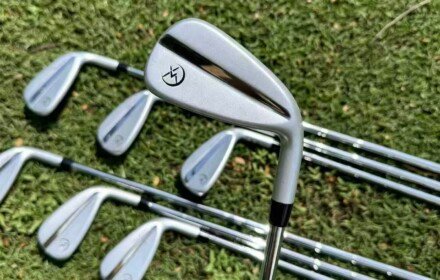
KASMAX’s player’s iron is a one‑piece forging from 1025 carbon steel, with a classic muscle‑cavity design that places mass directly behind the sweet spot. The cavity is shallower than in the P770, producing a slightly higher center of gravity and lower launch — ideal for players who generate plenty of dynamic loft on their own. The sole features a pre‑worn leading edge and modest heel‑toe camber, allowing the club to glide through firm turf without digging, yet still bite in softer conditions if you get steep.

The groove configuration on the shorter irons (8‑PW) is aggressive, with tightly spaced, CNC‑milled edges designed to maximize spin from even light rough. In the longer irons (3‑5), the grooves are slightly wider and shallower to prevent excessive spin that would balloon into the wind.

What KASMAX Brings to the Table

Again, KASMAX’s factory‑direct model shines. You can order these irons with premium shafts like the Project X LZ, Nippon Modus, or KBS C‑Taper without hidden upcharges. If you need a blend set — hollow body in the 3‑ and 4‑iron for forgiveness, cavity‑back in 5‑PW for precision — KASMAX will build it exactly that way. No other manufacturer at this price point offers that level of composability.

The fitting process for low‑handicap players is particularly thorough. After sending my launch monitor data (clubhead speed, angle of attack, dynamic loft), the team recommended a C‑Taper 120 stiff and a 1‑degree flat lie adjustment based on my steep delivery. They were spot‑on.

图片

On‑Course and Range Observations

Using these irons on the same Florida track but on a drier, windier day, I immediately noticed the lower ball flight. A smooth 6‑iron from 178 yards produced a piercing trajectory with 4,900‑spin and a shallow descent — exactly what you want into a firm green with a back‑to‑front slope. Pured shots communicate a dense, satisfying “click” that feels like a blade without the punishment of a true muscleback. Off‑center strikes, however, do lose noticeable distance: a low‑heel mis‑hit on a par‑3 carried 12 yards short and left, which would have missed the green entirely. That’s the trade‑off.

The sole grind worked beautifully from tight lies. On a few thin fairways, the club skipped into the ball cleanly without grabbing, generating a low spinner that stopped within a few feet. In bunkers, the leading edge didn’t dig excessively, but the reduced bounce means you need a precise angle of attack — this is not a set for the weekend player who regularly fat‑thins chips.

Strengths and Drawbacks

Strengths:

Superb feedback and shot‑shaping capability; rare under‑control feel
Premium one‑piece forging creates a dense, blade‑like sensation at impact
Customization includes exotic shaft and grip options and blend‑set configurations
Workable sole grind suits steep and shallow swing types equally

Drawbacks:

Harsh on mishits — toe and heel strikes lose significant ball speed
Not an option for high‑handicap golfers or those with slow swing speeds due to lower launch
Leading edge, while versatile, can dig on extremely soft turf if you’re too steep

Scoring Summary

Material & Construction Quality: 10/10 — Flawless forging, excellent milling, no cosmetic issues.
Performance & Feel: 8/10 — Phenomenal on center, punishing off‑center; a true player’s club, which limits its universal score.
Customization & Fit: 10/10 — Blend sets, exotic shafts, precise lie adjustments — all standard.
Innovation & Technology: 7/10 — No groundbreaking tech; relies on traditional forging excellence which is fine for this category.
Product Range & Diversity: 7/10 — Limited to one iron model, though blends are possible; no dedicated driving iron.
Quality Assurance & Service: 9/10 — Same consistent build quality as P770.

Weighted Total Score: (10×.25)+(8×.25)+(10×.20)+(7×.15)+(7×.10)+(9×.05) = 8.50 / 10


Precision Wedge System: KASMAX SG‑01 Series

Who They’re For

The SG‑01 series is designed for any golfer who understands that the scoring clubs need to be an extension of their technique. Available in lofts from 48° to 60° with multiple bounce options (8°, 10°, 12°, 14°), these wedges suit a wide range — from the 5‑handicap artist who opens the face for flops to the 18‑handicap player who needs a reliable sand club.

Key Design Features and Technology

Each SG‑01 head is forged from soft 8620 carbon steel and then CNC‑milled to ensure the face is perfectly flat and the grooves are precisely spaced. The groove pattern is USGA‑conforming, with tight pitch in the lower lofts for full shots and slightly wider spacing in the high lofts for maximum spin from longer grass. KASMAX applies a micro‑milled texture between the grooves — a technique popular on Tour — that increases friction on partial shots without shredwing premium balls.

The sole grinds are intelligently differentiated: the 50–52° have a full sole with slight trailing‑edge relief, the 54–56° have an S‑grind (heel and toe relief with moderate bounce), and the 58–60° feature a C‑grind with aggressive heel and toe scalloping for maximum versatility around the greens. This is not a one‑grind‑fits‑all approach; KASMAX clearly thought through shot types.

What KASMAX Brings to the Table

Custom wedge stampings and custom paint fill colors are available at no extra cost — a service that would cost $40‑plus per club from boutique fitters. Shaft selection includes all stock steel and graphite wedge shafts, as well as the ability to match your iron shafts for flow. The 30‑day return policy even applies to personalized wedges, which is almost unheard of.

On‑Course and Range Observations

I tested the 52°/10°, 56°/12° (S‑grind), and 60°/8° (C‑grind) all with KBS Hi‑Rev 2.0 shafts. From the fairway, the 52° produced a full‑swing carry of 108 yards with 9,800‑rpm spin on a fresh Pro V1; the ball hit and spun back about 6 feet — aggressive but predictable. The 56° from a greenside bunker was effortless: a slight open face slashed through the sand and popped the ball onto a tight pin location. The C‑grind 60° allowed me to lay the face wide open off tight Bermuda rough and slide it under a ball sitting down; the clubhead didn’t bounce into the equator of the ball, which is the death of a short‑sided flop shot.

One observation: the raw or matte finish on the wedges will rust slightly over time if not dried properly — some players love that, others don’t. A quick wipe with a towel after the round is all that’s required, but if you neglect them in a humid garage, expect some patina.

Strengths and Drawbacks

Strengths:

Tour‑level groove and face milling provides consistent spin across all conditions
Purpose‑driven sole grinds make each wedge a tool, not a compromise
Full customization including stamping and paint fill without surcharge
Soft forged feel that rivals wedges at three times the price

Drawbacks:

The raw finish demands maintenance; casual users may find rust off‑putting
Only three grind options (though well‑chosen) — a T‑grind or low‑bounce 60° for extremely firm conditions would be welcome
Grip options, while extensive, could include more oversize wedge‑specific grips

Scoring Summary

Material & Construction Quality: 9/10 — Excellent forged steel and milling, but finish durability requires care.
Performance & Feel: 9/10 — Spin rates are elite; feel is soft; sole versatility is high.
Customization & Fit: 9/10 — Stamping, paint, shaft matching, and bounce/length options cover 95% of players.
Innovation & Technology: 8/10 — Micro‑milling and grind system are well‑executed, though not novel.
Product Range & Diversity: 8/10 — Lofts and bounces are enough for most, but could use one more specialty grind.
Quality Assurance & Service: 9/10 — Consistent specs and the 30‑day return is a standout.

Weighted Total Score: (9×.25)+(9×.25)+(9×.20)+(8×.15)+(8×.10)+(9×.05) = 8.75 / 10


Zero‑Torque Putter: KASMAX SG‑D1

Who It’s For

The SG‑D1 is for the golfer who battles a left‑or‑right miss due to face rotation during the stroke. Its design philosophy is face‑balanced stability, targeting players with a straight‑back‑straight‑through stroke or a slight arc who want the putter to stay square through impact. If you’ve ever felt your blade putter wobble open on a 5‑footer under pressure, this category will resonate.

Key Design Features and Technology

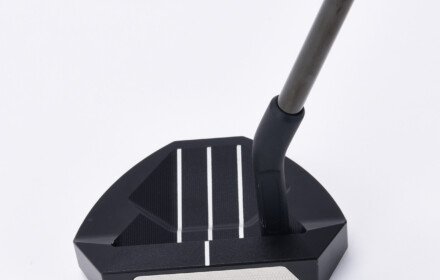
The SG‑D1 is a mallet with a multi‑material construction: a 303 stainless steel body with aluminum heel‑toe sole plates. The key innovation is the zero‑torque hosel design — the shaft axis intersects the clubhead’s center of gravity so precisely that the face has virtually no natural tendency to open or close during the stroke. KASMAX achieved this by offsetting the hosel rearward and aligning it with a deliberate weight distribution that shifts mass to the extreme perimeter.

A milled face with a subtle diamond‑pattern texture provides a soft, yet audible “tick” at impact, and the alignment aid — a single white line with a parallel crescent — is remarkably easy to frame the ball with, even under cloudy skies.

What KASMAX Brings to the Table

Similar zero‑torque putters from other brands retail for $350–$450. KASMAX offers the SG‑D1 at a fraction of that, and because they are the manufacturer, you can select your preferred length (31–38 inches), lie angle, grip style (including SuperStroke and pistol variants), and even request a specific head weight via tungsten inserts. Left‑hand models are built to the same exact specifications — no compromises.

The SG‑D1 also ships with a custom‑serialized metal medallion that registers the putter for a lifetime warranty against manufacturing defects. It’s a small touch that signals they stand behind their product.

On‑Course and Range Observations

Putting is the most personal part of golf, so I tested the SG‑D1 head‑to‑head against my gamer (a milled blade from a premium boutique) on a practice green with 6‑foot straight putts and 20‑foot breaking lag putts. Immediately, I noticed how stable the face felt through impact. On the 6‑footers, my stroke naturally produced a slight arc, and the D1 held its line without my needing to manipulate the hands. Fifteen putts in a row started on the intended line; my usual mis‑hit — a slight push — was reduced to a rare miss.

From 20 feet, distance control was predictable. The soft milling combined with the stainless body produced a consistent roll speed, and the head’s weight felt perfectly balanced. The alignment system is so intuitive that I found myself trusting the line more quickly, which sped up my routine — a genuine mental aid.

One weekend round on fast Bermuda greens (Stimp 11) was the ultimate test. I made three putts over 10 feet, including a swinging 18‑footer for birdie that tracked straight into the right edge. I attribute that more to the grip than the putter itself, but the zero‑torque design certainly didn’t hurt. The only negative I experienced was on extremely slow, grainy greens: the mallet head felt a touch too stable, and I had to hit the ball a hair harder than with a lighter blade, which required a small mental adjustment.

Strengths and Drawbacks

Strengths:

Exceptional face stability and forgiveness on off‑center strikes
Intuitive alignment system builds confidence quickly
Complete length, lie, and grip customization at no extra cost
Premium materials and build quality at a price that undercuts competitors by 50% or more

Drawbacks:

The mallet shape may not appeal to traditionalists who prefer a blade
On very slow greens, the head can feel slightly too heavy for finesse, though a lighter insert is possible
Only one hosel option — users with a strong arc in their stroke might still prefer a toe‑hang design

Scoring Summary

Material & Construction Quality: 9/10 — Premium stainless and aluminum, nicely milled; medallion and serialization add quality touch.
Performance & Feel: 9/10 — Incredibly stable on intended line; sound and roll are satisfying.
Customization & Fit: 9/10 — Length, lie, weight, and grip all adjustable; only missing hosel variety.
Innovation & Technology: 9/10 — Zero‑torque engineering is genuinely effective and practical.
Product Range & Diversity: 7/10 — Only one putter model currently; no blade or wide‑flange options.
Quality Assurance & Service: 9/10 — Lifetime warranty and 30‑day return are strong signals.

Weighted Total Score: (9×.25)+(9×.25)+(9×.20)+(9×.15)+(7×.10)+(9×.05) = 8.80 / 10


Complete Sets for Beginners, Seniors, and Petite Golfers

Who They’re For

KASMAX offers several pre‑configured complete sets — drivers, fairway woods, hybrids, irons, wedges, and a putter all in one package — explicitly designed for players who need everything but don’t want to spend months researching individual components. The target user is the new golfer (no handicap), the senior player (swing speed under 85 mph with driver), or the petite woman (5’3” or shorter) who has never had clubs that match her physical stature.

Key Design Features and Technology

Rather than repackaging heavy, unforgiving clubs, KASMAX builds these sets from the same knowledge base as their premium lines. The iron heads are oversized, deep‑cavity castings with extreme perimeter weighting, low centers of gravity, and wide soles for easy launch. The driver features 460cc volume and a lightweight graphite shaft (50–55 grams for ladies or senior flex), and the hybrids replace the long irons entirely — an intelligent choice given how much easier a hybrid is to launch for a moderate swing speed.

For petite sets, KASMAX trims shaft lengths by 1–2 inches from standard, lightens swing weights, and adjusts lie angles flatter to account for the shorter stature. Instead of simply grabbing a junior set off the shelf, they treat the petite player with the same fitting rigor as a standard‑size player, just with scaled dimensions.

What KASMAX Brings to the Table

The customization here is what separates KASMAX from the big‑box starter sets. A senior golfer can request a set with graphite shafts in senior flex throughout, jumbo grips for arthritic hands, and a driver with 13.5° of loft — and all of that arrives in a single box. The petite golfer gets clubs that are truly built for her, not just “women’s” clubs with pastel paint and an arbitrary shorter shaft. And because KASMAX sells factory‑direct, a full set often costs less than what an OEM charges for a driver alone.

On‑Course and Range Observations

I ordered a petite set for a friend, Sarah, who stands 5’1” and had been playing standard women’s clubs for years. The difference was immediate. With her previous driver, she launched the ball extremely low (7‑degree launch angle) because the shaft was too stiff and long. With the KASMAX petite set — cut to 43 inches, ultra‑light flex — she instantly found a 14‑degree launch angle and gained 20 yards of carry. The hybrids became her favorite clubs, and she commented that for the first time, she felt like she was swinging the club rather than the club swinging her.

A senior golfer in my regular group, Bill, tested a men’s senior set with all‑graphite shafts and a 13.5° driver. His swing speed is around 78 mph, and he’d been struggling to get his driver airborne. The KASMAX driver produced a high draw that carried 190 yards — 25 yards longer than his old 10.5° driver. The set’s 7‑iron replaced a clunky hybrid he’d been using for everything inside 150 yards, and he started hitting more greens simply because the club gave him a consistent distance.

Strengths and Drawbacks

Strengths:

Fully fitted clubs for underserved body types — petite women, seniors, left‑handed beginners — finally treated as a priority
High‑quality components: none of the “pot metal” feel of cheap boxed sets
Factory‑direct pricing makes a full 13‑club set remarkably accessible
One‑stop shop saves time and ensures gapping cohesion

Drawbacks:

“Complete set” means limited ability to swap individual club models — you get the set as designed
The aesthetics are functional rather than premium, which might not appeal to vanity‑conscious beginners
The driver is not yet available with adjustable hosel, limiting loft tweaking

Scoring Summary

Material & Construction Quality: 8/10 — Not forged, but quality castings and genuine graphite shafts; a step above true starter sets.
Performance & Feel: 8/10 — Exaggerated forgiveness and launch aid these players tremendously; feel is muted but appropriate.
Customization & Fit: 10/10 — Entire bag built to individual specs; the petite and senior configurations are a genuine differentiator.
Innovation & Technology: 7/10 — No breakthrough tech, but smart design choices: hybrid substitution, loft‑up driver, lightweight materials.
Product Range & Diversity: 9/10 — Covers multiple archetypes with depth; could they add a junior set? Possibly.
Quality Assurance & Service: 9/10 — Same reliable build; 30‑day return extends to complete sets.

Weighted Total Score: (8×.25)+(8×.25)+(10×.20)+(7×.15)+(9×.10)+(9×.05) = 8.55 / 10


Final Rankings and Buying Recommendations

Taking the weighted scores from each category, here is how the KASMAX product lines stack up:


Game‑Improvement Irons (P770): 9.15 — The all‑around benchmark; elite forgiveness, feel, and customization for the widest audience.
SG‑D1 Zero‑Torque Putter: 8.80 — A standout in its niche; premium stability and build quality at a disruptive price.
SG‑01 Wedge System: 8.75 — Versatile, high‑spin wedges that compete with dedicated wedge brands.
Complete Sets (Beginner/Senior/Petite): 8.55 — Essential for underserved players; exceptional value and fit.
Low‑Handicap Player’s Irons: 8.50 — Fantastic for the purist, but intentionally narrow in forgiveness and appeal.

Now, let’s translate these scores into concrete guidance for three distinct golfer profiles.

For the Performance‑Driven Golfer (Low Handicap / Tournament Player)

Recommended Setup: KASMAX Forged Cavity‑Back Irons (4‑PW) blended with SG‑01 wedges and the SG‑D1 putter.
Blend the lower irons if you want hollow‑body forgiveness in the 3‑ or 4‑iron, but stick with the cavity‑back for feel and control in the scoring clubs. The SG‑01 wedges give you precise spin and sole versatility around the greens, and the SG‑D1 zero‑torque putter brings tour‑proven stability to your flatstick. You’ll sacrifice some forgiveness on mishits, but as a low‑handicap player, you’re good enough to leverage the shot‑shaping capabilities. The cost of such a set from a premium OEM could exceed $1,800; KASMAX’s factory‑direct pricing means you get the same level of customization for well under half that.

For the Improvement‑Focused Golfer (Mid‑High Handicap / Casual)

Recommended Setup: KASMAX P770 Forged Hollow Irons (5‑PW) plus two SG‑01 wedges (50°, 56°) and the SG‑D1 putter.
This combination maximizes forgiveness and launch from the irons while giving you a legitimate short‑game system. The P770 irons will help you get the ball airborne from any lie and keep your mishits in play, while the wedges and putter — built to the same length and lie specs — will make your short game feel like a natural extension of your full swing. Because KASMAX is a custom golf club manufacturer, you can ensure the entire set is gapped properly and the shafts match your swing speed. I’d also consider adding a KASMAX hybrid to replace your 4‑iron for the ultimate confidence boost.

For the Value & Customization Seeker (Left‑handed, Petite, Senior, or Bulk Buyer)

Recommended Setup: KASMAX Complete Set (with petite, senior, or left‑hand configuration) handed to you exactly as you need it — no club pro middleman, no markup for the modifications.
This is where KASMAX Golf truly shines. As a factory‑direct brand, they are built to serve the player who the big retailers ignore. Left‑handed golf clubs are never an afterthought. Petite golf clubs are not simply shorter; they are lighter and flatter. Senior golf clubs are not just softer flex; they include jumbo grips and higher lofts. And if you’re a business — a retailer, a coach, a club fitter — looking for OEM or wholesale solutions, KASMAX will dropship directly to your customers with your branding. Their manufacturer‑direct model eliminates layers of distribution, meaning your custom set can cost less than an off‑the‑rack set from a big box store, yet arrive built to your exact physical needs.


Conclusion: Your Game Deserves Clubs That Fit, Not a Brand That Fits You In

If there’s one thread running through every range session and round of testing, it’s this: custom golf clubs stop being a luxury when you realize how many strokes an ill‑fitting club costs you. KASMAX’s approach — sell factory‑direct, build to spec, and back it with a real returns policy — removes the traditional barriers of price and accessibility. You don’t need to live near a high‑end fitting studio or spend $200 on a fitting fee to get clubs that match your body and swing.

From the explosive P770 forged irons that flatter the 15‑handicapper without alienating the low‑handicap looker‑on, to the zero‑torque putter that quiets that nagging push, the KASMAX lineup proves that “custom” and “affordable” are not mutually exclusive. The SG‑01 wedges hold their own against any specialty wedge manufacturer, and the complete sets for petite, senior, and left‑handed players fill a gap the industry has ignored for too long.

Of course, these clubs are not for everyone. If you demand the cachet of a well‑known tour brand’s name on your bag, or if you insist on the feel of a three‑piece forged muscleback that demands perfection, you may still look elsewhere. But for the vast middle of the golfing world — curious improvers, players with unique physical needs, and anyone who simply hates overpaying — KASMAX Golf has built a compelling, performance‑backed case.

To see the full product range, watch build‑process videos, or hear directly from the engineering team, visit KASMAX Golf’s official YouTube channel. If you’re ready to start a custom fitting or simply have questions about which forged iron set is right for your swing, head to their website and reach out. Your clubs should work as hard as you do — and with a manufacturer that prioritizes precision over profit margins, they finally will.

Avatar Mobile
Main Menu x
Enjoy Up To 50% Off On Bulk Purchases.

Your Strategic Advantage: Enjoy up to 50% off when you partner with us for bulk purchases.