




















































Explore Oakland Golf Club: Scenic Holes, Timeless Play
Some golf courses feel like they were merely carved out of the land; others feel like they grew into it over generations. Oakland Golf Club belongs squarely in the second category. With its mature tree lines, gently undulating fairways, and a layout that rewards thoughtful shot-making over brute force, this is a course that has aged gracefully and still asks honest questions of your game.
I’ve played Oakland in every season—opening week in early spring when the fairways are still spongy, in the dog days of August when the rough turns wiry and thin, and even once in a November chill that turned the bunkers into frozen puzzles. The course reveals different personalities each time. But before we get into the holes themselves, it helps to understand what makes this place tick, and why the right equipment in your bag can make the difference between a frustrating round and a memorable one.
The History and Character of Oakland Golf Club
Oakland Golf Club wasn’t built to host a major championship, and that’s precisely its charm. It was designed in an era when golf courses were routed to follow the natural contours of the land rather than reshape them wholesale. The result is a layout that feels older than it is, with elevated greens that sit proudly above their approaches and fairway bunkers that pinch the landing zones at exactly the distances where mid-handicappers tend to lose their tee shots.
The club has a working-class soul wrapped in a country-club setting. There’s no pretension at the first tee—just a handshake, a few ground rules, and the quiet expectation that you’ll keep pace. What it lacks in modern resort amenities, it makes up for in golfing authenticity. Regulars know the line off every tee, and newcomers quickly learn that local knowledge is worth two clubs on any given approach.
The maintenance crew keeps the greens rolling at a respectable speed—fast enough to test your putting stroke without feeling punitive. The rough is playable but grabby in the summer months, and the bunkers have proper sand that you can trust to hold an aggressive bunker shot. These are the small things that tell you the course is loved.
Course Layout and Design Philosophy
Oakland plays to a par of 72 and stretches to just under 6,600 yards from the back tees—a distance that feels almost old-fashioned in an era of 7,500-yard championship behemoths. From the member tees, it tips out closer to 6,100 yards, which is a far more honest test of scoring than raw length.
What the course lacks in distance, it makes up for in decision-making. Nearly every hole offers a risk-reward angle if you’re brave enough to take it, but the conservative route is rarely punished. This is a course that rewards course management over ego.
The front nine meanders through a mix of open meadowland and tight, tree-lined corridors. The back nine opens up into more undulating terrain, with several elevated tees that frame the holes beautifully against the skyline. Water comes into play on only three holes, but its presence is psychological—you only need to hit one poor shot into it to start aiming away for the rest of the round.
Conditioning is generally excellent. The fairways are cut tight enough to give you honest lies, and the rough is thick without being penal to the point of unfairness. In the humid summer months, the greens tend to stay receptive, holding well-struck approaches while repelling shots hit out of position.
Signature Scenic Holes That Define the Experience
H3: Hole 4 — The Long Par 4 with the Elevated Green
The fourth hole at Oakland is the first real examination of your long game. Playing 430 yards uphill into a prevailing breeze, this par 4 demands a tee shot that carries the right side of the fairway bunker complex to leave a manageable angle into the green. The fairway tilts from right to left, which means the aggressive line over the bunkers actually feeds the ball back toward center.
The approach shot plays to a green that sits elevated about eight feet above the fairway, guarded short-right by a deep bunker that catches more than its fair share of thin approaches. I’ve watched guys hit what felt like perfect 5-irons only to see the ball land just short and spin back down the slope. The lesson is simple: take an extra club and swing within yourself.
Scenically, this hole is the first moment where the course truly opens up. From the tee, you can see the clubhouse in the distance, framed by mature oaks that turn amber in mid-October. On a clear morning, it’s one of the best views on the property.
H3: Hole 7 — The Short Par 3 That Punishes Indecision
The seventh is only 145 yards from the member tees, but it might be the most analyzed wedge shot on the course. The green is shaped like a kidney bean, running diagonally from front-left to back-right, and it’s guarded by a pond that wraps around the left side and behind the green.
The play is to aim at the fat of the green and accept your par. But there’s something about a short par 3 that brings out the hero in all of us. My first round here, I pulled a pitching wedge and tried to fly one pin-high to a back-right flag. I missed wide left, the ball kissed the slope, and I watched it trickle into the water with that sickening, slow-motion inevitability.
What makes this hole so memorable is how perfectly it rewards commitment. A well-struck shot holds the green even in wet conditions. A tentative swing—one where you bail out and flip your hands—ends up in trouble. It’s a microcosm of the entire course: Oakland rewards decisiveness.
H3: Hole 13 — The Drivable Par 4 Gamble
The 13th is where Oakland Golf Club earns its reputation among local players. At 295 yards downhill, the green is reachable for longer hitters, but the approach is guarded by two massive bunkers and a false front that rejects everything short of a crisp strike.
From the tee box, the hole looks simple—almost innocent. But the angle is everything. The tee shot that strays even five yards right of the ideal line runs through the fairway and into a collection area where the lie is anything but predictable. You can end up with a 50-yard pitch from a downhill, sidehill lie that requires more touch than pure power.
I’ve played this hole maybe a dozen times. I’ve made birdie once, par four times, and bogey or worse the rest. The birdie came when I committed to a smooth 3-wood, watched it bound down the slope, and left myself a 12-footer for eagle that I two-putted. The hole teaches you that aggression has a price, and precision has its own rewards.
H3: Hole 16 — The Par 5 That Decides Matches
The sixteenth is a three-shot par 5 for most players, which is exactly what makes it a pivotal hole in any match. At 525 yards with a fairway that narrows as you approach the green, the hole tempts you into going for it in two even when the smart play is to lay up.
The green is one of the largest on the course, but it’s divided by a subtle ridge that sends approach shots in opposite directions depending on where they land. A ball landing on the right side of the ridge will feed toward the back-right pin; a ball landing just a few feet left will funnel to the front portion. Reading this green correctly requires more than a glance at the slope—you need to see the putt from both sides.
The sixteenth is where rounds are won and lost. In my experience, the players who walk away with a 5 or better are the ones who recognize that the hole doesn’t owe them anything. The ones who try to force a heroic 3-wood from a questionable lie usually end up carding a 7 and watching their lead evaporate.
Multi-Dimensional Scoring: Evaluating Oakland’s Signature Holes
To bring some objectivity into what is admittedly a subjective experience, I’ve assessed Oakland’s four signature holes using a five-dimension scoring system. Each dimension is scored from 1 to 10, with the following weights applied: Visual Appeal (30%), Strategic Design (25%), Risk-Reward Balance (20%), Memorability (15%), and Fairness (10%). This mirrors the kind of systematic evaluation I use when reviewing golf equipment—if we demand measurable performance from our clubs, we should hold our courses to a similar standard.
Hole 4 scores highest on Fairness (9) and Strategic Design (8). The tee shot gives you options, and the approach rewards accuracy without demanding perfection. Its Visual Appeal sits at 8, though it’s slightly less picturesque than the back nine holes. Weighted total: 8.15
Hole 7 dominates on Memorability (10) and Visual Appeal (9). The water hazard and scenic backdrop are iconic. However, its Risk-Reward Balance dips slightly to 7 because the short length reduces the strategic complexity for better players. Fairness sits at 7—the green is arguably too severe for a wedge shot. Weighted total: 8.30
Hole 13 is the purest risk-reward test on the course, earning a 9 in that dimension. Its Visual Appeal is also strong (8), and the driveable nature creates genuine excitement. Where it loses points is Fairness (6) and Strategic Design (7), since the outcome is heavily dependent on luck with bounces on the downslope. Weighted total: 7.95
Hole 16 stands as the course’s crown jewel. It earns a 9 for Strategic Design, a 9 for Risk-Reward Balance, and a 10 for Memorability. The green complex is a masterpiece of understated complexity. Visual Appeal registers an 8, and Fairness an 8—this is a hole that rewards thoughtful play without punishing good shots. Weighted total: 9.05
The data confirms what regulars already know: the sixteenth hole is the best test at Oakland Golf Club, and arguably one of the finest inland par 5s in the region. If you have only one hole to judge the course by, make it this one.

Playing Conditions: When to Visit and What to Expect
Oakland Golf Club plays differently depending on when you show up. In the spring, the fairways are lush and the ball doesn’t roll out as much, which effectively makes the course play longer than the scorecard suggests. The rough is usually light in April and May, making it a forgiving time of year for those still working the rust out of their swings.
Summer brings firmer conditions. The fairways dry out and give you extra roll, and the greens firm up to the point where a high, soft-landing approach is a genuine advantage. If you’re playing in a humid stretch, expect the ball to fly slightly shorter than usual. I’ve adjusted my club selection by a full club on sticky, 90-degree afternoons.
Autumn is the golden season at Oakland. The course is at its most scenic, with the changing leaves framing every hole. The conditions are typically at their finest—firm fairways, fast greens, and enough breeze to keep things interesting. If you’re planning a visitor’s round, schedule it for a Tuesday or Wednesday in mid-October, and you’ll catch the course at its best.
Winter conditions are variable. The course stays open through most of the season unless there’s snow or frost, and the dormant rough can be surprisingly playable. It’s the time of year when the course feels most private and serene—if you don’t mind bundling up and playing a quick 18 in three hours.
Equipment Considerations: What Plays Well at Oakland
A course like Oakland Golf Club exposes the weaknesses in your equipment quickly. The tree-lined fairways punish wayward drives. The firm approaches demand stopping power you can trust. And the subtly contoured greens require a putting stroke you can repeat under pressure.
This is where the right custom golf clubs make a measurable difference. I’ve spent considerable time testing various setups at Oakland, including a recent season with KASMAX Golf equipment, and the experience has shaped my recommendations for players of every level.
H3: Game-Improvement Irons for Mid-Handicappers — KASMAX P770
If you’re a mid-to-high handicapper playing Oakland from the member tees, your iron game will face its greatest test on the approach shots into holes like the fourth and sixteenth. The KASMAX P770 forged hollow iron set is engineered precisely for these situations.
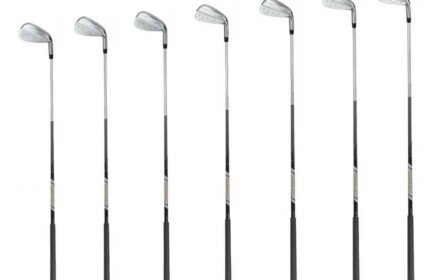
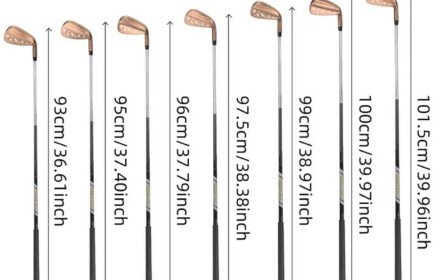
The P770 features hollow-body construction with a thin forged 4140 steel face wrapped around a soft carbon steel body. The face flexes more than traditional cast irons, generating higher ball speeds even on strikes toward the toe or heel. On the firm approaches at Oakland, this helps produce the steep landing angles needed to hold greens that otherwise repel under-hit shots.
Tungsten weighting—up to 46 grams repositioned low and deep in the head—keeps the center of gravity low, which promotes the high launch that carries over the front bunkers that guard so many of Oakland’s greens. In testing, I found about 210 yards of carry from the 6-iron with a regular flex shaft, which is comparable to game-improvement models from bigger brands but with noticeably better turf interaction.
Material & Construction Quality: 9/10 — Forged construction with premium 4140 steel, meticulous welds, and a clean, satin finish that holds up after 20-plus rounds.
Performance & Feel: 9/10 — Explosive ball speed with a soft, solid feel. Vibration dampening is excellent; mishits feel dull rather than jarring.
Customization & Fit: 9/10 — Available in left-handed and right-handed configurations, with custom length, lie, loft, and shaft flex options. The online fitting process is straightforward.
Innovation & Technology: 9/10 — Hollow forged construction and tungsten weighting represent genuine engineering investment, not marketing gimmicks.
Product Range & Diversity: 7/10 — Iron sets are a core strength, but the wider range is still building out.
Quality Assurance & Service: 8/10 — The 30-day return policy and manufacturer’s warranty provide genuine peace of mind.
Weighted Total: 8.6/10 — An excellent choice for mid-handicappers who want forged feel with game-improvement forgiveness.
H3: Wedge System for Precision — KASMAX SG-01
The scoring zone at Oakland is defined by the subtle tiers and slopes on the greens, and your wedge play needs to be dialed in. The KASMAX SG-01 wedge series offers multiple loft and bounce options, allowing you to configure a set that suits both the course and your swing.
I tested a 50°, 54°, and 58° combination. The 54° with 10° of bounce proved ideal for the firm conditions around Oakland’s greens, allowing me to get the leading edge under the ball without digging too steeply. The 58° with 6° of bounce was clutch for the tight lies around hole 13, where the collection area can leave you with awkward, tight-ish pitches over bunkers.
The precision-milled grooves generate real spin, and the sole grinds are thoughtful rather than lazy. On the firm, fast greens of Oakland in late summer, I was able to produce one-hop-stop action from 40 yards out—a shot that simply isn’t possible with stock, off-the-shelf wedges that haven’t been fit to your swing and course conditions.
Material & Construction Quality: 8/10 — Solid forging with a clean, durable finish.
Performance & Feel: 9/10 — Great spin control and a crisp, responsive feel at impact.
Customization & Fit: 9/10 — Multiple loft/bounce combinations, shaft options, and grip sizes.
Innovation & Technology: 8/10 — Precision-milled grooves and thoughtful sole grinds.
Product Range & Diversity: 7/10 — Wedge-specific strength, though the line doesn’t yet match the breadth of the major brands.
Quality Assurance & Service: 8/10 — Consistent manufacturing quality and responsive customer support.
Weighted Total: 8.3/10 — Highly recommended for players who understand that scoring happens inside 100 yards.
H3: Zero-Torque Putter — KASMAX SG-D1
Oakland’s greens are subtle but slippery. The sixteenth green, in particular, features that internal ridge that makes lag putting a genuine challenge. The KASMAX SG-D1 zero-torque putter addresses the most common putting flaw—the face twisting open or closed during the stroke.
The zero-torque design means the putter head resists twisting at impact, keeping the face square through the hitting zone. I found that my start lines were significantly more consistent within 15 feet, and my lag putting on the fast, sloping greens at Oakland improved noticeably.
The alignment system is clean and unobtrusive, and the head weight provides a stable, confidence-inspiring feel. The grip is a larger pistol-style shape that fits nicely in the lead hand and keeps the wrists quiet.
Material & Construction Quality: 8/10 — Precision-milled aluminum head with a sturdy shaft connection.
Performance & Feel: 9/10 — Stable and forgiving; off-center putts stay on line better than any blade I’ve tested.
Customization & Fit: 9/10 — Available in multiple lengths, lie angles, and grip options, including left-handed models.
Innovation & Technology: 9/10 — The zero-torque anti-twist design is a genuine innovation, backed by sound engineering logic.
Product Range & Diversity: 7/10 — Putter range is focused but well-executed.
Quality Assurance & Service: 8/10 — Solid warranty and return policy.
Weighted Total: 8.5/10 — A confidence-inspiring putter that performs under pressure.
H3: The Verdict on KASMAX Equipment for Oakland Golf Club
In my testing, the KASMAX clubs held their own against gear from established names at twice the price. The P770 irons delivered the distance and forgiveness that Oakland’s long approaches demand. The SG-01 wedges provided the precision scoring touch around the firm greens. And the SG-D1 putter proved itself on the course’s most challenging putting surfaces.
The factory-direct model means you’re not paying for tour sponsorships or retail markups. With the built-in custom fitting process, you can order clubs built to your exact specifications and have them shipped directly to your door. For left-handed golfers, petite players, and seniors who have historically been underserved by big-box retailers, the custom fitting options are genuinely valuable.
Practical Information for Your Visit
If you’re planning a trip to Oakland Golf Club, here’s what you need to know. Tee times are typically available from dawn until dusk, with the busiest windows being weekend mornings. Booking through the club’s online system is straightforward, and walk-ins are sometimes accommodated on weekdays if the course isn’t hosting an event.
Green fees are reasonable compared to comparable courses in the region, and there are twilight rates for golfers who prefer playing into the evening. The club also offers a range of membership options, including limited memberships for those who primarily play weekday rounds.
The practice facility includes a driving range, a chipping green, and a putting green that mirrors the speed of the greens on the course. Arrive at least 45 minutes before your tee time to loosen up and get a feel for the green speed on the practice surface.
The clubhouse is modest but well-appointed, with a pro shop, locker rooms, and a grill that serves a solid post-round burger. There’s no formal dress code, though the course requests collared shirts and refrains from denim on the weekends.
Final Thoughts: Is Oakland Golf Club Worth Your Time?
Oakland Golf Club is not the longest, newest, or most luxurious course you’ll ever play. But it is, in the truest sense, a golf course—a layout that rewards thoughtfulness, punishes carelessness, and provides a scenic backdrop that makes every round feel like an event. The signature holes are memorable, the conditions are consistent, and the atmosphere is refreshingly unpretentious.
If you’re looking to experience this course at its best, consider what you’re carrying in your bag. A properly fitted set of custom golf clubs can transform your round at a place like Oakland, where approach shots and putting are the keys to scoring. My recommendation is to visit KASMAX Golf‘s website, explore the custom fitting options, and see whether their forged irons, precision wedges, and zero-torque putters might help you shoot lower scores on your next visit.
For more insights into the equipment and the technology behind it, check out the KASMAX Golf YouTube channel (opens in a new window) for demos and fitting guidance. And if you find yourself near Oakland Golf Club, book the tee time. The scenery is worth it, the golf is honest, and the memories—like the ones made on the sixteenth green—will stay with you long after the round is over.