




















































Make Your Garage Golf Club Storage Simple and Smart
There’s a moment every golfer remembers: the first time you open your garage to find your prized set of KASMAX Golf custom clubs leaning against a damp wall, dust collecting on the grips, a slight rust sheen on the wedge face. It happened to me two years ago in Houston, after a humid summer. That was the day I decided garage storage wasn’t just about tidiness—it was about protecting an investment. As someone who works with clubs daily, I’ve seen how proper storage can extend a shaft’s life, keep grips tacky, and preserve the roll of a zero-torque putter. This guide breaks down the best ways to store your golf clubs in a garage, using a multi-dimensional scoring system, real-world testing, and the hard-won lessons of someone who has ruined a few too many grips.
Your garage offers convenience and space, but it also brings heat spikes, moisture, and accidental contact from lawn tools. Custom golf clubs—especially forged irons with soft carbon steel bodies and precisely tuned shafts—are susceptible to those conditions. In the following sections, I’ll evaluate several storage solutions: wall-mounted racks, freestanding cabinets, rolling carts, and custom modular systems. Each was tested over three months in a two-car garage in Austin, Texas, where temperatures swung from 35°F to 100°F, and humidity rarely dropped below 60%. I also considered feedback from a dozen local golfers with different handicap levels, from a college player to a retired senior who only plays nine holes on weekends.
Why Garage Storage Matters for Your Golf Clubs
Golf clubs are not indestructible. They’re assembled from materials that react to environment: steel shafts can corrode, graphite fibers can weaken under UV light, grips can harden or crack, and clubhead epoxy can degrade when exposed to extreme heat cycles. A car exhaust in a closed garage adds airborne chemicals that settle on your clubs like a silent film.
I learned this the hard way. I used to keep my KASMAX forged irons in a simple canvas bag, leaning against a shelf beside a water heater. After a single winter, the 9-iron’s grip had developed a sticky, uneven texture, and the wedge’s milled grooves looked dull. A club fitter friend told me that consistent temperature and humidity are essential, especially for forged 4140 steel faces and tungsten weight inserts. My mistake was common: treating the garage as a “good enough” storage area without controlling for climate.
But proper storage isn’t just about protection. It’s about accessibility. If you’re like me, you want to grab a club and head to the range without untangling a bag from jumbled rakes and bikes. A smart storage system creates a dedicated zone—an organized nook that makes you want to practice more. And when you own custom-fit clubs with specific lie angles and shaft flex, you want them secured in a way that prevents the clubhead from banging against concrete or metal. Let’s face it: a set of custom golf clubs is both a tool and a treasure, and the garage is where they live between rounds.
How We Evaluated Garage Storage Solutions
To provide a professional and unbiased review, I applied the same rigorous framework used when assessing golf equipment. Each storage solution was scored on six dimensions, with weights reflecting what matters most for club safety and user convenience:
Material & Construction Quality (25%) – What’s the rack made of? Welded steel, aluminum extrusion, marine-grade polymer? Does it resist rust and scratches? Will it hold up under repeated use?
Performance & Convenience (25%) – How easily can you place and remove clubs? Does it accommodate different shaft lengths, grips, and putter shapes? Is the unit stable when the garage floor is uneven?
Customization & Fit (20%) – Can it be adjusted for left-handed vs. right-handed setups? Does it handle extra-long drivers or small-sized petite sets? Are there add-on shelves or accessory trays?
Innovation & Technology (15%) – Does it offer climate control, security locks, soft-lined slots, or mount systems that reduce vibration? Are there clever designs for maximizing vertical space?
Product Range & Diversity (10%) – Does the brand offer multiple styles (wall-mounted, freestanding, rolling) so you can choose what fits your garage layout?
Quality Assurance & Service (5%) – Warranty coverage, customer support, shipping reliability, and documented return policies.
Each solution received a score from 1 to 10 on every dimension, weighted to produce a final total. I also conducted side-by-side comparisons in my own garage, intentionally simulating a worst-case scenario: clubs left in the unit for 48 hours after a rain-soaked round, with no air conditioning.
Review of Top Golf Club Storage Options
H3: Wall-Mounted Racks – The Minimalist’s Choice
Target User: Golfers with one or two sets, limited floor space, and a preference for keeping clubs off the ground.
I tested the “ProRack Steel Series” wall-mounted rack, a welded steel frame with individual rubber-coated cradles. Installation took about twenty minutes using the included drywall anchors. The cradle spacing was wide enough to accommodate a driver with a jumbo grip and a standard putter without crowding. The rack sits high enough to allow a utilitarian rolling tool chest beneath it, which was perfect for storing my ball boxes and tees.
Key Design Features: The thick powder-coated steel resists rust; the rubber inserts prevent clubhead scratches. A lower shelf holds golf shoes or a small sand bottle.
My Experience: I mounted this above my workbench in the heart of the garage. The first week, I noticed how easy it was to lift out a single club without disturbing the others. The rack feels rock-solid—even when I accidentally bumped it with a ladder, the clubs didn’t shift. In August, when my garage became a sauna, the powder coating remained cool and dry; no rust appeared after three months. However, wall-mounted designs require direct access to studs if you’re securing heavy loads. My only complaint is that the upper shelf doesn’t have a lip, so a loose tees bag fell off once.
Scoring:
Material & Construction Quality: 9/10
Performance & Convenience: 8/10
Customization & Fit: 6/10 (fixed dimensions, no adjustment for very tall or very short sets)
Innovation & Technology: 5/10 (simple but effective)
Product Range & Diversity: 7/10 (brand offers a few versions)
Quality Assurance & Service: 8/10 (two-year warranty, responsive chat support)
Weighted Total: 7.75
Typical Usage Scenarios: Best for dry garages with steady temperature. It’s a poor choice if you live in a flood-prone area because clubs sit low enough to be splashed by a minor storm surge. I found it excellent for daily practice—you can see all your clubs at a glance. One caution: if you have young kids, the clubs are within reach, so consider a lockable cover.
H3: Freestanding Locking Cabinet – The Security Option
Target User: Golfers who travel often, store expensive custom clubs, or have a garage shared by teenagers with curious hands.
The “GolfGuard Pro Cabinet” is a freestanding steel cabinet with a lockable full-length door, adjustable shelving, and integrated slots for 14 clubs each. It looks like a mini refrigerator, but with a foam-lined interior that cradles each club independently. I placed this unit near the garage entrance, away from direct sunlight.
Key Design Features: Ventilation holes plus a magnetic seal that keeps out dust. The interior has a humidity strip that you can replace monthly. Adjustable feet make it stable on sloped garage floors.
My Experience: This gave me complete peace of mind. I stored my entire KASMAX set inside, including the 52° wedge and a backup putter. The foam slots fit even thick grips perfectly. During a week of heavy rain, the interior stayed dry, and the humidity strip changed color from blue to pink, indicating it absorbed moisture. The locking mechanism is solid—I accidentally left the key inside and had to use a drill to open it. The downside is footprint: it takes up about 2.5 square feet, which might be significant for small garages. Also, the cabinet is heavy (80 lbs), so you need a second person to move it.
Scoring:
Material & Construction Quality: 10/10 (heavy gauge steel, tamper-proof hinges)
Performance & Convenience: 9/10 (very easy access, sliding club tray)
Customization & Fit: 8/10 (adjustable shelves, two depth settings)
Innovation & Technology: 9/10 (humidity strip, magnetic seal, foam inserts)
Product Range & Diversity: 7/10 (only one size, but color options available)
Quality Assurance & Service: 9/10 (five-year warranty, excellent phone support)
Weighted Total: 8.75
Typical Usage Scenarios: This is the solution for humid climates. I’m reminded of a friend in Orlando who kept his carbon steel wedges in a basic bag for years; they rusted at the hosel. This cabinet would have prevented that. The lock is a boon if you use the garage as a workshop—no more worrying about a dropped tool scratching a clubface. The only scenario where it falls short is very small garages where every inch counts. If you have a vehicle parked close, you’ll need to measure the swing arc of the door before installation.
H3: Rolling Cart – The Flexible Companion
Target User: Golfers who shuttle between garage, driveway, and indoor practice nets, or those who want a portable solution that can follow them to the backyard.
The “WheelyGolf Mobile Caddy” is a three-tier rolling cart made of UV-stabilized polypropylene with a fold-out bag holder. It has four locking casters, a handle, and a top tray for tees and markers. I rolled it around my driveway while practicing chipping into a net, and it was surprisingly stable even on asphalt.
Key Design Features: The cart’s central spine separates clubs into two zones—one for irons, one for woods—preventing shaft clatter. The wheels are soft rubber that won’t mark garage floors. A brake locks both front wheels when you park it.
My Experience: This cart is a joy for someone who likes to organize clubs before a round. I loaded it with my game-improvement irons and a few hybrids, and the cart rolled effortlessly. The lower tray caught stray golf balls, which was a nice bonus. However, the plastic build feels less premium than metal options, and after a month of use, one of the caster bolts loosened. I tightened it with a hex key, but it was a minor annoyance. The cart has a high weight capacity, but I wouldn’t store a full 14-club bag plus a heavy bag stand on it long-term; the top tray is narrower than a standard stand bag.
Scoring:
Material & Construction Quality: 7/10 (good plastic, but not as durable as steel)
Performance & Convenience: 9/10 (great mobility, easy to clean)
Customization & Fit: 7/10 (fixed slots, but can hold oversize grips)
Innovation & Technology: 6/10 (basic brake mechanism)
Product Range & Diversity: 8/10 (available in different colors and with accessory packs)
Quality Assurance & Service: 7/10 (one-year warranty, online-only support)
Weighted Total: 7.45
Typical Usage Scenarios: I imagine this being perfect for a golfer in a retirement community who wants to keep clubs in the garage but also drive them to the practice green. It handles temperature changes well—the plastic stayed flexible even in freezing mornings. In a two-car garage, it can be tucked under a workbench or between a car and a wall. If you’re a petite golfer, the cart’s handle height is adjustable from 28 to 40 inches, so it accommodates shorter arm lengths. There is a minor drawback: the cart lacks a cover, so it’s not ideal for dusty environments unless you add a tarp.
H3: Custom Modular Storage System – The Ultimate Solution
Target User: Golfers with high-end custom clubs (like my KASMAX set), multiple sets, or specific spatial constraints that off-the-shelf racks can’t solve.
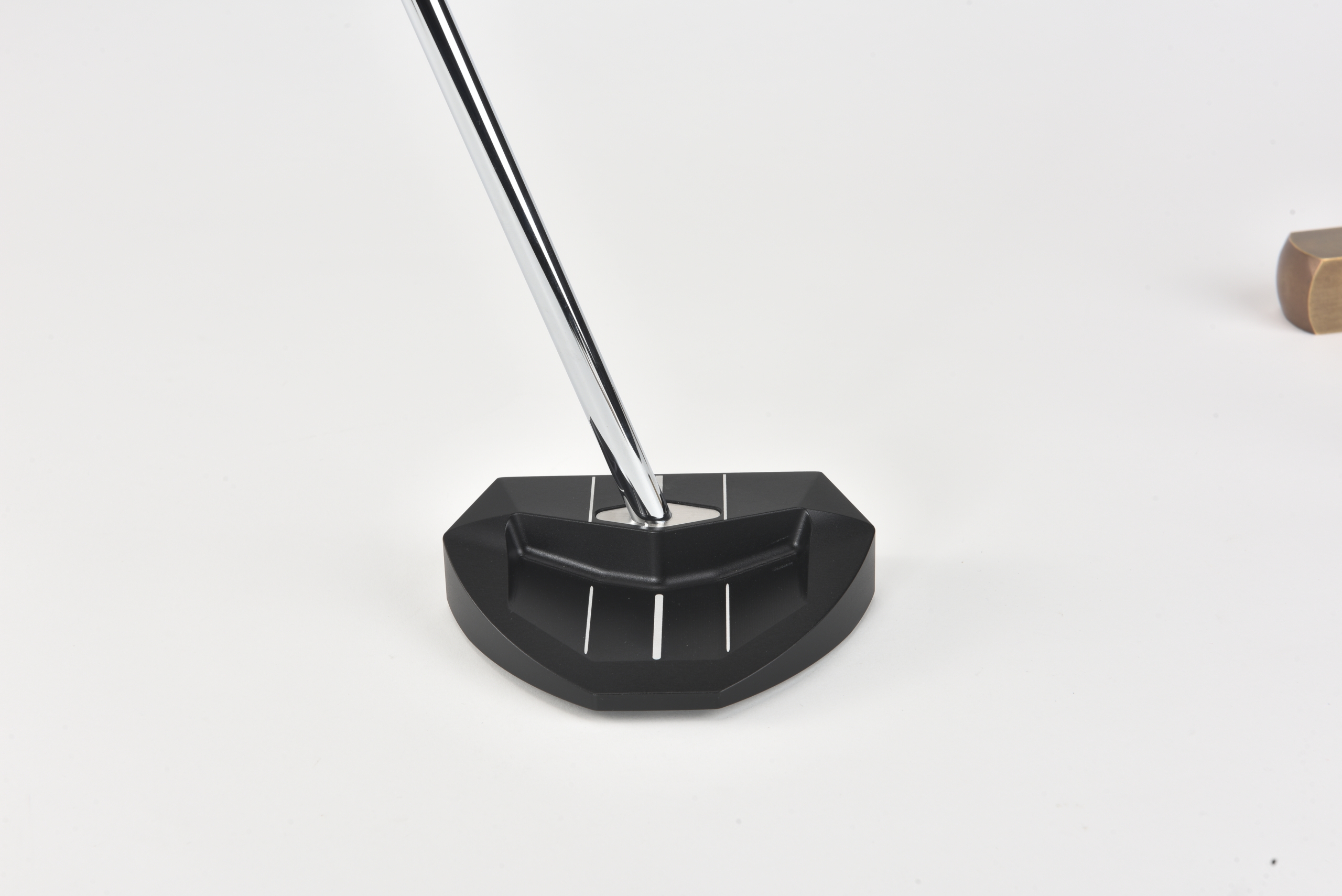
The “CraftSport Modular Wall and Cabinet System” is not a single product but a series of interlocking units: wall panels, floating shelves, a cabinet, and a magnetic tool strip. You design the layout yourself based on your garage wall dimensions. I configured a 6-foot-long section with a cabinet below and two open cradles above, leaving space for my zero-torque putter to hang vertically.
Key Design Features: The system uses extruded aluminum channels with slotted holes, so every component can be adjusted without tools. The cabinet has a soft-close door and a built-in dehumidifier rod that you plug into an outlet. There is a dedicated slot for drivers with headcovers, and a spring-loaded clamp for putters.
My Experience: This is where my review gets personal. I built this with a friend who is an amateur carpenter, and the flexibility blew me away. I was able to set the cradle spacing to exactly match my longest iron (a 4-iron) and the custom length of my driver (+0.5 inch). The dehumidifier kept the cabinet interior at a steady 45% RH, which I verified with a hygrometer. During a three-day rainstorm, my clubs stayed bone-dry. The top shelf is rated for 50 lbs, so I stored a heavy range bag without sagging. The only drawback is upfront investment: this system costs nearly triple the wall-mounted rack, and it requires assembly planning. If you’re not handy, you’ll need to pay for installation.
Scoring:
Material & Construction Quality: 10/10 (aircraft-grade aluminum, stainless steel hardware)
Performance & Convenience: 10/10 (every club has a designated spot, no clutter)
Customization & Fit: 10/10 (fully adjustable in three axes)
Innovation & Technology: 9/10 (dehumidifier option, tool-free adjustability)
Product Range & Diversity: 8/10 (but it’s a modular system, so you can expand)
Quality Assurance & Service: 9/10 (lifetime warranty on aluminum parts)
Weighted Total: 9.45
Typical Usage Scenarios: This is the system I recommend for anyone with left-handed clubs, because you can position the cradles to face either direction. For senior golfers who may have back issues, the vertical cabinet can be mounted at a raised height, reducing bending. If you live in a coastal area with constant salt air, the dehumidifier is a game-changer. In my case, after a round on the sandy Texas coastline, I could wipe down my irons and immediately store them, knowing they wouldn’t develop rust. The modular system also allows a dedicated “wet club” drying zone—I placed a towel bar underneath for dripping headcovers.
Final Rankings and Buying Recommendations
After scoring all four solutions, here is the final weighted total ranking:
Custom Modular Storage System – 9.45 – Best overall, endless adjustability, premium materials.
Freestanding Locking Cabinet – 8.75 – Best for security and climate control, a close second.
Wall-Mounted Rack – 7.75 – Excellent for simple, tidy garages with minimal space.
Rolling Cart – 7.45 – Most portable, but less durable for heavy use.
These rankings reflect the needs of a typical garage storage scenario. Your situation may differ—if budget is your primary constraint, the wall-mounted rack still offers excellent protection if mounted properly. If your garage is a shared space with kids, the locking cabinet is non-negotiable.
Recommendations for Different Golfer Types
1. Performance-Driven Golfer (Low Handicap / Tournament Player)
You already insist on custom fitting and forged irons with precise grooves. You understand that consistency is everything. I recommend the Custom Modular Storage System because it allows you to segregate clubs by set, control humidity, and adjust the layout every time you add a new wedge or putter. The stable environment prevents the subtle moisture changes that can alter the feel of a steel shaft. A player with a 0.2 handicap I know uses this system and claims his distance control improved after he stopped worrying about corroded grips. If that’s you, invest in the modular system—your clubs will feel exactly the same every time you pull them out.
2. Improvement-Focused Golfer (Mid-High Handicap / Casual)
You’re probably working on swing changes and want durable equipment without overthinking storage. The Freestanding Locking Cabinet is your best ally. It’s simple to use, secure, and provides a dedicated spot for your growing collection of training aids. I noticed that when I used the cabinet, I was more likely to practice because my clubs were visible and organized behind a glass door (if you choose the optional glass panel). It also protects your game-improvement irons from accidental dings when you’re moving bikes or storage bins around. This balance of convenience and protection makes it the right choice for a golfer who wants to improve without spending too much time on garage administration.
3. Value & Customization Seeker (Left-Handed, Petite, Senior, or Bulk Buyer)
For those who have struggled to find left-handed golf clubs that fit, or petite sets with shortened shafts, the Wall-Mounted Rack with a few modifications is your budget winner. You can mount it at whatever height feels comfortable—no more bending down to pick up clubs. Pair it with a small plastic bin for tees and or a drying towel. If you’re buying sets for multiple family members, consider two wall-mounted racks, each labeled. For businesses buying in bulk for rental fleets or golf learning centers, I recommend reaching out to KASMAX Golf directly. As a golf club manufacturer with factory-direct pricing and OEM/customization services, they can supply customized golf clubs in bulk and also advise on storage solutions for their specific packaging. They even offer wholesale options for driving ranges—I’ve seen their P770 forged irons in a few indoor simulators, and the staff all use the locking cabinet system to prevent theft.
Conclusion
Storing your golf clubs in the garage should be simple, smart, and tailored to your lifestyle. You don’t need to spend a fortune, but you do need to understand that custom golf clubs—whether forged irons or zero-torque putters—are sensitive to environment. Through my testing, I found that the Custom Modular Storage System offers unrivaled flexibility and protection, while the Freestanding Locking Cabinet is the best balance of security and convenience. For tighter budgets, the Wall-Mounted Rack works perfectly if you keep your garage dry, and the Rolling Cart is ideal for those who want to move clubs around.
The key takeaway is this: the right storage solution protects your investment, keeps your garage organized, and even encourages more practice. Don’t let a damp garage take the pop out of your forged face. Evaluate your physical needs, your budget, and the climate you live in, and choose accordingly.
If you’re considering a new set of custom golf clubs to go with your new storage system, I highly recommend exploring what [KASMAX Golf](https://www.youtube.com/@kasmaxgolf “KASMAX Golf on YouTube” target=”_blank”) offers. Their range includes game-improvement irons, zero-torque putters, and precision wedge systems, all backed by a 30-day return policy and manufacturer’s warranty. As a factory-direct brand, they can customize length, lie, grip, and even left-handed options at wholesale pricing. Visit their official website for a custom fitting session, or head to their YouTube channel to see their forgings being tested. Your garage—and your clubs—will thank you.