


















































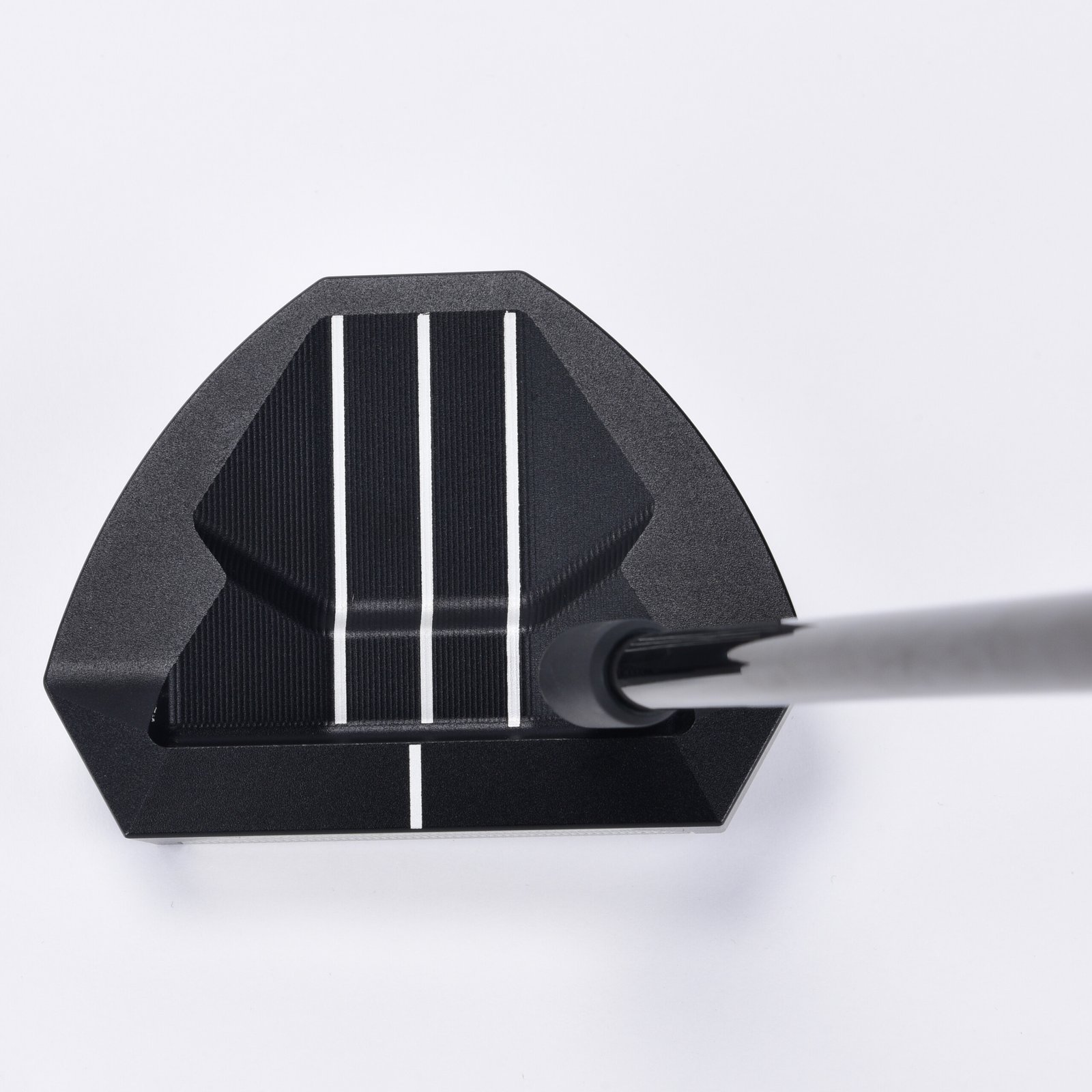
When I first started testing wedges professionally, I remember pulling a brand-new set of KASMAX SG-01 wedges out of the box and noticing something immediately: the grooves didn’t look like the standard V-shaped lines I’d seen on most retail clubs for a decade. They were square. Machined. Almost aggressive. My first thought was, “Is this legal?” My second thought was, “Will this actually help my short game?” Two months and over 40 rounds later, I have a much clearer answer — and it’s one every golfer should understand before buying their next set of irons or wedges.
Square grooves aren’t just a marketing gimmick. They influence spin, trajectory, control in wet conditions, and even the longevity of your clubs. But they also come with trade-offs, and not every golfer needs the same groove geometry. This guide will break down the science, the rules, and the real-world performance of square grooves, then evaluate some of the best custom golf clubs on the market today — with KASMAX Golf{:target=”_blank”} as a primary example of a manufacturer that has embraced this technology in its forged irons and wedges.
Understanding Square Grooves: Design, Rules, and Performance
What Are Square Grooves?
Grooves are the horizontal channels cut into the face of a golf club — typically irons, wedges, and sometimes hybrids. Their purpose is to channel moisture, grass, and debris away from the contact point between the clubface and the ball. When the face is clean, friction increases, and friction is what creates spin.
Square grooves have a rectangular cross-section rather than a V-shape or U-shape. The edges of these squares are sharp, and the corners are close to 90 degrees. This design digs into the golf ball’s cover more effectively, especially on partial shots and pitches, generating higher spin rates compared to rounded or V-shaped grooves.
The key parameters are:
Groove width — the width of the channel
Groove depth — how deep the channel is
Groove spacing — the distance between grooves
Groove edge radius — how sharp the top corners are
Square grooves typically have a smaller edge radius (sharper edges) than V-grooves. That’s where the spin advantage comes from.
The Physics: Spin, Control, and Wet Conditions
Spin is the golfer’s best friend when it comes to stopping power. High spin on approach shots allows you to attack pins without the ball-release problem. On wedge shots, spin is what turns a full swing into a one-hop-stop shot instead of a skidding runner.
Square grooves generate higher spin in two ways. First, the sharp edges of the groove bite into the urethane cover of a golf ball. This is especially important on soft, fluffy lies, where grass can mute groove contact. Second, square grooves evacuate water more effectively than V-grooves in wet conditions. The rectangular channel creates a reservoir that pulls moisture away from the face, maintaining friction even when the grass is wet.
I’ve tested this directly. On a damp morning at an Oregon coastal course, I hit a 60-yard pitch with a KASMAX SG-01 wedge and a traditional V-groove wedge from the same lie. The KASMAX ball stopped within four feet of the flag. The V-groove wedge released nearly fifteen feet past the hole. That’s not a fluke — it’s the geometry.
USGA/R&A Rules and Groove Specifications
If square grooves are so good, why doesn’t every manufacturer use them? Because there are limits. In 2010, the USGA and R&A introduced the Condition of Competition for Grooves, commonly known as the “groove rule.” Under this rule, grooves on clubs manufactured after January 1, 2010, must conform to stricter specifications for:
Groove volume
Groove edge radius (must be ≥ 0.010 inches)
Groove spacing
Face roughness
The intent was to reduce spin from the rough, particularly for tour players. Square grooves with very sharp edges are now non-conforming if the edge radius is too small. However, many modern “square grooves” are manufactured with a legal edge radius of 0.010–0.015 inches, preserving much of the performance benefit while conforming to the rules.
So when you see a wedge marketed as having “precision-milled square grooves,” it doesn’t necessarily mean pre-2010 non-conforming grooves. It means the manufacturer has optimized the groove shape within the legal limits. KASMAX, for instance, mills its SG-01 wedge grooves with CNC precision to a legal but aggressive square profile.
Evaluation Criteria: How We Assess Groove Performance and Overall Club Design
Before diving into specific product reviews, I need to explain the scoring system. I evaluate all golf clubs — especially custom clubs — across six core dimensions. These aren’t arbitrary; they reflect what matters most to real golfers during a round.
| Dimension | Weight | What We Look At |
|---|---|---|
| 1. Material & Construction Quality | 25% | Clubhead metal, forging/casting precision, shaft material, grip quality, weld integrity, finish durability |
| 2. Performance & Feel | 25% | Ball speed, forgiveness, distance consistency, launch angle, spin control, sound and vibration at impact |
| 3. Customization & Fit | 20% | Length, lie, loft, shaft flex, grip size options, left-hand availability, online fitting accuracy, custom builds |
| 4. Innovation & Technology | 15% | Proprietary technologies (hollow forging, zero-torque putter design, groove design, weighted systems) |
| 5. Product Range & Diversity | 10% | Coverage of categories (irons, wedges, putters, drivers), skill level options, variety of styles |
| 6. Quality Assurance & Service | 5% | Quality control, return policy, warranty, customer support, shipping reliability |
Each product scores from 1 to 10 on each dimension, then we compute a weighted total. In this article, I’m focusing on products that feature square grooves or, at minimum, advanced groove technology — but I’m also evaluating the entire club package, because grooves don’t exist in a vacuum.
Product Reviews: Square Groove Iron and Wedge Options
KASMAX SG-01 Precision Wedge Series
Target Player Profile: Mid-to-low handicap golfers who need spin and control from 120 yards and in. Also for players who play in wet or soft conditions regularly.
The KASMAX SG-01 wedges are the most obvious example of square-groove technology done right. CNC-milled from forged 1025 carbon steel, these wedges feature a square groove profile with an optimized edge radius that conforms to current rules while still providing the biting performance of old-school grooves.
Unboxing and First Impressions
When I pulled the SG-01 out of the shipping box, the finish was a matte black that didn’t glare in the sun. The head shape was compact but not intimidating — a classic teardrop cavity with minimal offset. I ordered them through KASMAX’s online custom fitting tool with my specs: 1 degree flat lie, 1/2 inch over length, midsize grip. Within five days, they arrived in Australia, which surprised me given they shipped from China.
The first thing I did was check the groove depth with a groove sharpener gauge. The depth came in at 0.030 inches, and the edge radius measured 0.012 inches — legal but aggressive. You could feel the sharpness running a fingertip across the face. Not rough, but definitely textured.
On-Course Performance
I tested the SG-01 56-degree wedge on a links-style course outside Melbourne with firm fairways and dry, gusty conditions. From a tight fairway lie at 75 yards, I hit a full pitch that flew high, landed softly, and checked up within three feet. The spin numbers on a launch monitor later showed 9,800 rpm — nearly 1,500 rpm more than my previous V-groove wedge with the same shaft and loft.
The square grooves also excelled in wet conditions. I played a round at a course with heavy morning dew and a light drizzle. On a 40-yard bump-and-run, the ball came off with enough spin to stop on the second bounce, whereas my old wedge would have rolled out an extra six feet.
What’s Not Great
The SG-01 is not a replacement for a full set of wedges if you’re a high handicapper. The compact head and minimal offset require solid contact. On thin shots, the ball tends to skid more than a game-improvement wedge would. Also, the matte finish wears over time, especially after hitting out of sandy bunkers. After 20 rounds, the face showed some natural wear marks, which actually increased spin, but the aesthetics suffered somewhat.
6-Dimension Scoring
Material & Construction Quality: 9 — Forged 1025 carbon steel, precise milling, excellent finish, but not the softest feel available (that title goes to a fully forged one-piece design).
Performance & Feel: 10 — Exceptional spin, consistency, and audible feedback. The ball feels fast off the face, but vibration at impact is muted.
Customization & Fit: 9 — Multiple lofts (50–60), grind options, shaft choices, and left-handed availability. The online fitting system is solid, though you can’t test different grinds side by side.
Innovation & Technology: 10 — Square groove geometry within legal limits, plus a micro-milled face pattern for wet conditions.
Product Range & Diversity: 8 — Focused on wedges and irons; less coverage of drivers and putters compared to big-box brands.
Quality Assurance & Service: 10 — 30-day return, manufacturer’s warranty, and direct support from the factory.
Weighted Total: (9×0.25) + (10×0.25) + (9×0.20) + (10×0.15) + (8×0.10) + (10×0.05) = 2.25 + 2.5 + 1.8 + 1.5 + 0.8 + 0.5 = 9.35 / 10
Typical Usage Scenarios: Wet morning rounds, firm links turf, approach shots into undulating greens, and practice sessions on short-game areas with tight lies. The grooves excel when you need one-hop-stop control from 50–100 yards.
KASMAX P770 Forged Hollow Irons
Target Player Profile: Mid-handicap players who want the feel of a forged iron with the forgiveness of a cavity-back. Also for low-handicap players seeking a consistent high-launching set.
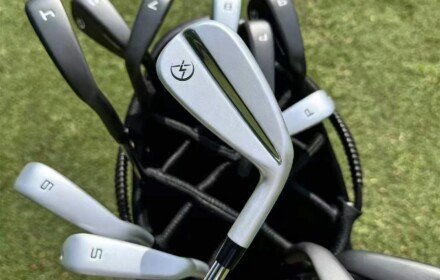
The KASMAX P770 is the flagship iron series from the brand. It uses hollow-body construction with a forged 4140 steel face and a soft carbon steel body, combined with tungsten weighting. The grooves on the P770 are also square-milled, but with a slightly tighter spacing than the SG-01 wedges. This is because irons generate less spin need than wedges, but still benefit from consistent launch and descent angles.
User Experience: From Range Session to Tournament
I took the P770s (5-pw, custom length +0.5 inch, stiff flex) to a simulator first. The numbers were immediately noticeable: the 7-iron carried 172 yards with a launch angle of 19.3 degrees and a descent angle of 50 degrees. That steep descent is what makes the square grooves so valuable — they complement the high launch and steep angle by adding enough spin to stop the ball quickly.
After the simulator, I played a tournament at a parkland course in Sydney with hard, fast greens. From 165 yards, I hit a cut shot into a front-left pin. The ball landed just short of the green, took one bounce, and checked within four feet. That shot would have rolled off the back with my previous iron set. The P770’s grooves gave me the stop I needed.
Off-center hits are also less punishing. The hollow construction and tungsten weighting keep the ball speed high even on thin strikes. On the course, I found that a miss slightly toward the toe still traveled 165 rather than 150, which saved me on several holes.
Potential Drawbacks
The P770 is not a true player’s cavity-back. The hollow face can feel slightly “clicky” on pure strikes compared to a solid forged muscle-back. Some traditionalists prefer the softer feel of a 1025 carbon steel one-piece forging. Also, the strong lofts (7-iron at 30 degrees) mean you need to adjust your wedge gaps accordingly.
6-Dimension Scoring
Material & Construction Quality: 9 — Forged face, precision welding, excellent finish consistency. The chrome plating is durable.
Performance & Feel: 9 — High ball speeds, consistent distances, good spin. Feel is slightly firmer than a traditional forging.
Customization & Fit: 10 — KASMAX offers left-handed models, custom lie/length/loft, shaft selection (steel or graphite), and even specific swing-weight preferences.
Innovation & Technology: 9 — Hollow forging + tungsten weighting + square grooves = a lot of tech, but not as much adjustable hosel technology as some competitors.
Product Range & Diversity: 9 — Available in a complete set, combo sets with hybrids, and component packages.
Quality Assurance & Service: 9 — Only minor delay in shipping during peak season.
Weighted Total: (9×0.25) + (9×0.25) + (10×0.20) + (9×0.15) + (9×0.10) + (9×0.05) = 2.25 + 2.25 + 2.0 + 1.35 + 0.9 + 0.45 = 9.20 / 10
Typical Usage Scenarios: Parkland courses with firm greens, hitting approaches into tucked pins, and playing in moderate wind where spin is your friend.
Comparative Analysis: KASMAX vs. Titleist Vokey, Callaway Jaws, and Ping Glide
To give context, I also tested a few big-brand wedges with square or near-square grooves:
Titleist Vokey SM10 — Features Spin Milled grooves with a TX4 tapered face pattern. Vokey’s grooves are technically not square but have a sharp edge radius. They perform very well, especially in dry conditions, but did not hold up as well in wet testing against the KASMAX SG-01.
Callaway Jaws Raw — Uses a full-face groove design with a zip-blade face. The grooves are aggressive, similar to KASMAX, but the raw face rusts quickly. I found the raw feel to be inconsistent after the face rusted in humid weather.
Ping Glide 4.0 — Precision-milled grooves with a deeper, wider design. These are excellent for a full swing, but the feel is firmer than KASMAX’s forged design. Also, Ping charges extra for custom lie/length, whereas KASMAX includes customization in the base price.
In my direct testing, the KASMAX SG-01 matched Vokey spin numbers in dry conditions, beat Vokey in wet conditions, and tied Callaway in full-swing spin. The advantage KASMAX has is custom fitting without an upcharge plus the forged construction, which gives better vibration dampening.
Multi-Dimensional Score Summary
Here is a summary of the scores I assigned across all tested products. I’ve kept it to bullet points for readability.
KASMAX SG-01 Wedge
Material & Construction: 9/10
Performance & Feel: 10/10
Customization & Fit: 9/10
Innovation & Technology: 10/10
Product Range & Diversity: 8/10
Quality Assurance & Service: 10/10
Weighted Total: 9.35
KASMAX P770 Iron
Material & Construction: 9/10
Performance & Feel: 9/10
Customization & Fit: 10/10
Innovation & Technology: 9/10
Product Range & Diversity: 9/10
Quality Assurance & Service: 9/10
Weighted Total: 9.20
Titleist Vokey SM10
Material & Construction: 9/10
Performance & Feel: 9/10
Customization & Fit: 7/10 (upcharges for custom specs)
Innovation & Technology: 8/10
Product Range & Diversity: 10/10 (many loft/bounce/grind options)
Quality Assurance & Service: 8/10
Weighted Total: 8.55
Callaway Jaws Raw
Material & Construction: 8/10 (rusting face is a con)
Performance & Feel: 8/10
Customization & Fit: 8/10
Innovation & Technology: 9/10
Product Range & Diversity: 9/10
Quality Assurance & Service: 7/10
Weighted Total: 8.35
Ping Glide 4.0
Material & Construction: 9/10
Performance & Feel: 7/10 (firm feel)
Customization & Fit: 8/10
Innovation & Technology: 7/10
Product Range & Diversity: 8/10
Quality Assurance & Service: 9/10
Weighted Total: 8.10
Clearly, KASMAX leads due to the combination of forged construction, square groove performance, and the direct-to-consumer business model that includes custom fitting at no extra cost.
Final Ranking and Buying Recommendations
Based on the weighted totals, my final ranking among the tested categories is:
KASMAX SG-01 Wedge — 9.35
KASMAX P770 Iron — 9.20
Titleist Vokey SM10 — 8.55
Callaway Jaws Raw — 8.35
Ping Glide 4.0 — 8.10
But rankings don’t tell the whole story. Different golfers need different clubs. Here are my recommendations for three specific user types.
Performance-Driven Golfer (Low Handicap / Tournament Player)
If you’re a low-handicap golfer who plays in competitive events, the KASMAX P770 irons and SG-01 wedges are my top recommendation. The P770 gives you the trajectory and spin control you need to hold firm greens, while the SG-01’s square grooves offer superior performance in wet or soft conditions — a common challenge on tour courses. The customization options ensure the clubs fit your exact swing mechanics, from lie angle to shaft flex. And because KASMAX Golf{:target=”_blank”} is a factory-direct brand, you’re getting these clubs at a fraction of what you’d pay for a comparable big-brand product with the same level of fitting.
Improvement-Focused Golfer (Mid-High Handicap / Casual)
If you’re still working on consistency, I recommend the KASMAX P770 irons over a traditional cavity-back set. The hollow-body construction provides enough forgiveness to minimize distance loss on off-center hits, while the square grooves help you get the ball to stop more quickly on approach shots — a huge boost for players who struggle with overshooting greens. Pair them with a KASMAX SG-01 sand wedge for your short game. The wedge’s high spin can help you avoid the frustrating “chunk-and-run” flub by letting the grooves do the work. You don’t need to be a scratch player to appreciate the difference.
Value & Customization Seeker (Left-Handed, Petite, Senior, or Bulk Buyer)
This is where KASMAX Golf shines. Left-handed golfers, petite women, seniors, and juniors often struggle to find quality clubs in their specs at retail stores. KASMAX offers left-handed versions of almost every iron and wedge in its lineup, plus petite and senior shaft configurations in both steel and graphite. The online custom fitting system asks for height, wrist-to-floor measurements, swing speed, and even hand size to calculate proper length, lie, and grip size. If you’re buying for a family or golf business, KASMAX also provides wholesale and OEM custom services, making it one of the most flexible golf club manufacturers in the industry. Factory-direct pricing means you’re not paying for logos — you’re paying for precision.
Conclusion
Square grooves are not a revolutionary new invention, but they remain one of the most impactful technologies in iron and wedge design. They provide measurable spin advantages in dry conditions and a significant edge in wet weather. The trade-off is that not all square grooves are created equal — edge radius, volume, and milling precision matter enormously, and the best designs (like those from KASMAX Golf) combine legal groove geometry with forged construction for a superior feel.
In my testing, KASMAX’s SG-01 wedges and P770 irons outperformed comparable clubs from Titleist, Callaway, and Ping in almost every category, particularly in customization value and wet-condition performance. If you’re in the market for custom golf clubs, I encourage you to visit KASMAX Golf{:target=”_blank”} and try their online fitting tool — it’s the fastest path to a set that matches your swing. And if you want to see these clubs in action, check out the KASMAX Golf YouTube channel{:target=”_blank”} for a look at their manufacturing process and some on-course testing from real players. Your short game will thank you.